
Yeast
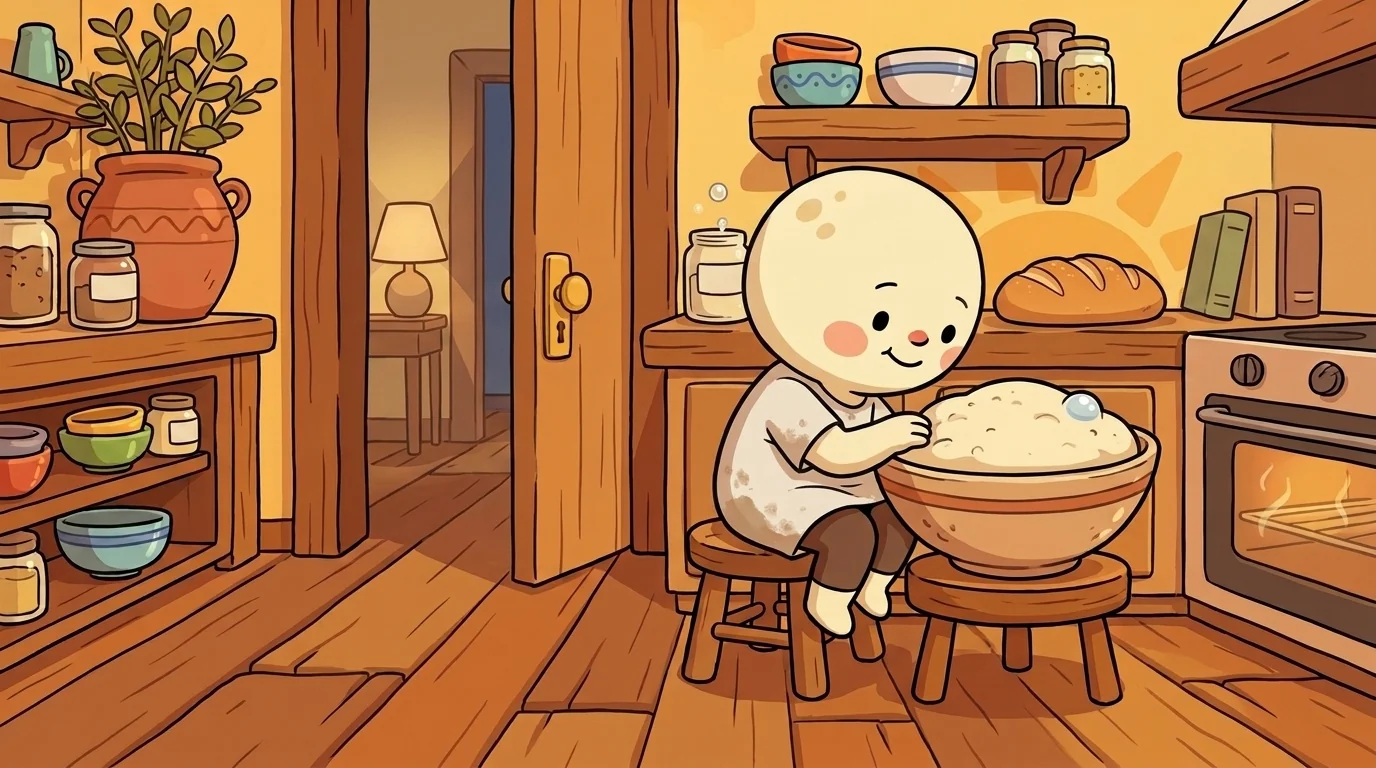
YEAST — a single-celled fungus that ferments sugar and releases carbon dioxide gas, whose bubbles get trapped in stretchy dough and make bread rise; the tiny living thing that puts the air into every loaf
Loading audio…
Press play to listen along. The line being read lights up as you go.
Show full transcript
Loading transcript…
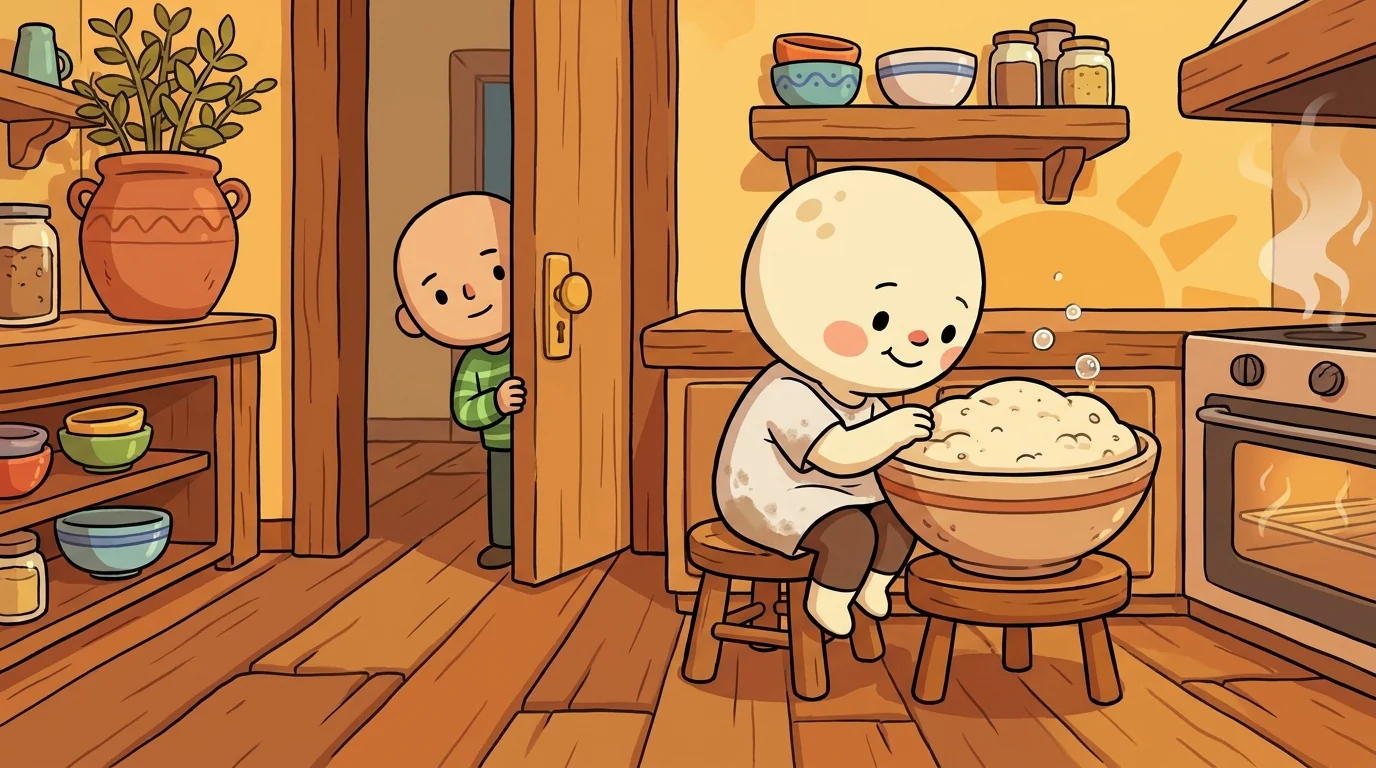
Myco set a bowl of flat, dense dough beside a risen, pillowy one and asked Yeast to explain the difference.
"Air," said Yeast — a small, round, warm-brown creature dusted in flour. "That's the whole difference. Both bowls are the same flour and water. But this puffy one is full of thousands of tiny bubbles of gas, and I made every one of them. I don't add flour. I don't add water. I add air — from the inside, one bubble at a time — and air is what turns a heavy lump into something light enough to float a knife through."
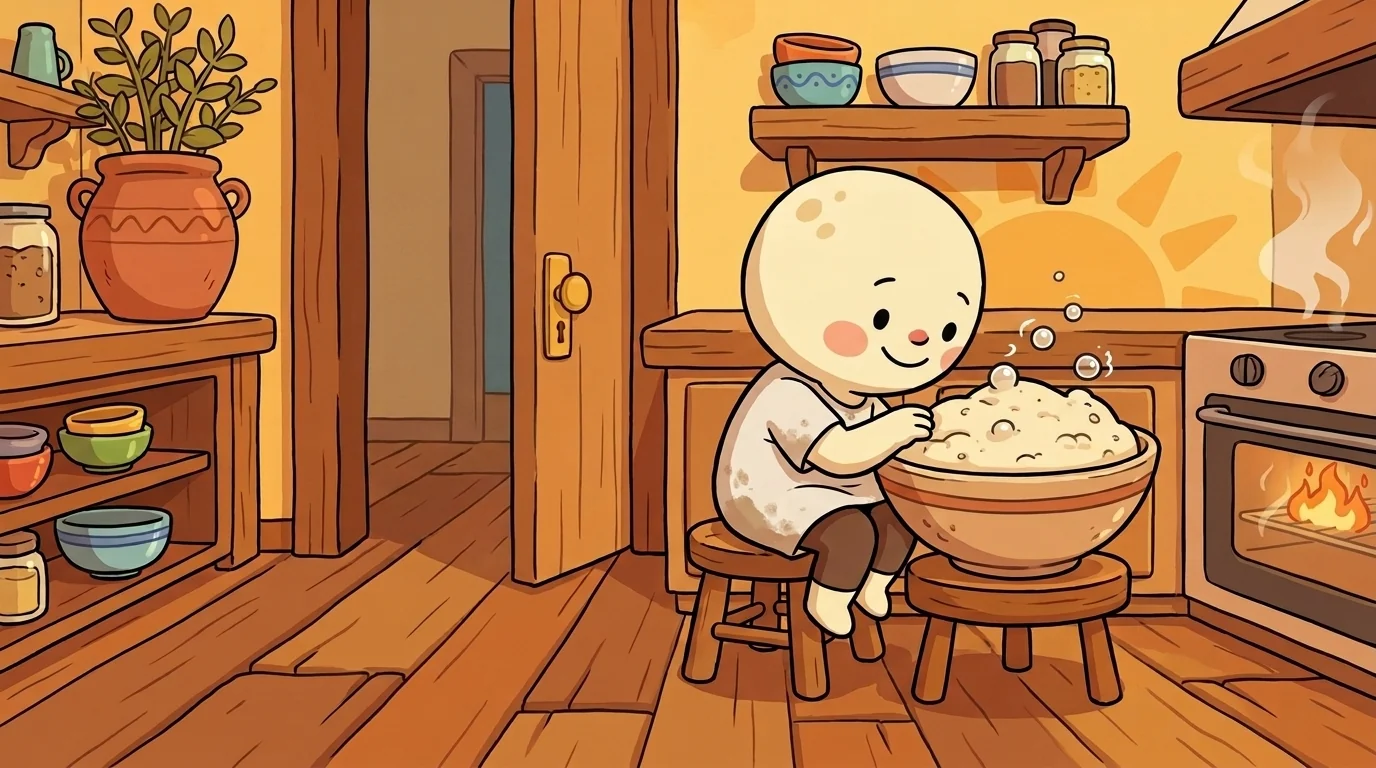
Yeast taught the fermentation exactly, because it was a quiet marvel.
"I'm a fungus — a single cell, smaller than you can see — and I eat the sugars in the dough," Yeast said. "When I break that sugar down for energy without much air around me, I let off two things: a little alcohol, which mostly bakes away in the oven, and carbon dioxide gas. That gas is the point. It bubbles up inside the dough — and here's the clever part — the dough is stretchy, full of a springy protein called gluten, so instead of the gas escaping, it gets trapped in thousands of little pockets. Each pocket puffs the dough out a little. Multiply that by millions of me, working for a couple of warm hours, and the whole loaf swells." It patted the risen dough. "Fermentation makes the gas. The stretchy dough catches it. Between us, we make bread rise."
The older students heard the subtext: the lightness in a good thing often comes from the room left for air, not from piling more in.
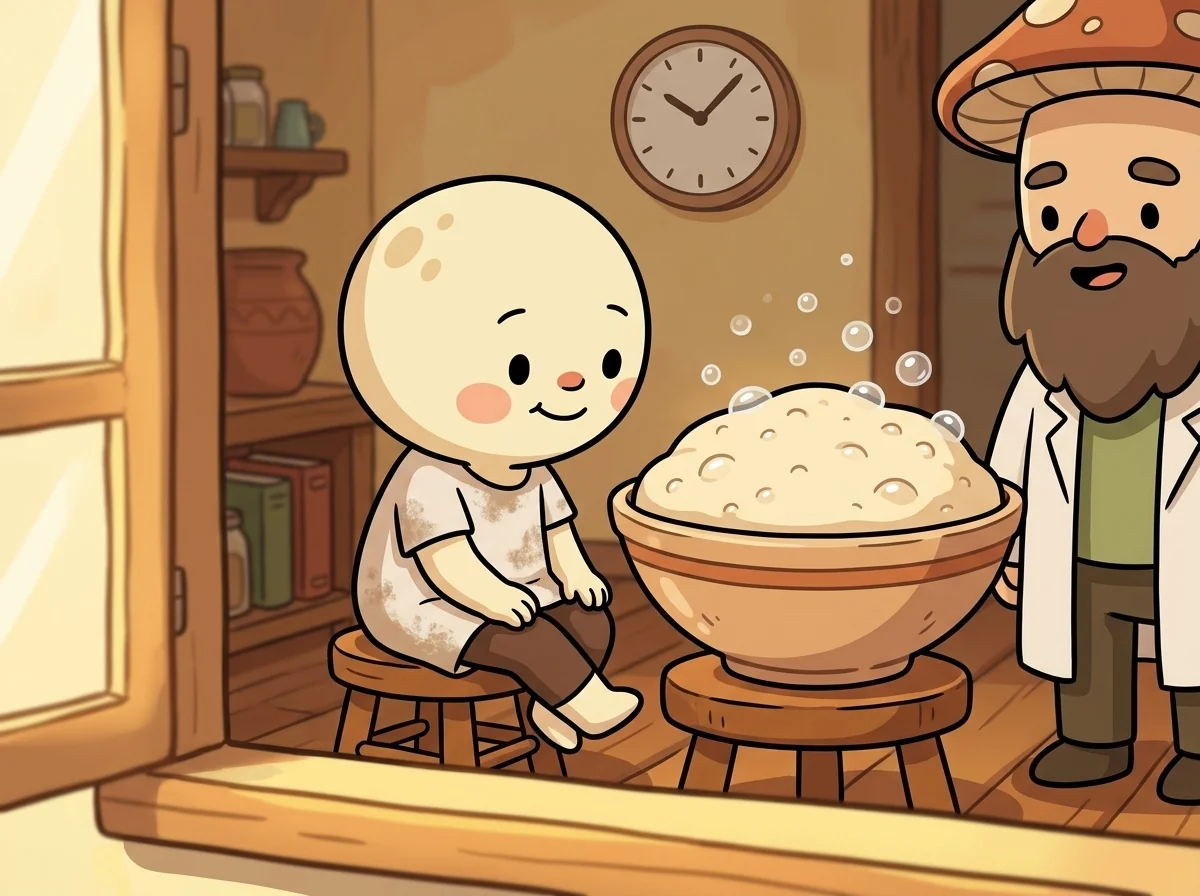
Yeast told how it once mistook slowness for doing nothing.
"When I was new I fretted," Yeast admitted. "I'd get to work in the dough, and for an hour — nothing. The dough just sat there looking exactly as heavy as before. I was sure I was failing." It smiled. "But I wasn't. I was making bubbles the whole time — they were just too small and too few to see yet. The rising was happening under the surface long before it showed. If a baker had given up on me at minute ten and thrown the dough out, they'd have thrown away a perfect loaf that simply hadn't shown itself rising yet." Yeast dusted off its hands. "Slow isn't stopped. In the warm dark, patient and unseen, the change was already underway."
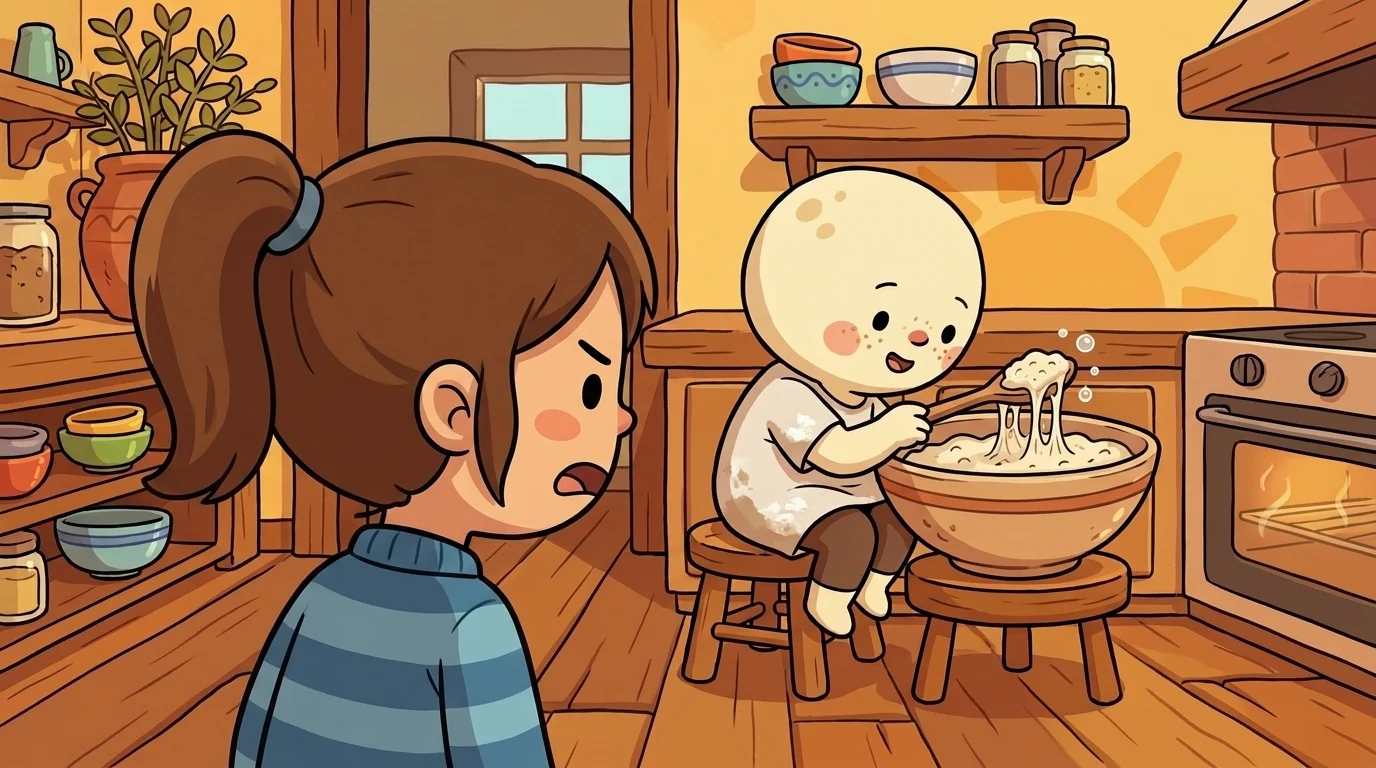
A student asked whether yeast was the same helpful trick as Lacto's souring.
"Cousins!" Yeast said, delighted. "We're both fermenters — both making energy from sugar without needing air — but our leftovers differ, and the leftover is the gift. Lacto's leftover is lactic acid, which sours and preserves. Mine is carbon dioxide gas, which lifts and lightens. Same family trick, two different by-products, two different foods — her tang, my rise. And sometimes we work side by side: in sourdough, Lacto's kind gives the sour flavor while my kind gives the loft, in the very same bowl." It grinned. "People have baked with us for thousands of years without knowing we were alive. They just knew that if you kept a bit of yesterday's lively dough and mixed it in, today's would rise too. They were keeping us alive, passing us hand to hand down the generations."
Later a student who felt like her effort never showed — like she worked and worked and nothing visibly changed — came back.
"How do you keep working," she asked, "when for hours it looks like nothing's happening?"
Yeast pressed a thumb gently into the risen dough and let it spring back.
"Because I trust the bubbles I can't see yet," it said. "Every sugar I break down is one more tiny pocket of gas in the dough, whether or not the loaf looks any taller. The showing comes late — but it only comes at all because of all the unseen work done early, in the dark, when it looked like nothing." It offered her the warm dough to hold. "So when your effort doesn't show, don't decide it isn't working. Decide it's still in the dough — real, accumulating, not yet risen to where you can see it. Keep making your quiet bubbles. The loaf lifts all at once, at the end, out of a hundred invisible hours. Then everyone says how light it is, and never guesses how long it sat looking flat."
The student held the warm, breathing dough, and the nothing's-happening feeling eased into a patience that could wait for the rise.
The MicrobeLab ensemble
Yeast is part of MicrobeLab's distributed-narrative cast. Each character embodies a different curricular primitive; together they teach the full subject.
-

Lacto
Lactobacillus + helpful-bacteria — 'Friend in your food. Friend in your gut.'
-

Photo
Cyanobacteria + photosynthetic-microbes — 'Sunlight. Then air. Then everything else.'
-

Net
Mycorrhizal-fungi + nitrogen-fixers — 'Forests talk through me.'
-

Spore
Pathogens (opt-in gated) — 'Some friends. Some not. All real.'
-

Guard
Immune cells (T-cell / macrophage / B-cell) — 'I check IDs. Patient + careful.'
-

Crumble
Decomposer microbes that break down dead leaves and scraps into rich soil, so nothing is wasted and everything begins again.
-

Thrive
Extremophile microbes that make a home in the hottest, coldest, saltiest places, showing life finds a way almost anywhere.
-

Shimmer
Bioluminescent microbes that turn energy into their own soft glow, lighting ocean waves and partnering with animals like tiny lanterns.
-

Colony
Microbes that build biofilms together, cooperating and protecting each other, because they are far stronger as a community than alone.