
Wise-Elder, Threshold-Guardian and Shadow
THE HERO'S ROAD — the journey pattern beneath a thousand stories has three figures: the Wise-Elder gives the hero guidance but cannot make the journey for them, the Threshold-Guardian tests whether the hero is truly ready to cross into the unknown, and the Shadow is the hidden self the hero must face to become whole
A story read by Wise-Elder, Threshold-Guardian and Shadow
Loading audio…
Press play to listen along. The line being read lights up as you go.
Show full transcript
Loading transcript…
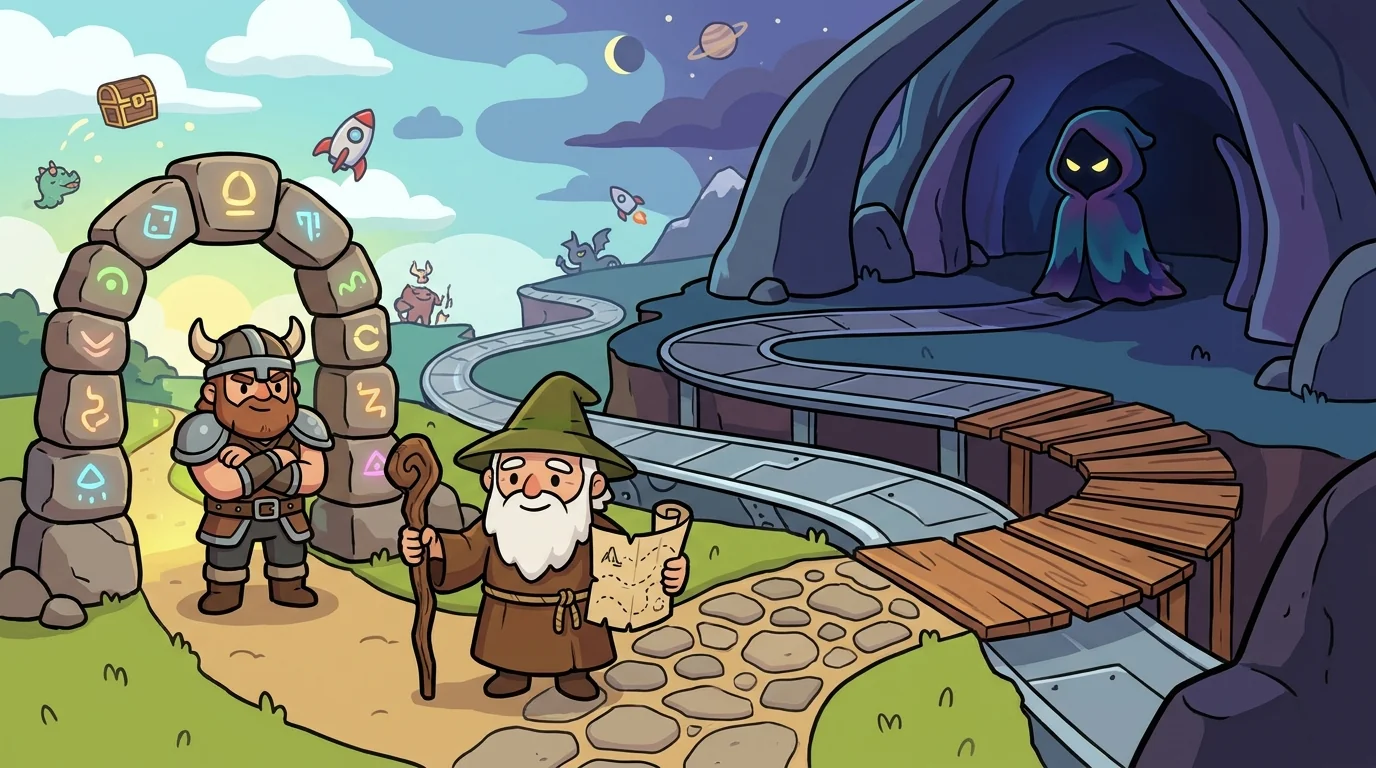
There is a road that runs underneath a thousand different stories, and although the costumes change endlessly — knights, spacefarers, ordinary kids who stumble through a strange door — the road itself never does. And on that road, without fail, wait three figures.
The Wise-Elder waited near the beginning, leaning on a staff, holding a map. The Threshold-Guardian stood at the border of the known world, arms crossed, blocking the way. And the Shadow waited in the deepest part, at the very bottom of the road — the figure the hero fears most, and needs most to meet.
"Every hero meets us three," said the Wise-Elder, "in one shape or another. We are not the story. We are the shape underneath the story. Watch, and you'll never un-see us again."
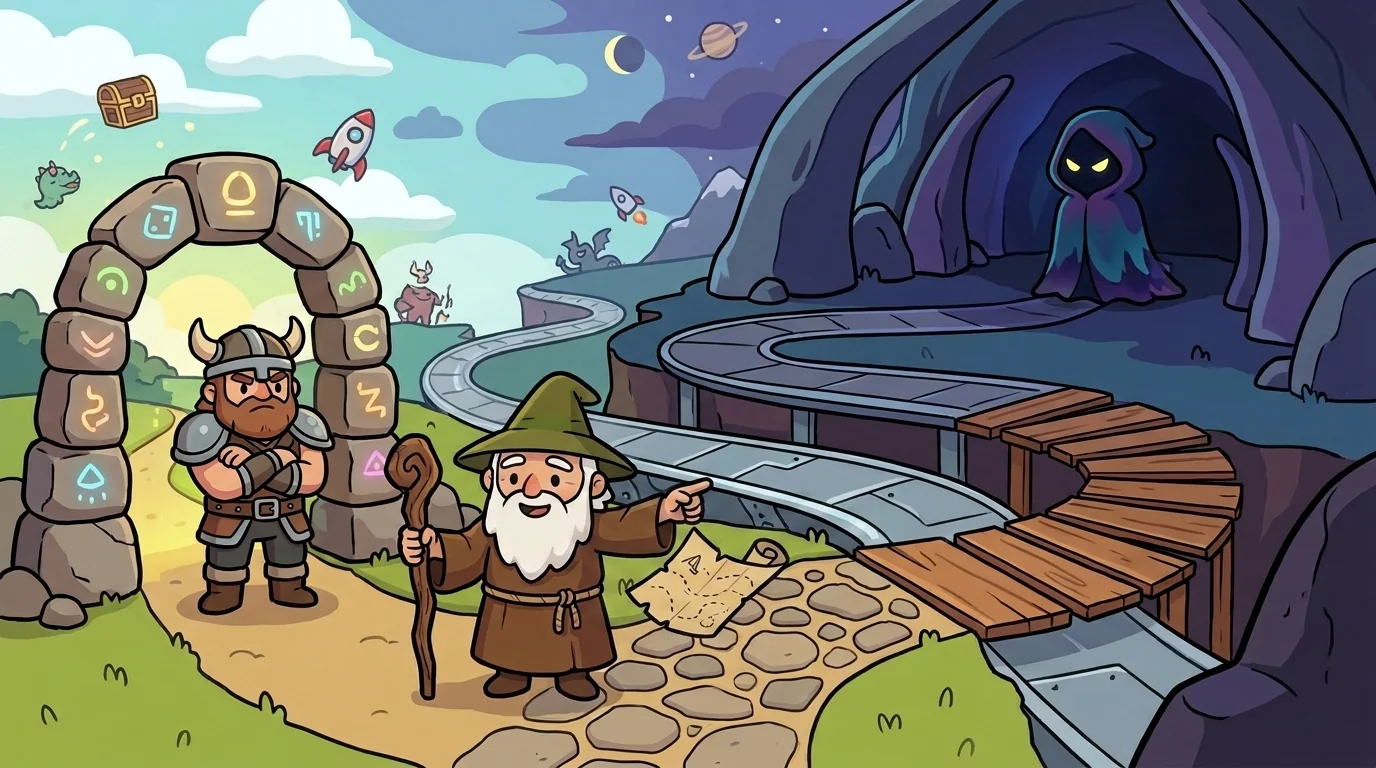
The Wise-Elder went first, because at the start of every journey comes the mentor — the one who knows the road intimately and yet cannot walk it.
"A young hero always comes to me first," said the Wise-Elder, "lost and unready, and I give what I have: the map, the warning, the single wise word, the gift they won't understand until much later." The elder tapped the staff against the stone. "But here is the ache of me, and the entire point of me: I cannot make the journey in their place. I know the road better than they ever will — and I cannot take one step of it for them. The mentor who tries to walk the hero's road for the hero robs them of the only thing that ultimately matters: becoming a person who could have walked it."
The elder's voice gentled. "So I point. I guide. I hand over what wisdom I've gathered. And then I stand back and let them go on alone — because the road only ever changes the one who actually walks it. That is why I always know the way and never reach the end. My whole gift is pointing — and then, harder than any pointing, letting go."
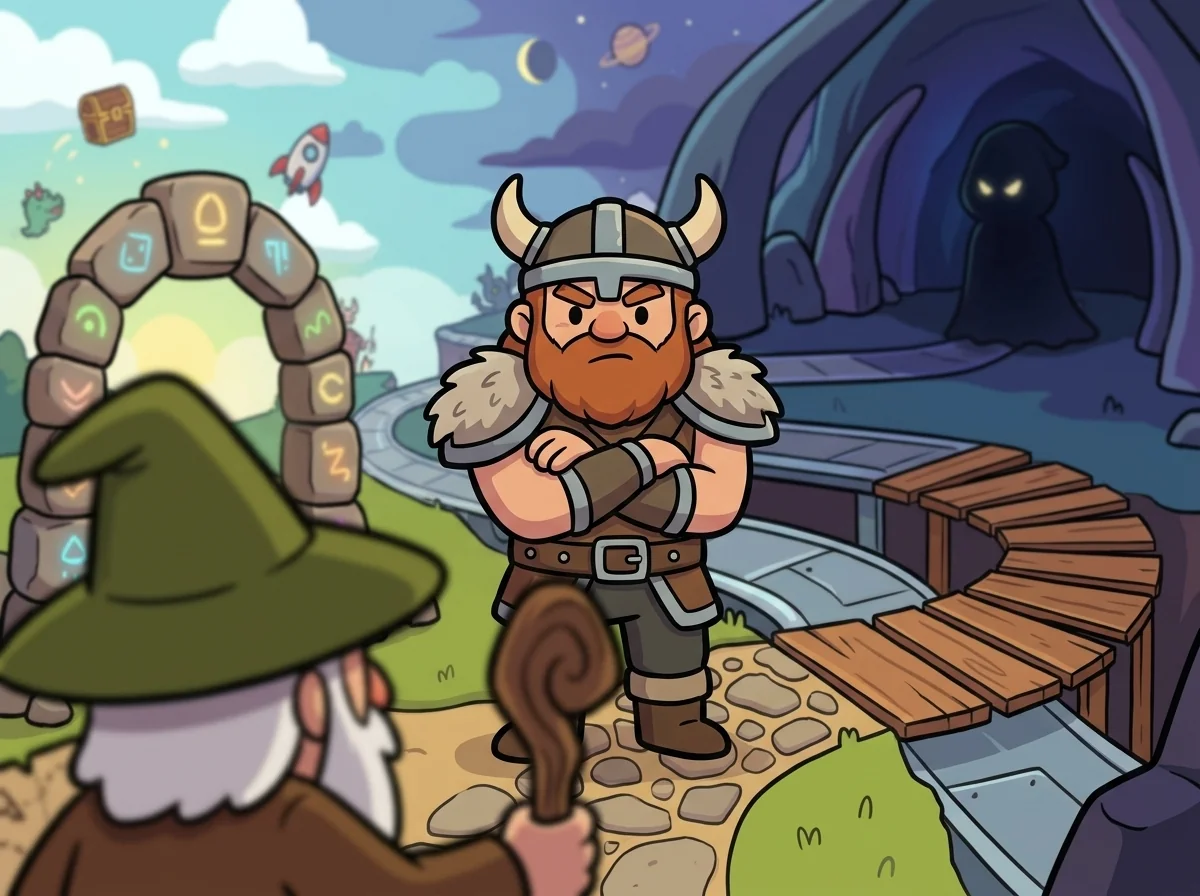
Then the road reached its border, and there stood the Threshold-Guardian — because no one may enter the unknown until something tests whether they are ready for it.
"Beyond me," said the Threshold-Guardian, unmoving, "lies the real journey — the strange country where the hero will actually be changed. And I stand at that door, and I do not simply wave them through." The guardian's arms stayed folded. "I test them. A riddle, a trial, a refusal, a fear they must face merely to begin. And heroes always resent me at first — I am the obstacle, the one saying not yet, not like this, prove it."
The guardian's voice was firm without cruelty. "But I am not here to stop the hero. I am here to ensure they cross as someone ready — because the unknown beyond me devours anyone who wanders in unproven and unprepared. My test is the first thing that turns a mere wisher into a hero; passing me is how they discover they are genuinely capable of the road. I am not the enemy at the door. I am the door's own way of asking, are you certain? Then show me — and a hero who cannot get past me was never ready for what waits past me."
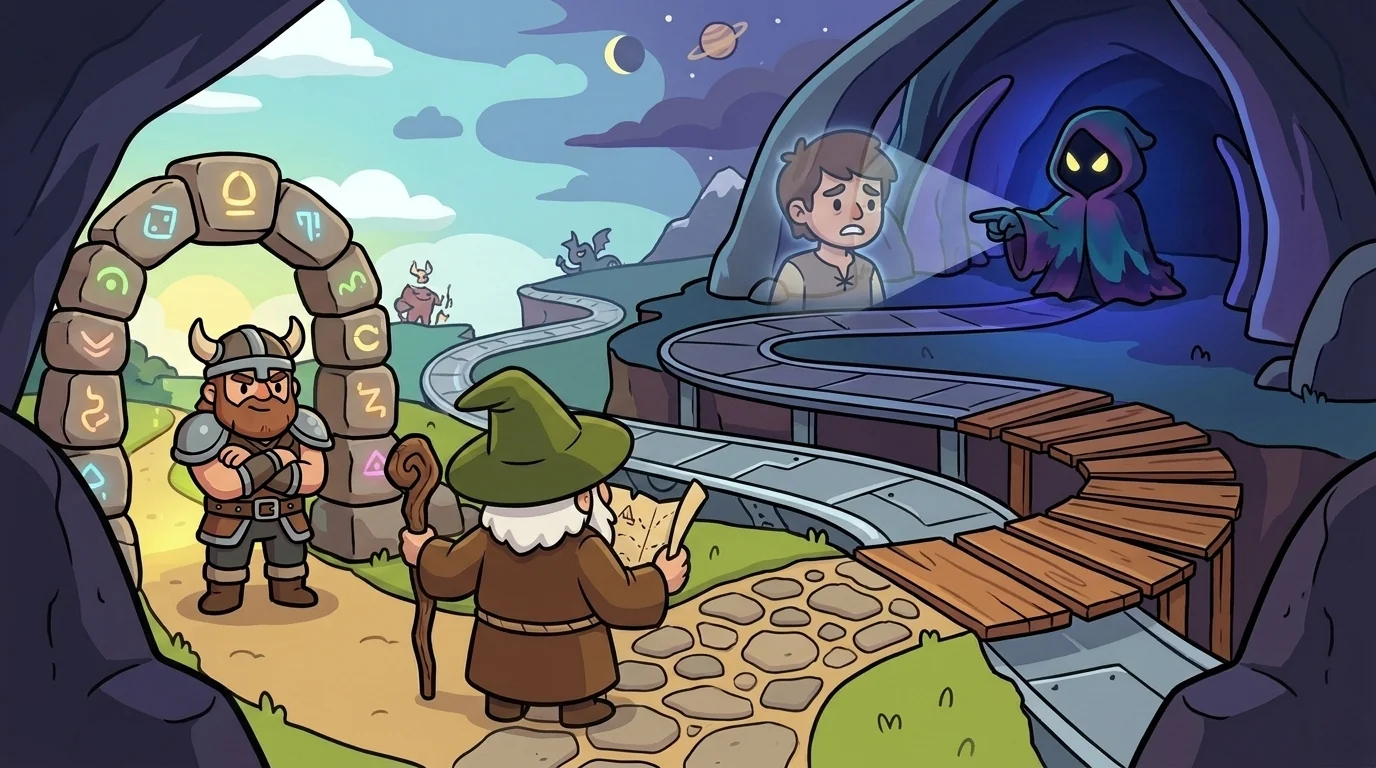
And at the very bottom of the road, in the deepest dark, waited the Shadow — the figure the hero dreads beyond every monster, because the Shadow is themselves.
"They always expect a dragon down here," said the Shadow, quietly. "Something outside them to fight and be done with. But the deepest thing on the road was never out there. It is in here." The Shadow's shape flickered, unbearably familiar. "I am the parts of the hero they would rather not look at — the fear, the anger, the selfishness, the old wound they've been outrunning the entire journey. And the real trial, the one the whole road was quietly leading toward, was never slaying me. It is facing me. Looking straight at the hidden parts of themselves without flinching, and owning every one."
The Shadow's voice softened almost to kindness. "A hero who refuses to look at their own Shadow stays split — forever half-afraid of themselves, forever incomplete. But a hero who turns and faces me, who says yes, that hidden part is me too, becomes whole. That is the true treasure at the bottom of every hero's road. Not gold. Not a crown. The self they finally stopped hiding from."
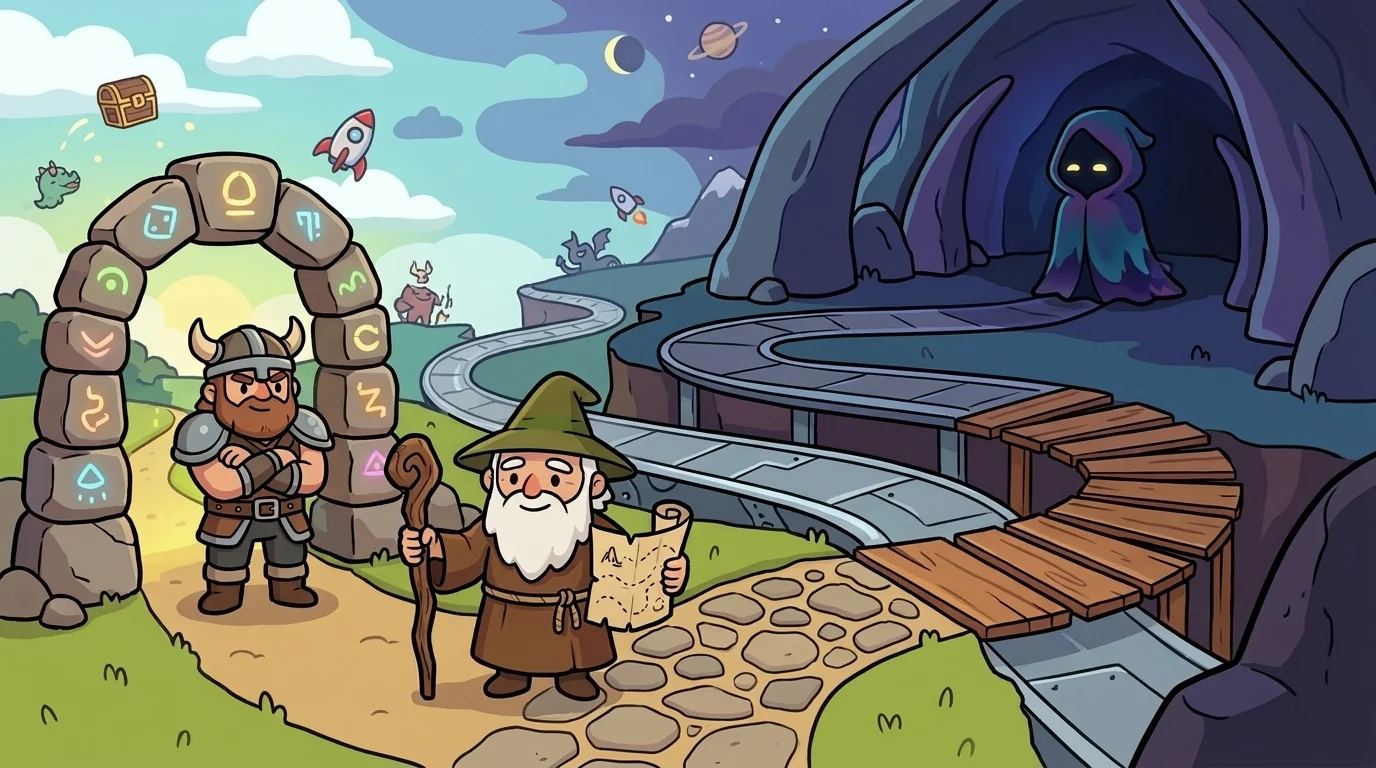
And so the pattern completes, in story after story after story: guided by the elder, tested at the threshold, and made whole by facing the shadow — the hero returns, changed, carrying home what they found.
"Good guiding," said the Threshold-Guardian.
"Good testing," said the Shadow.
"Good facing," said the Wise-Elder.
There is a quiet astonishment in seeing the shape beneath the stories — in realizing that a thousand tales, across every land and every age, run along the very same road, with the very same three figures waiting on it. And the reason the pattern rings so true is that it is a mirror: every one of us carries a wise voice worth heeding, a threshold to prove ourselves at, and a shadow we would rather not face. The hero's road is not confined to the books. It is the shape of becoming — and learning to recognize it out here, in your own life, is like being handed a map to a journey you had already, unknowingly, begun.
The MythForge ensemble
Wise-Elder, Threshold-Guardian and Shadow is part of MythForge's distributed-narrative cast. Each character embodies a different curricular primitive; together they teach the full subject.
-

Trickster
The boundary-crosser who teaches through inversion. Recurs across nearly all traditions (Anansi, Coyote, Loki, Hermes, Maui, Ijapa).
-
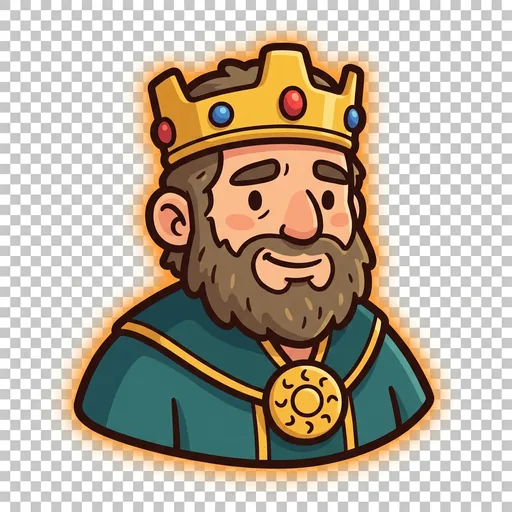
Hero-King
The reluctant ruler called to a journey (Campbell's central figure: Gilgamesh, Odysseus, Arjuna, Beowulf, Cuchulain).
-
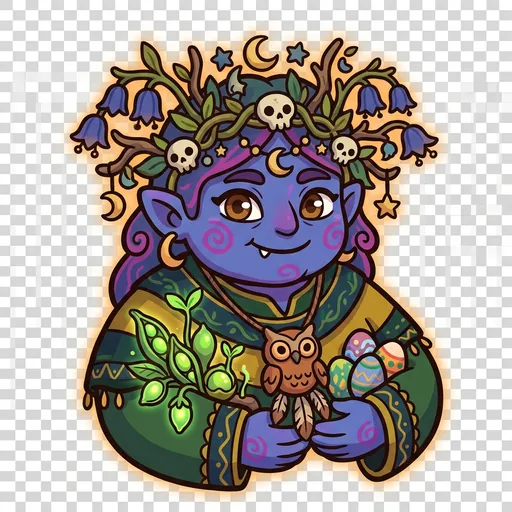
Devouring-Mother
The dark-creator / death-and-renewal force (post-Jungian; surfaces as Kali-aspect / Hel / Coatlicue / Hecate). **High trauma load.**
-
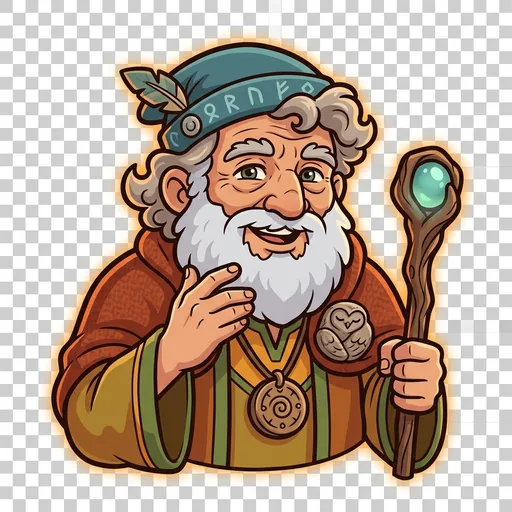
Wise-Elder
The mentor-figure who knows the path but cannot walk it for the hero (Athena, Odin-as-wanderer, Krishna-as-advisor).
-
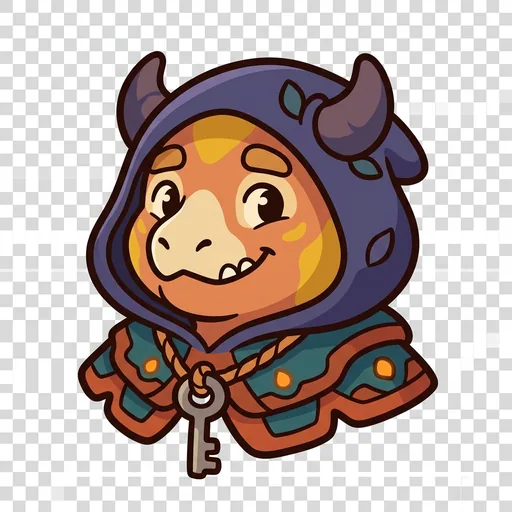
Threshold-Guardian
The figure that tests whether the hero is ready to cross (Sphinx, Cerberus, the dragon at the gate, the riddling stranger).
-
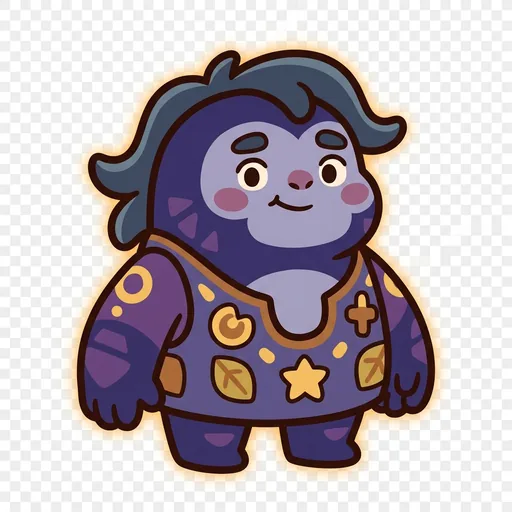
Shadow
The repressed-self / dark-mirror (Jungian core archetype; surfaces as the hero's nemesis-who-is-also-them: Loki/Baldr, Set/Osiris, Cain/Abel framings).
-

Anima/Animus (paired)
The complementary-other-self (Jungian); represented as a pair-character that always appears together, embodying the inner-other-gendered-self pattern that surfaces across many t...
-
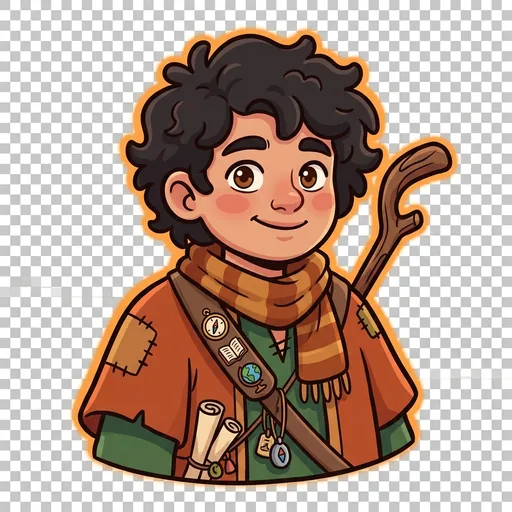
Wanderer
The journeyer-without-fixed-home who carries stories between cultures (Odysseus-after-Ithaca, the wandering Jew, the diaspora-keeper figure).
-
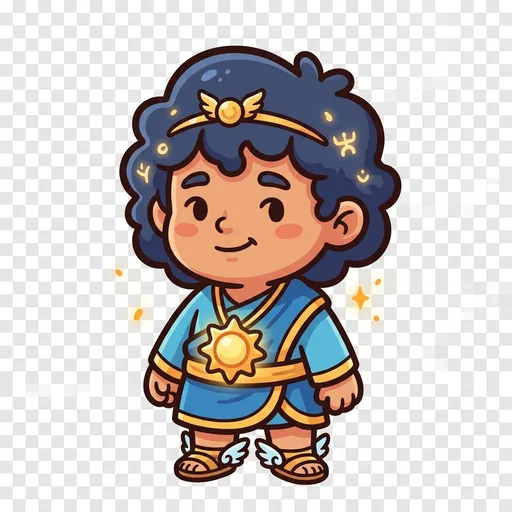
Child-Divinity
The newborn-with-power archetype (infant Krishna, baby Hermes, child Horus, divine-child motif).
-
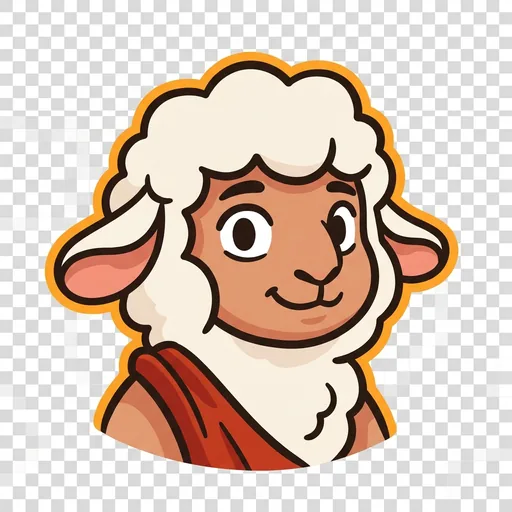
Sacrificial-Lamb
The figure whose loss enables renewal (cross-traditional: dying-and-rising deities, scapegoat figures, voluntary-sacrifice motif).
-
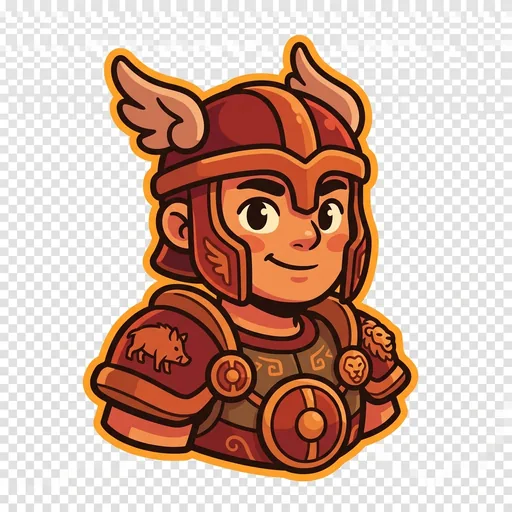
Warrior
The conflict-pattern-bearer (Ares, Tyr, Sekhmet-aspect, the warrior-figure across many traditions).
-
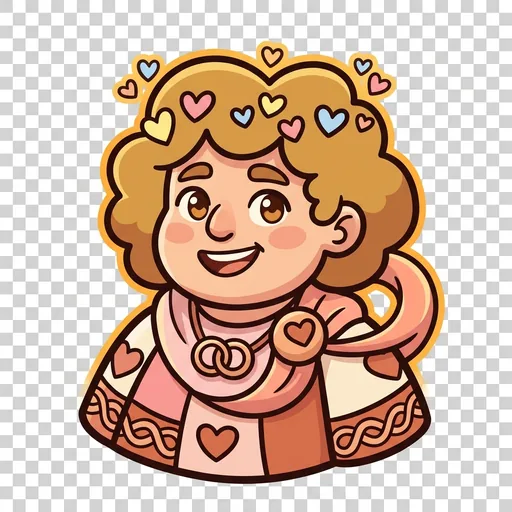
Lover
The relational-bond-bearer (Aphrodite-aspect, the romantic-mythic pair, the bond-that-shapes-the-world archetype).
-

Sovereign
The cosmic-order-keeper archetype (Zeus-aspect, Odin-as-ruler, Ra-as-cosmic-king, Quetzalcoatl-aspect).
-
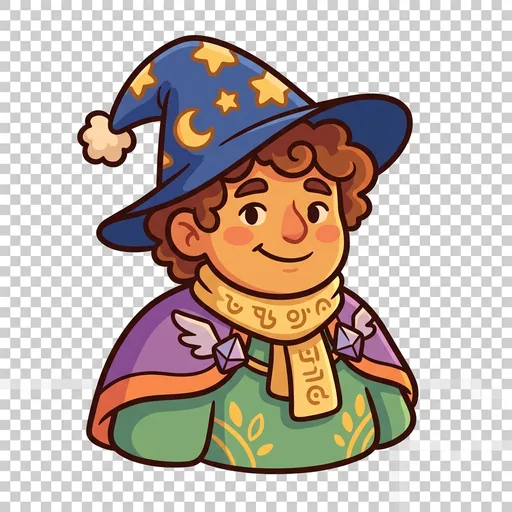
Magician
The transformation-bearer (Hermes-Trismegistus, Tezcatlipoca-aspect, Merlin, the alchemist-figure, the shape-shifter pattern).