Factor Fiona
factors and multiples
Loading audio…
Press play to listen along. The line being read lights up as you go.
Show full transcript
Loading transcript…
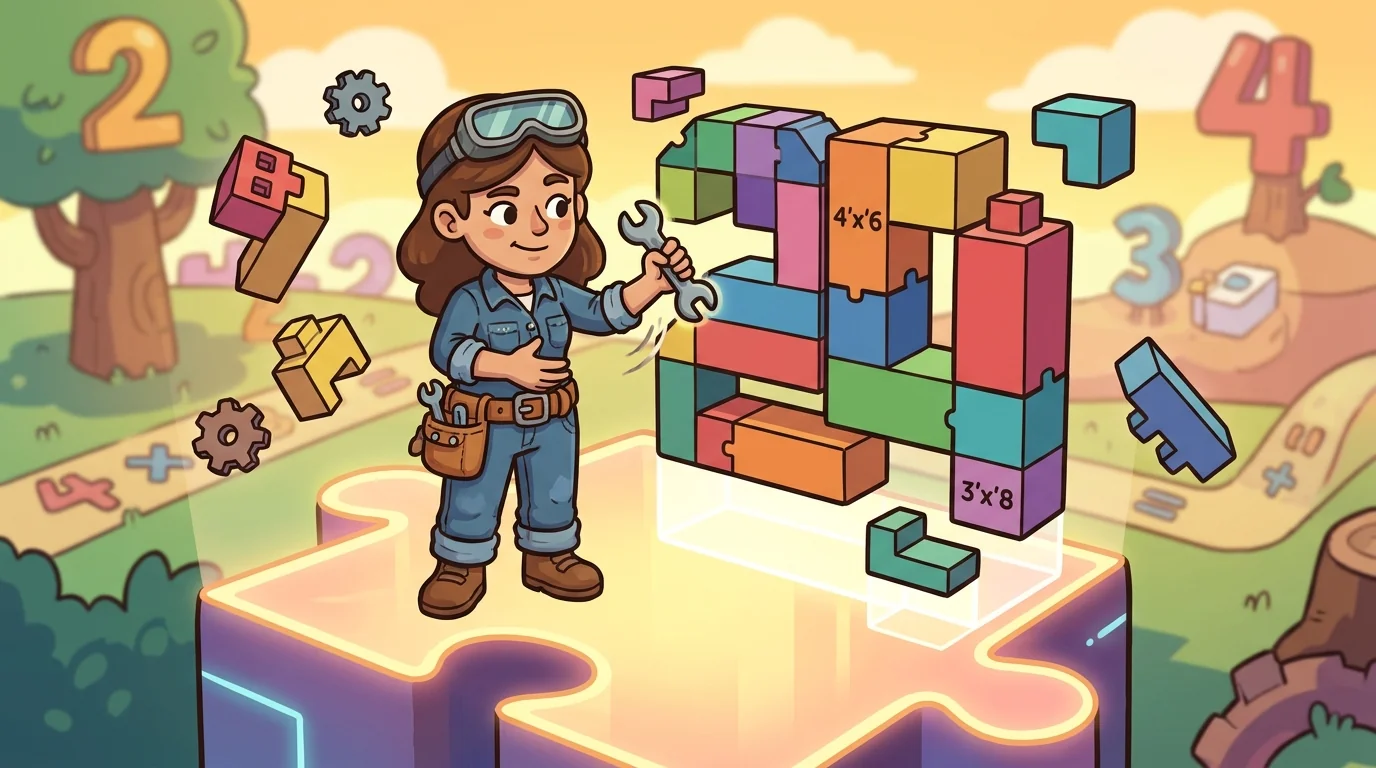
Dev sat in the dim light of his bedroom, staring at the glowing screen of his tablet. The screen displayed a single, stubborn number: 24. It sat in the center of the grid like a grey concrete block, cold and unyielding. The problem asked him to find a way through, but to Dev, twenty-four was just a wall. It was a solid, heavy lump of a number with no handles and no doors. He tapped his pencil against his chin, scowling at the glass.
"You're looking at it like it's a solid brick," a voice said.
Dev jumped, his pencil slipping from his fingers as Factor Fiona appeared beside his digital workspace. She wore a heavy leather tool belt that clinked with brass clips and small, steel wrenches. She didn't look like a cartoon; she looked like someone who spent her afternoons fixing lawnmower engines.
"Isn't it?" Dev muttered, glancing down at his blank scratch paper. "It's just twenty-four, one big number that won't go where I want it to."
Fiona smiled and unclipped a small, silver caliper from her belt. "Only on the outside," she said. "Watch."
She tapped the screen with the tip of her tool, and the grey block of twenty-four shuddered. A thin, glowing seam appeared down the middle, then another, until the block split into six neat columns of four.
"See?" Fiona said, her fingers moving as if she were sliding drawers open. "It's not a lump. It's built. Right now, it's six fours."
She tapped it again, and the columns shifted, sliding into three rows of eight.
"Or eight threes," she continued, her voice quiet and steady. "Or four sixes. Or twelve twos. They are all packed inside there, waiting."
Dev leaned in, the blue light reflecting in his eyes. "They're all in there at the same time?"
"Every single one," Fiona said. "These are its factors—the smaller numbers that multiply together to build the big one. Once you see the seams, you can take the whole thing apart."
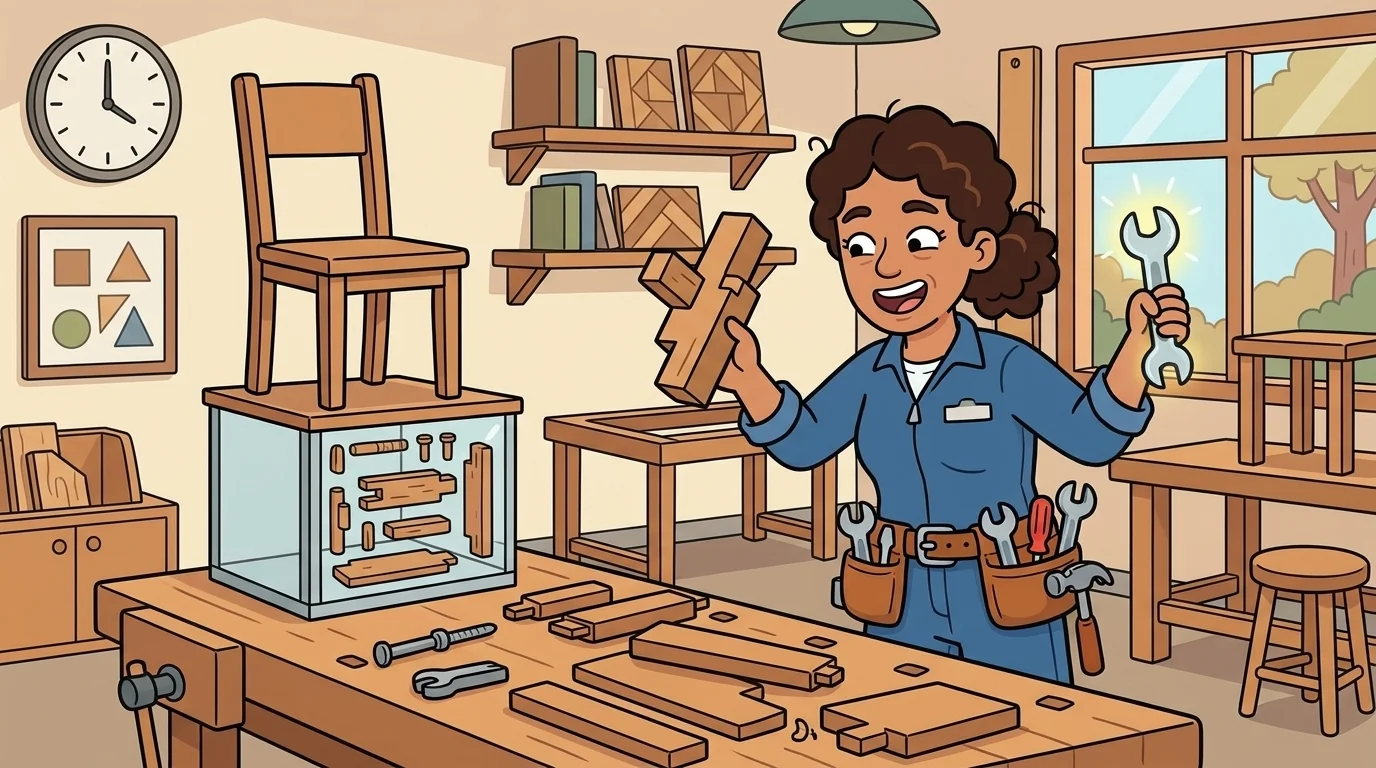
Fiona had learned to see these hidden seams when she was ten years old. Her uncle was a cabinetmaker, and his workshop always smelled of sweet cedar shavings, mineral spirits, and warm wood glue. She used to sit on a three-legged stool in the corner, watching him work.
He would stand before a finished oak dining chair, running his rough hands over the smooth backrest. To Fiona, the chair was just a chair. But her uncle saw something completely different.
"Look here, Fee," he would say, pointing to a seamless corner. "This isn't just one piece of wood. It's a mortise and tenon joint. The peg goes in here, and the pocket holds it tight."
He would tap the joint with a wooden mallet, explaining how the grain of the oak ran.
"Once you build a chair, you can never look at one as just a seat again," he told her, wiping sawdust from his apron. "You see the joints. You see the pegs. And once you know how a thing is put together, you can fix it, or copy it, or change it entirely."
Fiona took that lesson and carried it into her math notebook.
Numbers stopped being flat drawings on a page. Thirty-six wasn't just a symbol anymore. It was a little wooden chest made of six sixes, or nine fours, or three twelves. Each number became a kit of parts. When a difficult multiplication problem landed on her desk, she didn't panic. She simply reached for her mental toolbox, found the seams, and pulled the numbers apart into friendlier pieces.
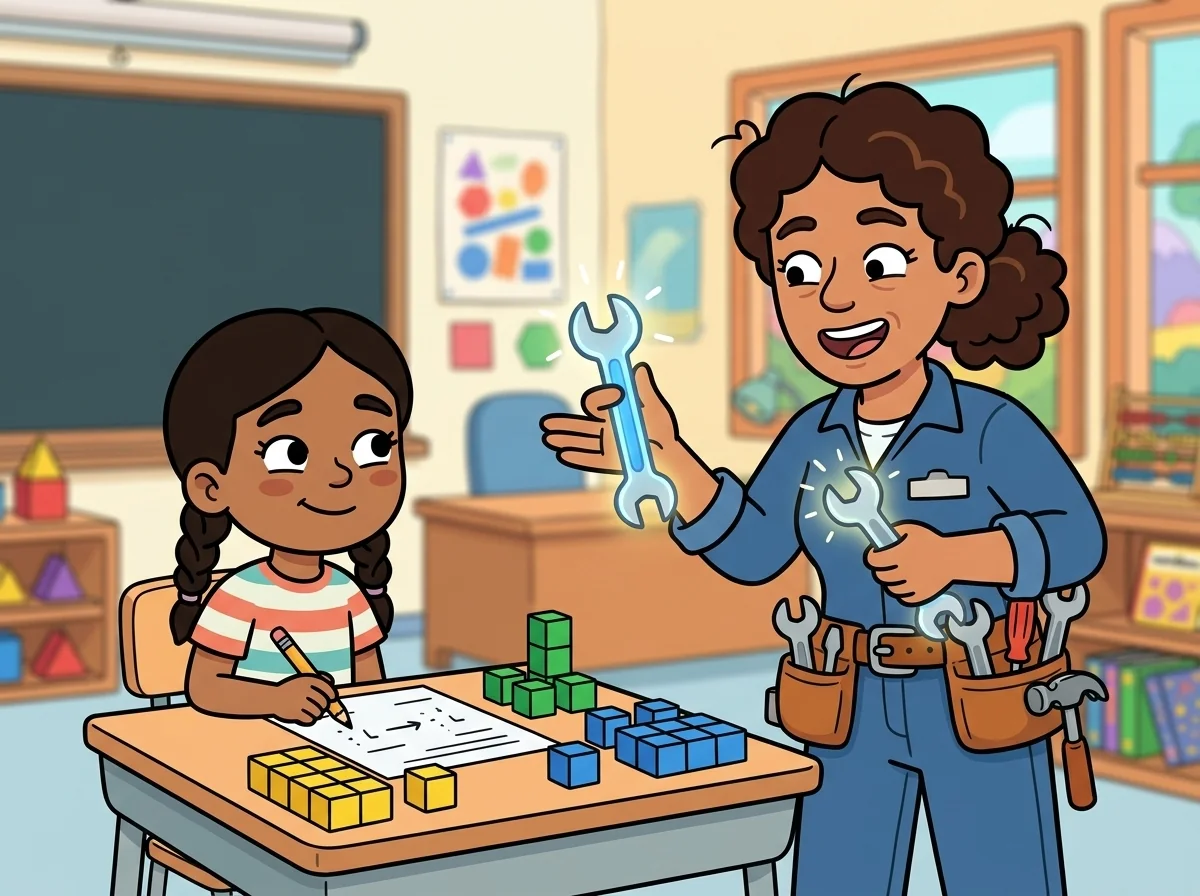
The next afternoon, Fiona found a girl named Sana staring blankly at a long-division problem. Sana was chewing on the cap of her blue pen, her notebook covered in messy eraser smudges. The screen showed a calculation that required her to multiply a large decimal by twenty-four.
"I hate twenty-fours," Sana whispered to her desk. "It's too big. I always mess up the carrying part."
Fiona sat on the edge of the digital margin, swinging her boots. "Then don't use twenty-four. Use its blocks."
Sana looked up, blinking. "What do you mean? The problem says twenty-four."
"Sure, but twenty-four is just a disguise," Fiona said, tapping her leather belt. "What is twenty-four made of?"
"Six times four?" Sana offered.
"Perfect," Fiona said. "Or eight times three. Let's use eight and three. Instead of multiplying by twenty-four all at once, multiply your number by eight first. Then, take that answer and multiply it by three."
Sana frowned, her pen hovering over the paper. "Is that allowed?"
"It's your workshop," Fiona said with a dry shrug. "You own the numbers. You can handle them however you like."
Sana slowly wrote down the first step. She multiplied the decimal by eight, which was surprisingly easy. Then she took the result and multiplied it by three. She stared at the final number, then compared it to the answer key.
"It worked," Sana said, a tiny smile breaking through her frown. "That was actually... simple. It felt like two small steps instead of one giant mountain."
"That is the secret," Fiona said, leaning back. "A hard number is just easy numbers wearing a mask. Take it apart, deal with the pieces one by one, and the scary thing falls apart in your hands."
In the margin of her notebook, Sana wrote a note to herself: Break the big numbers into factors. Do the easy pieces first.
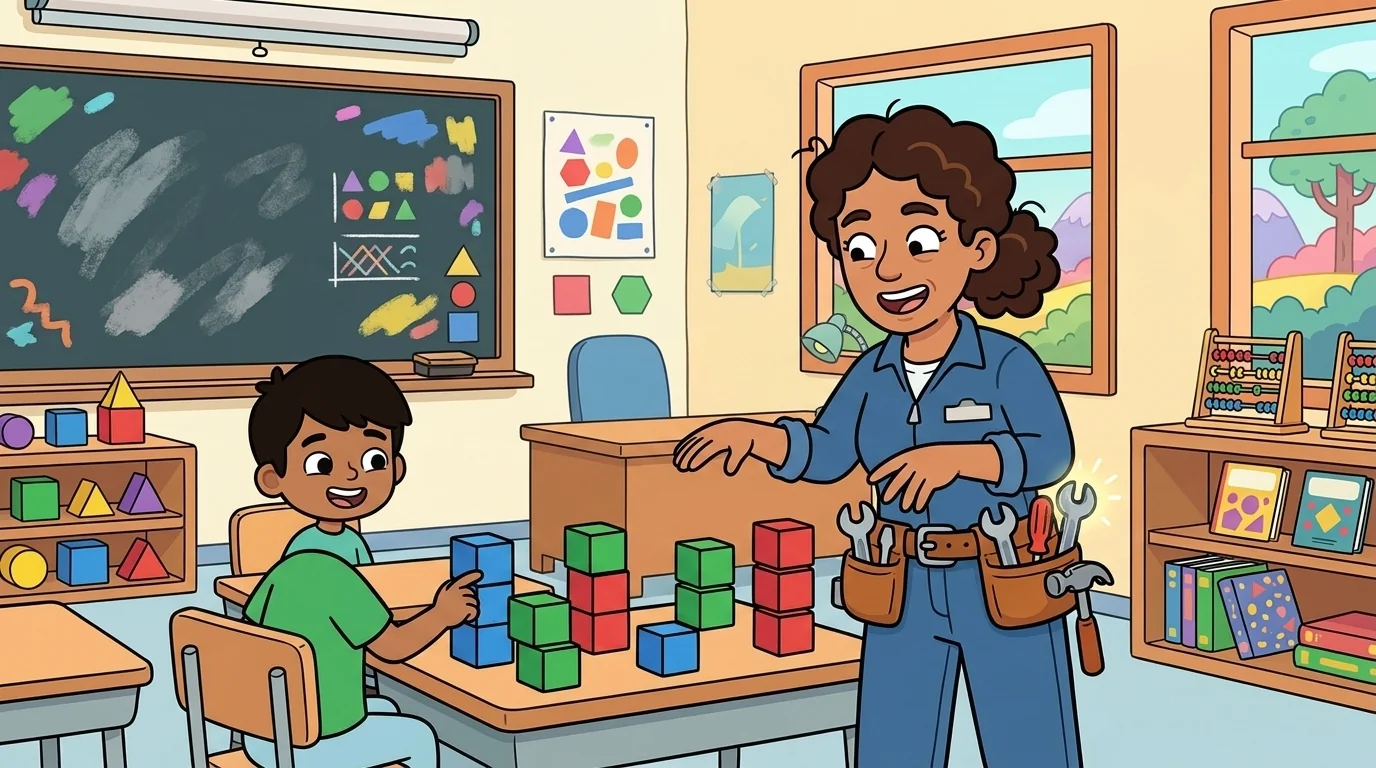
For Fiona, the best part of the job wasn't the correct answers. It was the moment a kid stopped looking at a number with fear.
She spent an hour that Friday with Theo, a boy who used to freeze whenever a three-digit number appeared on his screen. To Theo, the number one hundred and twenty was a fortress wall. He would stare at it, his shoulders rising toward his ears, waiting for the inevitable mistake.
"Walls are only scary because you think you have to climb over them," Fiona told him. She unbuckled a small brass pry bar from her belt and handed it to him across the screen. "But this number isn't solid stone. It's just a stack of blocks. Where are the seams?"
Theo looked at the digital pry bar, then at the number 120. "It ends in a zero. So... ten is in there?"
"Exactly," Fiona said. "Ten is a massive seam. Pop it open."
Theo tapped the screen. The number split into ten and twelve. He let out a breath he seemed to have been holding for ten minutes.
"Now look at twelve," Fiona prompted. "What's inside?"
"Four and three," Theo said quickly. "Or six and two."
"Keep going," Fiona urged. "Take it all the way down."
Within a minute, the giant, terrifying one hundred and twenty was gone. In its place sat a neat row of small, manageable factors: twos, threes, and fives. They looked like clean wooden blocks ready for a building project.
"It's not a wall anymore," Theo said. He touched one of the digital twos, spinning it around. "It's just a kit."
"It was always a kit," Fiona said. "You just had to find the seams."
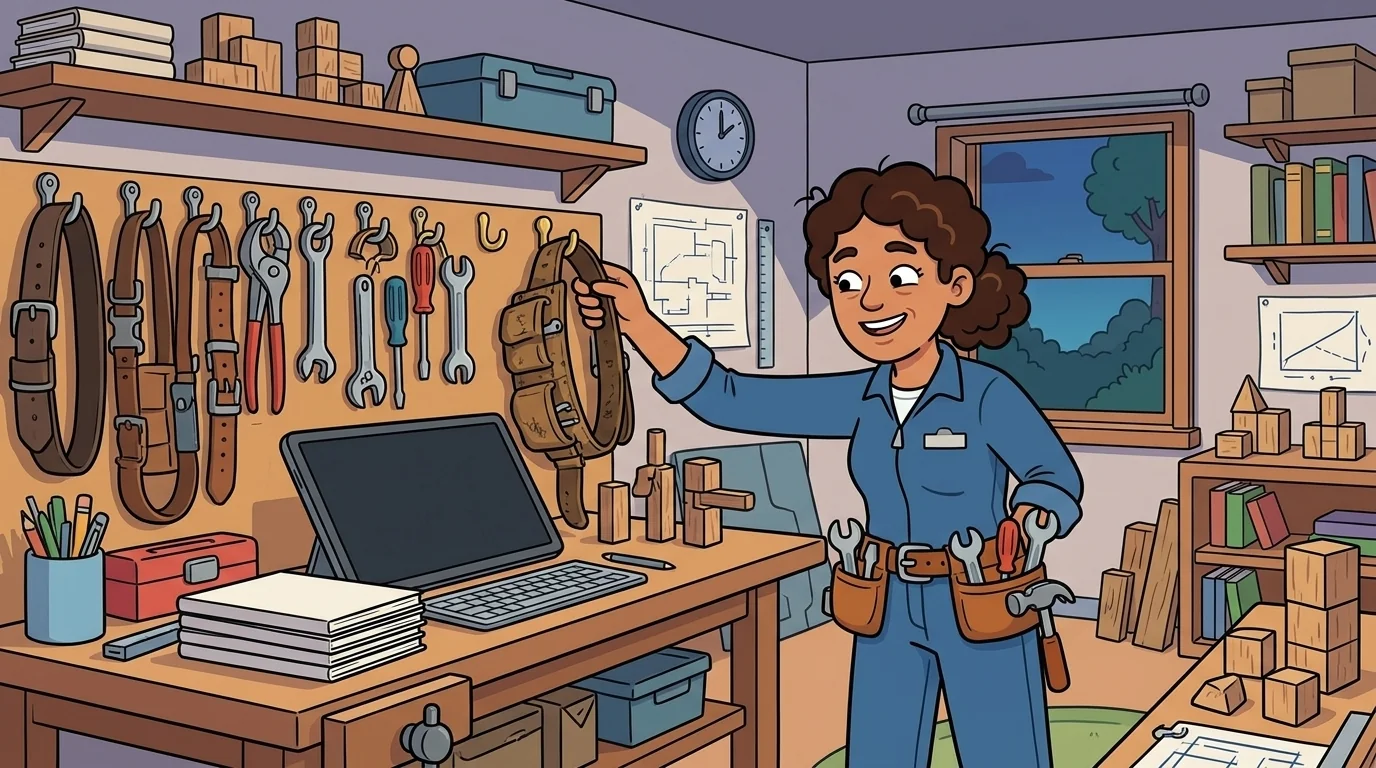
As the sun dipped below the horizon, the servers began to cool. The bright blue light of the digital workspace faded into a soft, quiet amber. Fiona unbuckled her heavy tool belt. She hung it carefully on its brass hook beside her desk, the leather creaking in the quiet room. It was the exact same way her uncle used to hang his belt at the end of a long day in the woodshop.
On the main dashboard, Theo's final message remained active, glowing softly in the twilight.
Numbers aren't walls, the message read. They're kits. I'm the one in charge of the pieces.
Fiona read the words twice. A quiet, steady pride settled in her chest. It was the pride of a builder who had finally taught an apprentice how to see.
She knew that a kid who understood the insides of a number could never be truly intimidated by it. There was a deep confidence in knowing that nothing is truly solid. Once you realize that everything built can be understood, you are no longer a spectator. You are the maker, ready to take the world apart and build it better.
Hear it as an audio drama
A short play starring Factor Fiona, from NumberSense. Different voices, same idea. Listen any time after you read.
Loading audio…
Read the drama script
- Narrator: From Spark and Anvil and Numbersense — this is Factor Fiona, in chapter 1 of the Numbersense cast.
- Narrator: This drama uses an AI-generated voice. Voiced via Gemini 2.5.
- Narrator: Factor Fiona had a tool belt, and she wore it even on the days she wasn't building anything — because you never knew when a number might need taking apart.
- Narrator: She showed up whenever a number was sitting there pretending to be solid. Dev was scowling at a twenty-four.
- Reader: The problem wants me to do something clever with twenty-four. But it's just... twenty-four. One lump. A wall.
- Fiona: It only looks solid. Watch. Twenty-four isn't a lump. It's built. It's six fours, fitted together. Or eight threes. Or four sixes. Or two twelves. All of those are hiding inside it.
- Reader: Twenty-four is all of those?
- Fiona: All at once. Those are its building blocks — its factors. And once you can see the blocks, you can take the number apart and put it back together whatever way the problem needs.
- Narrator: Fiona learned to see the blocks from her uncle, who built furniture.
- Fiona: He'd look at a finished chair — a solid, whole thing — and somehow see, underneath, every joint and peg and plank that made it. He told me: once you've built a chair, you can never look at one as just a chair again. Anything you can see how it's built, you can fix, or copy, or change.
- Narrator: Young Fiona started doing that with numbers.
- Fiona: Let me show you why it matters. Say you're stuck on thirty-five times four. Break the thirty-five — no wait, break the four. Four is two times two. So thirty-five times four is thirty-five, doubled, and doubled again. Seventy. Then a hundred and forty.
- Reader: You turned one hard step into two easy ones.
- Fiona: Because I could see the parts. A number that shares a building block with another number — those two will always play nicely together.
- Reader: So twenty-four and thirty-six both have... a twelve inside them.
- Fiona: Now you're seeing the seams. That shared twelve is why they fit. The whole number world stops being a row of solid walls and becomes a workshop full of parts you can mix and match.
- Reader: So I never have to treat a number as one scary thing.
- Fiona: Never. Pull it apart into what it's made of, and pick the pieces that make your job easy.
- Narrator: Factors and multiples. Every number is built from smaller numbers multiplied together — and seeing those building blocks makes hard arithmetic come apart in your hands.
- Narrator: You've been listening to a Spark and Anvil chapter, written by the Spark and Anvil writing team for ages 9 to 14.
- Narrator: Apps stay free forever.
- Narrator: Curriculum aligned to Common Core and Next Generation Science Standards.
- Narrator: Released under Creative Commons BY-NC-SA 4.0 for educational reuse. Visit Spark and Anvil for the full transcript.
The NumberSense ensemble
Factor Fiona is one of the friends in NumberSense. Each friend shows you one idea by how they act; meet them all and you have the whole subject.
-

Estimator Ernie
Confidently approximate; the first-guess advocate
-

Pivot Pia
Deceptively casual question-flipper; reframes the prompt
-

Ratio Rio
Per-something specialist; rate thinker
-

Splitter Sasha
Make-10 and place-value specialist; benchmark builder
-

Nudge Nora
Compensation — nudge a number to a friendly round one, do the easy math, then give back exactly what you borrowed.
-

Doubler Della
Doubling and halving — to multiply, double one number and halve the other; the product stays the same while one side gets friendlier.
-
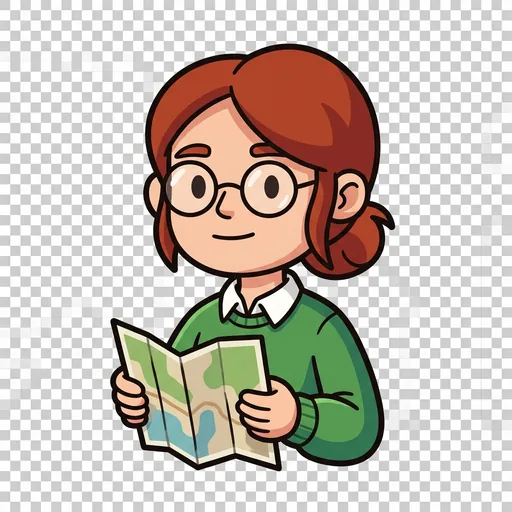
Landmark Lena
Benchmark numbers — judge any number by how it sits next to friendly landmarks like 0, a half, 10, 50, and 100.
-
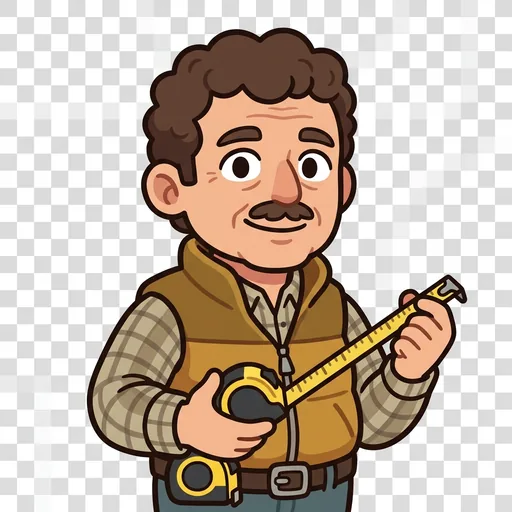
Gap Gus
Constant difference — subtraction is the gap between two numbers; slide both the same amount and the gap stays the same, so you can land on friendly numbers.
-

Bridge Bao
Derived facts — reach a fact you don't know by taking one short step out from a fact you do.