
Gap Gus
constant difference — subtraction is the gap between two numbers, and if you slide both numbers the same amount, the gap never changes, so you can shift them both to land on friendly numbers
Loading audio…
Press play to listen along. The line being read lights up as you go.
Show full transcript
Loading transcript…
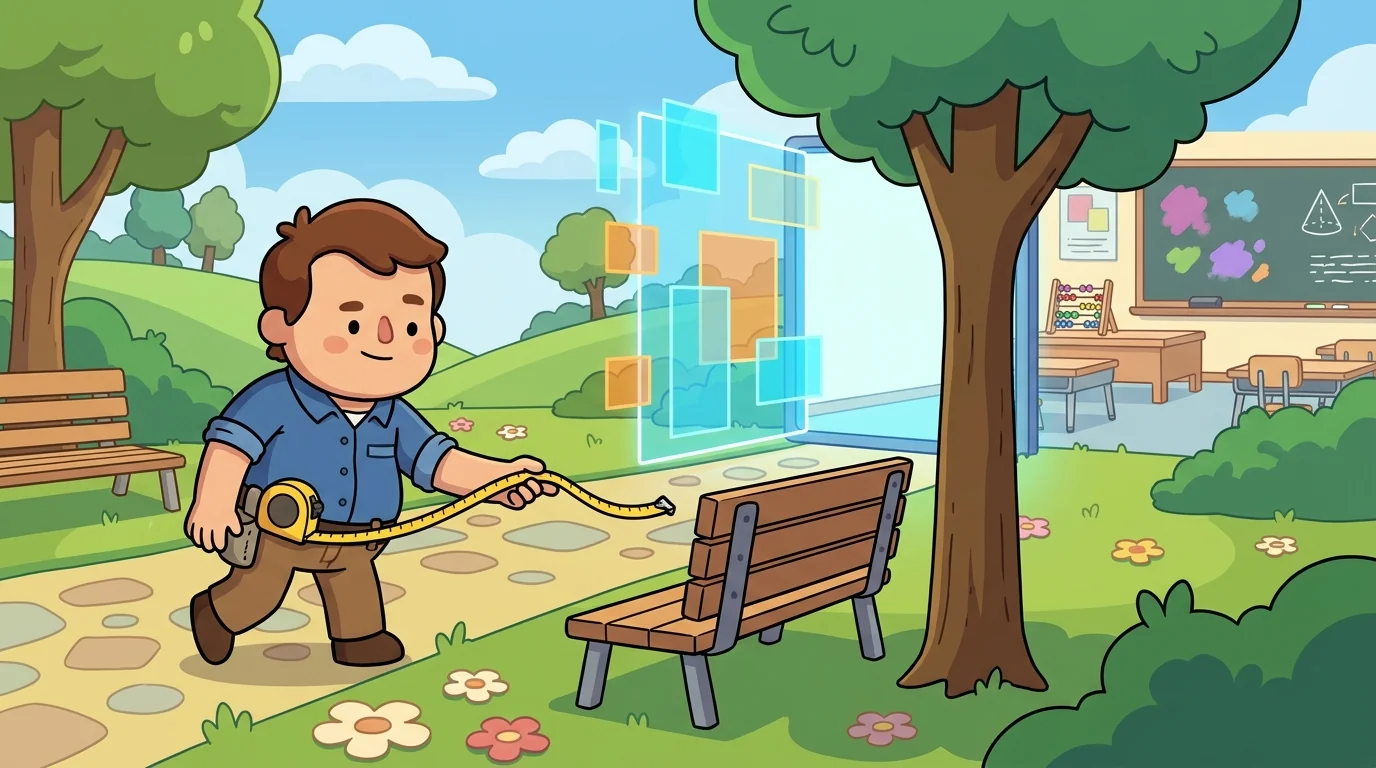
Gap Gus kept a heavy steel tape measure clipped to his leather belt, and he saw the whole world as distances between things. He did not care that the oak tree stood near the rusty bicycle; he only cared about the eleven-foot gap of empty air between them. The exact spots on the map did not interest him at all, because the distance was the only thing that truly mattered.
He ambled onto the NumberSense screen whenever a difficult subtraction problem was making a kid's head hurt.
Aisha sat at the wooden desk, her pencil digging so hard into the paper that the lead threatened to snap. On the screen, the numbers 83 − 47 seemed to mock her from the glowing white background.
“I hate borrowing,” she groaned, rubbing her forehead with the dusty back of her hand. “You cross out the eight, make it a seven, and then you have to carry the one.” She sighed. “By the time I finish all those steps, I usually forget what I was trying to solve.”
“Then stop subtracting,” Gus said easily, his boots clicking on the floorboards as he walked over. He unclipped his tape measure with a sharp metallic snap that made her look up from her paper. “Or rather, stop thinking of subtraction as taking things away, and start thinking of it as a gap.”
He pulled the silver tape out, letting it hiss softly through his calloused fingers. “How far is it from forty-seven up to eighty-three?”
Aisha stared at the yellow tape, her eyebrows knitting together in a tight frown. “That still sounds like a lot of counting,” she said, tapping her eraser against her chin.
“Only if we leave the numbers where they are,” Gus replied with a slow, reassuring smile. “Forty-seven is an awkward number, but it sits only three steps away from fifty. So, let’s push forty-seven up by three to make it fifty. But to keep the gap exactly the same, we must push eighty-three up by three, too.” He slid his thumb along the tape, showing her the movement. “Now we have eighty-six minus fifty.”
Aisha blinked, her pencil hovering over the paper as she calculated the new problem in her head. “Eighty-six minus fifty is just... thirty-six,” she whispered, her shoulders dropping in relief. “No borrowing at all.”
“No borrowing,” Gus agreed, letting the tape snap back into its metal case with a satisfying clack. “Fifty is a friendly number, so we just slid the whole gap over to sit next to it. The distance never changed, only the place where the numbers were standing.”
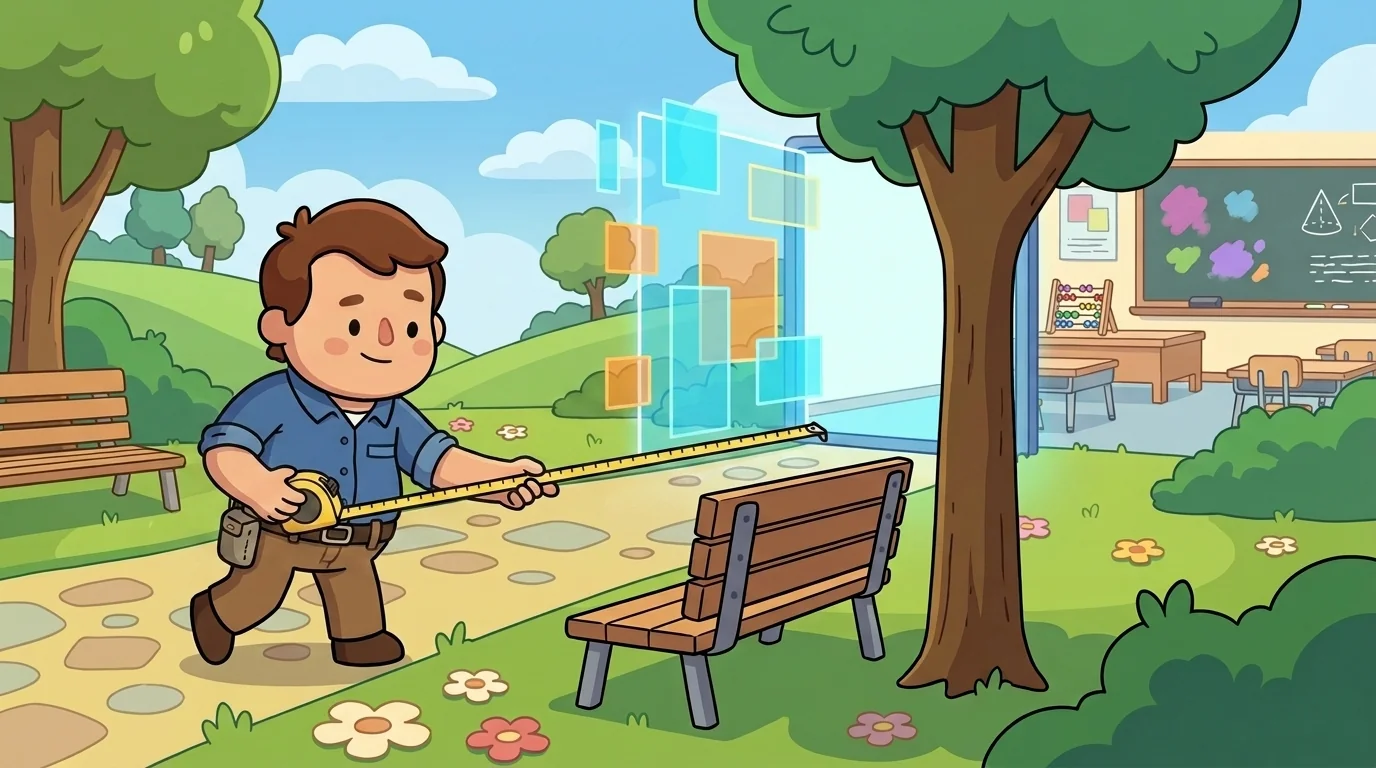
Gus had learned to think in gaps from his grandmother, who worked as a land surveyor in the valley. She spent her days measuring the earth, marking where one fence should go relative to another. On hot summer afternoons, Gus would carry her heavy brass tripod through the dry, waist-high grass.
She taught him that when you measure a distance, the starting point does not actually matter. If you slide your whole ruler three steps to the left, the object remains exactly as long as it was. This simple trick of keeping the gap identical while sliding the points is called constant difference.
“Look through the lens,” she told him once, pointing toward a pair of wooden stakes in the dirt. “The distance between those stakes belongs to them, not to the dirt underneath. If we move both stakes ten yards up the hill, the space between them does not shrink or grow. The gap rides along with them, completely unchanged.”
Gus carried that lesson straight into his schoolwork, realizing that subtraction was just a gap between two numbers. A subtraction problem did not care where on the number line it sat. If one of the numbers was awkward, he could slide both of them in the same direction. He would slide them until the difficult number landed on a friendly, round ten. The actual answer, which was just the gap, stayed exactly the same the entire time.
To keep himself grounded, he started carrying a steel tape measure everywhere, just like his grandmother.
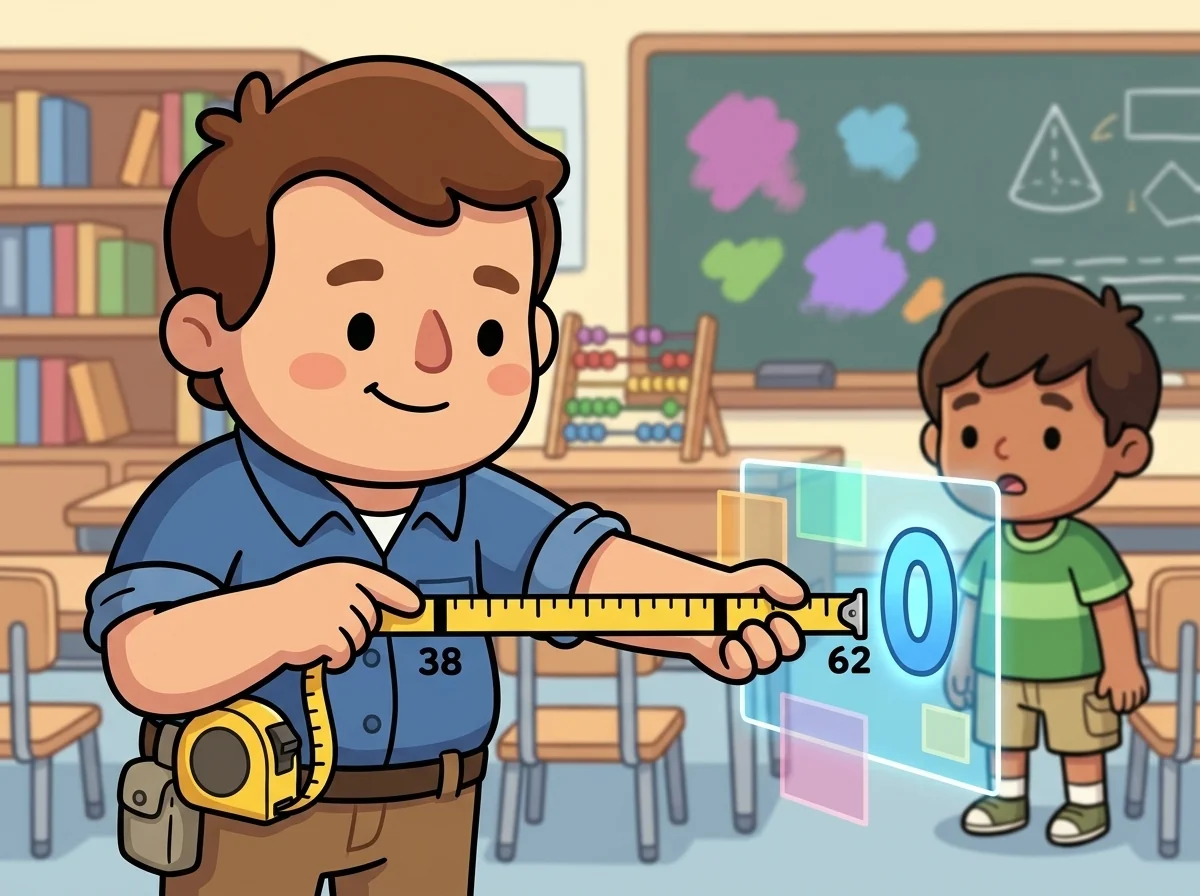
The slide worked in either direction, as Gus showed the kids during a quiet study hour the next afternoon.
A boy named Marcus was staring at his math paper, chewing thoughtfully on the yellow plastic of his mechanical pencil. His problem was 62 − 38, and his page was already messy with dark eraser smudges.
“Thirty-eight is awfully close to forty,” Gus said, leaning his shoulder against the edge of the wooden desk. “It only needs two more steps to become a friendly number. So let’s push both of our numbers up by two to make things easier.”
Marcus squinted at his paper, his pencil pausing mid-air above the smudged page. “If I change thirty-eight to forty, then sixty-two has to become sixty-four, right?”
“Exactly,” Gus said, pulling out his tape measure to show the two points sliding along the metal scale. “Now your problem is sixty-four minus forty, which is much easier to calculate in your head.”
Marcus scribbled the new numbers in the margin, his pencil moving much faster than before. “Twenty-four,” he said, but then he paused and looked up with a puzzled expression. “But if I changed both of the numbers, how is the answer still correct?”
“Because you did not change the actual gap,” Gus explained, tapping the silver tape with his finger. “You picked up the whole distance and set it down two steps further along the line. The two numbers traveled together, keeping the exact same space between them the entire time. The answer was never about where they stood on the ruler. It was only about how far apart they were from each other.”
Marcus nodded slowly, the tension leaving his jaw as he wrote a note in the margin. He wrote: Subtraction is just the gap. Slide both numbers the same way, and the gap stays.
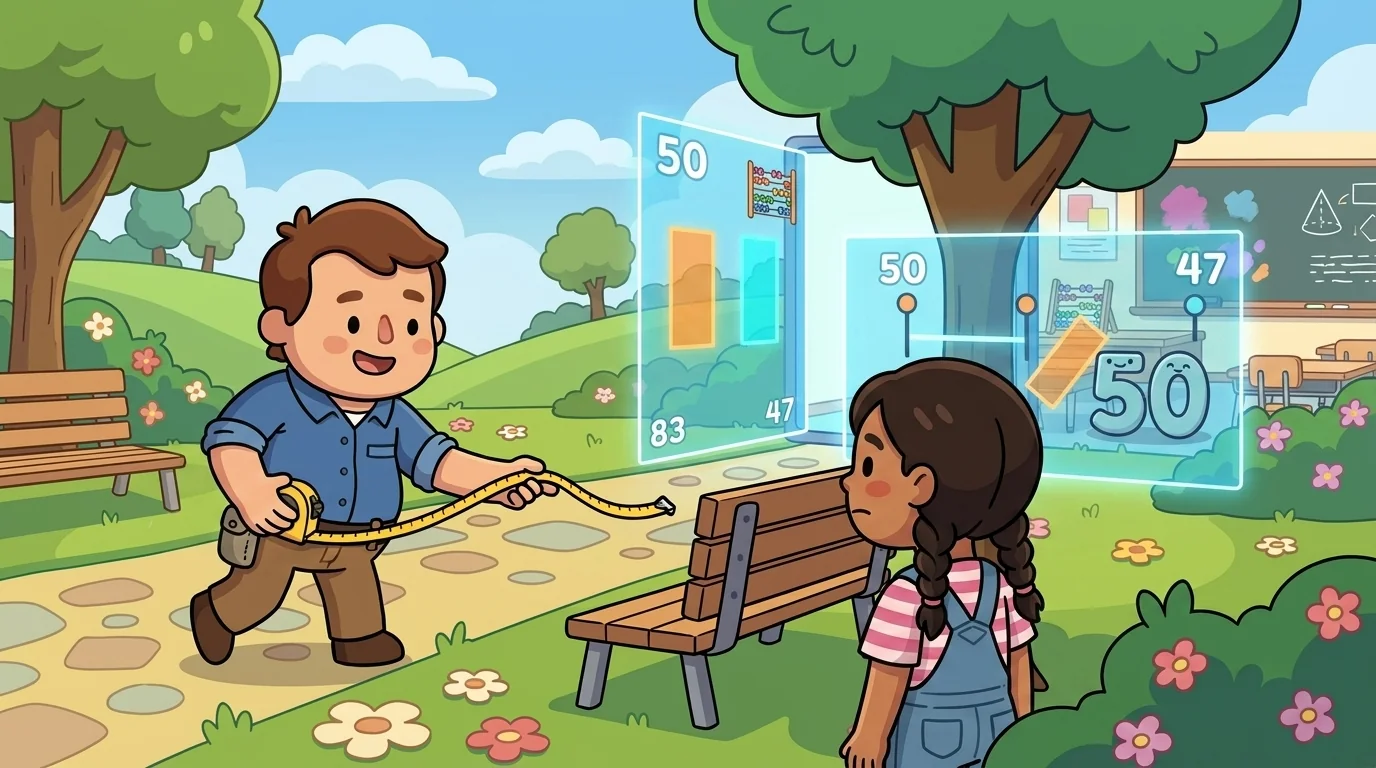
What Gus wanted most was for kids to stop fearing the difficult subtraction problems on their weekly tests.
“Borrowing and carrying is not a crime,” he told a girl named Lin during a quiet moment after class. Lin always tensed her shoulders and held her breath whenever she saw a minus sign on the page. “It works perfectly fine, but it makes a lot of people nervous, and anxiety is no way to study math.”
He patted the heavy metal case of his tape measure with a friendly grin. “So let’s take a different road where we do not have to break any numbers apart. We will just slide the whole gap until it rests on a friendly, round number. You are not borrowing from anyone; you are just walking the same distance to an easier spot.”
Lin took a slow breath and looked at her problem, which was 91 − 58. Fifty-eight was only two steps away from sixty, so she decided to try his sliding method. She added two to fifty-eight, and then she carefully added two to ninety-one as well. Her new problem was ninety-three minus sixty, which did not require any frustrating borrowing.
“Thirty-three,” she said, her voice quiet but filled with a sudden, surprising sense of confidence. She looked up at Gus, a relieved smile finally breaking through her usual worry. “It really is the same gap, just moved to a place where I can stand comfortably.”
“Exactly,” Gus said, nodding his approval as he clipped the tape back to his belt. “The same distance, just on friendlier ground.”
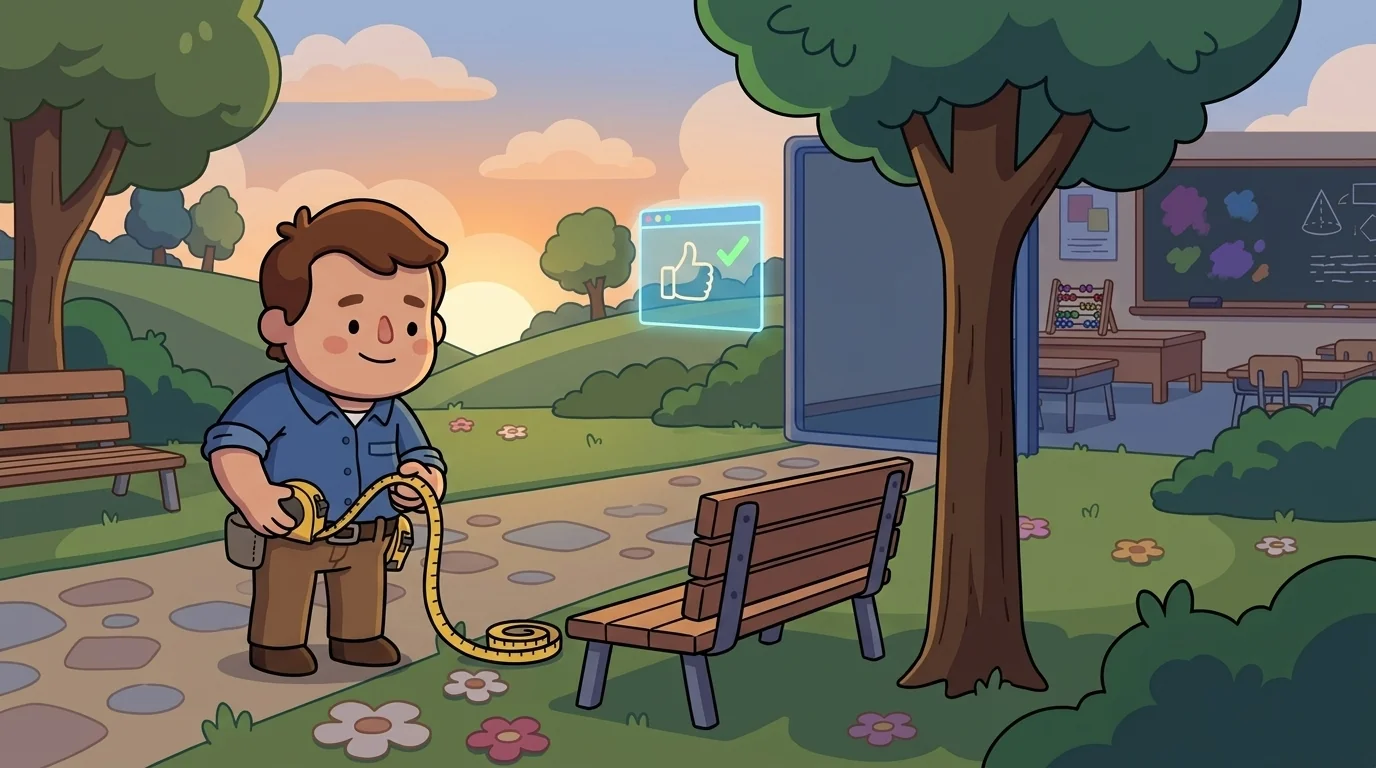
That evening, after the classroom screen dimmed and the school grew quiet, Gus reeled in his tape measure. He clipped it back onto his leather belt, just as his grandmother used to do after surveying.
On the monitor, a final message from Lin glowed softly in the darkened room. It read: I slid the gap today on my homework, and I did not feel nervous at all.
Gus read the words twice, feeling a warm, easygoing satisfaction settle over him. That was the real prize he hoped a kid would carry away from his lessons. He did not just want them to find a single correct answer on a worksheet. He wanted them to feel the calm that comes from understanding distances. Two numbers can pick themselves up and move together in the same direction. The bond between them—the gap they share—rides along with them, completely unchanged. There was something deeply steadying about knowing you could always move to easier ground. You could find a better place to stand without losing a single thing that mattered.
The NumberSense ensemble
Gap Gus is part of NumberSense's distributed-narrative cast. Each character embodies a different curricular primitive; together they teach the full subject.
-

Estimator Ernie
Confidently approximate; the first-guess advocate
-

Pivot Pia
Deceptively casual question-flipper; reframes the prompt
-
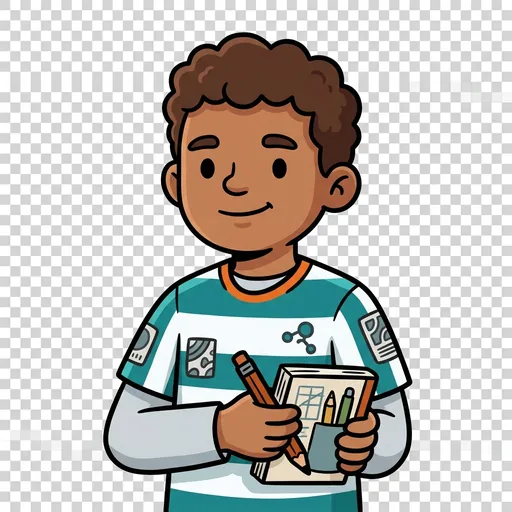
Ratio Rio
Per-something specialist; rate thinker
-

Splitter Sasha
Make-10 and place-value specialist; benchmark builder
-

Nudge Nora
Compensation — nudge a number to a friendly round one, do the easy math, then give back exactly what you borrowed.
-

Doubler Della
Doubling and halving — to multiply, double one number and halve the other; the product stays the same while one side gets friendlier.
-

Landmark Lena
Benchmark numbers — judge any number by how it sits next to friendly landmarks like 0, a half, 10, 50, and 100.
-
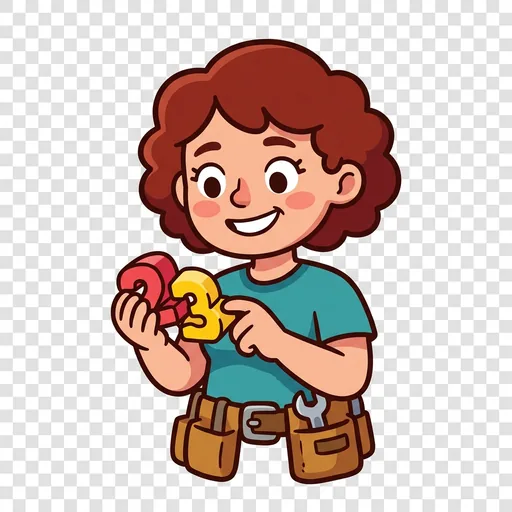
Factor Fiona
Factors and multiples — every number is built from smaller numbers multiplied together, and seeing the building blocks makes hard arithmetic come apart.
-

Bridge Bao
Derived facts — reach a fact you don't know by taking one short step out from a fact you do.