Speck and Banner
READ FROM FAR AWAY
A story read by Speck and Banner
Loading audio…
Press play to listen along. The line being read lights up as you go.
Show full transcript
Loading transcript…

Two friends stood at opposite ends of a scale — one so small it could barely be seen, one so bold it could be read across a room — and between the two of them lay the whole secret of making a pixel sprite that actually works.
Speck was a single pixel. One tiny square. That was all.

Banner was a silhouette — a bold black shape, no detail, just an outline you could recognize from across the room.
"I'm the smallest thing there is," said Speck, a single square glowing. "One pixel. Easy to think I don't matter."
"And I'm the whole shape, from far away," said Banner, a bold recognizable outline. "Easy to think I'm too simple to matter. We're both wrong to doubt ourselves. Watch — you need us both."

Speck went first — one single pixel — because everything, absolutely everything in the whole art form, is built from these.
"Look at me," said Speck. "One pixel. One little colored square. It seems like nothing — how could one matter?" Speck sat there, tiny. "But here's the humbling, wonderful truth: every sprite you've ever loved, every character, every sword and star and explosion, is made entirely of single pixels like me. There's nothing else. No brushstrokes, no curves — just a grid, filled one square at a time. The grandest sprite is just me, repeated, placed with care." Speck glowed. "And that means every single one of us counts. In a big painting, one stray dot vanishes. But on a small sprite, moving one pixel — one! — can change a smile to a frown, a glance to a glare, a good sprite to a broken one. When you work this small, there are no unimportant pieces. Every atom is a decision. That's the discipline of me: caring about one square like it matters — because at this size, it does."
Then Banner pulled all the way back to the silhouette — because for all that each pixel matters up close, a sprite lives or dies by whether its whole shape reads from far away.

"Now step way back," said Banner, "and squint until all the detail disappears and only my outline is left. The silhouette. Can you still tell what it is? A knight? A dragon? A little running cat?" Banner held up a bold, detail-free shape. "That's the test that comes first — before a single interior pixel, before any shading or color. Because here's the hard truth: if the silhouette doesn't read — if you can't tell what it is from the outline alone — then no amount of gorgeous detail up close will save it. In a game, a sprite is often small and moving fast; the player mostly sees the shape, not the fine details." Banner turned the bold outline. "So the pros build the silhouette first: make sure the shape is clear, distinctive, readable from across the room — a pose you'd know in an instant just from its outline. Then they fill in Speck's careful pixels inside. Shape first, detail second. Because a sprite you can't recognize from far away isn't finished, no matter how pretty it is up close."
And there was the whole art, held between the two of them: the single pixel that must be placed with care because at this size every atom counts — and the silhouette that must read from across the room because the whole shape matters more than any detail. Small and whole, at once. A sprite that honors both — every pixel deliberate, every silhouette clear — is a sprite that truly works.
"You need my whole shape," said Banner, "to be worth the care you spend."

"And you need my careful pixels," said Speck, "to fill the shape you make."
"Good atom," said Banner.
"Good silhouette," said Speck.
There is a lovely double lesson tucked into these two — one you can carry far past pixel art. From Speck: that when you work small enough, every tiny piece matters, and caring about a single square is not fussiness but craft. And from Banner: that the big-picture shape has to work first, that all the fine detail in the world can't rescue something you can't recognize from far away. Small and whole at once — sweat the single pixel and nail the overall silhouette. Hold both, and flat little squares become sprites full of life and character. And there's a real, grounded satisfaction in that balance: the tiny and the whole, both cared for, adding up to something that reads true from an inch away and across the room.
Hear it as an audio drama
A short play starring Speck and Banner, from PixelForge. Different voices, same idea. Listen any time after you read.
Loading audio…
Read the drama script
- Narrator: From Spark and Anvil and PixelForge — this is Speck, in chapter 1 of the PixelForge cast.
- Narrator: This drama uses an AI-generated voice. Voiced via Gemini 2.5.
- Narrator: Two friends stand at opposite ends of a scale. Speck is a single pixel — one tiny square, that's all. Banner is a silhouette — a bold black shape, no detail, just an outline you could recognize across a room. Between them lies the whole secret of a sprite that works.
- Speck: I'm the smallest thing there is. One pixel. One little colored square. It's easy to think I don't matter.
- Banner: And I'm the whole shape, from far away. Easy to think I'm too simple to matter. We're both wrong to doubt ourselves. You need us both.
- Speck: Here's the humbling, wonderful truth. Every sprite you've ever loved — every character, every sword and star — is made entirely of single pixels like me. No brushstrokes. Just a grid, filled one square at a time.
- Speck: And that means every one of us counts. On a small sprite, moving one pixel can change a smile to a frown, a glance to a glare. Every atom is a decision.
- Banner: Now step way back and squint until all the detail disappears and only my outline is left. Can you still tell what it is? A knight? A dragon? A running cat?
- Banner: That's the test that comes first — before a single interior pixel. Because if the silhouette doesn't read, no amount of gorgeous detail up close will save it. A sprite is small and moving fast; the player mostly sees the shape.
- Banner: So the pros build the silhouette first — clear, distinctive, readable across the room — then fill in Speck's careful pixels inside. Shape first, detail second.
- Narrator: There it was, held between the two of them — the single pixel placed with care because at this size every atom counts, and the silhouette that must read from across the room because the whole shape matters more than any detail.
- Banner: You need my whole shape, to be worth the care you spend.
- Speck: And you need my careful pixels, to fill the shape you make.
- Banner: Good atom.
- Speck: Good silhouette.
- Narrator: Small and whole at once — sweat the single pixel and nail the overall silhouette. Hold both, and flat little squares become sprites full of life.
- Narrator: You've been listening to a Spark and Anvil chapter, written by the Spark and Anvil writing team for ages 9 to 14.
- Narrator: Apps stay free forever.
- Narrator: Curriculum aligned to National Core Arts Standards visual.
- Narrator: Released under Creative Commons BY-NC-SA 4.0 for educational reuse. Visit Spark and Anvil for the full transcript.
The PixelForge ensemble
Speck and Banner is one of the friends in PixelForge. Each friend shows you one idea by how they act; meet them all and you have the whole subject.
-

Speck
The single pixel — the atomic unit of pixel art; every image is a grid of these
-

Shade
The palette ramp — a small set of colors arranged from darkest to lightest (the foundation of pixel-art shading and form)
-
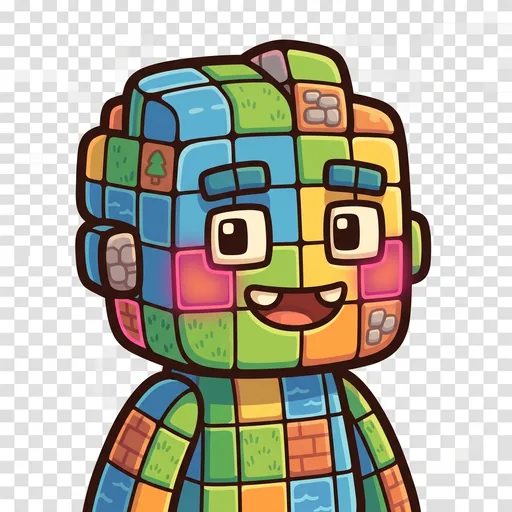
Grid
The tilemap grid — pixels snapped to repeating units that form tiles, tilesets, and game maps
-
Tween
The in-between frame — the animation frame that sits between two keyframes, giving motion its smoothness
-

Banner
The impact pose — the heroic / dramatic silhouette that reads instantly at thumbnail size (the principle that good character art is recognizable from its outline alone)
-
Stipple
Dithering — scattering two colors in a checker pattern so your eye blends them into a third; how pixel artists fake a smooth gradient with a tiny palette
-
Feather
Anti-aliasing — tucking a few in-between pixels along a jagged edge so a curve reads smooth instead of like a staircase
-

Sheen
Light source and form shading — choosing where the light comes from, then placing highlights and shadows so a flat shape turns round
-
Rim
Selective outlining — drawing the edge only where a sprite would get lost, so it pops from the background without looking boxed-in
-
Cycle
Color-cycling animation — making water and fire flow by shifting which colors sit in the palette slots, without moving a single pixel
-

The Sprite
A finished character sprite coming to life — how placed pixels, a color ramp, chosen light, a clean outline, and smoothed edges layer together into one whole little hero