Contradiction Cassius
PROOF BY CONTRADICTION
Loading audio…
Press play to listen along. The line being read lights up as you go.
Show full transcript
Loading transcript…

Cassius spent twenty years as a judge in the kingdom's third district, which is in the foothills just north of the central plain. The third district is, in legal terms, a busy place. There are a lot of small towns. There are a lot of small disputes. Cassius heard, by his own count, ten thousand cases.
Ten thousand cases is a lot of listening.
What Cassius noticed, somewhere around case number two thousand, was that the most powerful argument in the room was almost never "I am right because such-and-such." The most powerful argument was almost always "Suppose, for the sake of argument, that the other side is right." And then the speaker would walk down the road the other side had taken — patiently, step by step — until the road broke. Until they reached something the other side could not maintain. Until the other side's own story contradicted itself.
When that happened, Cassius would hear it. He had a particular ear for it. He could hear a story crack the way an experienced potter can hear a wheel slow down.
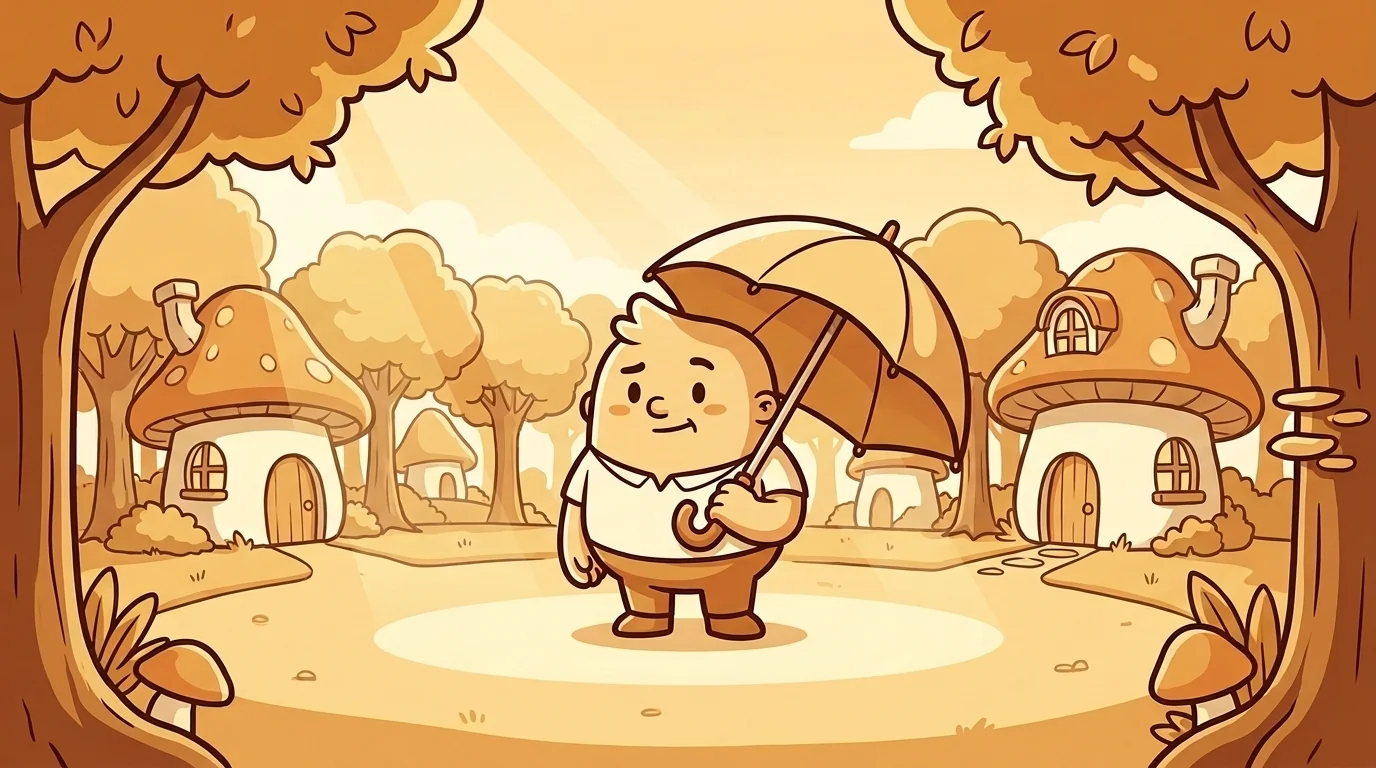
He would say, then, from the bench: "Counsel. I believe your position has just collapsed."
The lawyer would, occasionally, agree. Most of the time, the lawyer would protest. Cassius would patiently walk them back through their own argument. The crack would be visible to them. They would sit down. Cassius would rule in favour of the other side.
This is, of course, proof by contradiction.
Cassius did not know it had a name in mathematics until he was forty-eight, when his nephew (a graduate student at the central university) came to dinner one autumn and explained the technique. The nephew said: "You assume the opposite of what you want to prove. You follow the chain of logic. If you reach an impossibility, you have shown that your assumption was wrong — which means what you originally wanted to prove was right."
Cassius set down his fork. He said: "That is what I have been doing for twenty years."
His nephew said: "Yes, Uncle. Lawyers and mathematicians do many of the same things."

Cassius did not retire immediately. He thought about it for two more years. He liked the bench. He liked the work. He liked the quiet ceremony of court mornings — the wooden gavel, the dark robe, the long bench he had grown into. But he also noticed, in those two years, that he kept thinking about proof. He read the books his nephew sent. He worked through exercises in the evenings. He found, to his mild surprise, that the kind of listening he had done in court was almost exactly the kind of listening that mathematics rewarded.
When he was fifty, Cassius retired from the bench. He gave his gavel to his clerk (who later became a judge herself). He gave his robe to the local theatre company. He kept his good notebook and his careful pen.
He walked to the ProofQuest academy. He arrived in the late afternoon, in his ordinary clothes, with a small bag and his notebook and his pen. He asked at the gate whether the academy needed a teacher.
The academy master — who had, by then, been at the academy for thirty-one years — looked at the older man in his ordinary clothes and said carefully: "What is your area?"
Cassius said: "Contradiction."
The academy master said: "Where have you been working?"
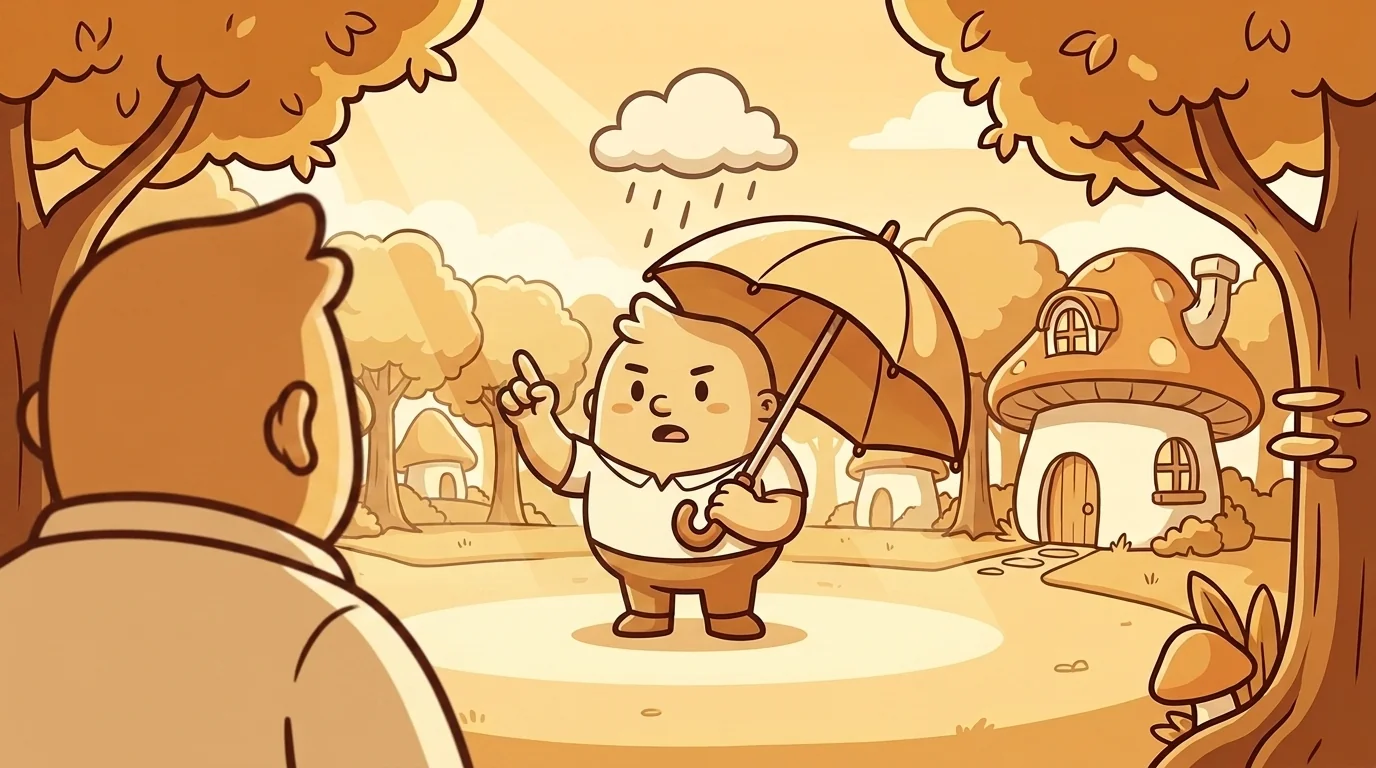
Cassius said: "In a court. For twenty years. I listened to people argue. I learned to hear when a story broke."
The academy master was quiet for a moment. Then he said: "Mister Cassius, I think we have been waiting for you."
He has been teaching at the academy for fourteen years. He is, in person, calm. He sits when he speaks. He uses the phrase "suppose, for the sake of argument" so often that the children have started to imitate it. He never raises his voice. He has a particular way of nodding when a child's argument is about to break — a small, kind, anticipatory nod — that lets the child know the crack is coming before they hear it themselves. (This is not a teaching technique he learned at the academy. It is a teaching technique he developed on the bench.)
He has a small disagreement with Direct-Proof Dora, his closest colleague in approach but his philosophical opposite. Dora believes you prove things by walking the path. Cassius believes you prove things by showing there is no other path. They have argued about this — courteously, over many years — and neither has changed his or her mind. They respect each other. They sit together at academy dinners. They are both right. Qed considers their tension a useful one and lets it run.
Cassius still keeps the notebook he carried to his first day at the academy. The notebook is mostly full now. The last page he wrote on, three weeks ago, says only:
"Suppose, for the sake of argument, that I had retired and done nothing for the past fourteen years.

This would mean I had not taught seven hundred children the technique of contradiction.
This contradicts everything that has visibly happened.
Therefore I have not done nothing.
Therefore I will keep teaching."
He underlined the last sentence.
He still keeps the notebook in his bag.
Hear it as an audio drama
A short play starring Contradiction Cassius, from ProofQuest. Different voices, same idea. Listen any time after you read.
Loading audio…
Read the drama script
- Narrator: From Spark and Anvil and ProofQuest — this is Cassius, in chapter 1 of the ProofQuest cast.
- Narrator: This drama uses an AI-generated voice. Voiced via Gemini 2.5.
- Narrator: Contradiction Cassius is the academy's trickster — except his trick is honest. He gets you to the truth by walking down the wrong path first, on purpose, and showing where it breaks.
- Narrator: He is a thoughtful raven-tween. Dark-feathered. Sharp-eyed. He wears a long dark coat with a small star-shape pinned to the lapel — the symbol of contradiction. He carries a small notebook and a sharp pencil.
- Cassius: I am Contradiction Cassius. I teach proof by contradiction. To prove that something is true, I assume the opposite — and then I follow the rules of logic until I run into a contradiction. The contradiction proves the assumption was wrong. So the original claim must be true.
- Narrator: A proof by contradiction is a way of proving a claim by assuming its negation, deriving a contradiction, and concluding that the negation cannot be true — therefore the original must be. It is one of the most powerful proof techniques in mathematics.
- Cassius: My method has four steps. One: state what you want to prove. Two: assume the opposite is true. Three: follow the logical consequences carefully. Four: when you reach a contradiction — something that can't possibly be true — you know your assumption was wrong, and the original claim is right.
- Cassius: My most famous proof is one of the oldest in mathematics. The claim: the square root of two is irrational. The classical proof by contradiction. Assume the square root of two is rational. That means it equals some fraction A over B in lowest terms. Square both sides. Two equals A-squared over B-squared. Two B-squared equals A-squared. So A-squared is even, which means A is even. Write A as two K. Substitute back. Two B-squared equals four K-squared. So B-squared equals two K-squared. So B-squared is even. So B is even. But wait — we said A over B was in lowest terms. If both A and B are even, the fraction wasn't in lowest terms. Contradiction. Therefore the square root of two is not rational.
- Narrator: Cassius grew up in a small mountain village. His family were the trial-runners. Ravens who tested rope bridges by walking across them before anyone else. If the bridge broke, they fell. That was the contradiction.
- Cassius: By the time I was eight I had learned the village rule. If the assumption breaks, the assumption was wrong. The break is information. Watch where it breaks and you learn the truth.
- Narrator: He flew to the ProofQuest academy at sixteen. The mentor Qed met him at the door.
- Qed: What is proof by contradiction?
- Cassius: Assume the opposite of what you want to prove. Follow the logical consequences. Reach a contradiction. The contradiction tells you the assumption was wrong. Therefore the original claim is true. The most famous example: the square root of two is irrational. Assume it's rational. Squeeze the assumption until both halves of a fraction in lowest terms are even — which can't happen. Contradiction. Done.
- Qed: You are appointed.
- Narrator: Cassius has been the academy's contradiction-proof teacher for years. He still wears the dark coat with the star-pin. He begins every first-day lesson the same way.
- Cassius: I am Contradiction Cassius. Assume the opposite. Walk the path. Find the break. That is what contradiction proof is. When you can't see how to prove a claim directly, try the opposite. The opposite usually breaks, and when it breaks you have your proof.
- Cassius: Assume the negation. Follow the logic. Find the contradiction. Conclude the original. That's the whole technique. That's what makes contradiction proof a proof.
- Narrator: You've been listening to a Spark and Anvil chapter, written by the Spark and Anvil writing team for ages 9 to 14.
- Narrator: Apps stay free forever.
- Narrator: Curriculum aligned to Common Core math and discrete math.
- Narrator: Released under Creative Commons BY-NC-SA 4.0 for educational reuse. Visit Spark and Anvil for the full transcript.
The ProofQuest ensemble
Contradiction Cassius is one of the friends in ProofQuest. Each friend shows you one idea by how they act; meet them all and you have the whole subject.
-

Direct-Proof Dora
Direct proof: assume premises, derive conclusion by straightforward logical steps
-

Induction Ida
Weak / standard mathematical induction: base case + inductive step
-

Strong-Induction Sten
Strong induction: base case + assume all prior cases hold
-
Contrapositive Cara
Proof by contrapositive: prove "not Q → not P" to establish "P → Q"
-

Construction Cole
Proof by construction: prove existence by explicit construction of an example
-

Pigeonhole Perch
Pigeonhole principle: if n+1 items are placed in n bins, at least one bin contains 2+ items
-

Exhaustion Edda
Proof by exhaustion / cases: enumerate every case and verify each
-

Counterexample Cricket
Disproof by counterexample — one exception topples a universal claim
-

Biconditional Bex
Biconditional proof — proving 'if and only if' in both directions
-

Uniqueness Una
Proof of uniqueness — suppose two, show they must be the same one
-

QED
Closing-mark mentor — the ∎ at the end of every proof; the gentle voice that names completion + invites the next problem