
Uniqueness Una
PROOF OF UNIQUENESS — to prove there is exactly one thing with a property, you suppose there are two, then show the two must actually be identical. If "both" are forced to be the very same thing, then there was only ever one. Existence says at least one; uniqueness says at most one.
Loading audio…
Press play to listen along. The line being read lights up as you go.
Show full transcript
Loading transcript…
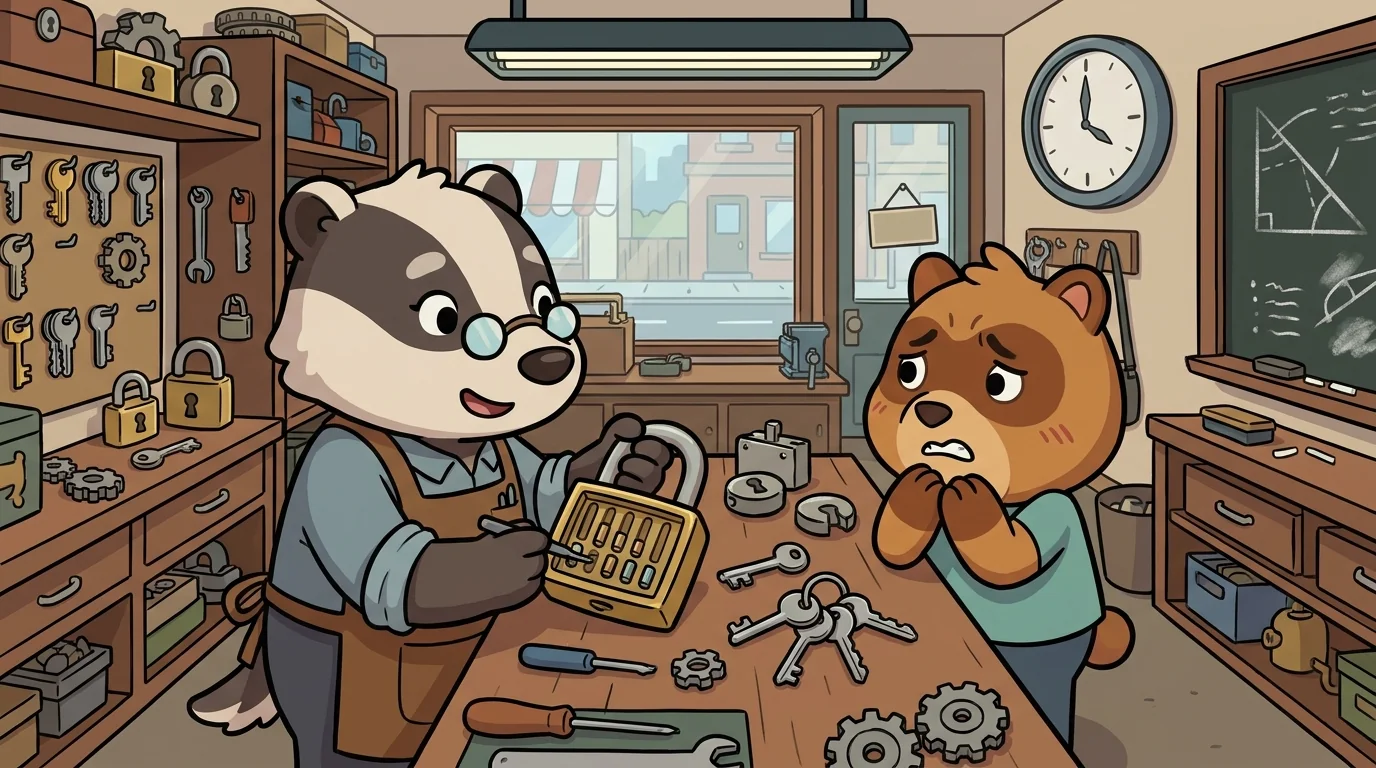
Before Uniqueness Una taught at the ProofQuest academy, she was a locksmith for twenty-three years. Una is a careful, soft-spoken badger, and her specialty was the rarest kind of lock — the sort with exactly one key in all the world. People would come to her terrified they'd had a copy made in secret, that somewhere a second key existed that could open their door. And Una had a particular way of putting their fears to rest. She would take the lock apart, study its every tumbler, and prove to them — not promise, prove — that any key which opened it must be cut in precisely one way. There could not be two different keys. Any key that worked was forced to be a copy of the same one.
A worried client named Marlow once watched her work. "But how can you be sure there's only one key?" Marlow fretted. "Maybe someone made a different one that also opens it." "Let's suppose they did," Una said calmly, laying out her tools. "Suppose there are two different keys, and both open this lock. Now — watch — I'll show you that any key opening this lock must have this notch here, and that groove there, and so on, every single cut forced by the tumblers. Both your imagined keys must have all of them. But if both keys have exactly the same cuts... then they aren't two keys at all. They're the same key. So there was only ever one." She handed Marlow the single key. "Your second key can't exist. I just made it turn into the first one."
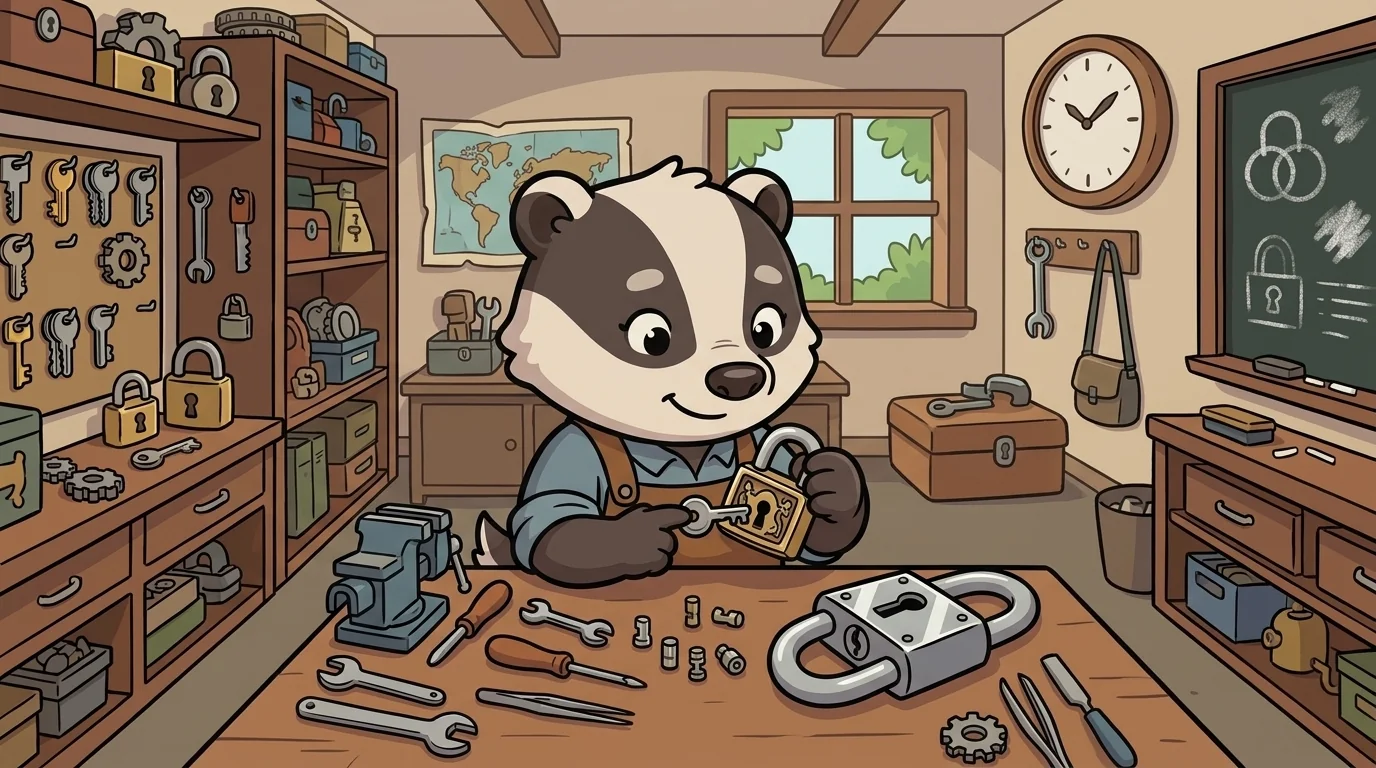
Marlow turned the key over and over, looking for the catch. "But you didn't search anywhere," he said slowly. "You didn't hunt through drawers, or check the other locksmiths in town, or ask if anyone had ever cut a copy. You just... sat here and reasoned, and now you're certain."
"That's the whole beauty of it," Una said. "If I'd tried to prove there was no second key by searching — checking every drawer in the world, every locksmith, every workshop — I could never finish. I'd search my whole life and only ever be able to say 'I haven't found one yet.' That's not certainty; that's just tiredness. Instead I turn the question around. I don't go looking for a second key to rule out. I assume it exists — I invite it in — and then I show the assumption forces the imagined second key to become identical to the first. A second different key is impossible, because the lock itself won't allow two different answers." She tapped the tumblers. "The proof lives in the lock, not in the searching."
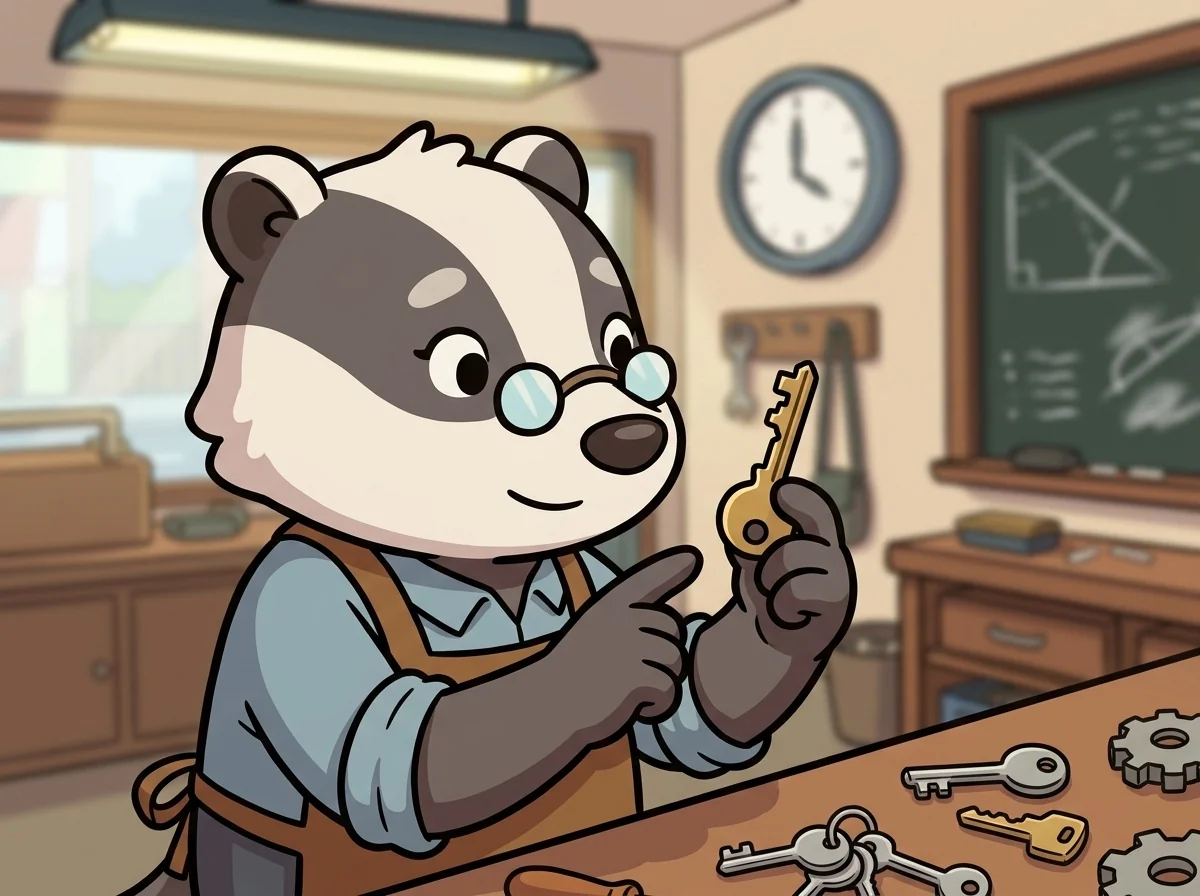
Una had been proving things one-of-a-kind since she was small. She'd grown up in a den crowded with belongings, in a family forever worried about duplicates and impostors — was this the real heirloom or a copy, was that the true map or a forgery? The worry never ended, because they kept trying to prove uniqueness the impossible way: by checking every object in the whole world to make sure no second one existed. You can never finish a search like that. There is always one more drawer, one more town, one more year.
Young Una found the way out almost by accident, arguing with her brother over a carved wooden fox he swore someone had copied. Instead of searching for the copy, she looked hard at the fox itself — the particular knot in the grain, the exact angle of the ear, the chip on the tail — and realized that anything claiming to be the same fox would have to match every one of those marks. And a thing that matched every single mark wouldn't be a copy at all; it would just be the fox. "There can't be a second one," she told her astonished brother, "because a real second one would have to be the first one." The relief of it — the end of the endless searching — was the calmest she'd felt in that crowded, suspicious den in years.
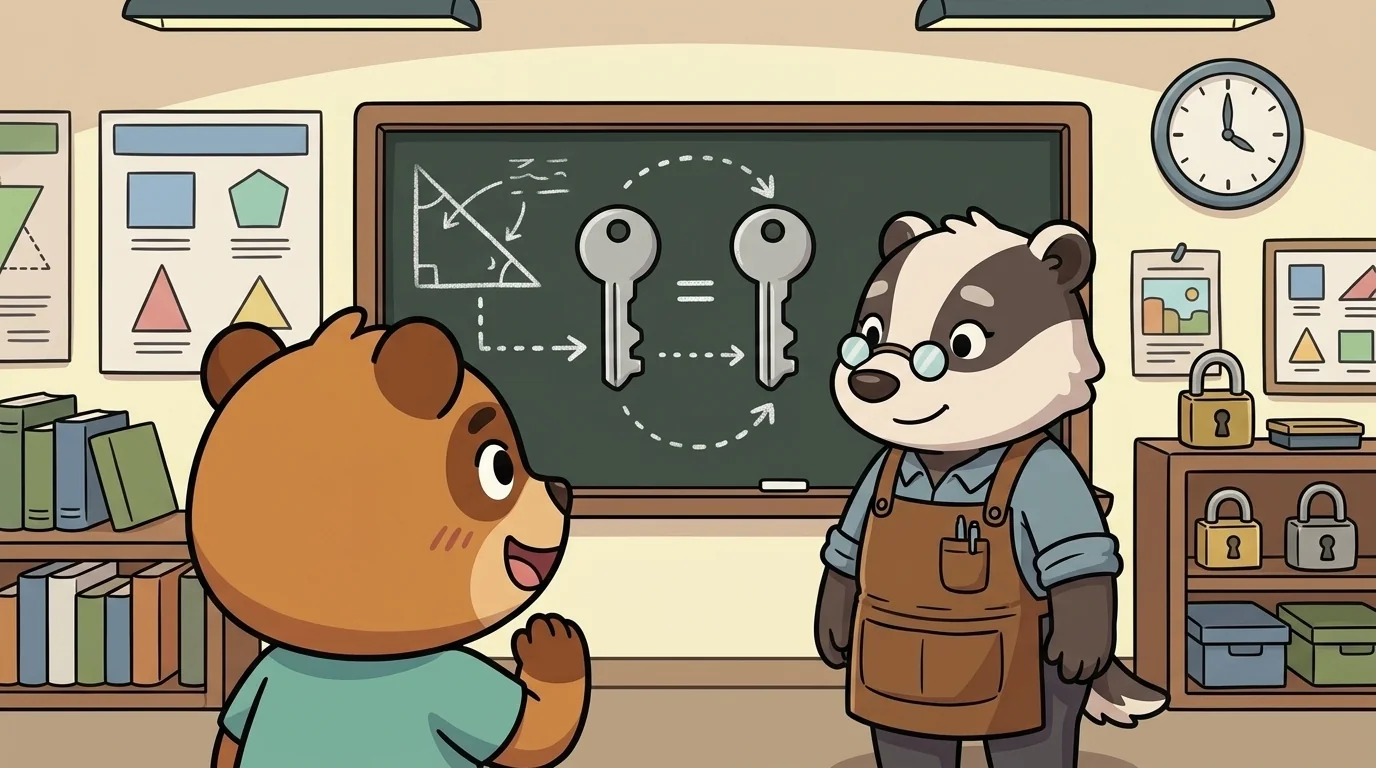
Una's favourite thing to teach was that uniqueness is only half of a truth, and knowing which half you're proving matters enormously. A careful student named Odell once brought her a proof he was proud of. "I proved this equation has a unique solution!" he said. "I supposed there were two solutions, and showed they had to be equal. Done!"
"You've proved something real and important," Una said warmly. "You've proved at most one. That's uniqueness — if a solution exists, there's only the one. But tell me — have you proved a solution exists at all?" Odell paused. "I... assumed it did." "Then you're only half-finished," Una said gently. "Existence proves at least one — that the thing you're talking about is really there. Uniqueness proves at most one — that there isn't a second. You need both to say 'exactly one.' I've watched people prove a thing is unique so beautifully, and never notice they never showed it exists — a perfect proof that there's at most one unicorn." Odell laughed, then went quiet, then went back to his page to prove the solution existed too.
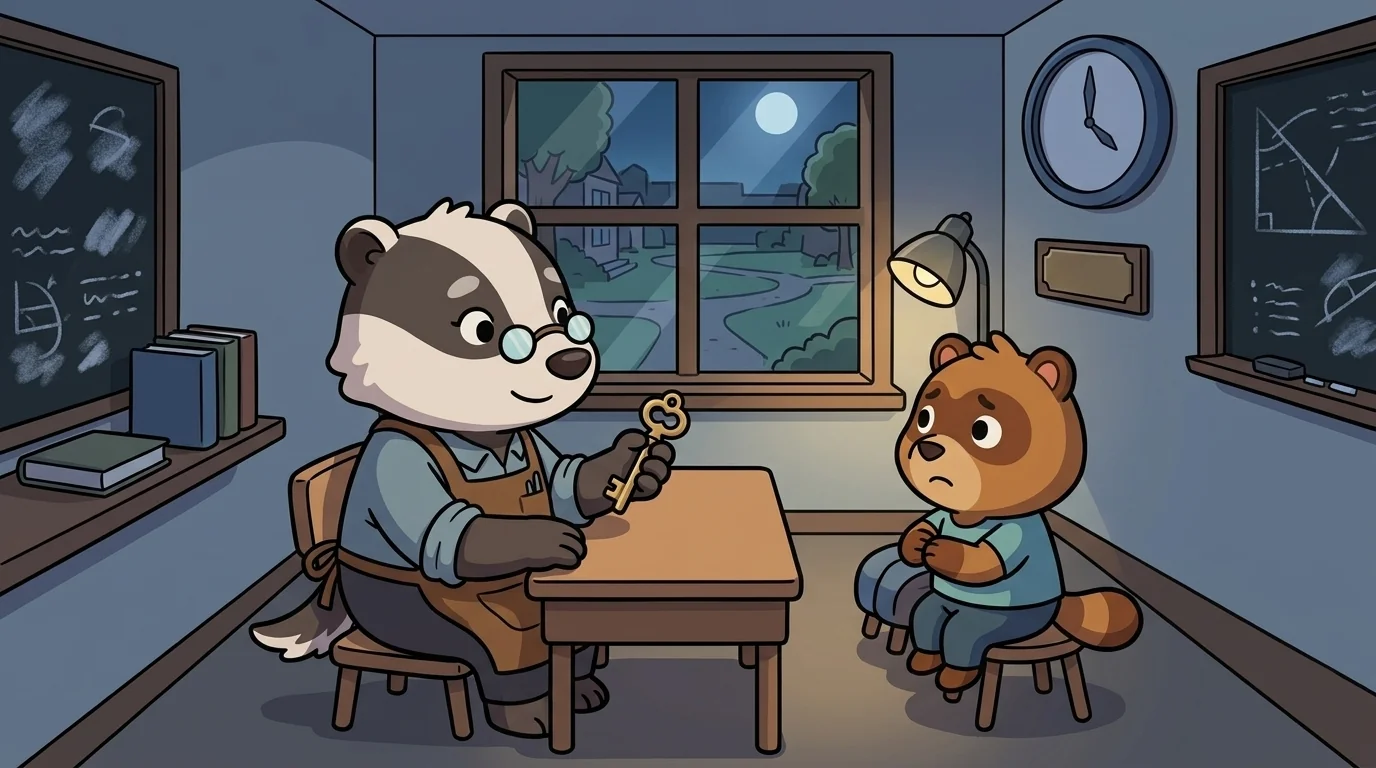
Later, when the academy lamps were low, Una sat by her window, where a single carved key rested on the sill — no lock beside it, just the key. A student passing by asked why she kept a key with no lock. Una smiled and turned it in her paws.
"To remember the shape of the whole idea," she said. "When you want to know there is exactly one of a thing, you don't go hunting the endless world for a second one to rule out — you'd never finish. You suppose there are two, and you follow that supposition until the two are forced to become identical, and collapse into one. Existence says the thing is there at all. Uniqueness says there's no second. Put them together, and you can say the rarest, surest thing in all of mathematics." She set the key back on the sill, content all the way down. "Exactly one. Proven — not promised."
The ProofQuest ensemble
Uniqueness Una is part of ProofQuest's distributed-narrative cast. Each character embodies a different curricular primitive; together they teach the full subject.
-

Direct-Proof Dora
Direct proof: assume premises, derive conclusion by straightforward logical steps
-
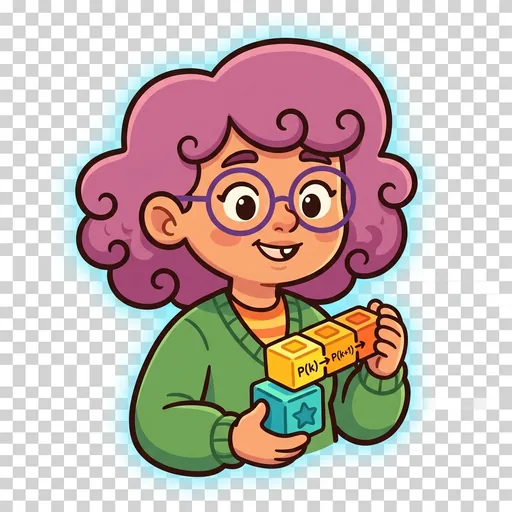
Induction Ida
Weak / standard mathematical induction: base case + inductive step
-

Strong-Induction Sten
Strong induction: base case + assume all prior cases hold
-
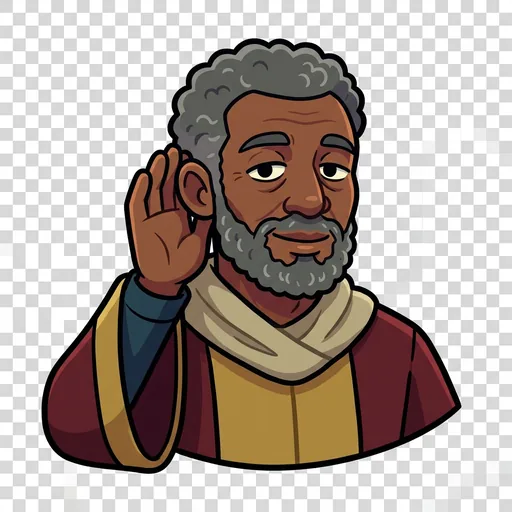
Contradiction Cassius
Proof by contradiction (reductio ad absurdum): assume the negation, derive a contradiction
-
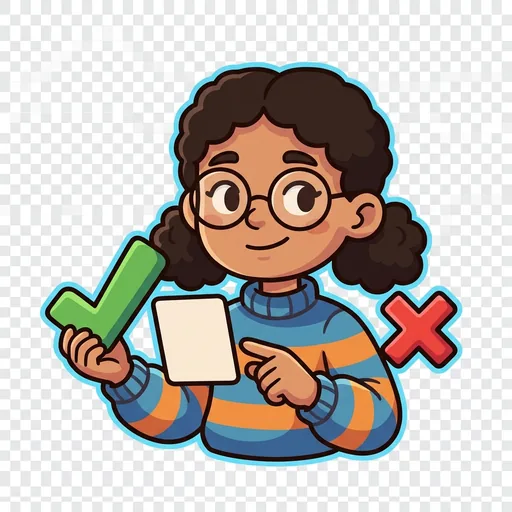
Contrapositive Cara
Proof by contrapositive: prove "not Q → not P" to establish "P → Q"
-
Construction Cole
Proof by construction: prove existence by explicit construction of an example
-

Pigeonhole Perch
Pigeonhole principle: if n+1 items are placed in n bins, at least one bin contains 2+ items
-

Exhaustion Edda
Proof by exhaustion / cases: enumerate every case and verify each
-
Counterexample Cricket
Disproof by counterexample — one exception topples a universal claim
-

Biconditional Bex
Biconditional proof — proving 'if and only if' in both directions
-

QED
Closing-mark mentor — the ∎ at the end of every proof; the gentle voice that names completion + invites the next problem