Frame
TEXT STRUCTURE
Loading audio…
Press play to listen along. The line being read lights up as you go.
Show full transcript
Loading transcript…
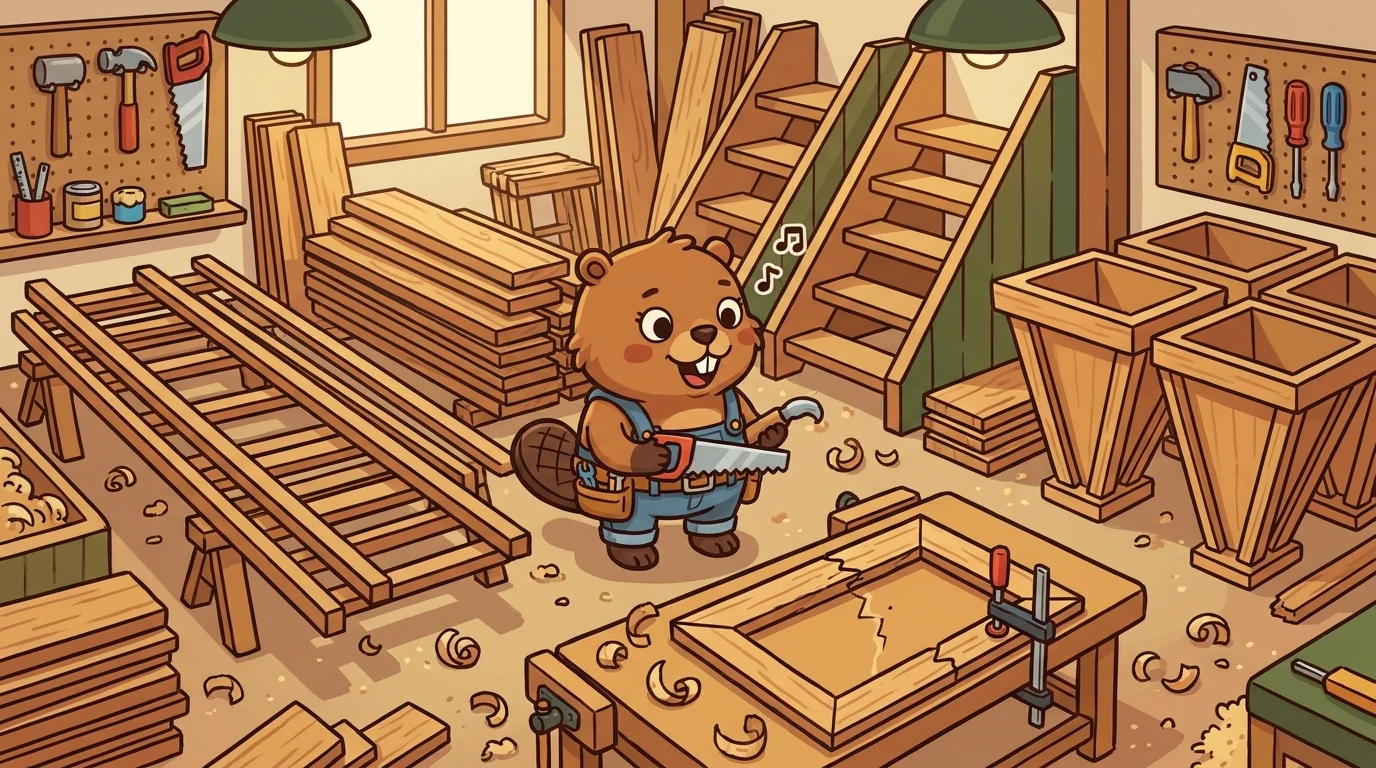
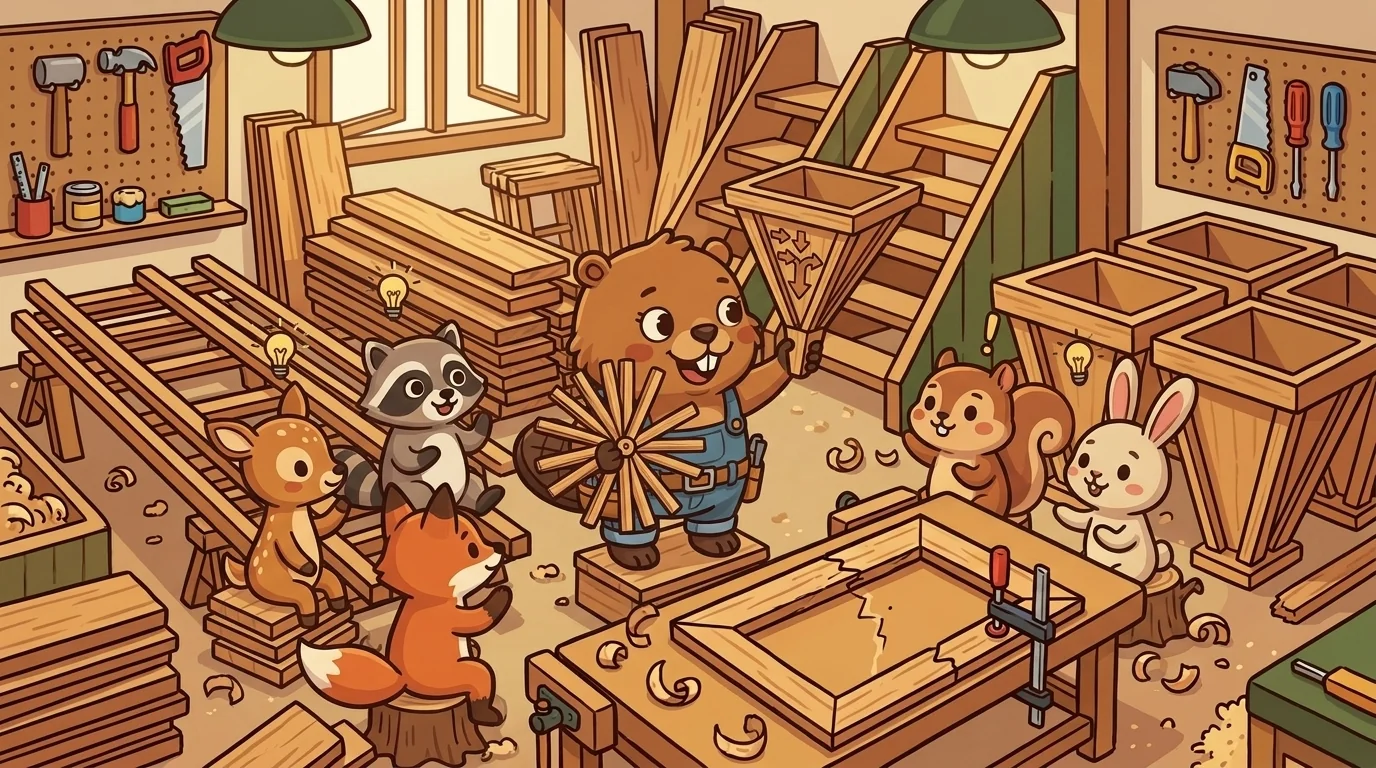
Frame is a beaver-tween carpenter.
Her small workshop contains every kind of wooden frame. Parallel-bar frames (two long parallel pieces with cross-supports between). Staircase frames (stepped rising pieces, each one slightly above the previous). Funnel frames (wide-mouthed-narrow-bottomed, channeling toward a single point). Broken-fixed frames (a damaged frame visibly repaired). Expanding frames (a frame that grows from a small center outward in all directions). Each frame-shape matches a text structure.
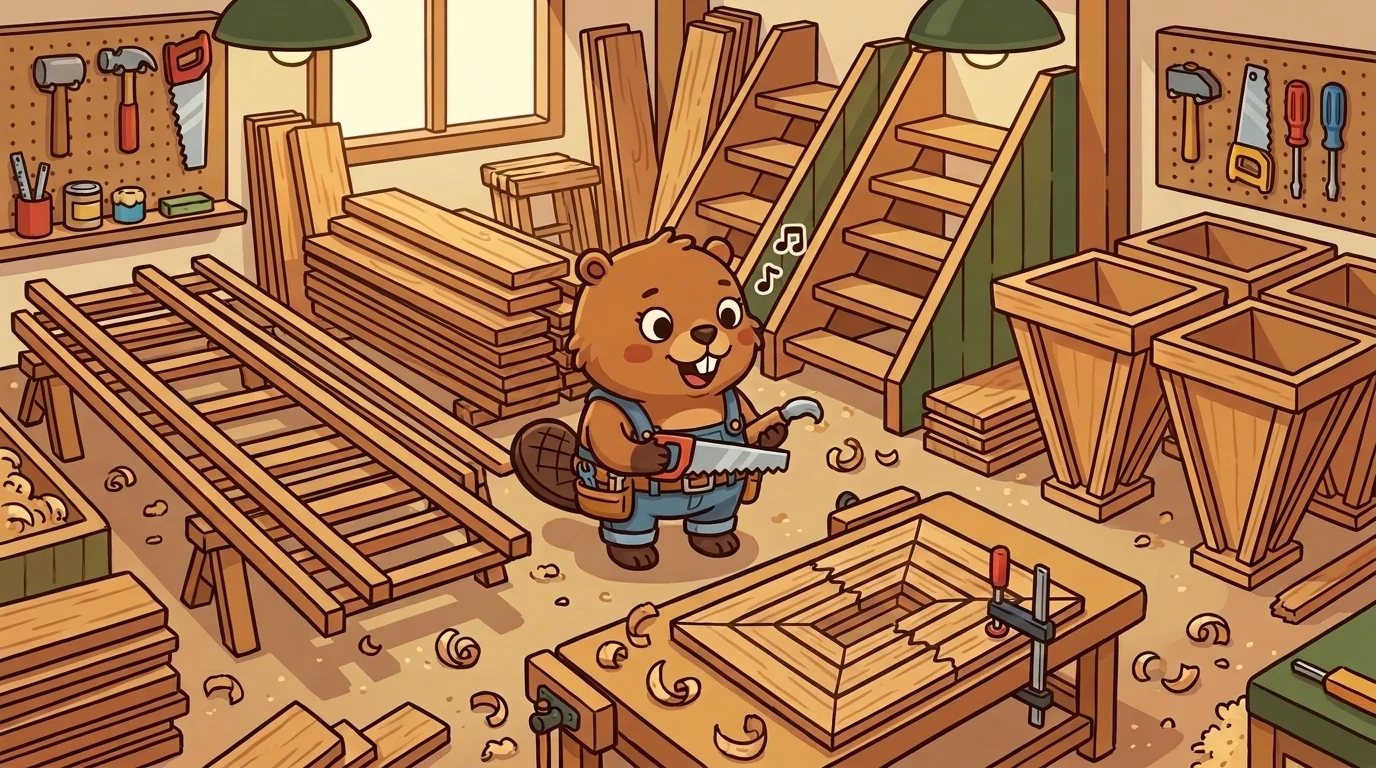
Parallel-bar frames match compare-contrast passages. Staircase frames match sequence passages. Funnel frames match cause-effect passages. Broken-fixed frames match problem-solution passages. Expanding frames match description passages. Frame demonstrates by building the appropriate frame for each passage and holding it up to show the structural shape.
Frame grew up in a beaver-family of dam-builders. Her parents had built actual dams in the kingdom's small rivers. Frame had learned, by age six, that dams have specific structures. Some are straight-bar dams (a single long structure across a narrow river). Some are staircase dams (multiple small stepped dams down a slope). Some are V-shaped dams (focused flow toward a central spillway). The structure of a dam determined how it worked. Frame had grown up thinking of structures as having intrinsic shapes.
She had applied this to passages at thirteen. Her village schoolteacher had said: "Some passages are organized as compare-contrast. Some as sequence. Some as cause-effect. Some as problem-solution. Some as description. Knowing the structure helps you read." Frame had said: "Like dams. Each dam has a shape. Each shape does something specific. Passages must work the same way." The teacher had been delighted.
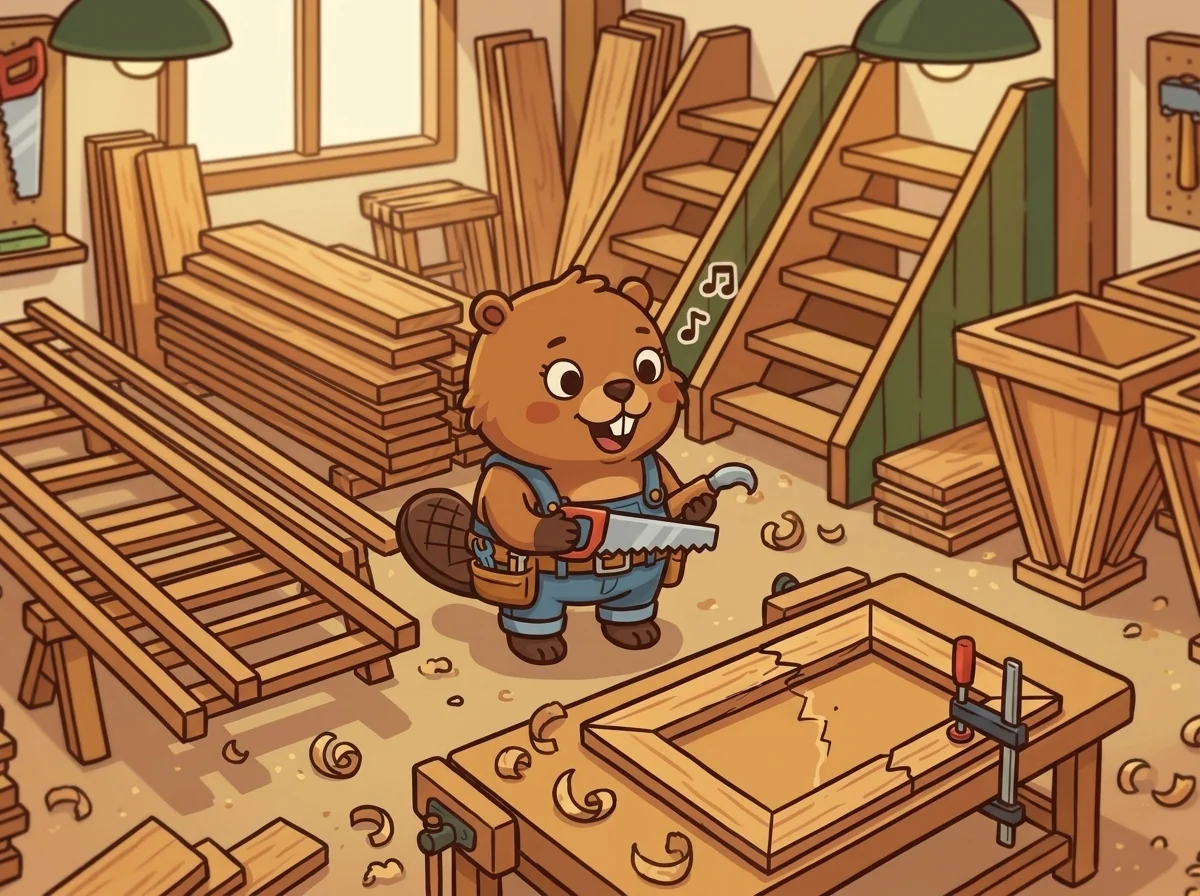
Frame had walked to the ReadQuest academy at nineteen. She has been the academy's text-structure teacher for eleven years.
In her classroom, she begins every first-day lesson the same way. She has, on her workbench, one of each kind of frame. She says: "I am Frame. I build wooden frames in different shapes. Each shape matches a text structure. Watch."
She picks up the parallel-bar frame. She says: "Compare-contrast structure. Two things are placed side by side. Their similarities and differences are listed in parallel. The parallel-bar frame matches this structure visually — two parallel pieces with cross-supports between."
She picks up the staircase frame. She says: "Sequence structure. Events are listed in order — first, then, next, finally. Each event builds on the previous. The staircase frame matches — stepped rising pieces."
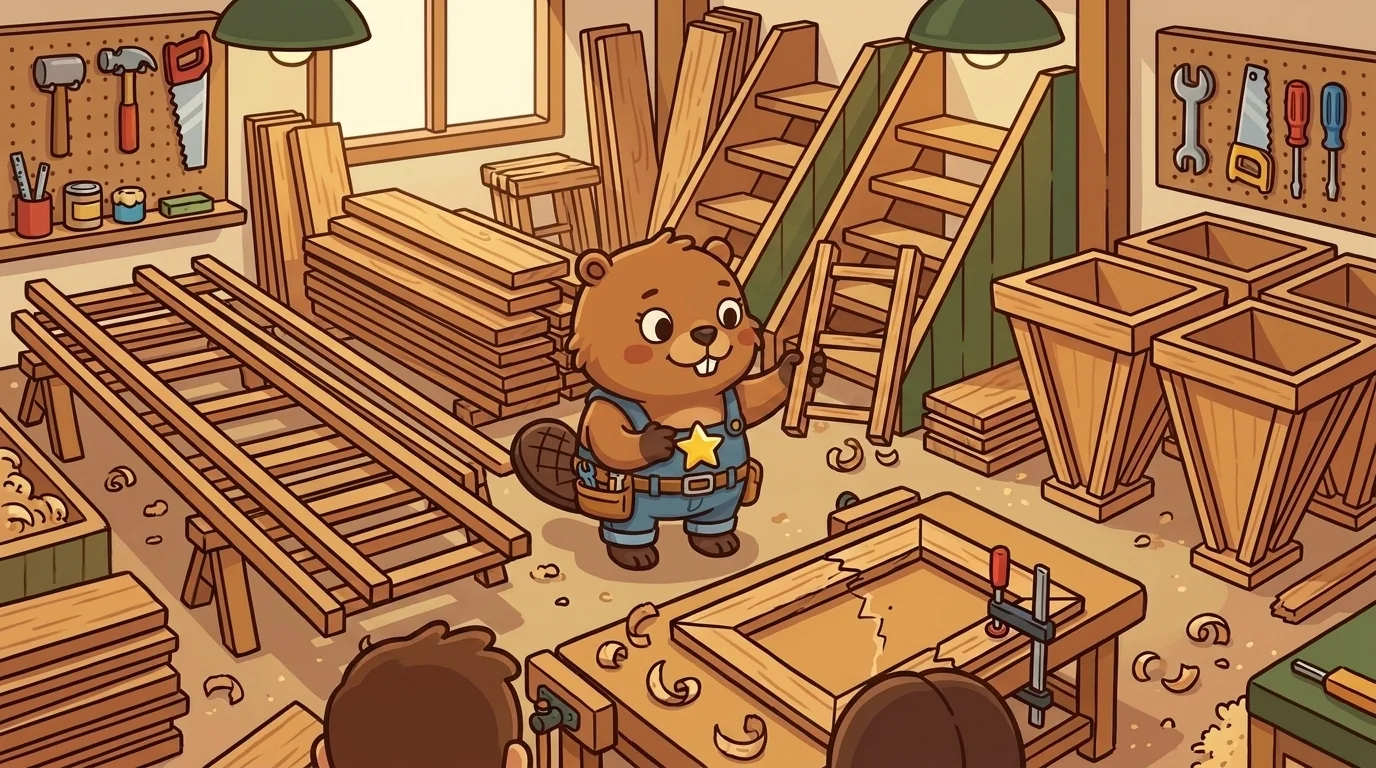
She picks up the funnel frame. She says: "Cause-effect structure. Multiple causes converge toward a single effect (or a single cause produces multiple effects). The funnel matches — wide at the input, narrow at the output."
She picks up the broken-fixed frame. She says: "Problem-solution structure. A problem is presented. A solution is then proposed. The broken-fixed frame matches — a damaged piece visibly repaired."
She picks up the expanding frame. She says: "Description structure. A central subject is presented and then described from multiple angles. The expanding frame matches — a small center growing outward in all directions."
The students always — always — find the frame-and-structure pairing clarifying. They had often read passages without recognizing their structural pattern. Frame makes the patterns visible. They learn to identify the frame-shape of each passage they read. The identification helps them anticipate the passage's content and integrate it.
Frame teaches the signal-words for each structure. Compare-contrast uses like, unlike, similarly and however. Sequence uses first, then, next and finally. Cause-effect uses because, since and therefore. Problem-solution uses problem, solution, however and instead. Description uses for example, such as and specifically.
When students ask Frame whether identifying text structure is hard, Frame always says the same thing:
"It is not hard. It is seeing the shape. Read the passage. Ask: what shape does this make? Compare-contrast? Sequence? Cause-effect? Problem-solution? Description? Each shape has signal-words. Each shape has a wooden frame in my workshop. Pick the frame. The structure is identified."
She still keeps the five frames on her workbench. The children sometimes ask to hold them. She always lets them.
Hear it as an audio drama
A short play starring Frame, from ReadQuest. Different voices, same idea. Listen any time after you read.
Loading audio…
Read the drama script
- Narrator: From Spark and Anvil and ReadQuest — this is Frame, in chapter 1 of the ReadQuest cast.
- Narrator: This drama uses an AI-generated voice. Voiced via Gemini 2.5.
- Narrator: Frame is a beaver-tween carpenter. Her workshop is filled with wooden frames of every possible shape.
- Narrator: Each frame's shape is a visual match for a text structure, the underlying pattern of a passage.
- Frame: I am Frame. I build frames to show you the shape of what you read.
- Frame: A parallel-bar frame is for compare-contrast. A staircase is for a sequence. A funnel is for cause-and-effect.
- Narrator: Frame grew up in a family of dam-builders. She learned early that a structure's shape determines its job.
- Frame: Dams have specific shapes for specific flows. I knew passages must work the same way.
- Narrator: When her village schoolteacher listed the five text structures, Frame didn't hear words. She saw shapes.
- Frame: I told her, "Like dams! Each shape does something specific!" She was delighted.
- Narrator: She walked to the ReadQuest academy at nineteen, ready to teach others how to see.
- Frame: It is not hard. It is seeing the shape. Read the passage. Ask: what shape does this make?
- Frame: Pick the frame. The parallel-bar, the staircase, the funnel. The structure is identified.
- Narrator: Seeing the shape is seeing the structure. That is what Frame teaches.
- Narrator: You've been listening to a Spark and Anvil chapter, written by the Spark and Anvil writing team for ages 9 to 14.
- Narrator: Apps stay free forever.
- Narrator: Curriculum aligned to Common Core English Language Arts.
- Narrator: Released under Creative Commons BY-NC-SA 4.0 for educational reuse. Visit Spark and Anvil for the full transcript.
The ReadQuest ensemble
Frame is one of the friends in ReadQuest. Each friend shows you one idea by how they act; meet them all and you have the whole subject.
-

Crest
Main idea / central message (the *peak* of the passage)
-

Hunch
Inference (reading between the lines)
-

Anchor
Evidence / textual citation
-

Plume
Author's purpose / voice / tone
-

Pith
Vocabulary in context (deriving word meaning from surrounding text)
-

Yonder
Predicting — alert young-hare creature who reads the trail's clues to guess what's around the bend; a wrong guess just means the story surprised you
-

Vista
Visualizing — dreamy young-deer creature who turns words into a movie in the mind; the writer gives the words, the reader gives the pictures
-

Nettle
Questioning the text — question-quilled hedgehog who pokes a passage with why/how/what-if; asking questions means you're awake, not that you don't understand
-

Sheaf
Summarizing — warm-handed harvester who gathers a whole passage into one tidy armful, keeping the important middle and letting loose details fall