
Dolly
DOLLY — a moving camera moves the feeling. Pushing slowly in pulls the audience closer to a heart; drifting back lets them go; following alongside keeps them walking with you.
Loading audio…
Press play to listen along. The line being read lights up as you go.
Show full transcript
Loading transcript…
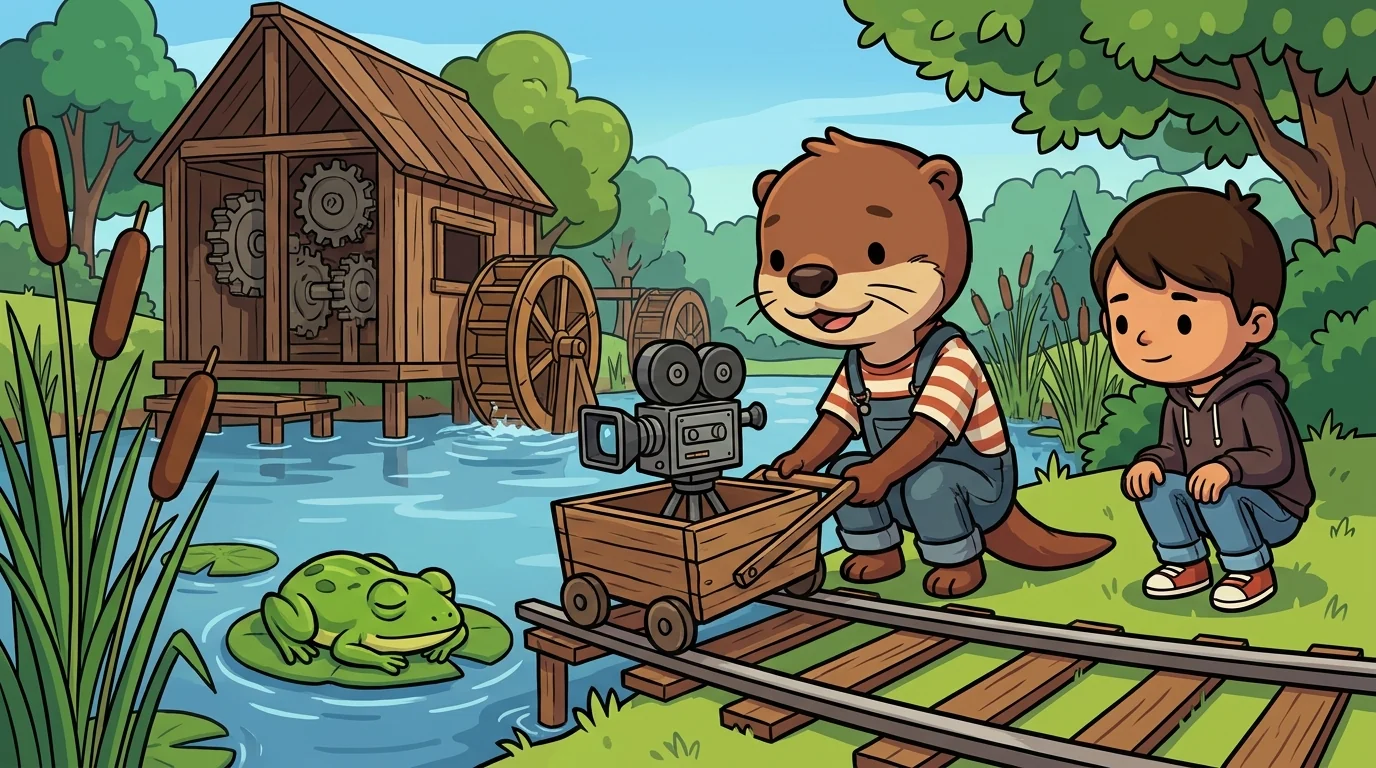
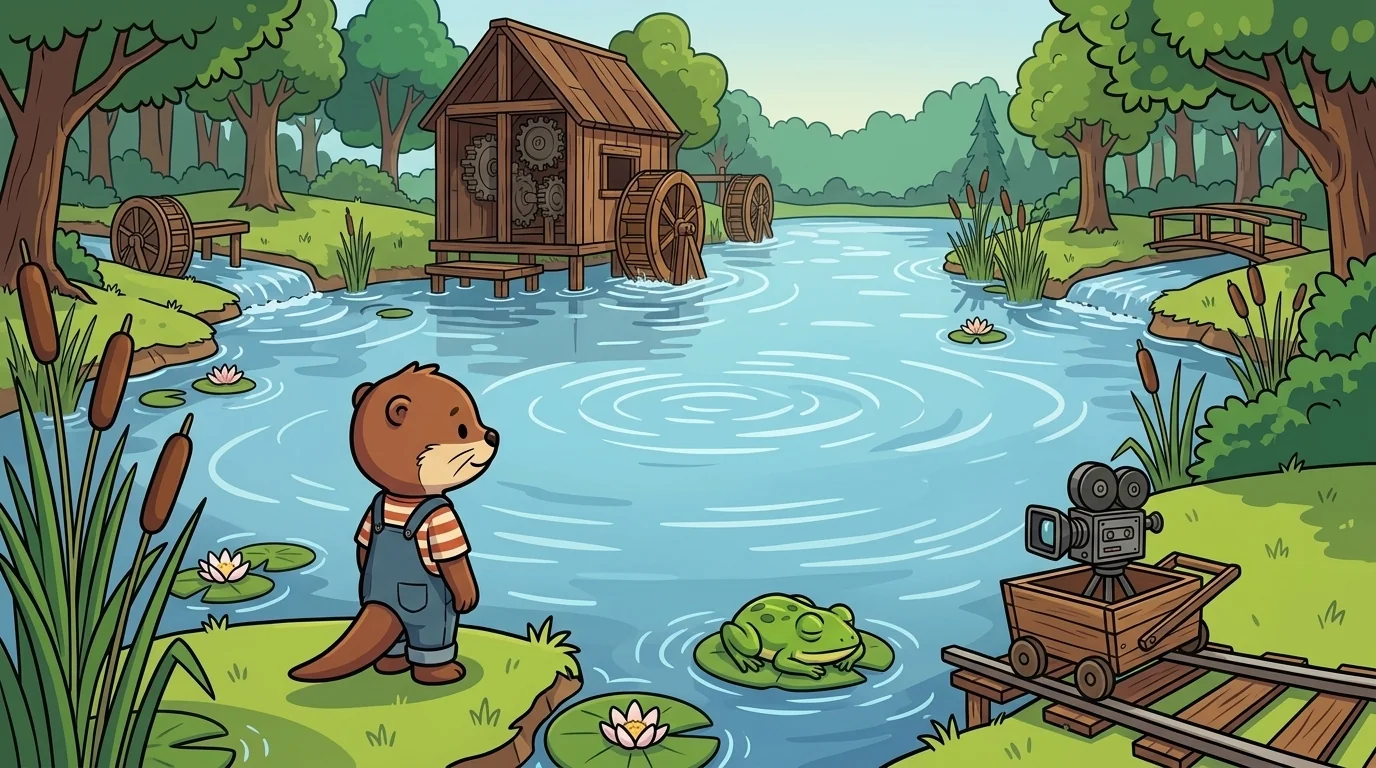
Down at the edge of the Reelforge millpond, an otter-tween named Dolly had built a little cart with wheels, set a camera on it, and was rolling it slowly toward a sleeping frog.
"Watch what the moving does," Dolly said to the kid crouched beside the pond. The camera crept in — slow, smooth, closer and closer — and the kid felt something tighten in their chest, a quiet lean-forward feeling, as if sneaking up on a secret. "I didn't cut. I didn't change the shot. I just moved," Dolly said. Then she rolled the cart gently backward, and the tightness eased and let go, like stepping back from something private. "A still camera shows you a thing. A moving camera feels its way toward it, or away. The movement is the feeling — and the slowness is what makes it land. A slow push-in you barely notice; you just find yourself, somehow, closer to someone's heart than you were a moment ago."
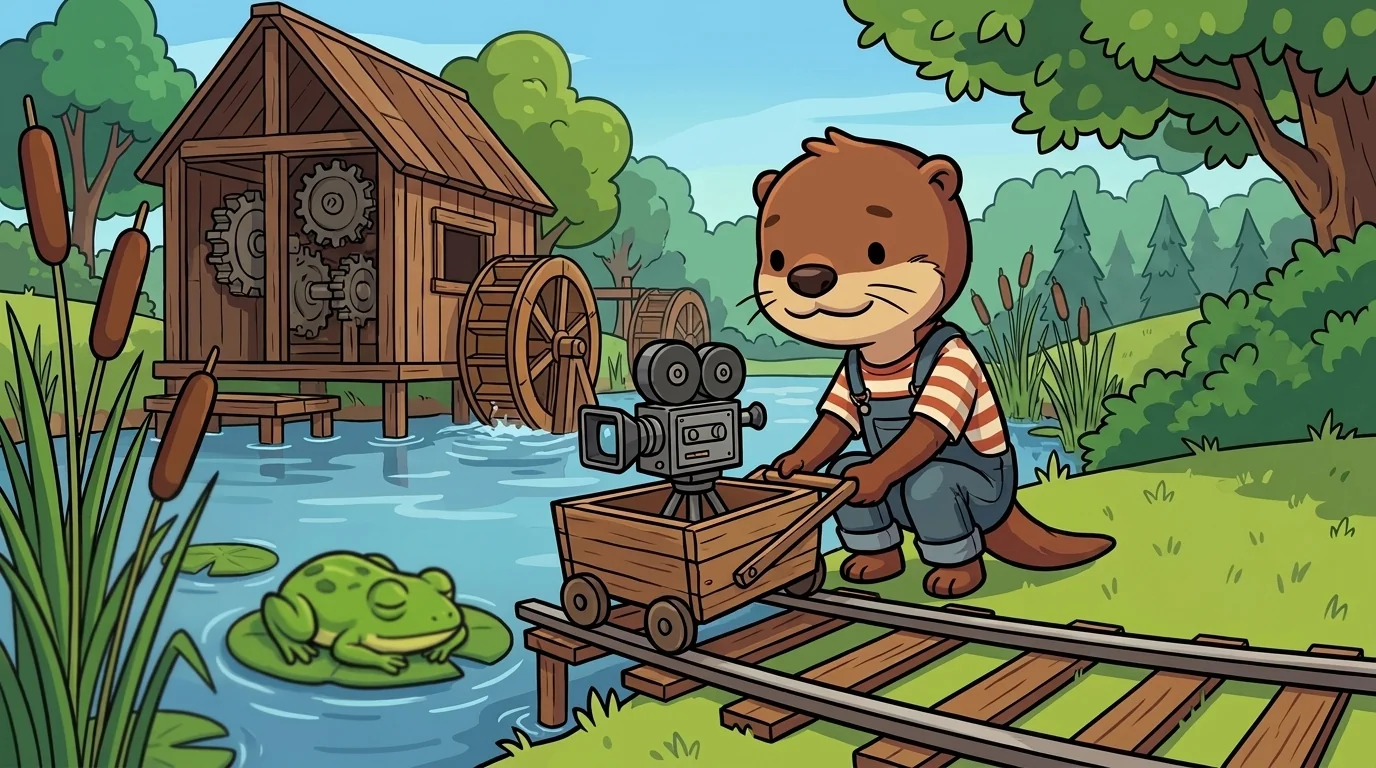
Dolly learned the deeper secret of it the day she confused two things that look the same and aren't. She had two ways to make the frog "get bigger": roll the whole cart in on its wheels, or stand still and twist the lens to zoom. On a tiny screen, a kid said, they looked identical. "Look again," Dolly said, and did both, slowly. When she dollied in, the world changed shape around the frog — the near reeds slid past, the far bank drifted, the whole space opened the way it does when you actually walk toward something. When she zoomed, nothing moved through space at all; the far bank just got cropped and flattened, pulled forward like a painted backdrop. "The dolly travels," she said. "Your body believes it, because it's how eyes really move through a room. The zoom only magnifies — it's a good tool, but it doesn't take the audience anywhere. That's why a real push-in feels like approaching, and a zoom feels like pointing."
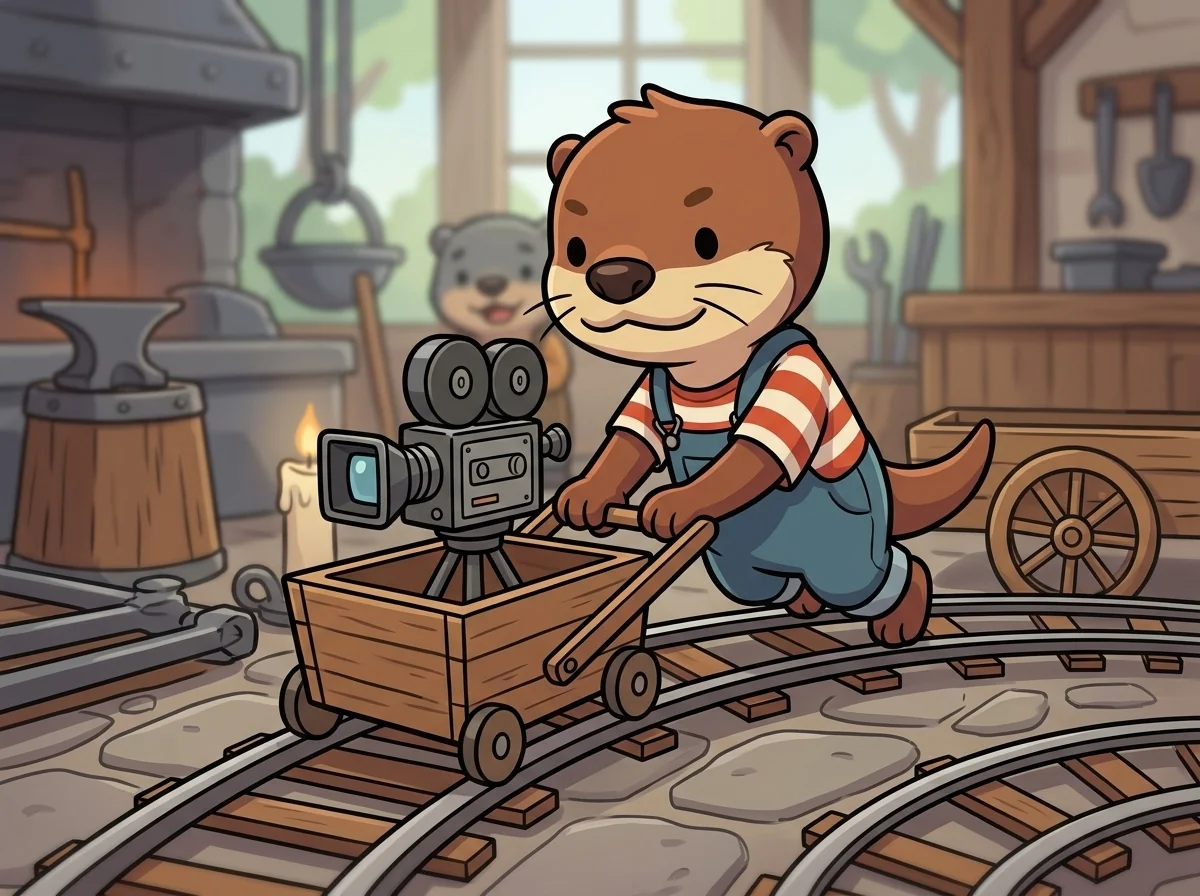
When she was young, Dolly rolled her cart everywhere for the sheer joy of the glide, until an old riverboat captain taught her the rule that gave the joy a spine. "A camera that moves for no reason," he said, "makes people seasick. A camera that moves because the story moves — because a character steps forward, because a heart opens, because we need to arrive somewhere — that's invisible, and it carries them." Dolly took it to heart. She learned to motivate every move: to push in on the exact beat a character decides something, to drift back the instant a moment wants to be let go, to follow alongside so the audience walks in step. "The move isn't decoration," she'd say. "It's a feeling with wheels. If I can't say what feeling it's carrying, I take the wheels off."
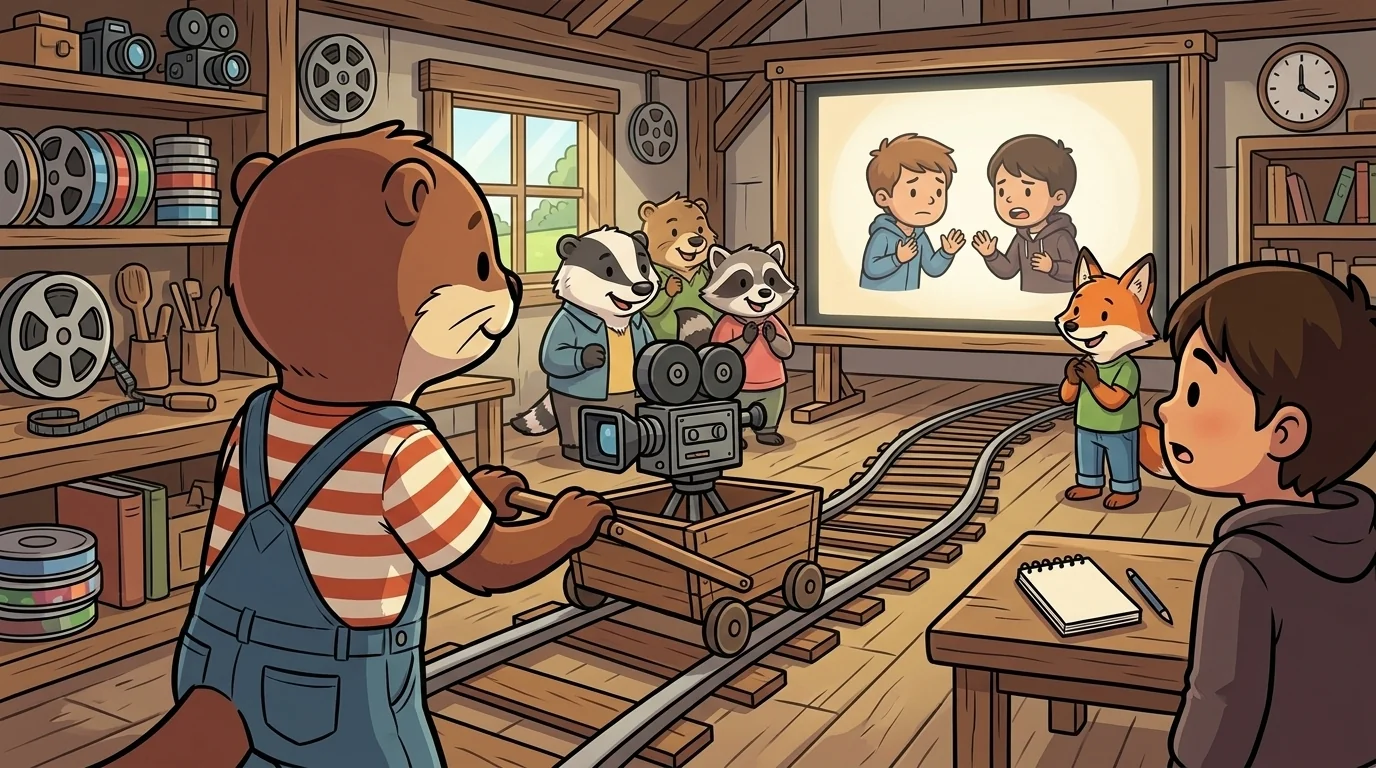
At Reelforge, a kid had a scene where a girl reads a letter that slowly breaks her heart, and the footage sat there, flat and far away. "You're watching her," Dolly said. "You should be arriving at her." She set the camera on the cart at a respectful distance and, as the girl read, rolled it in — slow, so slow you couldn't catch it starting — until by the last line the frame held only the girl's face and the audience was right there with her, close enough to feel it. "That's the push-in," Dolly said softly. "Not a zoom — a travel. We moved through the space toward her, so the audience's heart moved too." Then she showed the opposite, for a different scene — a friend leaving — easing the cart gently back as he walked away, letting him go, the growing space between camera and character becoming the ache itself. "In, to hold someone closer. Back, to let them go. Alongside, to walk with them. Every move a feeling — and every move slow enough, and motivated enough, that no one sees the wheels."
"So moving the camera isn't just getting a bigger picture," the kid said slowly. "It's carrying the audience's heart somewhere — actually traveling there, not just pointing?"
"That's the whole of it," Dolly said, and gave the cart one last, unhurried glide across the smooth boards by the pond. Under the quiet she felt the calm that always came from a move that meant something: not the queasy drift of motion for its own sake, not the flat magnification of a lazy zoom, but a smooth, purposeful, heart-carrying ease — the ease of someone who had learned that a camera's real gift isn't standing still and showing, but traveling, slowly and for a reason, so an audience arrives somewhere they didn't know they were going. That gliding, motivated, we-moved-together feeling, steadier than any restless drift, was to Dolly exactly why she'd put the camera on wheels in the first place.
The ReelForge ensemble
Dolly is part of ReelForge's distributed-narrative cast. Each character embodies a different curricular primitive; together they teach the full subject.
-

Draft
Storyboarding — pre-visualization; 'Draw it first. Then film it.'
-
Aim
Camera angles + framing — 'Where the camera stands changes the story.'
-

Bright
Lighting design — 'Three lights. Different feelings.'
-

Buzz
Sound design — foley + ambient + dialogue — 'Sound is the other half.'
-

Snip
Editing — timeline + transitions + pacing — 'Cut here. Not there.'
-

Whole
Multi-scene narrative — 'Beginning. Middle. End.'
-
Sharp
Focus + depth of field — 'Where the eye lands.'
-
Stir
Blocking + performance — 'The body carries the scene.'
-
Vast
Shot size — wide, medium, close — 'How much you see changes how you feel.'