
Sharp
SHARP — what is clear is what they look at. Focus is a pointing finger: the sharp thing matters, the soft blur quietly gets out of the way.
Loading audio…
Press play to listen along. The line being read lights up as you go.
Show full transcript
Loading transcript…
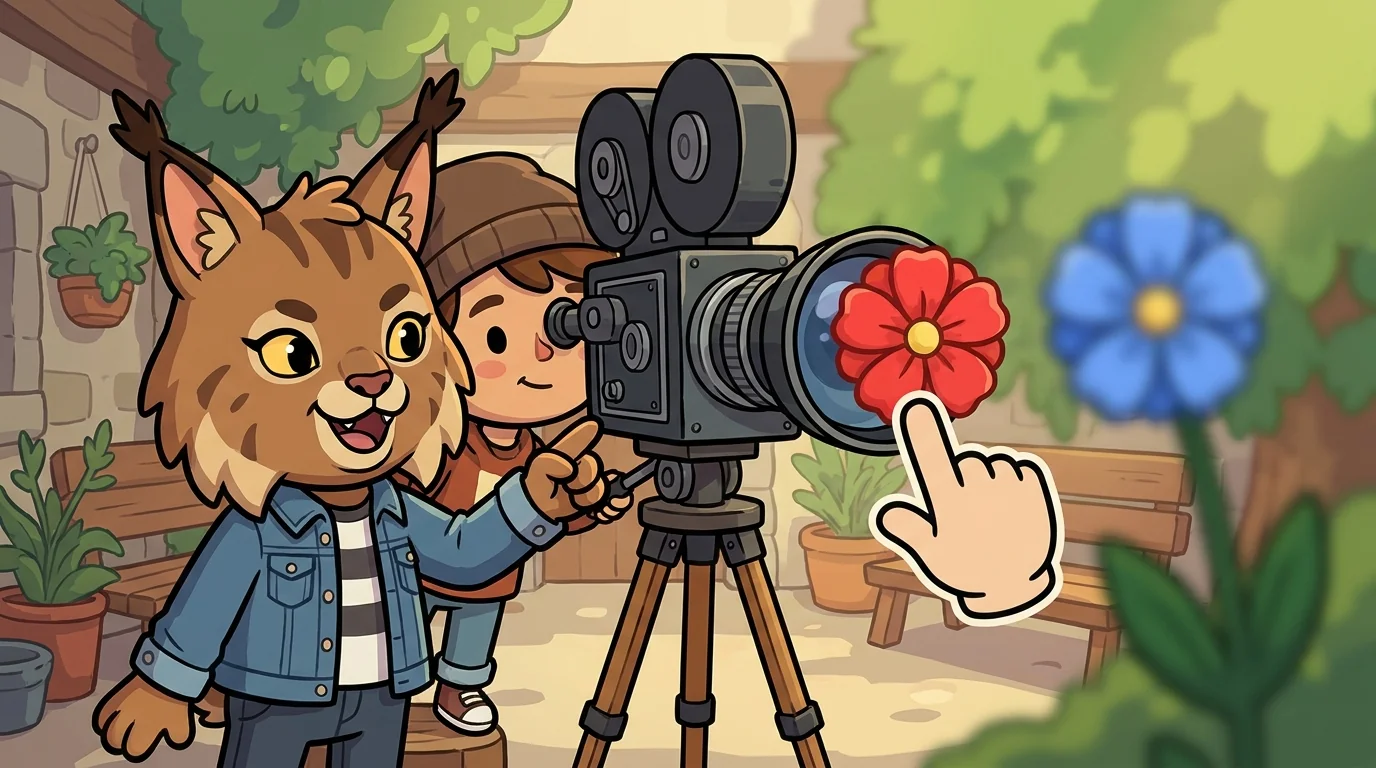
In a shaded corner of the Reelforge courtyard, a lynx-tween named Sharp had two flowers before the camera — one near, one far — and only one of them was clear.
"Look," Sharp said to the kid at the viewfinder. The near flower stood crisp and bright, every petal edged; behind it, the far flower melted into a soft green blur. "Your eye can't help it. It goes straight to the clear one. The blurry one is there — but it's not what you're looking at." Then Sharp turned the lens a hair, and the focus slid — the near flower went dreamy-soft, the far flower snapped clear — and the kid's eye jumped, helplessly, to the newly-clear bloom. "See? I moved your eye without moving anything. What's sharp is what you look at. Focus is a finger pointing — and the softness behind it isn't a mistake. It's mercy. It clears away everything that isn't the point."
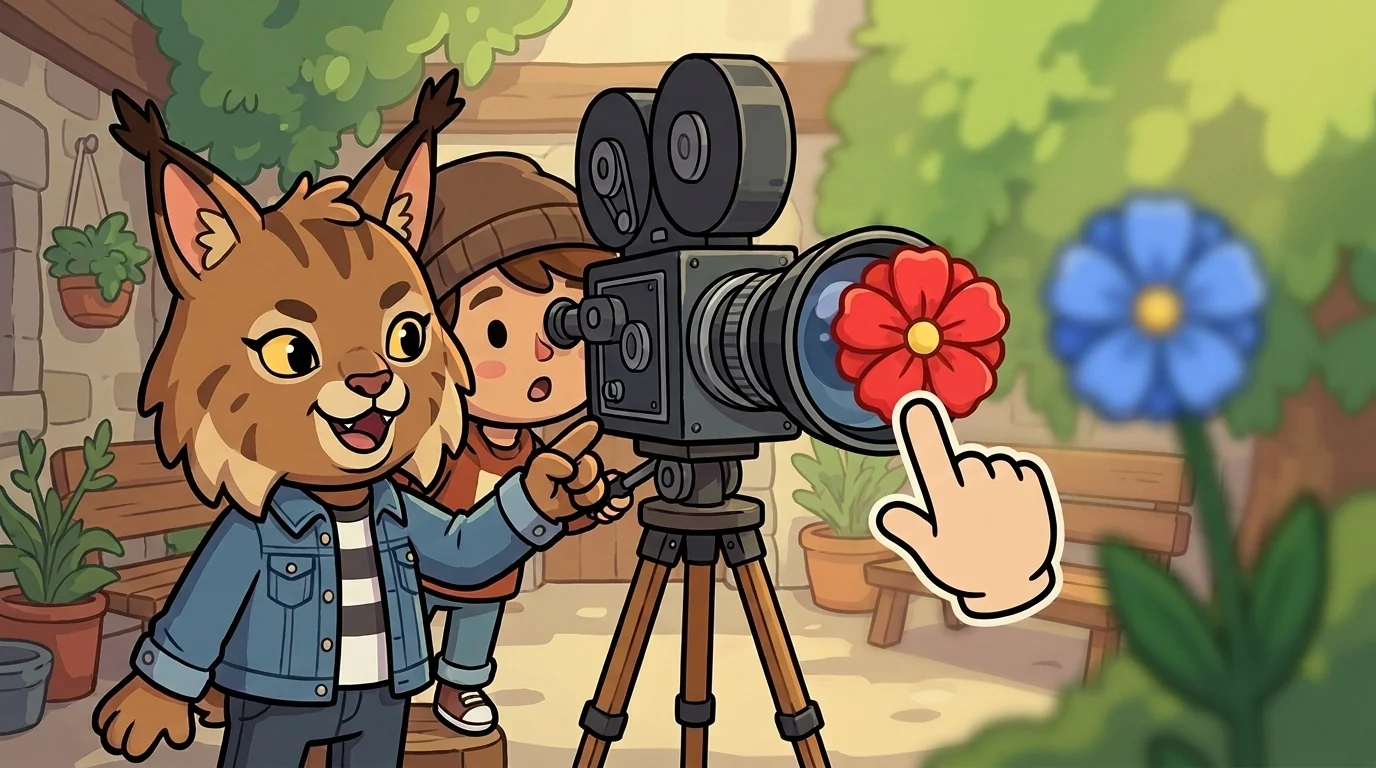
Sharp learned to control how much blur she got, and that control had a name. "The band of clear stuff — from the nearest sharp thing to the farthest sharp thing — is called the depth of field," she told the kid, "and I get to make it thin or thick." She opened the lens wide, and the band of focus shrank to a hair's width — just the one flower clear, everything else a wash of soft colour. "Shallow focus. One thing in the whole world. That's for a face, a tear, a held hand — when you want the audience to have nowhere else to look." Then she stopped the lens down small, and the band swelled until near flower, far flower, and the whole courtyard behind stood crisp together. "Deep focus. Now everything matters at once — the person and the room they're trapped in, the child and the huge world around them. Shallow says this one thing. Deep says all of it, together. Same lens. I just chose how wide to open the eye."
When she was young, Sharp thought sharpness was simply good and blur was bad — the way a beginner thinks a photo should have everything in focus. An old lens-grinder set her straight. "A picture where everything is clear," he said, "is a picture that hasn't decided what it's about. The eye wanders; it finds no home. Blur isn't failure — it's you being kind enough to choose for them, to say: rest here, this is the one." Sharp never forgot it. She stopped chasing all-clear and started composing with softness — using the blur as a frame, a hush, a way of folding the whole distracting world down to the single thing that mattered. "Sharpness points," she'd say. "Softness forgives everything else for being there."
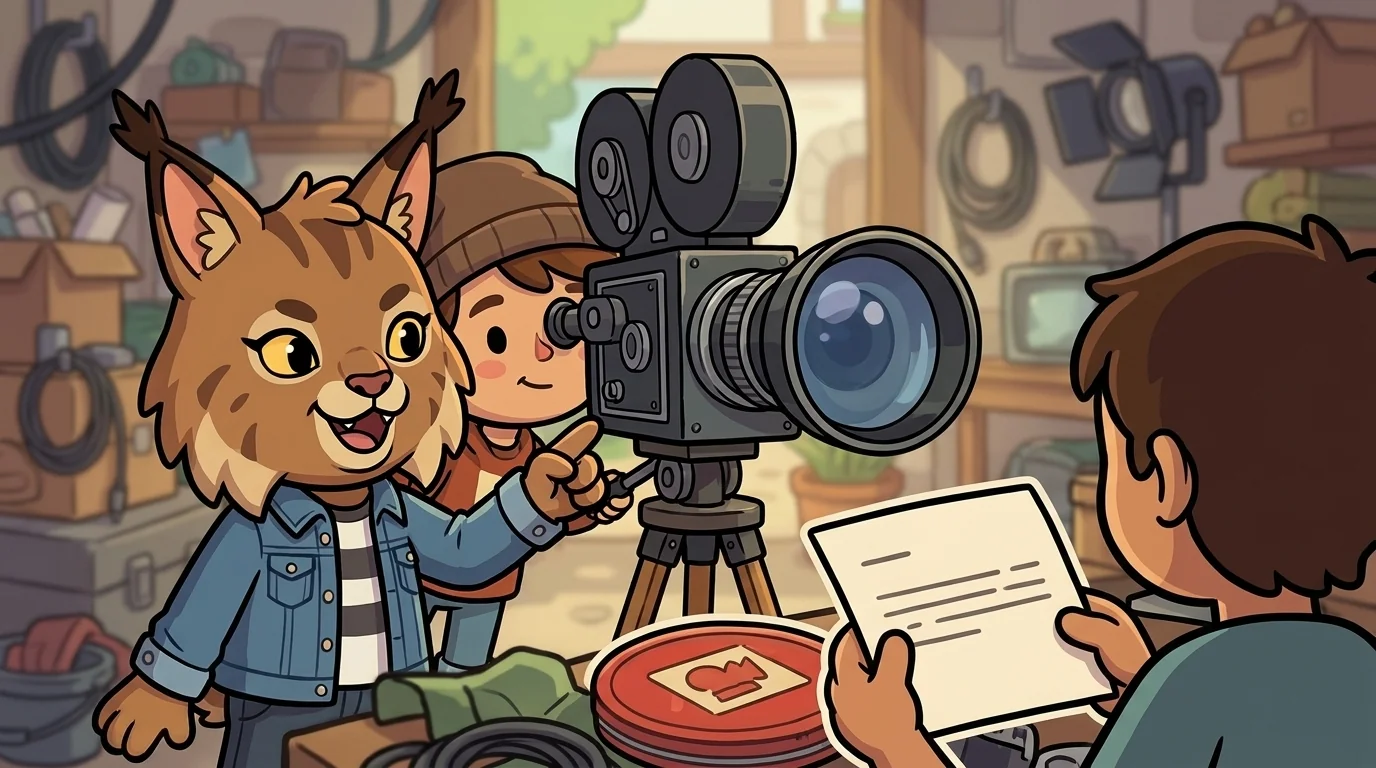
At Reelforge a kid had a scene — a boy at a crowded party spotting the one friend he came to find — and the footage was a mess, everything equally clear, the eye lost in the crowd. "You filmed it deep," Sharp said. "Everyone's in focus, so the audience doesn't know who to care about." She opened the lens wide, threw the crowd into a warm soft blur, and pulled the one friend into knife-sharp clarity. Instantly the kid's eye locked onto him, the crowd dissolving into mere colour and motion. "There's your boy," Sharp said. Then, for the reveal, she did the move she loved best: as the boy turned and he spotted the friend, she slid the focus — rack focus — from the boy's face to the friend's, in one smooth pull, and the audience's eye traveled the exact path his gaze did. "I didn't cut. I didn't move. I just slid what was clear," she said, "and their eyes followed like they were on a string. That's the whole craft: decide the one thing that matters, make it sharp — and when the one thing changes, slide the sharpness to it."
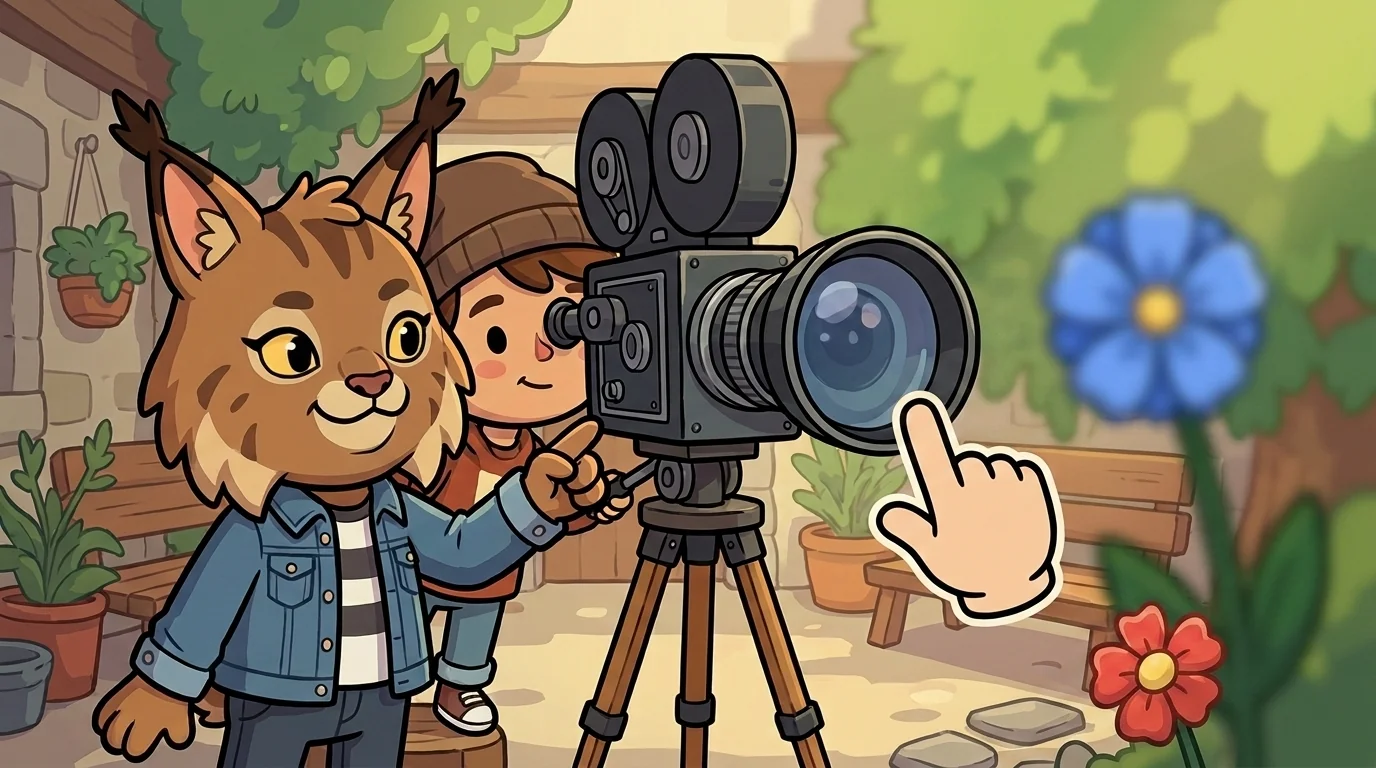
"So blur isn't the camera failing," the kid said, working it out. "It's the camera being kind — clearing away everything that isn't the point, and pointing me at the thing that is?"
"That's exactly it," Sharp said, and let the focus rest, soft and sure, on the single near flower. Under the quiet she felt the calm that always came from a clear thing well-chosen: not the scattered restlessness of an everything-in-focus frame with no home for the eye, not the beginner's worry that softness was a flaw, but a settled, pointed, nothing-wasted ease — the ease of someone who had learned that a picture must decide what it's about, that blur is a mercy that frames the point, and that the sharpest kindness a camera can offer is to say, gently and without a word, look here. That clear, chosen, look-here feeling, steadier than any anxious all-in-focus frame, was to Sharp exactly why she loved the soft green blur as much as the crisp bright bloom.
The ReelForge ensemble
Sharp is part of ReelForge's distributed-narrative cast. Each character embodies a different curricular primitive; together they teach the full subject.
-

Draft
Storyboarding — pre-visualization; 'Draw it first. Then film it.'
-
Aim
Camera angles + framing — 'Where the camera stands changes the story.'
-

Bright
Lighting design — 'Three lights. Different feelings.'
-

Buzz
Sound design — foley + ambient + dialogue — 'Sound is the other half.'
-

Snip
Editing — timeline + transitions + pacing — 'Cut here. Not there.'
-

Whole
Multi-scene narrative — 'Beginning. Middle. End.'
-

Dolly
Camera movement — the push-in, the follow, the reveal — 'Move the camera to move the eye.'
-
Stir
Blocking + performance — 'The body carries the scene.'
-
Vast
Shot size — wide, medium, close — 'How much you see changes how you feel.'