
Vast
VAST — how much you show is how much they feel. A wide shot says where you are; a close-up says what matters.
Loading audio…
Press play to listen along. The line being read lights up as you go.
Show full transcript
Loading transcript…
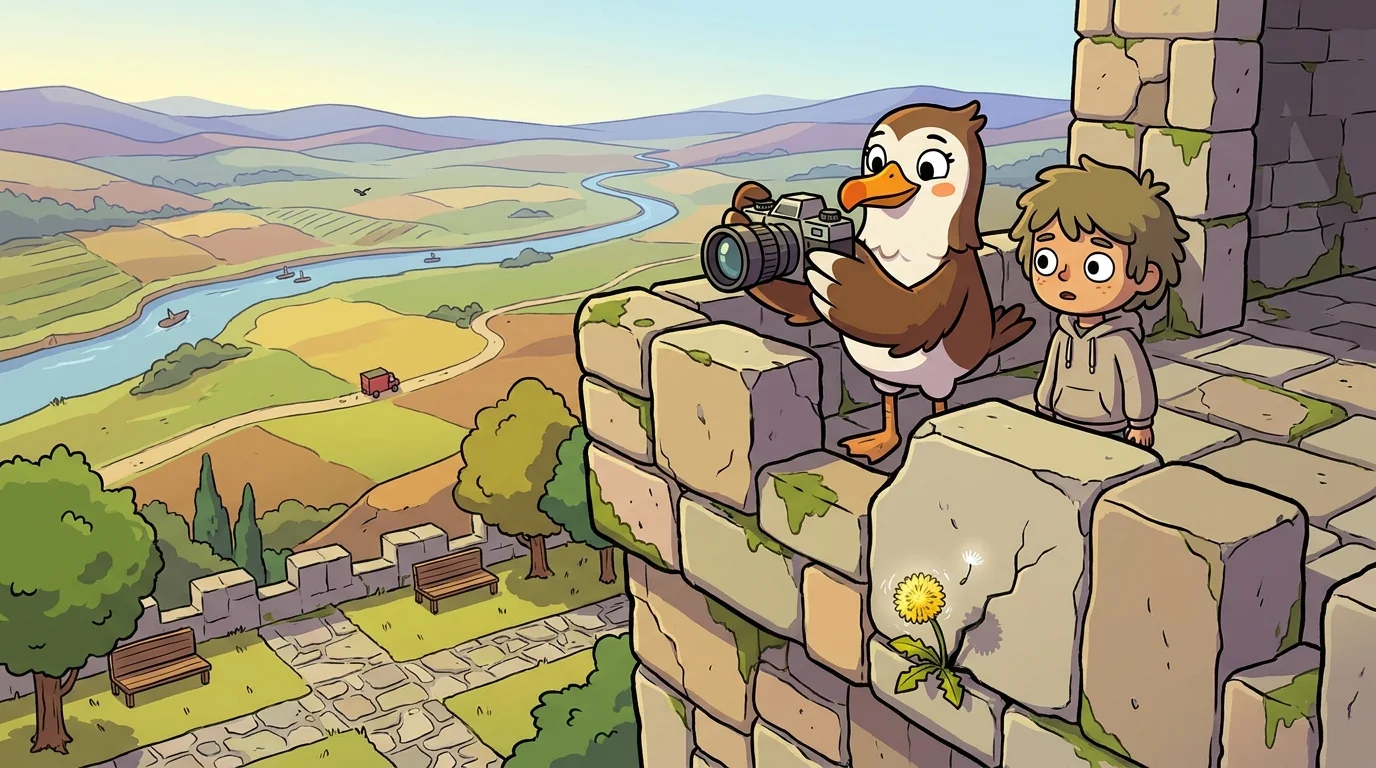
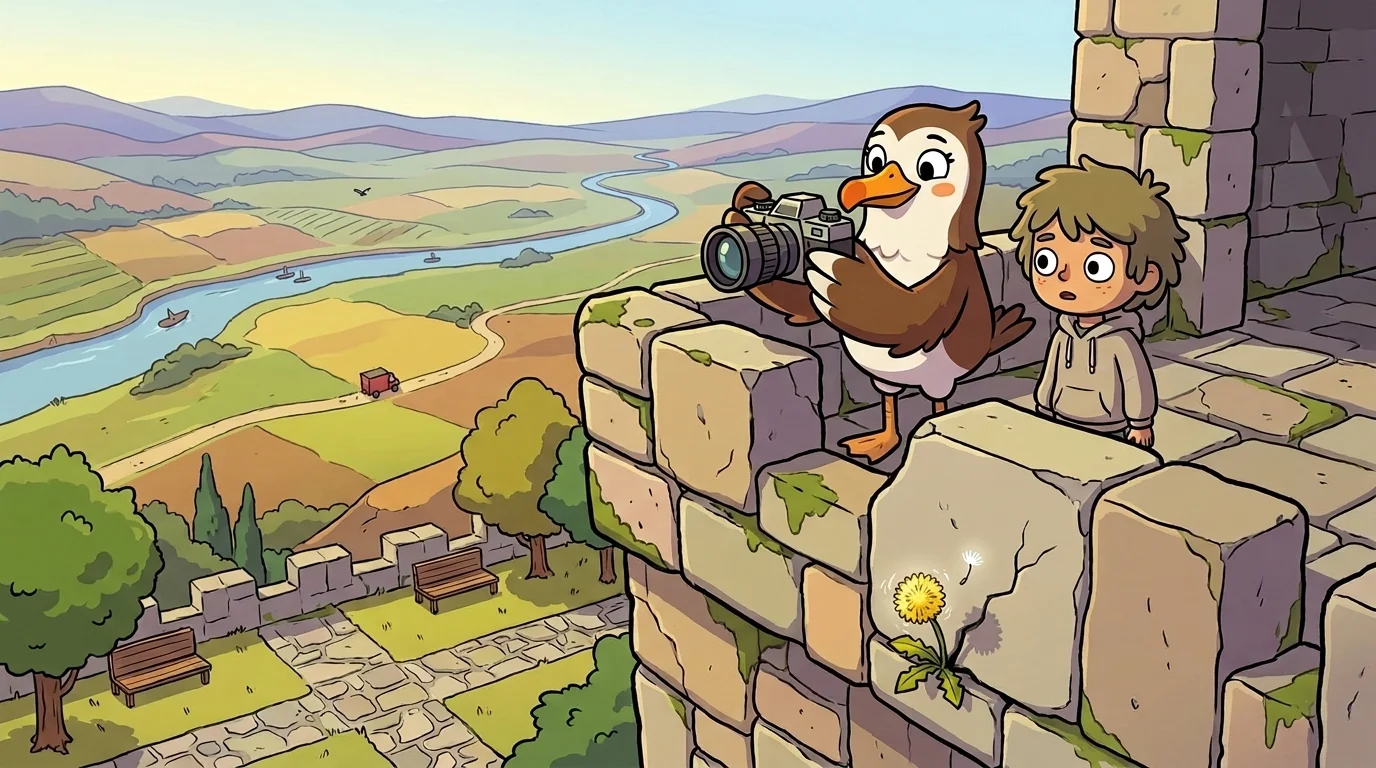
On the high wall above the Reelforge courtyard, an albatross-tween named Vast pointed a camera at a whole valley.
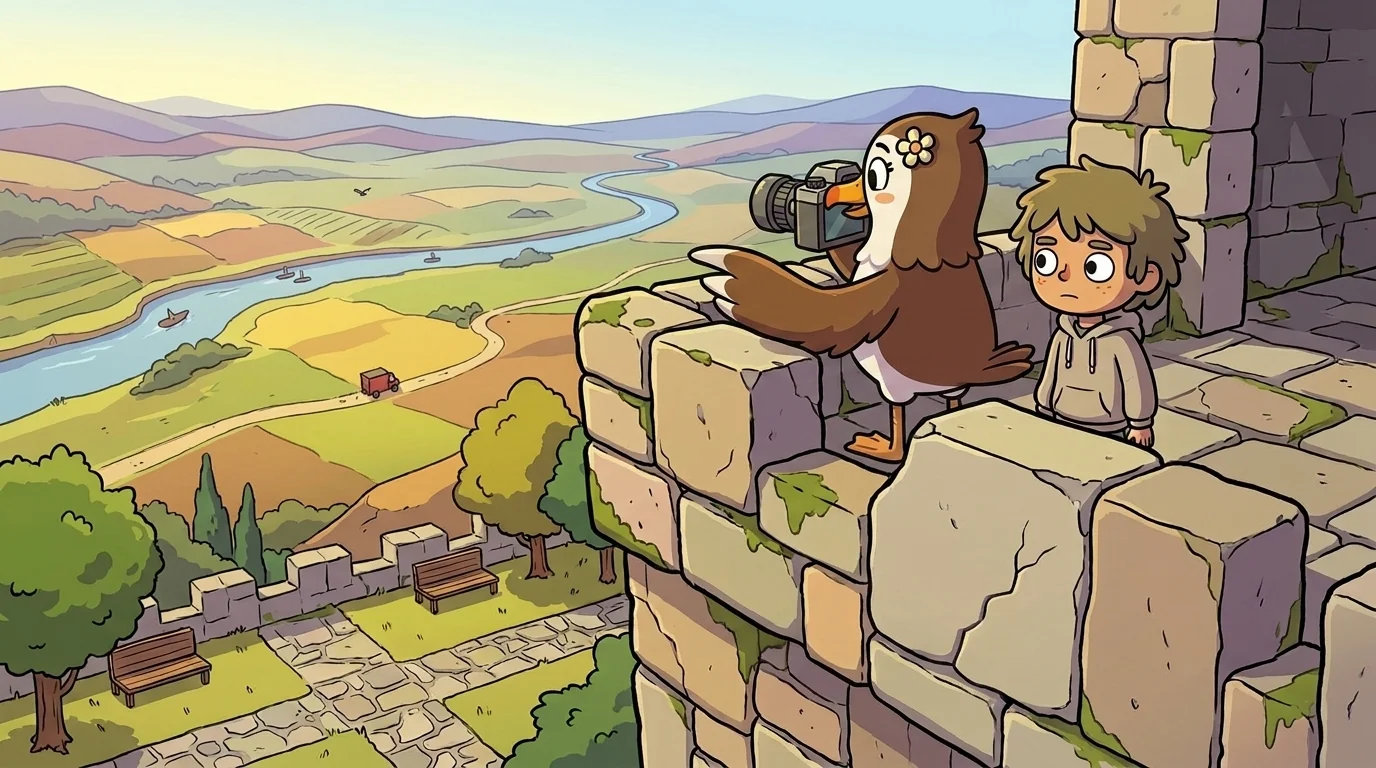
The frame held everything — the river, the far hills, a tiny cart on a tiny road, a speck of a bird that was probably a friend. "That's where we are," Vast said to the kid who'd climbed up beside her. "The whole world at once. You know exactly where you are — but you're small in it." Then, without moving her feet, she swung the camera down and in until the frame held only one thing: a single dandelion in a crack in the wall, its seeds trembling. "And that," she said softly, "is what matters. Same valley. But now your whole heart is on one flower. Because I showed you less. How much you show is how much they feel — the wider I go, the more you understand; the closer I go, the more you feel."
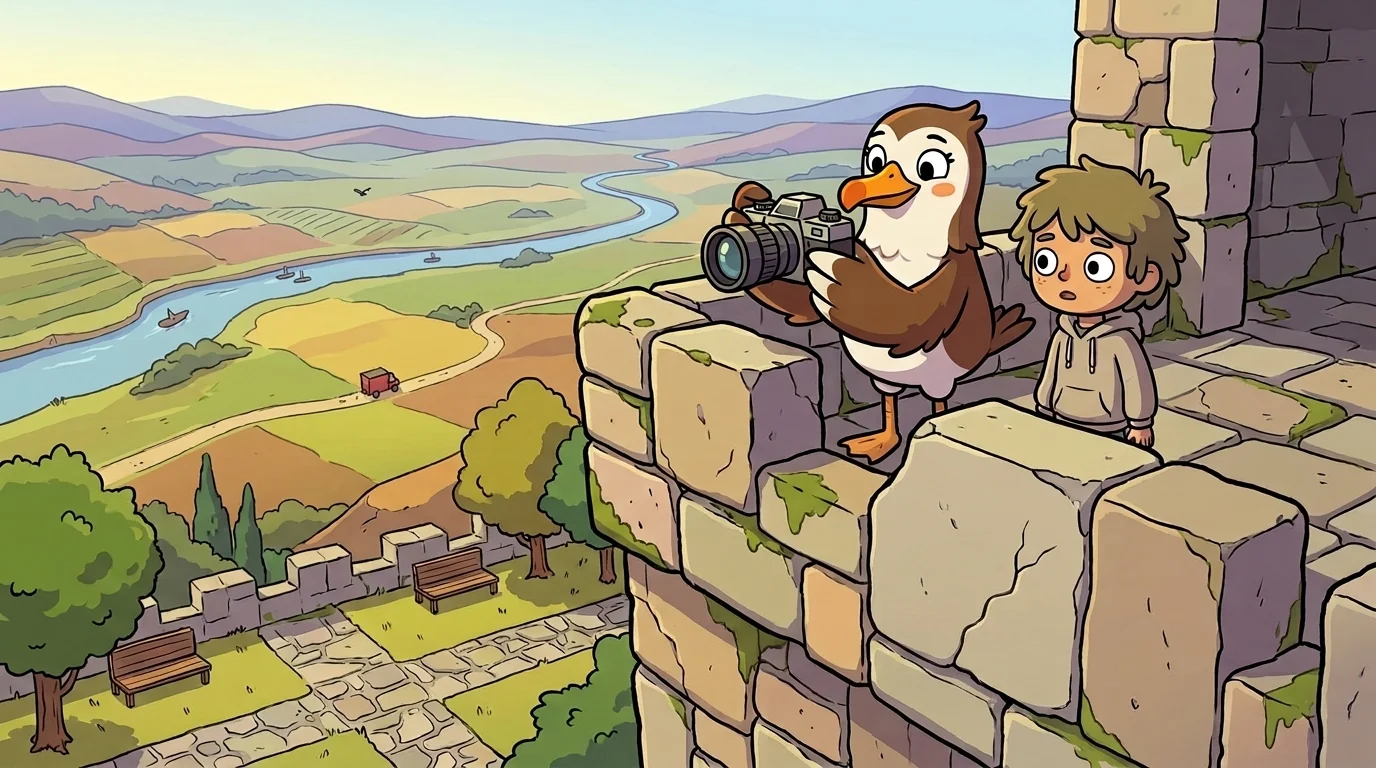
Vast learned that the sizes formed a ladder, each rung a different job, and that naming the rungs let her climb them on purpose. "Widest is the establishing shot," she told the kid, sweeping the whole valley. "It answers where are we — it hands the audience the map. Come in a step and you get the wide — a person and the whole world around them, tiny against it. Step in again: the medium, a body from about the waist up — this is conversation range, close enough to read a face, wide enough to see the hands. Closer still, the close-up — just the face, filling the frame; now nowhere to hide, every flicker of feeling enormous. And closest of all, the extreme close-up — one eye, one trembling lip, one shaking hand on a doorknob — so close it's almost unbearable, pure feeling with no room for anything else." She counted them off like rungs. "Each rung trades knowing for feeling. The wide gives you the facts. The close gives you the heart. Neither is better. They're for different jobs."
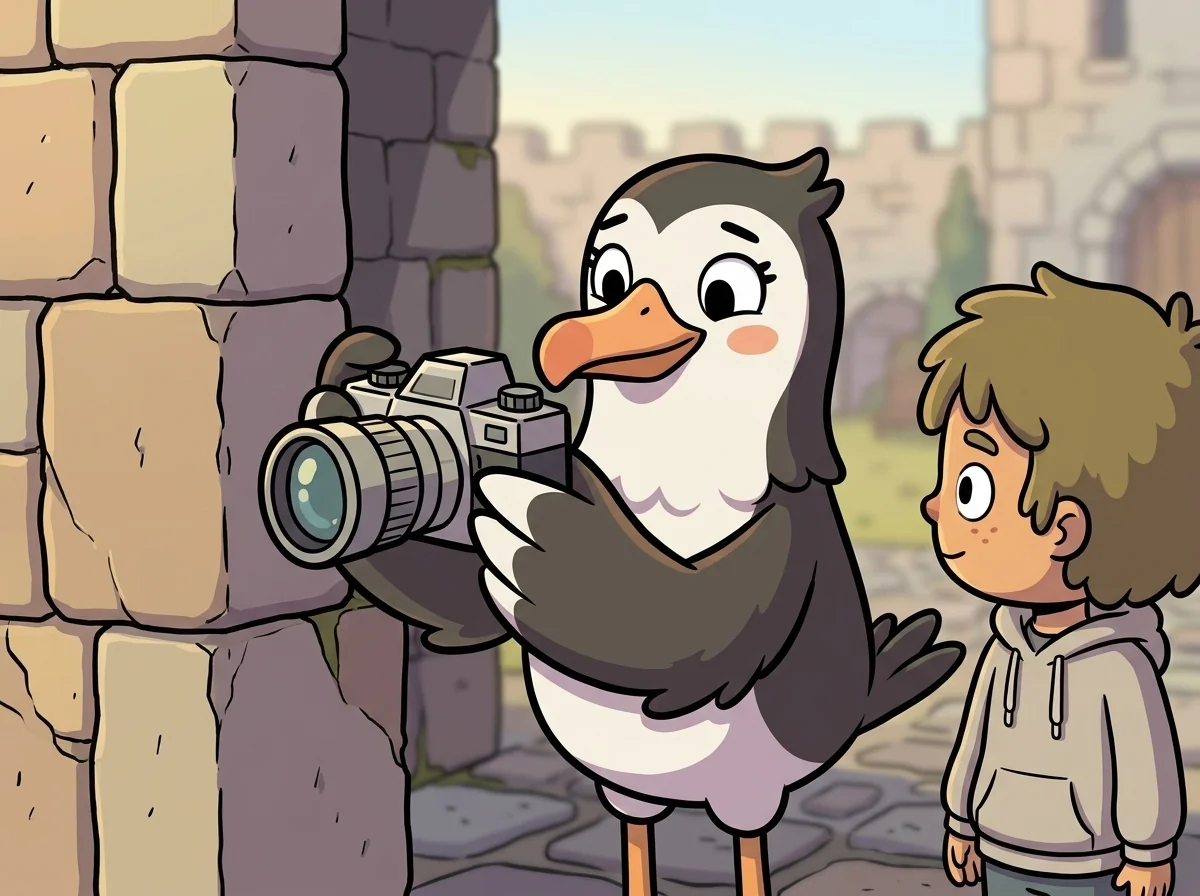
When she was young, Vast filmed everything wide, in love with the grandeur of it, until an old cinematographer showed her what she was missing. "You've shown me the whole magnificent kingdom," he said, watching her footage, "and I don't care about a single soul in it. You never came close enough for me to love anyone." He taught her the arc that fixed it: start wide to place them, end close to make them matter. Open on the vast, so the audience knows the world; then, as the story narrows to one heart, narrow the frame with it, rung by rung, until at the emotional peak there's nothing left but a face. "The wide earns the close," he said. "You can't break a heart in close-up if you never showed the world it's small inside." Vast built her whole eye on it — the slow journey from where to who to what it costs.
At Reelforge a kid had a scene — a girl saying goodbye at a train station — filmed entirely in one wide shot, the girl a distant figure among crowds. "It's beautiful," Vast said, "and I feel nothing, because you kept me far." She rebuilt it as a climb down the ladder: open wide — the vast station, the girl tiny, so we know where and how alone; step to a medium as she reaches the platform, close enough now to see her hands twist; then, on the goodbye itself, a close-up — just her face, the whole world gone, every held-back tear filling the frame; and last, for one heartbeat, an extreme close-up of her fingers letting go of a sleeve. The kid actually gasped. "Same goodbye," Vast said. "But we traveled — from the whole lonely station down to one letting-go hand. The wide told you where. The close told you it hurt. That's the ladder: show more to help them understand, show less to make them feel — and walk down it, rung by rung, so the feeling arrives exactly when the story needs it."
"So it's not that close-ups are better," the kid said, working it out. "It's that how much I show decides whether the audience is understanding or feeling — and I get to walk them from one to the other?"
"That's exactly it," Vast said, and let the frame rest, for a moment, on the single trembling dandelion. Under the quiet she felt the calm that always came from a size chosen for its job: not the cold grandeur of everything-wide with no one to love, not the claustrophobia of a close-up that hadn't earned its place, but a balanced, purposeful, walked-them-there ease — the ease of someone who had learned that the wide gives the facts and the close gives the heart, that neither is better, and that the whole art is choosing how much to show, and when. That from-where-to-who feeling, steadier than any single size held too long, was to Vast exactly why she could point a camera at a whole valley, or at one flower, and mean something different, and true, each time.
The ReelForge ensemble
Vast is part of ReelForge's distributed-narrative cast. Each character embodies a different curricular primitive; together they teach the full subject.
-

Draft
Storyboarding — pre-visualization; 'Draw it first. Then film it.'
-
Aim
Camera angles + framing — 'Where the camera stands changes the story.'
-

Bright
Lighting design — 'Three lights. Different feelings.'
-

Buzz
Sound design — foley + ambient + dialogue — 'Sound is the other half.'
-

Snip
Editing — timeline + transitions + pacing — 'Cut here. Not there.'
-

Whole
Multi-scene narrative — 'Beginning. Middle. End.'
-

Dolly
Camera movement — the push-in, the follow, the reveal — 'Move the camera to move the eye.'
-
Sharp
Focus + depth of field — 'Where the eye lands.'
-
Stir
Blocking + performance — 'The body carries the scene.'