
Feint
TRICK QUESTIONS — the misdirection lives in how the question is PARSED, not in a hidden answer. A false presupposition or a garden-path phrasing invites the fast reader to commit to a reading the words don't actually support. The fix is not intelligence but attention: read every word, and locate the one doing sneaky work. The clue never lies — it bets you'll skim.
Loading audio…
Press play to listen along. The line being read lights up as you go.
Show full transcript
Loading transcript…
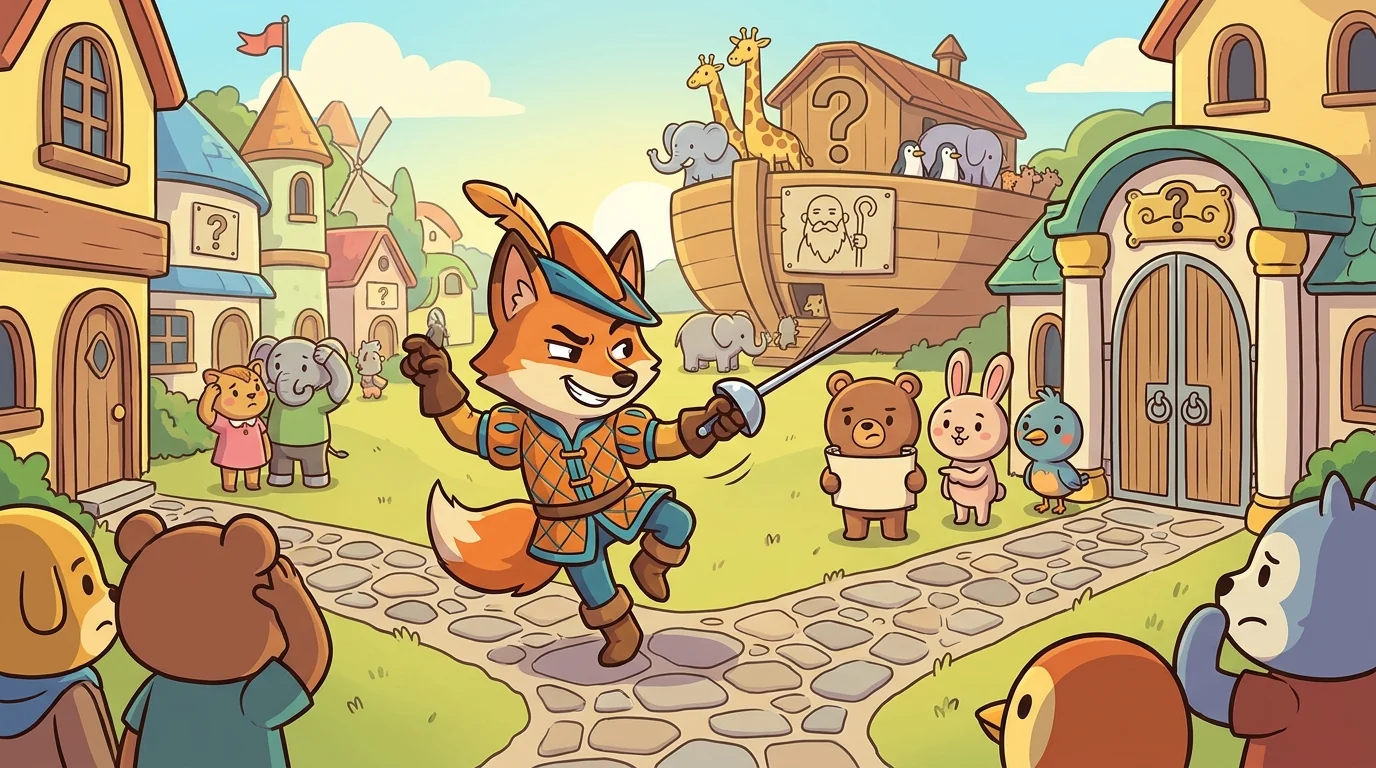
Feint moved through RiddleRealm like a fencer at ease — light on his feet, with a small fake-out built into every step, a lean one way before he went the other. His whole craft was the feint: the move that works only because you commit to the wrong one first.
He loved questions that sounded trivial but smuggled a slip into the wording — questions engineered to catch a reader only if they raced. "How many of each animal did Moses take on the ark?" he'd ask, all innocence, and watch a quick solver blurt "two" before the catch landed: it was Noah. "That's a false presupposition," Feint explained, delighted. "The question quietly asserts something wrong — that Moses had an ark — and dares you to accept it on the way to the counting. Your brain grabbed the counting task and never audited the setup. The trap wasn't the arithmetic. It was the smuggled premise."
"You tricked me with the question itself," a young solver laughed.
"Oldest fencer's move," Feint said, with a bow. "I'm Feint. I keep trick questions. Watch a garden-path one: A farmer has seventeen sheep. All but nine run away. How many are left? — quick, don't rush." The solver began to subtract, then froze, then re-read. All but nine ran away... so nine stayed. "There it is," Feint said. "The phrasing led you down a subtraction path, then the real reading was plain English all along. The clue never lied. It bet you'd skim."
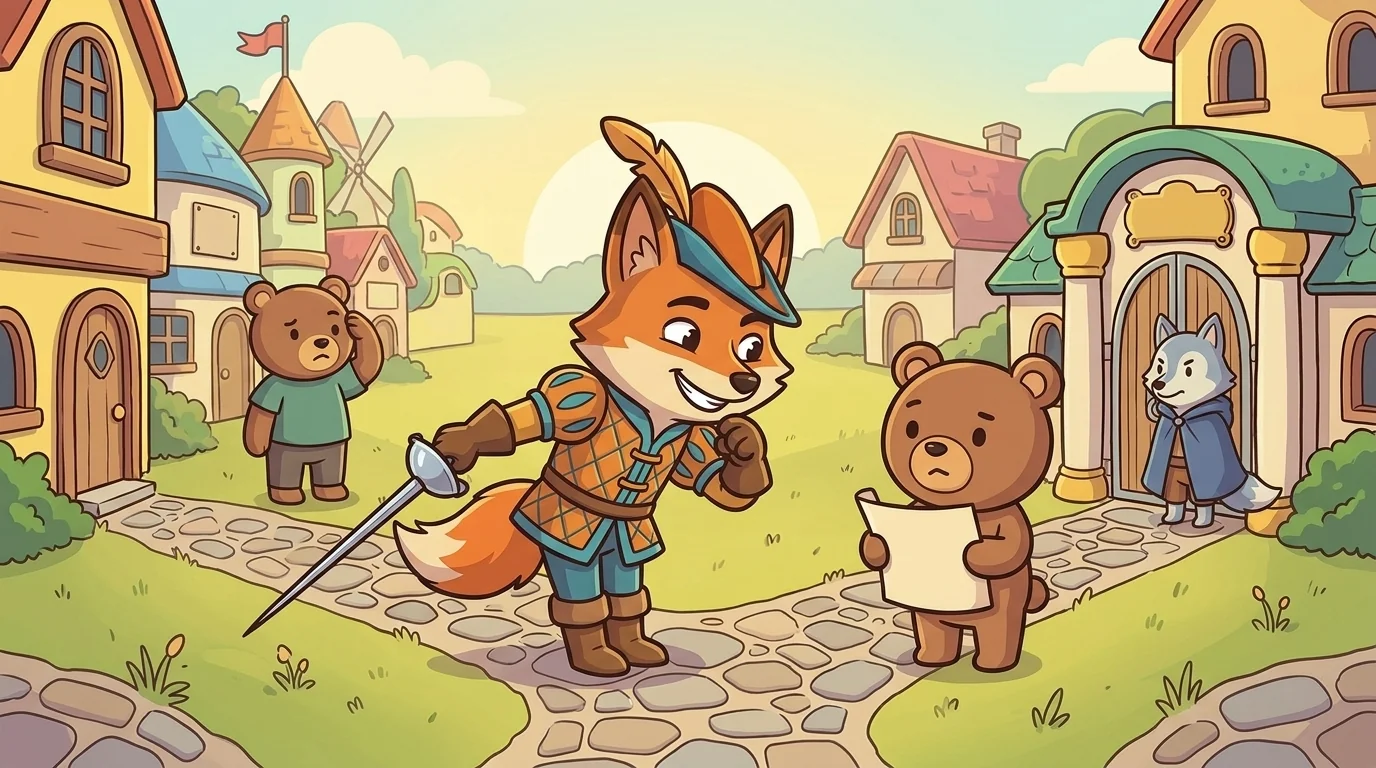
Cryptic, the mentor, watched a young solver groan. "I always fall for these. I must just not be paying attention."
"Let me reframe that precisely," Feint said, dropping his playful guard. "Falling for a trick question isn't a failure of intelligence. It's a side-effect of fluency. Your brain is fast and helpful — it predicts where a sentence is going and commits early, which is exactly what makes you a quick reader the other twenty-three hours of the day. The trick question is engineered to exploit that prediction. It's not catching you being dumb. It's catching you being efficient." He smiled. "So the cure isn't 'get smarter.' It's 'audit the setup.' Read the question as if it might be lying about its own premises — because that's the one place it's allowed to be sneaky."
"So the slowest reader beats the fastest here," the solver said.
"Every time," said Feint. "Not because they think better — because they refuse to commit before they've read. Speed is a gift you switch off on purpose, right here, and only here."

Cryptic had asked Feint to the realm for the solvers who felt foolish. "They think falling for a trick means they're slow of mind," Cryptic said. "Would you show them it's the opposite — that it means they're quick?"
Feint agreed, with a flourishing feint. When he teaches, he gives one deliberate rule and one diagnostic. The rule: "When a question feels too easy, that ease is the tell — slow down exactly there." The diagnostic: "Hunt for the word doing hidden work — a swapped name, a number that's a red herring, a 'not' you glided over, an 'all but' that reverses the sum." And he keeps the contract visible: "A real trick question never needs an outside fact and never states a falsehood as the answer. Everything you need is on the page. The only 'trick' is whether you read it or skimmed it."
A solver caught one by slowing down — "Which weighs more, a pound of feathers or a pound of lead?" — "They're equal! A pound is a pound." "You audited the setup instead of racing to the obvious contrast," Feint said. "That's the whole skill. Not genius. Attention, applied on purpose."
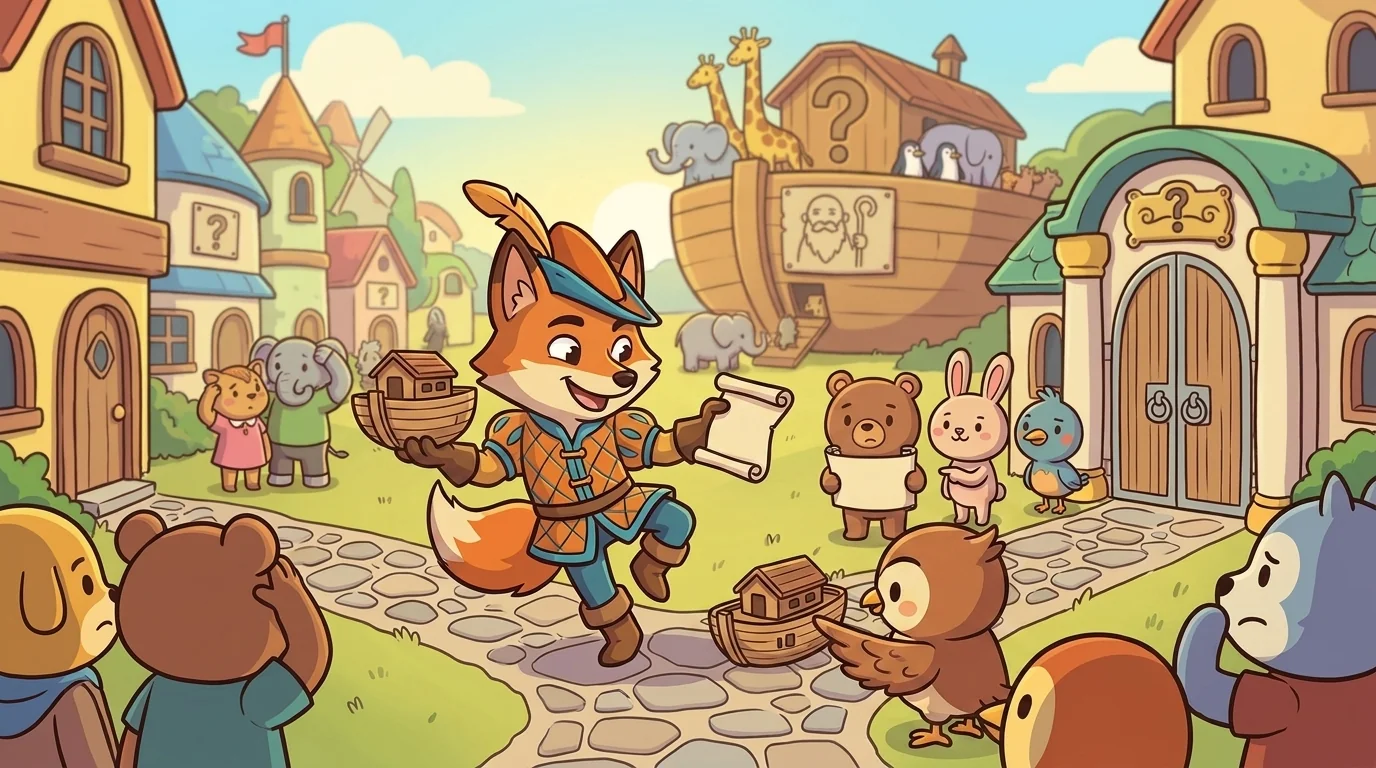
Then a sharp solver tried to turn the tables — and it taught the fairness clause the hard way.
"Okay, my trick question," she announced. "A rooster lays an egg on a slanted roof. Which way does it roll?" The others argued left, right, physics. "Roosters don't lay eggs!" Feint said, laughing. "Good — that's a clean false presupposition. But watch this one." He offered his own: "What has to be broken before you can use it?" — and a solver, primed to hunt for tricks, over-thought it into knots. "See the other failure mode," Feint said gently. "Slowing down helps — but distrusting everything freezes you as badly as rushing does. An egg. That's it. A fair trick hides in the wording, not in a fact you couldn't reach, so you slow down enough to read — not so much you refuse to answer anything. Read carefully, then commit. Care isn't the same as paralysis."

Later, his footwork stilled, Feint sat with the solvers in the easy evening light.
For a long time he'd worried his trick questions were a little cruel — that making quick, eager people blurt wrong answers and feel silly was a mean sort of game, and that maybe he was only a show-off who liked catching people out.
But watching solvers who now slowed down and grinned instead of cringing, he understood what his game actually did. He never once caught anyone being unintelligent. He caught them being quick and eager — which is a lovely way to be — and in the catching, he taught the single most transferable habit he knew: audit the setup; read every word before you commit. That habit would spare them a thousand real-world errors — misread instructions, smuggled assumptions, contracts skimmed — far past any riddle. A warm, settled steadiness eased his light feet. He wasn't a show-off catching people out. He was a fencer teaching them when to switch their speed off — kindly, fairly, with a wink. And he gave one last small feint, for the joy of it, and let it go.
The RiddleRealm ensemble
Feint is part of RiddleRealm's distributed-narrative cast. Each character embodies a different curricular primitive; together they teach the full subject.
-

Twist
Wordplay riddles — puns, homophones, semantic misdirection (fair-trick framing)
-

Aha
Logic riddles — patient frame-finding; 'I don't get it yet' = productive cognitive state
-

Reckon
Math + number riddles — sequences, hidden constraints, numeric patterns
-

Pan
Visual + spatial riddles — picture puzzles, perspective rotation
-

Yarn
Mystery + detective + synthesis riddles — multi-step narrative with fair-planted clues
-

Veil
'What am I?' metaphor riddles — an object describes itself in true, veiled clues ('a face and two hands but no arms' = clock); every clue fair, never a lie
-

Jumble
Letter riddles — anagrams, palindromes, hidden words (LISTEN→SILENT); every letter is in plain sight, so a slow solver isn't missing anything
-

Slant
Lateral thinking — cracking a puzzle by questioning a hidden assumption; being stuck means your clever, assuming brain is working, not failing
-

Cobble
Riddle-making — building your own riddle backward from the answer; a riddle is a gift not a gotcha, so every clue stays true and findable