
Bind
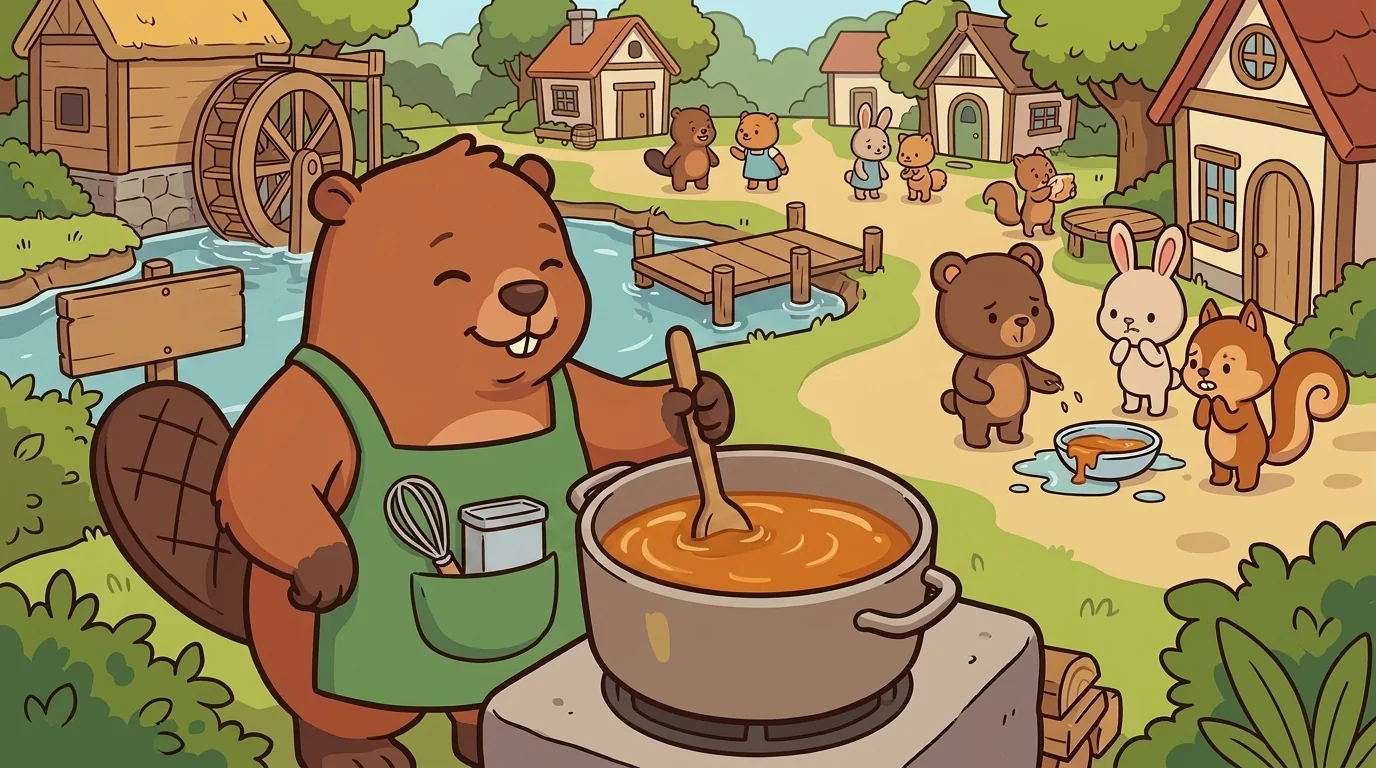
BIND — a thin, watery sauce becomes a smooth, coating one when you thicken it: by cooking it down, or by adding a little starch that swells and traps the water. thickening is what turns loose ingredients into one silky whole.
Loading audio…
Press play to listen along. The line being read lights up as you go.
Show full transcript
Loading transcript…
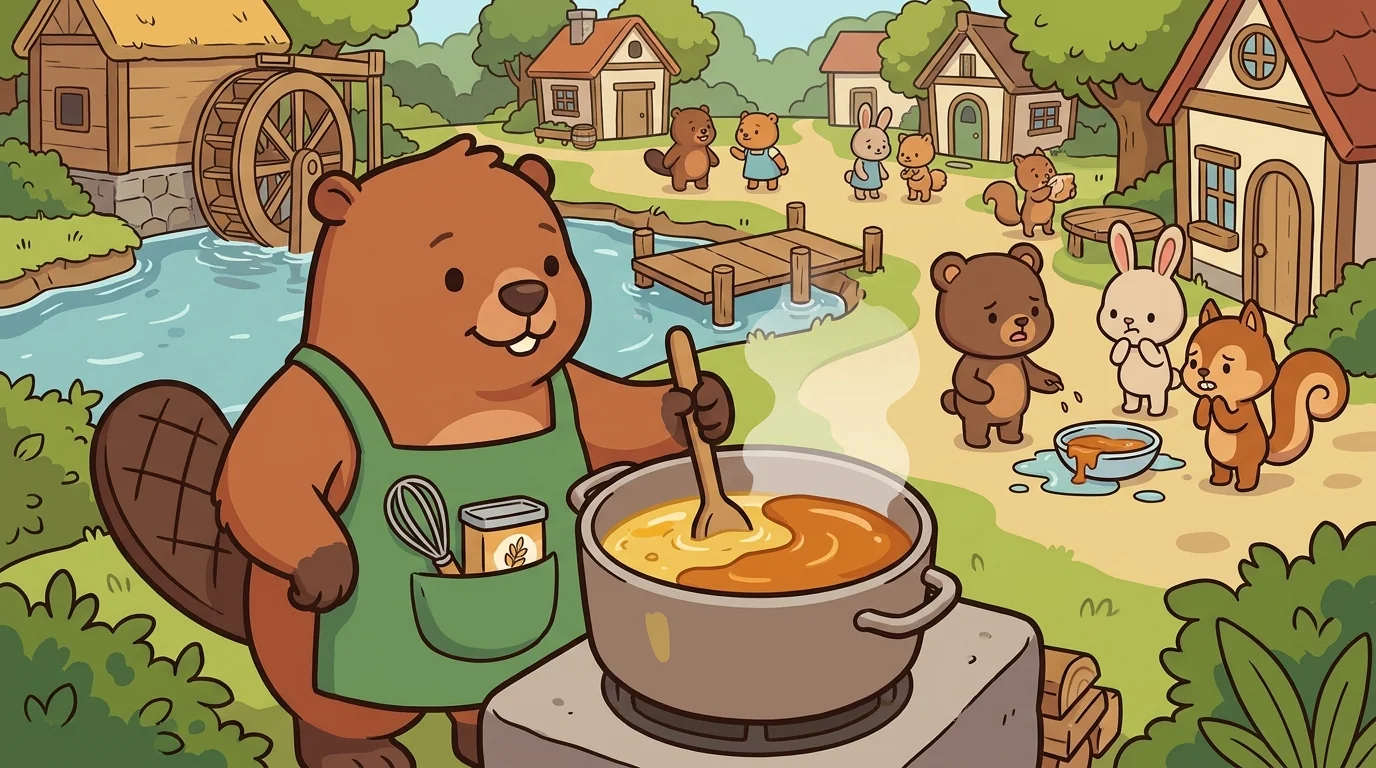
In the SaffronLab kitchen, beside a window fogged with steam, a broad and patient beaver named Bind was doing the one thing that turned a thin, split, watery mess into something smooth and glossy that clung to a spoon — while a young cook beside her was certain her sauce was simply ruined.
Bind was calm and unhurried, warm brown fur dusted with flour, a small whisk and a tin of starch in her big apron pocket. The young cook — a flustered vole — jabbed at her pan. "It's broken. The butter and the stock just... slide apart. They won't be one thing. I did everything right and it's still watery." She reached to dump it out.
Bind laid a gentle paw over the pan. "Wait. It isn't broken. It's just loose — a lot of separate little things that haven't been given a reason to hold together yet." She sprinkled the faintest dusting of flour into a spoonful of fat at the pan's edge and stirred it into a smooth paste before it could clump. "Here's the secret nobody tells you: thickening isn't about adding more. It's about giving the water something to hold onto. Starch grains are like tiny sponges — warm them in the liquid and they swell, drinking the water in, until the whole thing goes from thin to silky." She stirred the paste back into the stock, slowly, and the sauce began to gloss and cling. "See? Loose things, made one. Not by force. By giving them a way to bind."
The vole stared as the sauce coated the back of her spoon. "So it wasn't ruined. It was just... waiting for the thing that holds it together?"
"Most loose things are," Bind said. "They don't need throwing out. They need the one small addition that lets them become whole."
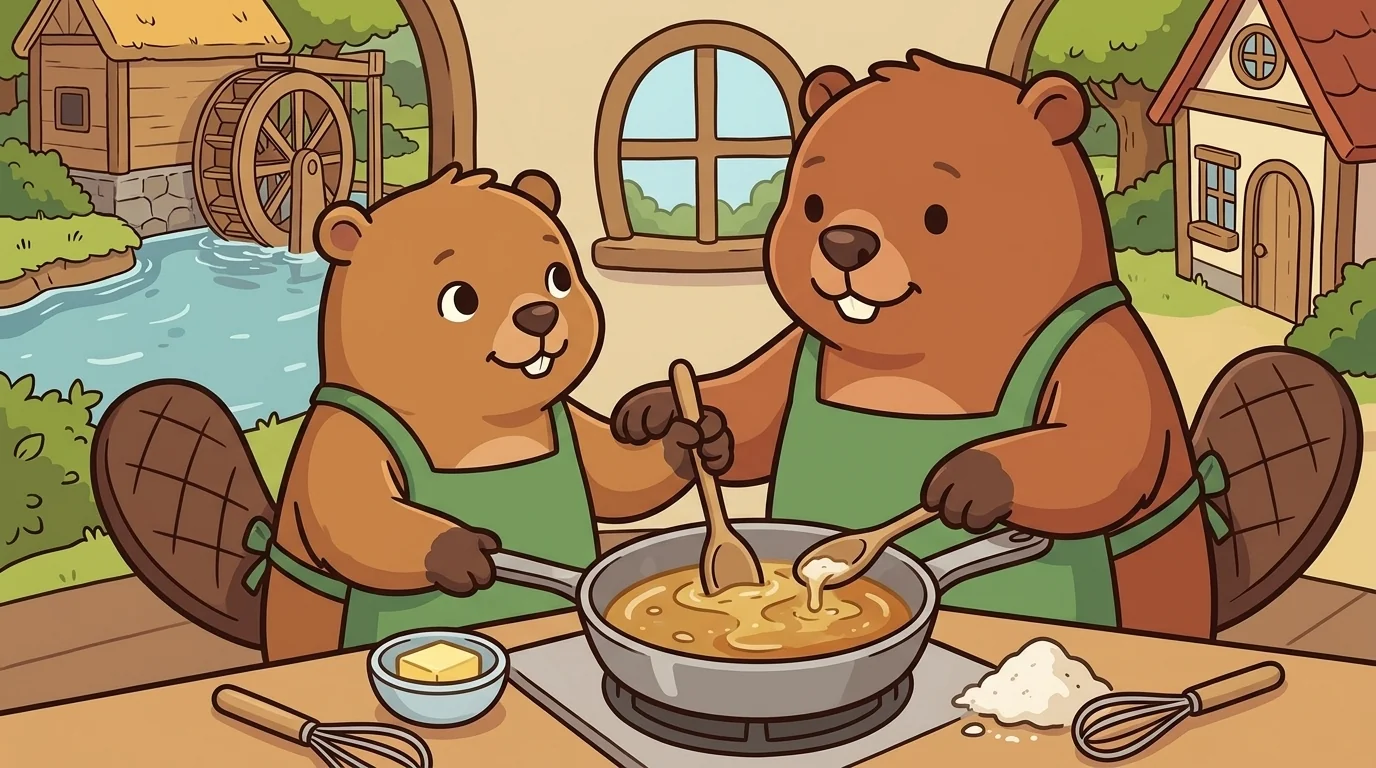
Bind had not always been so patient with loose things. When she was young, she'd been a great dumper-out of anything that didn't come together fast.
She'd wanted, that first winter she was allowed near the stove, to make her grandmother's gravy — the thick, glossy kind that hugged the potatoes. But hers came out thin and gray and sad, a puddle instead of a hug. So she threw it out and started over. Thin again. Threw it out. Again. She burned through a whole afternoon and half the larder, each batch abandoned the moment it wasn't instantly perfect, until she sat by the cold stove nearly in tears, convinced she simply couldn't do the thing her grandmother did without thinking.
Her grandmother found her there and didn't scold the waste. She just rescued the last thin batch — didn't throw it out — and showed Bind how to whisk a little flour into a spoon of fat, and stir it in, and then wait, letting it warm and thicken in its own time instead of demanding it happen at once. And the gray puddle slowly, gently became the glossy hug. "You kept throwing away things that were almost there," her grandmother said, not unkindly. "Loose isn't ruined. Loose is not finished yet." Bind never forgot it — the quiet lesson that the thing she'd been discarding a dozen times had, every time, only needed a little starch and a little patience to become whole.
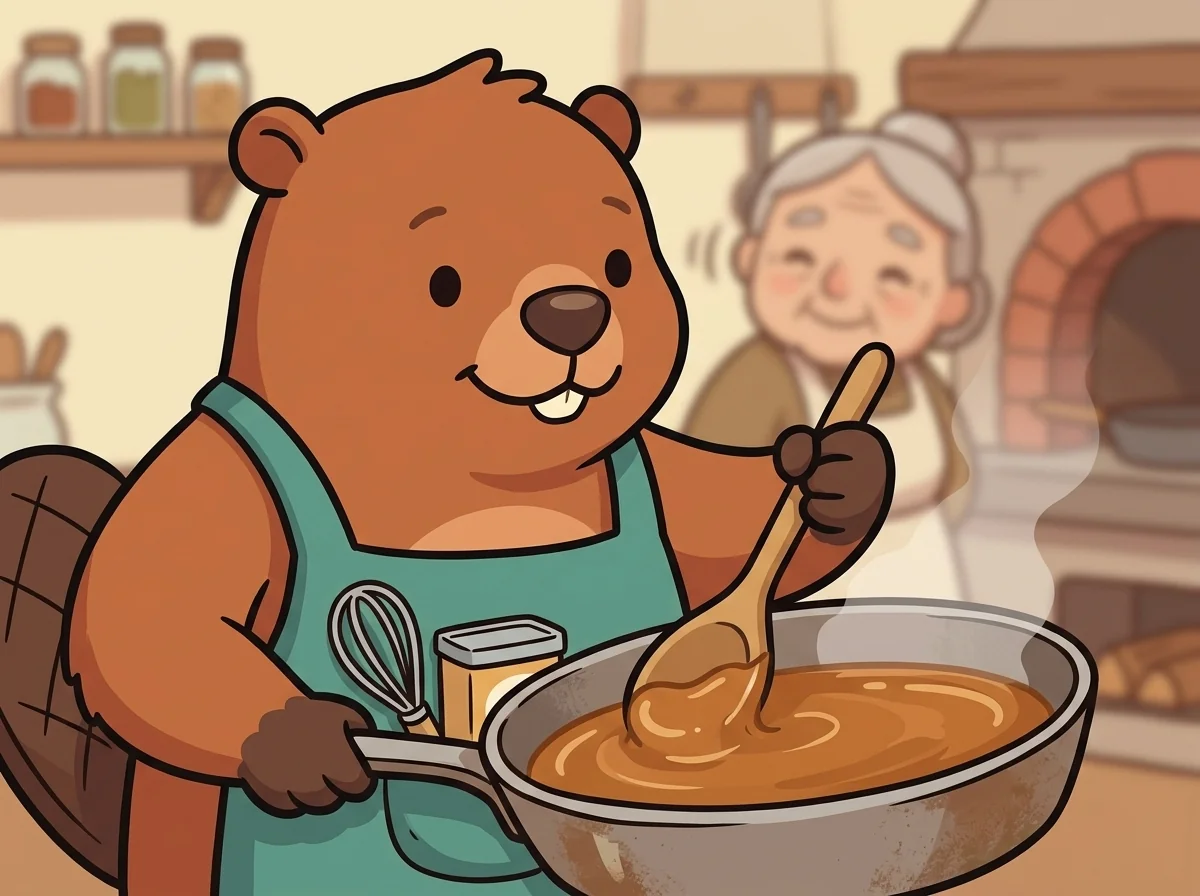
She came to work at the SaffronLab kitchen as a young cook, drawn to the one place that treated a broken-looking sauce as a problem to be understood rather than a failure to be hidden.
The head cook, an old otter named Roux, met her at the door with a pan of curdled custard — grainy, weeping, clearly "wrong." "What would you do with this?" he asked.
The old dump-it-out Bind would have reached for the bin. This Bind looked closer. "It's not curdled past saving — the eggs have just tightened and squeezed out their water; the little solids and the liquid have come loose from each other. If I warm it gently with a spoon of starch slurry and whisk steady, the starch will get between the egg proteins and hold the water back in, and it'll come smooth." She did exactly that, low and slow, and the grainy weep pulled back into a glossy cream.
Roux watched the custard come together. "Most young cooks tell me it's ruined and reach for the bin," he said. "You told me it was only loose, and you gave it the thing that binds. That patience — that's the whole craft. You belong in this kitchen."
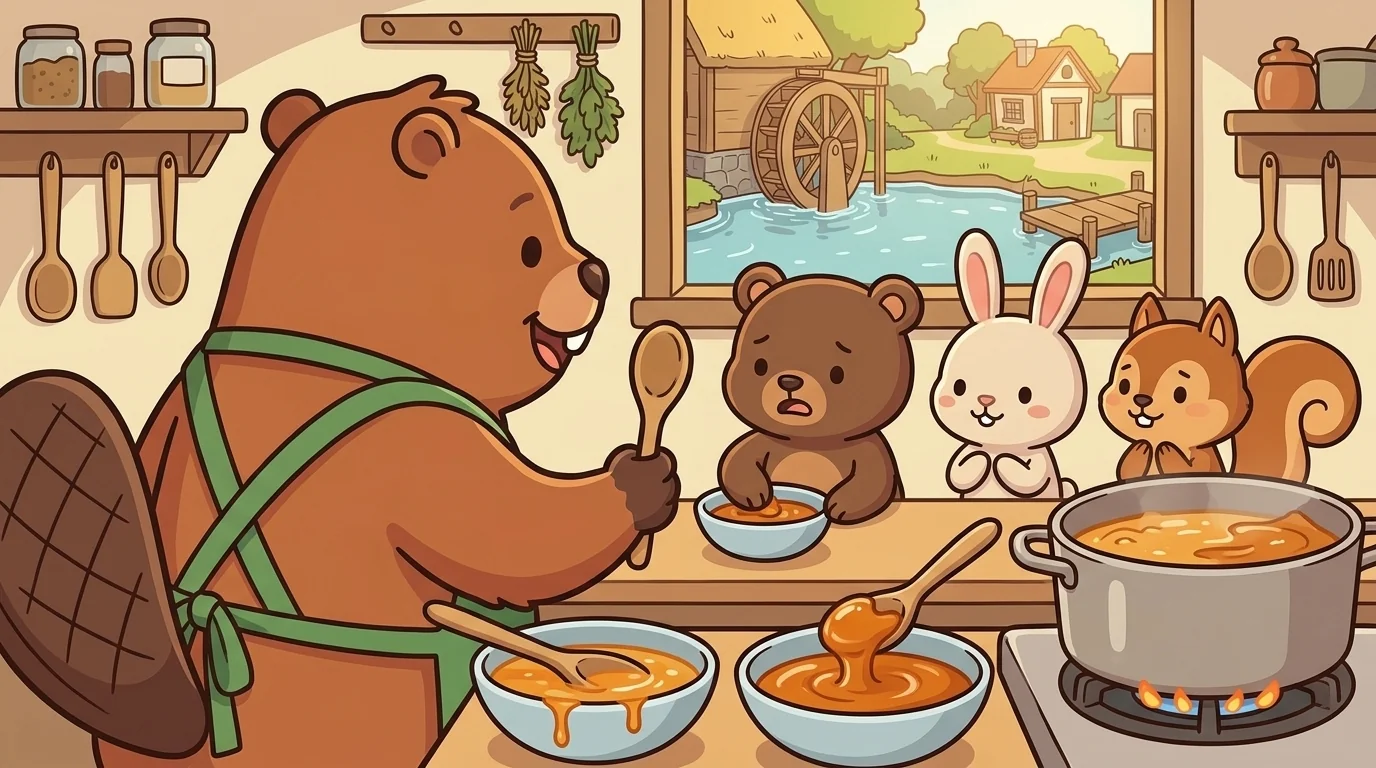
Over the seasons, Bind's corner of the kitchen filled with cooks holding pans they were sure were beyond saving.
One afternoon a rattled young hare slammed down a soup. "It's watery and thin and it tastes like nothing holds together. I've been boiling it harder and harder to fix it and it's only getting worse." Bind didn't tell her she was wrong. "Boiling harder is you shouting at it to come together," she said gently. "Loose things don't respond to shouting. Watch — two ways to bind. One: we cook it down, slow, so the water leaves as steam and what's left grows thick and concentrated on its own. Two: we add a little starch to hold the water it has. Both turn loose into one — neither one needs force." She stirred in a small slurry and lowered the flame, and the thin soup began, slowly, to cling. The hare watched the transformation. "So the fix was gentler, not harder?" "Almost always," Bind said. "The loud, fast way breaks things — the sauce splits, the starch clumps into lumps. The patient way lets them bind. When something won't come together, the answer is rarely more heat and more speed. It's the right small addition, stirred in slow, and then the willingness to wait while it thickens." The hare lowered her flame, and Bind watched the frustration ease out of her as the loose soup gathered, at last, into one silky whole.
When the kitchen had quieted and the last pots sat cooling, the hare came back with a smaller, softer question.
"Doesn't it ever frustrate you," she asked, "how slow it is? Waiting for things to thicken, stirring and stirring, when you just want it done?"
Bind thought about a cold stove and a dozen batches of gravy thrown away, and the grandmother who'd rescued the last one.
"It used to," she said. "When I was small I threw away a whole afternoon because nothing came together the instant I wanted it to." She turned her little whisk slowly in her paw. "But I've learned that the waiting is the binding. A sauce doesn't thicken because you willed it to — it thickens because the starch had time to swell and drink the water in. Rushing it just makes lumps. The patience isn't the price of the silky sauce. The patience is the silky sauce."
She felt it as she said it — a warm, settled steadiness spreading through her chest, her broad shoulders easing, her paws loose and unhurried on the whisk. Not the frantic heat of demanding it come together now. The deep, glad calm of knowing that loose things, given the right small help and a little time, become whole on their own.
"That's the feeling I cook toward now," she told the hare, and her whisk gleamed with a film of glossy sauce. "Not forcing it. Giving it what it needs to hold — and then trusting the thickening to happen."
The SaffronLab ensemble
Bind is part of SaffronLab's distributed-narrative cast. Each character embodies a different curricular primitive; together they teach the full subject.
-

Whisk
Mixing + emulsions — the energetic hummingbird-tween who treats mixing as conversation between ingredients ('quick wrists, patient eyes — air goes in, lumps come out')
-

Simmer
Heat application + states of matter — the patient tortoise-tween who treats heat as the slow-revealer ('heat moves slow, food changes slower; watch the bubbles — they're telling you')
-

Rise
Fermentation + leavening — the wise badger-elder who treats fermentation as the patient art of working with living things, foregrounding cross-cultural traditions ('living things take time — wait; the bread knows when it's ready')
-

Crisp
Maillard + caramelization — the focused fox-tween who treats browning as the flavor-creating frontier ('sugar meets heat, protein meets heat — new flavors are born')
-

Brine
Preservation + food safety — the careful axolotl-tween who treats food safety as care-for-the-eater, foregrounding cross-cultural preservation traditions ('salt remembers, vinegar remembers, cold remembers — food keeps if it's kept right')
-

Mince
Knife-work — uniform cuts + mise-en-place — 'Prep first. Cook calm.'
-

Savor
Seasoning — salt as flavor-amplifier; taste as you go — 'Taste, then decide.'
-

Steep
Infusion — drawing flavor from aromatics + herbs — 'Give it time to open up.'
-

Zest
Acidity + brightness — balancing richness — 'A squeeze wakes it all up.'