
Mince
MINCE — cut them the same size and they cook the same. get everything ready first, then cook calm. the tidy board makes the calm cook.
Loading audio…
Press play to listen along. The line being read lights up as you go.
Show full transcript
Loading transcript…
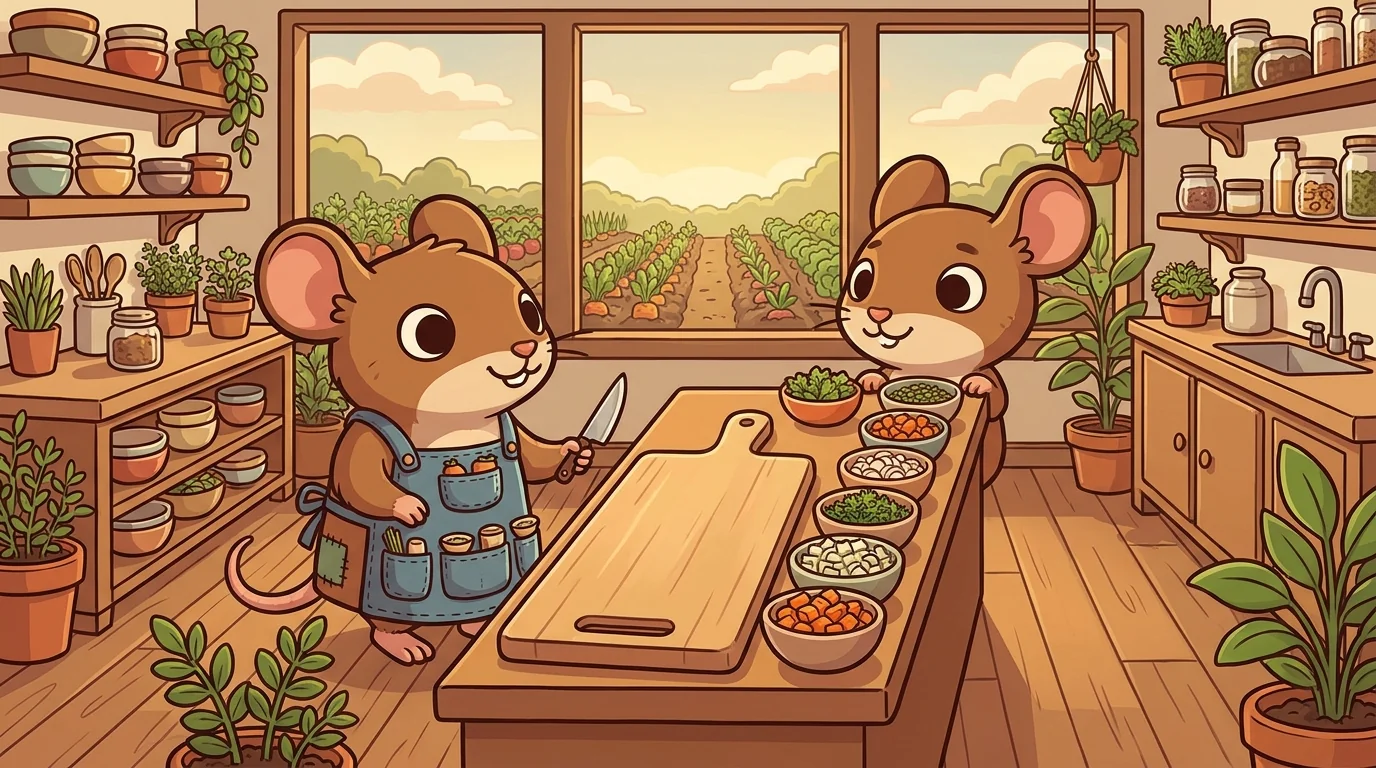
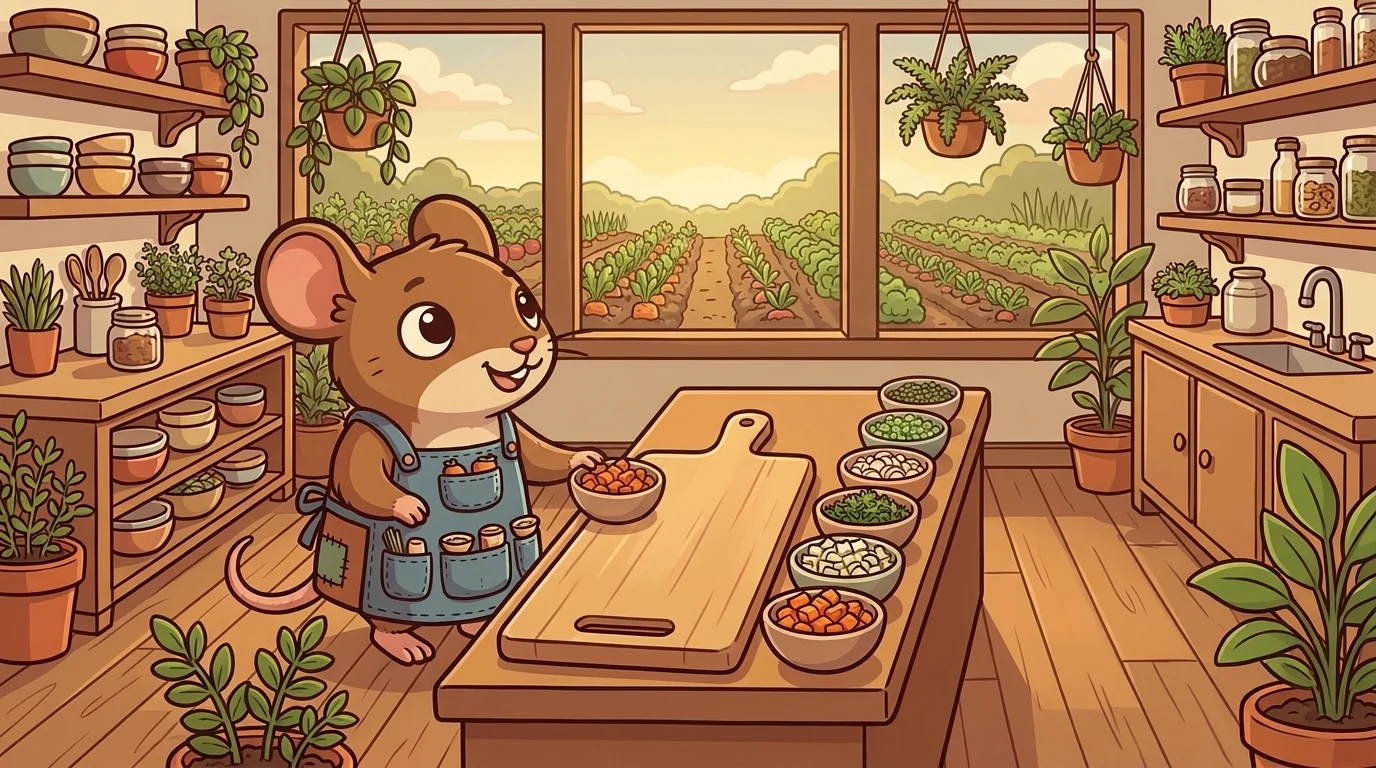
In the SaffronLab kitchen, at a board so clean it gleamed, a quick and careful harvest-mouse named Mince was cutting every vegetable to exactly the same size before she lit a single flame — while beside her a young cook was already halfway into a panic, chopping and cooking and burning all at once.
Mince was small and precise, bright-eyed, an apron of many little pockets each holding its own small bowl. The other cook — a frazzled squirrel — had a pan smoking on the flame while he still hacked at an onion, pieces flying every size at once, huge chunks beside tiny slivers. "I don't have TIME to line up little bowls!" he said, flinging onion at the hot pan. "I just cook as I cut!"
Mince didn't hurry. She laid her knife down. "That's exactly why it's chaos," she said kindly. "Look at your onion — some pieces are big as a thumb, some are shreds. In that hot pan the shreds will burn black before the thumbs even soften. You can't cook them evenly because they aren't cut evenly." She drew her own onion into neat, identical dice, each the same little square. "Same size cooks the same. That's the whole reason we cut with care — not to be fussy, but so everything in the pan finishes together instead of half-burnt and half-raw." She swept each kind of vegetable into its own bowl, in a row. "And this — getting everything cut and ready before the flame — the old cooks call it mise-en-place, 'everything in its place.' The tidy board is what makes the calm cook."
The squirrel looked at his smoking, chaotic pan, then at her quiet row of bowls. "So the calm isn't your personality... it's your board?"
"The calm comes from the board," Mince said. "Get ready first, and the cooking has nowhere to turn into a scramble."
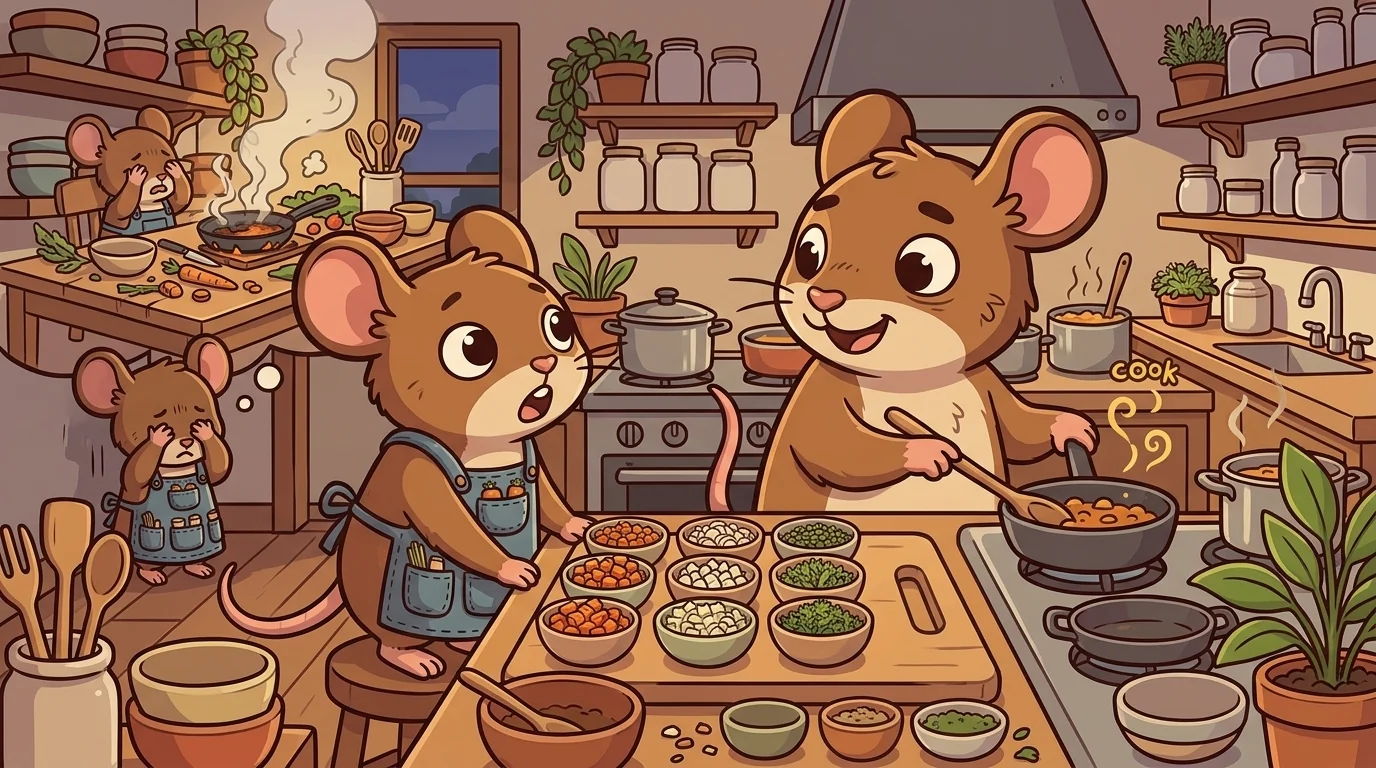
Mince had not always kept a tidy board. When she was young, she'd been exactly the cook-as-you-go squirrel, and she'd learned the hard way.
There was a harvest supper she'd promised to help with — her first real one — and she'd walked in with no plan, meaning to just start and figure it out. And it had come apart around her: the garlic burned while she was still peeling carrots, the pot boiled over while she hunted for a spoon, she cut her thumb reaching fast for an onion she should have prepped an hour before. By the end she was near tears in the middle of a wrecked kitchen, everything half-done and nothing finished, feeling like she simply wasn't built for cooking. The scramble hadn't been a lack of skill. It had been a lack of readiness.
It was an old cook named Board — the kitchen's gentlest elder — who sat her down afterward and taught her the thing no recipe had. "You didn't fail because you're slow or clumsy," Board said. "You failed because you tried to prepare and perform at the same time, and no one can do both at once." He showed her: cut everything first, same size, into its bowls, in order. Then light the flame. And the next supper, with her board tidy and her bowls in a row, Mince had cooked the whole meal in a calm she'd never felt at a stove before — because every frantic decision had already been made, quietly, beforehand. She never went back to the scramble.
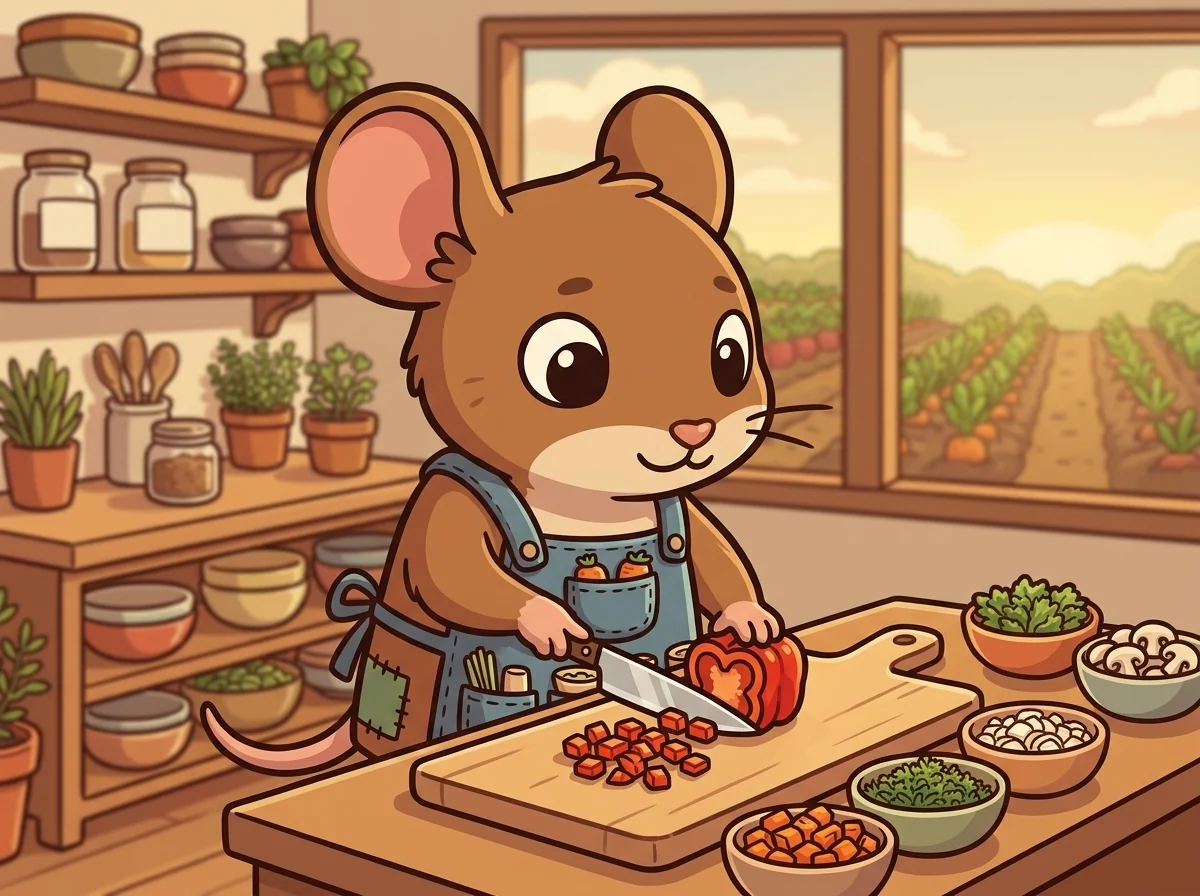
She came to the SaffronLab kitchen as a young cook, drawn to the one place that treated getting-ready as real work rather than a delay before the "real" cooking.
The head cook, an old otter named Roux, met her with a heap of unwashed, uncut vegetables and a lit stove. "Supper in an hour," he said. "Go."
The old scramble-Mince would have thrown vegetables at the hot pan at once. This Mince turned the flame off first. "The stove can wait," she said. "The board comes first." And she washed, and cut everything to the same size, and set each in its bowl, in order — and only when the whole board was ready did she light the flame. The cooking, when it came, was swift and calm, everything finishing together.
Roux watched her unhurried row of bowls. "Most young cooks race the clock by cooking the instant they arrive," he said. "You turned off my stove and got ready first — and finished sooner, and calmer, than any of them. That readiness is the real craft. You belong in this kitchen."
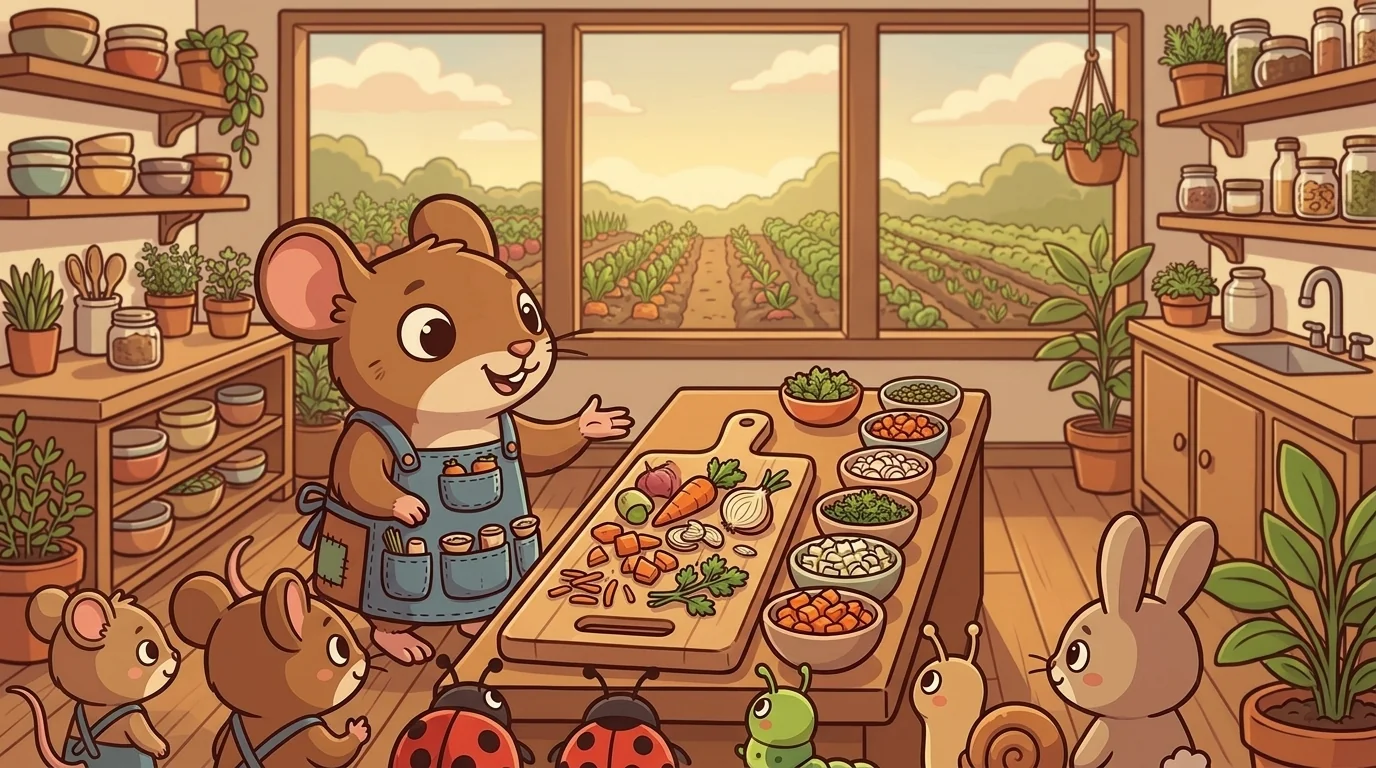
Over the seasons, Mince's board drew every cook who confused hurrying with being fast.
One afternoon a breathless young sparrow crashed in. "I'm so behind — I have to cook three things at once, no time to prep, just GO!" Mince caught her gently before she reached the flame. "You feel behind because you're skipping the prep," she said. "Watch what the scramble actually costs you — you'll cut unevenly, so things burn; you'll hunt for tools mid-cook, so the pan scorches; you'll panic, so you'll cut yourself. The scramble is slower, not faster. It just feels busier." She handed the sparrow a knife and a row of empty bowls. "Cut everything first. Same size. Into the bowls. It'll feel like you're 'wasting' three minutes not-cooking. Then you'll cook all three things in a calm you didn't know was possible, and finish ahead." The sparrow, doubtful, prepped her board — and then cooked, for the first time, without a single scorch or scramble. "It felt slower to get ready," she said, amazed, "but the whole thing went faster." "That's mise-en-place," Mince said. "Readiness isn't the delay before the work. Readiness is what makes the work calm." The sparrow set down her tidy board, and Mince watched the panic drain out of her posture as the flame, for once, held no fear.
When the kitchen had quieted, the sparrow came back with a smaller question.
"Doesn't it ever feel like a waste," she asked, "spending all that time getting ready when you could be doing?"
Mince thought about a wrecked harvest supper and a cut thumb and an elder named Board.
"It felt like a waste to me once," she said. "I thought getting ready was time stolen from the real cooking." She touched the neat row of little pockets on her apron. "But the getting-ready is the cooking — the calm part of it, the part where you make all your frantic decisions ahead of time, quietly, so that when the flame is lit there's nothing left to panic about. A tidy board isn't time lost before the work. It's the reason the work can be calm."
She felt it as she said it — a quiet, ordered steadiness settling through her, her quick paws unhurried, her breath even the way it never was in the scramble years. Not the frantic heat of preparing and performing at once. The clear, calm gladness of a board laid out, every piece the same size, every bowl in its place, nothing left to fear from the flame.
"That's the feeling I cook toward now," she told the sparrow, and her gleaming board caught the light. "Get ready first. Then the calm cook is just... who you get to be."
The SaffronLab ensemble
Mince is part of SaffronLab's distributed-narrative cast. Each character embodies a different curricular primitive; together they teach the full subject.
-

Whisk
Mixing + emulsions — the energetic hummingbird-tween who treats mixing as conversation between ingredients ('quick wrists, patient eyes — air goes in, lumps come out')
-

Simmer
Heat application + states of matter — the patient tortoise-tween who treats heat as the slow-revealer ('heat moves slow, food changes slower; watch the bubbles — they're telling you')
-

Rise
Fermentation + leavening — the wise badger-elder who treats fermentation as the patient art of working with living things, foregrounding cross-cultural traditions ('living things take time — wait; the bread knows when it's ready')
-

Crisp
Maillard + caramelization — the focused fox-tween who treats browning as the flavor-creating frontier ('sugar meets heat, protein meets heat — new flavors are born')
-

Brine
Preservation + food safety — the careful axolotl-tween who treats food safety as care-for-the-eater, foregrounding cross-cultural preservation traditions ('salt remembers, vinegar remembers, cold remembers — food keeps if it's kept right')
-

Bind
Thickening — roux, reduction, how a sauce comes together — 'Patience turns liquid into silk.'
-

Savor
Seasoning — salt as flavor-amplifier; taste as you go — 'Taste, then decide.'
-

Steep
Infusion — drawing flavor from aromatics + herbs — 'Give it time to open up.'
-

Zest
Acidity + brightness — balancing richness — 'A squeeze wakes it all up.'