
The Patient Pair
culinary-patience pair — Rise carries the slow-lift skill (yeast time; the wait that makes bread light). Simmer carries the long-warmth skill (gentle heat; the wait that makes broth deep). Together they show that good food cannot be hurried, and that this is true for fancy food and everyday food alike.
A story read by The Patient Pair
Loading audio…
Press play to listen along. The line being read lights up as you go.
Show full transcript
Loading transcript…
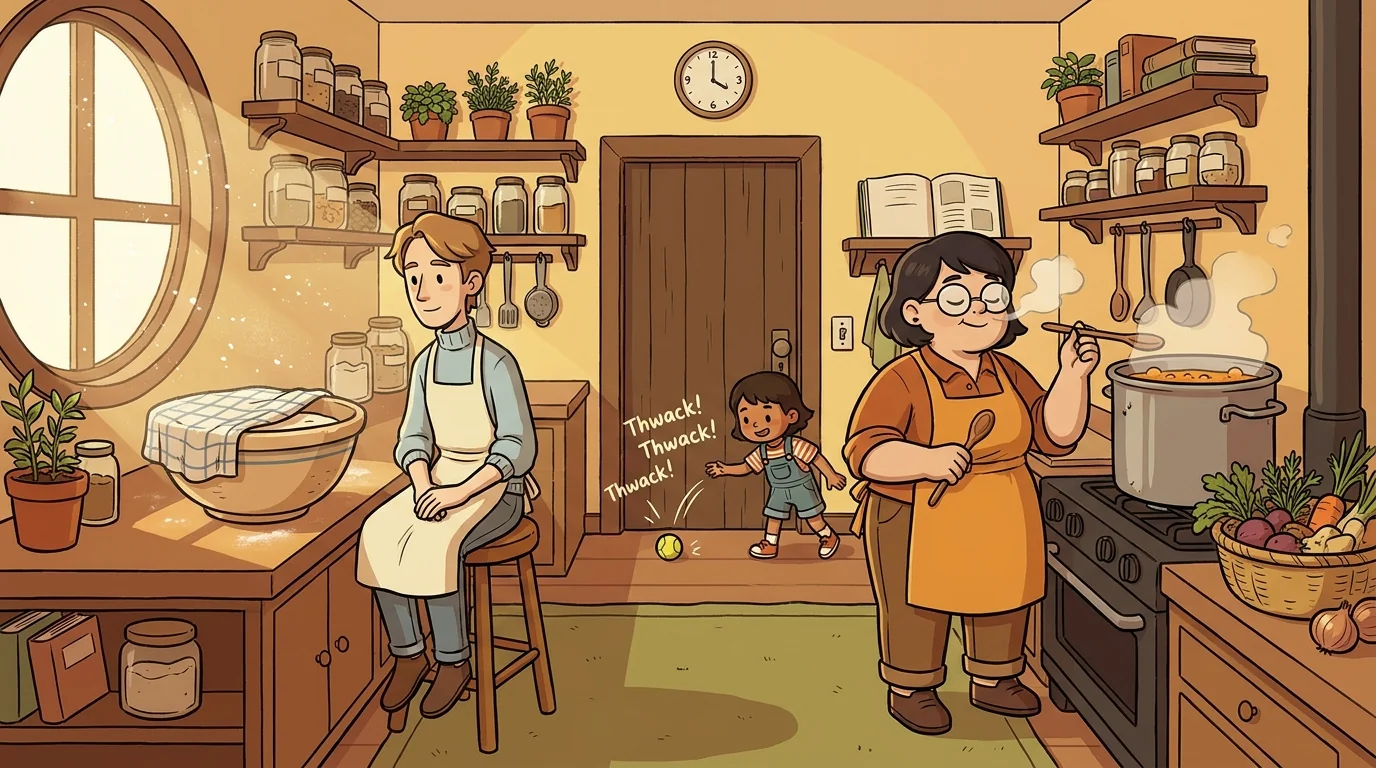
The SaffronLab kitchen smelled like a warm hug — yeast and herbs and the deep scent of vegetables that had been warming for hours. By a sunbeam thick with flour dust sat Rise, tall and light, watching a big covered bowl without poking or peeking. Across the room, by a stockpot burbling low, stood Simmer, solid and calm, leaning in now and then just to breathe the steam. A young cook stood between them, near tears, gripping a lump of dense bread and a thin, watery broth.
"I did everything the recipe said," the young cook — a small anxious dormouse — burst out. "But my bread came out flat and heavy as a stone, and my soup tastes like warm water. I followed every step! Why won't it work?" She looked from the flat loaf to the thin broth, ashamed. "Everyone else makes it look so easy."
Rise turned from their bowl, unhurried and kind. "Show me your bread," they said gently. "Ah — I think I know. How long did you let the dough rest before you baked it?" The dormouse blinked. "Rest? I mixed it and baked it right away. I was in a hurry." Rise nodded slowly, without a trace of scolding. "There it is. Bread doesn't rise because of the recipe. It rises because of time."
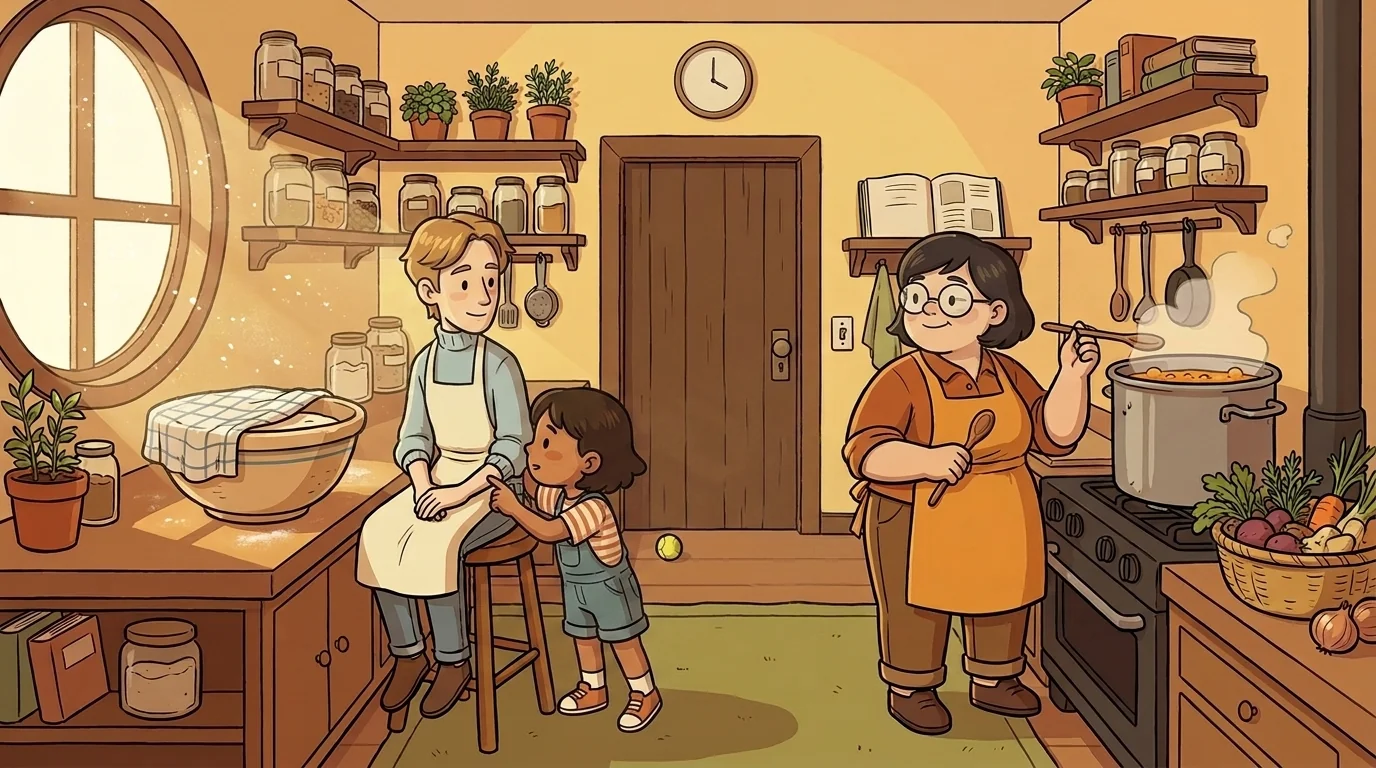
Rise cupped the flat loaf with real tenderness, the way you'd hold something that had tried its best. "Inside dough there are tiny living helpers — yeast — and they're slow. Given warmth and time, they breathe out little bubbles of gas that lift the whole dough, light and airy. But they can't be rushed. You mixed and baked in five minutes, so the yeast never got to do its slow work — and the bread stayed heavy." They set it down gently. "This loaf isn't a failure. It's a loaf that wasn't given its wait. The yeast was ready to lift it. It just needed you to wait for it."
The dormouse's eyes stung. "So I ruined it by rushing?"
"You didn't ruin anything," Rise said firmly, kindly. "You just hadn't learned yet that the waiting is part of the making. Nobody's born knowing that. The dough forgives you. We start another, and this time we let it take its time."
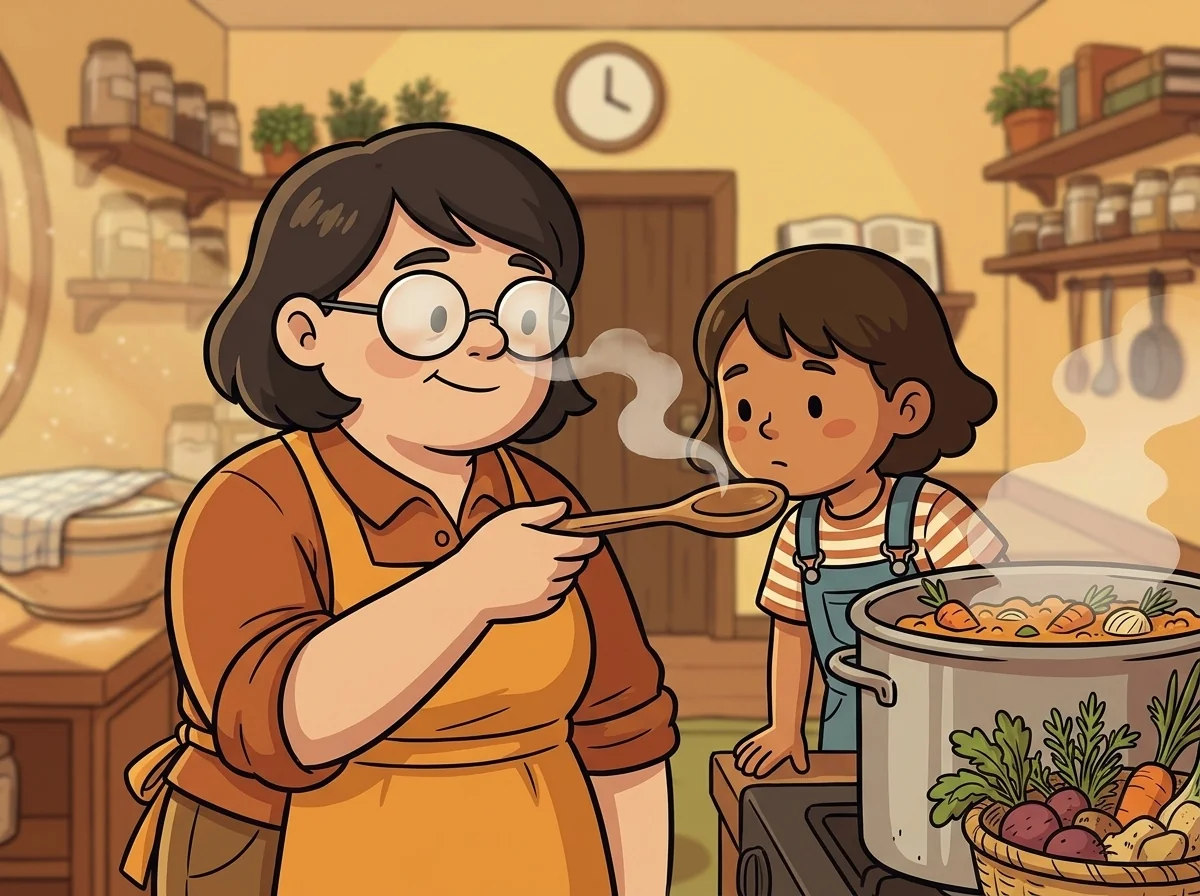
Simmer waved the dormouse over to the low, burbling stockpot with a warm, steady patience. "Now — your broth. Tell me how you made it." The dormouse sniffled. "I boiled it hard for ten minutes to hurry it up." Simmer smiled, not unkindly, and stirred the deep pot slow. "That's the same lesson wearing a different apron. Broth doesn't get its deep flavor from a hard, fast boil. It gets it from gentle warmth, kept low, for a long time — hours, sometimes. Slowly the vegetables and bones and herbs give up everything they have into the water, layer after layer, until the broth is rich and deep." They offered the dormouse a spoonful of the hours-old broth beside her own thin ten-minute one. The difference was night and day.
"Boiling it hard for ten minutes," Simmer said, "is like shouting at the pot to hurry. It can't. Depth like this comes from patience, not from force or heat. And here's the thing I most want you to hear: a simple broth of scraps and water, given hours of gentle warmth, becomes one of the finest things a kitchen can make. Humble ingredients. Just patience. That's all."
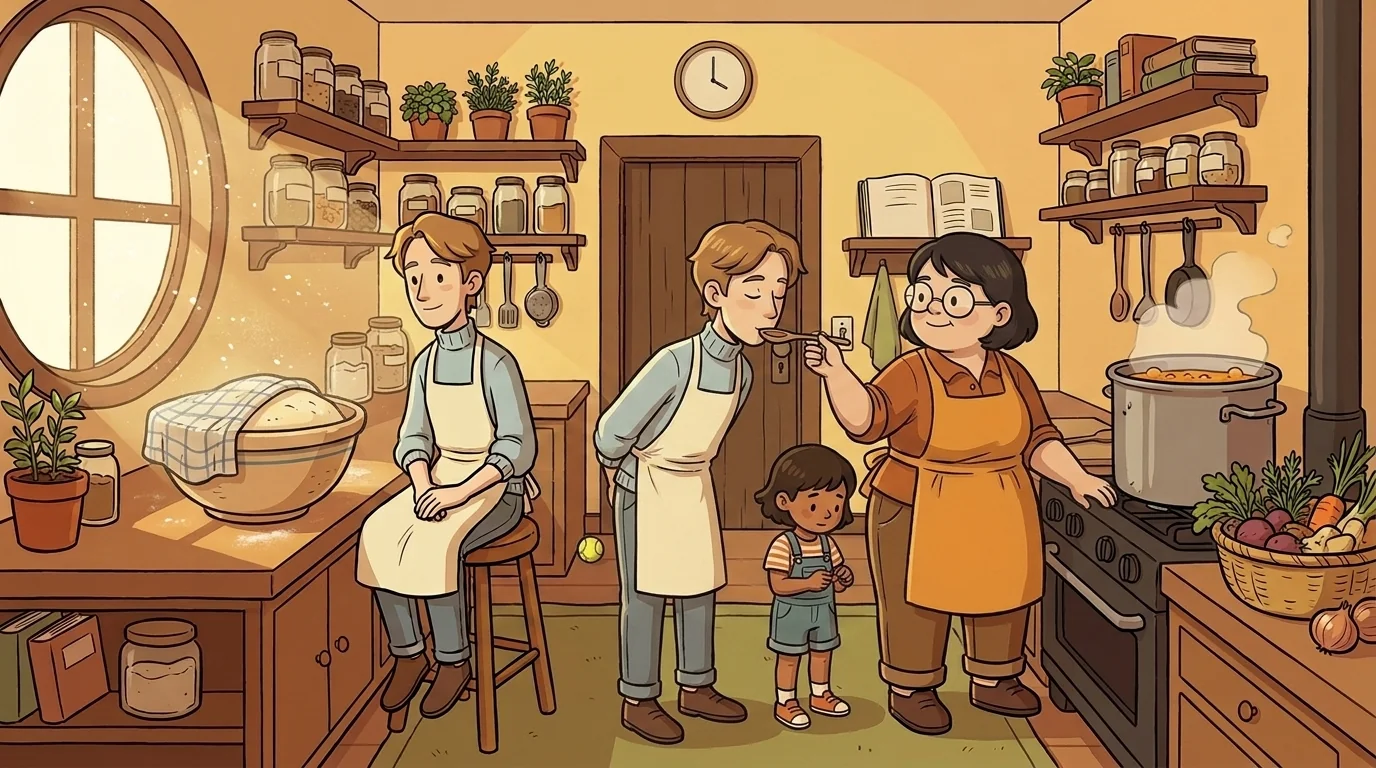
The dormouse looked between the two of them — the light bread rising slowly under its cloth, the deep broth burbling low — and something in her unclenched. "So the fix wasn't a fancier recipe or better ingredients. It was just... time?"
"Just time, given on purpose," Rise said. "And I want to tell you something, because I can see the shame on you, and it doesn't belong there." They sat beside the dormouse. "Patience isn't something only fancy cooks or people with big kitchens get to have. It's a gift you give yourself — anyone can wait, in any kitchen, with any ingredients. A patient loaf of plain flour is as worthy as any grand cake. A patient pot of scraps is as worthy as any feast." Simmer nodded. "Fast food isn't bad food, and simple food isn't lesser food. There's no shame in a quick meal or a humble one. We're only showing you that when you have the time to give, giving it is its own kind of magic — and it costs nothing but the willingness to wait."
The dormouse wiped her eyes, and this time she was almost smiling. "So I'm not bad at this. I just hadn't learned to wait yet."
"That's exactly it," they said, together and gently.
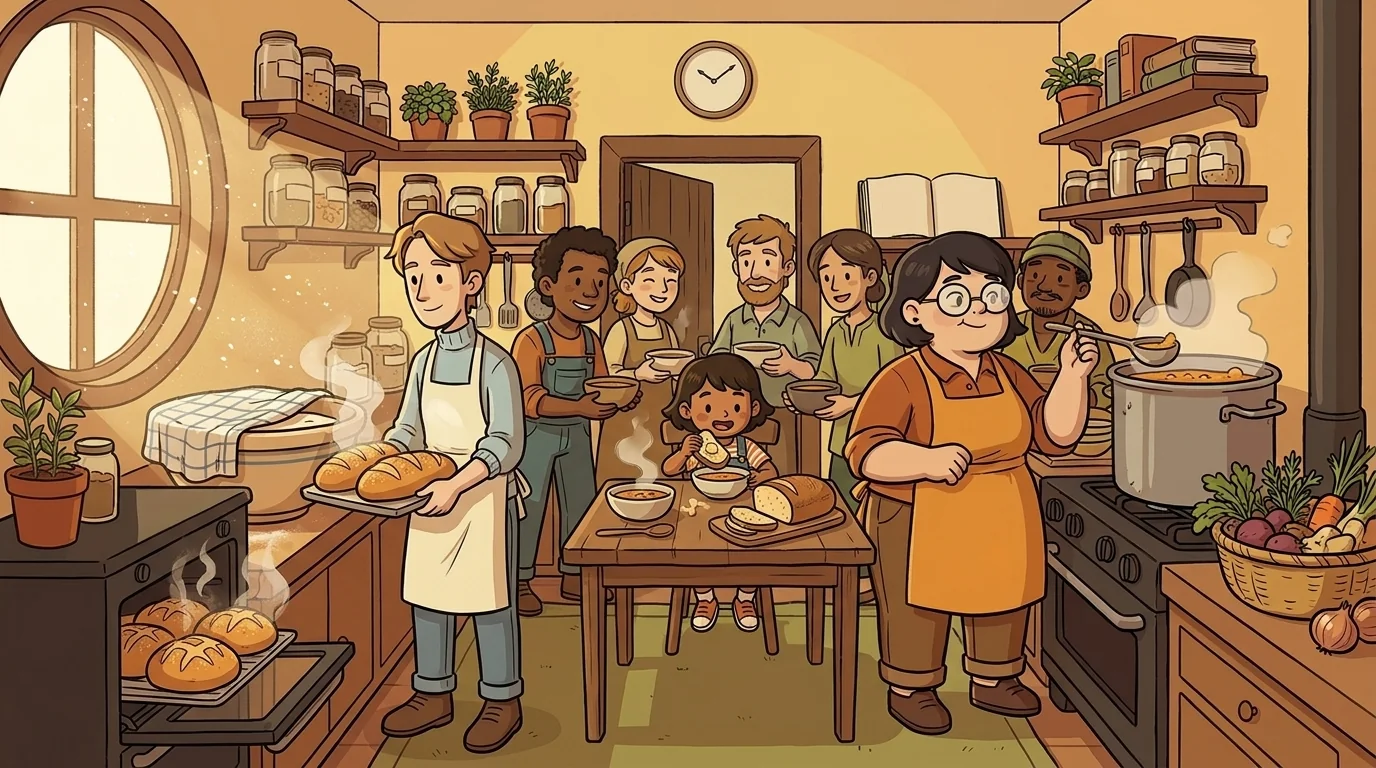
When the kitchen had quieted and the second loaf was rising slow and true under its cloth, the dormouse came back to the Patient Pair with a smaller question.
"Doesn't the waiting ever feel like doing nothing?" she asked. "Just sitting while the dough and the pot do all the work?"
Rise and Simmer traded a warm look — two who had learned, over long years, that the wait is never nothing. "It used to feel like nothing to me," Rise admitted. "Empty time, a bowl doing something I couldn't see." "And I used to think stirring hard meant I was helping," said Simmer. "That doing more was doing better."
"But the waiting is the work," Rise said. "While the dough rests, the yeast is lifting it — the whole thing is happening, just slow and quiet and out of sight. I'm not doing nothing. I'm giving it the one thing it needs, which is time." Simmer nodded into the steam. "And the patience isn't a burden. It's a kindness — to the food, and to yourself. You get to slow down. You get to let something take its time. In a world that's always rushing, that's a gift you're allowed to give yourself, in any kitchen, with anything you've got."
And the dormouse felt it settle into her as they spoke — a warm, unhurried steadiness spreading through her chest, the tight shame loosening, her breath going slow and easy as the rising dough. Not the frantic heat of rushing and failing. The deep, grounded calm of knowing that good things — light bread, deep broth, a patient self — come to those who are willing to wait, and that she was welcome, exactly as she was, to learn how.
"That's the feeling I want in my kitchen now," she told them. "Not the rush. The patient wait — the gift I get to give myself."
Rise turned back to the rising bowl, and Simmer leaned once more into the fragrant steam, and the whole kitchen smelled, again, like a warm hug.
The SaffronLab ensemble
The Patient Pair is part of SaffronLab's distributed-narrative cast. Each character embodies a different curricular primitive; together they teach the full subject.
-

Whisk
Mixing + emulsions — the energetic hummingbird-tween who treats mixing as conversation between ingredients ('quick wrists, patient eyes — air goes in, lumps come out')
-

Simmer
Heat application + states of matter — the patient tortoise-tween who treats heat as the slow-revealer ('heat moves slow, food changes slower; watch the bubbles — they're telling you')
-

Rise
Fermentation + leavening — the wise badger-elder who treats fermentation as the patient art of working with living things, foregrounding cross-cultural traditions ('living things take time — wait; the bread knows when it's ready')
-

Crisp
Maillard + caramelization — the focused fox-tween who treats browning as the flavor-creating frontier ('sugar meets heat, protein meets heat — new flavors are born')
-

Brine
Preservation + food safety — the careful axolotl-tween who treats food safety as care-for-the-eater, foregrounding cross-cultural preservation traditions ('salt remembers, vinegar remembers, cold remembers — food keeps if it's kept right')
-

Bind
Thickening — roux, reduction, how a sauce comes together — 'Patience turns liquid into silk.'
-

Mince
Knife-work — uniform cuts + mise-en-place — 'Prep first. Cook calm.'
-

Savor
Seasoning — salt as flavor-amplifier; taste as you go — 'Taste, then decide.'
-

Steep
Infusion — drawing flavor from aromatics + herbs — 'Give it time to open up.'
-

Zest
Acidity + brightness — balancing richness — 'A squeeze wakes it all up.'