Savor and Zest
DEPTH AND BRIGHTNESS
Loading audio…
Press play to listen along. The line being read lights up as you go.
Show full transcript
Loading transcript…
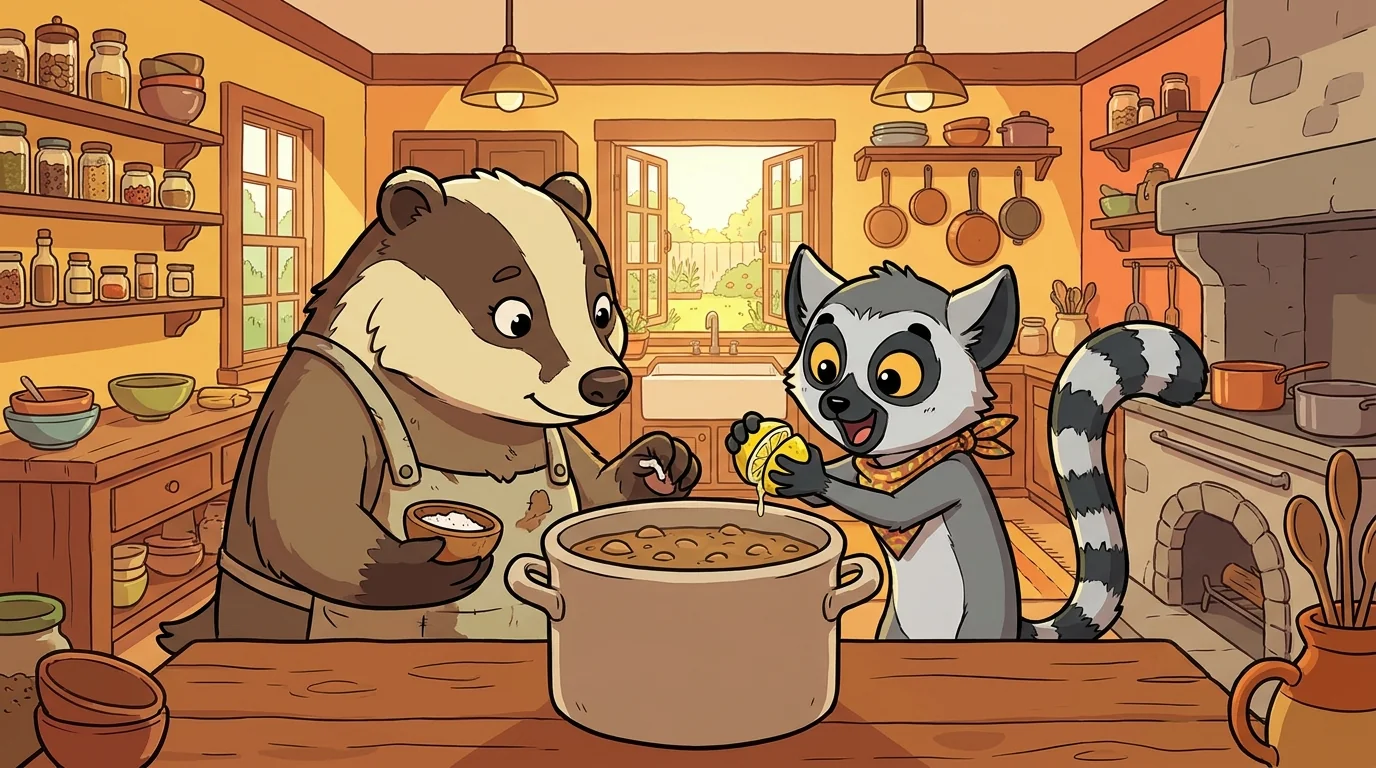
A young cook came to the SaffronLab kitchen one afternoon with a big pot of bean stew that everyone agreed was… fine. Just fine. Warm and filling and completely, stubbornly dull — and she wanted to know why, and how to fix it.
So she asked Savor, the unhurried badger who knew salt, and then Zest, the lively lemur who knew sour — and the two of them, who usually worked at different ends of the flavor, ended up leaning over the same dull pot together, each certain she alone had the fix.
The beans, it should be said, were a humble supper — cheap, plain, honest food. Neither Savor nor Zest thought a bit less of them for it. "A humble pot deserves the same care as a fancy one," Savor said. "More, maybe," said Zest. "It has been waiting longer to be noticed."
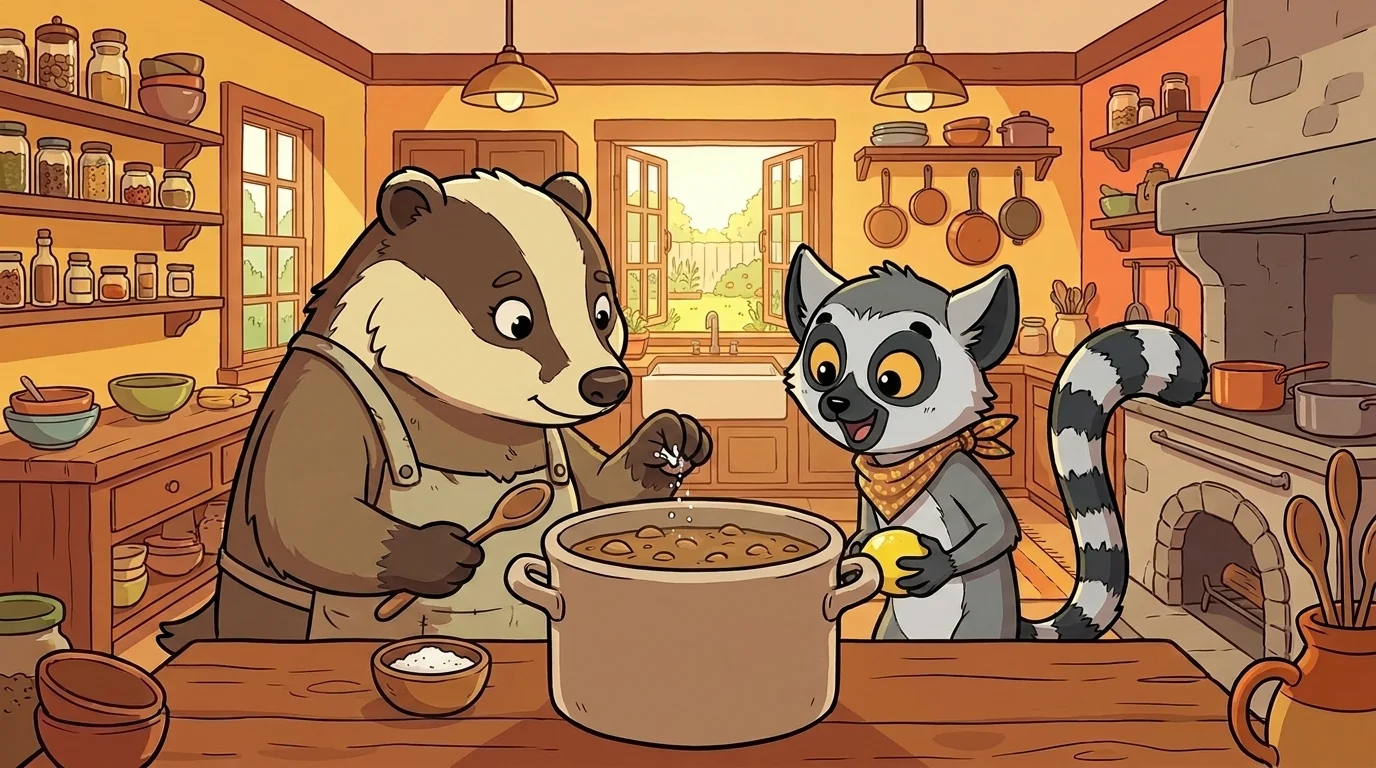
Savor tasted first, dipping her little wooden spoon. "Here is your trouble," she said. "It's flat. The beans, the onion, the herbs — they're all there, but they're sleeping, quiet, hidden. It needs depth. It needs waking up from underneath." She added a small pinch of salt, stirred, tasted again, added one more small pinch. And the stew woke — the beans tasted more like beans, the onion more like onion, everything louder and clearer and more itself. "There," said Savor. "Salt gives it depth. It was too quiet, and now it can speak."
The young cook tasted. It was better — deeper, fuller. But something still sat a little heavy on the tongue, a little dull despite the depth. Not fixed. Not quite.
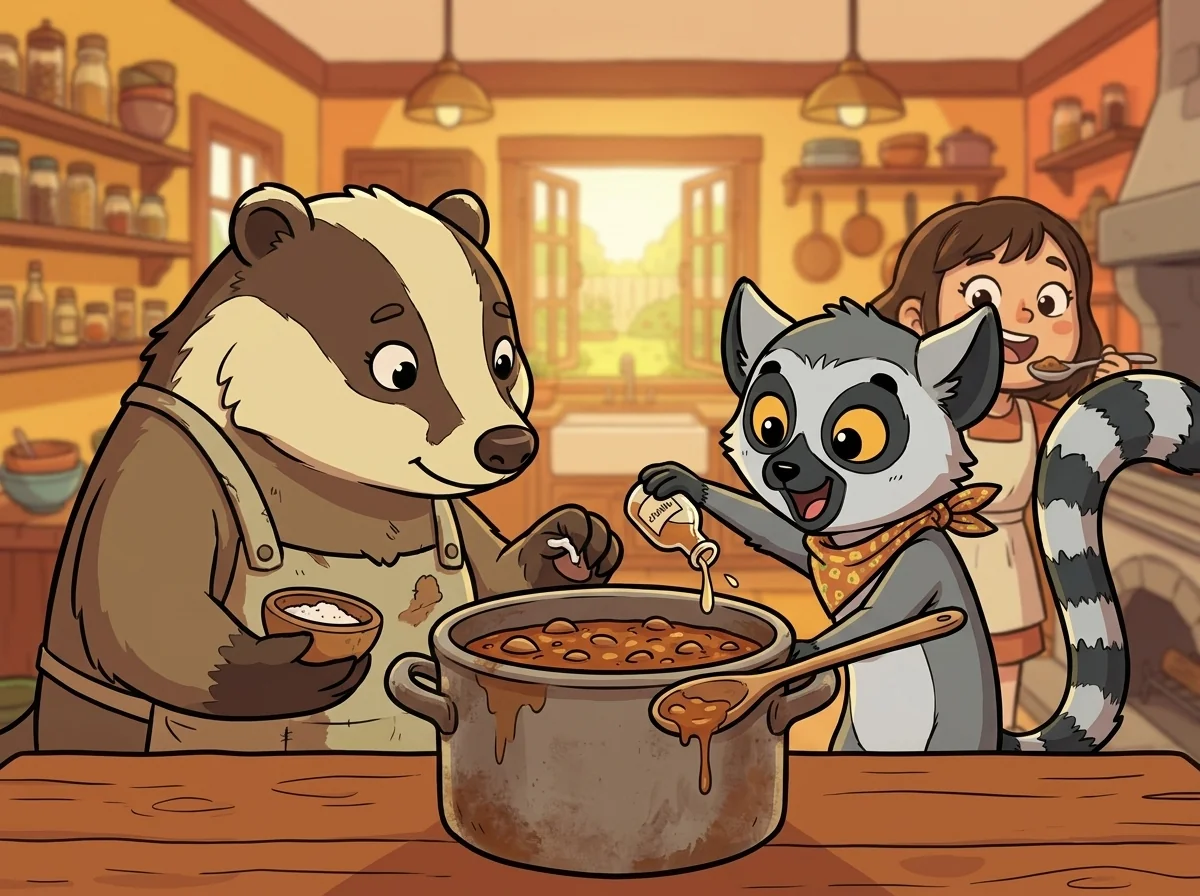
Zest had been watching, and now she leaned in. "Savor's right that it was flat," Zest said, "and the salt helped — but taste it now. It's deeper, yes, but it's still heavy. Rich and thick and sitting flat. That's not a depth problem anymore. That's a brightness problem." She squeezed in a little splash of vinegar, stirred, and offered the spoon. And the stew lifted — the heaviness cut clean through, a brightness breaking over the top like sunlight, the flavors that the salt had deepened now sparkling and alive. "There," said Zest. "Acid gives it brightness. Savor made it deep; I made it bright."
The young cook tasted — and her eyes went wide, because now it was right, fully alive, deep and bright at once.
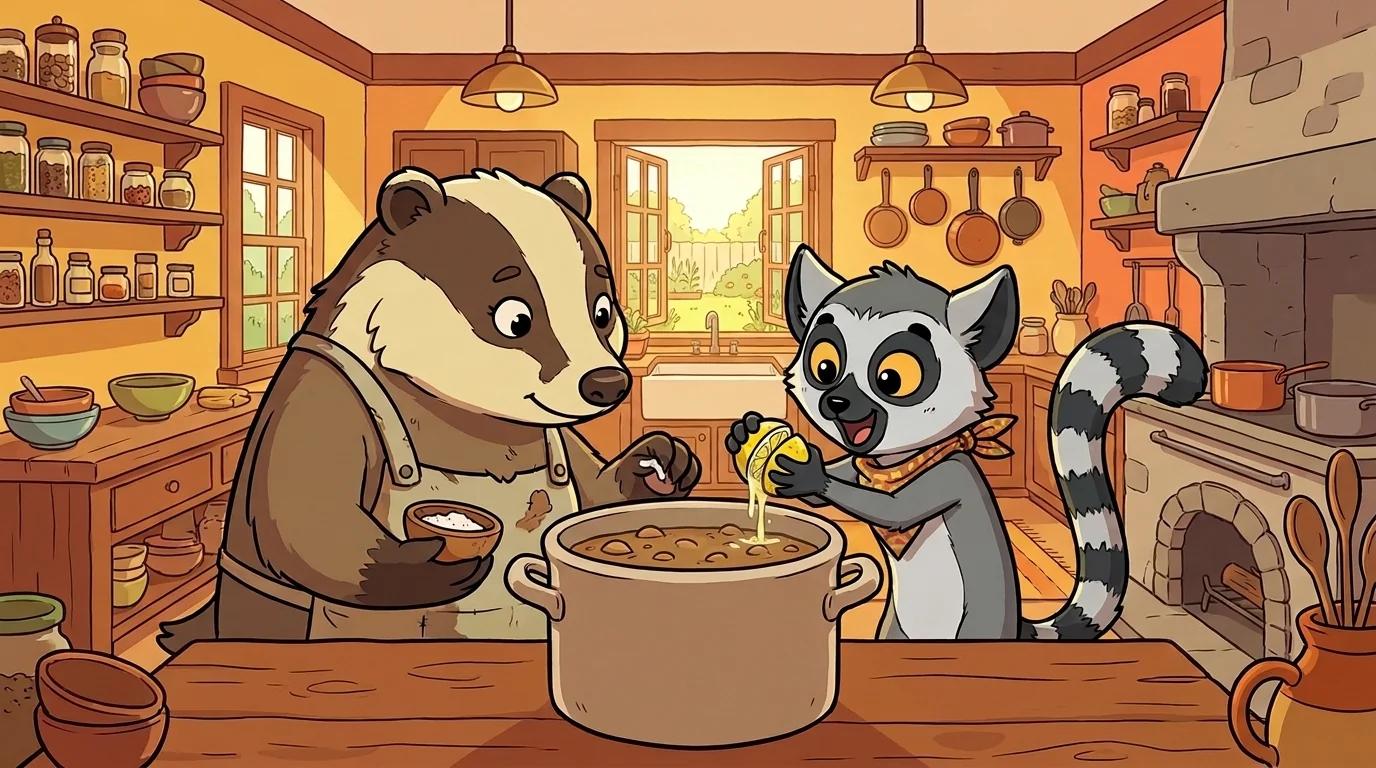
And then the two of them showed her the real lesson together — and had her taste at each step, so she could feel that depth and brightness were two different gifts, and that most dull dishes are quietly asking for both.
"Don't just guess," Savor said. "Taste, and ask what it's missing." "Flat and sleepy and quiet?" said Zest. "That's Savor's — it needs salt, needs depth." "Deep enough but heavy and dull?" said Savor. "That's Zest's — it needs acid, needs lift." The young cook tasted the plain pot again (flat), then after salt (deep but heavy), then after the squeeze of sour (deep and bright) — and felt, on her own tongue, the two different fixes for two different problems. "Most dull dishes," Savor said, "aren't missing just one thing. They're a little low on depth and a little low on brightness. A pinch of salt, a squeeze of sour — the two of us together — and a humble pot of beans becomes something you're proud to serve." The young cook stirred it, tasted her finished stew — deep, bright, alive — and understood: salt and sour weren't rivals. They were two hands doing two different jobs on the same pot.
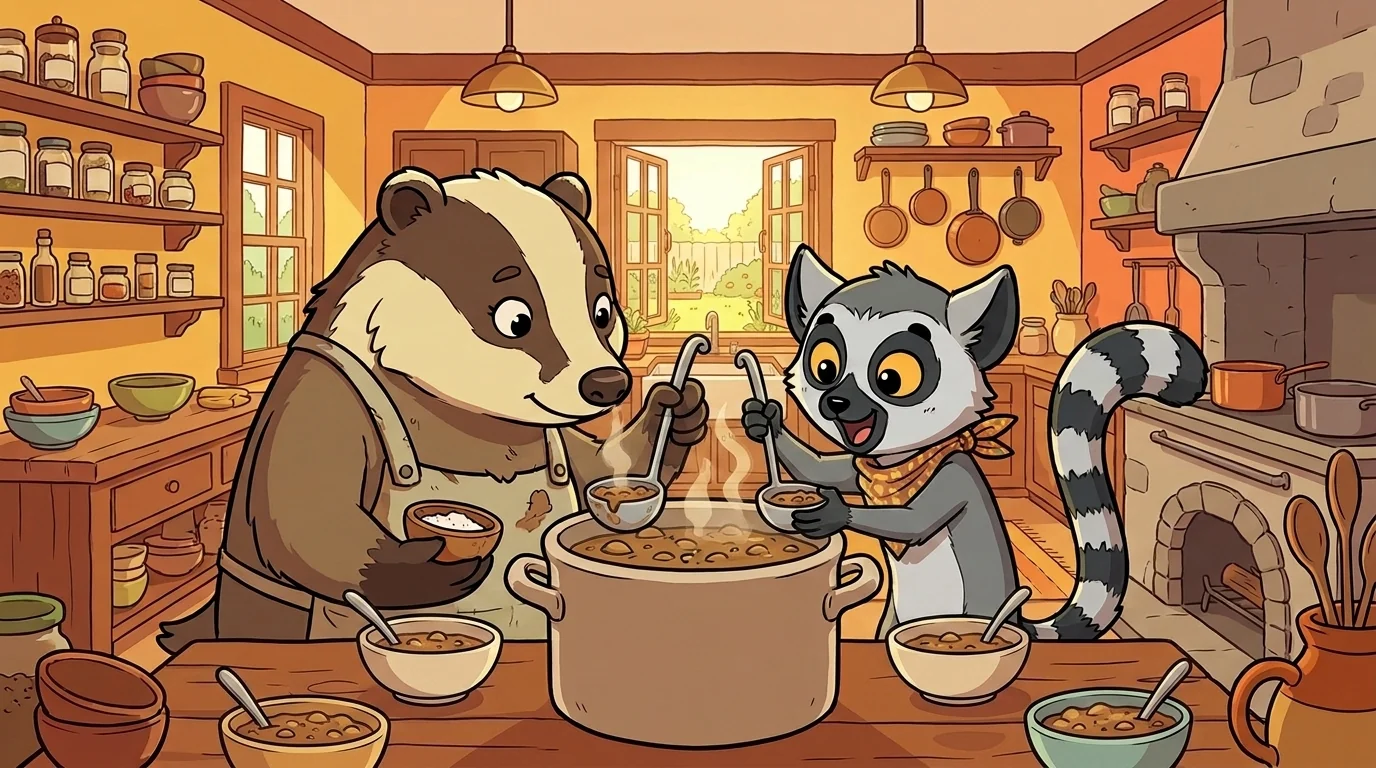
Afterward, ladling the good stew into bowls, Savor admitted she used to think a dull dish always just needed more salt — that depth was the whole answer. And Zest admitted she used to reach for sour first every time, sure that brightness fixed everything. Neither was true. Salt couldn't lift a heavy dish; acid couldn't deepen a thin one. It took the two of them — depth and brightness, the pinch and the squeeze — to bring a flat pot fully to life.
They began teaching the waking-up lesson together after that, one pot, two gifts. And the young cooks who learned it that way carried something past the kitchen: that when something feels off, the kind thing is to taste it and ask what it truly needs, instead of guessing or just doing more of the same — and that the humblest supper, given a little depth and a little brightness, deserves and rewards exactly as much care as the grandest feast. Savor and Zest, who had worked at opposite ends of the flavor for years, found they had always been two hands on the same warm pot — one making it deep, one making it bright, both making it loved.
Hear it as an audio drama
A short play starring Savor and Zest, from SaffronLab. Different voices, same idea. Listen any time after you read.
Loading audio…
Read the drama script
- Narrator: From Spark and Anvil and SaffronLab — this is Savor, in chapter 1 of the SaffronLab cast.
- Narrator: This drama uses an AI-generated voice. Voiced via Gemini 2.5.
- Narrator: This story covers food, culture, and family. Parents may want to listen first.
- Narrator: Savor is the unhurried badger who knows salt; Zest is the lively lemur who knows sour. Usually they work at opposite ends of the flavor.
- Narrator: A young cook brought them a pot of bean stew everyone agreed was fine — just fine — and stubbornly, completely dull.
- Savor: It needs salt. It's flat because the flavors are asleep. A pinch will wake them and give them depth.
- Zest: It needs acid. It's heavy because there's nothing bright in it. A squeeze of sour will lift the whole thing.
- Narrator: The two looked at each other over the pot, each sure the other was about to fix it wrong.
- Savor: Wait — let me taste it again. Huh. It IS flat and heavy. Both at once. I was only tasting the flat part.
- Zest: And I was only tasting the heavy part. We were each solving a different half of the same problem.
- Narrator: So they worked together — a pinch of salt for depth, a squeeze of lemon for lift, tasting between each move.
- Savor: And hear this, young cook: your beans were never bad, and you were never a bad cook. A humble pot of beans is a good and worthy thing.
- Zest: It only needed two small, humble things any kitchen has — a pinch of salt and a squeeze of sour. Seasoning is a kindness within anyone's reach.
- Pestle: Tell me, waking-up pair — why does it take the two of you together?
- Savor: Because most dull food is a little flat AND a little heavy. My depth gives her brightness something to lift; her brightness keeps my depth from turning heavy.
- Narrator: Depth and brightness, meeting in one humble pot, bringing good beans all the way to wonderful. That is their craft, together.
- Narrator: You've been listening to a Spark and Anvil chapter, written by the Spark and Anvil writing team for ages 9 to 14.
- Narrator: Apps stay free forever.
- Narrator: Curriculum aligned to Family and Consumer Sciences standards.
- Narrator: If anything in this story brought up big feelings, talking to a trusted adult helps. You can also reach support lines anytime.
- Narrator: Released under Creative Commons BY-NC-SA 4.0 for educational reuse. Visit Spark and Anvil for the full transcript.
The SaffronLab ensemble
Savor and Zest is one of the friends in SaffronLab. Each friend shows you one idea by how they act; meet them all and you have the whole subject.
-

Whisk
Mixing + emulsions — the energetic hummingbird who treats mixing as conversation between ingredients ('quick wrists, patient eyes — air goes in, lumps come out')
-

Simmer
Heat application + states of matter — the patient tortoise who treats heat as the slow-revealer ('heat moves slow, food changes slower; watch the bubbles — they're telling you')
-

Rise
Fermentation + leavening — the wise old badger who treats fermentation as the patient art of working with living things, foregrounding cross-cultural traditions ('living things take time — wait; the bread knows when it's ready')
-

Crisp
Maillard + caramelization — the focused fox who treats browning as the flavor-creating frontier ('sugar meets heat, protein meets heat — new flavors are born')
-

Brine
Preservation + food safety — the careful axolotl who treats food safety as care-for-the-eater, foregrounding cross-cultural preservation traditions ('salt remembers, vinegar remembers, cold remembers — food keeps if it's kept right')
-

Bind
Thickening — roux, reduction, how a sauce comes together — 'Patience turns liquid into silk.'
-

Mince
Knife-work — uniform cuts + mise-en-place — 'Prep first. Cook calm.'
-

Savor
Seasoning — salt as flavor-amplifier; taste as you go — 'Taste, then decide.'
-

Steep
Infusion — drawing flavor from aromatics + herbs — 'Give it time to open up.'
-

Zest
Acidity + brightness — balancing richness — 'A squeeze wakes it all up.'