
Account
ACCOUNT — ask open questions and listen; memory is reconstructive, not a recording, and a confident witness isn't always a correct one.
Loading audio…
Press play to listen along. The line being read lights up as you go.
Show full transcript
Loading transcript…
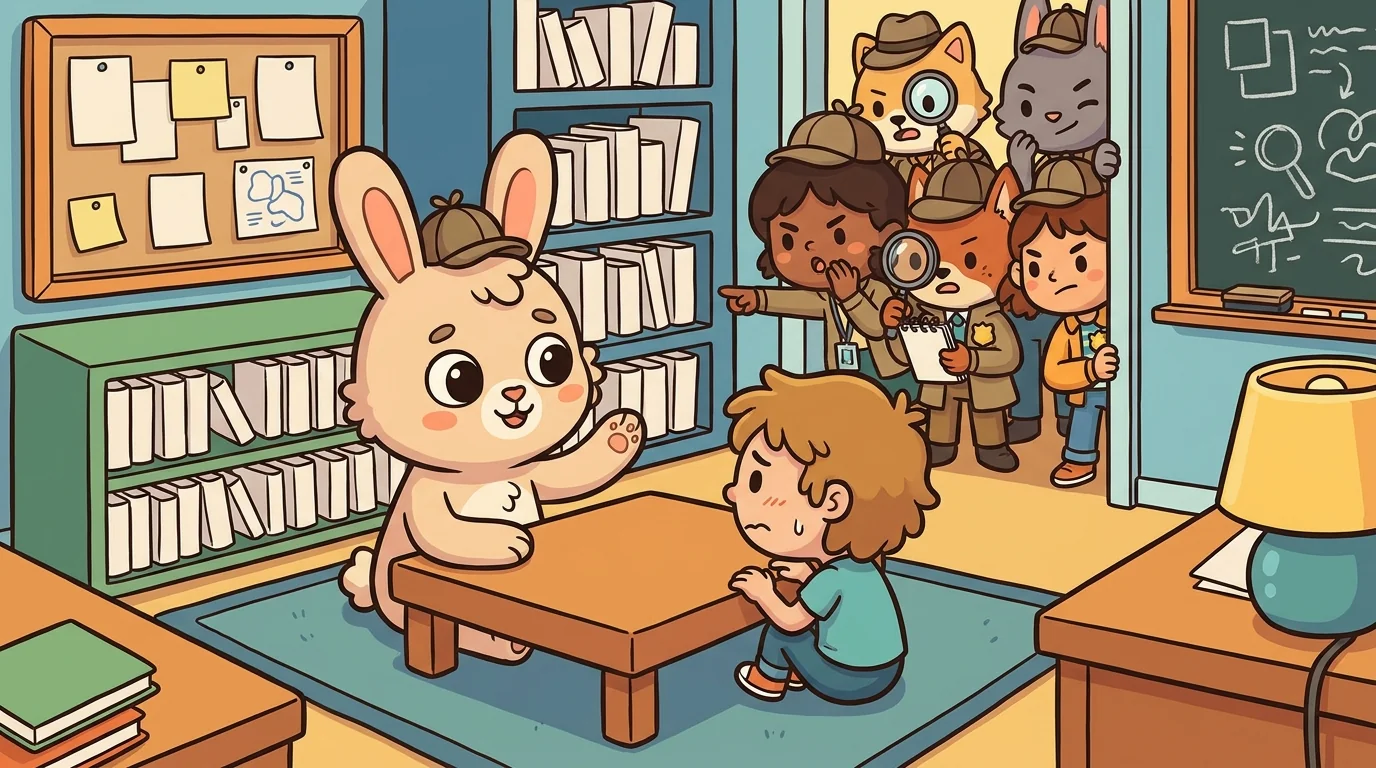
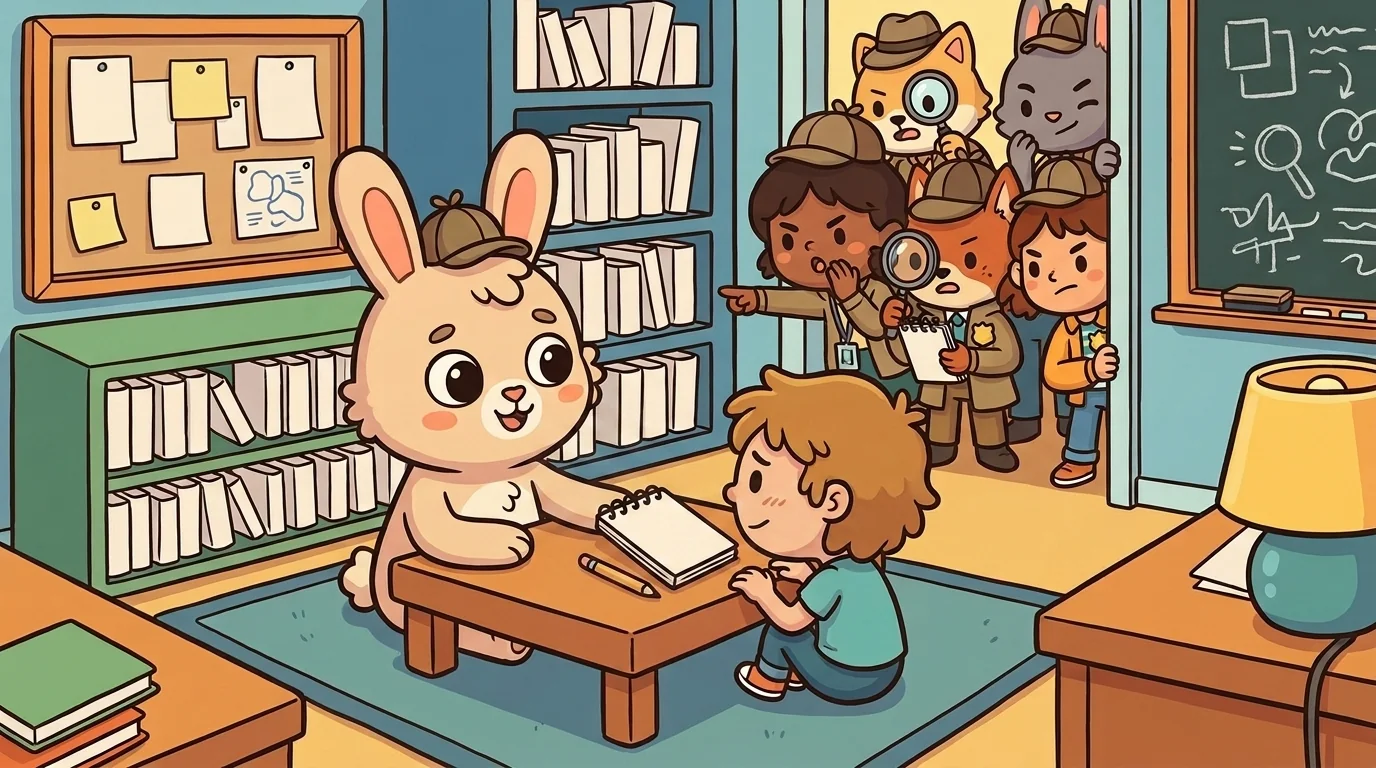
In a quiet corner of the SleuthLab clubroom, a rabbit named Account sat across from a nervous witness who had watched the recycling bins go over, and said, gently: "In your own words. Whatever order it comes. I won't rush you."
The rest of the club pressed in. "Ask if it was the tall fox! It was the tall fox — you saw the tall fox, right?"
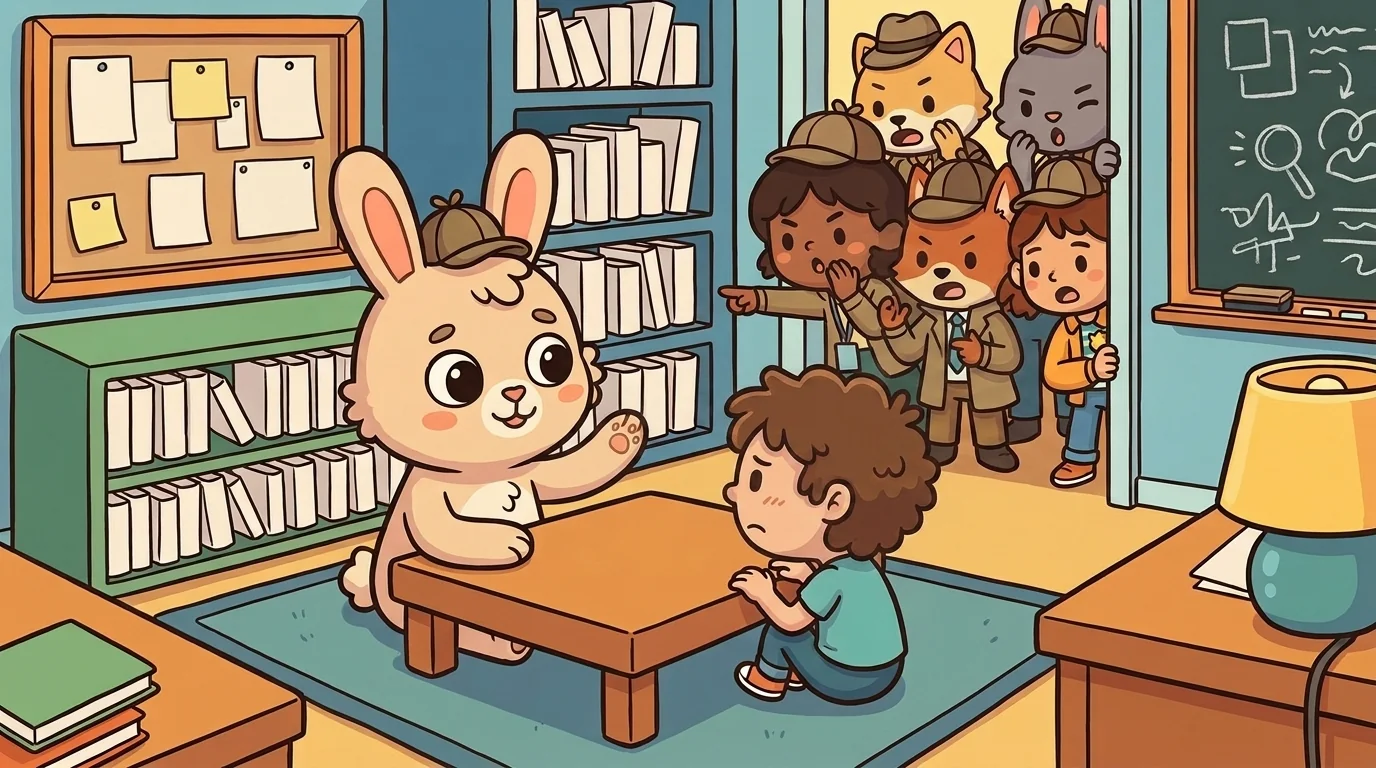
Account lifted a paw. "Stop. That's a leading question — it smuggles the answer inside the asking. Here's the mechanism that makes it dangerous: memory isn't a recording we press play on. It's reconstructive. Every time you recall something, your mind rebuilds it from fragments — and it can't always tell which fragments came from the event and which arrived afterward. That confusion has a name: a source-monitoring error. When I say 'did you see the tall fox,' I hand your mind a fragment. A helpful witness, wanting to give me what I want, may weave it in — and then honestly remember a fox that was only ever a shape in a hurry. So I ask open. What did you see? And then I hold the silence, and I do not fill it with my own guess."
The club went quiet, which was its own kind of evidence.
Account had learned this after watching a leading question invent a memory whole. Years back, the club was certain a kid in a red coat had knocked over the paint shelf, and they interviewed a witness by asking, over and over, "you saw them, didn't you — the red coat, by the shelf?" And the witness, trying to be useful, slowly, sincerely came to remember a red coat by the shelf. The accused owned no red coat and had been in the library the whole hour. The coat had been stitched into the witness's memory by the questions themselves — a textbook misinformation effect, the way post-event suggestion rewrites the original trace.
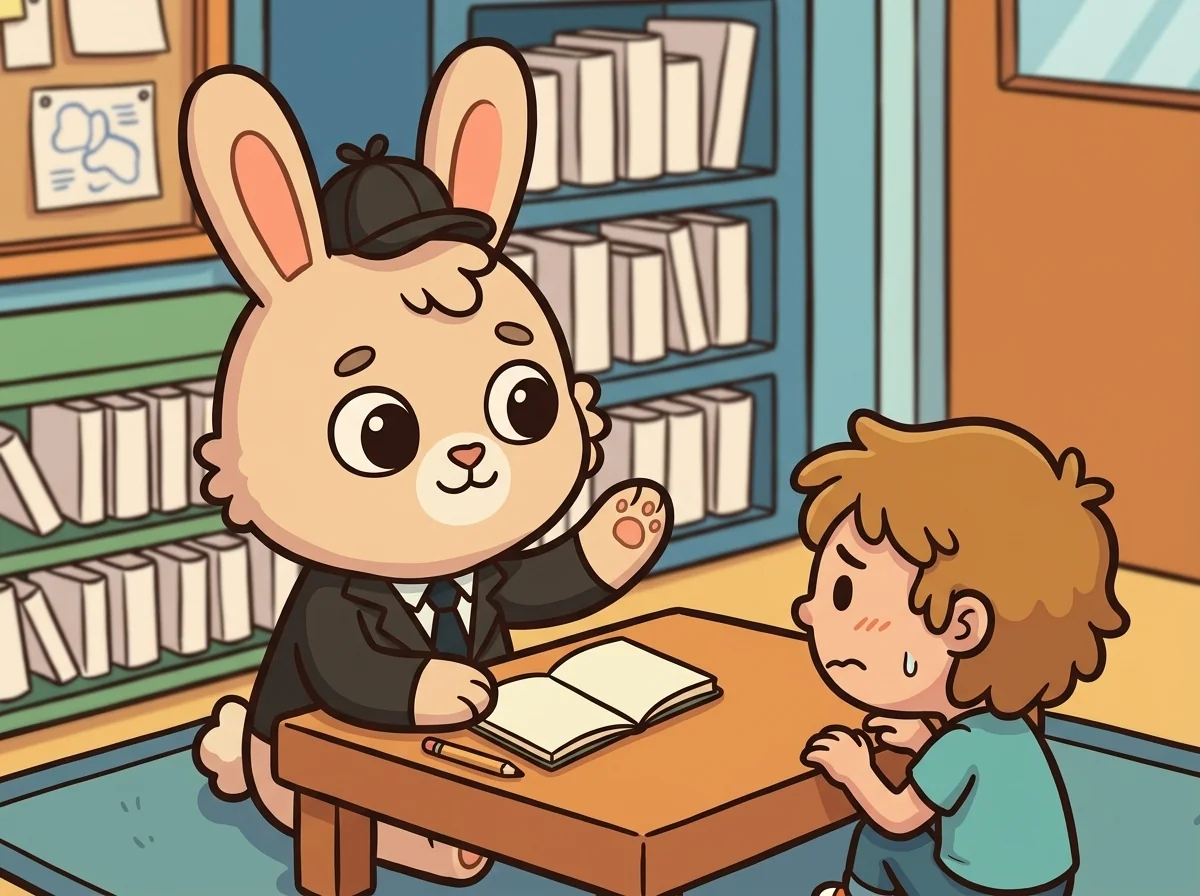
Account, small and listening from the side, had felt something go cold and careful. The witness hadn't lied — that was the frightening part. They had believed the coat, felt sure of it, because confidence is generated by how fluent and vivid a memory feels, not by whether it's true. The two run on separate tracks. You can lead someone into a false memory without either of you intending to. From then on, Account asked the openest questions it could find.
Account hopped to the SleuthLab academy with a notebook of prompts that all began with what and tell me.
Inspector Vex asked the appointment question. "How do you take a witness's story?"
Account answered with a demonstration instead of a speech. Vex described a scene. Account asked one club member, "was the umbrella blue?" and asked another, "what color was the umbrella?" The first, led, said blue. The second, open, wasn't sure — and it emerged there had been no umbrella at all. The leading question had grown one out of nothing.
"Open questions let the trace speak for itself," Account said. "Leading questions overwrite it. I'd rather bank an honest I'm not sure than a confident answer I planted."
Vex weighed the two very different results. "You are appointed."
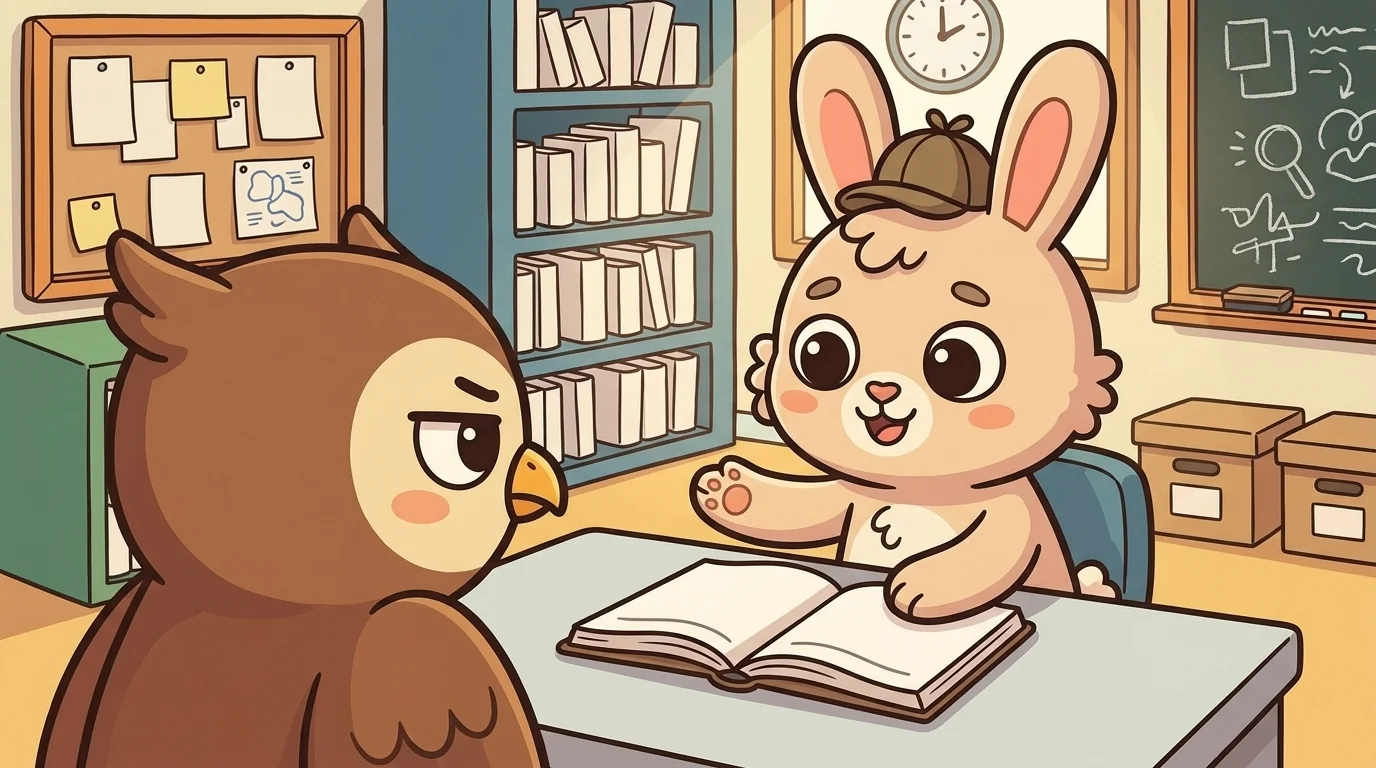
In Account's corner-workshop, a young owl frowned, skeptical. "If memory is that unstable, and sure people are just wrong — why interview witnesses at all? Can we ever trust an account?"
Account set the notebook down. "We can — if we handle it the way you'd handle any fragile trace. Ask open, never leading. Let silences sit; pressure contaminates. Record their exact words, not your paraphrase — your summary is already your interpretation leaking in. And treat even a certain witness as one line of evidence to be corroborated against the physical trace, never the verdict itself. This is the discipline real investigators call the cognitive interview: reinstate the context, let the witness lead, never suggest. The goal isn't to catch people lying — most witnesses aren't lying. The goal is to keep from teaching them a memory, and then keep from over-trusting the memory you didn't teach."
The owl's frown eased. "So it's less like squeezing the truth out. More like... not spilling it."
"Not spilling it," Account agreed. "And then checking it against everything that can't be led — the timeline, the trace, the chain. A witness is precious. You just hold their words gently enough not to reshape them, and honestly enough not to lean the whole case on them." Account slid the notebook across. "Go listen to someone like that. Watch how much more surfaces once they stop being steered."
The owl took the notebook, feeling the quiet weight of it, and went to ask someone, openly, what did you see?
The SleuthLab ensemble
Account is part of SleuthLab's distributed-narrative cast. Each character embodies a different curricular primitive; together they teach the full subject.
-

Loop
Impression evidence — fingerprints, shoeprints, toolmarks (class vs individual evidence)
-

Fiber
Trace evidence — fibers, hairs, paint, glass (Locard's exchange principle)
-

Drop
Chemical evidence — chromatography, pH, spectroscopy (test-don't-guess)
-

Stroke
Document analysis — handwriting, ink, paper (comparison methodology)
-

Witness
Biological + digital evidence — DNA + digital footprints (statistical-match, not certainty)
-

Seal
Chain of custody — bag it, label it, log every hand it passes through; a broken chain can't be trusted; otter with evidence bags + logbook
-
Sketch
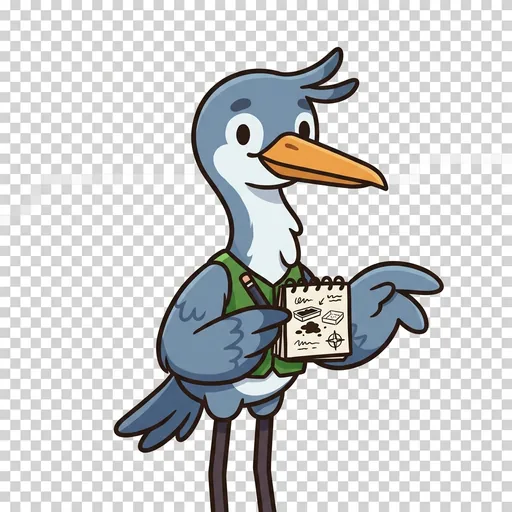
Scene documentation — record the scene before anyone touches it; the scene only tells its story once; heron with a measuring notebook
-

Tick
Timeline reconstruction — put every event in order on the clock; the sequence is where the answer hides; mouse with a paper timeline
-

Branch
Alternative explanations — ask 'what else could explain this?' and test each branch before choosing; squirrel with a whiteboard of possibilities