
Seal
SEAL — bag it, label it, log every hand it passes through; a clue is only as trustworthy as its unbroken chain.
Loading audio…
Press play to listen along. The line being read lights up as you go.
Show full transcript
Loading transcript…
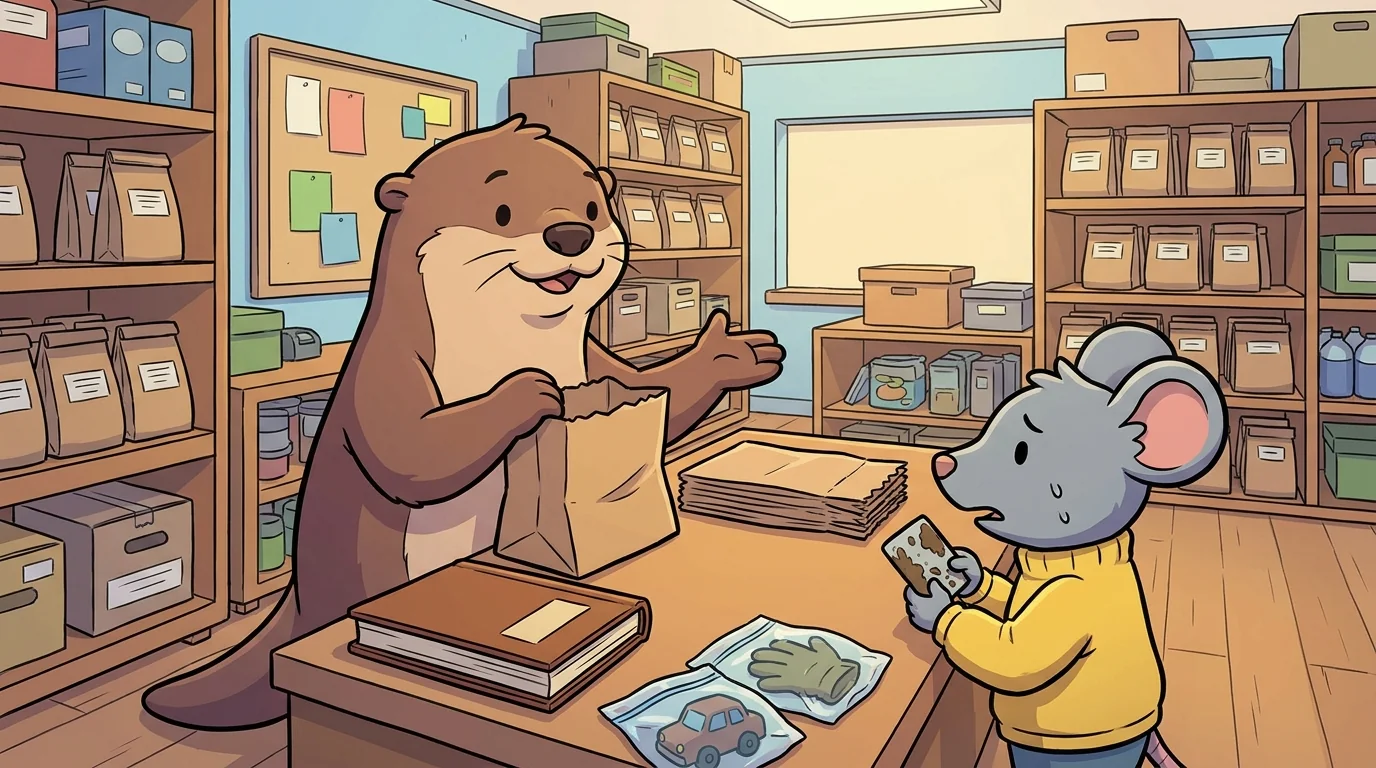
In the SleuthLab evidence room — really a tidy back closet of little bags and one logbook — an otter named Seal was doing the least dramatic and most load-bearing job in the building.
A breathless mouse burst in holding a muddy library card. "Seal! We found it — the card from the reading nook. This proves who was there!"
Seal didn't grab it. Seal held out an open paper bag. "Drop it in. Not paw-to-paw. Now — who touched it, where exactly did you find it, what time?"
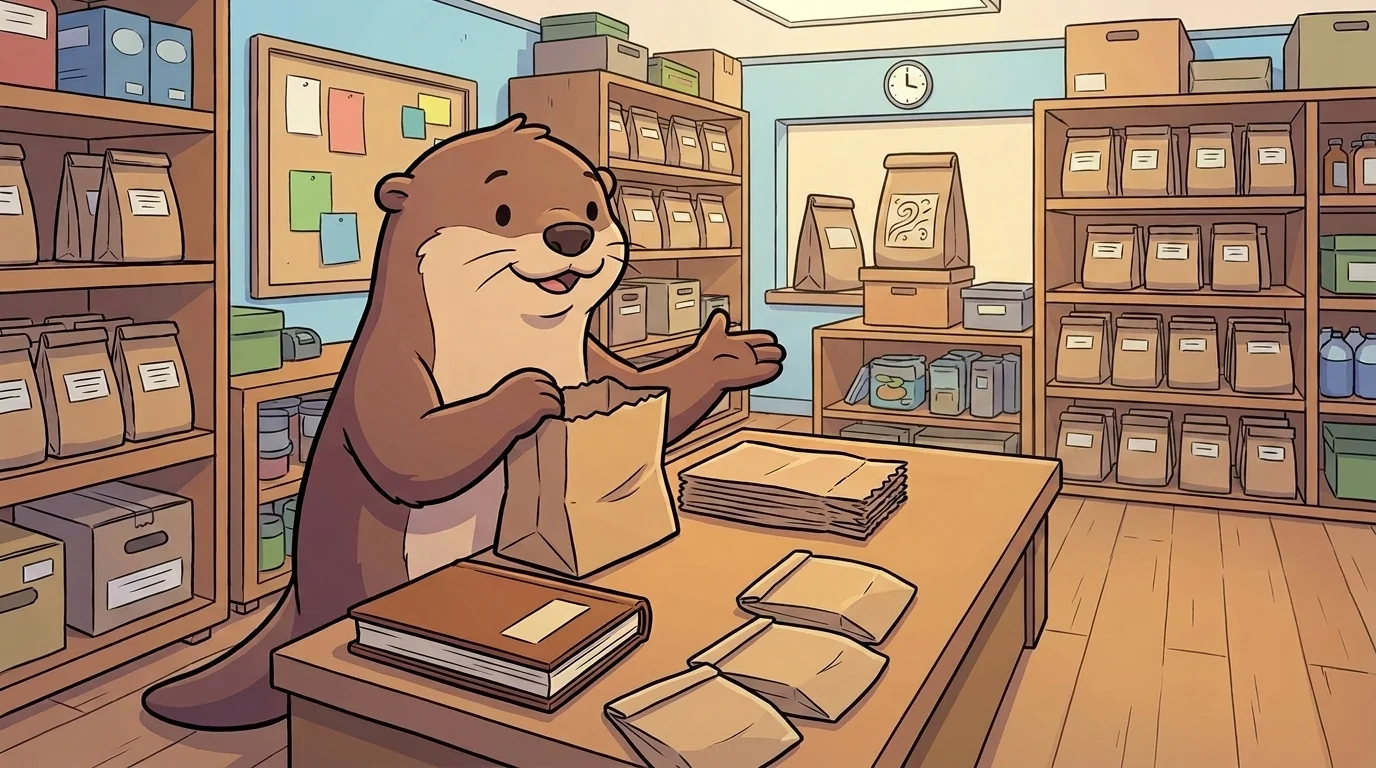
"Uh... I picked it up, then Pip held it, then Pip gave it to Bo, then Bo—"
"Then right now," Seal said, sealing the bag and reaching for the logbook, "four sets of muddy paws have been on it, and no one can testify which mud arrived when. Here's the principle: a clue's value isn't in the clue — it's in the provenance, the documented history of everywhere it's been and everyone who held it. That history is the chain of custody. Break it anywhere — one moment nobody can account for — and the clue doesn't become half-trustworthy. It collapses to zero. Because a single unaccounted gap means anyone can propose that it was swapped, contaminated, or planted, and you can't prove otherwise. An unaccountable clue isn't weak evidence. It's a rumor with mud on it, wearing the costume of proof."
Seal had learned that the hard way, on the first case the club ever thought it cracked.
They'd found a chewed pencil near a toppled science project. A real clue. But nobody bagged it. It went paw to paw around the whole club "just to look," someone pocketed it with their own pencils, and by day's end no one could honestly say whether the chewed pencil was the one from the scene or a wanderer from a backpack. The club was sure. But when Vex asked the one fair question — "can you prove this is the same pencil you found, and only that pencil?" — the room went silent. They couldn't. A kid nearly got blamed on a clue that had quietly decayed into no clue at all.

Seal, mortified in the back, felt something knot tight. It wasn't just losing the pencil's story. It was that the carelessness had almost delivered the wrong ending to a real person. A clue you can't account for isn't neutral. It's dangerous — it looks like proof and isn't. That day Seal started carrying bags and a logbook everywhere.
Seal walked to the academy with a satchel that clinked softly with folded bags.
Vex asked the question every junior investigator got. "What keeps evidence trustworthy?"
Seal didn't make a speech. Seal asked to borrow Vex's own reading glasses "as evidence," then narrated every step aloud: received from Inspector Vex, 9:02; placed in bag; labeled; sealed; logged; not opened. Then handed the sealed bag back.
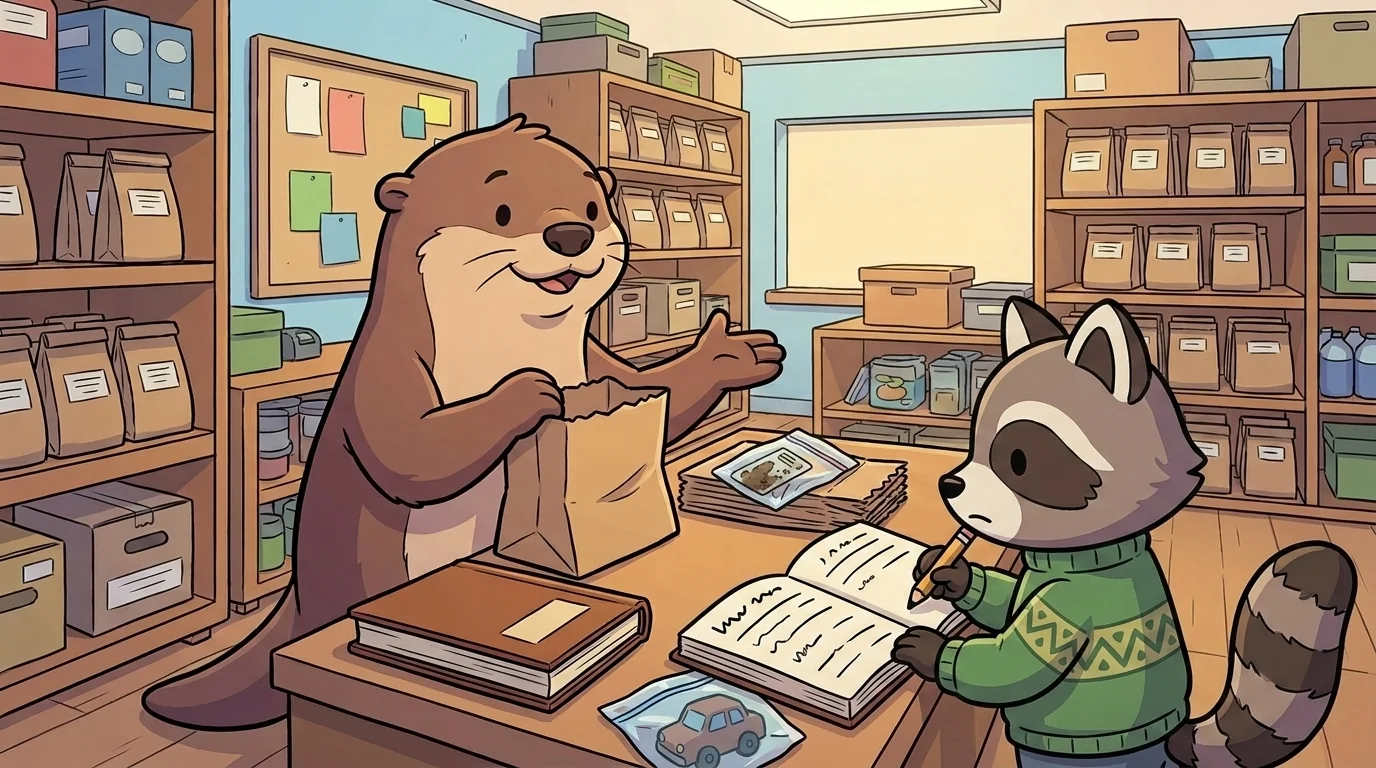
"That. An unbroken chain. If I can name every hand this passed through from the find to right now, you can trust what it tells us. If there's a single gap — one and then somebody had it for a while — the evidence has a hole, and an honest investigator says so out loud instead of hoping no one notices."
Vex turned the sealed bag over, reading the neat label. "You are appointed."
In Seal's closet-workshop, a young raccoon slouched in, unconvinced. "Seal, this is so slow. We all know we found the card in the reading nook. Why bag it and write a whole log line? We were there."
Seal slid the logbook across to a fresh line. "Because we were there fades, and this doesn't. Next week you won't remember if you found the card on the chair or under it — the log will. And here's what matters most: the log doesn't only serve us. It protects whoever we might accuse. If we ever say 'this card proves it was Rosa,' Rosa is owed the certainty that it's genuinely the card — not mixed up, not lost, not topped up by four muddy paws. The chain isn't bureaucracy slowing down the answer. The chain is the thing that lets anyone — Rosa included — believe the answer at all. Bag it. Label it. Log every hand. Especially when you're sure, because certainty is exactly when people get sloppy."
The raccoon eyed the blank line, then picked up the pencil. "And if the chain already broke? Like your pencil?"
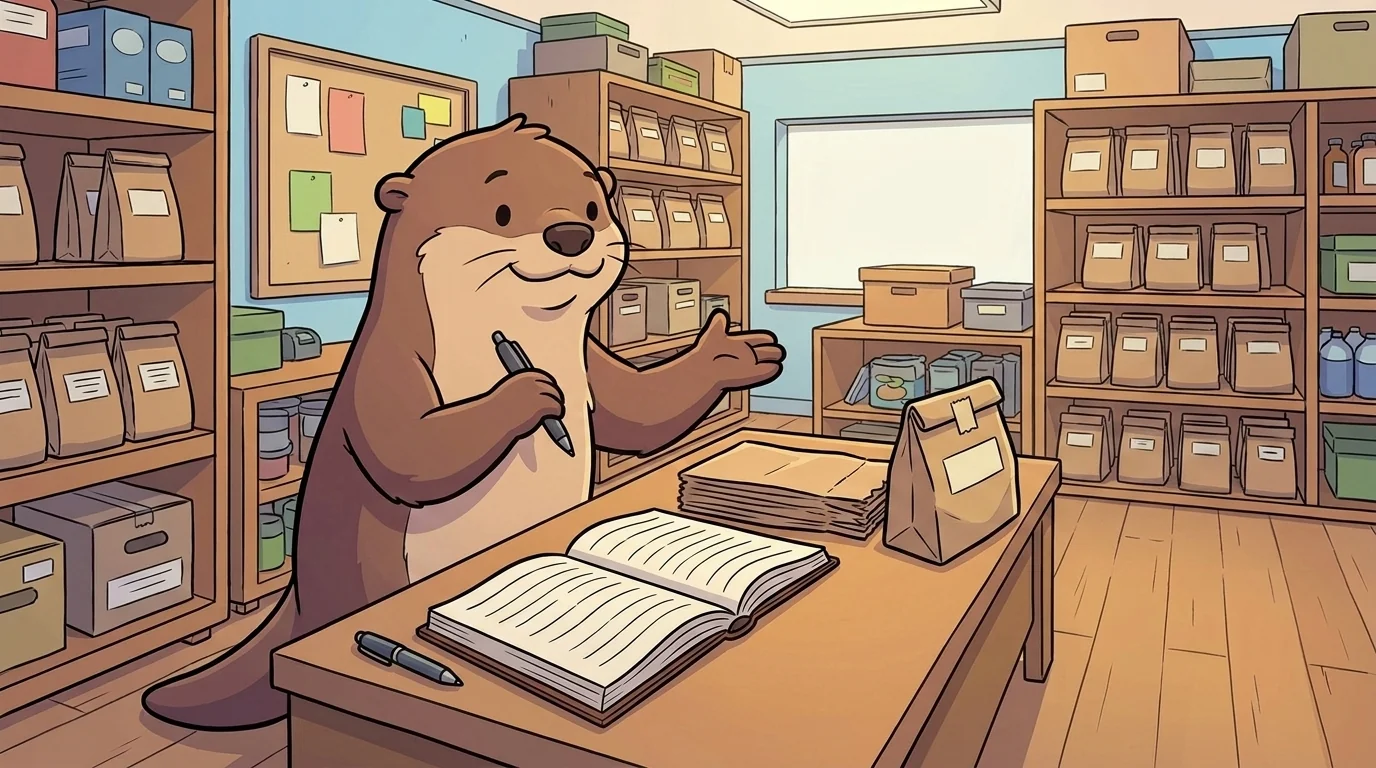
"Then you say so, plainly," Seal said. "A break you admit is a lesson. A break you hide is a lie. Disclosing the hole is what keeps the rest of your work honest."
The raccoon filled in the log line — slow, careful — and something in the slouch straightened.
"That actually feels kind of good," the raccoon admitted. "Like — I don't have to worry whether we can trust it later. It's written. Handled."
"That's the feeling I chase," Seal said. "Not the thrill of the catch — the quieter one: knowing there's no soft spot where a mistake could sneak in and hurt someone. When the chain holds, whatever the evidence says, it's really the evidence saying it — and not your own muddy paws." Seal capped the pen, neat. "Careful isn't the boring part of this work. Careful is the part that lets you trust yourself."
The raccoon sealed the bag with a satisfying press, and the slowness stopped feeling slow. It felt solid.
The SleuthLab ensemble
Seal is part of SleuthLab's distributed-narrative cast. Each character embodies a different curricular primitive; together they teach the full subject.
-

Loop
Impression evidence — fingerprints, shoeprints, toolmarks (class vs individual evidence)
-

Fiber
Trace evidence — fibers, hairs, paint, glass (Locard's exchange principle)
-

Drop
Chemical evidence — chromatography, pH, spectroscopy (test-don't-guess)
-

Stroke
Document analysis — handwriting, ink, paper (comparison methodology)
-

Witness
Biological + digital evidence — DNA + digital footprints (statistical-match, not certainty)
-
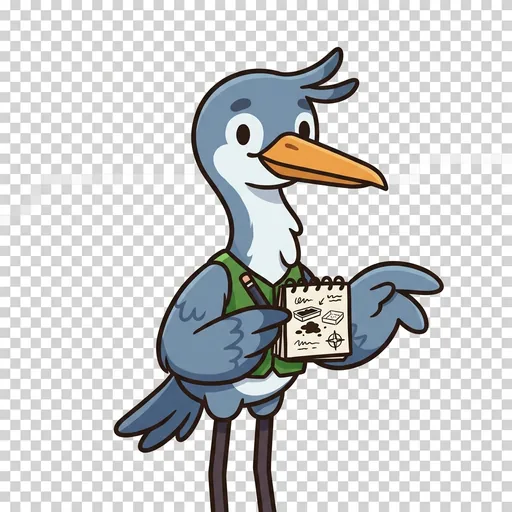
Sketch
Scene documentation — record the scene before anyone touches it; the scene only tells its story once; heron with a measuring notebook
-

Tick
Timeline reconstruction — put every event in order on the clock; the sequence is where the answer hides; mouse with a paper timeline
-

Branch
Alternative explanations — ask 'what else could explain this?' and test each branch before choosing; squirrel with a whiteboard of possibilities
-

Account
Testimony reliability — ask open questions and listen; memory is fragile and a confident witness isn't always correct; rabbit with a gentle notebook