
Sketch
SKETCH — record the scene before anyone touches it; the spatial arrangement is a one-read page, and documentation before theory keeps the clues that might change your mind.
Loading audio…
Press play to listen along. The line being read lights up as you go.
Show full transcript
Loading transcript…
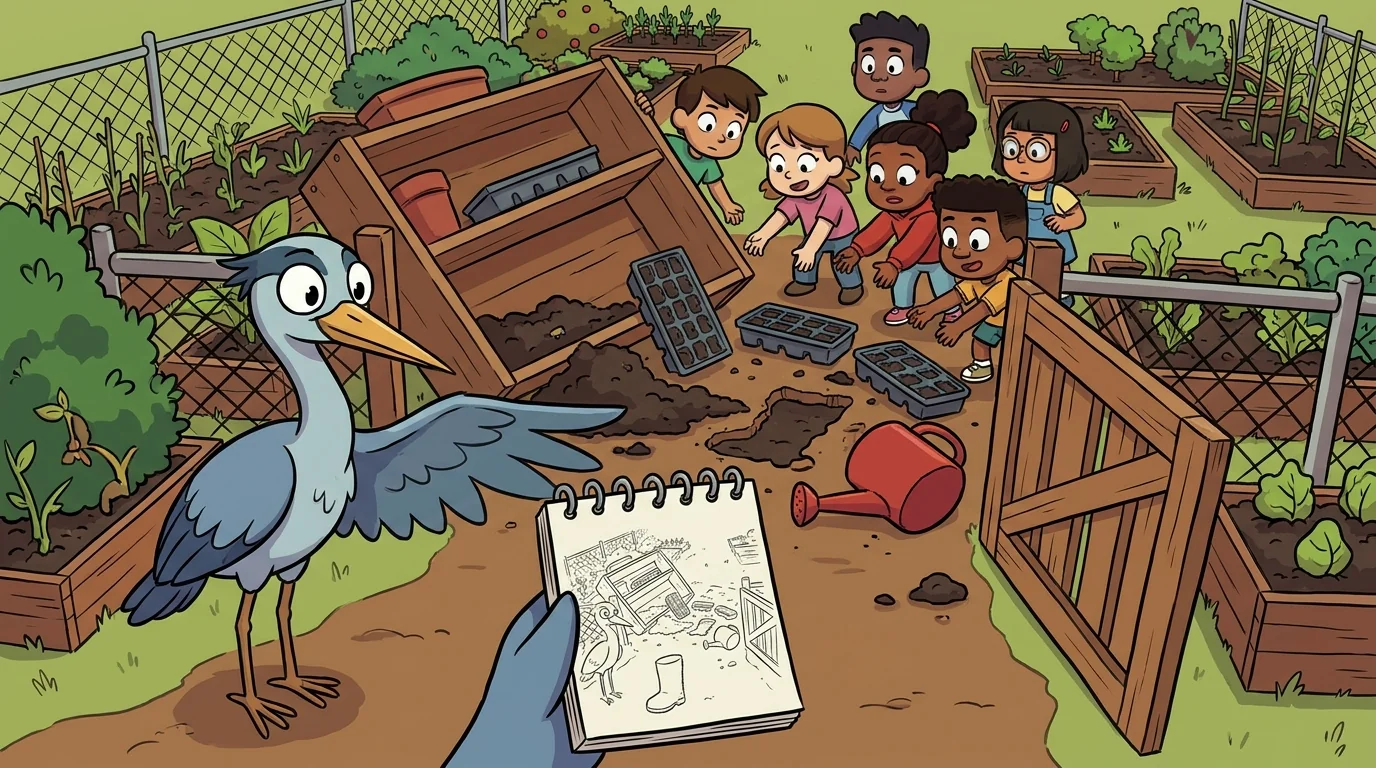
At the edge of the school garden, where a row of seed trays had gone off a shelf overnight, a heron named Sketch stood very still, touching nothing, drawing.
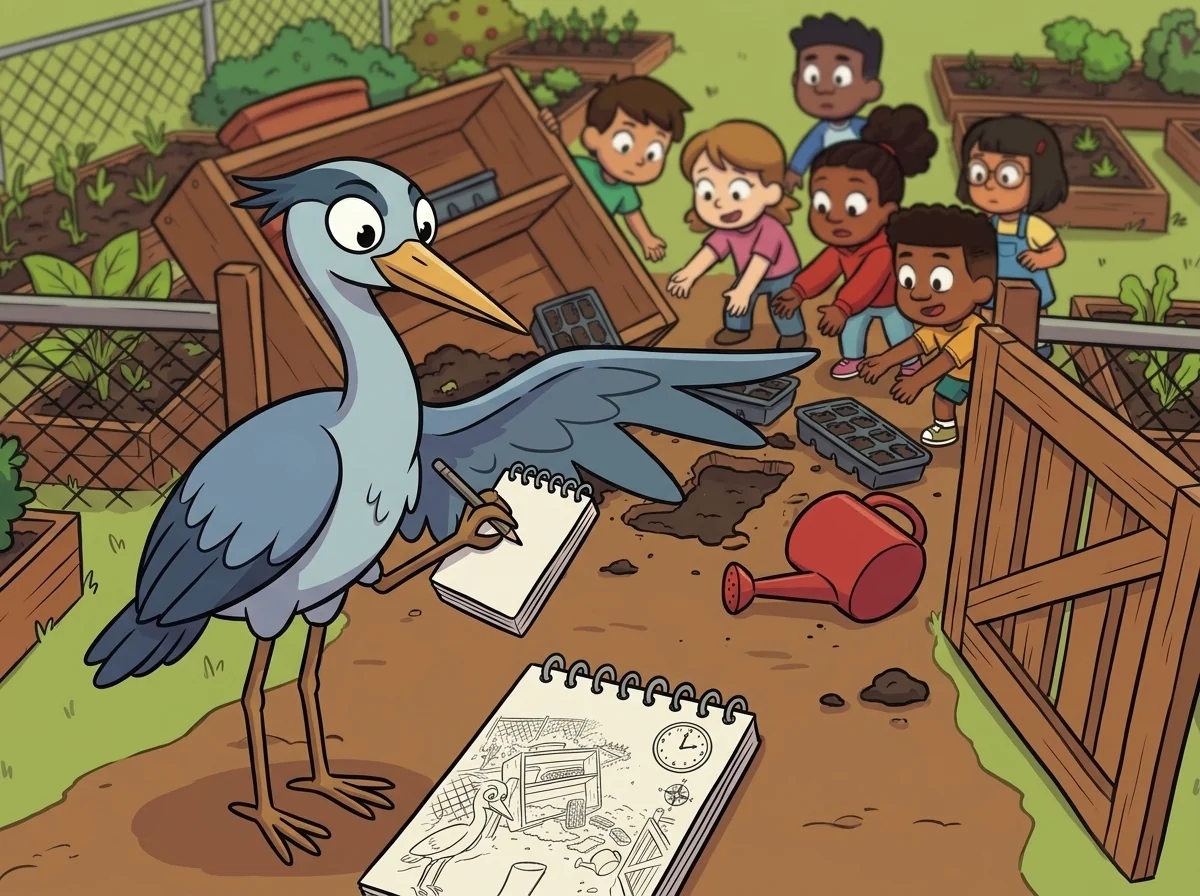
The notebook filled fast: the trays where they'd fallen, the exact scatter of spilled soil, a single clean boot-shaped gap in the mud where no soil had landed, the open gate, the direction the watering can had rolled. Measurements down the margin. A small compass rose in the corner.
The club crowded in, hands already reaching. "Let's pick it all up and hunt for clues!"
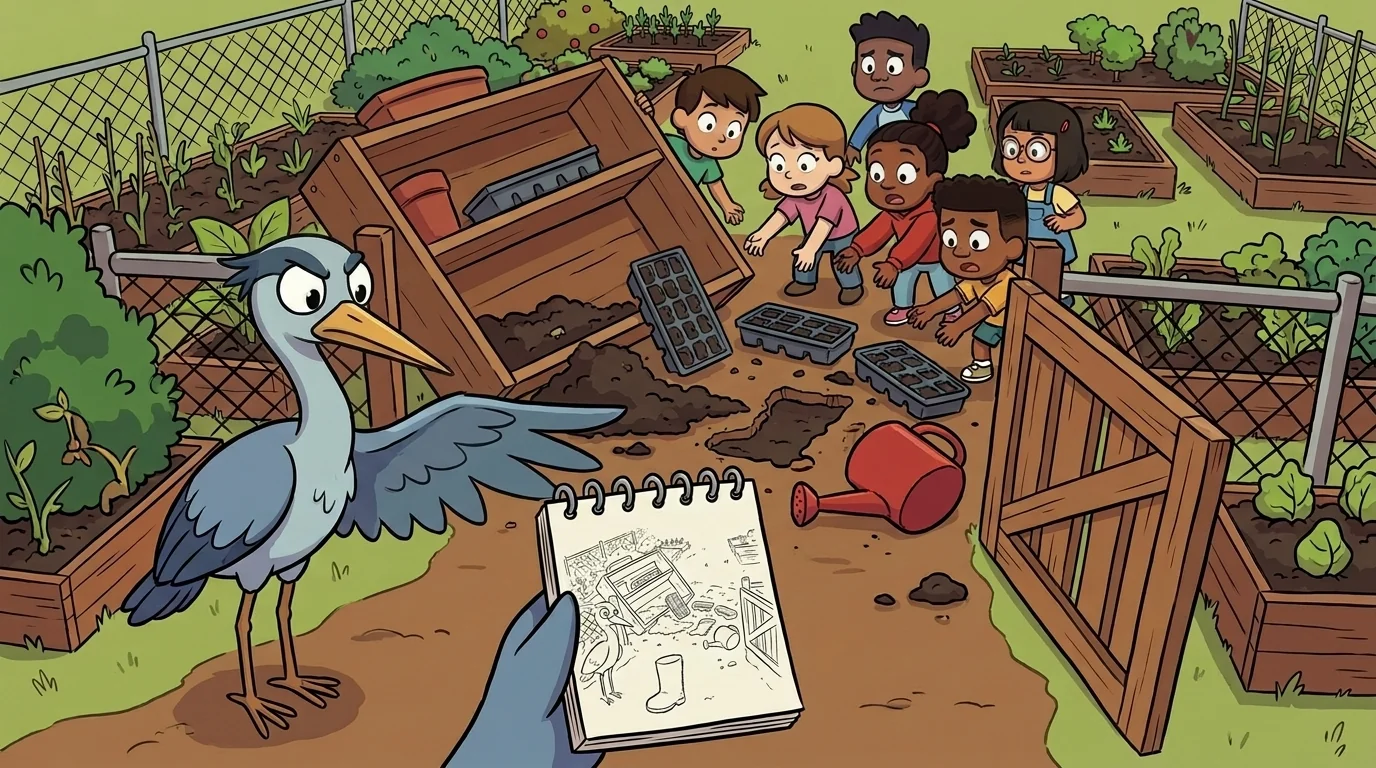
"Wait," said Sketch, wing out. "Once you lift it, the scene is gone — permanently. Here's what people miss: the arrangement itself is the evidence. The gap in the mud, the roll direction, what landed where and what didn't — that spatial relationship is a message written once, and it can't be reconstructed after it's disturbed, because disturbing it destroys the very thing it records. So we document first — draw it, measure it, photograph it, capture the whole scene exactly as found — and only then are we free to collect, because now the scene is preserved in the record. This is the order the whole method depends on: observe and record before you intervene. Reverse that order and you've deleted the data before you read it."
Sketch had learned this from a case the club solved wrong — twice — because the scene got tidied before it got recorded.
The mystery of the classroom hamster's escape. The club rushed in, scooped up the tipped cage, straightened the chewed corner, wiped the muddy tracks off the desk to "clean up" — and then asked how the hamster got out. By then the answer was mopped away. The tracks would have shown direction. The angle of the tipped cage would have shown a push versus a slip. The chewed corner, before it was straightened, would have shown whether the hamster chewed out or a latch was opened. All gone — erased by helpful hands.
Sketch, frozen at the back, felt something ache. The club hadn't been careless, exactly. They'd been trying to help — which was almost worse, because the scene's whole story was destroyed by good intentions moving too fast. A scene is a page that can be read once, and most of the time someone tidies it before anyone thinks to read it. From that day Sketch drew first and touched second, without exception.
Sketch walked to the academy with a notebook already soft at the corners.
Vex asked the question. "How do you keep a scene's story?"
Sketch answered by asking Vex not to move, then quietly rendering the office exactly as it was — the tilt of the desk lamp, three books left open, the chair pushed back at its angle — and writing the time at the top.
"There. Whatever gets moved in this room in the next hour, we can return to how it truly was. A scene doesn't wait for us to be ready; it begins degrading the instant someone walks through it. So the first job — before any theory, before any touching — is to make the scene permanent on the page."
Vex studied the little drawing and its accuracy. "You are appointed."
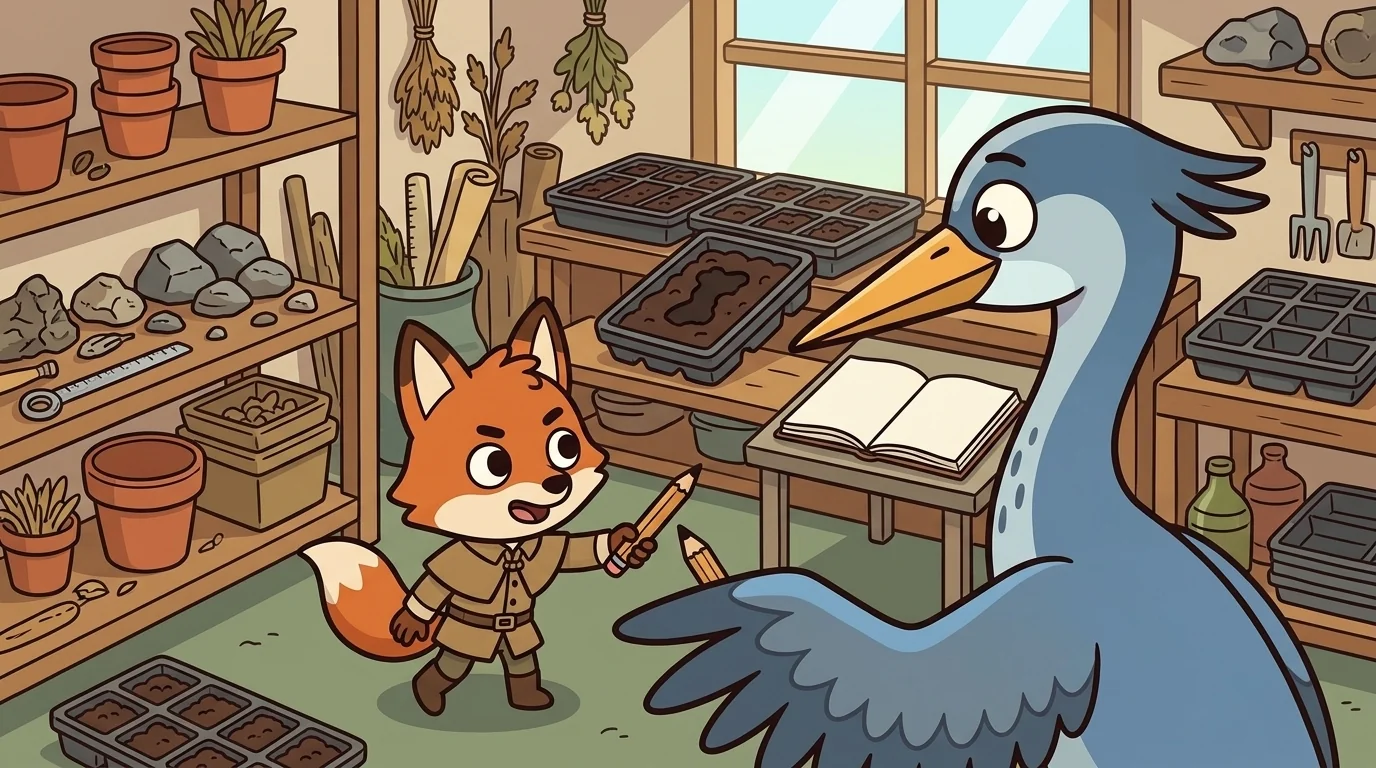
In Sketch's workshop, a young fox fidgeted, itching to act. "Sketch, drawing takes ages and my theory's right there. Can't I grab the boot-print tray and match it while it's fresh?"
Sketch handed the fox a pencil instead of the tray. "Here's the trap, and it's a cognitive one: the moment your theory feels right is the most dangerous moment to start moving things — because now confirmation bias switches on. You'll see what fits and quietly tidy away what doesn't, not on purpose, just because you've stopped looking with open eyes. Recording the entire scene first, before you have a favorite answer, is how you protect the clues that could overturn your theory. Draw everything — the boring parts, the parts that don't fit, especially those. The scene you capture with no theory yet is honest. The scene you capture after you've decided is your theory wearing a costume."
The fox, restless: "And if I record the boring parts and none of them matter?"
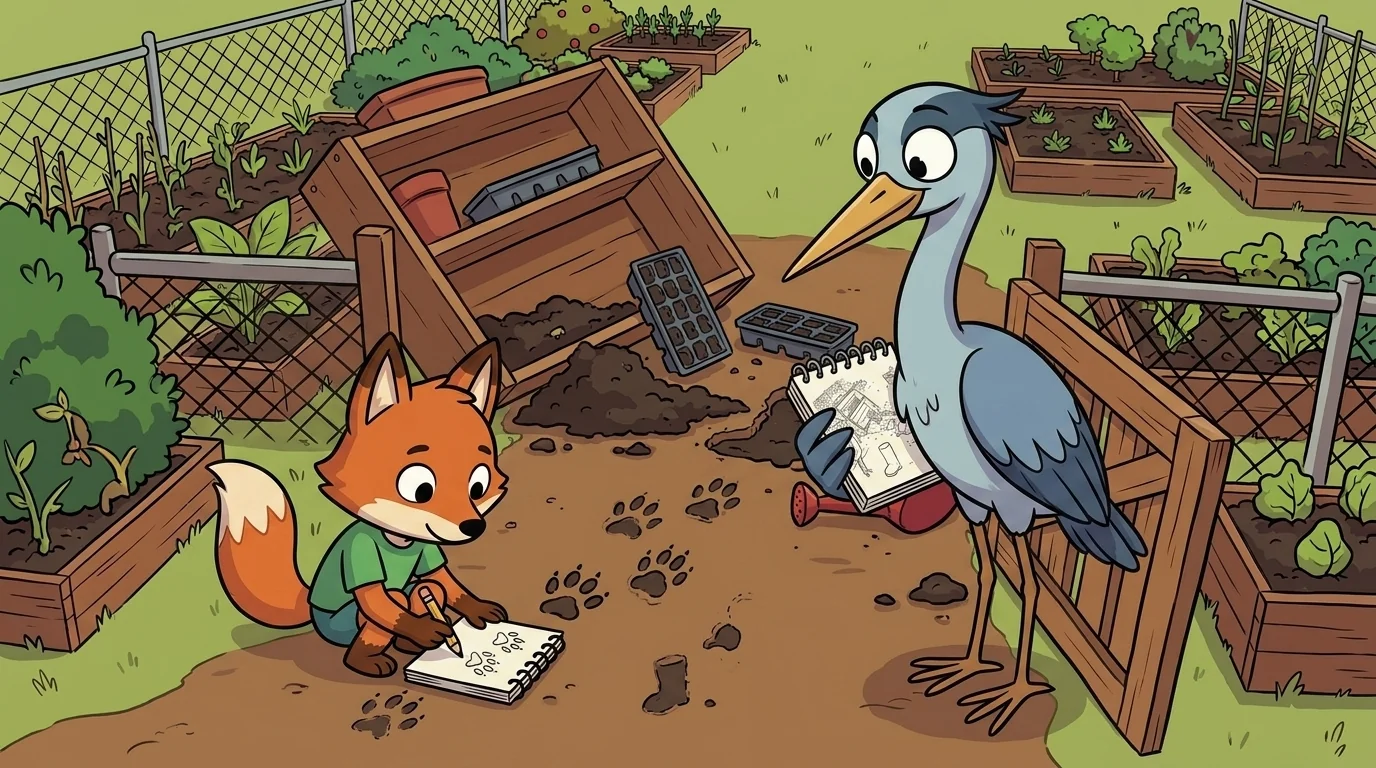
"Then you've spent five minutes," Sketch said. "Skip them and grab the wrong tray, and you can lose the whole answer — or worse, find a wrong one and believe it."
The fox began to draw — grudging, then slower, then really looking — and the fidget went quiet.
"Huh," the fox said, pencil pausing. "I didn't even see that second set of prints until I had to draw them. I'd have stepped right on them."
"That's the secret nobody believes until it happens to them," Sketch said. "Drawing isn't the slow part in the way of noticing. Drawing is noticing — your hand drags your eye to where it skipped. And there's a feeling in it: that settled, unhurried focus where the whole loud rush to solve it goes still and you're just seeing what's actually there. That calm is where the real clues live. The fast, excited part of you sprints right past them."
The fox looked down at the two sets of prints they'd almost trampled, felt the steadiness of having seen, and kept drawing.
The SleuthLab ensemble
Sketch is part of SleuthLab's distributed-narrative cast. Each character embodies a different curricular primitive; together they teach the full subject.
-

Loop
Impression evidence — fingerprints, shoeprints, toolmarks (class vs individual evidence)
-

Fiber
Trace evidence — fibers, hairs, paint, glass (Locard's exchange principle)
-

Drop
Chemical evidence — chromatography, pH, spectroscopy (test-don't-guess)
-

Stroke
Document analysis — handwriting, ink, paper (comparison methodology)
-

Witness
Biological + digital evidence — DNA + digital footprints (statistical-match, not certainty)
-

Seal
Chain of custody — bag it, label it, log every hand it passes through; a broken chain can't be trusted; otter with evidence bags + logbook
-

Tick
Timeline reconstruction — put every event in order on the clock; the sequence is where the answer hides; mouse with a paper timeline
-

Branch
Alternative explanations — ask 'what else could explain this?' and test each branch before choosing; squirrel with a whiteboard of possibilities
-

Account
Testimony reliability — ask open questions and listen; memory is fragile and a confident witness isn't always correct; rabbit with a gentle notebook