Hark and Mosaic
LISTEN, THEN BUILD
A story read by Hark and Mosaic
Loading audio…
Press play to listen along. The line being read lights up as you go.
Show full transcript
Loading transcript…

The group project meeting was going badly, and not because anyone was mean. It was going badly because everyone was talking and no one was listening — five creatures, each waiting for a gap to drop their own idea, each already rehearsing their next sentence while someone else was still mid-thought. Ideas kept getting dropped on the floor, half-heard, and nothing was building. Two helpers slipped in to show the group what real conversation looks like.
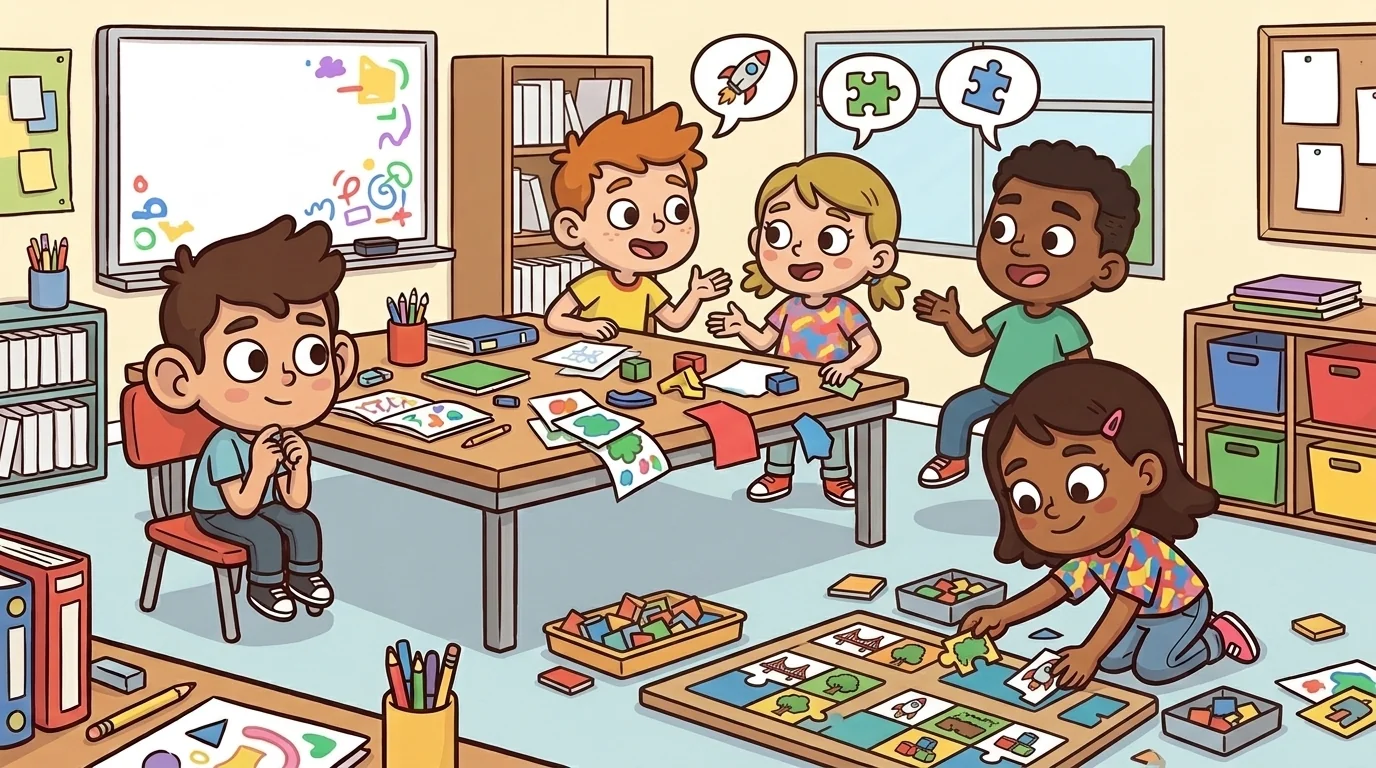
Hark went first, and did something that looked, at first, like nothing at all. She simply listened — all the way to the end of what each creature said, without her face doing the thing faces do when they are only waiting to talk.
[HARK, calm]: "Here is the trap. The moment someone starts speaking, most of us start composing our reply — and from that instant, we are no longer listening. We are guarding a sentence, waiting to launch it. You cannot hear a whole idea while you are rehearsing your own."
She showed them the fix, which cost only patience. "Let the whole idea land. All of it. Don't build your answer until they've finished — because the last thing they say often changes everything they said before."

Then Mosaic stepped in, and did the other half.
[MOSAIC, warm]: "Once you've truly heard everyone, you have a table full of pieces. My job is to fit them. Not to add a sixth idea — to connect the five already here. 'You said faster; you said fewer steps — put those together and there's the answer.'"
The scattered thoughts became, suddenly, one whole thing. The group stared at a plan that had been sitting in the room the entire time, in pieces, unheard.
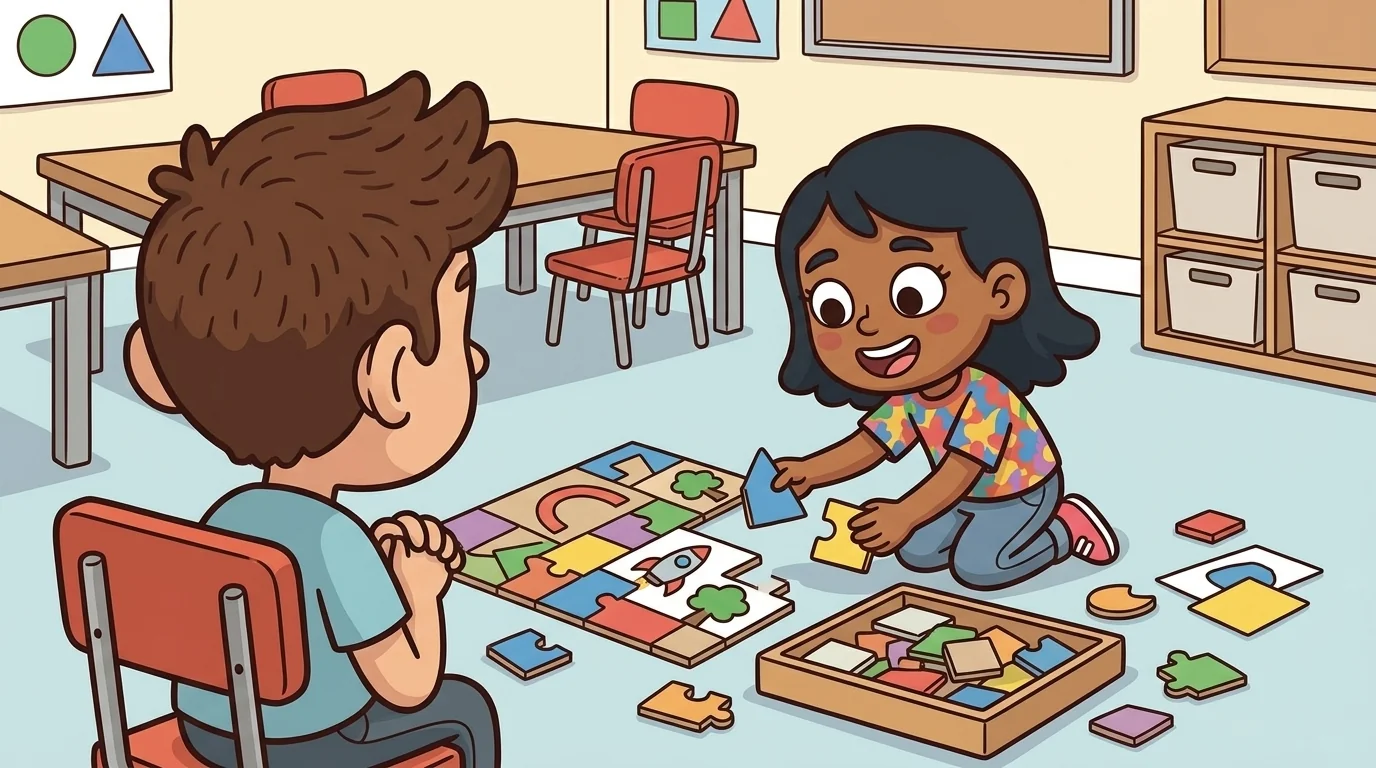
The children watching asked why it took two of them — why listening and building weren't just one skill.
[HARK, thoughtful]: "Because they fail separately. Listen without building, and you've heard everyone and done nothing — a very kind meeting that produces no plan."
[MOSAIC, nodding]: "And build without listening, and you're fitting together pieces you only half-heard — a fast plan built on a misunderstanding. You need both. Hear it fully. Then build on it. In that order."
[HARK, quiet]: "The order matters. Building first is just guessing with confidence."
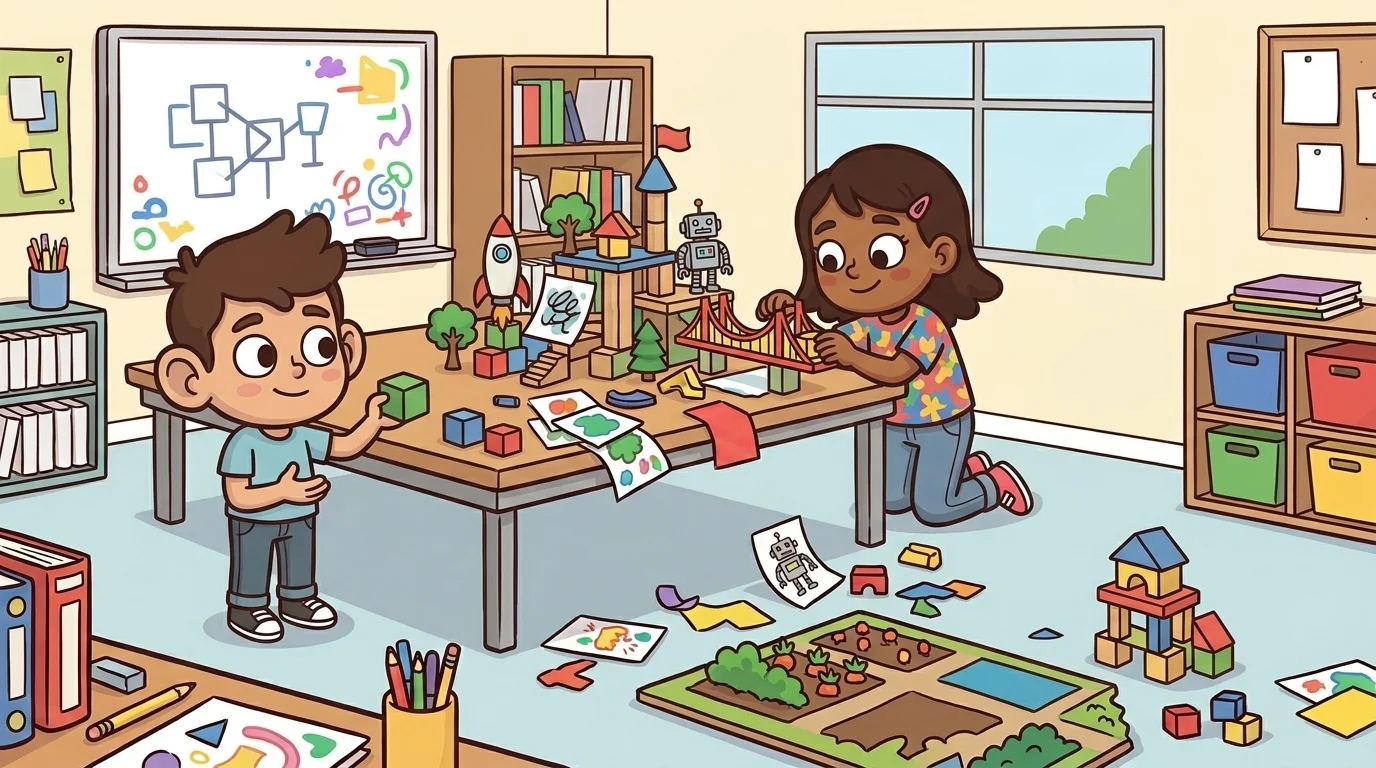
A frustrated creature named Rill, who had good ideas the group never used, tried it their way — for one meeting, he only listened all the way through, and then only connected. The plan came in twenty minutes.
[MOSAIC, gentle]: "Your ideas were never the problem, Rill. You were adding tiles to a table where no one had listened long enough to see the picture."
[HARK, warm]: "Listen first, so there's something true to build on. Build second, so the listening becomes a plan. That's the whole of it — and it takes two halves, working in order."
The group, for the first time, had built something together — because someone finally heard it fully before anyone tried to build.
Hear it as an audio drama
A short play starring Hark and Mosaic, from SpeakForge. Different voices, same idea. Listen any time after you read.
Loading audio…
Read the drama script
- Narrator: From Spark and Anvil and SpeakForge — this is Hark, in chapter 1 of the SpeakForge cast.
- Narrator: This drama uses an AI-generated voice. Voiced via Gemini 2.5.
- Narrator: The group project meeting was going badly — not because anyone was mean, but because everyone was talking and no one was listening. Five creatures, each rehearsing a reply while someone else was still mid-thought. Ideas kept dropping on the floor, half-heard.
- Narrator: Two helpers slipped in. Hark went first, and did something that looked like nothing at all — she simply listened, all the way to the end.
- Hark: Here is the trap. The moment someone speaks, most of us start composing our reply — and from that instant, we've stopped listening. You cannot hear a whole idea while guarding your own sentence.
- Hark: Let the whole idea land. All of it. The last thing they say often changes everything before it.
- Narrator: Then Mosaic did the other half.
- Mosaic: Once you've truly heard everyone, you have a table full of pieces. My job is to fit them. Not add a sixth idea — connect the five already here. "You said faster; you said fewer steps — together, there's the answer."
- Narrator: The scattered thoughts became one whole thing. The children asked why it took two of them.
- Hark: Because they fail separately. Listen without building, and you've heard everyone and done nothing — a kind meeting that makes no plan.
- Mosaic: And build without listening, and you're fitting pieces you only half-heard — a fast plan on a misunderstanding. Hear it fully. Then build on it. In that order.
- Narrator: A frustrated creature named Rill, whose ideas the group never used, tried it their way.
- Mosaic: Your ideas were never the problem, Rill. You were adding tiles to a table where no one had listened long enough to see the picture.
- Hark: Listen first, so there's something true to build on. Build second, so the listening becomes a plan.
- Narrator: Hear it fully, then build — two halves, in order. That is Hark and Mosaic.
- Narrator: You've been listening to a Spark and Anvil chapter, written by the Spark and Anvil writing team for ages 9 to 14.
- Narrator: Apps stay free forever.
- Narrator: Curriculum aligned to Common Core and Next Generation Science Standards.
- Narrator: Released under Creative Commons BY-NC-SA 4.0 for educational reuse. Visit Spark and Anvil for the full transcript.
The SpeakForge ensemble
Hark and Mosaic is one of the friends in SpeakForge. Each friend shows you one idea by how they act; meet them all and you have the whole subject.
-

Pose
Posture / presence / stance — 'Stand. Then speak.'
-

Pitch
Voice projection + tone variation — 'Your voice is a road. Not a wall.'
-

Hark
Active listening — 'Listen all the way through.'
-

Truss
Argument structure (claim / evidence / reasoning) — 'Claim, then proof, then why.'
-

Echo
Audience awareness + tone calibration — 'Who's listening? Speak to THEM.'
-

Easel
Visual aids / multimedia displays — show, don't just tell; one clear picture beats a hundred words (SL.5)
-

Waypoint
Signposting — the verbal roadmap; 'first, next, finally' so listeners never get lost (SL.4)
-

Volley
Q&A — fielding and answering questions; catch it, breathe, send it back clean (SL.1)
-

Mosaic
Building on others' ideas — synthesizing a discussion; 'you said X, and building on that…' (SL.1c-d)
-

Usher
Turn-taking & discussion norms — everyone gets a seat at the talk; make room for the quiet voice (SL.1b)