
Pose, Pitch and Easel
STAND, THEN SPEAK — how you deliver carries as much as what you say; Pose steadies the body first so the voice has a foundation, Pitch varies the voice like a road that rises and falls instead of a flat wall, and Easel shows the idea with a picture instead of only telling it. Delivery is not decoration — it is half the message.
A story read by Pose, Pitch and Easel
Loading audio…
Press play to listen along. The line being read lights up as you go.
Show full transcript
Loading transcript…
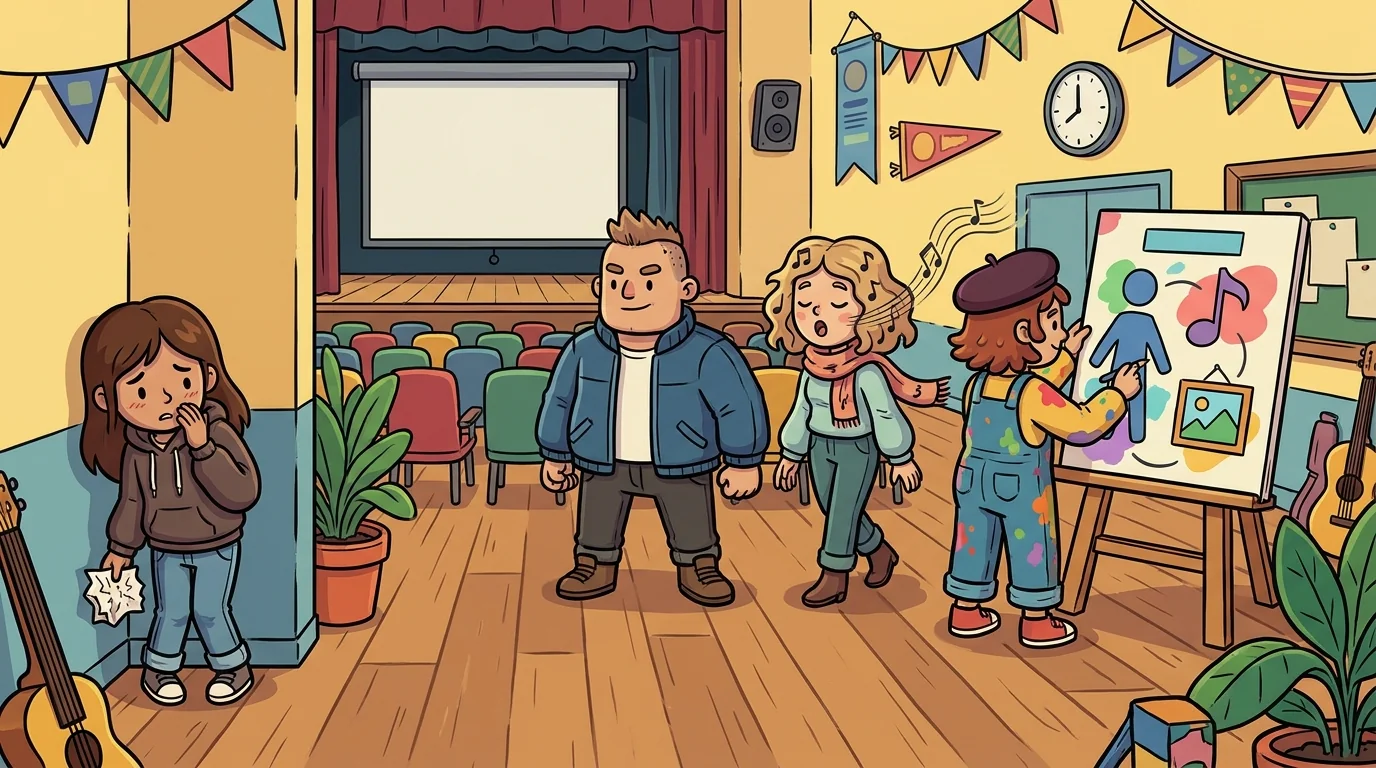
The girl had to give her talk in five minutes, and she was doing the thing nervous speakers do: standing hunched in the corner, whispering her notes to the floor, hoping to become invisible. Three helpers found her there — and they were not going to fix her words. Her words were fine. They were going to fix everything around the words, the part most people forget is even part of speaking.
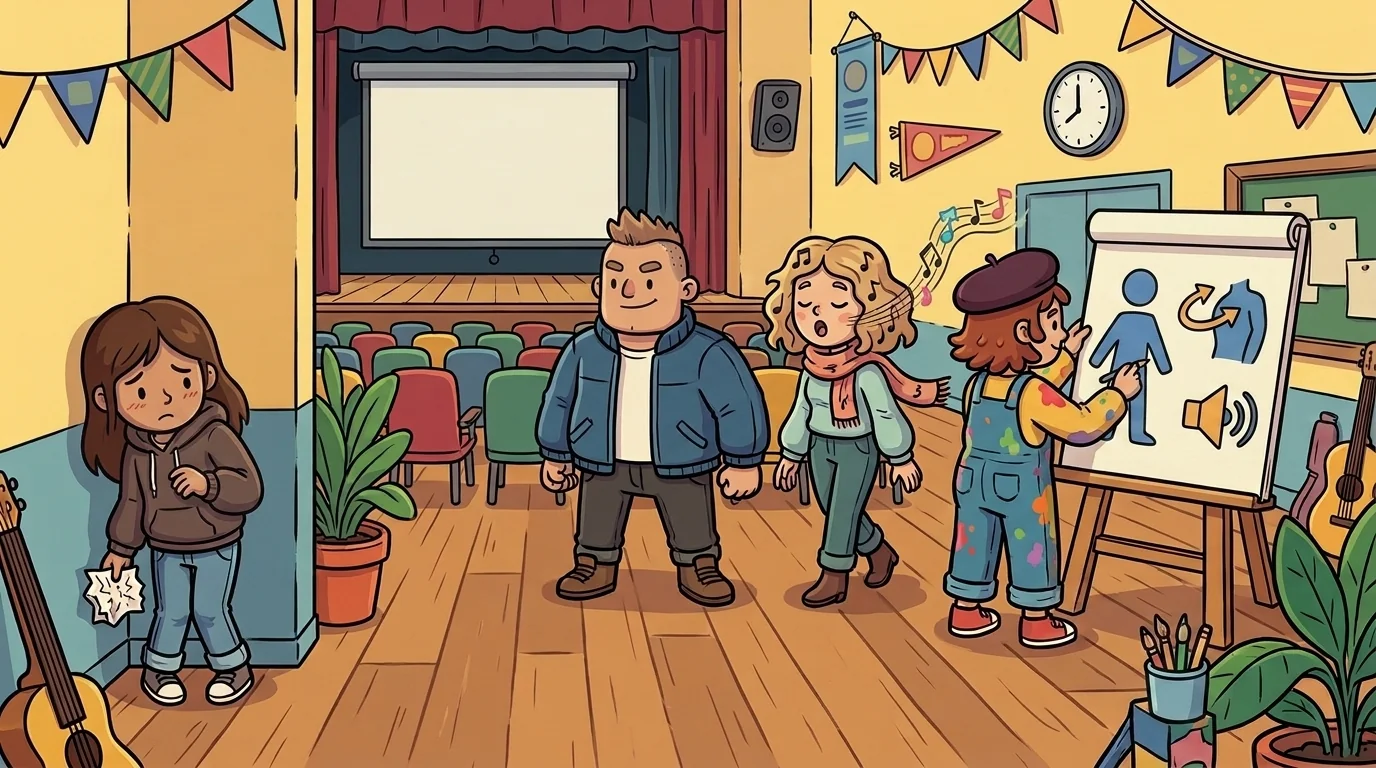
Pose went first, and would not let her say a single sentence yet.
[POSE, steady]: "Before the voice, the body. You are folded into the corner, and a folded body makes a folded voice — thin, apologetic, easy to ignore. Stand square. Feet under you. Shoulders down. The breath needs somewhere to live."
The girl straightened, and her very first word came out twice as clear — before she had changed anything about the word itself.
[POSE, warm]: "See? The body is the foundation. A steady stance isn't about looking confident. It's about giving the voice a place to stand."
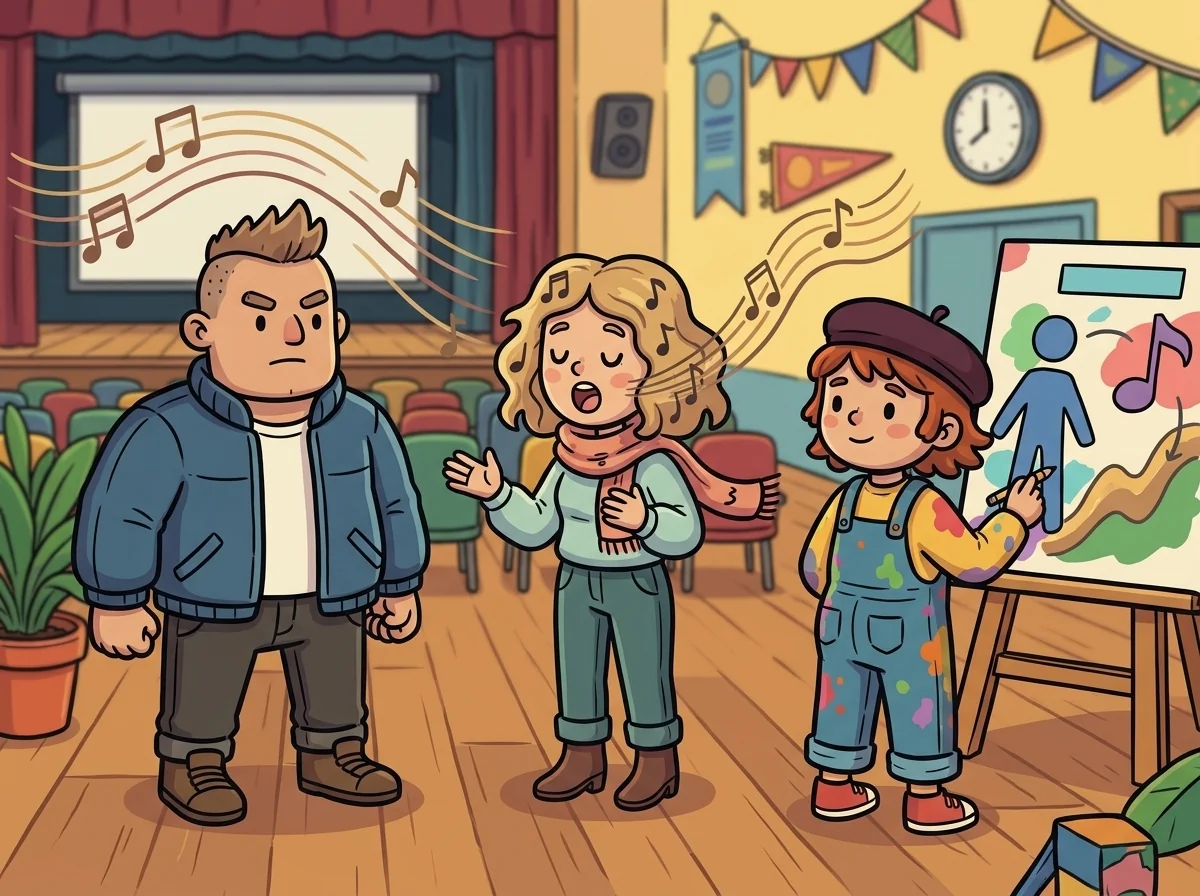
Then Pitch stepped in and listened to her read one flat, frightened line.
[PITCH, encouraging]: "Your voice is a road, and right now it's a wall — flat, one height, all the way across. A listener's ear falls asleep on a flat wall. Let it rise and fall. Lean on the words that matter. Slow down for the important part; let the small parts move quick."
She tried the same sentence with the road in it — up at the question, down at the point — and it stopped being notes and started being speech.
[PITCH, warm]: "The meaning was always in there. Variation is what carries it out to the back of the room."
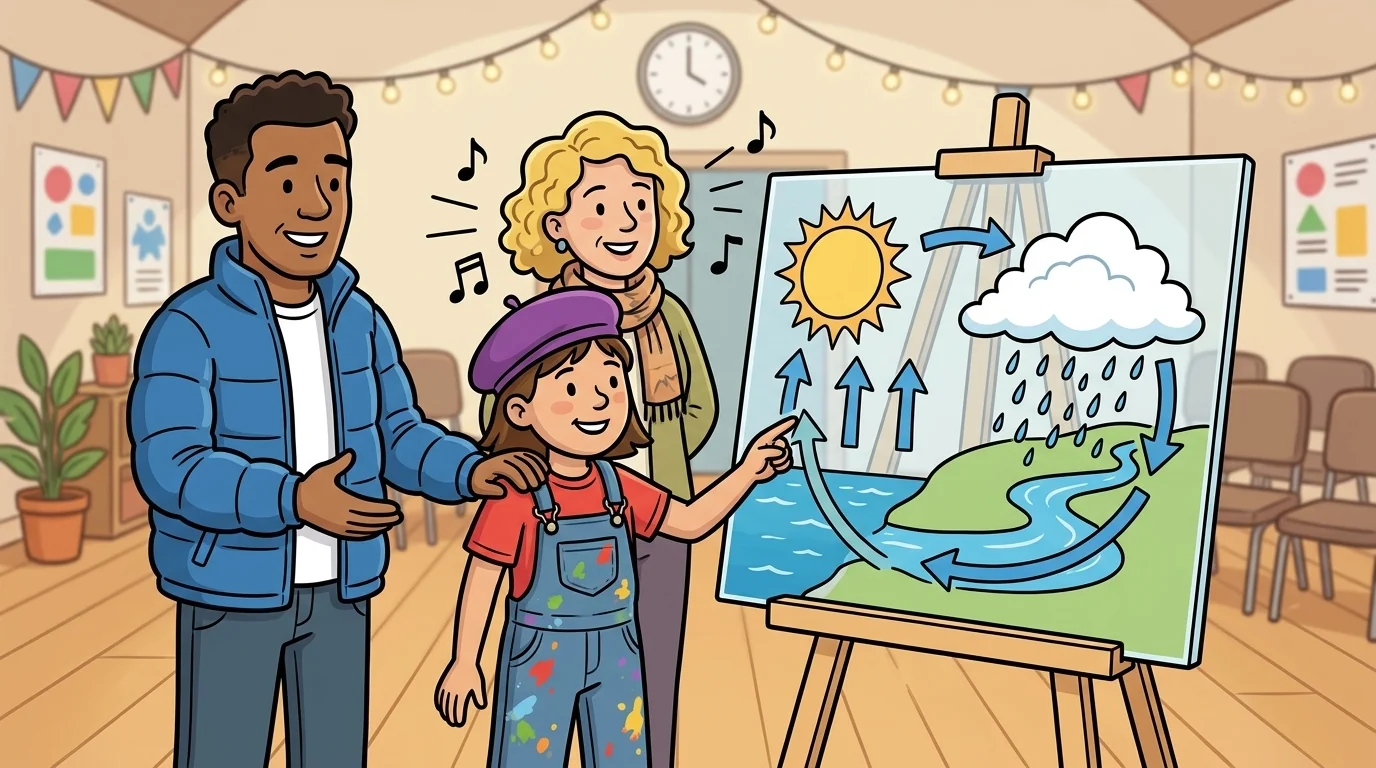
Then Easel, quiet as ever, unrolled a single picture.
[EASEL, calm]: "And when you reach the part words can't quite carry — here. One picture, at the exact moment the idea needs to be seen. Not to decorate. To land the thing your sentence is reaching for."
The children watching asked why it took three of them for one short talk.
[POSE, thoughtful]: "Because delivery isn't one thing. It's the body, the voice, and the eye — three channels, all carrying meaning at once, before the content of a single word arrives."
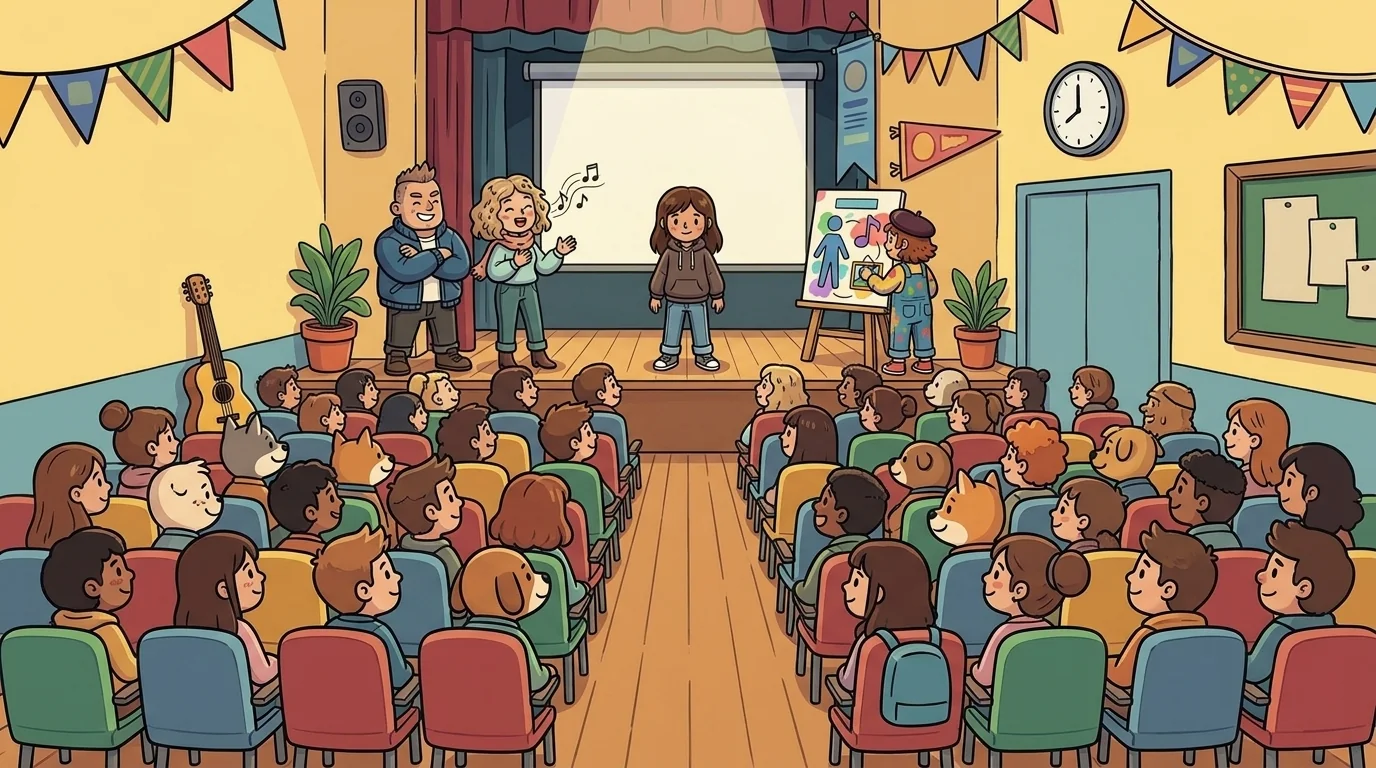
The girl gave her talk — standing square, voice rising and falling, one picture at the one right moment — and it was the same words she'd been whispering to the floor, now landing in every seat.
[PITCH, gentle]: "We changed nothing you were going to say."
[EASEL, warm]: "We changed how it arrived. And how it arrives is half of what it means."
[POSE, steady]: "Stand, then speak. Steady the body, shape the voice, show the idea — and the words you already had finally get heard."
The girl who had wanted to be invisible had, for five minutes, been impossible to look away from — and she hadn't rewritten a word.
The SpeakForge ensemble
Pose, Pitch and Easel is part of SpeakForge's distributed-narrative cast. Each character embodies a different curricular primitive; together they teach the full subject.
-

Pose
Posture / presence / stance — 'Stand. Then speak.'
-

Pitch
Voice projection + tone variation — 'Your voice is a road. Not a wall.'
-

Hark
Active listening — 'Listen all the way through.'
-

Truss
Argument structure (claim / evidence / reasoning) — 'Claim, then proof, then why.'
-

Echo
Audience awareness + tone calibration — 'Who's listening? Speak to THEM.'
-

Easel
Visual aids / multimedia displays — show, don't just tell; one clear picture beats a hundred words (SL.5)
-

Waypoint
Signposting — the verbal roadmap; 'first, next, finally' so listeners never get lost (SL.4)
-

Volley
Q&A — fielding and answering questions; catch it, breathe, send it back clean (SL.1)
-

Mosaic
Building on others' ideas — synthesizing a discussion; 'you said X, and building on that…' (SL.1c-d)
-

Usher
Turn-taking & discussion norms — everyone gets a seat at the talk; make room for the quiet voice (SL.1b)