Volley the Question-Fielder
FIELDING QUESTIONS
A story read by Volley the Question-Fielder
Loading audio…
Press play to listen along. The line being read lights up as you go.
Show full transcript
Loading transcript…
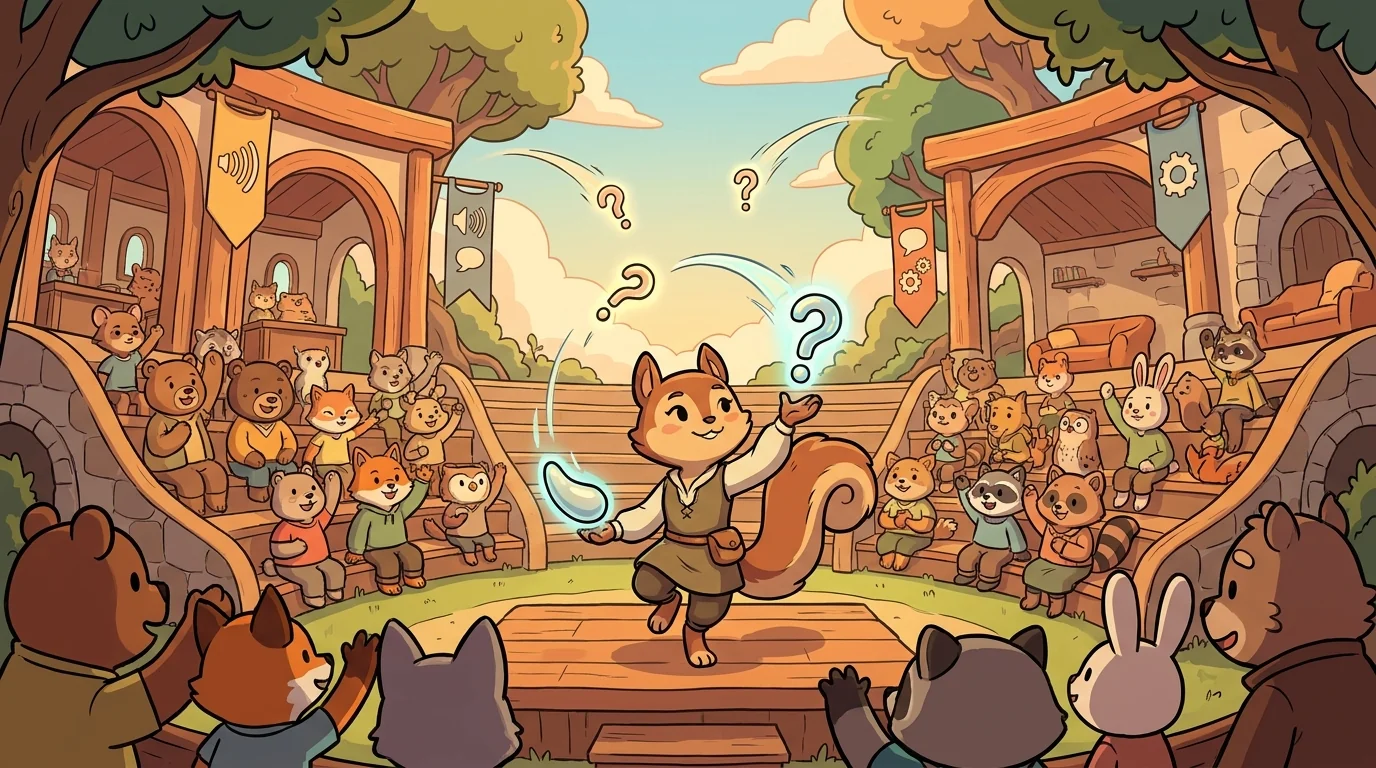
At the SpeakForge academy, where creatures practiced being understood, Volley was a quick, light-footed creature who loved the moment after a talk most of all — the part where hands go up and questions come flying. Where other speakers tensed up when a question arrived, Volley relaxed. She'd catch the question gently, turn it over to find what was really being asked, and send back a clean, calm answer — a friendly volley, back and forth, never a fight.
The fear, she taught, comes from a misunderstanding of what a question is. "Most speakers hear a question as an attack — someone trying to catch them out, to find the hole. So they brace, and defend, and answer the question as a threat instead of a request. But almost every question is just this: a listener wanted to understand, and something didn't quite reach them. A question is not the failure of your talk. It is a listener still trying, which is the best thing an audience can do."
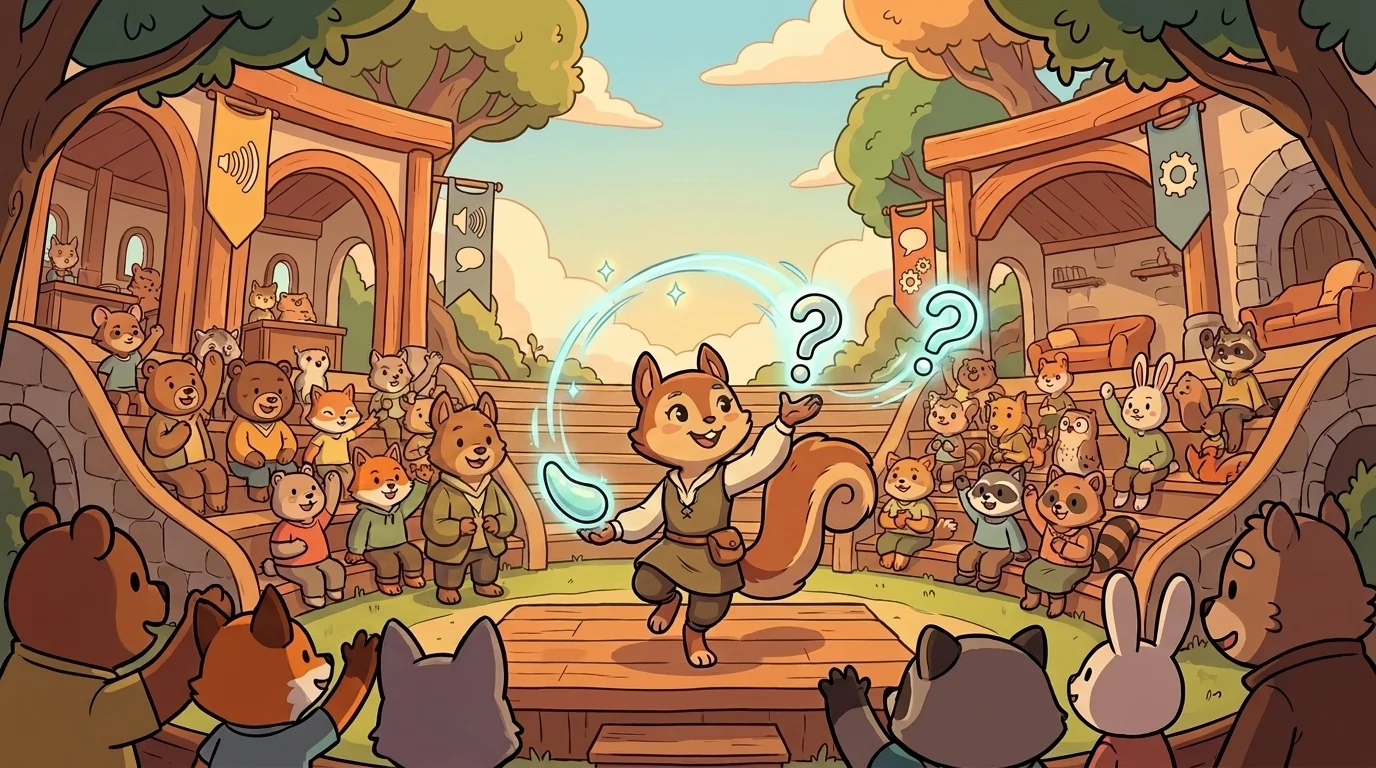
The Advanced craft, Volley explained, is that the question someone asks is often not the question they mean. "The words that come out are the surface. Under them is the real ask. Someone says, 'But wouldn't that be expensive?' — the surface is about money. The real ask might be 'I don't yet believe this is worth doing.' Answer only the surface and you give a number and lose them. Catch the real ask and you speak to the doubt underneath, and then the number lands." Her whole method turned on the pause before the answer: catch, turn it over, find the real ask, then send it back.
She taught the catching as three quick moves. "One: let the whole question land — don't start answering over the top of it; you'll answer the wrong thing. Two: if you're unsure what they mean, ask back — 'do you mean the cost to start, or to keep it running?' Naming the real ask is half the answer. Three: answer that, cleanly, and stop. A good answer is short. A speaker who keeps talking past the answer is no longer answering — they are defending."
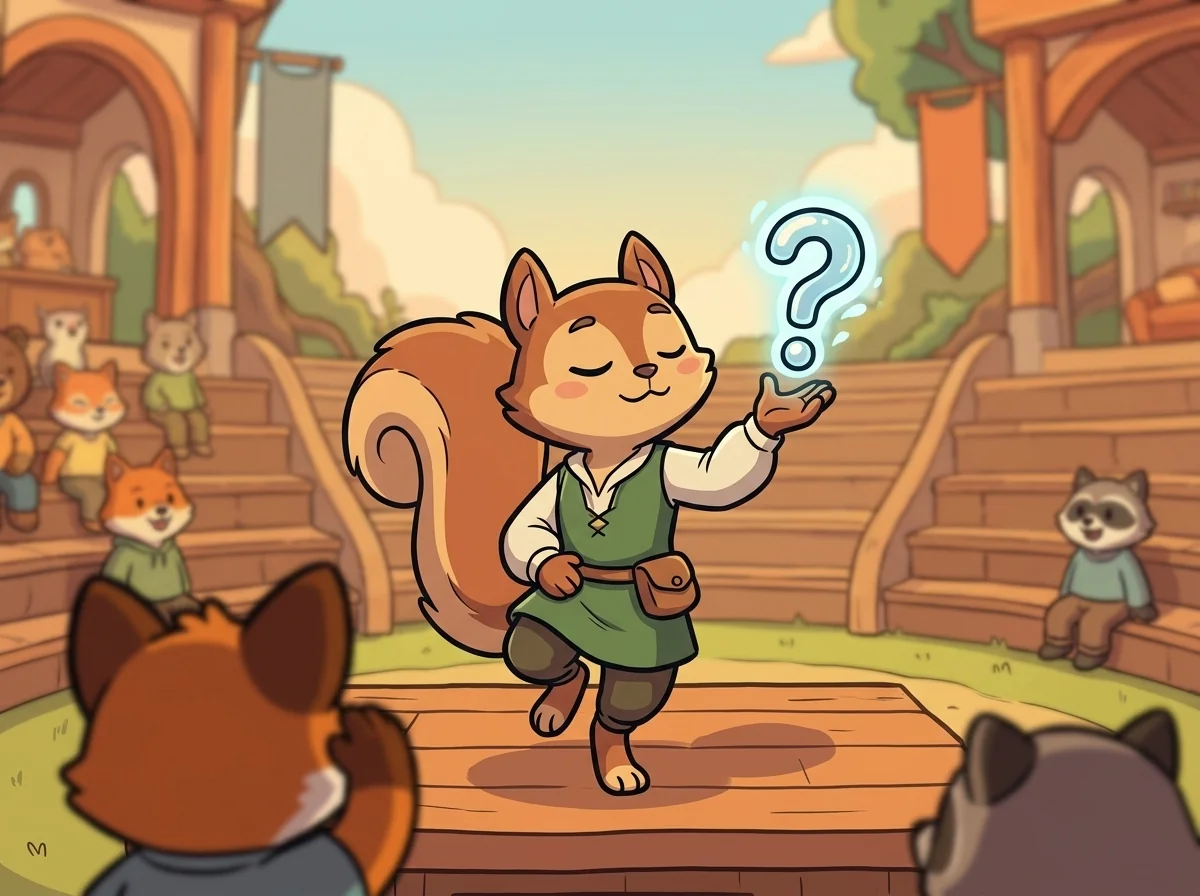
She was firm that Q&A is a volley, not a duel. "The moment you decide you have to win the exchange, you have lost the room, because now you are fighting your own audience. If someone asks a hard question, the win is not crushing them — it is honoring the question so well that everyone watching thinks, I could ask this creature anything." And when she truly didn't know? "You say so. 'I don't know — but here's how I'd find out.' An honest 'I don't know' buys more trust than a confident wrong answer ever will."

A tense young creature named Pell dreaded questions so much he rushed his talks just to reach the end before anyone could raise a hand. Volley took him aside. "You are treating the hands as an ambush," she said. "Try seeing them as the best thing that can happen — proof someone cared enough to keep thinking." She gave him one move: "When a question comes, don't answer yet. Say 'good question,' and take one breath. In that breath, find the real ask." Pell tried it, and the breath that he thought would look like hesitation looked, from the outside, exactly like calm.
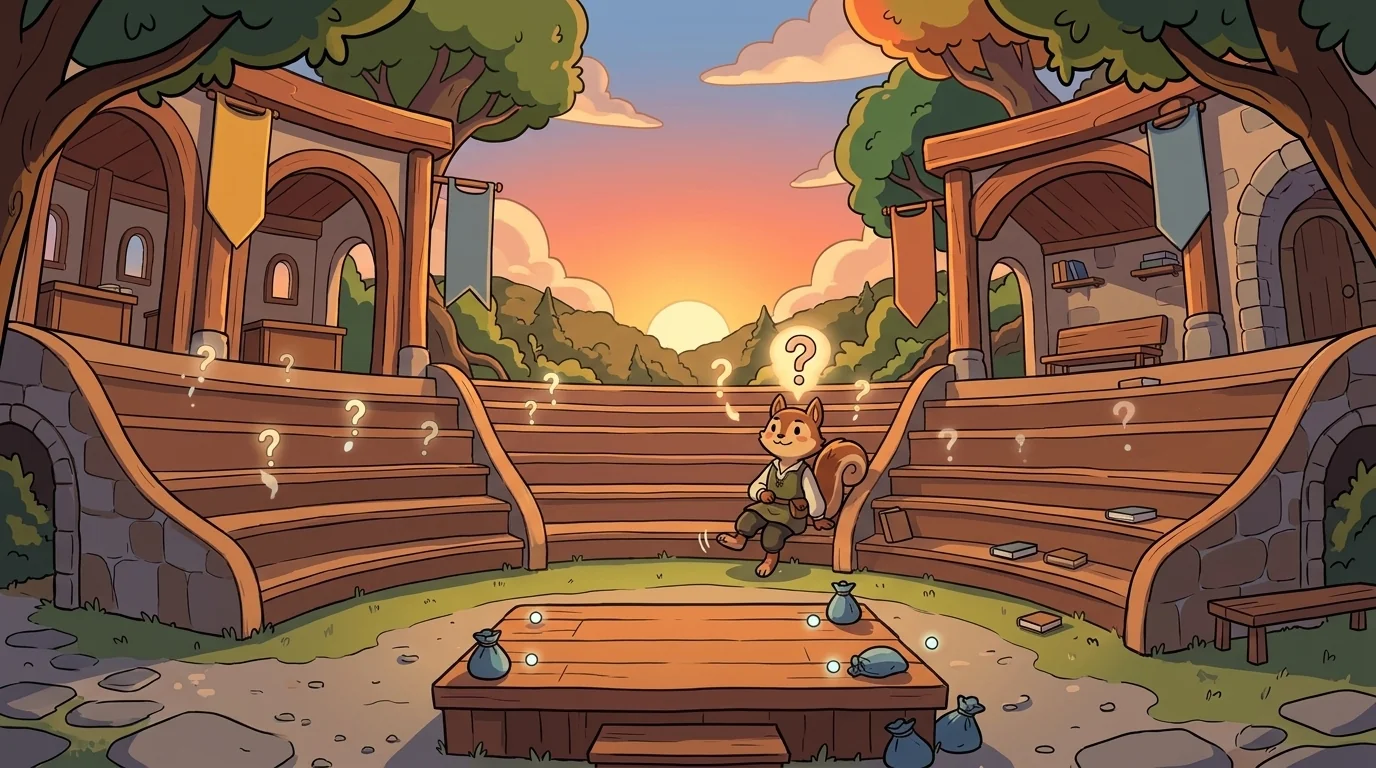
What changed for Pell was not his answers but his fear: once a question was a request instead of an attack, the whole terror drained out of the moment. Volley said that was the secret the anxious never guess. "The question was never the enemy. It was a listener reaching for you. Catch it gently, find what they truly asked, and send it back clean — and the scariest part of speaking becomes the part you look forward to." She bounced lightly on her feet, the way she always did when the hands went up.
Hear it as an audio drama
A short play starring Volley the Question-Fielder, from SpeakForge. Different voices, same idea. Listen any time after you read.
Loading audio…
Read the drama script
- Narrator: From Spark and Anvil and SpeakForge — this is Volley The Question-Fielder, in chapter 1 of the SpeakForge cast.
- Narrator: This drama uses an AI-generated voice. Voiced via Gemini 2.5.
- Narrator: At the SpeakForge academy, Volley was a quick, light-footed creature who loved the moment after a talk most of all — the part where hands go up and questions come flying.
- Volley The Question-Fielder: Where other speakers tense up, I relax. I catch the question gently, turn it over to find what's really being asked, and send back a clean, calm answer. A friendly volley, never a fight.
- Narrator: The fear, she taught, comes from a misunderstanding of what a question is.
- Volley The Question-Fielder: Most speakers hear a question as an attack, so they brace and defend. But a question is just a listener who wanted to understand, and something didn't quite reach them. It's not your talk failing — it's a listener still trying.
- Narrator: The Advanced craft, she said, is that the question someone asks is often not the question they mean.
- Volley The Question-Fielder: Someone says "wouldn't that be expensive?" The surface is money. The real ask might be "I don't yet believe this is worth doing." Answer only the surface, and you give a number and lose them.
- Narrator: She taught the catching as three quick moves.
- Volley The Question-Fielder: Let the whole question land — don't answer over the top of it. If you're unsure what they mean, ask back: "the cost to start, or to keep it running?" Naming the real ask is half the answer. Then answer that, cleanly, and stop.
- Narrator: A tense creature named Pell dreaded questions so much he rushed his talks to reach the end before any hand went up.
- Volley The Question-Fielder: You're treating the hands as an ambush. They're the best thing that can happen — proof someone cared enough to keep thinking. When a question comes, don't answer yet. Say "good question," and take one breath.
- Narrator: The breath Pell thought would look like hesitation looked, from outside, exactly like calm.
- Volley The Question-Fielder: The question was never the enemy. It was a listener reaching for you. And if you truly don't know — say so, then say how you'd find out. That buys more trust than a confident wrong answer ever will.
- Narrator: Catch the real ask; answer clean and stop; a volley, never a duel. That is Volley.
- Narrator: You've been listening to a Spark and Anvil chapter, written by the Spark and Anvil writing team for ages 9 to 14.
- Narrator: Apps stay free forever.
- Narrator: Curriculum aligned to Common Core and Next Generation Science Standards.
- Narrator: Released under Creative Commons BY-NC-SA 4.0 for educational reuse. Visit Spark and Anvil for the full transcript.
The SpeakForge ensemble
Volley the Question-Fielder is one of the friends in SpeakForge. Each friend shows you one idea by how they act; meet them all and you have the whole subject.
-

Pose
Posture / presence / stance — 'Stand. Then speak.'
-

Pitch
Voice projection + tone variation — 'Your voice is a road. Not a wall.'
-

Hark
Active listening — 'Listen all the way through.'
-

Truss
Argument structure (claim / evidence / reasoning) — 'Claim, then proof, then why.'
-

Echo
Audience awareness + tone calibration — 'Who's listening? Speak to THEM.'
-

Easel
Visual aids / multimedia displays — show, don't just tell; one clear picture beats a hundred words (SL.5)
-

Waypoint
Signposting — the verbal roadmap; 'first, next, finally' so listeners never get lost (SL.4)
-

Mosaic
Building on others' ideas — synthesizing a discussion; 'you said X, and building on that…' (SL.1c-d)
-

Usher
Turn-taking & discussion norms — everyone gets a seat at the talk; make room for the quiet voice (SL.1b)