Waypoint the Signpost-Setter
SIGNPOSTING
A story read by Waypoint the Signpost-Setter
Loading audio…
Press play to listen along. The line being read lights up as you go.
Show full transcript
Loading transcript…
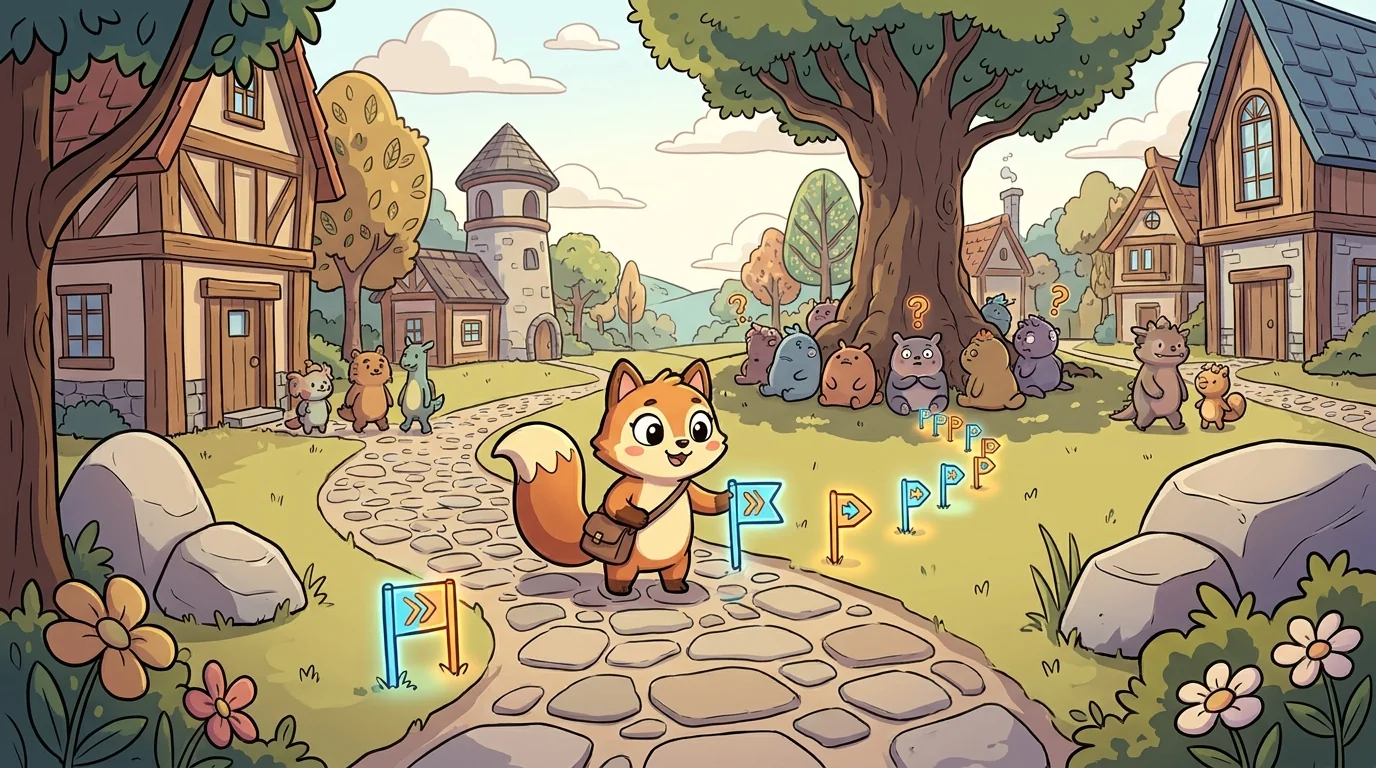
At the SpeakForge academy, where creatures learned to be understood, Waypoint was a bright-eyed creature who never went anywhere without planting little markers behind her — small spoken flags that said, in effect, you are here, and here is where we go next. When a speaker started to wander and the listeners' eyes glazed over, Waypoint would step in and drop a marker: "First, the problem. Then, the cause. Finally, the fix." And just like that, the lost listeners had a path again.
She was careful to explain what a signpost is not. "A signpost adds no new idea," she said. "'First… next… finally' — those words carry no content at all. They are pure path. And that is exactly why beginners skip them: they feel like they're not saying anything. But the path between ideas is what keeps a listener from falling off, and a talk with brilliant ideas and no path is a talk nobody can follow."
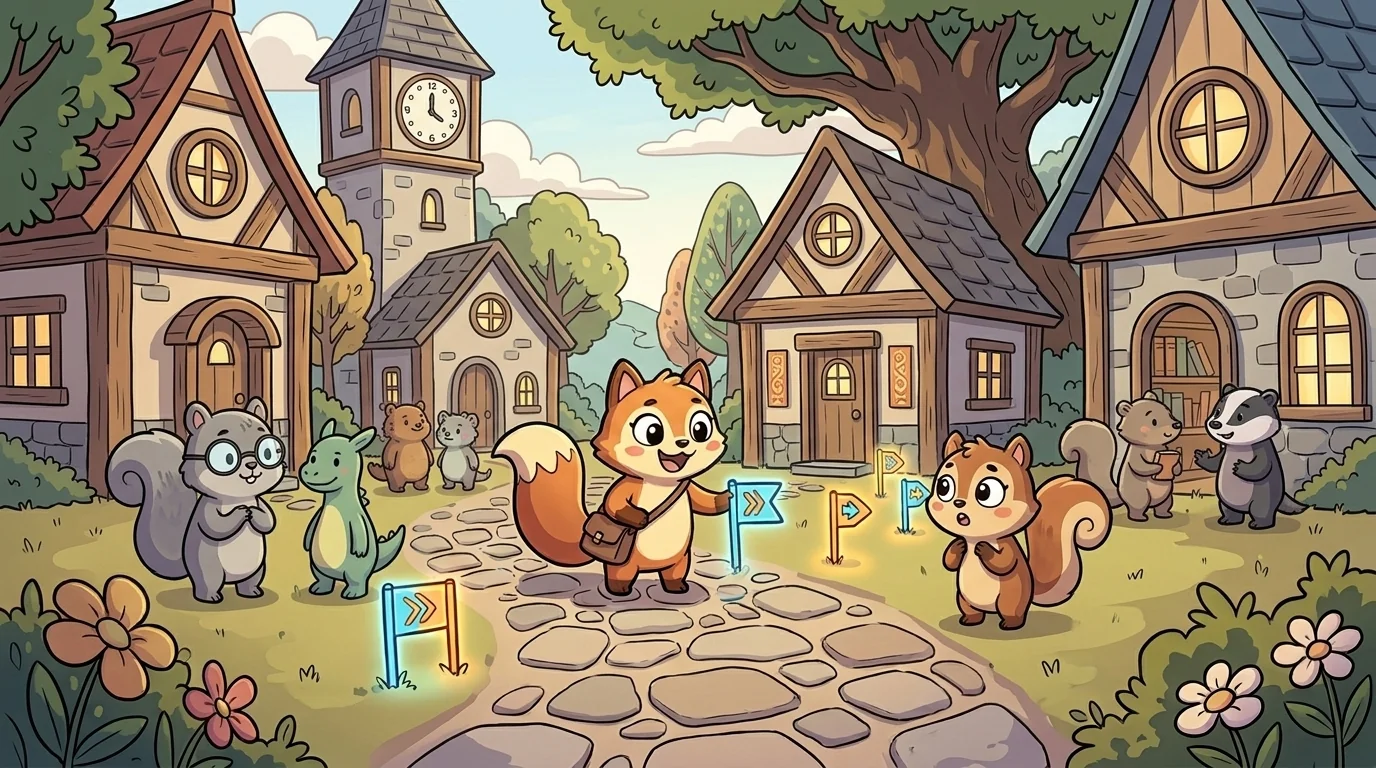
The Advanced reason signposting matters so much, Waypoint explained, is the one thing that makes speaking different from writing. "A reader who gets lost can go back and re-read the paragraph. A listener cannot. Your words arrive once, in order, and vanish. If a listener loses the thread at minute two, they are lost for the rest — there is no scrolling back." So the speaker has to do, out loud and in advance, the work a reader would do with their own eyes. "You give them the map before the journey — 'today, three things' — and then you tell them, at every turn, which of the three they're on. You are the only map they get."
She taught three kinds of marker. "The preview — 'I'll cover three things: what, why, and how.' The transition — 'that's the what; now, the why.' And the recap — 'so: what, why, and how — that's the whole of it.' Preview sets the expectation, transitions mark each turn, recap closes the loop. A listener held by all three literally cannot get lost, because at every moment they know where they are, where they've been, and where they're going."
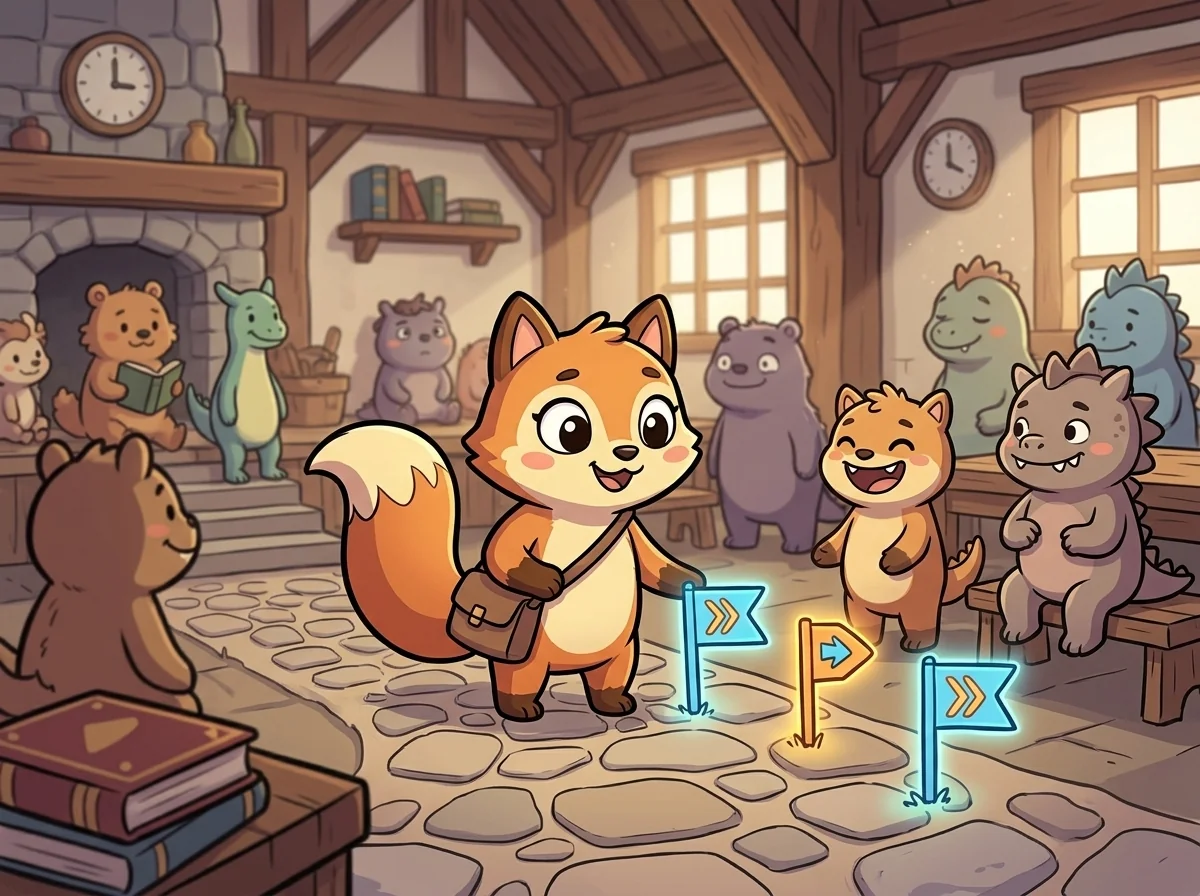
She warned against the opposite failure, too — burying real ideas under too many empty markers. "Signposts are salt, not soup. A talk that is all 'firstly, secondly, moreover, furthermore' is a skeleton with no body. The markers exist to serve the ideas. Three clear waypoints on a real path beat twenty on a path with nothing on it."
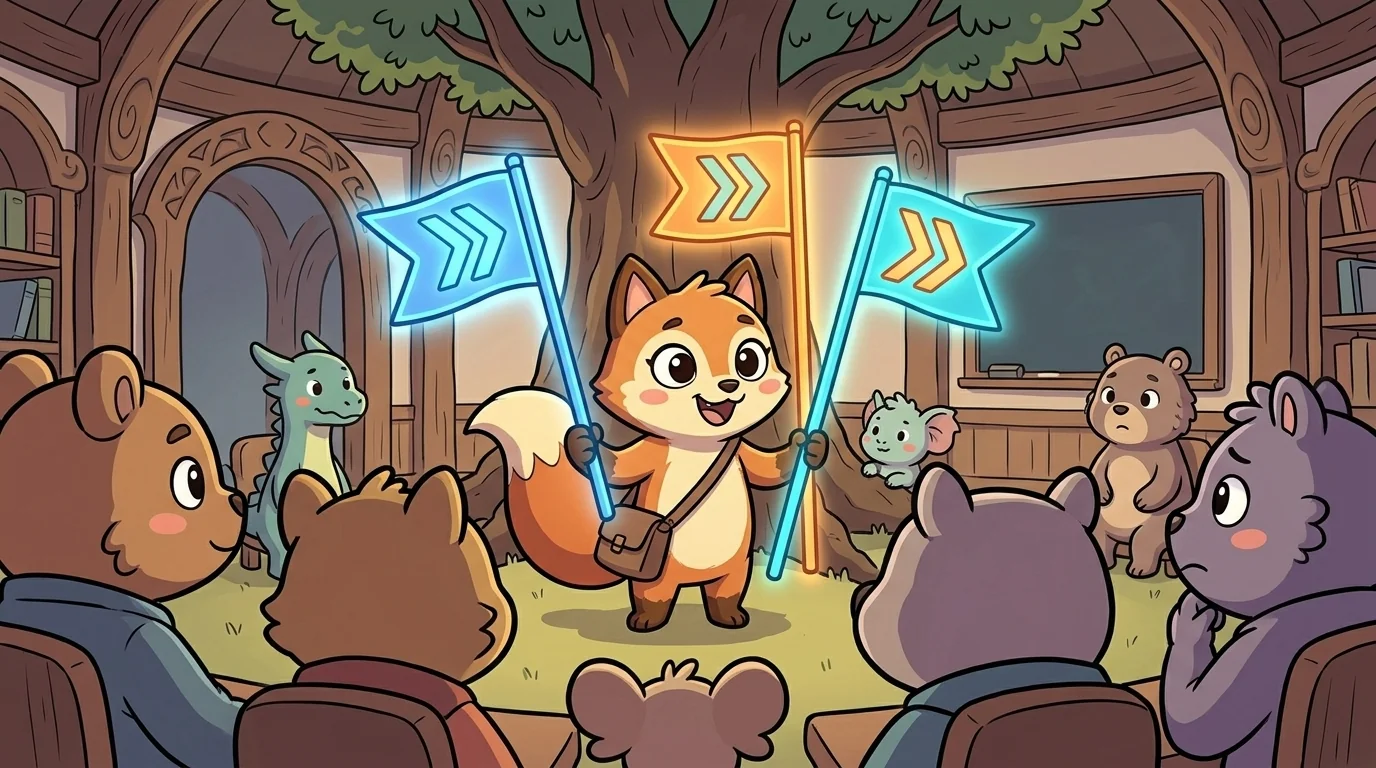
A wandering, warm creature named Sedge had wonderful ideas that no one could ever follow. Waypoint listened and diagnosed it instantly. "Your ideas are fine — better than fine. But you never tell anyone where you're going, so every turn feels like a surprise, and surprises are exhausting to follow." She gave him one sentence to open with: "'Today, three things.' Then, each time you move, name which one." Sedge tried it, and the same ideas that had lost every room suddenly landed — not because they were better, but because now there was a path to walk them along.
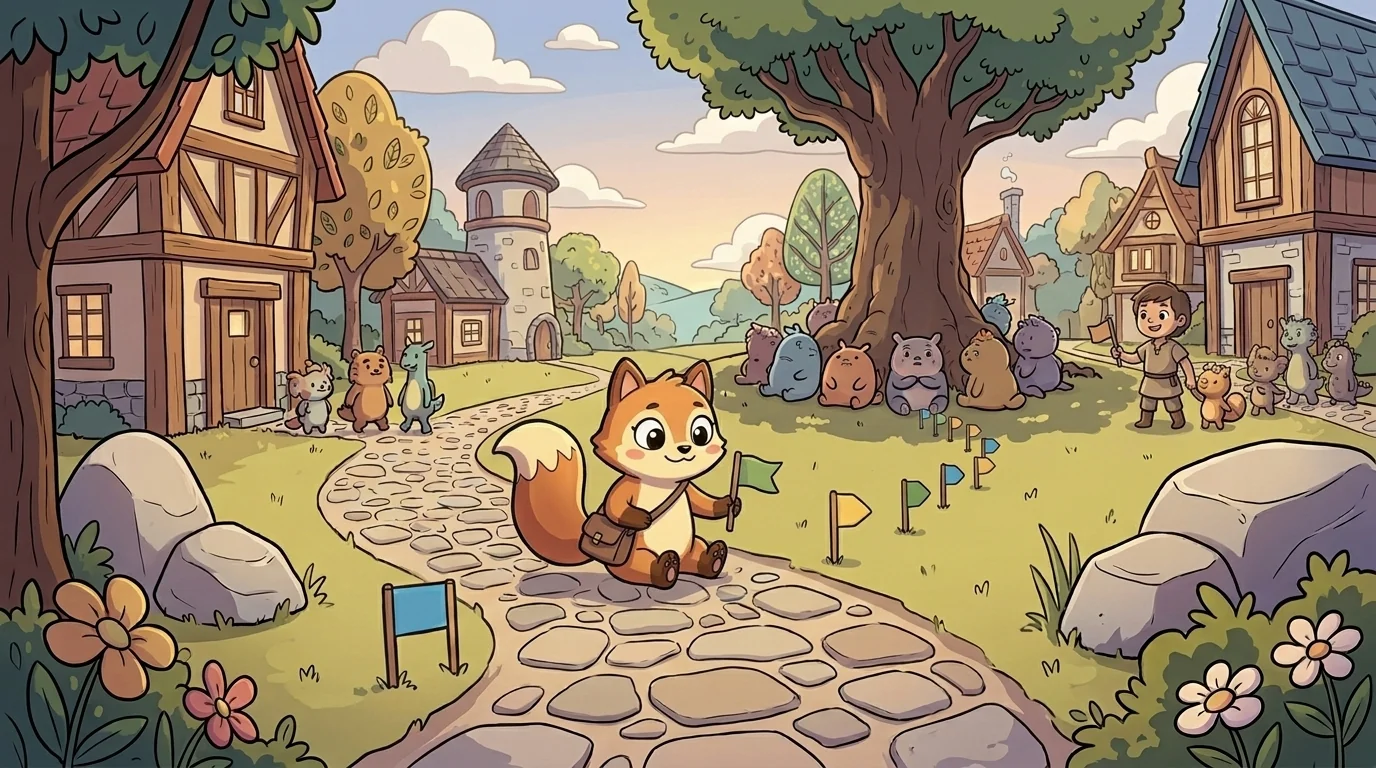
What amazed Sedge was that he'd changed nothing about his ideas and everything about whether they arrived. Waypoint nodded. "The ideas were never the problem. The path was missing. Lay the trail between them — tell them where you're going, then take them there — and the listener stays with you all the way to the end." She planted one more little marker, the way she always did, so no one behind her would lose the way.
Hear it as an audio drama
A short play starring Waypoint the Signpost-Setter, from SpeakForge. Different voices, same idea. Listen any time after you read.
Loading audio…
Read the drama script
- Narrator: From Spark and Anvil and SpeakForge — this is Waypoint The Signpost-Setter, in chapter 1 of the SpeakForge cast.
- Narrator: This drama uses an AI-generated voice. Voiced via Gemini 2.5.
- Narrator: At the SpeakForge academy, Waypoint was a bright-eyed creature who never went anywhere without planting little markers behind her — small spoken flags that said, you are here, and here is where we go next.
- Waypoint The Signpost-Setter: When a speaker starts to wander and the listeners' eyes glaze over, I drop a marker. "First, the problem. Then, the cause. Finally, the fix." And just like that, the lost listeners have a path again.
- Narrator: She was careful about what a signpost is not.
- Waypoint The Signpost-Setter: A signpost adds no new idea. "First, next, finally" carry no content at all. They are pure path. Beginners skip them because they feel like saying nothing — but the path between ideas is what keeps a listener from falling off.
- Narrator: The Advanced reason it matters is the one thing that makes speaking different from writing.
- Waypoint The Signpost-Setter: A reader who gets lost can re-read the paragraph. A listener cannot. Your words arrive once and vanish. Lose the thread at minute two, and you're lost for the rest. So you give them the map before the journey — and you are the only map they get.
- Narrator: She taught three kinds of marker.
- Waypoint The Signpost-Setter: The preview — "I'll cover three things." The transition — "that's the what; now, the why." The recap — "so: what, why, how; that's the whole of it." Held by all three, a listener literally cannot get lost.
- Narrator: A wandering creature named Sedge had wonderful ideas no one could follow.
- Waypoint The Signpost-Setter: Your ideas are better than fine. But you never tell anyone where you're going, so every turn is a surprise, and surprises are exhausting to follow. Open with "Today, three things." Then name which one, each time you move.
- Narrator: Sedge changed nothing about his ideas, and the same ideas that had lost every room suddenly landed.
- Waypoint The Signpost-Setter: The ideas were never the problem. The path was missing. But signposts are salt, not soup — three real waypoints beat twenty empty ones.
- Narrator: Tell them where you're going, then take them there — preview, transition, recap. That is Waypoint.
- Narrator: You've been listening to a Spark and Anvil chapter, written by the Spark and Anvil writing team for ages 9 to 14.
- Narrator: Apps stay free forever.
- Narrator: Curriculum aligned to Common Core and Next Generation Science Standards.
- Narrator: Released under Creative Commons BY-NC-SA 4.0 for educational reuse. Visit Spark and Anvil for the full transcript.
The SpeakForge ensemble
Waypoint the Signpost-Setter is one of the friends in SpeakForge. Each friend shows you one idea by how they act; meet them all and you have the whole subject.
-

Pose
Posture / presence / stance — 'Stand. Then speak.'
-

Pitch
Voice projection + tone variation — 'Your voice is a road. Not a wall.'
-

Hark
Active listening — 'Listen all the way through.'
-

Truss
Argument structure (claim / evidence / reasoning) — 'Claim, then proof, then why.'
-

Echo
Audience awareness + tone calibration — 'Who's listening? Speak to THEM.'
-
Easel
Visual aids / multimedia displays — show, don't just tell; one clear picture beats a hundred words (SL.5)
-

Volley
Q&A — fielding and answering questions; catch it, breathe, send it back clean (SL.1)
-

Mosaic
Building on others' ideas — synthesizing a discussion; 'you said X, and building on that…' (SL.1c-d)
-

Usher
Turn-taking & discussion norms — everyone gets a seat at the talk; make room for the quiet voice (SL.1b)