
The Opening-Night Company
PUTTING ON A SCENE — the performance crafts working at once. A scene comes alive only when character, want, hidden meaning, held picture, and timing all pull together. Named directly: the integration of objective + subtext + embodiment + tableau + timing into one live performance.
A story read by The Opening-Night Company
Loading audio…
Press play to listen along. The line being read lights up as you go.
Show full transcript
Loading transcript…
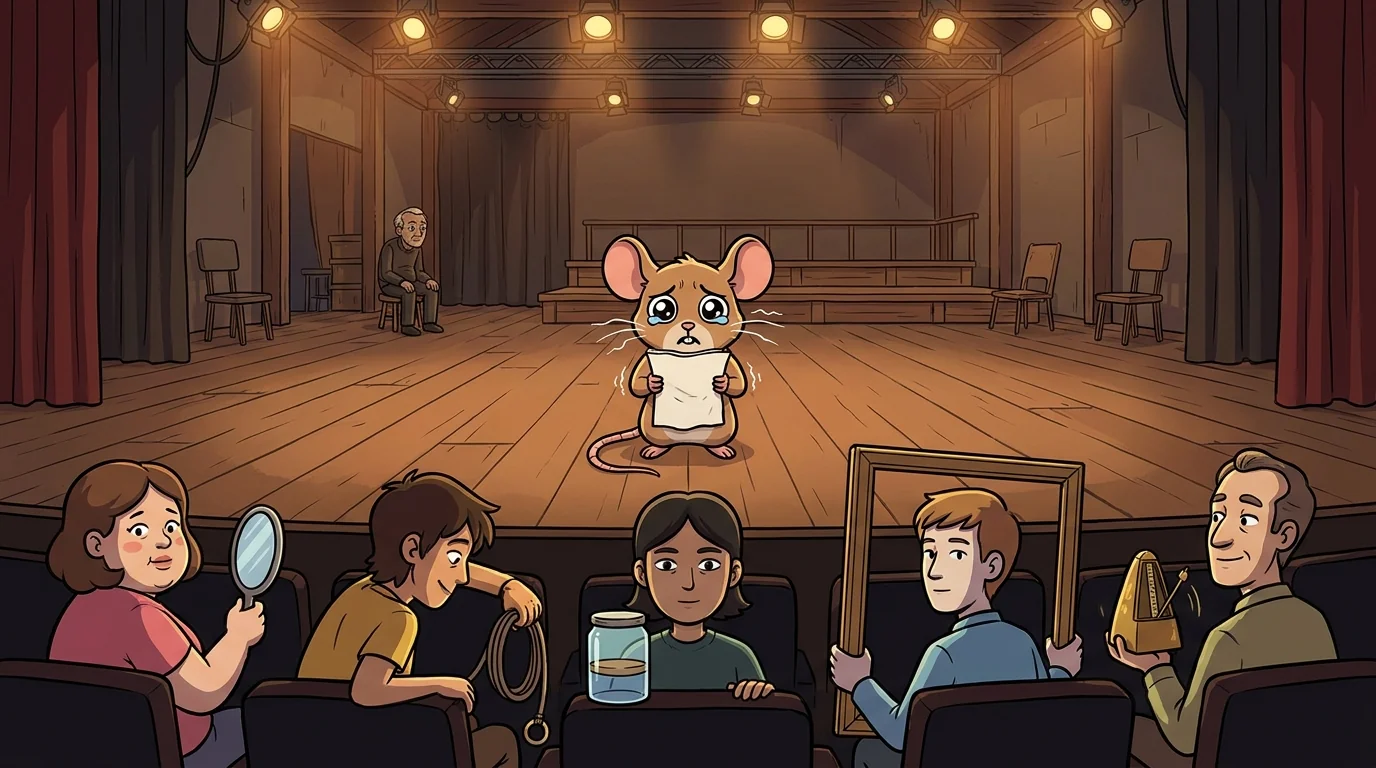
It was three days before opening night, and Sumi's scene was a disaster.
The young rabbit stood center stage, saying all the right lines in all the right order, and the whole thing lay there like a dropped script. Every craft she'd been taught was somewhere in the room — she knew her lines, she'd been told about wants and subtext and pictures and pauses — but none of it was pulling together, and a scene with every part and no unity is somehow worse than a scene with nothing at all. From the dark house, five voices watched: Yearn, Undertow, Face, Freeze, and Hitch. "It's all there," Yearn murmured. "And none of it's connected." "Three days," said Face quietly. "Let's build it — together, one craft at a time, until they all pull as one."
Sumi's ears drooped. "I don't understand. I'm doing everything you all taught me."
"You're doing them separately," Freeze said, from the dark. "A scene isn't five crafts side by side. It's five crafts braided. Watch what happens when they start to pull together."
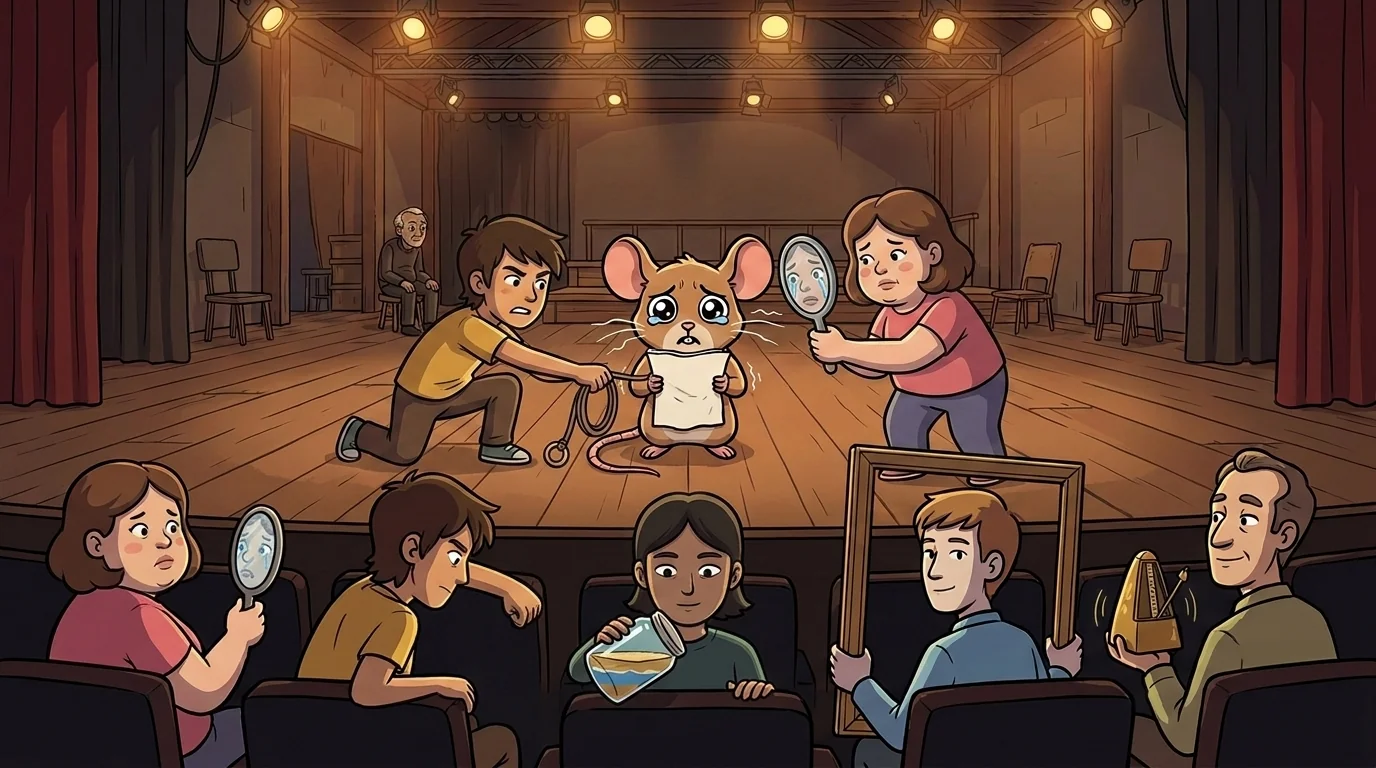
Yearn went up first, and gave the scene its engine. "What does your character want in this scene, Sumi? Right now, badly?" Sumi found it — I need my sister to forgive me — and Yearn had her play every line toward it, and the dead lines began, faintly, to reach. "There's the engine," Yearn said. "Now it's driving. But an engine alone is just a want with the surface showing."
Undertow came next, tilting her two-layered jar. "The words say I'm sorry. What runs underneath?" Sumi found it — I'm terrified you'll never trust me again — and let the fear pull under the apology, and the reaching lines gained a hidden ache. "Now it's got a secret," Undertow said. "But a want and a subtext still need a body to show them."
Face stepped up and worked Sumi's voice and frame until the want and the ache lived in her body — a chin that lifted and trembled, a voice steady over a crack. The scene was, suddenly, acted. "Now she's a person," Face said. "But a living person still needs the stage shaped around her, and the moments timed."
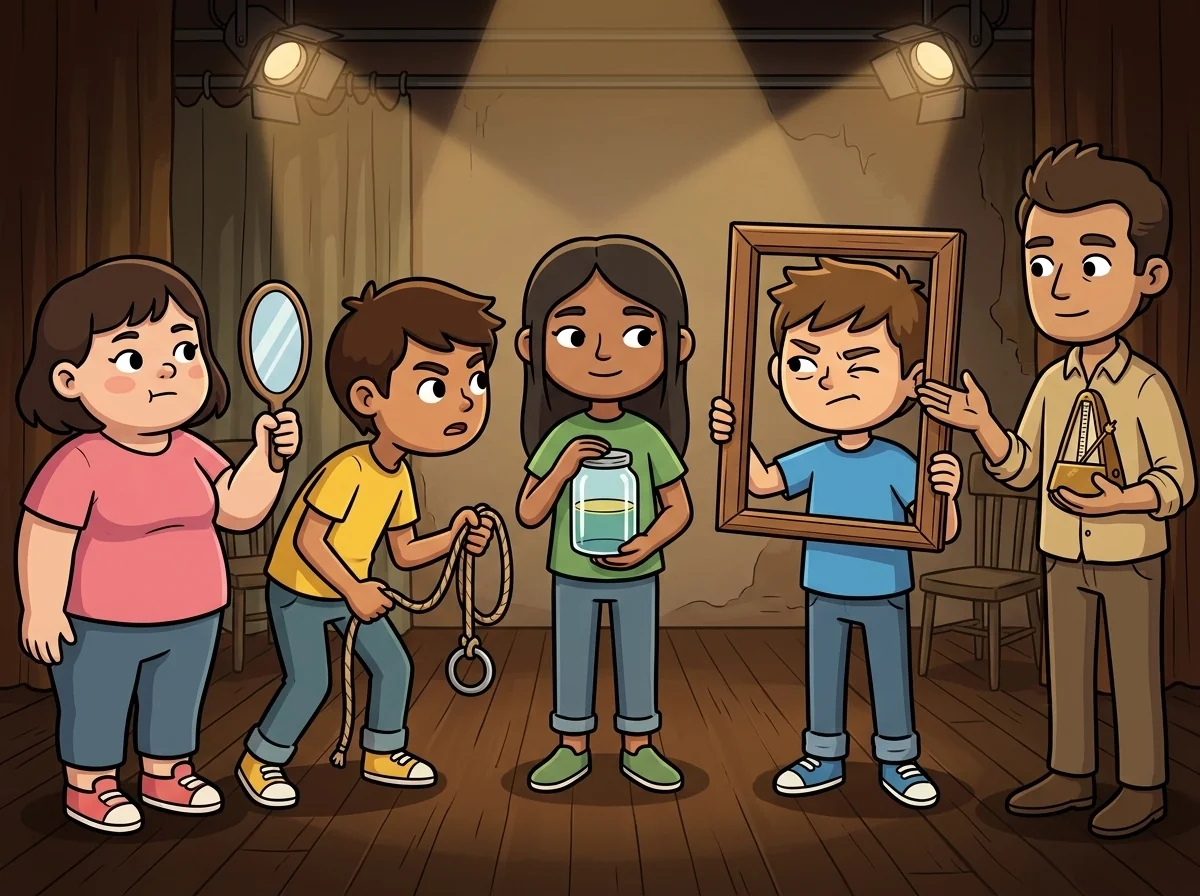
Then Freeze lifted her empty frame. "The picture's a mess," she said. "You and your sister are standing in a flat line, evenly spaced — the eye doesn't know where the hurt is." She moved them: the sister turned half away, Sumi reaching low toward her, a gap of empty space between them that was the whole distance of the quarrel. "Freeze," she said — and the held picture told the story before a word: one reaching, one turned away. "Now the shape of the stage means something."
And last came Hitch, unhurried, his metronome-egg ticking. "The truth's all here now," he said, "but you're spending it too fast — racing past the moment that matters." He found the line the whole scene was built toward — "I never stopped being your sister" — and made Sumi hold, one full beat of silence before sister, the whole imagined house leaning in. "Rush the beat, and the truth slips by. Hold it — just long enough — and it arrives."
Five crafts. And now, for the first time, they were all in the same scene at the same time.
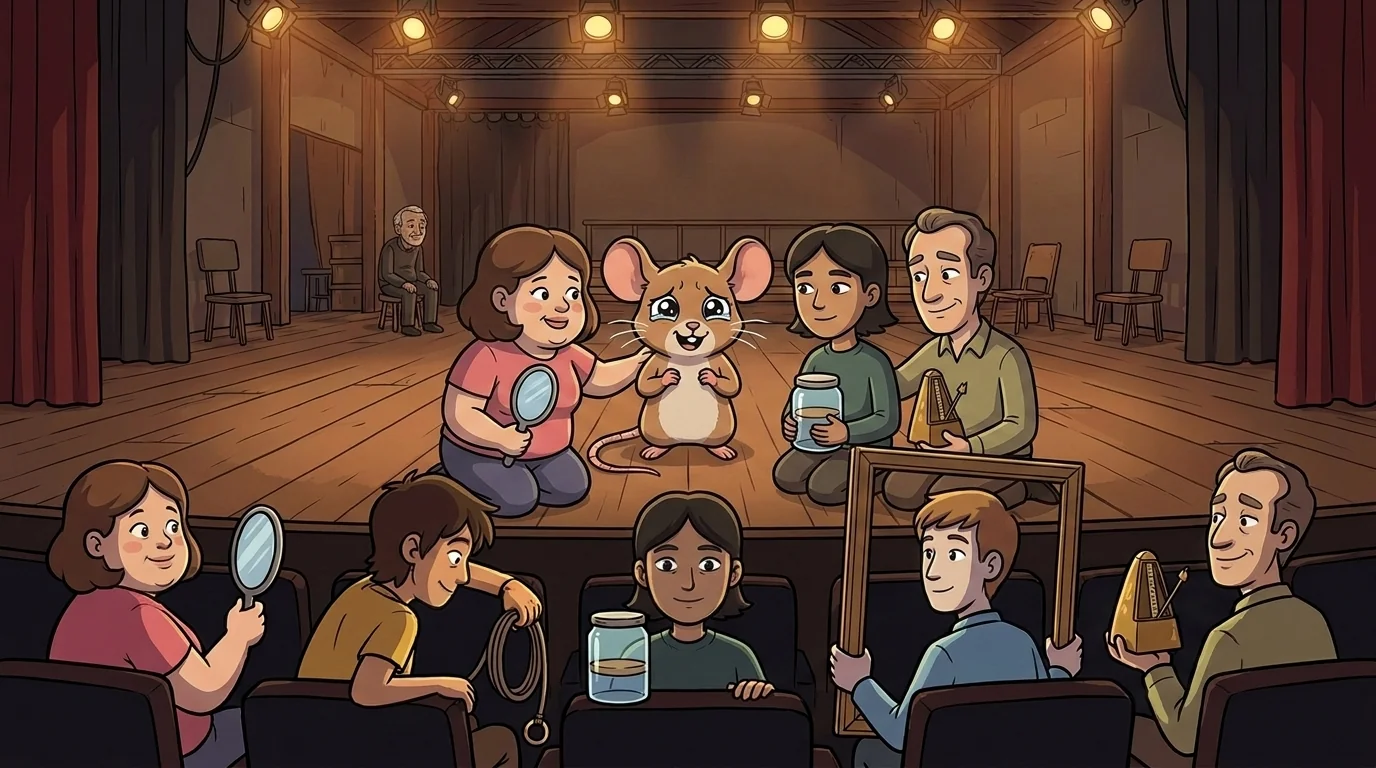
"Now," said Face softly, from the dark. "All of it. At once. Don't do them one at a time — let them pull together."
Sumi drew a breath. She wanted her sister's forgiveness (Yearn's engine). She let her terror pull under the apology (Undertow's secret). She let both live in her lifted, trembling body (Face's craft). She reached across the shaped, meaningful gap toward her half-turned sister (Freeze's picture). And at the line the whole scene had climbed toward, she held — one loaded beat of silence — and then, into the waiting quiet, she let it fall: "I never stopped... being your sister." (Hitch's beat.)
And the scene came alive — not five crafts in a row, but one living, breathing, heartbreaking whole, so complete that in the dark house five performers who had seen a thousand scenes forgot, for a moment, to breathe.
Sumi stood in the silence after, shaking a little. "...It felt totally different," she whispered. "Not like doing five things. Like doing one thing."
"That's the truest thing you've felt all week," Face said, and her voice was thick.
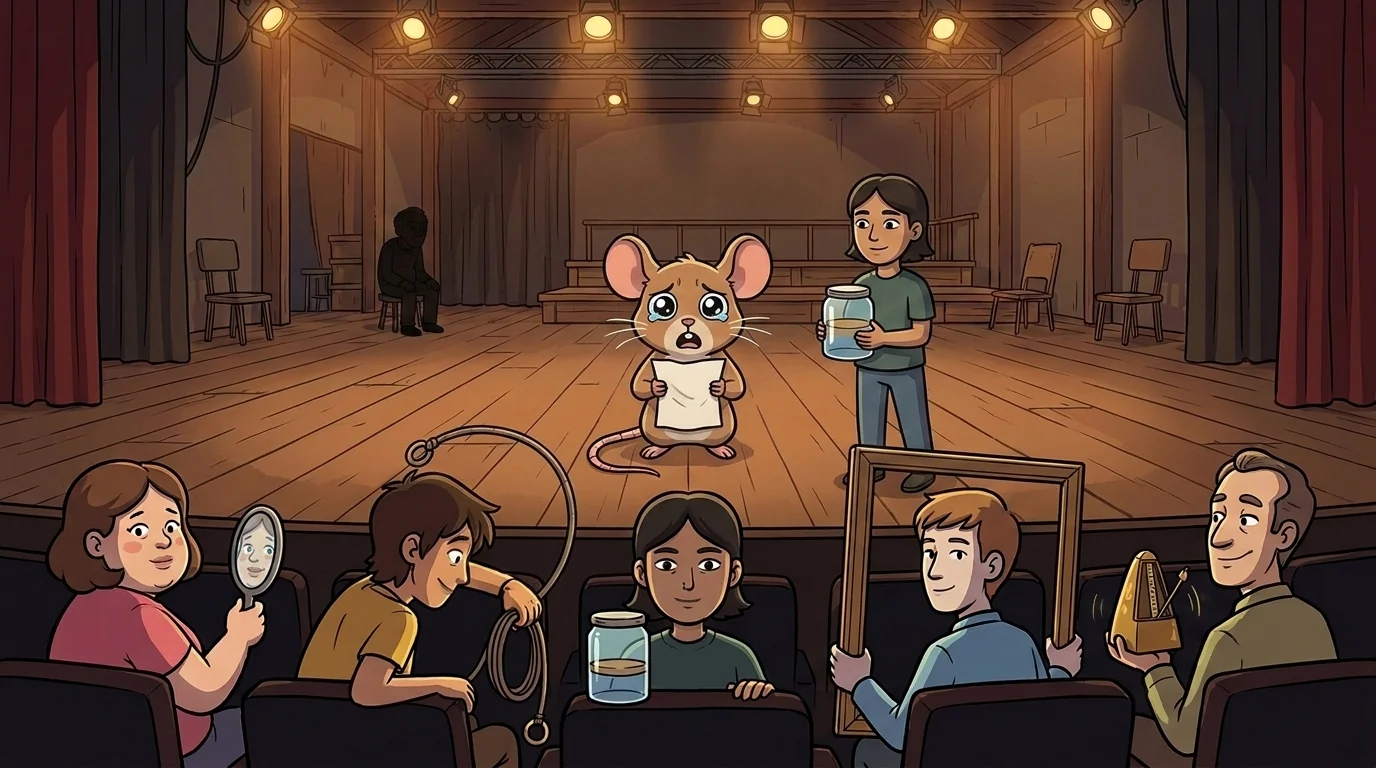
Later, on opening night, the scene landed exactly as it had in that empty afternoon, and the five of them watched from the wings as the real audience went still.
"I don't get how it works," Sumi said afterward, glowing and spent. "You each taught me one thing. But the magic wasn't in any one of them."
"The magic was never in one of them," said Yearn. "The want alone is just intensity. The subtext alone is just mystery. The acting alone is just showing off. The picture alone is just a pose. The timing alone is just a pause." She smiled. "Each craft, by itself, is a party trick."
"But braided," said Undertow, tilting her jar so all the layers moved as one, "each one makes the others true. The want gives the subtext something to hide. The subtext gives the body something to show. The body fills the picture. The picture holds for the beat. And the beat lets the whole thing land." Freeze lifted her frame around the memory of the scene; Hitch let his egg tick once into the quiet. "A scene isn't the sum of its crafts," Freeze said. "It's what happens when they stop being separate."
And a quiet gladness rose in all five of them — the deep, particular joy of watching a young performer discover that the crafts were never the point, only the parts, and that the real art was the moment they all, at last, pulled as one: a scene, whole and alive, greater than everything that made it, breathing on its own in a hushed and waiting house.
The StageForge ensemble
The Opening-Night Company is part of StageForge's distributed-narrative cast. Each character embodies a different curricular primitive; together they teach the full subject.
-

Face
Acting — character work through voice, body, and emotional life
-

Pen
Playwriting — turning ideas into scripts with character, conflict, structure
-

Block
Blocking — directing actors through stage geography
-
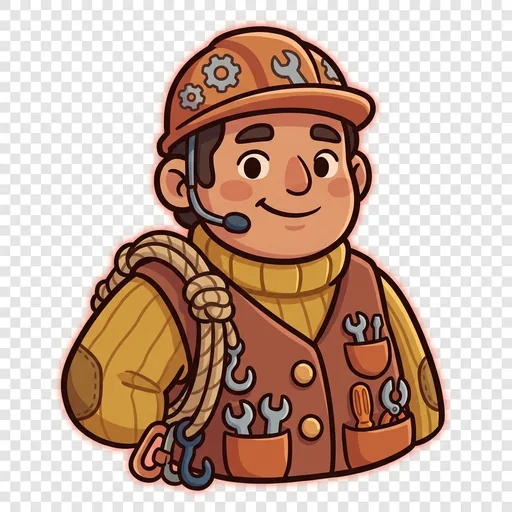
Rig
Stagecraft — the technical-theater craft that makes the visible-stage possible
-

Riff
Improvisation — the live-performance craft of Yes, and...
-
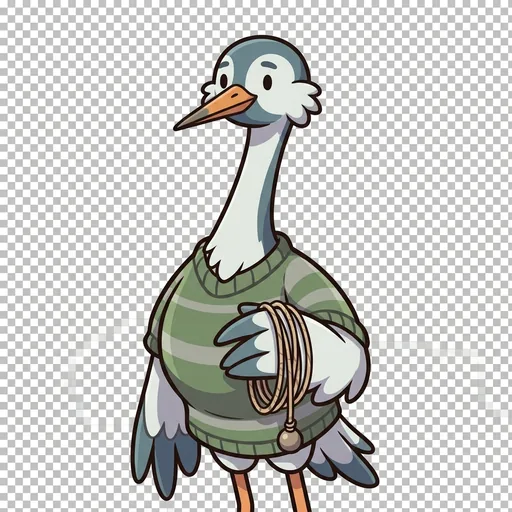
Rafter
Projection — making your voice reach the back row without shouting, by supporting it with breath so even a quiet line lands in the last seat
-

Yearn
The objective — what a character wants in a scene, badly enough to drive every line and move; the engine under a performance
-

Undertow
Subtext — the real meaning running under the spoken line; what a character truly means beneath the words they actually say
-

Freeze
Tableau — a frozen stage picture the whole cast holds so the audience can read the moment like a painting
-

Hitch
Pacing and timing — the rhythm of a scene and the deliberate pause that makes a line land, the held beat before the joke or the truth