
Undertow
SUBTEXT — the real meaning running under the spoken line; what a character truly means or feels beneath the words they actually say. Named directly: subtext, the line vs the intention, playing the meaning under the words, saying one thing and meaning another.
Loading audio…
Press play to listen along. The line being read lights up as you go.
Show full transcript
Loading transcript…

Undertow was a seal-tween, sleek and unhurried, with dark calm eyes that always seemed to be seeing something just below the surface of things.
She moved smoothly, spoke smoothly, and had a way of saying the most ordinary sentence — "nice weather" — so that you somehow heard "I've missed you terribly" underneath it, without a single extra word. In her flipper she carried a small clear jar of two-layered water, oil floating gold on top and deep blue beneath, which she'd tilt so the top slid one way while the deep layer pulled the other. "Words on top," she'd murmur, tilting it. "Meaning underneath. They can go opposite ways. That's subtext." She watched a young actor say her line — "I'm so happy for you" — brightly, flatly, meaning exactly and only the words. "You said the top layer," Undertow told her. "Just the words. But this character is jealous — the real thing running underneath is I wish that were me." She tilted her jar so the blue pulled against the gold. "Play the underneath. Say happy for you — but let I wish it were me run beneath it. Then the line comes alive."
The actor blinked. "But the line says happy. How do I say happy and mean jealous?"
"The same way people do it every single day," Undertow said. "With everything except the words."

Undertow had learned to read the underneath long before she knew the word subtext.
She'd grown up in a family of deep-water divers, who read the sea not by its surface but by what moved beneath — the current under the calm, the pull you couldn't see. Her aunt had taught her, young: the top of the water tells you almost nothing. A flat, calm surface can have a fierce current running under it. Learn to feel the pull underneath, or the sea will fool you every time.
Undertow hadn't understood the size of that at six. She'd trusted the smooth surface. It turned out her aunt had been teaching her that the real thing is often the hidden layer — that a calm sentence, like calm water, can have a whole opposite current running beneath it — without either of them ever using the word.

She walked to StageForge, because a place devoted to living characters ought to know that people rarely say what they mean outright.
Curtain, the old mentor who ran the workshops, didn't ask her to prove she'd trained. He handed her a line — "No, it's fine, go ahead" — and said, "Say it three ways."
Undertow tilted her two-layered jar and said it three times. Once, warm, the blue and gold flowing together — it really is fine. Once, with a cold still current pulling under the pleasant words — it is absolutely not fine and you know it. Once, small and pulled-down underneath — please don't go, but I won't beg. Same six words, three whole different scenes. "The words never changed," she said. "Only the current under them."
Curtain watched the jar settle. "You said one sentence three times," he said, "and I heard three different people."
"Because I wasn't playing the words," Undertow said. "I was playing what ran underneath them."
He nodded, slow and certain. "Then you'll teach the underneath here. The meaning the words are only floating on top of."

Undertow's corner filled with young actors who played only the top layer — the words, and nothing beneath.
A boy delivered a tender line — "I forgive you" — flat and bright, meaning just the words, and it landed like cardboard. "I said it nicely!" he protested.
"You said the top," Undertow said gently, tilting her jar. "Just the words, floating alone. But think about your character. Does he fully forgive? Or does I forgive you have a hurt still running under it — I forgive you, but I haven't forgotten — or a fear — I forgive you because I'm scared to lose you?" She let the blue layer pull slow beneath the gold. "Pick the current. Then say I forgive you on top — and let the real thing run beneath it. Don't announce the underneath. Just let it pull."
The boy thought, chose I forgive you but it still hurts, and said the line again — the words gentle on top, the ache pulling underneath — and it stopped being cardboard and became a person.
The boy's eyes widened. "...I didn't change the words at all. I just — thought the other thing while I said them."
"That's the truest thing you've felt today," Undertow said warmly. "That's the whole secret. Subtext isn't extra words. It's the real thing you let run beneath the words you're given. The audience can't hear your thoughts — but they can feel the current. Play the underneath, and a flat line fills with a whole hidden life."
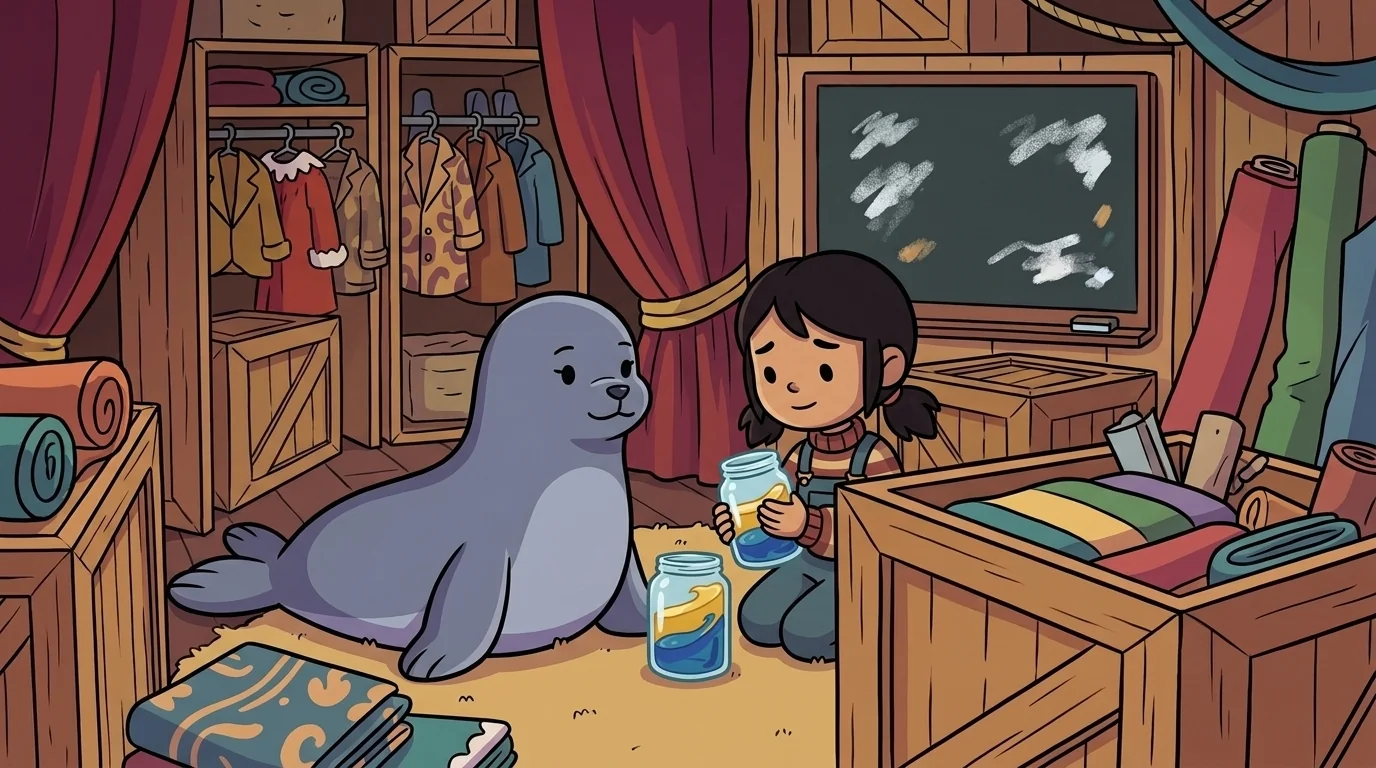
Later, when the hall was dim, the boy came back, turning the idea over.
"But how do I know what the underneath is?" he said. "The script only gives me the top layer — the words."
Undertow thought about the flat sea with the fierce current, and her aunt's steady hand.
"You ask what the character wants, and what they're hiding," she said. "The words are what they're willing to say out loud. The subtext is everything they can't — the want they won't admit, the hurt they're covering, the fear they won't name. Real people do it constantly: they say I'm fine over a whole storm; they say nice weather and mean stay. Your job isn't to explain the storm. It's to let it pull, under the calm words, so the audience feels what the character can't say." She tilted her jar one last time, the deep blue sliding against the gold. "The words are the surface. The truth is the current. Play the current — and even nice weather can break someone's heart."
The boy nodded slow, and Undertow watched something settle in him — the same deep understanding she'd found the day she stopped trusting the smooth surface and learned to feel the pull beneath. She drew a slow breath through her calm dark eyes, and a quiet gladness rose in her: to teach a young one that the realest thing is the one running underneath — that was a deep, still joy, felt well below the surface.
The StageForge ensemble
Undertow is part of StageForge's distributed-narrative cast. Each character embodies a different curricular primitive; together they teach the full subject.
-

Face
Acting — character work through voice, body, and emotional life
-

Pen
Playwriting — turning ideas into scripts with character, conflict, structure
-

Block
Blocking — directing actors through stage geography
-
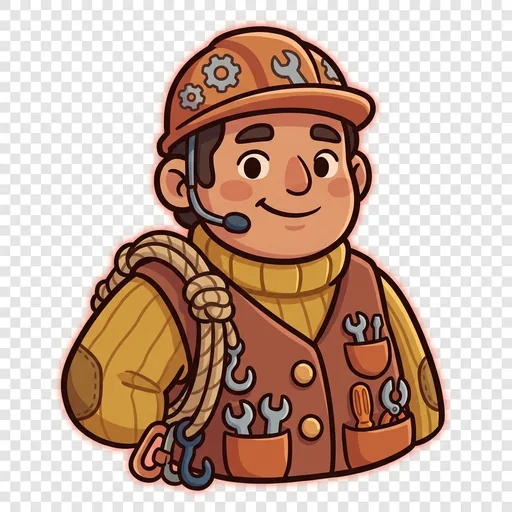
Rig
Stagecraft — the technical-theater craft that makes the visible-stage possible
-

Riff
Improvisation — the live-performance craft of Yes, and...
-
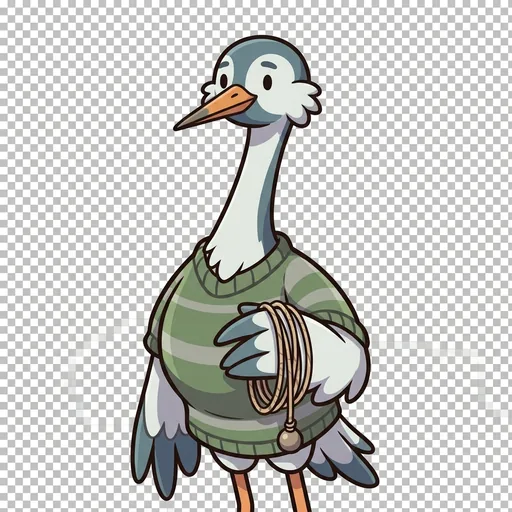
Rafter
Projection — making your voice reach the back row without shouting, by supporting it with breath so even a quiet line lands in the last seat
-

Yearn
The objective — what a character wants in a scene, badly enough to drive every line and move; the engine under a performance
-

Freeze
Tableau — a frozen stage picture the whole cast holds so the audience can read the moment like a painting
-

Hitch
Pacing and timing — the rhythm of a scene and the deliberate pause that makes a line land, the held beat before the joke or the truth
-

Opening Night
The whole company on stage together — how acting, objective, subtext, tableau, and timing combine so one live scene truly comes alive