
Yearn
OBJECTIVE — what a character WANTS in a scene, badly enough to drive every line and move; the engine under a performance, the want you play toward. Named directly: the objective, the want, playing an action, the super-objective (the want across the whole play).
Loading audio…
Press play to listen along. The line being read lights up as you go.
Show full transcript
Loading transcript…
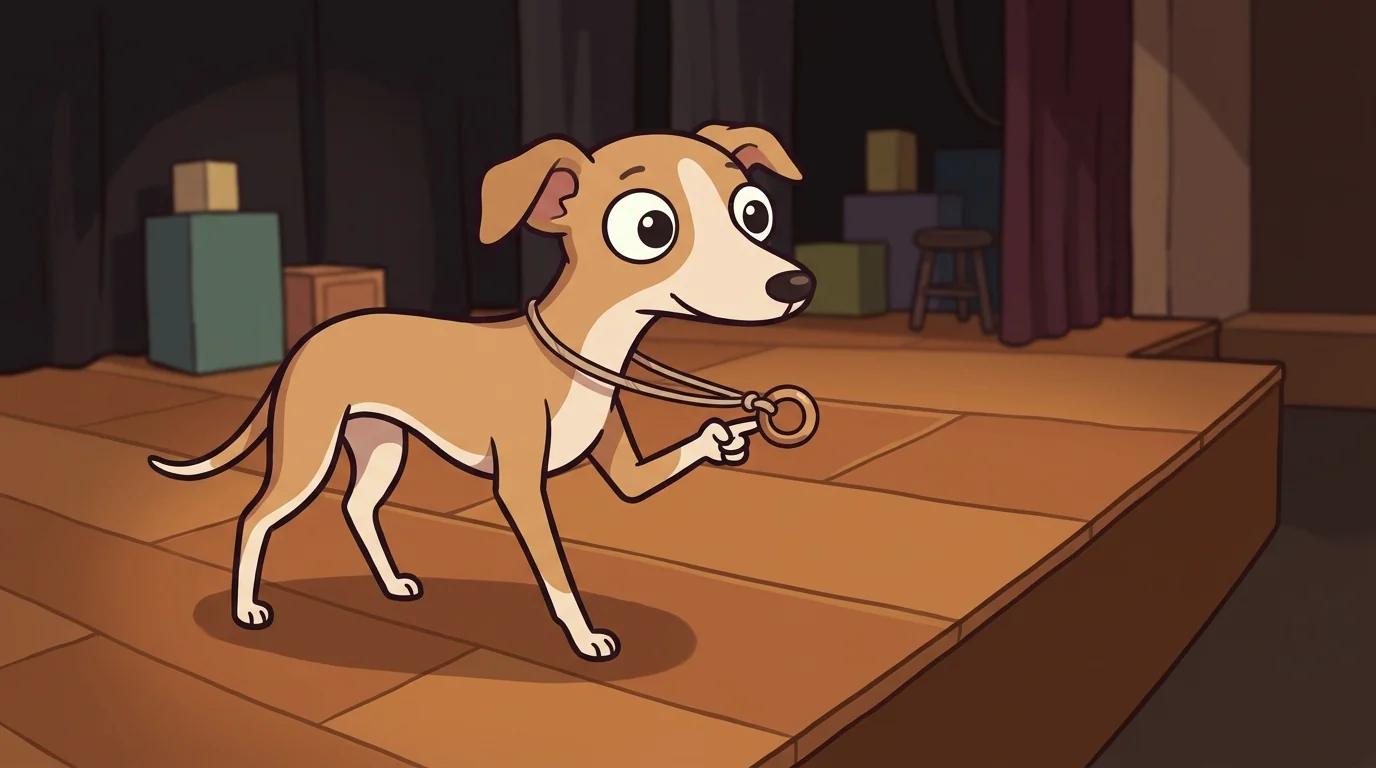
Yearn was a whippet-tween, lean and leaning, always tilted forward as though the air ahead of her held something she was about to reach.
Her eyes were the give-away — bright and fixed, forever locked onto some invisible thing just out of frame. Around her neck she wore a length of soft cord tied to a small wooden ring, and in scenes she'd hook one finger through the ring and pull, gently, toward whatever her character wanted, so her whole body pointed at the desire like a needle at north. "Every character in every scene wants something," she told a young actor whose performance had gone limp and driftless. "Badly. That want is the objective — the engine. It's what your character is trying to get, right now, from the other person on stage." She hooked her ring-cord and leaned. "You just played that whole scene wanting nothing. So your lines had nowhere to go — they just sat there. Give the character a want, a real one — I need her to forgive me, I have to make him stay — and play every line toward it."
The actor frowned. "But my character's just... talking. Making conversation."
"Nobody just talks," Yearn said, leaning into her cord. "Not on a living stage. Everybody's after something."

Yearn had learned about the pull of a want long before she knew the word objective.
She came from a family of coursing hounds — runners, chasers, whose whole art was the pursuit, the total focus on the thing ahead. Her father had taught her that a hound with no target ran in aimless circles, tiring and dull; but a hound locked onto something ran clean and beautiful and true. Find the thing, he'd say, nose pointed down the field, and let it pull you. A body with a target moves like it means it. A body with nothing to chase just wanders.
Yearn hadn't understood the size of that at six. She'd run for the joy of running, in loops. It turned out her father had been teaching her that focus comes from a want — that a clear target organizes everything you do into one clean line toward it — without either of them ever using the word.
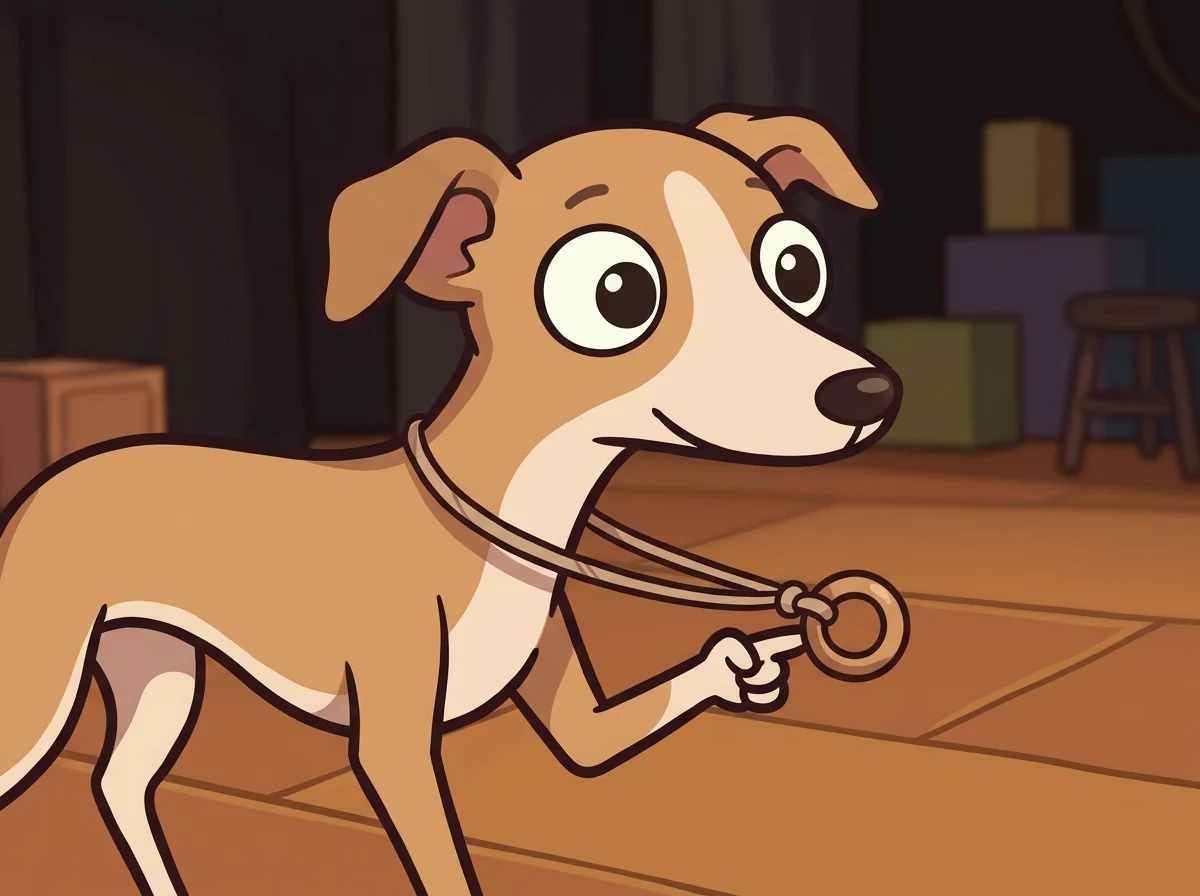
She walked to StageForge, because a place devoted to living characters ought to know that a character with no want is a character with no life.
Curtain, the old mentor who ran the workshops, didn't ask her to prove she'd trained. He handed her a dull, ordinary line — "Would you like some tea?" — and said, "Make me care."
Yearn read it once flat — would you like some tea — dead. Then she hooked her ring-cord, chose a fierce secret want — I need you to stay, and tea is the only excuse I have to keep you here — and said the exact same line again, her whole body leaning toward the imagined other person, every word aimed at don't go. And suddenly the little line about tea was desperate, alive, full of a whole hidden hope.
Curtain leaned in without meaning to. "You said four words about tea," he said, "and I heard someone terrified of being left alone."
"Because I wasn't playing tea," Yearn said. "I was playing what I wanted. The words were just how I reached for it."
He nodded, slow and certain. "Then you'll teach the want here. The engine that drives every living line."
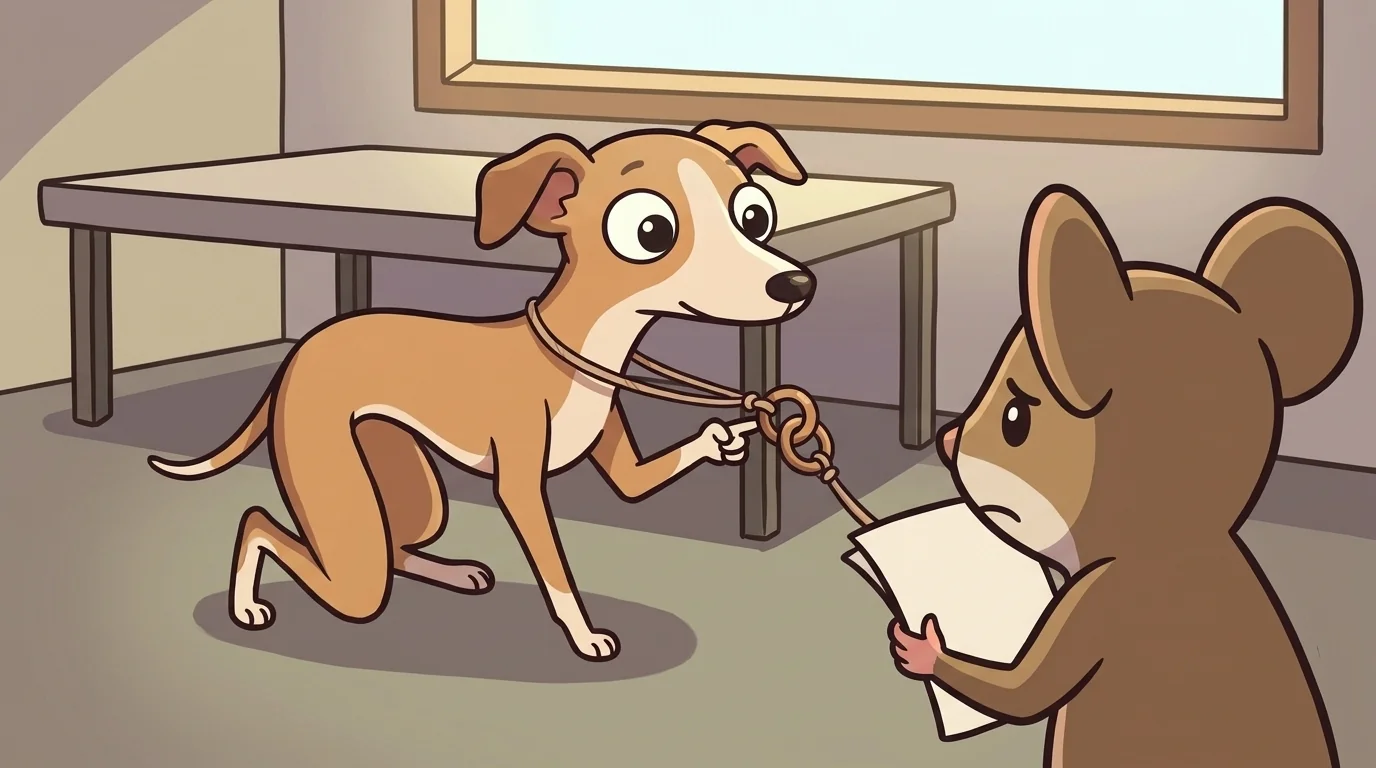
Yearn's corner filled with young actors whose scenes drifted because their characters wanted nothing in particular.
A boy played a whole argument limply, saying true words with no drive behind them. "I said all my lines," he shrugged.
"You did — aimed at nothing," Yearn said gently. "So they wandered. Tell me: in this scene, what does your character want from the other one? Not in general — right now, this minute. What are you trying to get out of them?"
The boy thought. "...I guess I want him to admit he was wrong."
"Then that's your engine," Yearn said, hooking her cord. "I need him to admit he was wrong. Now play every single line toward that — as a move to get it. This line's a push. That one's a trick. That one's a plea. They're not just words anymore — they're attempts to get the thing you want."
The boy ran the argument again, this time driving every line at admit it — and the limp scene tightened into a real fight, alive with purpose.
The boy stared. "...I didn't change a word. I just — actually wanted something."
"That's the truest thing you've felt today," Yearn said warmly. "A line with a want behind it is an action — a move to get something. A line with no want is just noise. Find what your character needs, badly, right now — and let it pull every word toward it. That's the engine. That's what makes a scene go."
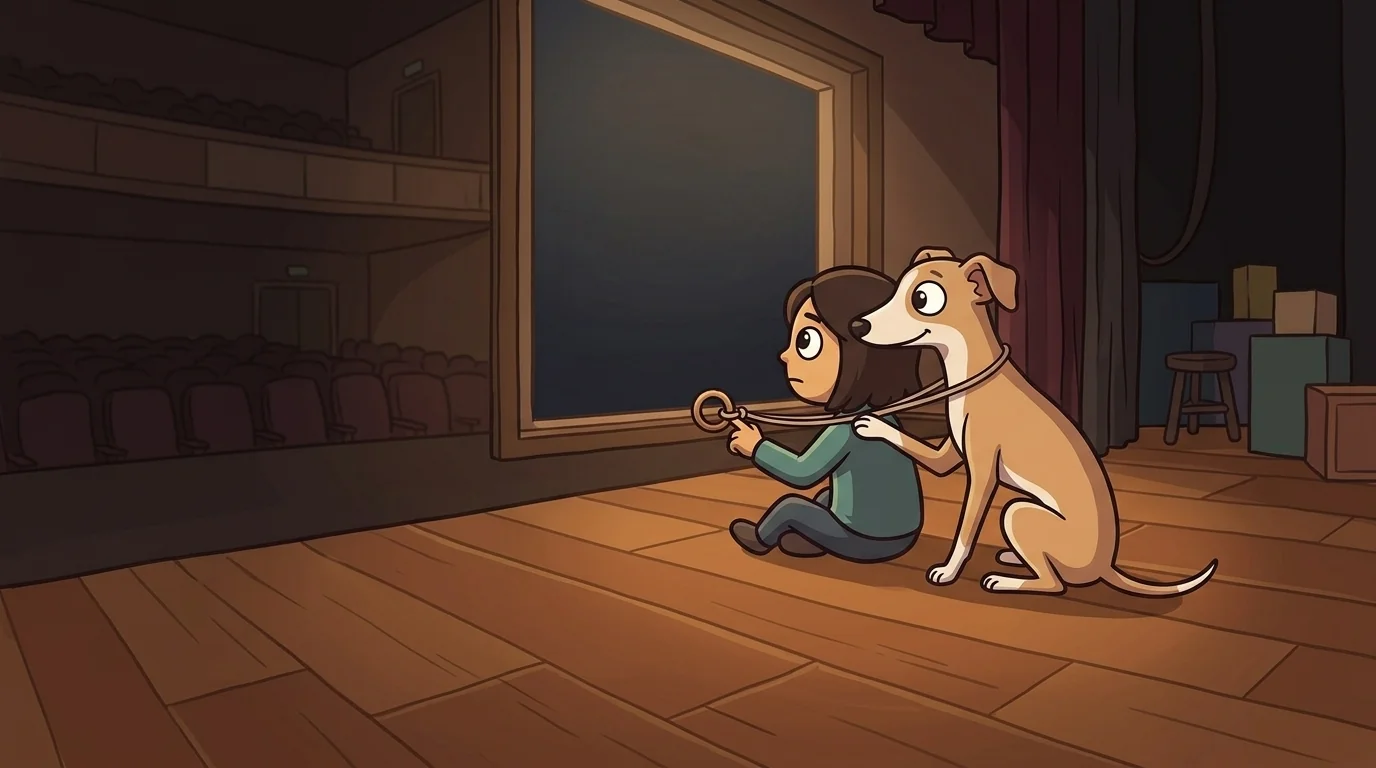
Later, when the hall had dimmed, the boy came back, thoughtful, one finger absently hooked as if through a ring.
"But real people don't always want something huge," he said. "Sometimes you're just... chatting."
Yearn thought about the aimless loops, and her father's nose pointed down the field.
"Even chatting, you want something," she said. "To be liked. To not be alone. To find out if they're still angry. To make them laugh. It doesn't have to be huge — it has to be there, and it has to be yours, right now." She leaned gently into her ring-cord, her whole lean body pointing at the invisible thing. "And across a whole play, all those little wants usually add up to one big one — the thing your character is really after, start to finish. That's the super-objective, the master-want under all the small ones. Find the want in each scene, aim everything at it, and the character stops wandering and starts pursuing. And a character in pursuit is a character the audience can't look away from — because wanting is the most alive thing a person ever does."
The boy nodded slow, and Yearn watched something settle in him — the same clean focus she'd found the day she stopped running in loops and locked onto a target. She leaned forward out of pure habit, bright-eyed, and a quiet gladness rose in her: to teach a driftless young one to find the want and let it pull — that was a joy she chased with her whole leaning body, and never once tired of.
The StageForge ensemble
Yearn is part of StageForge's distributed-narrative cast. Each character embodies a different curricular primitive; together they teach the full subject.
-

Face
Acting — character work through voice, body, and emotional life
-

Pen
Playwriting — turning ideas into scripts with character, conflict, structure
-

Block
Blocking — directing actors through stage geography
-
Rig
Stagecraft — the technical-theater craft that makes the visible-stage possible
-

Riff
Improvisation — the live-performance craft of Yes, and...
-
Rafter
Projection — making your voice reach the back row without shouting, by supporting it with breath so even a quiet line lands in the last seat
-

Undertow
Subtext — the real meaning running under the spoken line; what a character truly means beneath the words they actually say
-

Freeze
Tableau — a frozen stage picture the whole cast holds so the audience can read the moment like a painting
-

Hitch
Pacing and timing — the rhythm of a scene and the deliberate pause that makes a line land, the held beat before the joke or the truth
-
Opening Night
The whole company on stage together — how acting, objective, subtext, tableau, and timing combine so one live scene truly comes alive