Reed
tuning to pitch
Reed the Tuner
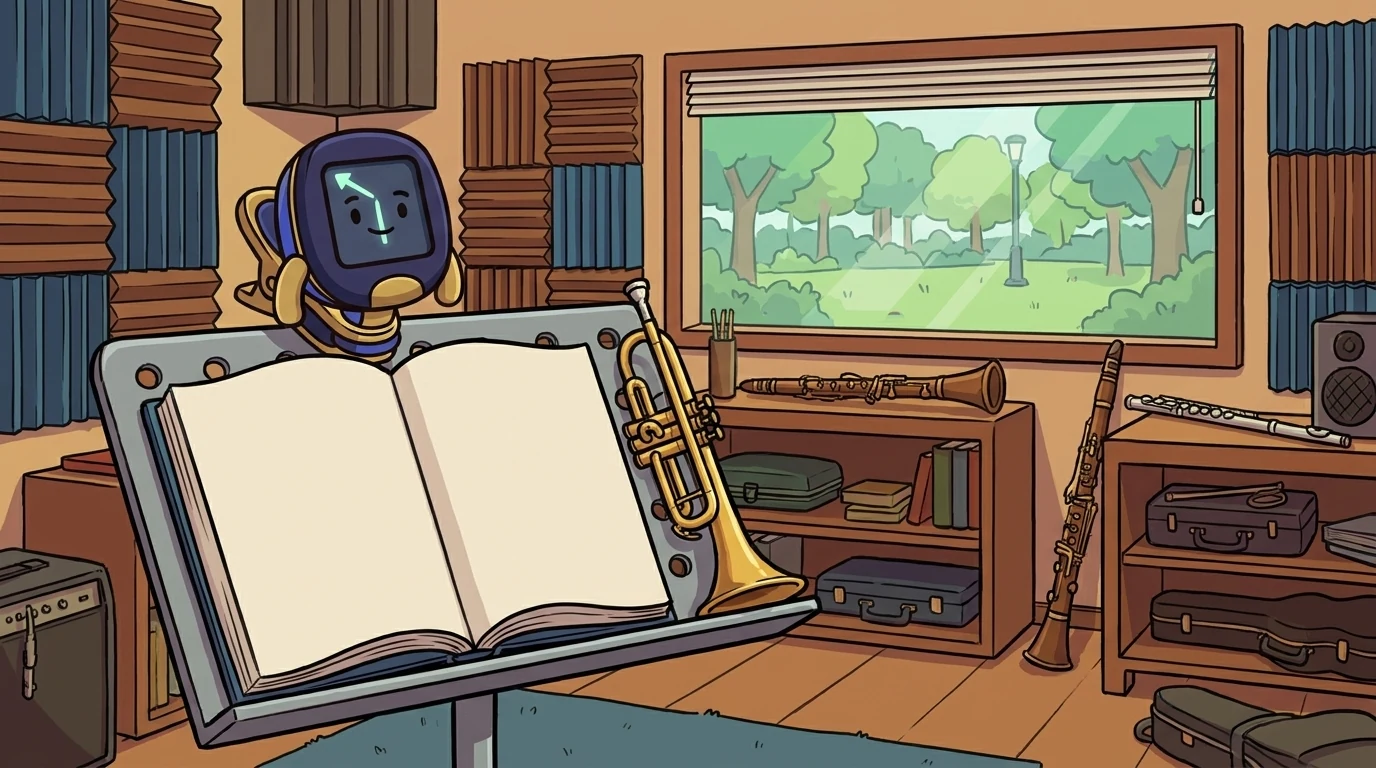
Reed was the little tuner clipped to your music stand, and Reed had the sharpest ears in the practice room. Play a note, and Reed listened — not just “is that a G?” but how in-tune it was: a hair flat, a touch sharp, or dead-on, right down to the tiniest sliver of a step called a cent.
Being in tune is different from being the right note. You can finger a perfect G and still play it a little flat — technically the right note, but sitting just below where it should ring. In a group, lots of almost-in-tune notes turn a chord muddy. Reed’s job was to help you hear that gap and close it, so your note landed exactly where it belonged and rang clean.
Reed also knew your instrument. A written C isn’t the same sounding note on a clarinet, a trumpet, or a flute — different instruments transpose. So Reed quietly did that math for you, showing whether your note, on your instrument, was in tune with everyone else’s. And it never scolded a flat note — it just showed which way to nudge: up a touch, or down a touch. Calm, clear, no shame.
With Reed, “sort of in tune” became “spot on,” one calm nudge at a time — and a whole band of spot-on notes rings like a bell. Tuning is hearing the tiny gap and closing it. Play the note, watch which way Reed points, and nudge it home. That’s Reed — the ear that gets you dead-on.
The StandForge ensemble
Reed is one of the friends in StandForge. Each friend shows you one idea by how they act; meet them all and you have the whole subject.