
Hark
listening as a strength — taking in the world through sound and words, and noticing what quieter ears miss
Loading audio…
Press play to listen along. The line being read lights up as you go.
Show full transcript
Loading transcript…
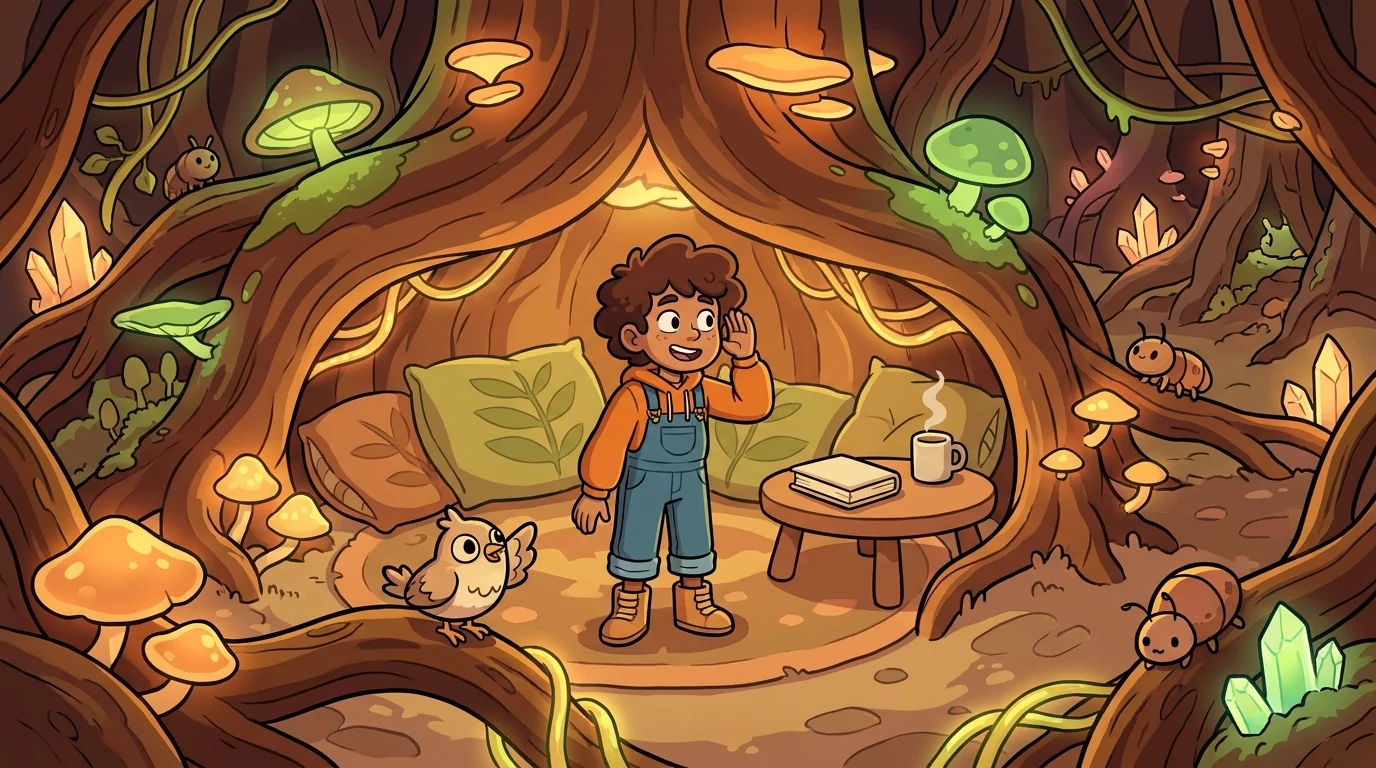
Down at the bottom of the Learning Tree, where the roots spread out into the warm dark earth, there is a guide named Hark.
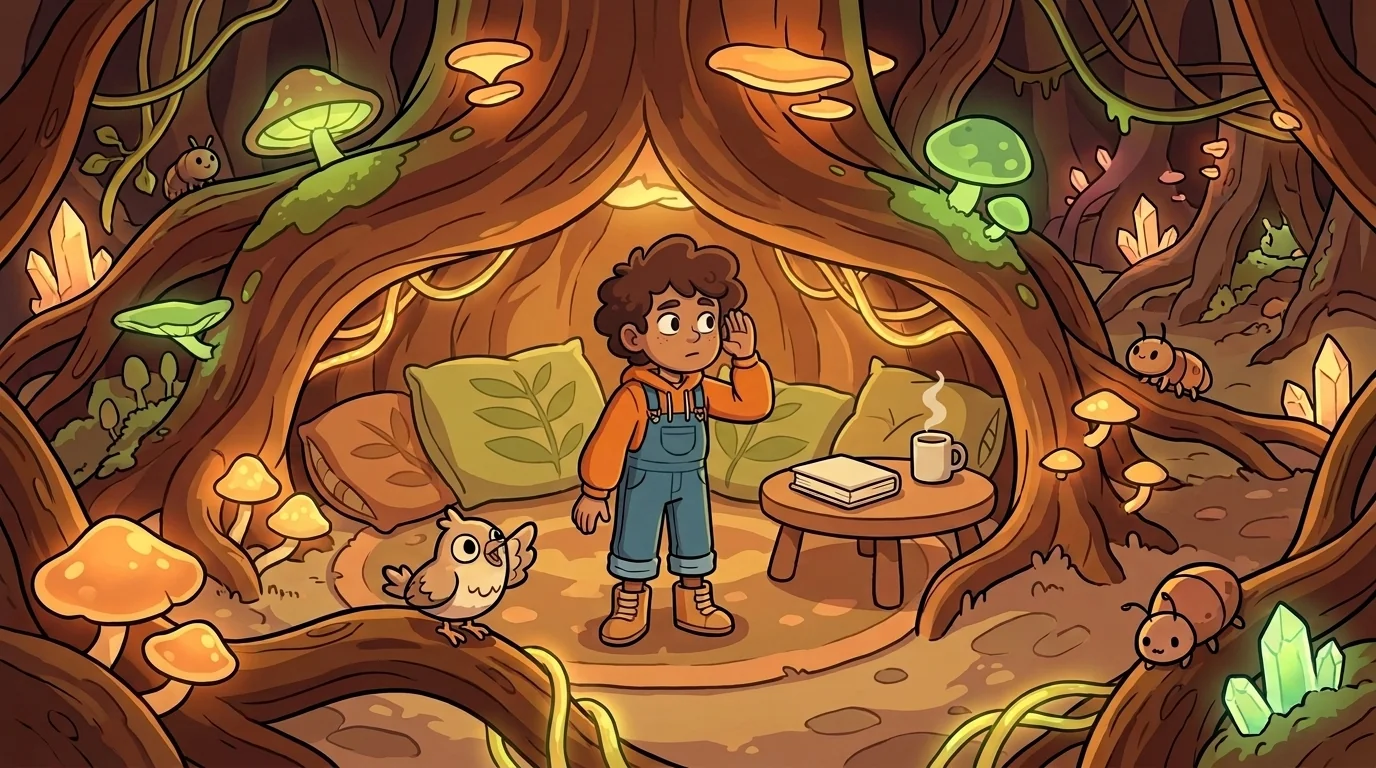
Hark is your ears — grown into a friend.
You might think ears are a small thing. Hark does not. Hark stands very still at the base of the tree, chin tipped a little to one side, and listens. Not just to the loud things. To the small things underneath. The far-off drum of rain before it reaches the leaves. A friend's voice going wobbly a half-second before they say they're fine. The exact tune of a song, held whole in the memory, ready to hum back note for note.
"Most people hear," Hark likes to say. "I listen. There's a difference, and the difference is where I'm strong."
One afternoon a kid sat down in the roots looking crumpled. The classroom had been all buzz and scrape and shout, and by the end of it their thoughts had gone to static. "I couldn't follow anything," the kid said. "Everyone else just… got it."
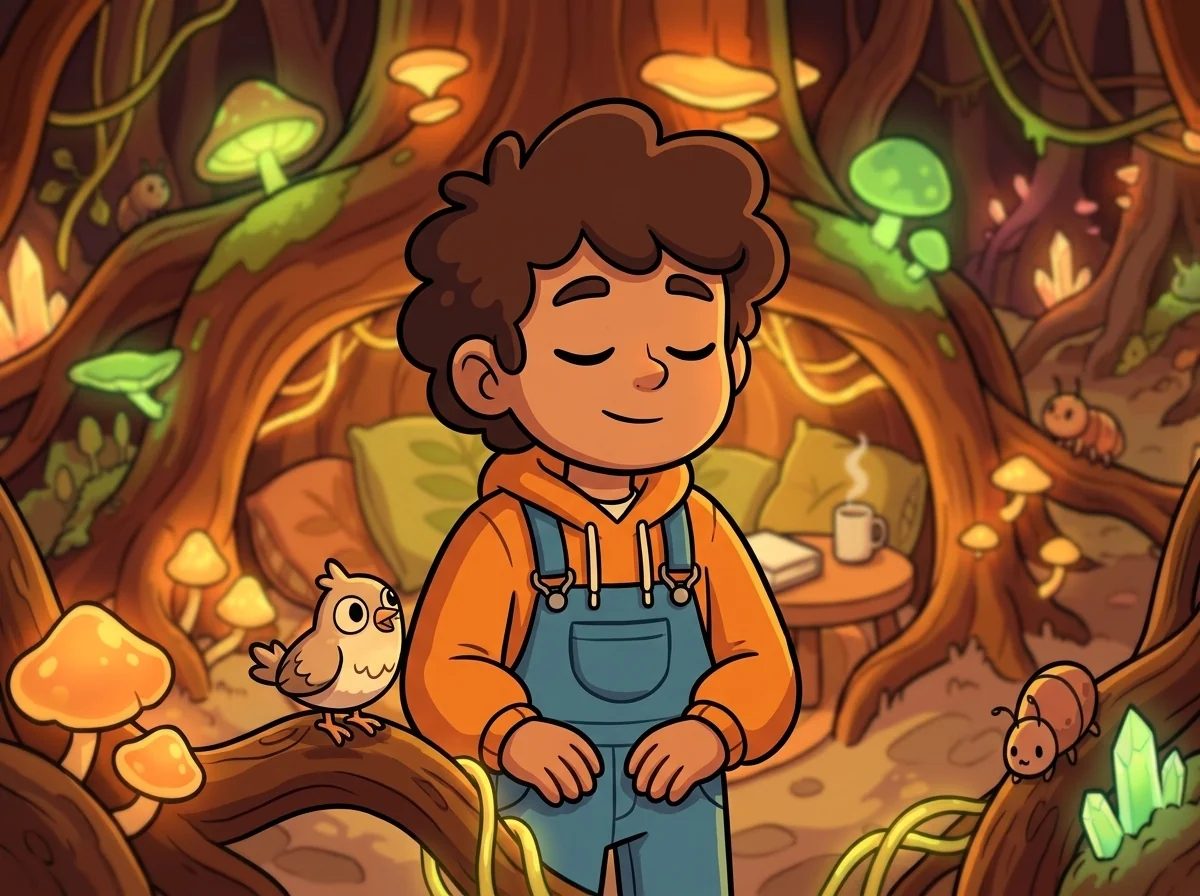
Hark didn't rush to fix it. Hark did the thing Hark always does first: closed their eyes, and took one slow breath, and let the noise settle into its parts. When Hark opened them again, the whole tangled room had come apart into single threads — this sound, then that one, then the important one underneath.
"Here's a secret," Hark said. "You're not bad at listening. You listen hard — so hard that when everything shouts at once, it all lands on you at the same time. That's not a weak ear. That's a loud world." Hark tapped the kid gently on the shoulder. "Let's give your strong ears one thing at a time."
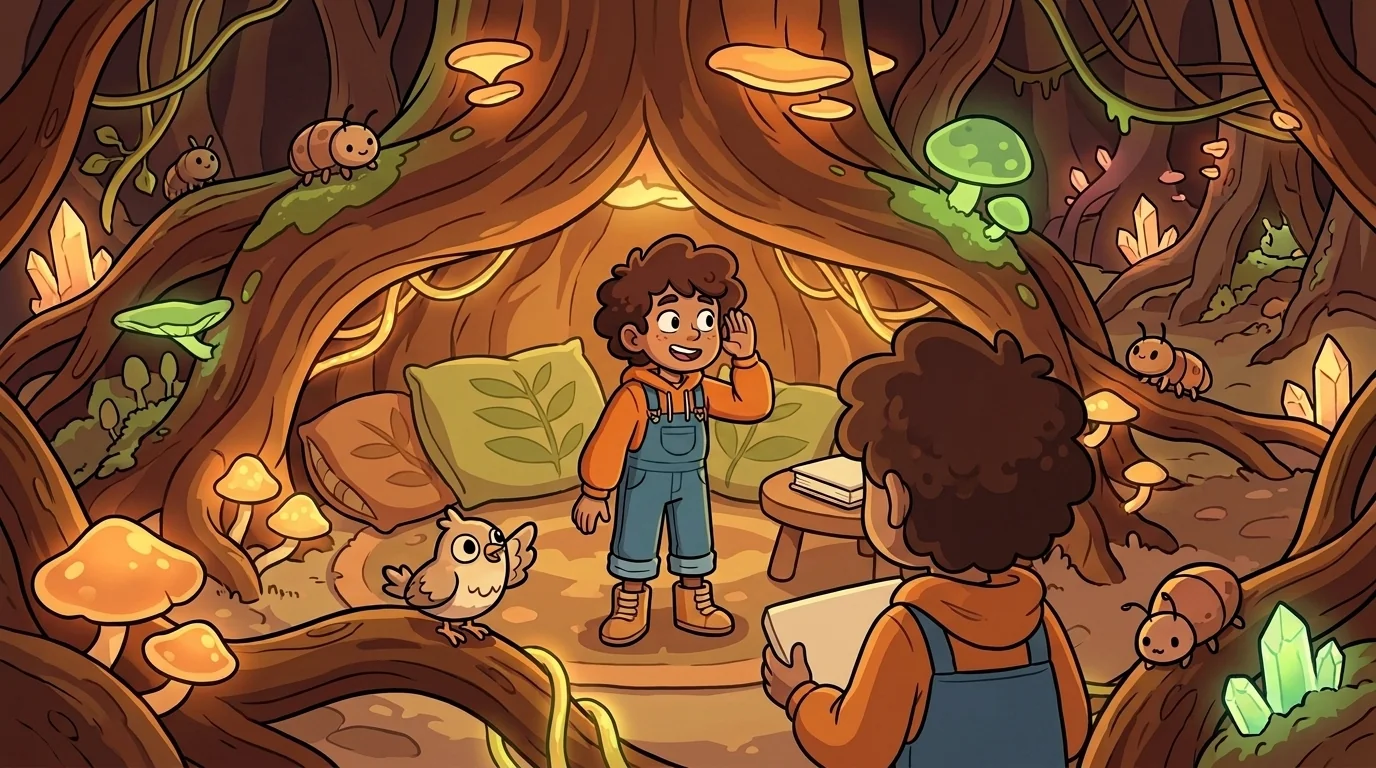
So they did. Hark hummed the day's lesson back as a little tune, the way you'd remember a song. And the kid — who could hold a melody all the way home without trying — held it. The words rode in on the sound and stayed.
That is the whole of what Hark knows. When something matters, say it out loud, sing it, or hear it in your own voice. Sounds have handles. Your ears can grab a handle and carry a thing you couldn't carry with your eyes alone.
Hark feels most like Hark in a quiet moment right after a loud one — that first clean second when the racket drops away and the one true sound comes forward. It's a warm, wide-open feeling, like a window unstuck at last. Hark leans into it every single time.
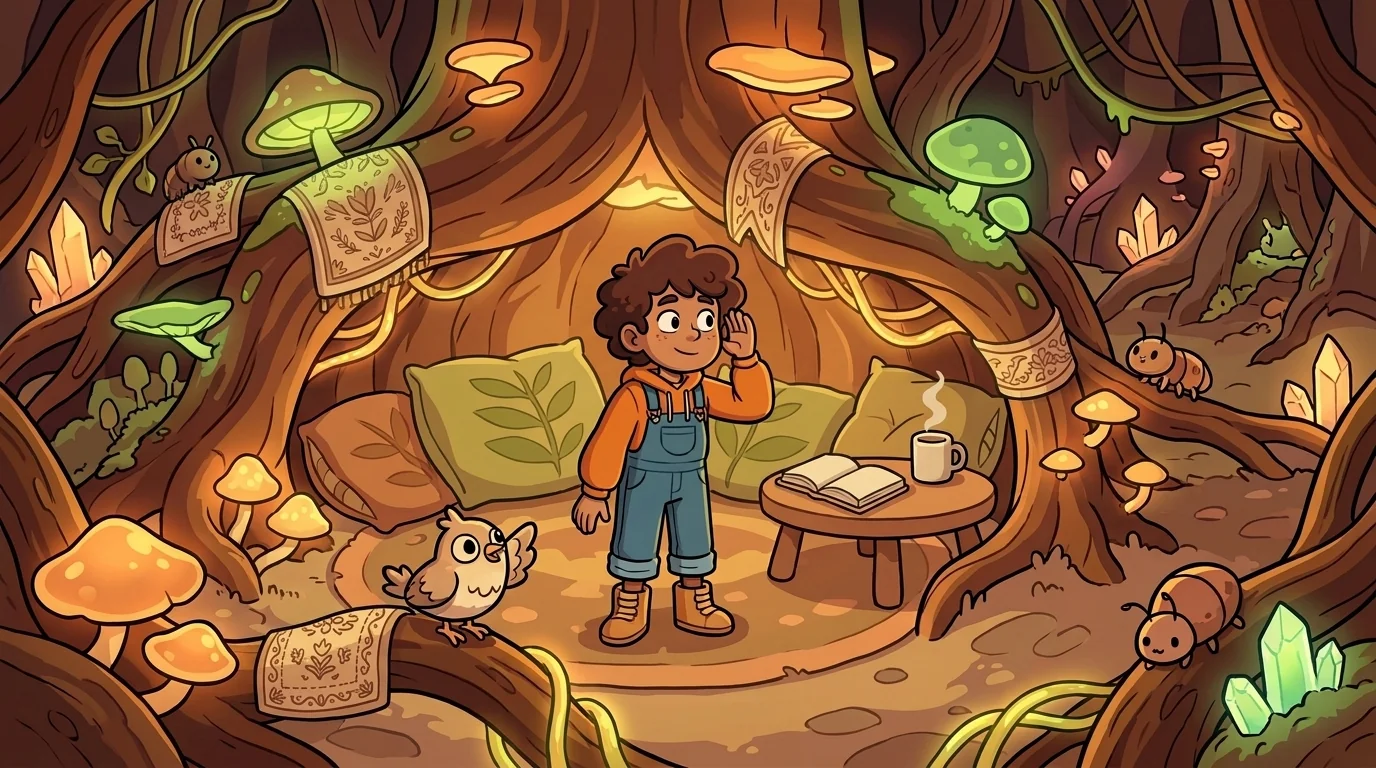
You have a bit of Hark in you. Everyone does — but in some people it runs deep, like a taproot. If you're the kind who remembers what people said better than what you read, who catches the tune first and the words second, who needs the room to quiet before your mind will — that's not something wrong with you. That's Hark, strong in your roots.
Say it the way Hark does, out loud: "Hark closes their eyes for one breath — and the room tells them everything."
And then listen. You'll be surprised what your ears were already holding.
The treeforge ensemble
Hark is part of treeforge's distributed-narrative cast. Each character embodies a different curricular primitive; together they teach the full subject.