
Mirror
reflective thinking — a strength for noticing your own thinking and how a task went, then using that to choose what to do next time
Loading audio…
Press play to listen along. The line being read lights up as you go.
Show full transcript
Loading transcript…
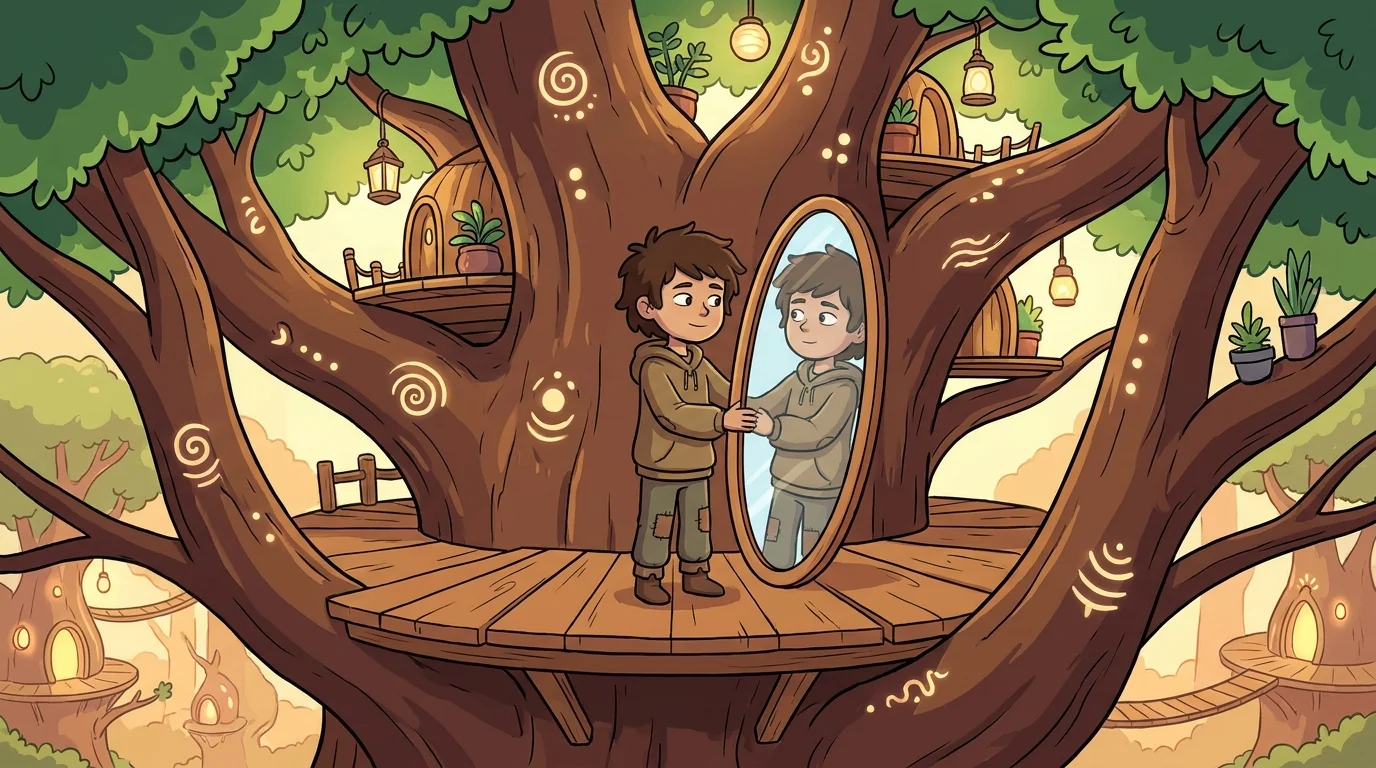
At the top of the trunk, where the Learning Tree begins to branch, stands the quietest of the three thinking guides: Mirror.
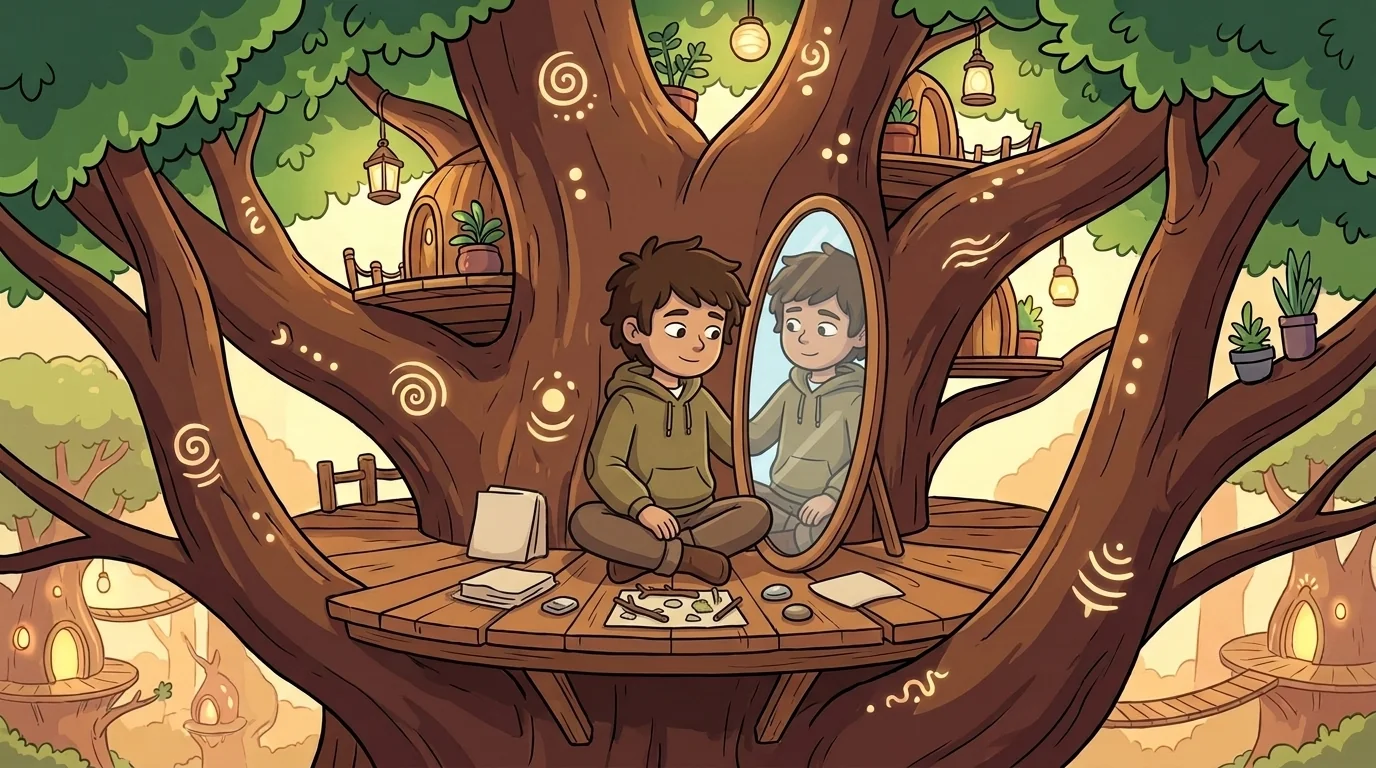
Mirror is the part of you that looks back — so you can go forward smarter.
Most guides are busy in the middle of a task. Mirror waits for after. When something's finished — a test, a project, a hard conversation, a whole rough day — Mirror sits down with it and asks the questions almost nobody asks: How did that actually go? What did I do that worked? Where did it get hard, and what was I doing right before it got hard? Mirror doesn't relive it to feel bad. Mirror studies it, the way you'd rewatch a game to get better — curious, honest, and kind.
"Doing the thing is only half of learning," Mirror says. "The other half is noticing how you did it. Skip that half and you'll make the same tangle a hundred times without ever seeing the knot."
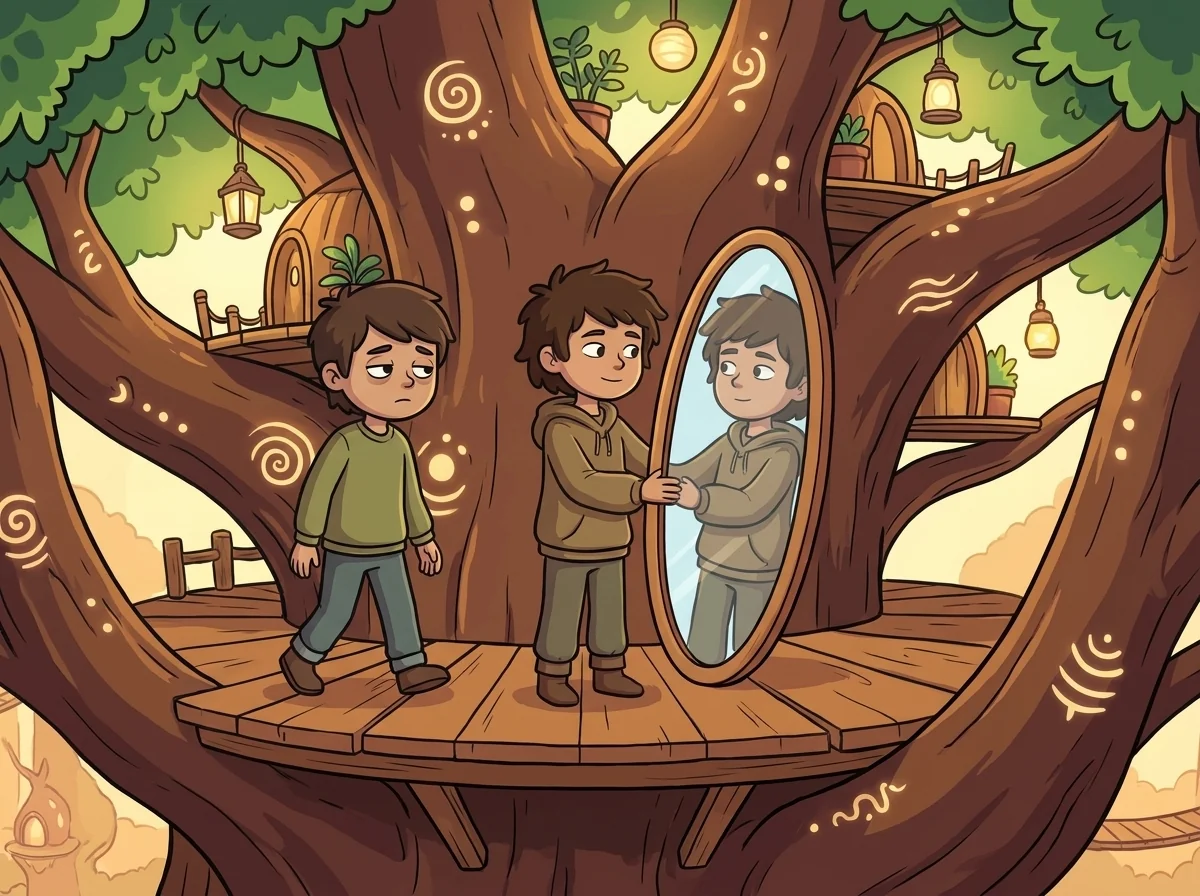
A kid trudged to the top of the trunk after a study session that had gone nowhere. "Two hours," they said. "Two hours and I remember basically none of it."
Mirror didn't say try harder next time. Mirror said, "Walk me back through the two hours. Where were you? What was around you? When did your mind actually stick, and when did it slide off?"
And as the kid walked it back, they heard themselves say it out loud: "...I had my phone right there. And I kept just rereading instead of testing myself. And honestly the part that DID stick was when I explained it to my little brother."
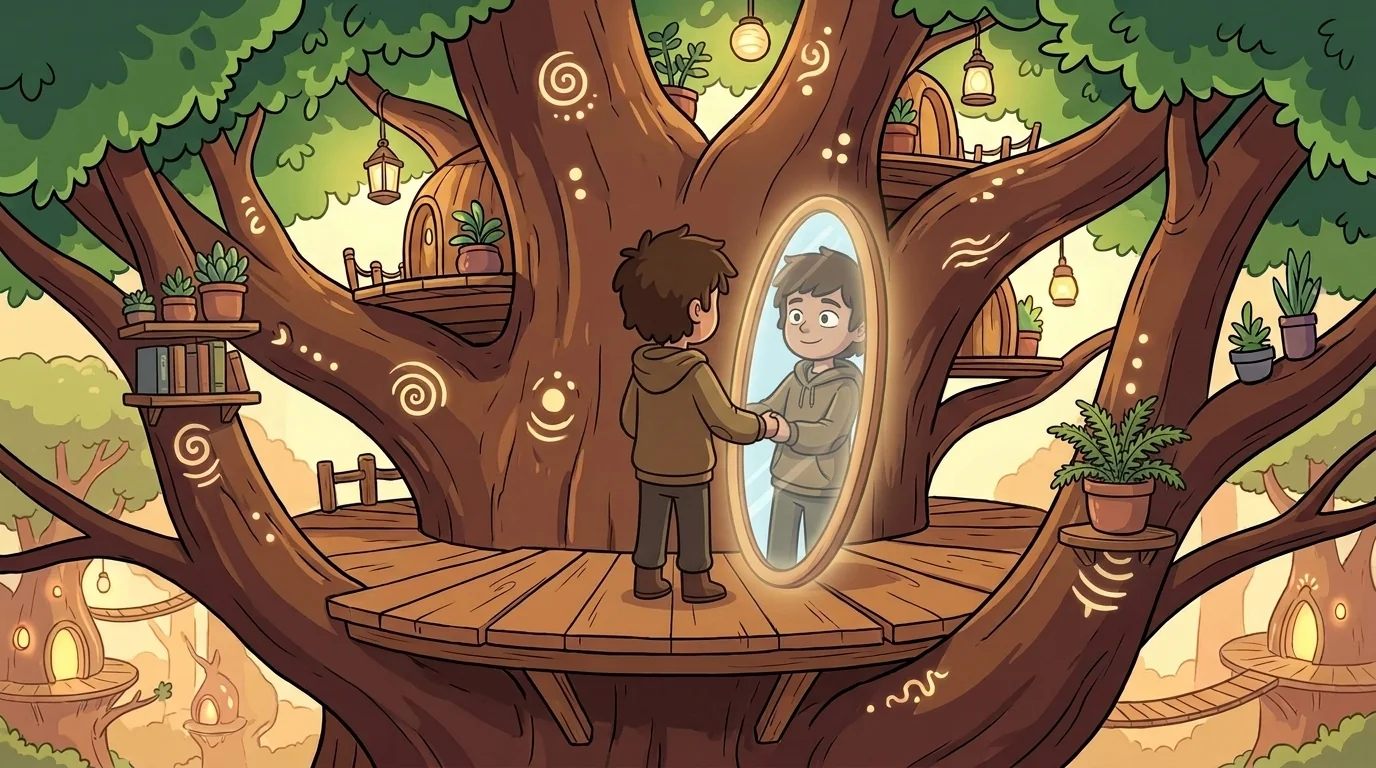
Mirror smiled. "So now you know three things about how you learn — not in general, about you. Phone away. Test yourself instead of rereading. Explain it to someone. You didn't waste two hours. You just found your instructions."
That is what Mirror knows. After a thing is done, take one honest, gentle look back: what helped, what got in the way, what you'd tweak. That short look-back is how a strategy gets better — and it's the difference between doing something a hundred times and learning something once.
Mirror feels most like Mirror in the still moment after looking back honestly, when a messy experience quietly turns into a useful one — the calm click of ah, so THAT'S what happened, and here's what I'll do differently. It's not the sting of regret. It's the settle of understanding. Mirror seeks that settle on purpose.
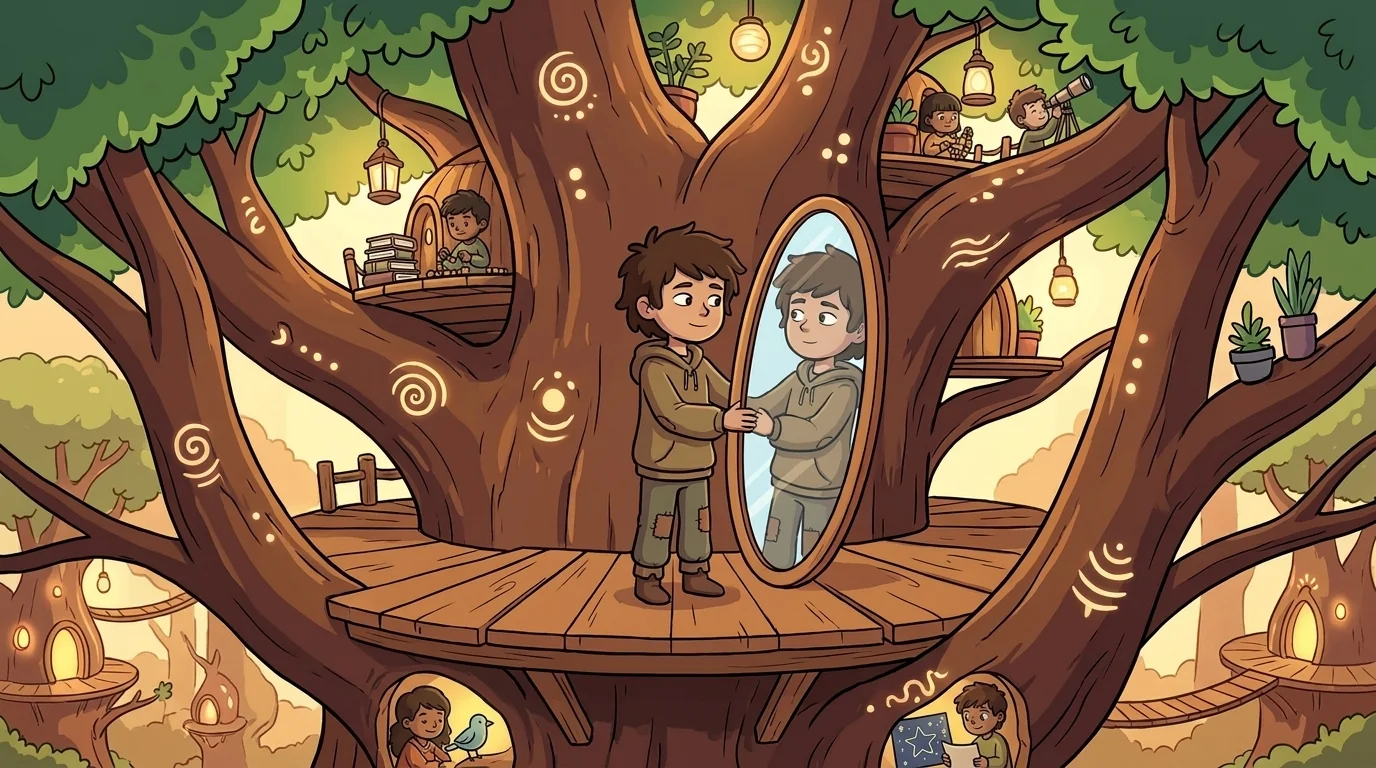
You have a bit of Mirror in you. Everyone does — but in some people it runs strong in the trunk. If you replay how things went, if you notice your own patterns, if you can look at a flop and ask "what would I change?" instead of just feeling bad — that isn't dwelling. That's Mirror, turning experience into wisdom.
Say it the way Mirror does, gently: "Mirror looks back at how it went — and that's how Mirror knows what to do next."
Then take your honest, kind look back. It's the fastest way forward there is.
The treeforge ensemble
Mirror is part of treeforge's distributed-narrative cast. Each character embodies a different curricular primitive; together they teach the full subject.