
Reader
reading — a strength for turning written letters into sounds and sounds into meaning, unlocking what the words say
Loading audio…
Press play to listen along. The line being read lights up as you go.
Show full transcript
Loading transcript…
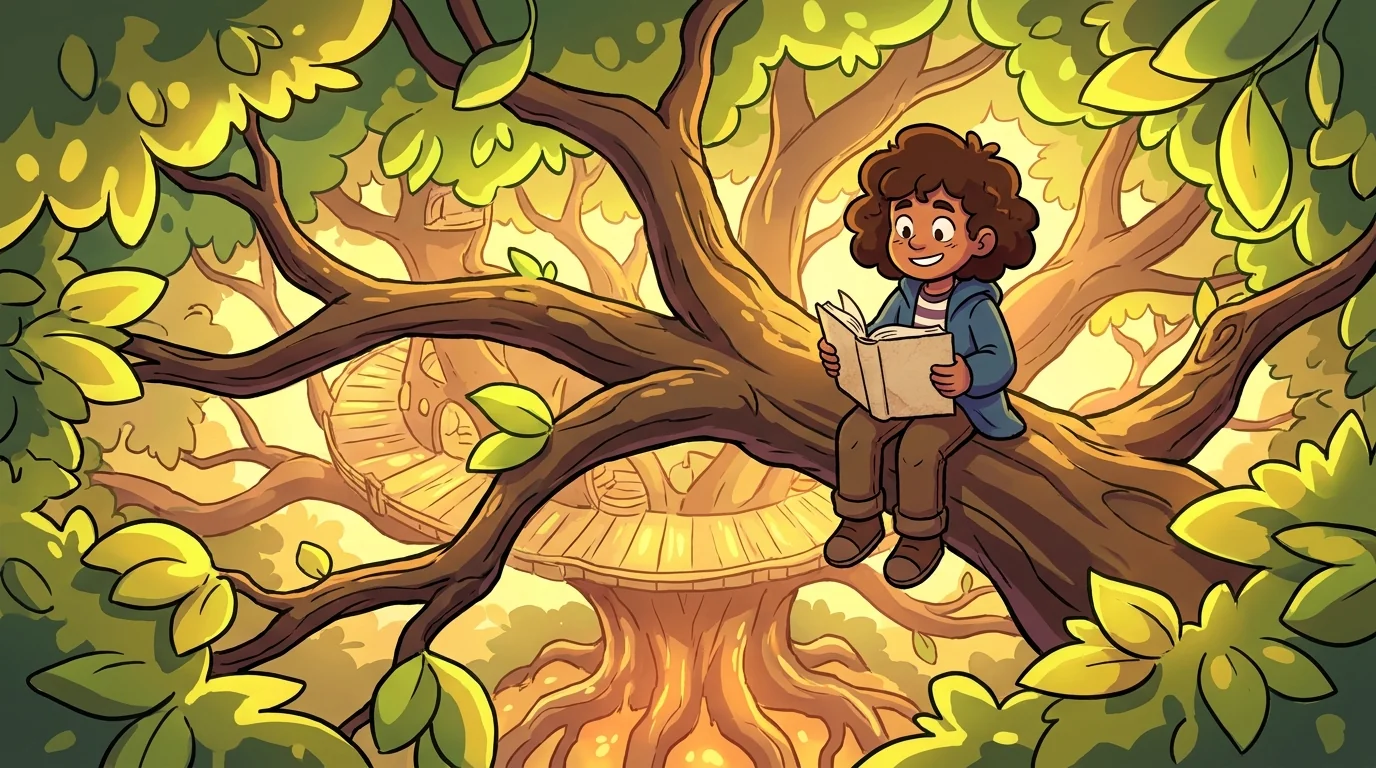
Up in the leafy branches of the Learning Tree — where the roots and trunk finally reach out into schoolwork — there's a guide named Reader.
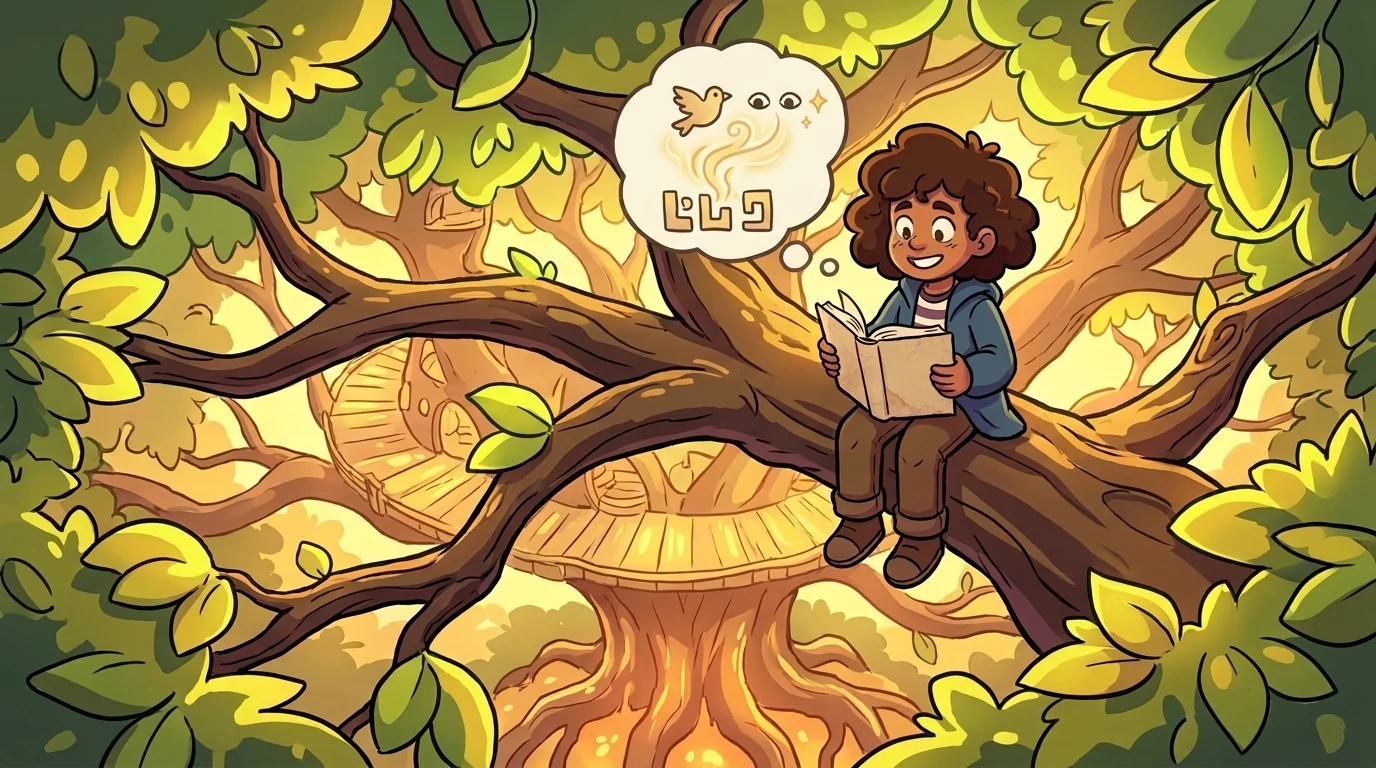
Reader lives where reading happens.
Reader's whole job is a kind of magic that's so common people forget it's magic at all: taking little black marks — letters — turning them into sounds, and turning those sounds into meaning. A row of shapes becomes a word. A row of words becomes a sentence. A page of sentences becomes a whole world you can step into without leaving your chair. Reader does this move over and over, and never stops thinking it's wonderful.
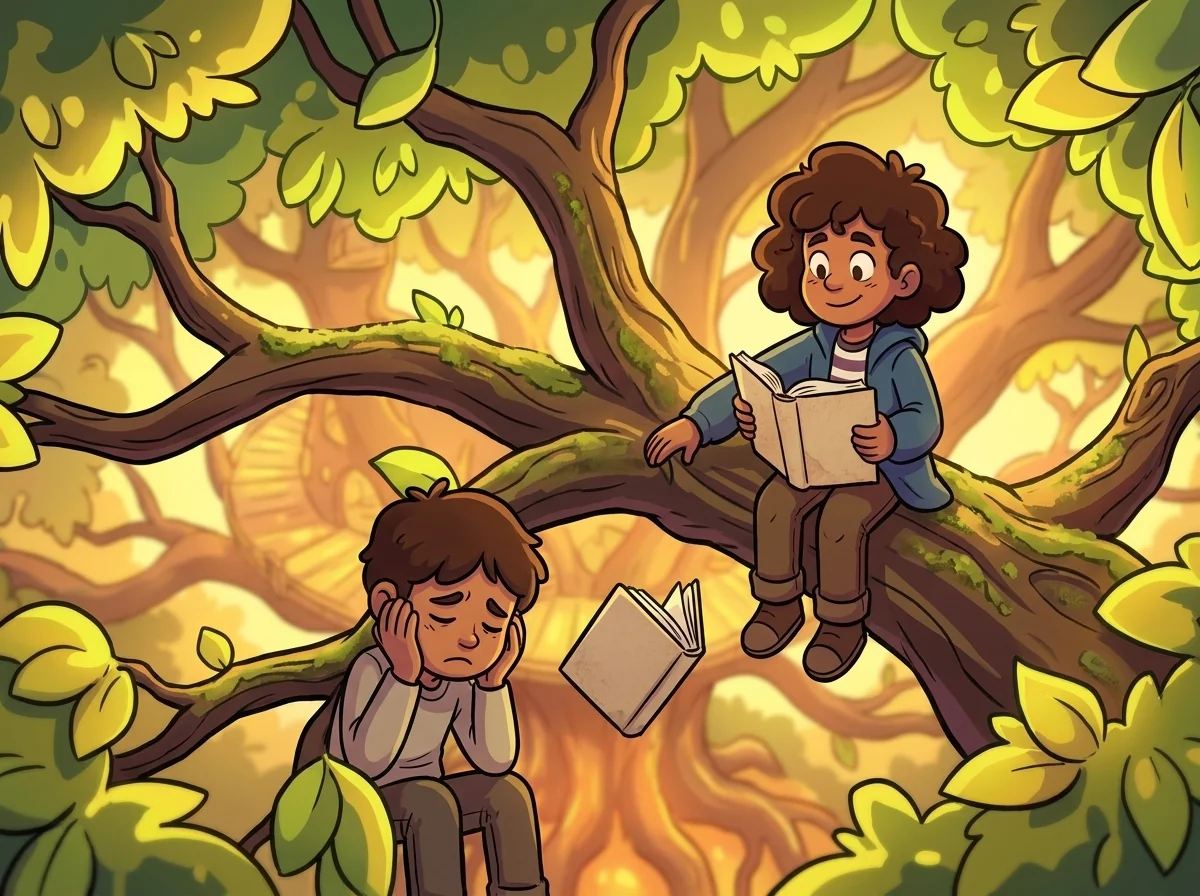
"People say 'just read it' like it's one thing," Reader says. "It's not one thing. It's a stack of clever moves — sound out, chunk up, guess from the story, check if it makes sense. I do them so fast they look like one. But every reader builds that stack piece by piece."
A kid slumped under the branches one day, a book pushed away. "I hate reading," they said. "I'm bad at it. I get stuck and everyone's already turning the page."
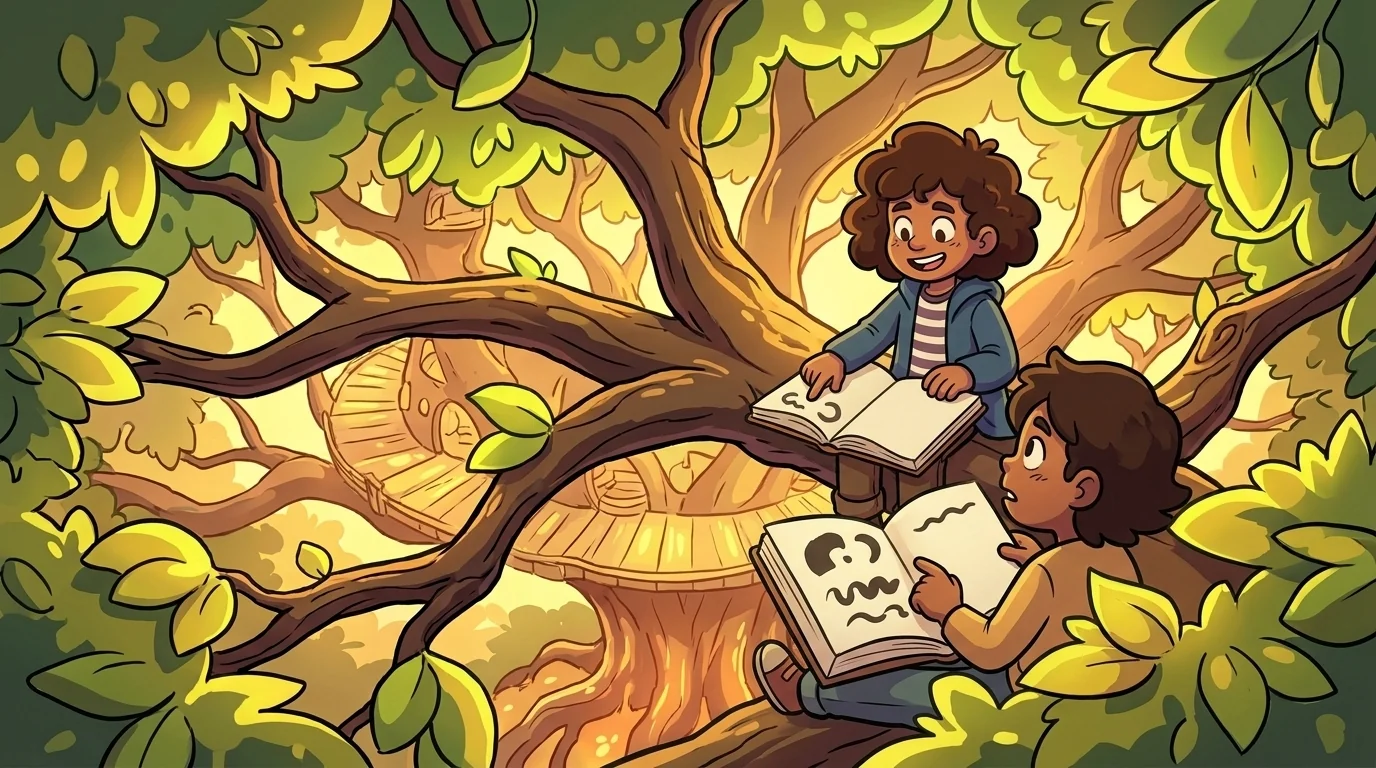
Reader sat down beside them — not above them. "Getting stuck isn't being bad at reading," Reader said. "Getting stuck is reading meeting a word that hasn't been unlocked yet. Watch." Reader pointed at the word that had stopped them. Not the whole scary word — just the first chunk. Then the next. Sound, chunk, sound. And the word that had been a wall clicked open into something the kid actually knew. "See? You didn't need to be faster. You needed to break the big word into the small sounds it's made of. That's not cheating. That's how everyone does the hard ones."
That is what Reader knows. Reading isn't one talent you have or don't. It's a set of moves — sound it out, chunk it up, lean on the story around it, ask "does that make sense?" — and any of those moves can be practiced and gotten stronger. A stuck word is a locked word, and locks have keys.
Reader feels most like Reader in the instant a stuck word gives way and the sentence suddenly means something — that little door-swinging-open feeling, where the marks stop being marks and start being a voice in your head. It's the feeling of a world opening up. Reader loves nothing more.
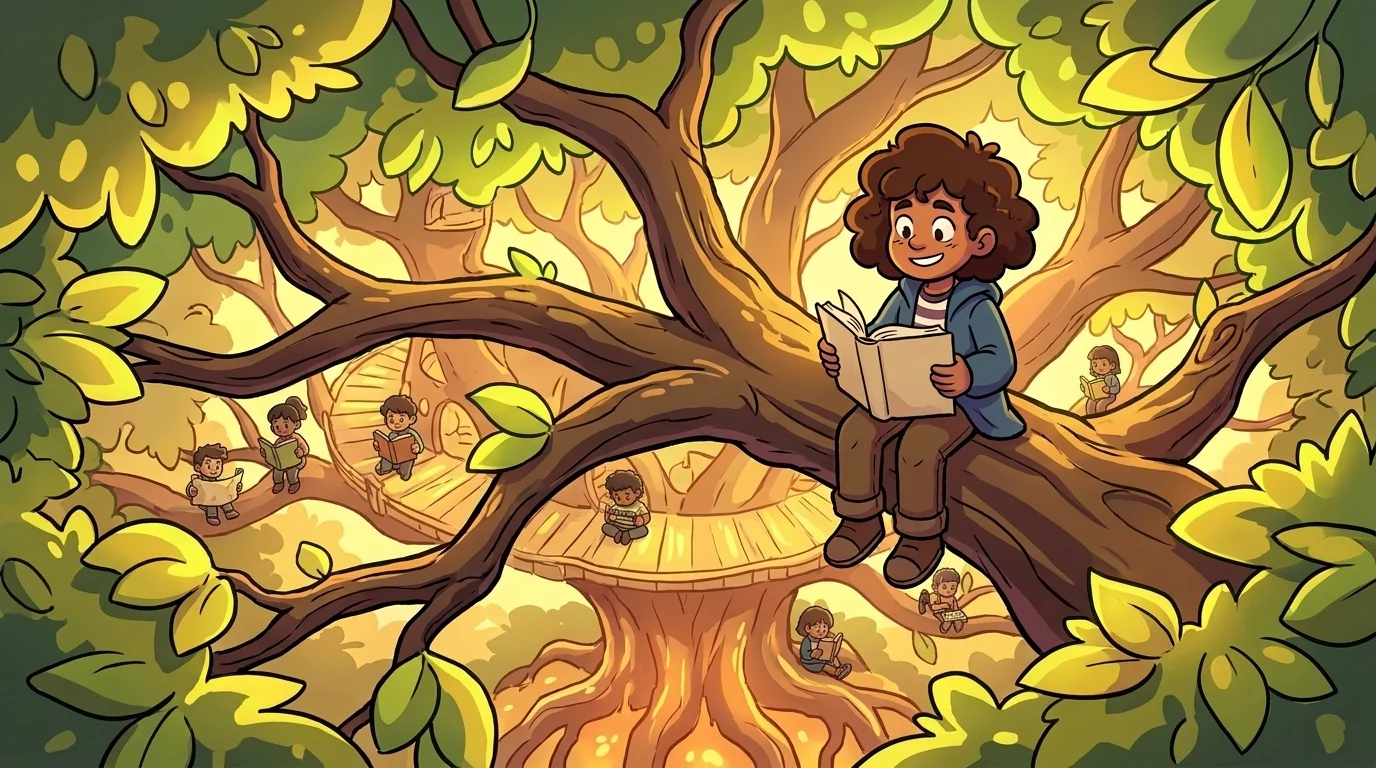
Everyone has a Reader out on their branches, and everyone's works a little differently — some fast, some careful, some who need the room quiet, some who do best hearing it and seeing it at once. If reading is hard for you right now, that is not a verdict about how smart you are. It's a branch that grows stronger every time you unlock one more word. Lean on your roots while you do it: sound it out with Hark's ears, see the word-chunks with Glance's eyes, go one step at a time like Planner.
Say it the way Reader does: "Reader turns letters into sounds, and sounds into meaning — one unlocked word at a time."
Then unlock the next one. That's all reading ever is — the next word, then the next.
The treeforge ensemble
Reader is part of treeforge's distributed-narrative cast. Each character embodies a different curricular primitive; together they teach the full subject.