Kelp
One keystone can hold up a whole forest
Loading audio…
Press play to listen along. The line being read lights up as you go.
Show full transcript
Loading transcript…
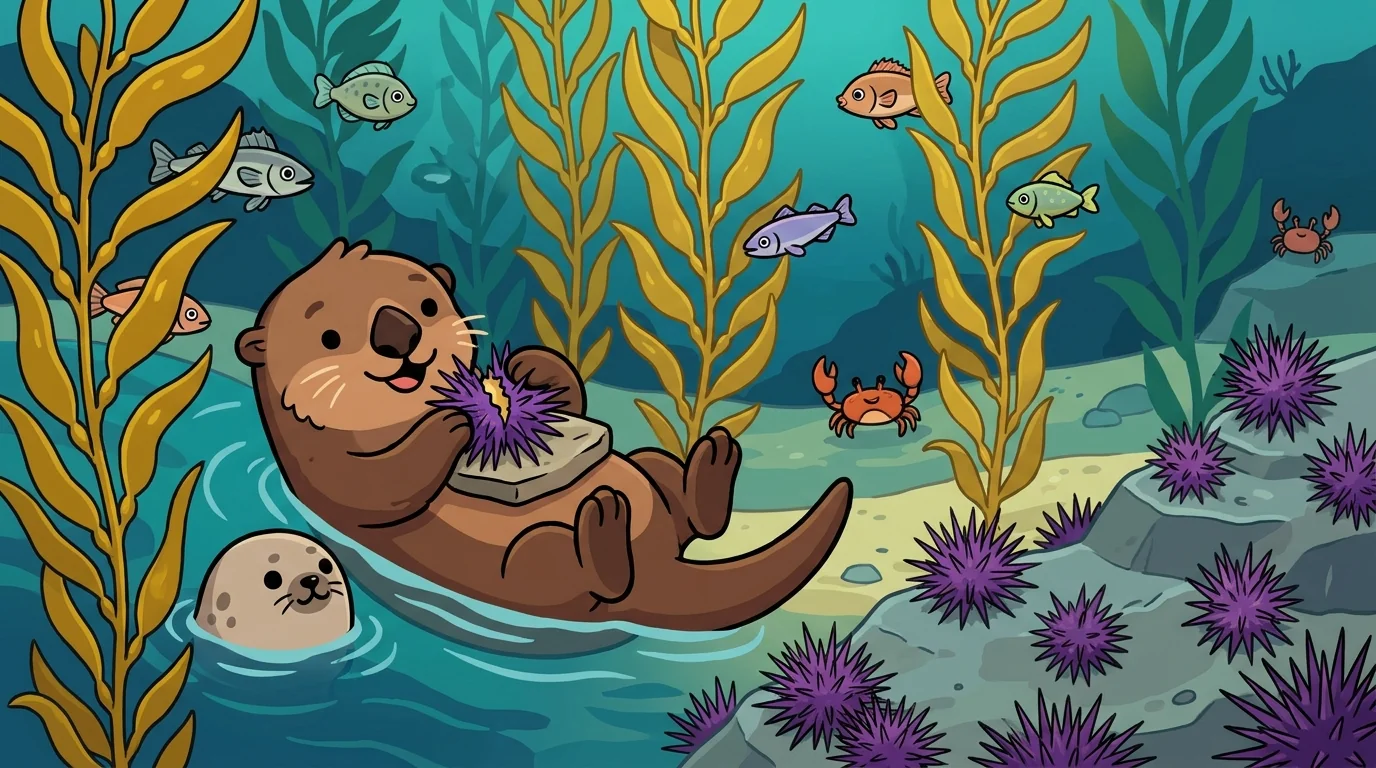
Kelp floated on her back among the tall swaying fronds, cracking a sea urchin open on a flat stone she kept tucked under one arm, and to anyone watching it looked like lunch — but it was really the most important gardening job in the whole underwater forest.
She was a sea-otter-tween, sleek and brown, with clever paws and whiskers that read the current. Around her, giant kelp rose from the seafloor in golden columns, a swaying forest full of fish and crabs and darting life. A younger seal-kid bobbed up beside her. "Why do you eat so many spiky urchins? They can't taste good."
"They don't," Kelp said, munching. "But somebody has to. Watch what happens if I stop." She pointed a paw at a bare patch nearby, all rock and spines, no kelp at all. "Over there, the otters are gone. So the urchins bred and bred, with nothing to eat them, and they mowed the whole kelp forest down to bare rock — an urchin barren. No kelp, no fish, no forest. Just spines." She cracked another urchin, unbothered. "Over here, I keep the urchins in check, so the kelp grows tall, so the whole forest lives. I'm just one otter eating snails. But pull me out —" her whiskers twitched "— and the whole forest topples."
The seal-kid looked from the golden, living forest to the bare, spiny barren, and understood: one small animal was holding all of it up.
Kelp had not always known she was a keystone.
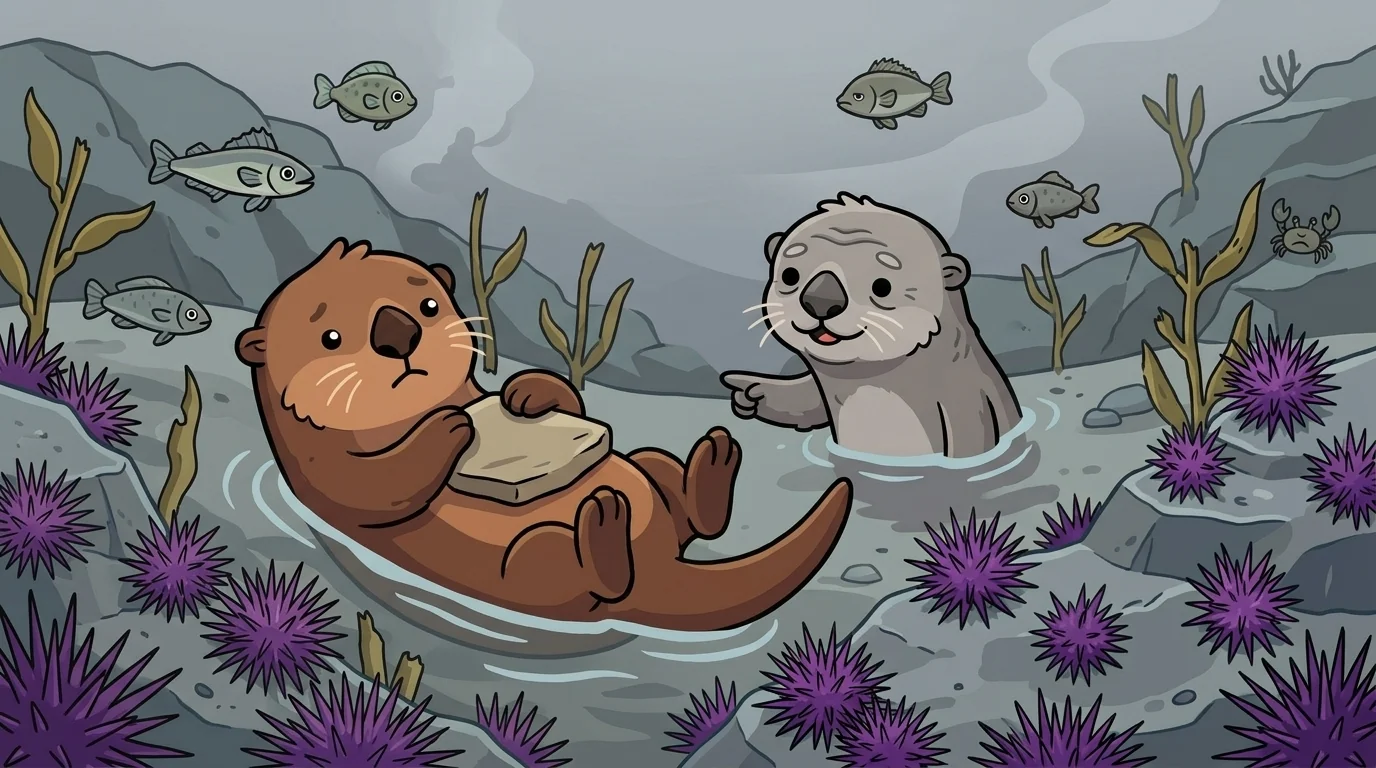
When she was small, she'd thought of herself as one little otter among thousands of creatures — the fish mattered, the kelp mattered, the big animals mattered, and she was just… there, cracking snails, unimportant. Then a sickness swept through her cove and most of the otters vanished, and within a season she watched the golden forest she'd grown up in wither to a grey urchin barren, the fish gone, the crabs gone, the swaying columns gone.
An old otter, one of the few left, had floated beside her in the ruined water. "Feels like we were nobody, doesn't it?" she said softly. "Just otters. But look what happened when the otters left. The whole forest was leaning on us the whole time, little one — and we never knew, because it only shows when you're gone. Some threads hold up more than their size. You're one of those threads."
Kelp had looked at her own small paws, at the flat stone she cracked urchins on, and felt the world tip on its side. She wasn't a nobody in the forest. She was one of the pins the whole forest hung from.
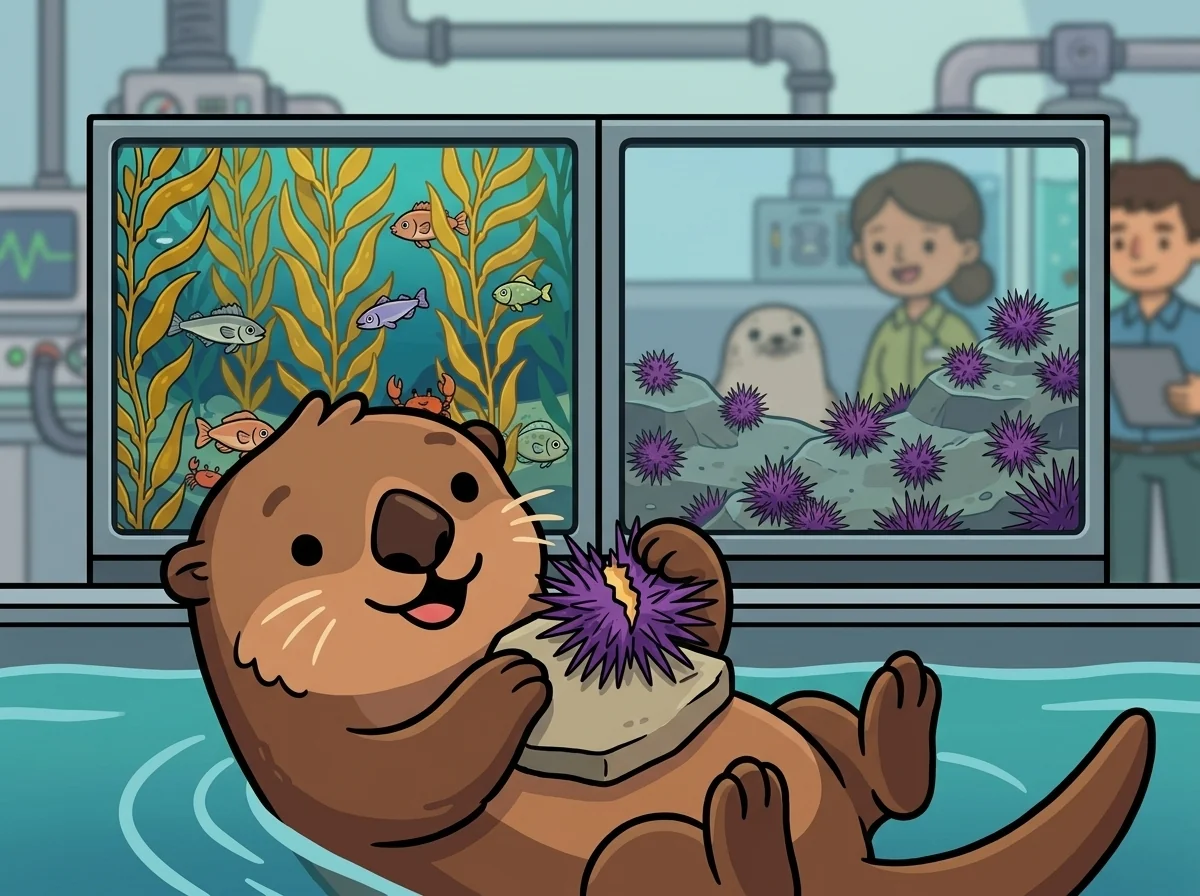
She swam to the field-station at Biomeforge at twelve, because a place that studied living systems ought to understand the ones that balanced on a single thread — the forests that stood or fell on one animal's appetite.
The naturalist met her by two tanks: one thick with green, one bare rock with a few urchins. "Same water, same light. Why is one a forest and one a desert?"
Kelp pressed to the glass. "This one's got a predator keeping the plant-eaters down, so the plants can grow, so everything else can live," she said, tapping the green tank. "That one lost its predator, so the plant-eaters took over and ate it bare." She looked up. "It's not about the water or the light. It's about the one keystone. Add it back to the bare tank and, given time, the whole forest could come back."
The naturalist smiled. "Most people look for what's different in the water. You found the keystone. You belong here."
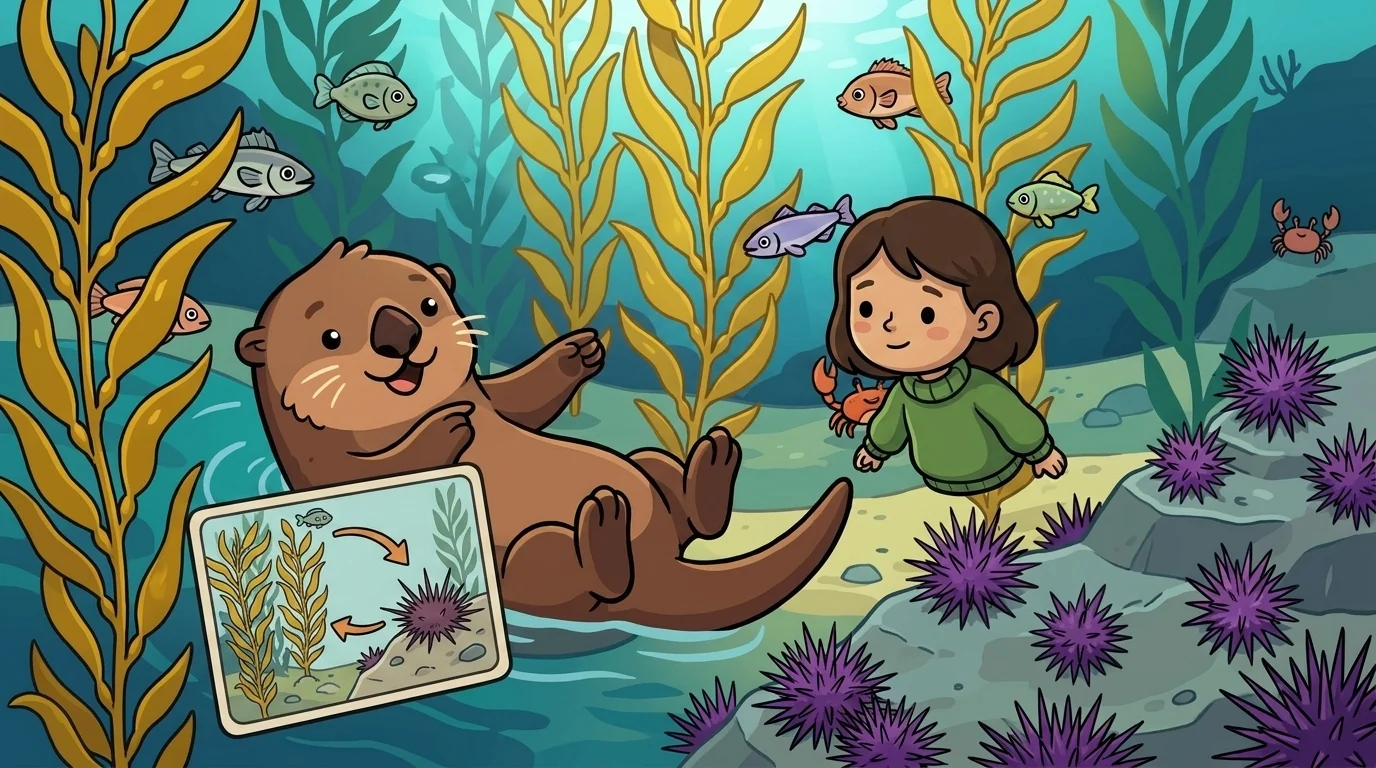
Kelp's corner filled up with kids who felt too small to matter in a huge, tangled world.
A girl came in quiet and low. She'd learned that kelp forests were disappearing as the ocean warmed and otters and other keystones dwindled, and she felt crushed by it — and also felt like she was too small to do anything. "It's all so big and connected," she said. "And I'm just one kid. If a whole forest can fall because a few otters vanish, what could one small person like me possibly do?"
Kelp knew that feeling exactly — the ruined cove, the sense of being nobody.
"Here's the thing you've got backwards, and it's the best thing I know," she said, rolling upright in the water. "You looked at the forest falling because a few small otters left, and you thought: I'm too small to matter. But that story means the opposite. If a few small keystones leaving can topple a forest, then a few small keystones returning can bring it back. Small doesn't mean powerless. Sometimes small is exactly what holds everything up." She nudged a card over. "You can't cool the ocean. But you can be a keystone in your own patch — learn how kelp forests work, protect one keystone species by supporting the people who do, tell the story right so nobody calls otters unimportant again." Her whiskers lifted. "The forest didn't fall because otters were weak. It fell because they were strong, and gone. Be one of the strong small ones who stays."
The girl sat up straighter.
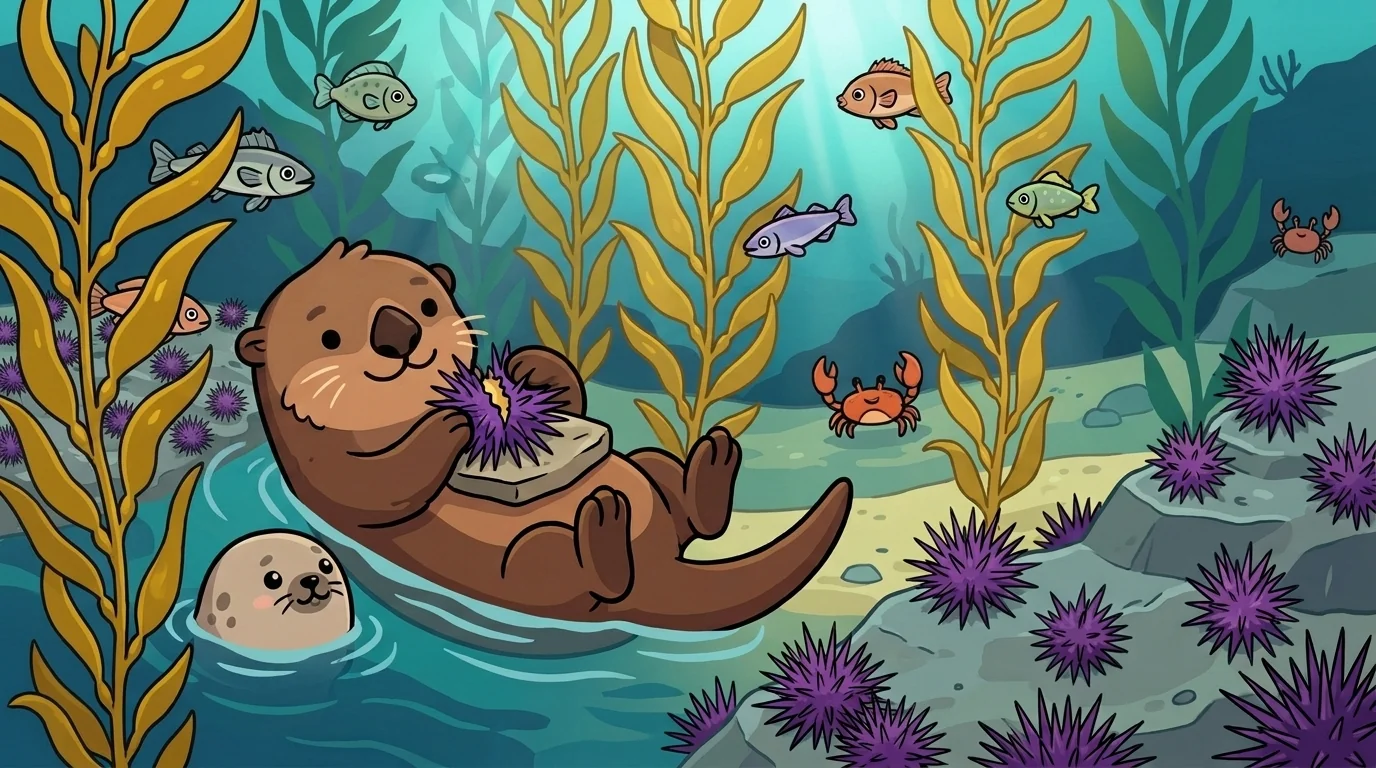
Later, softer, she came back. "When you're small," she said, "in something this huge — how do you believe you're one of the ones that matters, and not just… one of the crowd?"
Kelp thought about the grey ruined cove, and the old otter, and the flat urchin-stone.
"You stop measuring by size and start measuring by what leans on you," she said. "That's the honest swap. I'm a small animal cracking snails. But a whole golden forest leans on me doing it. Small and world-holding aren't opposites." She floated back, calm among the swaying fronds. "When I look up through all this tall living kelp and let myself feel how much of it is standing because otters like me keep at our small, spiky, unglamorous job — I don't feel like one of the crowd. I feel like one of the pins. And so is everybody, somewhere. You just have to find the forest that's leaning on you."
The girl was quiet, then nodded — and Kelp saw something in her lift, light and steady and quietly glad, the way a frond lifts once the urchins are kept back and it can finally reach toward the light. She didn't look like one of the crowd anymore. She looked, Kelp thought with a warm rush, like a kid who'd just found out she was one of the pins — small, and needed, and proud of it. That warm, settled, I-hold-something-up feeling — a kid discovering her smallness was exactly where her strength lived — was, to Kelp floating easy among the golden fronds, the very best thing the whole forest could grow.
Hear it as an audio drama
A short play starring Kelp, from BiomeForge. Different voices, same idea. Listen any time after you read.
Loading audio…
Read the drama script
- Narrator: From Spark and Anvil and BiomeForge — this is Kelp, in chapter 1 of the BiomeForge cast.
- Narrator: This drama uses an AI-generated voice. Voiced via Gemini 2.5.
- Narrator: This story covers ecosystems and Indigenous knowledge. Parents may want to listen first.
- Narrator: Kelp swayed in the cold current, a towering underwater forest, and told how she'd once nearly disappeared.
- Sea Turtle: You're the biggest thing here. Surely you're what holds this whole place together.
- Kelp: You'd think so — but no. There's a word from stone arches: the keystone, the single wedge that holds all the others up. Pull it, and the whole arch falls. My keystone isn't me. It's the sea otter.
- Sea Turtle: A little otter holds up an entire forest?
- Kelp: Follow the chain. Otters eat sea urchins. Urchins eat me. With otters here, the urchins stay in check and my forest grows tall, sheltering a thousand species.
- Sea Turtle: And without the otters?
- Kelp: The urchins explode. Unchecked, they mow my whole forest down to bare rock — an urchin barren. One missing predator, and everything that lived here is gone. That's why "keystone" is the right word — removing it doesn't lose one stone, it collapses the arch.
- Sea Turtle: Can a fallen forest ever come back?
- Kelp: That's the good news. When otters were protected and returned, they ate the urchins back down and my forests regrew. Restore the keystone, and the arch can rebuild — but only if you protect the RIGHT species.
- Sea Turtle: So saving a whole forest can mean saving one small animal that never touches the trees.
- Narrator: And Kelp swayed, whole and towering again, in a current patrolled once more by the small furry thing that quietly holds up the arch.
- Narrator: You've been listening to a Spark and Anvil chapter, written by the Spark and Anvil writing team for ages 9 to 14.
- Narrator: Apps stay free forever.
- Narrator: Curriculum aligned to Next Generation Science Standards.
- Narrator: If anything in this story brought up big feelings, talking to a trusted adult helps. You can also reach support lines anytime.
- Narrator: With cultural-knowledge credit to the Indigenous, traditional, and community knowledge holders whose practice and care this story draws on.
- Narrator: Released under Creative Commons BY-NC-SA 4.0 for educational reuse. Visit Spark and Anvil for the full transcript.
The BiomeForge ensemble
Kelp is one of the friends in BiomeForge. Each friend shows you one idea by how they act; meet them all and you have the whole subject.
-
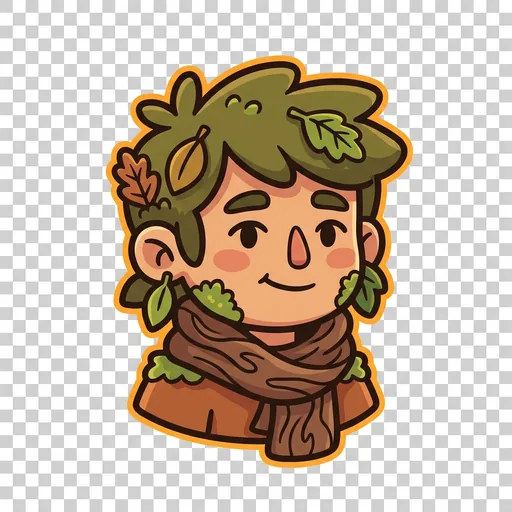
Canopy
Forest biomes (temperate, tropical, taiga)
-
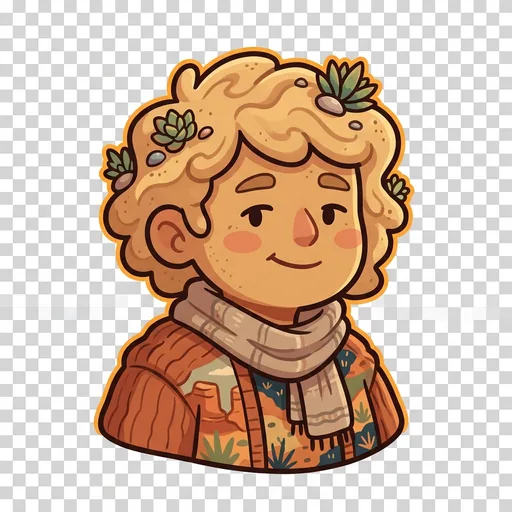
Dune
Desert biomes (hot, cold, semi-arid)
-
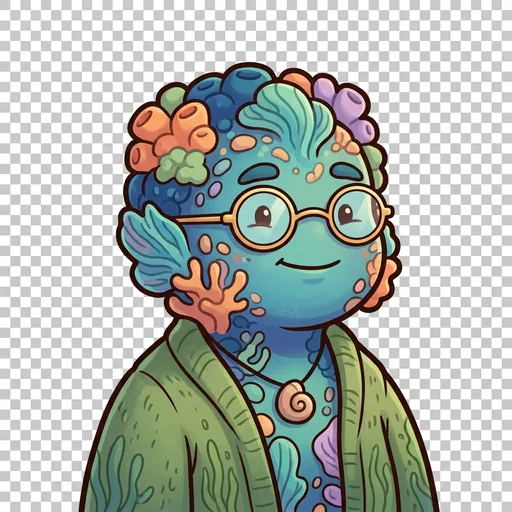
Reef
Aquatic biomes (coral reef, freshwater, marine)
-
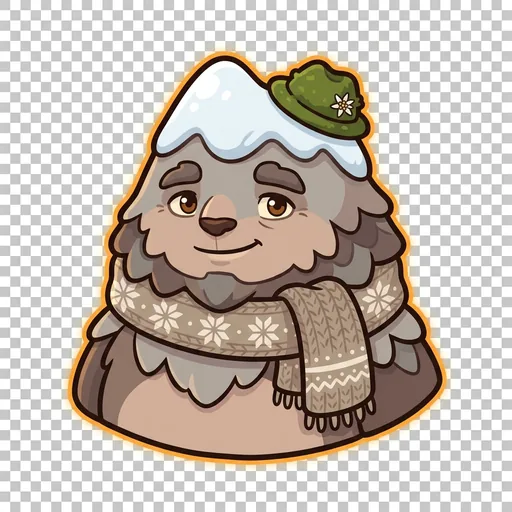
Ridge
Mountain / alpine / vertical-zonation biomes
-
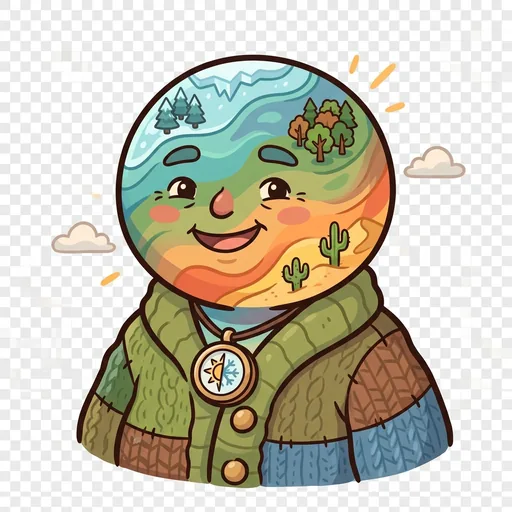
Flux
Climate-biome mapping (where biomes shift with climate)
-
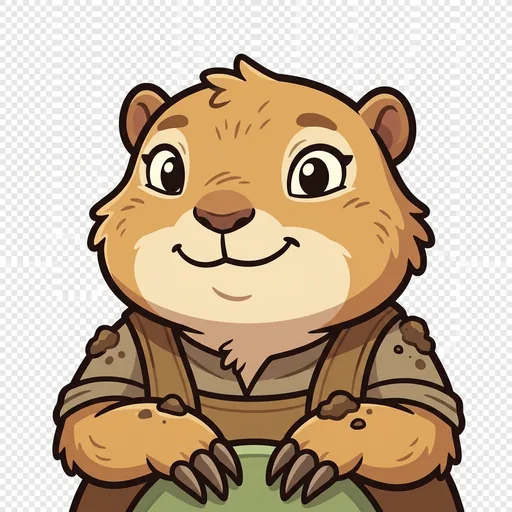
Burrow
Ecosystem engineers — some animals build homes for a hundred others; dig, and the neighborhood moves in
-
Graze
Keystone herbivores + grasslands — a grassland needs its grazers; eat, move on, keep the prairie alive
-
Marsh
Decomposition + nutrient cycling — nothing is wasted; the dead feed the living, the water remembers
-
Silt
Sediment + ecological succession — new land is built one grain at a time; life moves in the moment it's ready