
Splice
MATH↔ELA BRIDGE — structure-metaphor connection (sequence + symmetry in writing; math is the bones). The cross-curricular primitive of *the bridge where math underwrites the literary architecture.*
Loading audio…
Press play to listen along. The line being read lights up as you go.
Show full transcript
Loading transcript…
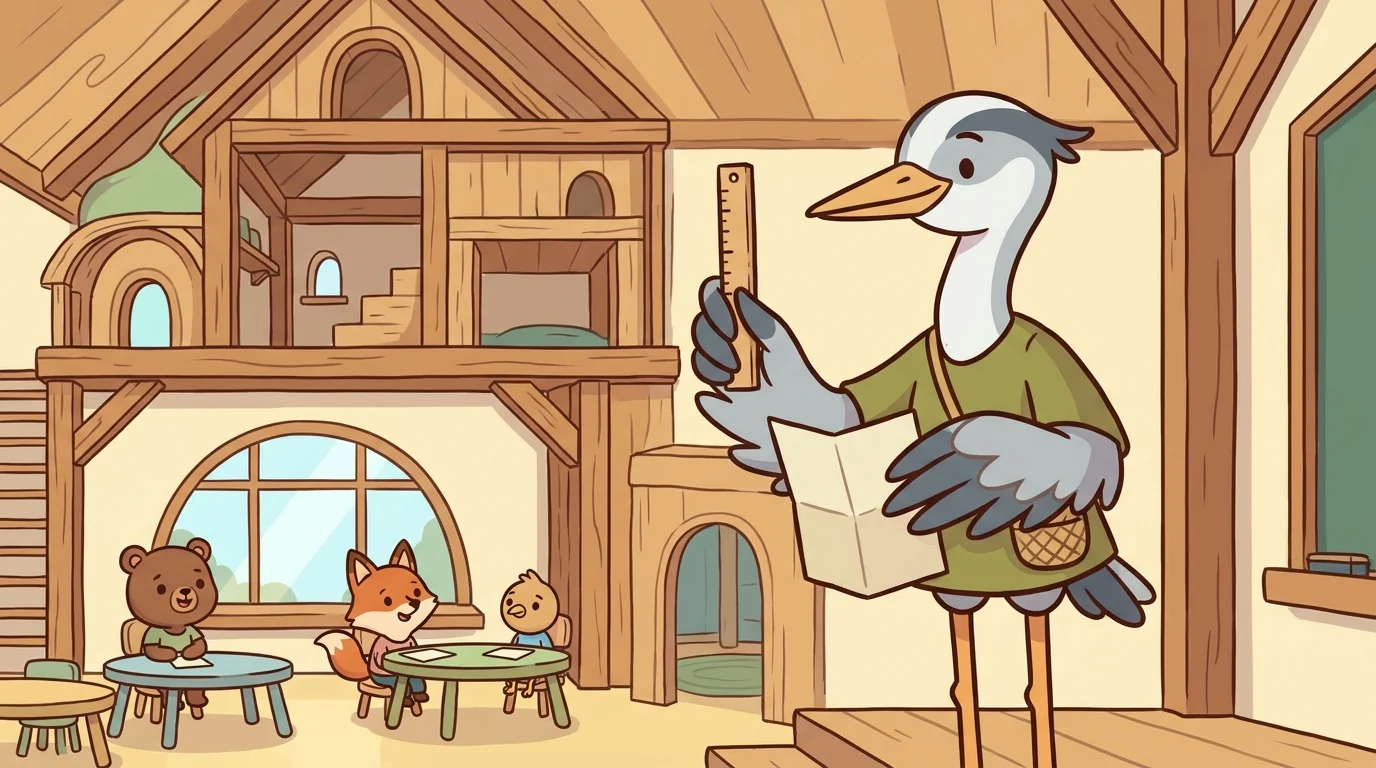
Splice unfolded the little poem on the table, drew the notched wooden line-counter from her wing-pocket, and laid its edge against the first line. She was a long-legged heron-tween, grey-and-white, patient, unhurried, and she counted the way other creatures breathe — without thinking about it, out loud, one line at a time. "One. Two. Three." The notched stick stepped down the poem. "...Thirteen. Fourteen." She looked up, satisfied. "Fourteen lines. That's a sonnet. That's a number hiding in a poem."
She ran the counter along a single line next, ticking off the beats. "Ten syllables. Five soft-loud pairs." She tapped her foot to it — da-DUM, da-DUM — and the rhythm of the notches and the rhythm of the line marched together.
Her friend Pier looked for the people inside a table of numbers. Splice looked for the numbers inside a poem — the counted frame under all the feeling. Most readers only saw the surface: the words, the pictures, the ache in the chest at the last line. Splice saw the surface too. She just also saw the frame holding it up, the way you can look at a house and still know there are beams inside the walls. She folded the poem and slid it back into her pocket. The next text would get counted the same patient way.
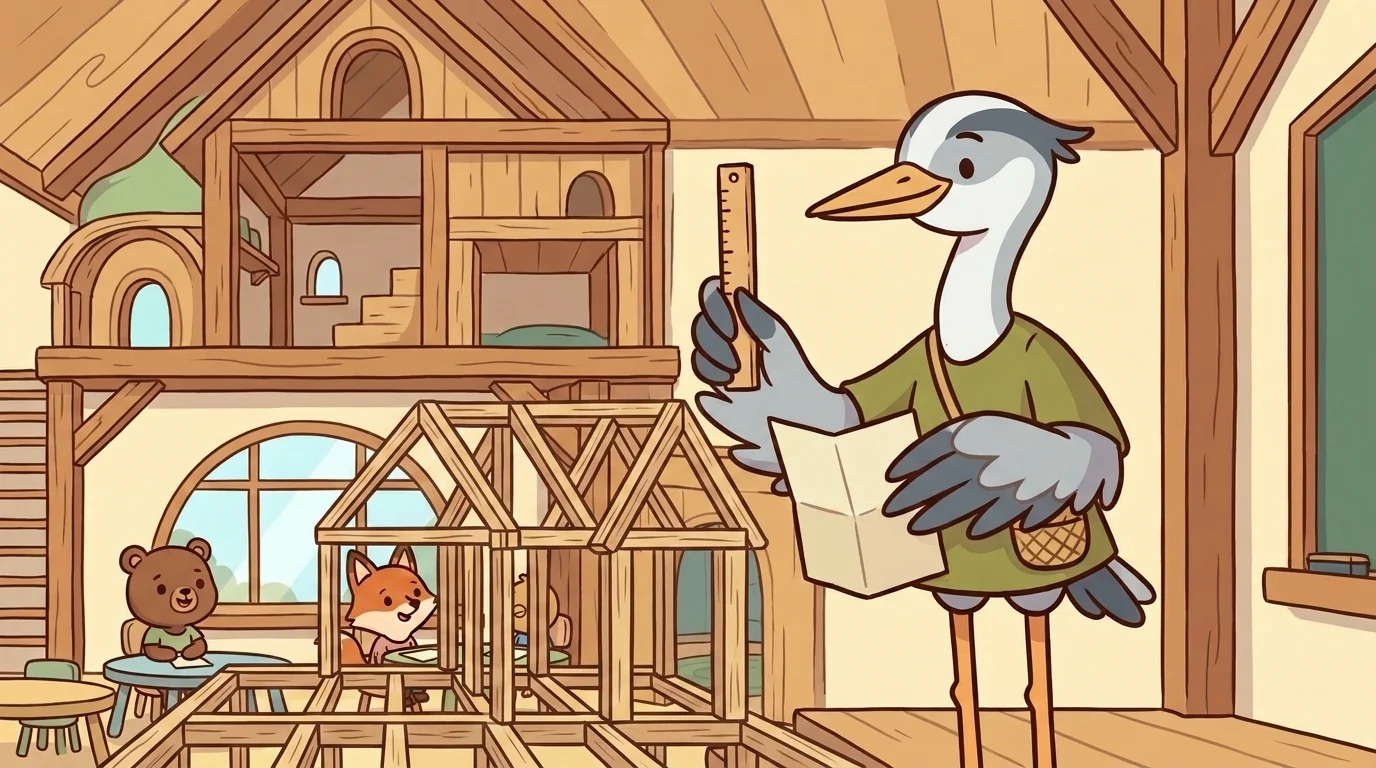
She learned that counting was the craft, not a thing beside it, in her family's workshop.
Splice's family were the village poet-counters — the herons who checked the old ballads line by line and syllable by syllable so the verses that went into the village's memory were built true. When Splice was six she recited a ballad she loved and her mother stopped her halfway.
"Beautiful," her mother said. "Now count it."
Splice counted the syllables on her claws and found a line that ran long — eleven where the pattern wanted ten. "It still sounds nice," she said.
"It does. And it's cracked." Her mother showed her how the extra syllable made the line stumble against all its neighbors, a beam a little too long, throwing the frame off. "A poet-counter who lets a cracked line pass puts a flaw into the village's memory forever. A poet-counter who counts keeps the ballads standing." She handed Splice her first line-counter, the notched stick worn smooth by other herons' claws. "The feeling is the roof. The count is the beams. You can love the roof all you want — but if you don't count the beams, one day the whole thing sags."
Splice spent that year counting every ballad the village owned, learning to feel the crack before her claws even reached it. By seven she could hear a long line the way Cable could hear a sour bell — and she trusted the counter, not just the feeling, to prove it.
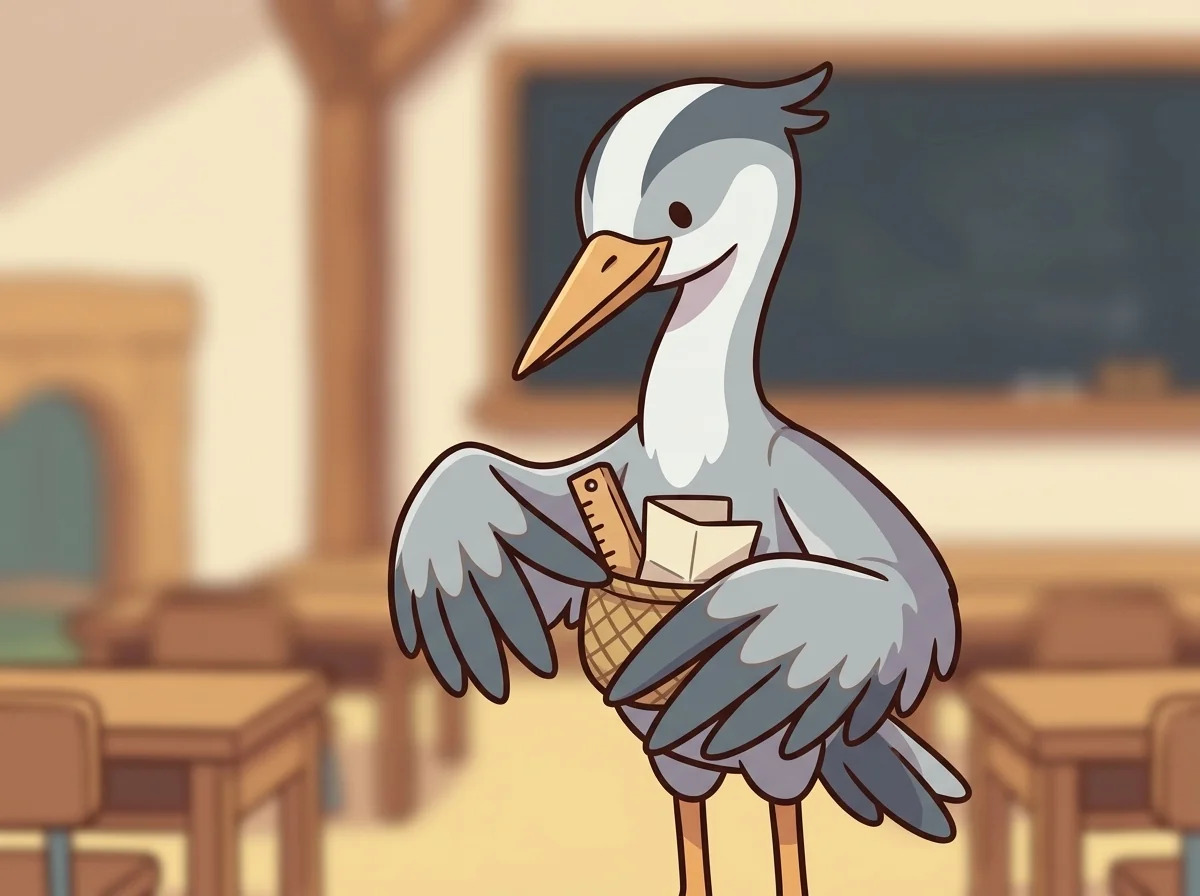
She walked to the BridgeForge academy the summer she turned twenty-two, and Archie handed her a poem with no title and one flat question: "Anything true you can tell me about this, without reading it for meaning?"
Splice took out her counter and walked it down the lines without so much as reading the words. "Fourteen lines," she said. "Ten syllables each — I'll check three at random." She did; they held. She marked the last sound of each line with a claw-tick in the margin — same sound here, same sound there. "The rhymes go A-B-A-B, C-D-C-D, and so on, then a pair at the end. And here—" she pointed to the ninth line "—the argument turns. It always does, in one of these, around line nine." She handed it back. "I haven't told you what it means. I've told you it's a sonnet, and where its hinge is. Now when you do read it for meaning, you'll feel the turn land, because I've shown you the beam it swings on."
Archie read the poem through, felt the turn arrive exactly where her claw had marked it, and looked at her differently. He hadn't wanted her to admire the poem. He'd wanted to see whether she could find the frame with her hands before her heart got involved — and she had, standing right there. Her workshop was waiting for her that afternoon.
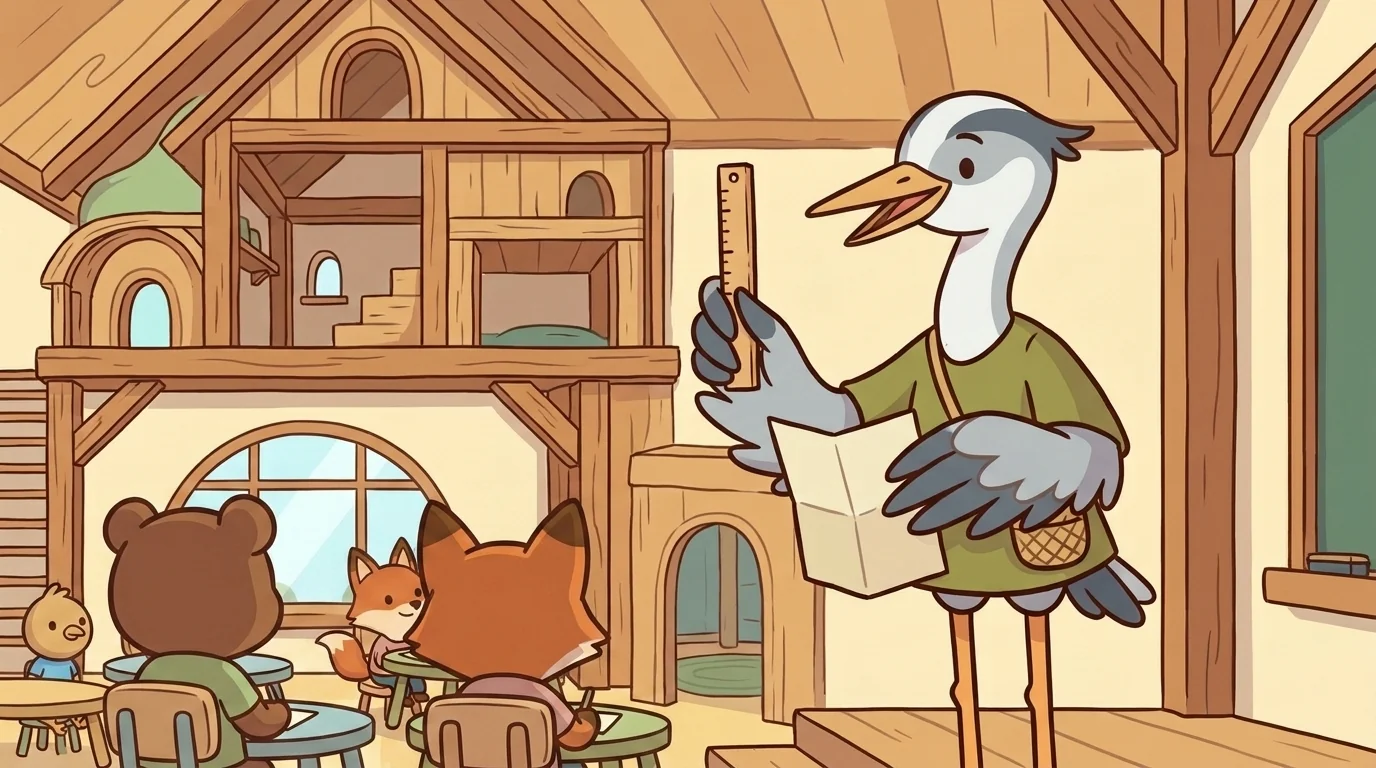
Her first lesson always opened with the counter and a challenge.
"Don't take my word for it," Splice told the heron-kits, sliding a sonnet down the bench. "Count it yourselves. Line-counter on line one." Claws and sticks fumbled down the page. "One... two..." A ragged chorus reached fourteen together, and Splice smiled. "Fourteen. Every time. That's your first hard fact about this poem, and you proved it."
Next she had them count syllables across one line — ten — and tap the soft-loud beat with a foot until the bench sounded like a slow heartbeat. "That heartbeat has a name, meter, but the name doesn't matter. The counting does." She showed them how a haiku runs five, then seven, then five, and had them clap a haiku's shape without a single word in it — just the counted frame, standing on its own.
Then she taught them the claw-tick trick for rhyme, marking matching end-sounds with letters down the margin until the A-B-A-B pattern appeared under their own claws. A kit gasped. "It's got a shape."
"It's got bones," Splice said. "And here's the part I need you to hold." She laid her wing flat on the poem. "The counting reveals the frame. It does not flatten the poem into arithmetic. A well-counted sonnet isn't a less beautiful sonnet — it's a better-read one, because now you feel exactly where the turn lands and why the last two lines hit so hard." She looked around the bench. "'Poems have patterns and numbers have patterns' — that's too loose to be worth anything. 'This sonnet is fourteen lines, ten syllables each, with the argument turning at line nine' — that you can check, and that's a real bridge." A quiet kit at the end, who'd come in sure she was bad at poems, ticked off her own fourteen lines and whispered fourteen to herself, wide-eyed.
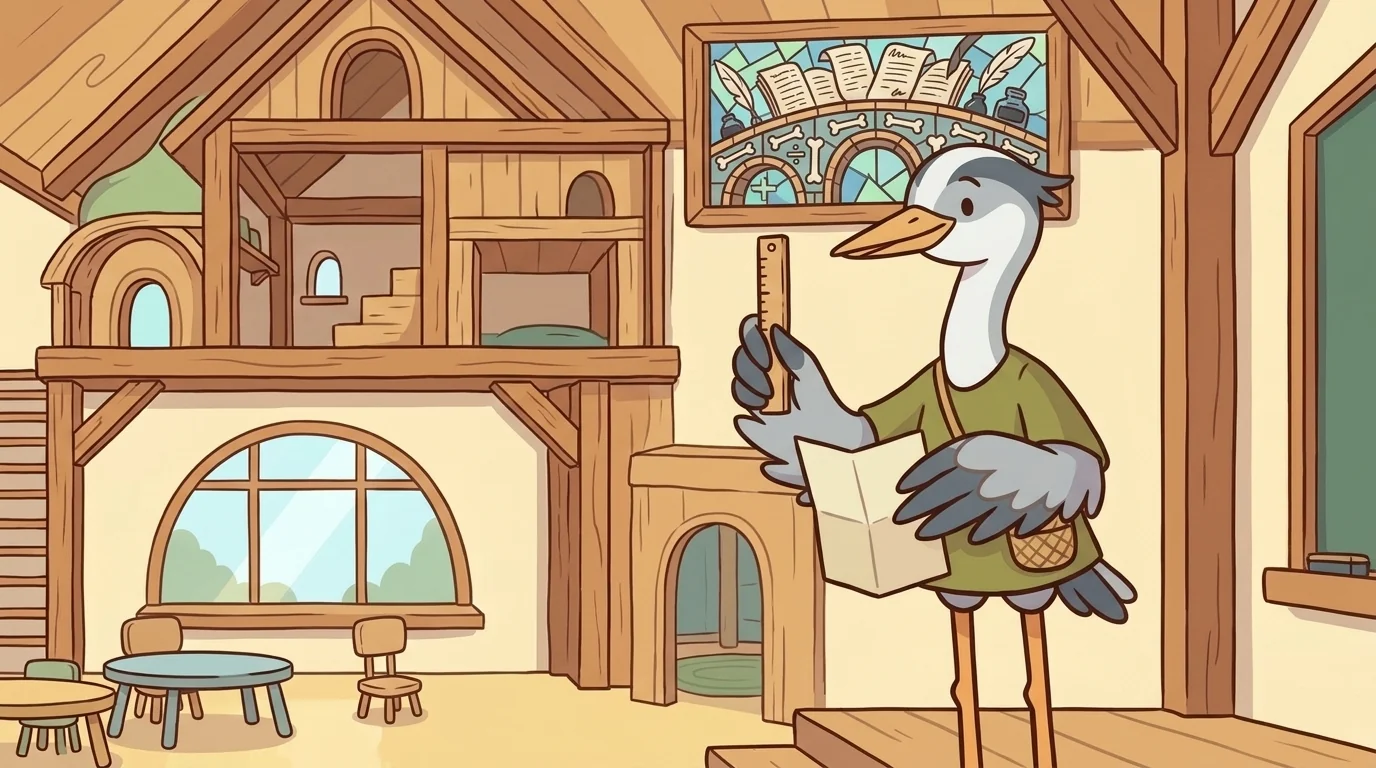
"Is it hard?" that same kit asked at the end, still holding her line-counter against the last line.
"You just did it," Splice said gently. "You counted the lines. The shape showed up. That's the whole move — the bones were always there, you only had to count to see them." She refolded the poem and tucked it into her wing-pocket.
The kit looked back down at the sonnet, and Splice watched her eyes go wide and glad as the fourteen counted lines and the surface meaning settled into the same poem at once — a secret unlocking quietly, the roof and the beams becoming one thing she could finally see whole.
That was the feeling Splice worked for: the moment a kid who'd walked in certain she was locked out of poems discovered there had never been a lock at all. It left Splice's chest light and warm and proud. The line-counter waited for the next text.
The BridgeForge ensemble
Splice is part of BridgeForge's distributed-narrative cast. Each character embodies a different curricular primitive; together they teach the full subject.
-

Truss
Math↔Science bridges — causal-evidential connection (measurement + replication; both sides need numbers)
-

Arch
Math↔Art bridges — proportion-aesthetic connection (golden ratio + symmetry; math you can SEE)
-
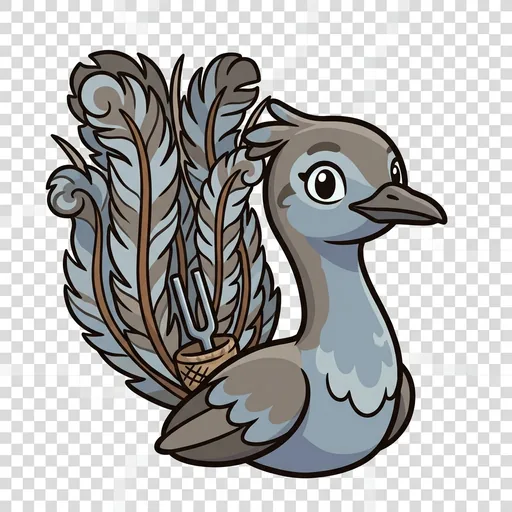
Cable
Math↔Music bridges — ratio-temporal connection (frequency ratios + rhythm; math you can HEAR)
-

Pier
Math↔Social-Studies bridges — data-narrative connection (statistics in history + civics; numbers + people)
-
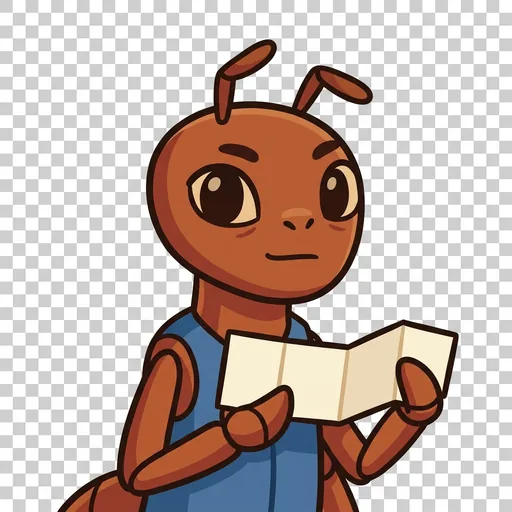
Girder
Math-computing bridge — order-of-operations is the same as sequence in code; math you can run
-

Rivet
Math-movement bridge — rate, angle, and trajectory; a jump is math in the air
-

Ballast
Math-health bridge — ratio, scaling, and balance; the right amount in the right proportion
-

Strut
Math↔Cooking bridge — proportional reasoning; a recipe is a ratio you can scale up or down
-

Trestle
Math↔Gardening bridge — spatial reasoning; a garden bed is geometry you can grow