
The Forcer
FORCER — *they freely choose the card you wanted them to choose.*
A story read by The Forcer
Loading audio…
Press play to listen along. The line being read lights up as you go.
Show full transcript
Loading transcript…
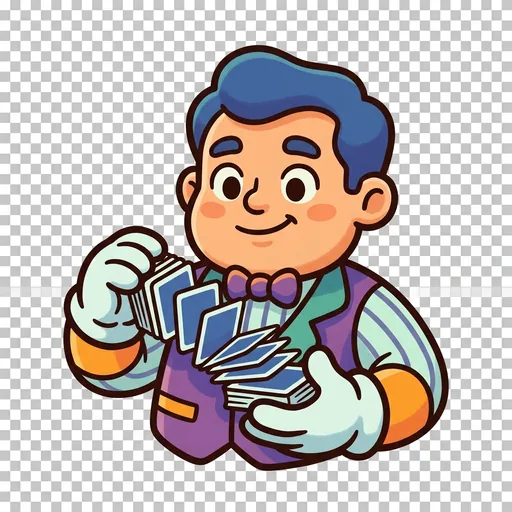
The living room was loud with the usual family noise — an aunt laughing at her own story, an uncle narrating a golf game nobody had asked about — and in the middle of it all, a small figure in a deep amethyst cape-vest fanned a deck of cards toward a wide-eyed seven-year-old.
"Pick a card," the Forcer said. "Any card."
The fan looked ordinary, a clean arc of red and blue backs. But the Forcer held it a certain way. One edge of the fan opened a hair wider than the rest. A thumb rested light on the cards below it, closing every gap but one. To the cousin reaching in, the whole deck looked equally reachable. Only one card was actually easy to take — the one sitting proud at the top of that single open gap.
The cousin's fingers hovered, drifted, and plucked a card from what felt like the middle.
"Got it?" the Forcer asked, not even glancing down.
"It's a good one!" the cousin whispered, clutching it to his chest.
The Forcer only smiled. They already knew which card it was. They had known before the fan even opened.
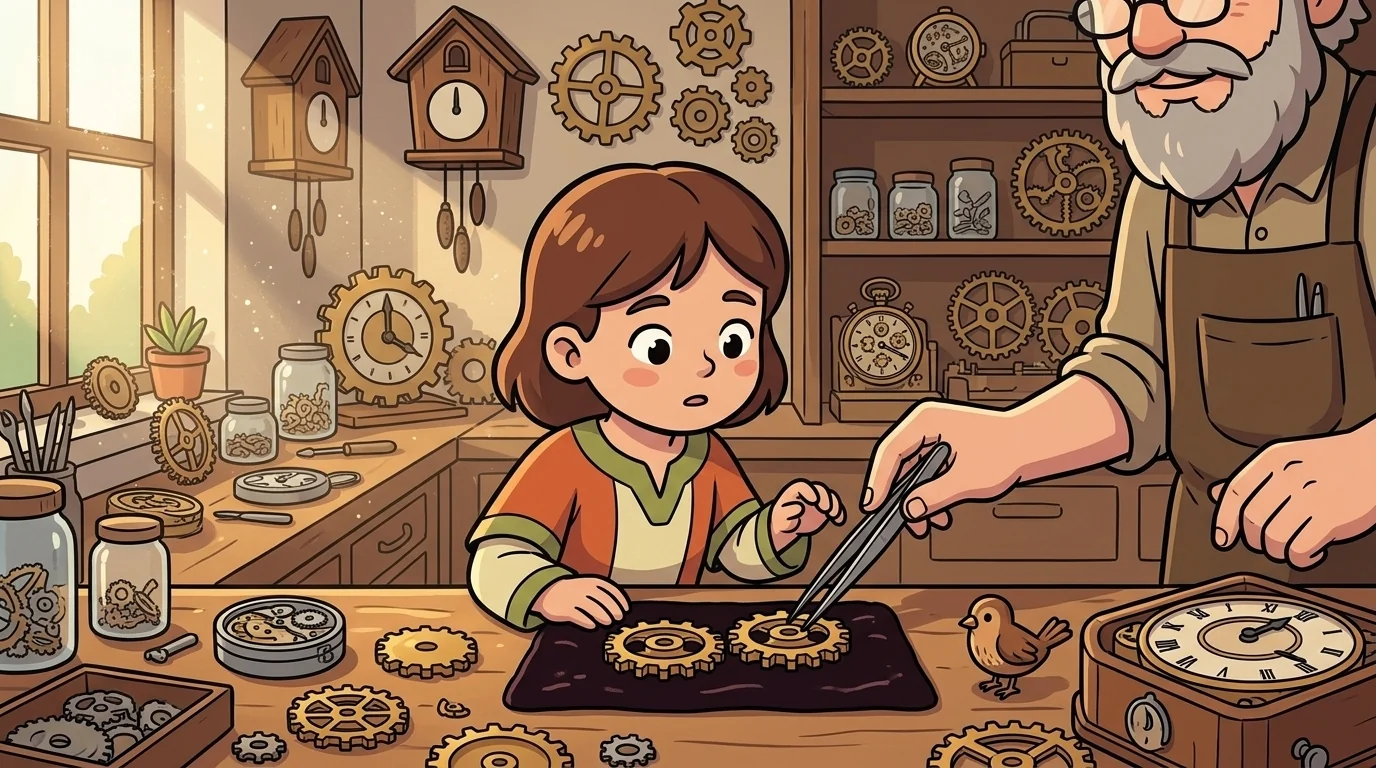
They had not always been this calm about it.
The first trick the Forcer ever tried, years earlier, had fallen apart in their hands. They'd wanted a friend to pick the queen of spades — had rehearsed the shuffle a hundred times in front of a mirror — but when the moment came, the friend reached past the queen and grabbed something else entirely. The Forcer had frozen, cards spilling, face hot. I did all that work, they'd thought, and it just came apart. All that practice for nothing.
They'd wanted, more than anything, to grab the friend's wrist and steer it. To just make them take the right card. But that felt wrong even in the wanting — like it would ruin the very thing that made a trick feel like magic instead of a shove.
An older performer had watched the whole disaster and hadn't laughed. She'd sat down beside them and said, quietly, "You were trying to force the person. That's the mistake everyone makes. You don't move the hand. You move the choices. You arrange things so the card they want to take is already the one you want them to take." She squared the spilled deck without looking at it. "They still choose. It has to feel free, or it isn't magic — it's just bossing someone around. The whole craft lives in that difference."
The Forcer sat with that for a long time. The freedom the spectator feels, and the design the magician does — not fighting each other, but folded together. Slowly the burning-cheeks feeling faded into something steadier. The work hadn't been for nothing. It had just been pointed the wrong way.
They came to CardForge as a young performer, carrying a worn deck and a script-card tucked in one pocket.
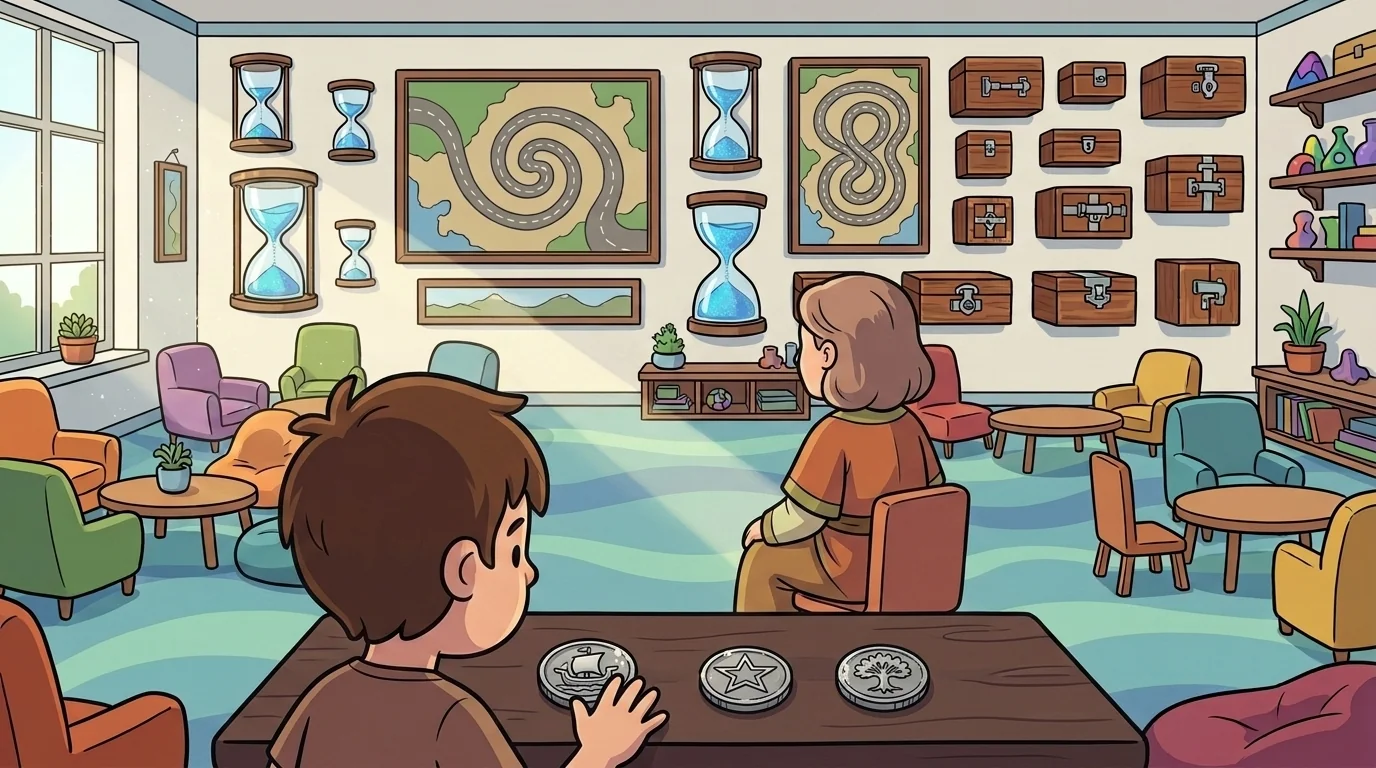
At the gate, the old head of the workshop didn't ask them to prove they were quick-handed. They asked one question. "What is a force?"
The Forcer didn't explain. They fanned their deck toward the head of the workshop — held it just so — and said, "Take one."
The head of the workshop reached out and drew a card, entirely at ease, and turned it over. Seven of hearts.
"You could have taken any of them," the Forcer said. "It felt open. But the way I held the fan, that was the only card that came out easy. You chose freely. I designed the choice." They set the deck down. "Both of those are true at the same time. That's the whole thing."
The head of the workshop studied the fan for a long moment, then handed the seven of hearts back. "You belong here," they said.
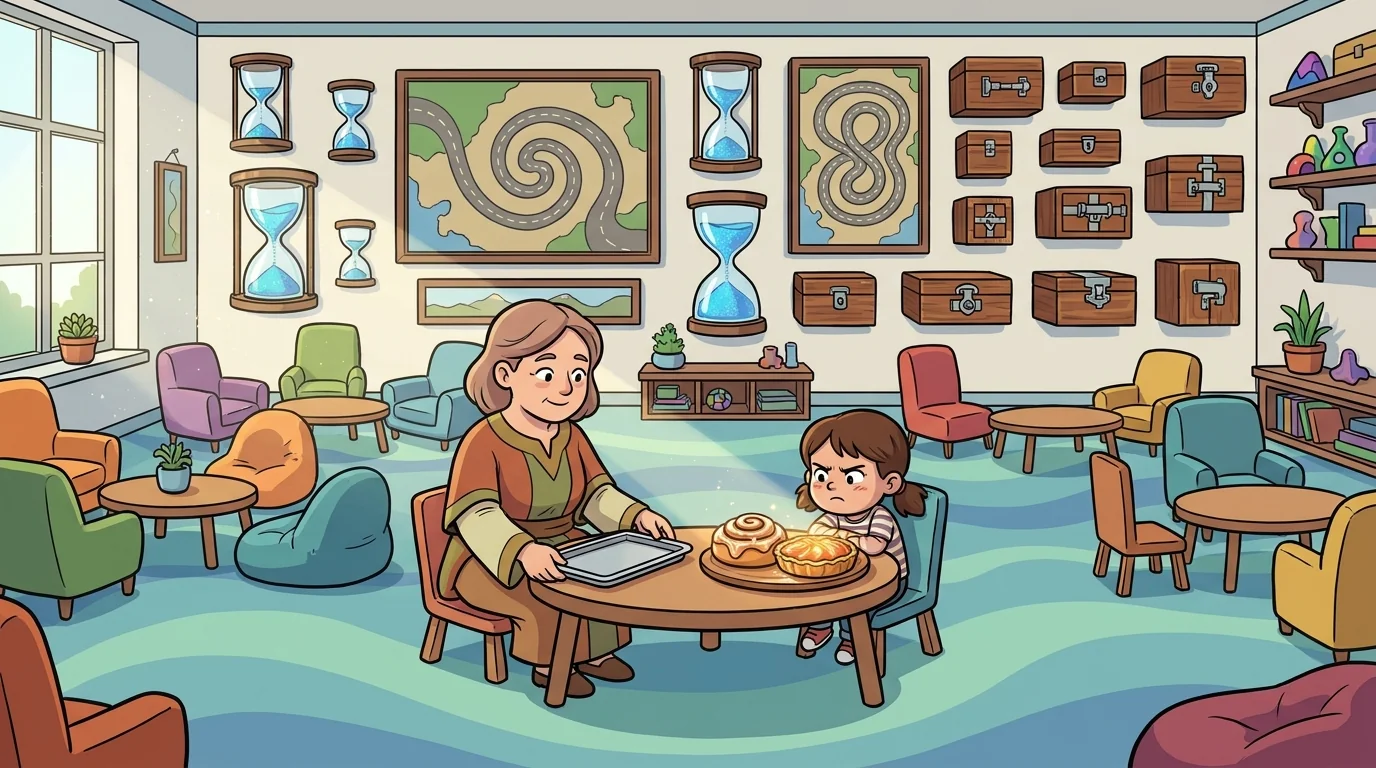
The Forcer's workshop was full of cousins and classmates who wanted to learn to fool people kindly.
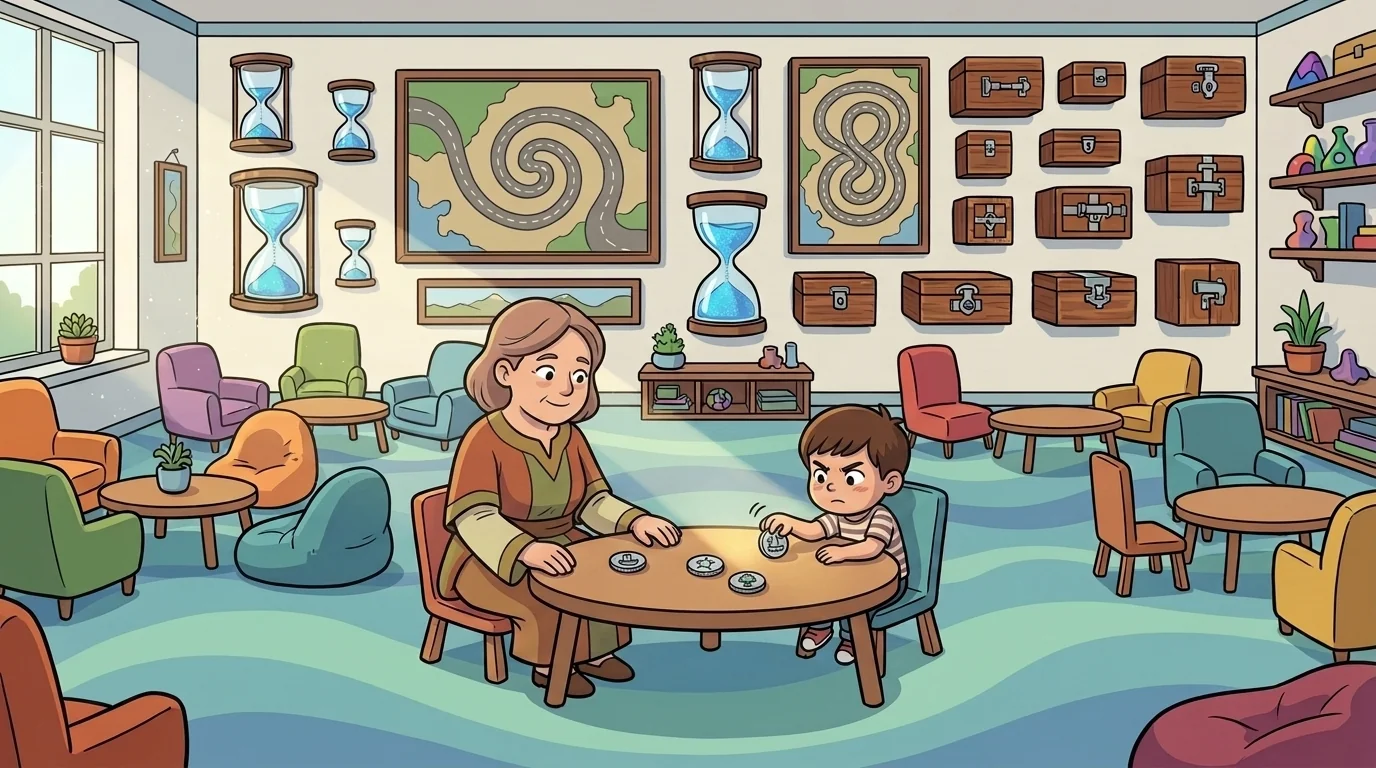
One afternoon a girl came in slumped and cross. She'd tried a force on her little brother and he'd picked the wrong card, and now she was sure she was hopeless. "I practiced so much," she said. "And he just — didn't take it. It's like all that work did nothing."
The Forcer knew that slump exactly. They'd worn it, spilling cards, years ago.
"Fan them for me," they said, handing over the deck. The girl fanned. "Now — which card do you want me to take?"
"The... top one? The king?"
"Then open a gap under it. Just a little. Close all the others with your thumb." They watched her fingers fumble, then find it. "Now offer it to me like you don't care which one I pick."
The Forcer reached in, easy and unhurried, and drew the king.
The girl's mouth fell open. "But — I didn't make you."
"No," the Forcer said. "You made the king the easy one. You left me free to take any card. I just happened to take the one you'd already set up." They handed it back. "You didn't waste your practice. You were pushing on the person. The second you push on the person, they feel it, and they pull away — same as your brother did. Push on the setup instead. Arrange the choices. Then step back and let them feel free."
She tried it again, slower. This time when the Forcer drew, they drew the card she'd meant. She laughed, startled and delighted.
"A shuffle can force," the Forcer said, dealing off a few. "A cut can force. A fan can force, a countdown can force, even a simple question — this hand or that one? — can quietly force, if you've set both hands the same way. Dozens of methods. Every one of them is the same idea in a different coat. Design the choices. Never grab the hand." They squared the deck. "And it only works one way. It's for wonder — for the moment someone asks to be amazed and you get to say yes. It is never for taking. No games for money, no cons, no cheating a friend out of what's theirs. A trick and a con use the same hands. What's different is whether the other person wanted to be fooled. When they want it, it's a gift. When they don't, it's just theft."
Later, when the workshop had emptied, the girl came back with one more question. She was quieter now.
"When they think it's a free choice," she said, "and it isn't — doesn't that feel like lying?"
The Forcer thought about the mirror, the spilled queen, the burning cheeks, and the older performer's steady voice.
"That's the honest worry," they said. "And the answer is in the wanting. A con hides the game so it can take something from you. A trick hides the game so it can give something to you — the wonder. Same secret, opposite direction." They looked toward the window. "There's a feeling right before the reveal — you're holding the whole thing in your chest, the setup and the secret and the surprise, and the other person doesn't know yet, and you get to be the one who makes their face light up. That held breath isn't sneaky. It's the most generous kind of patience there is. You did all the quiet work so they get the loud part."
The girl nodded slowly, and the Forcer watched the slump lift off her shoulders — the same way, years ago, their own had.
They didn't say the rest aloud, but they thought it, warm and sure: the trick was never fooling the person. It was arranging the world so gently that they walked into the wonder on their own two feet, and thought the whole beautiful thing was theirs.
The CardForge ensemble
The Forcer is part of CardForge's distributed-narrative cast. Each character embodies a different curricular primitive; together they teach the full subject.
-

The Finesseur
Finesse (force an opponent's high card via positional play; bridge / hearts / spades)
-

The Squeezer
Squeeze (force a discard that gives up a winner; advanced bridge + hearts)
-

The Endplayer
Endplay (throw opponent in to force a losing lead; bridge / hearts / whist)
-
The Counter
Card-counting / pip-tracking (track played cards to deduce remaining hands; gin / bridge / blackjack-style)
-
The Long-Suit
Suit establishment (set up a long suit to run for tricks late in the hand; bridge / whist / spades)
-

The Bluffer
Deception under uncertainty (poker betting; representing a hand you don't have)
-
The Discarder
Strategic discard (hearts: avoid points; spades / gin / rummy: shed dead wood)
-

The Trumpkeeper
Trump management (when to ruff, when to hold; whist / spades / euchre / pinochle)
-
The Shuffler
False-shuffle / stack management (control card order while appearing to randomize; mathematical card magic)