The Long-Suit
Play out the opponent's cards in your long suit, then your small cards win
A story read by The Long-Suit
Loading audio…
Press play to listen along. The line being read lights up as you go.
Show full transcript
Loading transcript…
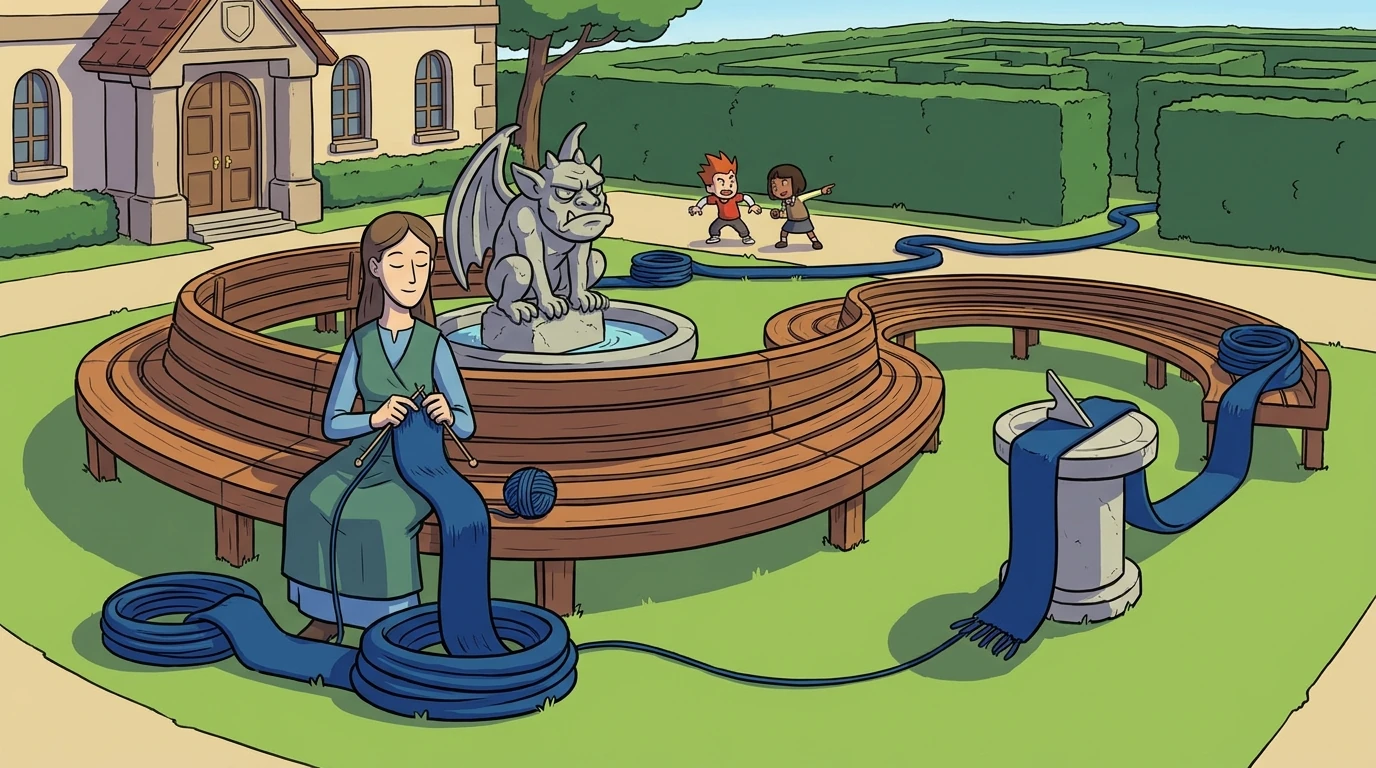
The Long-Suit moved with a quiet, deliberate grace, like a heron wading through shallow water. Their long, slender arms seemed to stretch even further when they reached for the cards, their fingers surprisingly nimble. They wore a vest the color of warm marsh-green, striped with soft reed-yellow, and it always seemed a little too big, as if they were still growing into it. Tucked into one pocket was a small, worn length-tracker, and in the other, an establishment-card. These weren't for magic tricks, but for something far more intricate: the card-craft of suit establishment, which The Long-Suit called LONG-AT-THE-FINISH.
The Long-Suit was small, but their presence felt large, especially when they were focused. Their eyes, a deep, thoughtful brown, were always attentive to the length of each suit in a hand of cards. They had a favorite saying, almost a mantra: "Play out the opponent's cards in your long suit, then your small cards win."
This was the core of what The Long-Suit taught. Imagine a game like bridge, whist, or spades. These weren't games played for cash stakes, but for the sheer challenge of strategy, for the mental gymnastics of out-thinking your opponents. The Long-Suit showed how patience and foresight could turn the weakest cards into winners.
"Alright, everyone," The Long-Suit said, their voice calm and even. "Today, we're going to talk about suit establishment. It's about seeing the end of the hand from the very beginning."
They laid out a sample hand on the table. "Let's say you're dealt six cards in a single suit—spades, for example. Small ones: a two, a three, a five, a six, a seven, and a nine. No Ace, no King, no Queen. Nothing strong."
The Finesseur, who loved flashy, high-card plays, frowned. "Seriously? Just those tiny spades? What are you even thinking?"
The Long-Suit nodded, unperturbed. "Exactly. Most people would look at this and think, 'Useless.' But watch." They tapped the small length-tracker on their vest. "If the other players have, say, three spades each, then after three rounds of playing spades, they'll have no more of that suit left. Their stock of spades will be gone."
"But how do you make them play their spades if you don't have the highest ones?" The Counter asked, always focused on the mechanics.
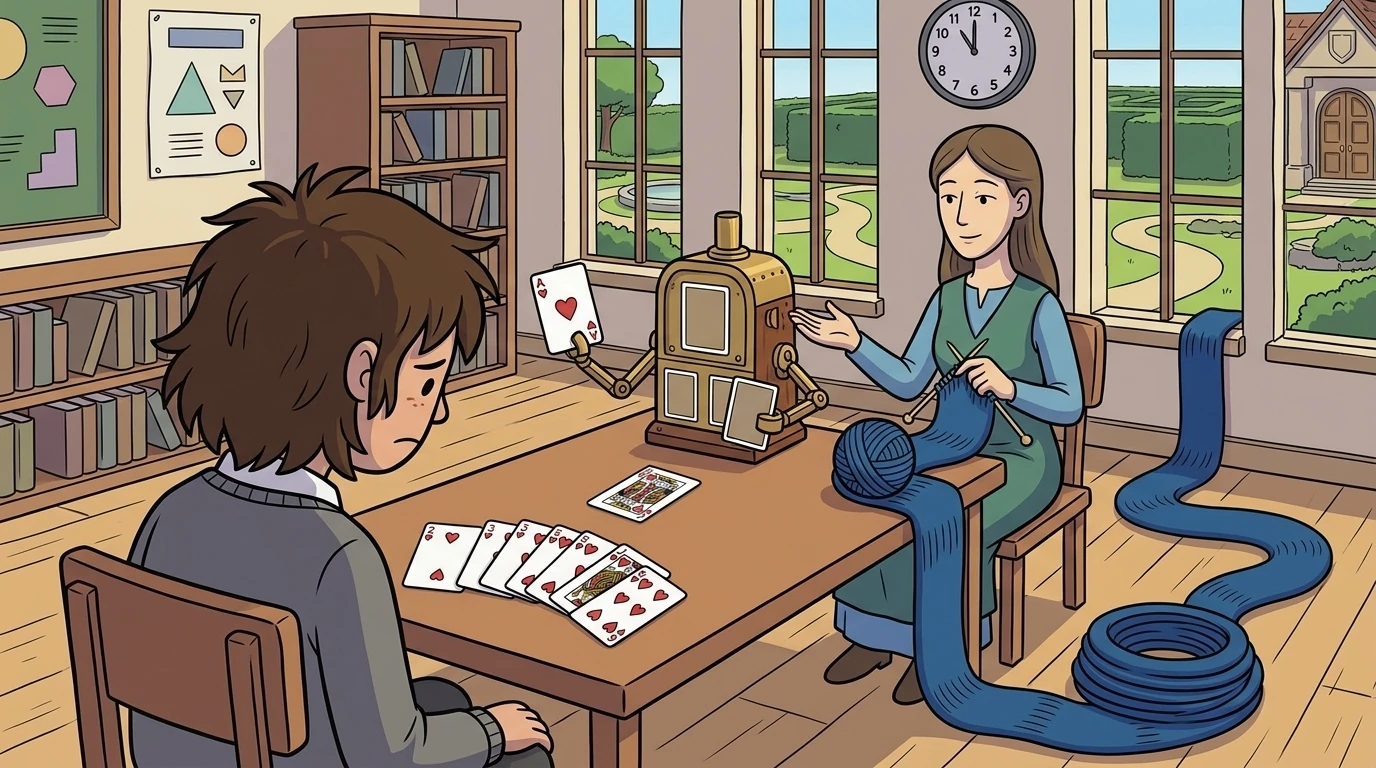
"That's the work," The Long-Suit explained, picking up their imaginary hand. "You lead the suit. You play a spade. The rules of these games say that if you have a spade, you must play a spade. It's called 'following suit.' So, even if you play your two of spades, and someone else plays their Ace, you've still achieved something important."
"You've burned one of their spades," The Finesseur murmured, starting to catch on.
"Exactly," The Long-Suit confirmed. "Each time you lead a spade, and everyone else follows, you're burning through their supply. You're emptying their hands of that suit. The setup is the real effort here. You might lose those first few 'tricks'—the rounds where the highest card played wins. But you're playing for something bigger."
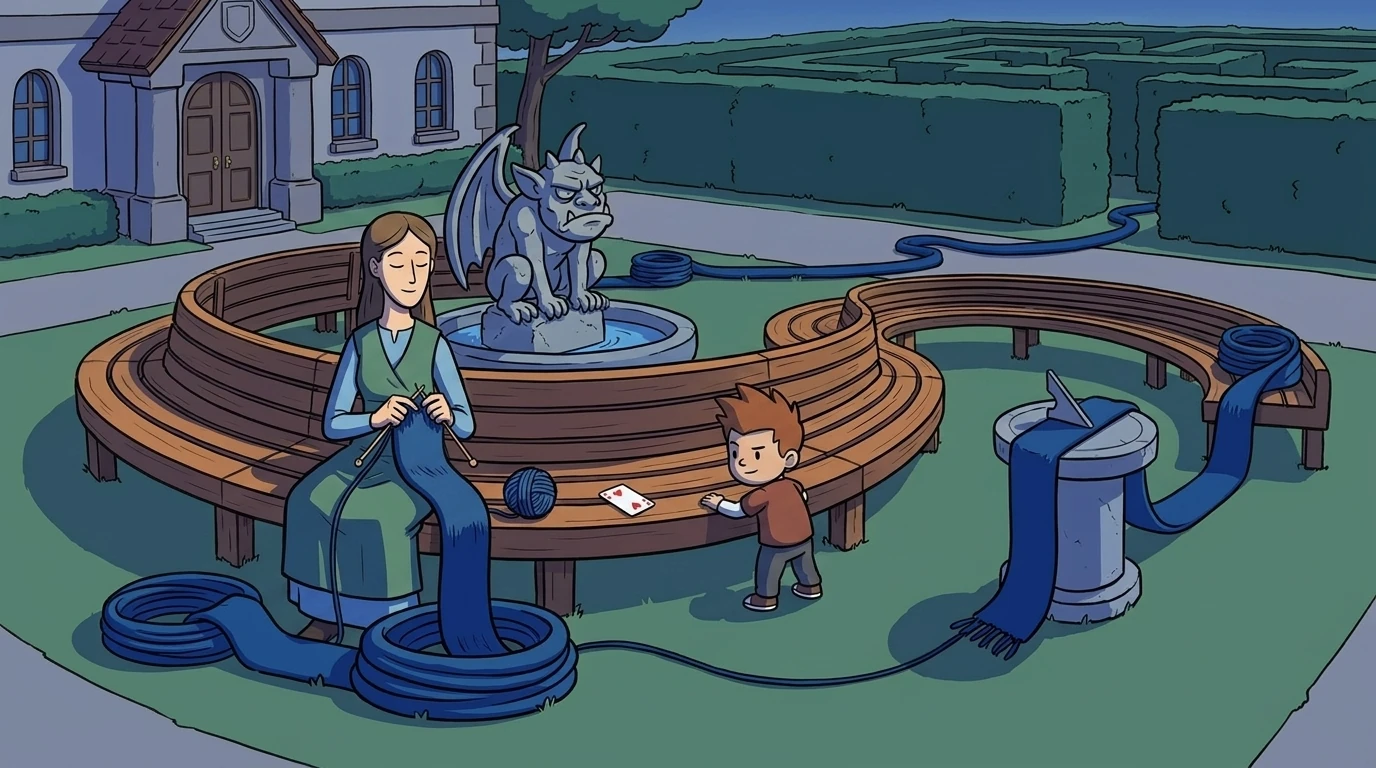
They paused, letting the idea settle. "By the end of the hand, when everyone else has run out of spades, your last three small cards—your two, three, and five—become unstoppable. They can't be beaten because nobody else has any spades left to play against them. Three tricks won, not by strength, but by patience and planning."
The Counter nodded slowly. "Length wins late. The small cards become the strong cards once the opponents are stripped."
The Long-Suit gave a slight shrug. "Length beats strength at the finish. That's the whole rule." They held up the establishment-card, a simple diagram showing a suit dwindling down to small, victorious numbers. "It's long-term planning. It's about leading a suit because it's long, not because it's strong. It's about accepting that the work comes first, and the payoff comes later."
This mindset was the opposite of quick wins or lucky breaks. It was about seeing the whole game, not just the next move. It was the satisfaction of a puzzle solved, of a carefully laid plan unfolding exactly as intended. The Long-Suit's craft echoed the positional pawn-chains of StrategyForge, where you build a strong structure now to gain an advantage much later. It felt like the endgame studies in GambitTales, where small material advantages compound with precise technique. And it was pure PuzzleLogic, where the effort to constrain the problem is the true work, and the answer simply falls into place.
Hear it as an audio drama
A short play starring The Long-Suit, from CardForge. Different voices, same idea. Listen any time after you read.
Loading audio…
Read the drama script
- Narrator: From Spark and Anvil and CardForge — this is The Long-Suit, in chapter 1 of the CardForge cast.
- Narrator: This drama uses an AI-generated voice. Voiced via Gemini 2.5.
- Narrator: The Long-Suit is a careful heron-cardsharp-tween, dressed in a chunky dealer-vest. It is warm marsh green with soft reed yellow stripes.
- Narrator: Its arms are long. Its focus is always on the late hand, on exhausting the opponents' cards.
- The Long-Suit: I am The Long-Suit. What I teach is suit establishment, the craft of being long at the finish.
- The Long-Suit: The move is simple: play out the opponent's cards in your long suit, then your small cards will win.
- Narrator: By leading a suit repeatedly, even with small cards, you can force opponents to play all their cards in that suit.
- The Long-Suit: You lead a suit because it is long, not because it is strong. The work is now, the payoff is later.
- Narrator: At the academy trials, the proctors dealt it a hand with six very small spades. No high cards at all.
- The Long-Suit: The others saw only weakness. But the proctor simply asked me, "What is the plan?"
- The Long-Suit: I will lead my small spades three times. I will exhaust their supply. My remaining cards will be winners.
- Narrator: And they were. The smallest cards in the deck took the final three tricks of the hand.
- The Long-Suit: My small cards became the strong cards once the opponents were stripped of theirs.
- Narrator: The work front-loads and the payoff back-loads. That is the craft of the long suit.
- The Long-Suit: Length beats strength at the finish. That's the whole rule.
- Narrator: You've been listening to a Spark and Anvil chapter, written by the Spark and Anvil writing team for ages 9 to 14.
- Narrator: Apps stay free forever.
- Narrator: Curriculum aligned to Common Core and Next Generation Science Standards.
- Narrator: Released under Creative Commons BY-NC-SA 4.0 for educational reuse. Visit Spark and Anvil for the full transcript.
The CardForge ensemble
The Long-Suit is one of the friends in CardForge. Each friend shows you one idea by how they act; meet them all and you have the whole subject.
-

The Finesseur
Finesse (force an opponent's high card via positional play; bridge / hearts / spades)
-

The Squeezer
Squeeze (force a discard that gives up a winner; advanced bridge + hearts)
-

The Endplayer
Endplay (throw opponent in to force a losing lead; bridge / hearts / whist)
-
The Counter
Card-counting / pip-tracking (track played cards to deduce remaining hands; gin / bridge / blackjack-style)
-

The Bluffer
Deception under uncertainty (poker betting; representing a hand you don't have)
-
The Discarder
Strategic discard (hearts: avoid points; spades / gin / rummy: shed dead wood)
-

The Trumpkeeper
Trump management (when to ruff, when to hold; whist / spades / euchre / pinochle)
-

The Forcer
Magic forcing (the spectator "freely chooses" the card you intended)
-
The Shuffler
False-shuffle / stack management (control card order while appearing to randomize; mathematical card magic)