Magna
MAGNESIUM (Mg) — *bold, ceremonial; burns bright white; chlorophyll core.* Two extra outer-shell electrons; gives both away to become Mg²⁺; bright-white-flame combustion; the chlorophyll-anchor element of green plants.
Loading audio…
Press play to listen along. The line being read lights up as you go.
Show full transcript
Loading transcript…
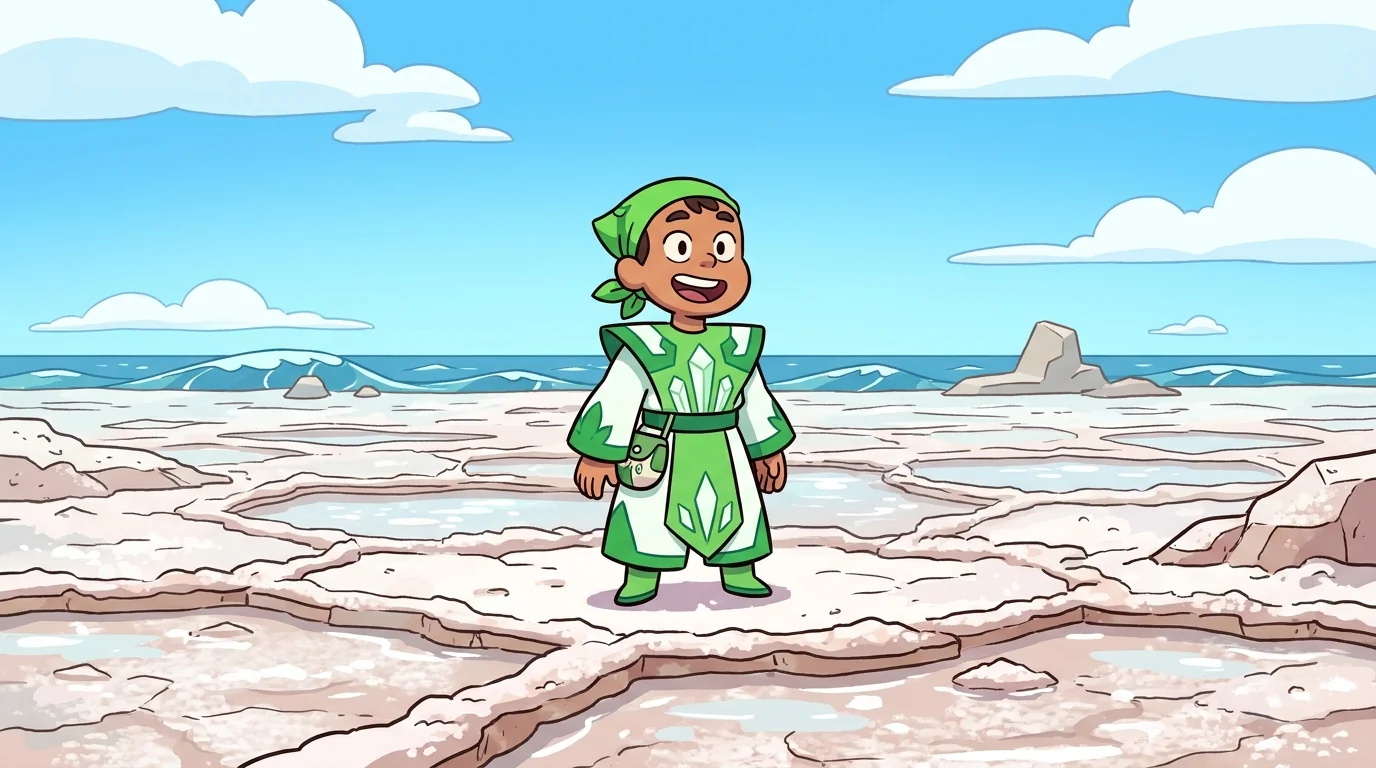
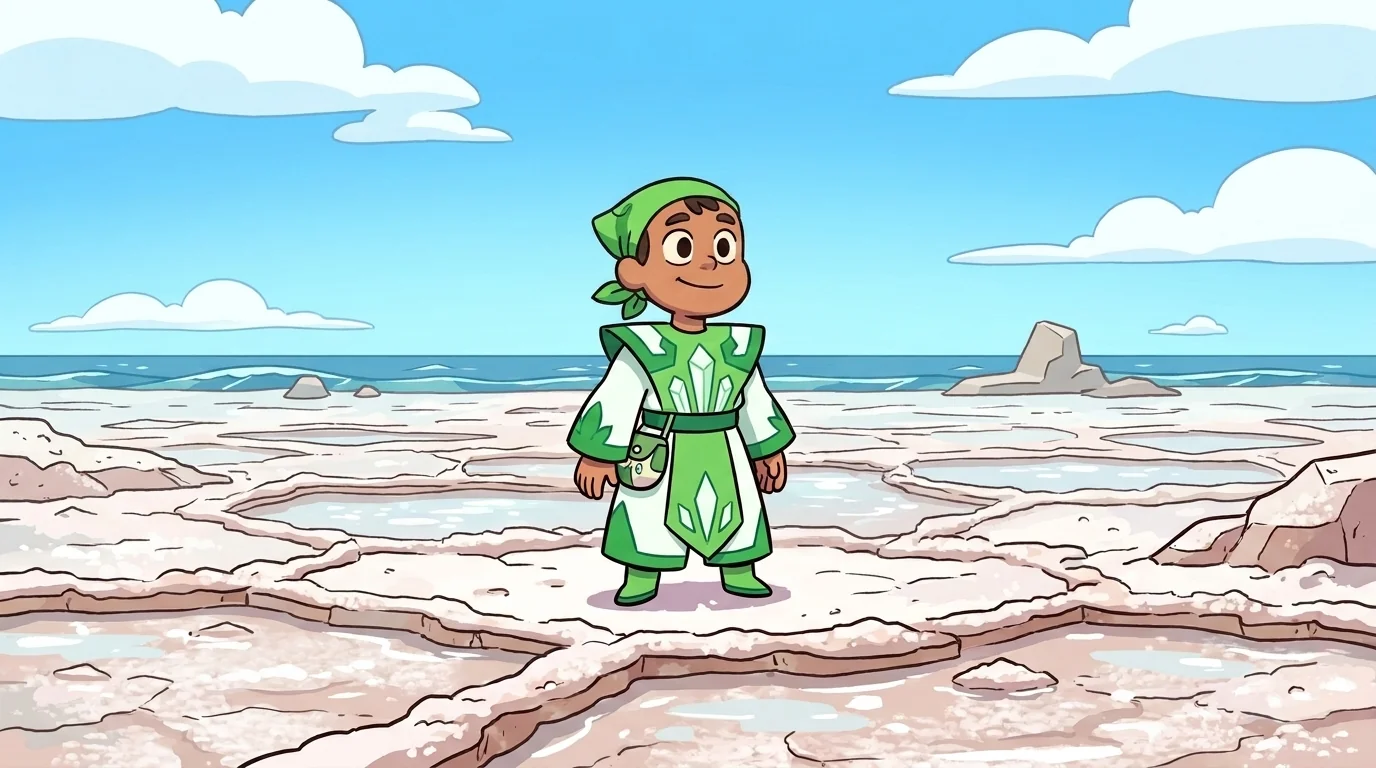
Magna was a crane-tween. She wasn't very big, but she held herself tall. A pure-white feathered crest sat on her head. It shimmered like fresh snow.
Magna was tall for her age. Her body was grey, like a smooth river stone. Her belly was cream-colored. A bright white crest sat on her head, shining like a tiny crown. She had long, graceful legs. Her eyes were steady, always looking straight ahead. She always stood in a careful, important way. Her special thing was that pure-white crest. It was a small fan of white feathers. It stood straight up, catching the light really well. It made you think of two big ideas. First, the bright, exciting flash of burning magnesium. Second, the soft, white light that helps chlorophyll work inside plants.

This was the main point about Magna. She was like the element magnesium (Mg). Magnesium atoms have two extra tiny bits. We call these 'electrons.' These two electrons are on its outer shell, like tiny guards on the edge of a castle. Magnesium doesn't need them to stay balanced. It's like having two extra toys you don't play with. (Sodi, another element, only has one extra electron.) Like Sodi, magnesium gives its extra electrons away. But magnesium gives away two electrons at once. When magnesium gives away both electrons, it changes. It becomes Mg²⁺. Think of it like a superhero who just gave away two powers. Now it has two positive charges, like two big 'PLUS' signs. Things made with Mg²⁺ often stick together very tightly. They stick tighter than things made with Sodi. For example, magnesium chloride (MgCl₂) sticks tighter than NaCl. Magnesium oxide (MgO) is a white powder. People use it as an antacid. It's also used in cement.
But the most exciting part of magnesium is how it burns. It's called magnesium-flare combustion. Pure magnesium metal burns with a super bright white light. It catches fire easily, like a firework. The light is so strong, it almost hurts your eyes to look directly at it. This bright light was used in old camera flash powder, making a quick, blinding pop. It's the bright flare you see in road emergency lights, warning cars from far away. It's also the quick, hot spark from some welding, joining metal together. This bright white flame is amazing to watch. It's one of the coolest chemistry shows you can see in a lab.
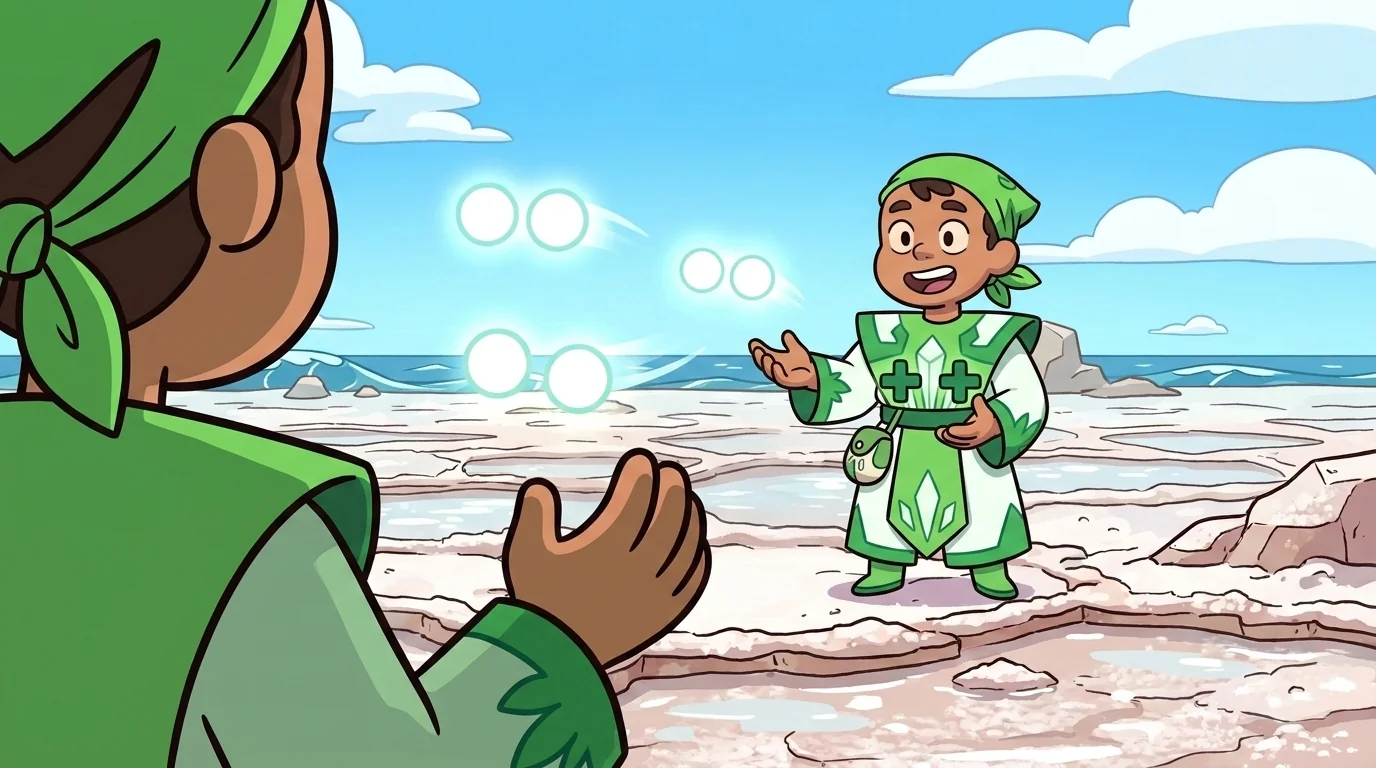
But magnesium has another really important job. It's a quiet job, but it's for all living things. Chlorophyll is the green color in every plant leaf. It has a magnesium ion right in its middle. It's like the quiet engine of a plant. Chlorophyll uses this magnesium center. It grabs energy from sunlight, soaking it up like a sponge. Then it changes that sunlight into power for the plant to grow. Without magnesium, there's no chlorophyll. Without chlorophyll, there are no plants. Without plants, there's no oxygen for us to breathe. No oxygen means no food. No food means no life on Earth. The bright flame of magnesium is cool and exciting. But its quiet job in plants, making life possible, is just as important.
Magna nodded slowly, her crest gleaming. She said this very clearly: "I am bold. I burn bright. But my real work is quiet. I sit at the center of every chlorophyll molecule. I am in every plant leaf, helping it live. The white-flame is exciting, yes. But chlorophyll-anchoring is super important for the whole world. Both things come from the same atomic rule. I give away two extra electrons. Then I become Mg²⁺. It's all connected."
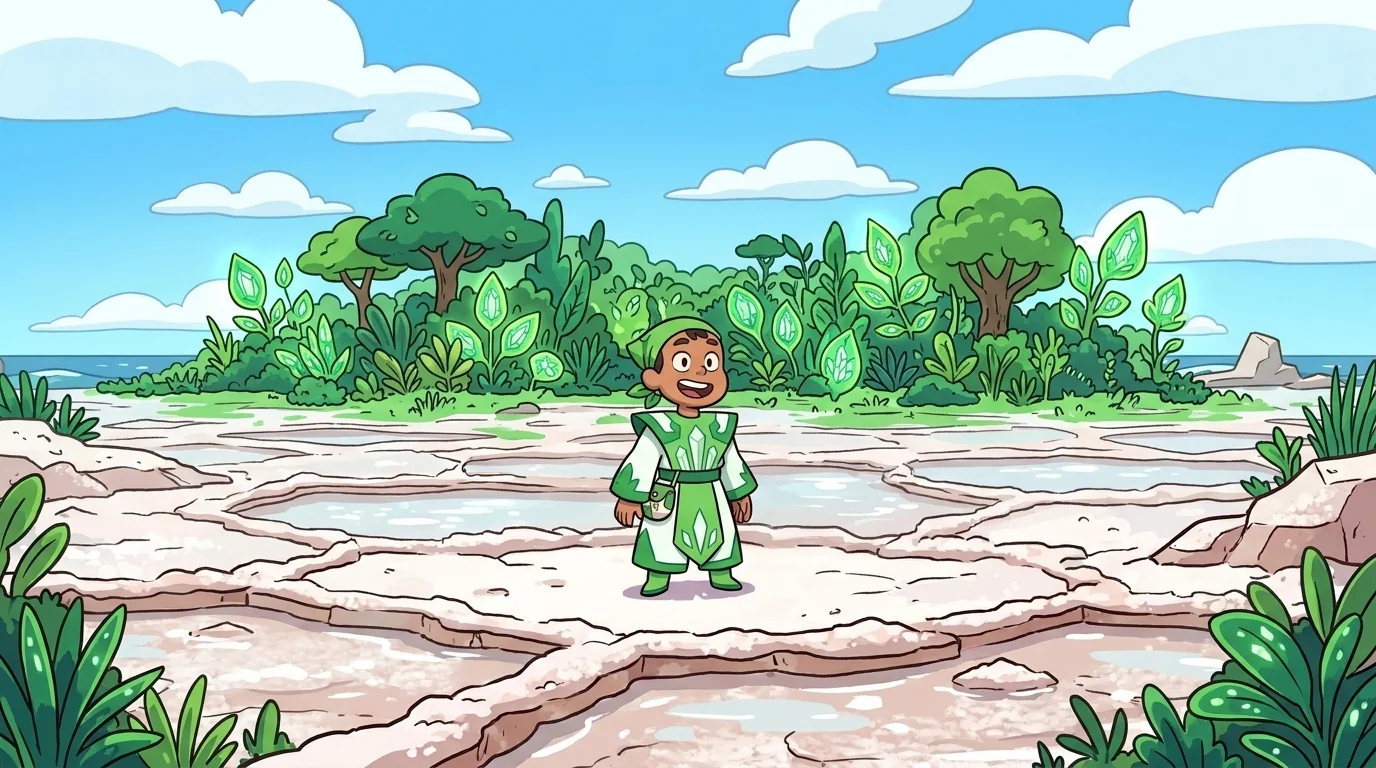
Magna grew up in a small village. Her family were the village's ceremony-callers. They were cranes who led special village events, like planting festivals or harvest celebrations. They held their bright-feathered crests high, so everyone could see them. People needed to see them leading the way. But they also quietly helped with the hard work after the ceremony, making sure everything ran smoothly. Magna learned this by age six. She knew both parts were her family's skill. The bright, visible moment of the ceremony was important. But the deep, quiet work that followed was too. Both needed her full attention.
Magna walked to the ChemQuest academy when she was twenty-two. Beaker, the head of the academy, looked at her with his wise, sparkling eyes. He asked her, "What is magnesium?" Magna stood even taller. She answered, "I give two electrons away. I become Mg²⁺. I burn super bright white when I catch fire. I sit at the center of every chlorophyll molecule on Earth. I am bold and ceremonial. I am also quietly central. It's the same atomic action. But I have two jobs." Beaker nodded slowly, a small smile on his face. He said, "Then you are twice welcome, Magna. Once for the light everyone can see — and once for the light no one ever notices, the quiet green light inside every leaf. The academy needs both of you."
Magna dipped her white crest, and a warm, steady gladness settled in her chest. She had spent her whole life proud of two very different things: the bright flare that made a room gasp, and the quiet work that let the whole world breathe. It felt good, at last, to hear someone say that both of them counted — that the showy light and the hidden light came from the very same small, generous act of giving two things away.
The ChemQuest ensemble
Magna is part of ChemQuest's distributed-narrative cast. Each character embodies a different curricular primitive; together they teach the full subject.
-

Hydra
Hydrogen (H) — lightweight, ubiquitous, always paired up; buddy-system enthusiast
-

Carbo
Carbon (C) — connects to anything; the social atom; backbone of life
-

Oxy
Oxygen (O) — eager bonder; electronegative; the hungry grabber
-

Nitra
Nitrogen (N) — triple-bond loyal; slow-to-warm; locks in deeply once bonded
-
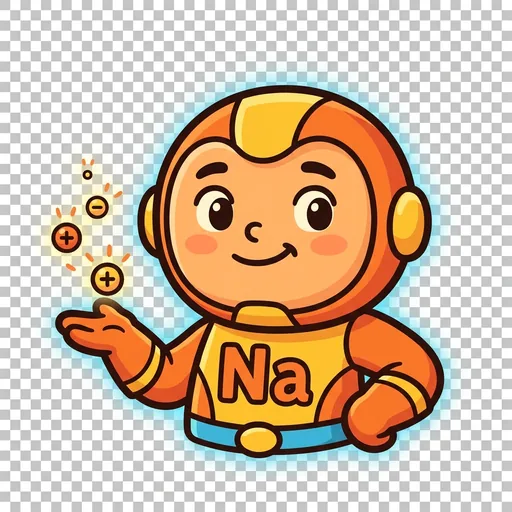
Sodi
Sodium (Na) — generous, impulsive; always giving away electrons
-

Chlora
Chlorine (Cl) — sharp, focused; the collector who finishes what Sodi starts
-

Helio
Helium (He) — noble gas; peaceful, floaty, complete; the contented onlooker
-

Sulfa
Sulfur (S) — earthy, dramatic; the stinky uncle of volcanoes and proteins
-

Phossa
Phosphorus (P) — energetic, restless; the spark of ATP and matches
-

Silica
Silicon (Si) — patient, geometric; the architect who builds quietly
-

Alumi
Aluminum (Al) — practical, modest; the workhorse of cans and foil
-

Tugger
Ionic bond — forceful, decisive; full electron transfer; opposites attract
-

Sharer
Covalent bond — cooperative, balanced; equal partnership
-

Streamer
Metallic bond — flowing, communal; delocalized electron sea
-

Whisperer
Hydrogen bond — subtle, persistent; water's superpower; DNA pairing