Sharer
COVALENT BOND
Loading audio…
Press play to listen along. The line being read lights up as you go.
Show full transcript
Loading transcript…
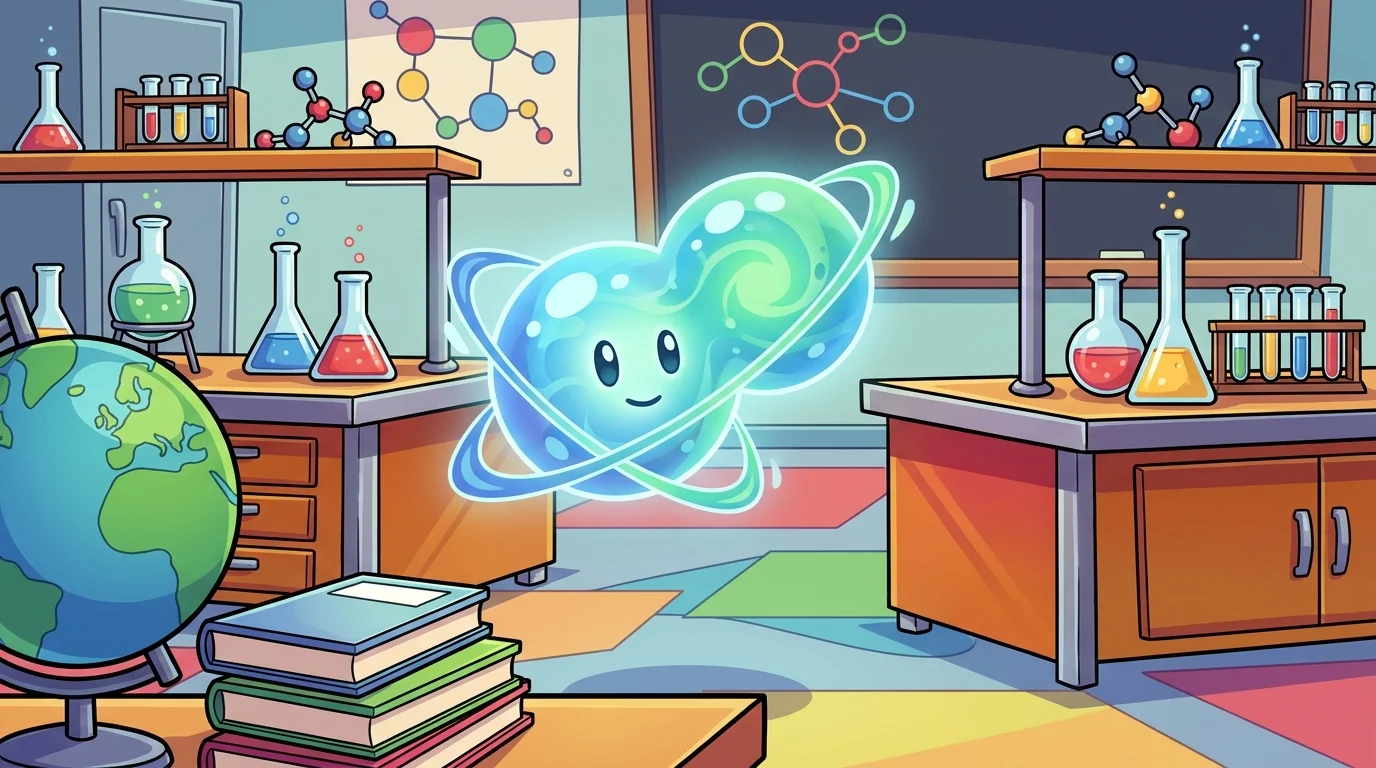
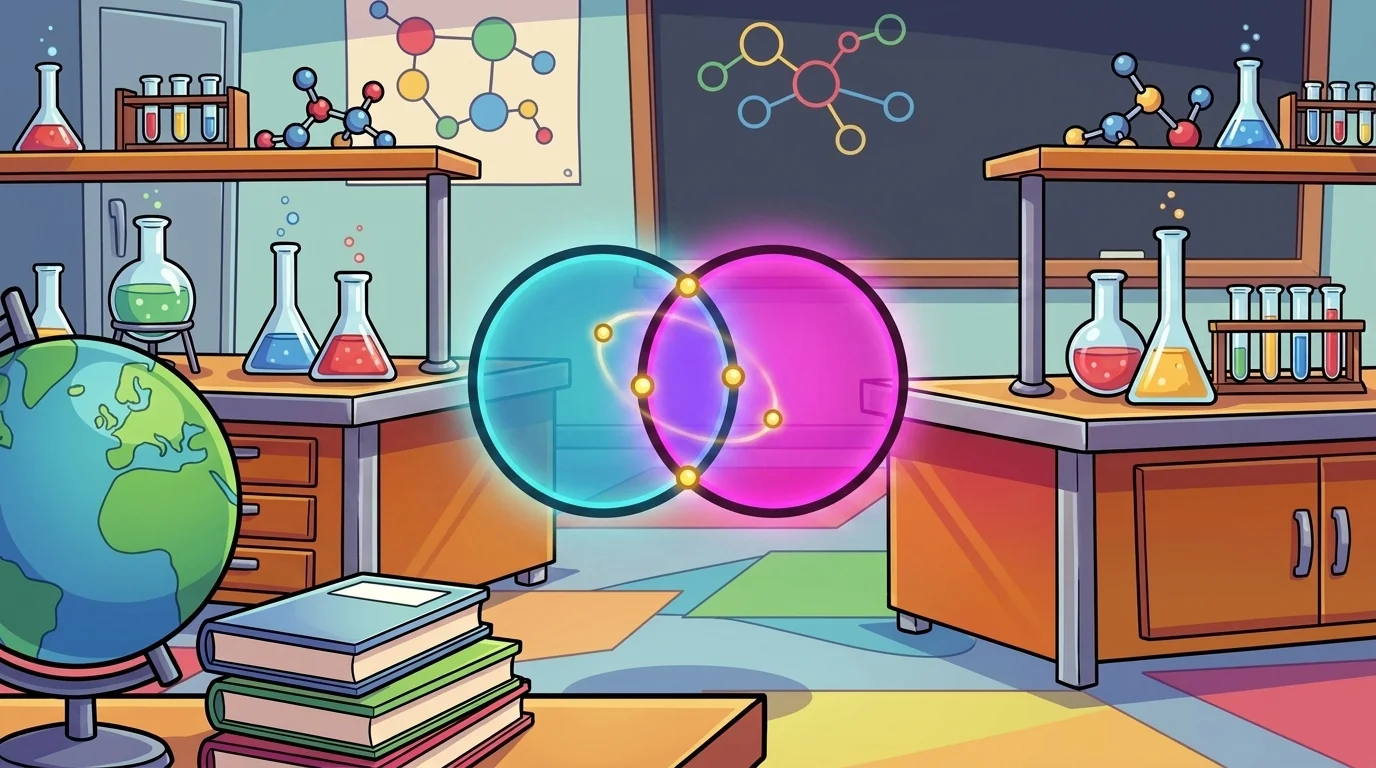
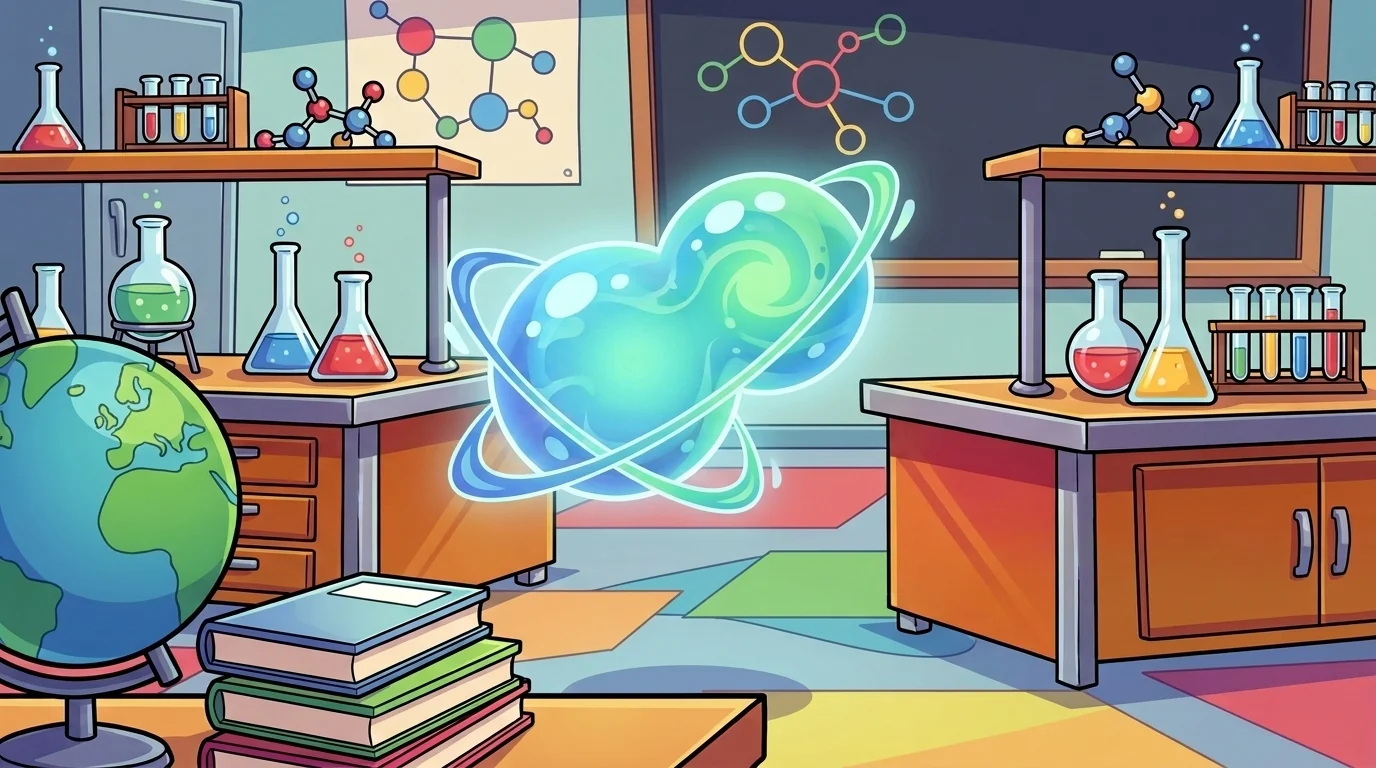
Sharer wasn't an animal. Sharer wasn't a person with a face. Sharer was just a shape. A very special shape. It was two small circles, painted bright. They overlapped a little bit. In that overlap zone, tiny bright dots floated. Those dots were shared electrons. They moved between the two atom-positions. That was the whole figure. No face. No personality. Just the energy-shape of shared electrons.
This shape was super important. Sharer showed everyone the covalent bond. What is a covalent bond? Imagine two atoms. Each atom gives one electron. They put these electrons into a shared pair. This pair sits right in the middle. It's in the overlap zone of their outer shells. Both atoms can reach these electrons. Neither atom takes the electron. They both share it. This shared electron-pair holds the two atoms together. That's the covalent bond.
Most molecules use covalent bonds. Think about water, H₂O. It has two H–O covalent bonds. Methane, CH₄, has four C–H covalent bonds. Ammonia, NH₃, has three N–H covalent bonds. Even the air we breathe has them. Molecular oxygen, O₂, has one O=O double covalent bond. Molecular nitrogen, N₂, has one N≡N triple covalent bond. Most things inside living creatures are like this. Proteins, sugars, fats, DNA. They are mostly held together by covalent bonds.
Covalent bonds come in different strengths. They can be single. That means one shared pair. They can be double. That means two shared pairs. Or they can be triple. That means three shared pairs. The more pairs shared, the stronger the bond. The atoms also get closer together. Triple bonds are the strongest covalent bonds. Nitra's N₂ atmospheric pair is a good example.
Sometimes, atoms share perfectly. This happens when both atoms pull equally. Like H–H in hydrogen gas. Or C–C in a diamond. They share the electrons 50/50. These are equal covalent bonds.
Other times, the sharing isn't quite fair. One atom pulls harder. This happens when one atom is more "electronegative." Take water, O–H. Oxygen pulls the electron pair closer to itself. So, the hydrogen atom ends up a little bit positive. The oxygen atom ends up a little bit negative. This unequal sharing makes water "polar." It means water has a slightly positive end and a slightly negative end.
Beaker introduced Sharer to the class. "This is Sharer!" he boomed. He held up the glowing shape. "Sharer is the covalent bond. See? No face. Sharer is not a being. Sharer is a force. It's the force between atoms. Atoms that share electrons. Look at the overlapping circles. Two atoms. One shared pair. That's the whole figure. The force is the figure."
In ChemQuest classrooms, Sharer often appeared. It would pop up next to cast members. They would be forming covalent bonds. Most often, Hydra and Oxy would stand together. Sharer would appear between them. This showed how water, H₂O, was made. Or Carbo and Hydra would join up. Sharer would show the methane, CH₄, bond. Sometimes Carbo would link with another Carbo. Sharer would show a carbon chain.
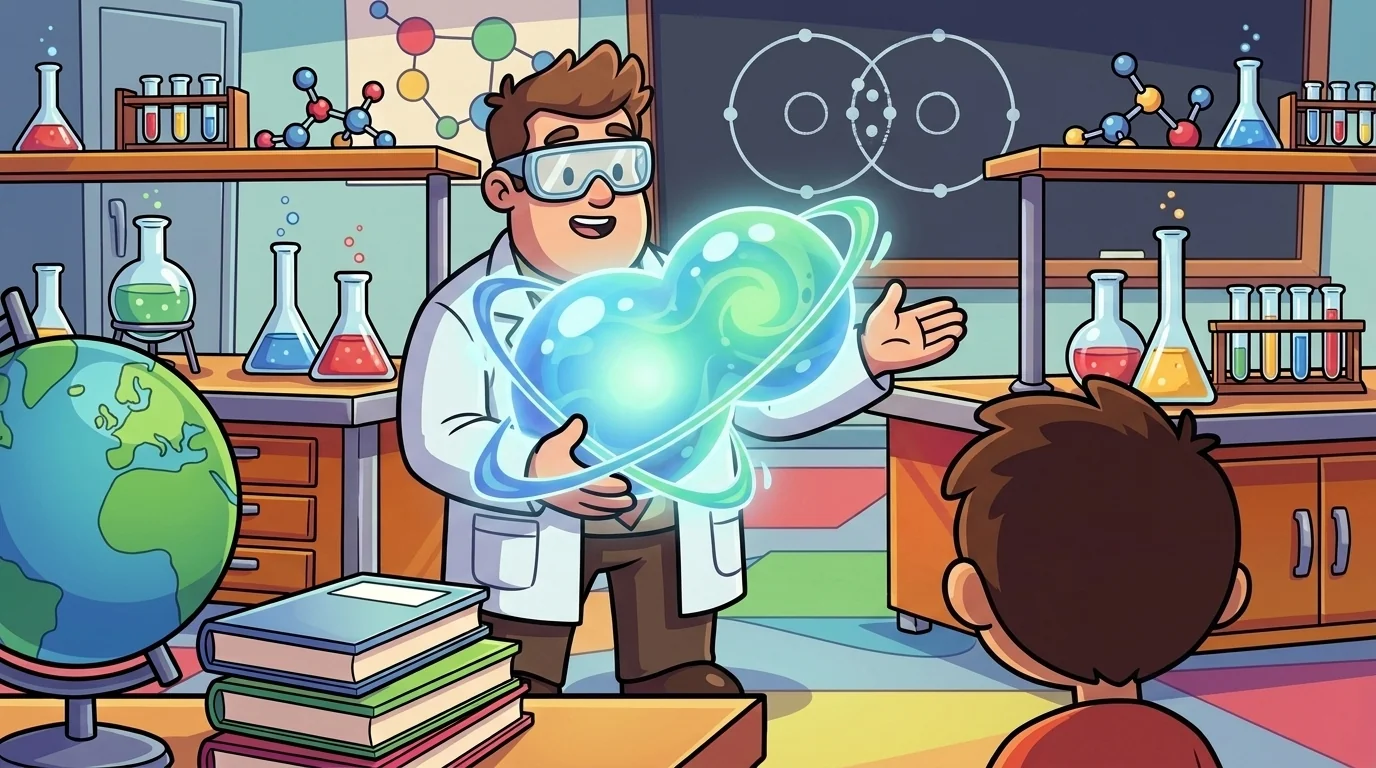
Beaker always made sure to explain the difference. "Tugger is full transfer," he'd say. "That's an ionic bond. Sharer is a shared pair. That's a covalent bond. Both are bonds. But they are different kinds of forces."
Sharer's lessons were important. Beaker taught them for Sharer. A covalent bond means shared electrons. They sit in overlapping spaces. It's not about taking. It's about sharing. Bonds can be single, double, or triple. One, two, or three shared pairs. More pairs mean a stronger bond. The atoms are also closer. Sharing can be equal or unequal. Equal sharing is like H–H or C–C. The atoms pull the same. Unequal sharing is like O–H or N–H. One atom pulls harder. This makes polar covalent bonds. Polar covalent bonds are still sharing. But the sharing is uneven. Polar bonds make polar molecules. Water is a polar molecule. It acts differently from nonpolar molecules. Methane is nonpolar. Most living things are made of covalent bonds. Proteins, fats, sugars, DNA. They all use covalent bonds. Some have polar covalent bonds too. These help them do their jobs. Covalent compounds are usually molecules. They are separate little groups. They don't form big lattices. They often have lower melting points. They usually don't conduct electricity. * Remember the big rule: shared, not transferred. For covalent bonds, both atoms hold the electrons. For ionic bonds (Tugger's job), one atom takes them all. This difference is key.
Beaker often pointed to Sharer. "Sharer has no face," he said. "That's the lesson. The shared bond is a force. It's not a person."
Sometimes students would ask. "Are covalent bonds hard to understand?" Beaker would smile. He spoke for Sharer.
"Not hard at all," he'd say. "It's a shared pair. Both atoms hold the electrons. Single, double, triple sharing all happen. Sharer is the force. Not the figure."
The overlapping-circles shape always caught the light, and it seemed to shimmer. Beaker looked at it and felt a quiet warmth — because that gentle glow, he liked to say, was what fairness looked like: two holding on together, both glad, neither one left out.
Hear it as an audio drama
A short play starring Sharer, from ChemQuest. Different voices, same idea. Listen any time after you read.
Loading audio…
Read the drama script
- Narrator: From Spark and Anvil and ChemQuest — this is Sharer, in chapter 1 of the ChemQuest cast.
- Narrator: This drama uses an AI-generated voice. Voiced via Gemini 2.5.
- Narrator: Sharer is not an animal. It is two perfect blue circles, overlapping in the center.
- Narrator: In the shimmering space between them, tiny bright dots dance like miniature stars.
- Sharer: I am Sharer. I am the covalent bond. My circles are atoms.
- Sharer: The dots are my shared electrons. They do not belong to one atom, but to both.
- Narrator: A covalent bond is a shared electron-pair. The atoms are held together by this cooperative partnership.
- Sharer: One pair shared is a single bond. Two pairs, a double. Three pairs, a triple bond.
- Narrator: Sharer was everywhere. In the water, the sugars, the very proteins that make up life.
- Sharer: My lesson is simple. Sharing creates connection. It builds the molecular world.
- Narrator: Professor Beaker summoned the glowing shape to her lab and asked a single question.
- Beaker: What is the nature of your force?
- Sharer: I am a shared space. An equal partnership. The quiet force that holds molecules together.
- Beaker: You are essential.
- Narrator: Two circles. Shared dots. That is the whole bond. That's what makes sharing sharing.
- Narrator: You've been listening to a Spark and Anvil chapter, written by the Spark and Anvil writing team for ages 9 to 14.
- Narrator: Apps stay free forever.
- Narrator: Curriculum aligned to Next Generation Science Standards.
- Narrator: Released under Creative Commons BY-NC-SA 4.0 for educational reuse. Visit Spark and Anvil for the full transcript.
More stories with Sharer
Another short audio story about Sharer. Open one when you are ready.
Equal partnership
Loading audio…
Read the script
- Narrator: From Spark and Anvil and ChemQuest — this is Sharer, in chapter 1 of the ChemQuest cast.
- Narrator: This drama uses an AI-generated voice. Voiced via Gemini 2.5.
- Narrator: Sharer is not an element. Sharer is a bond. She stands between two atoms, holding their hands, palms turned in toward each other. She is the cooperation made visible.
- Narrator: She is wearing a balanced double-vest — half one color, half another — like a kid wearing a friendship bracelet woven for two. Her job is not to be either atom. Her job is to be the connection.
- Sharer: I am Sharer. I am the covalent bond. I form when two atoms share their outer-shell electrons in an overlapping cloud. We meet in the middle. The bond is the sharing.
- Narrator: A covalent bond forms when two atoms each contribute an electron to a shared pair. The pair lives in the overlapping space between the two atoms. Both nuclei tug on the pair. Neither wins. The pair stays. The atoms stay together.
- Sharer: I am the most common kind of bond in the molecules of life. Water is one of me holding hydrogens and oxygen together. Methane is four of me holding carbon to four hydrogens. The chains in DNA are me, hundreds of me, holding the backbone together.
- Sharer: Some of me are single bonds — one shared pair. Some are double bonds — two shared pairs, twice the strength. Some are triple bonds — three shared pairs, very hard to break, like the bond between two nitrogens in N2.
- Narrator: Sharer did not grow up in a village. Sharer appeared the moment the first two atoms in the universe decided to share electrons instead of trade them. That was a very long time ago.
- Sharer: Wherever two atoms can each give a little — and each receive a little — I am there. I am the form their friendship takes.
- Narrator: She walked to the ChemQuest academy when the academy first opened. Professor Beaker greeted her like an old colleague.
- Beaker: What is the covalent bond?
- Sharer: Two atoms each contribute one electron to a shared pair. The pair lives between them. Both nuclei pull. Neither wins. I'm the connection that holds water, methane, ammonia, oxygen gas, nitrogen gas, sugars, proteins, DNA — every molecule that has the same kind of atom on both sides of the bond, and many that don't. I am the cooperative kind of partnership.
- Beaker: You are appointed.
- Narrator: Sharer has been the academy's covalent bond teacher for years. She still wears the double-vest. She begins every first-day lesson the same way.
- Sharer: I am Sharer. Two atoms. One shared pair. That is what a covalent bond is. When you drink water — me, holding the hydrogens to the oxygen. When you eat a slice of bread — me, holding the long carbon chains of the sugars and starches. When you read your DNA — me, holding the bases and the rungs.
- Sharer: Shared pair. Equal partnership. Cooperative bond. That's the whole concept. That's what makes a covalent bond a covalent bond.
- Narrator: You've been listening to a Spark and Anvil chapter, written by the Spark and Anvil writing team for ages 9 to 14.
- Narrator: Apps stay free forever.
- Narrator: Curriculum aligned to Next Generation Science Standards.
- Narrator: Released under Creative Commons BY-NC-SA 4.0 for educational reuse. Visit Spark and Anvil for the full transcript.
The ChemQuest ensemble
Sharer is one of the friends in ChemQuest. Each friend shows you one idea by how they act; meet them all and you have the whole subject.
-

Hydra
Hydrogen (H) — lightweight, ubiquitous, always paired up; buddy-system enthusiast
-
Carbo
Carbon (C) — connects to anything; the social atom; backbone of life
-

Oxy
Oxygen (O) — eager bonder; electronegative; the hungry grabber
-

Nitra
Nitrogen (N) — triple-bond loyal; slow-to-warm; locks in deeply once bonded
-
Sodi
Sodium (Na) — generous, impulsive; always giving away electrons
-

Chlora
Chlorine (Cl) — sharp, focused; the collector who finishes what Sodi starts
-
Helio
Helium (He) — noble gas; peaceful, floaty, complete; the contented onlooker
-
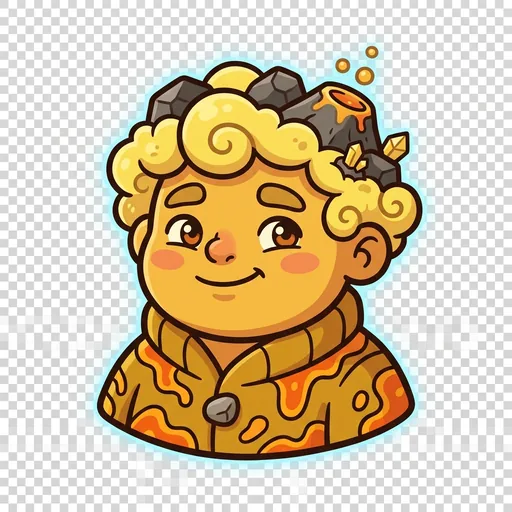
Sulfa
Sulfur (S) — earthy, dramatic; the stinky uncle of volcanoes and proteins
-
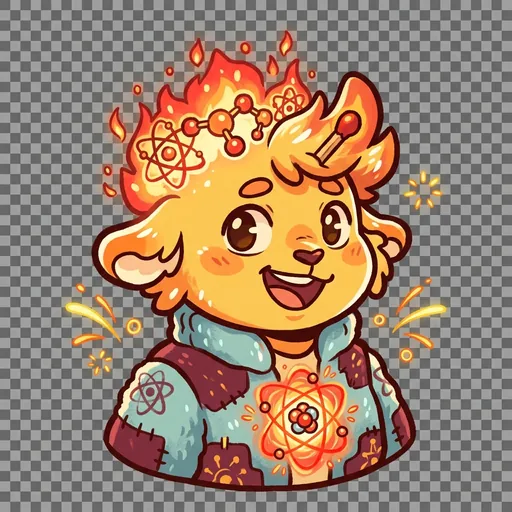
Phossa
Phosphorus (P) — energetic, restless; the spark of ATP and matches
-
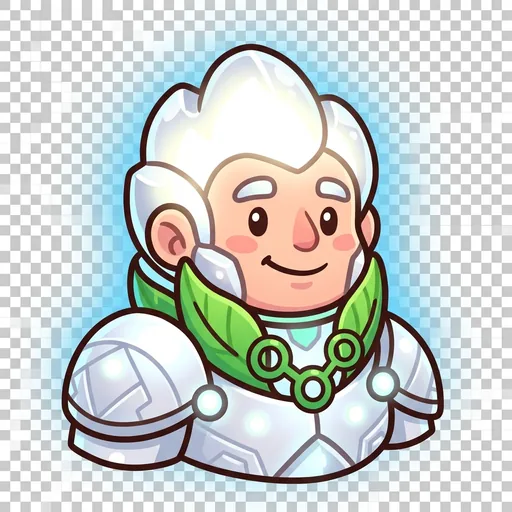
Magna
Magnesium (Mg) — bold, ceremonial; burns bright white; chlorophyll core
-
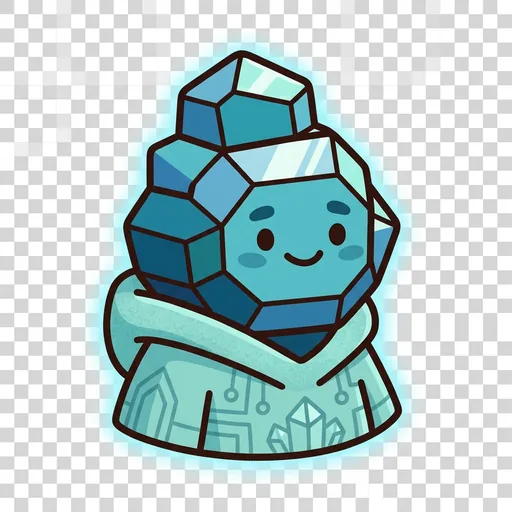
Silica
Silicon (Si) — patient, geometric; the architect who builds quietly
-
Alumi
Aluminum (Al) — practical, modest; the workhorse of cans and foil
-
Tugger
Ionic bond — forceful, decisive; full electron transfer; opposites attract
-

Streamer
Metallic bond — flowing, communal; delocalized electron sea
-
Whisperer
Hydrogen bond — subtle, persistent; water's superpower; DNA pairing