
Gloss, Footing and Onus
BEFORE YOU ARGUE — a good argument is won or lost in how it's set up: Gloss fixes the key terms so both sides mean the same thing, Footing surfaces the unstated warrants the argument rests on, and Onus establishes that whoever makes a claim carries the burden of supporting it
A story read by Gloss, Footing and Onus
Loading audio…
Press play to listen along. The line being read lights up as you go.
Show full transcript
Loading transcript…
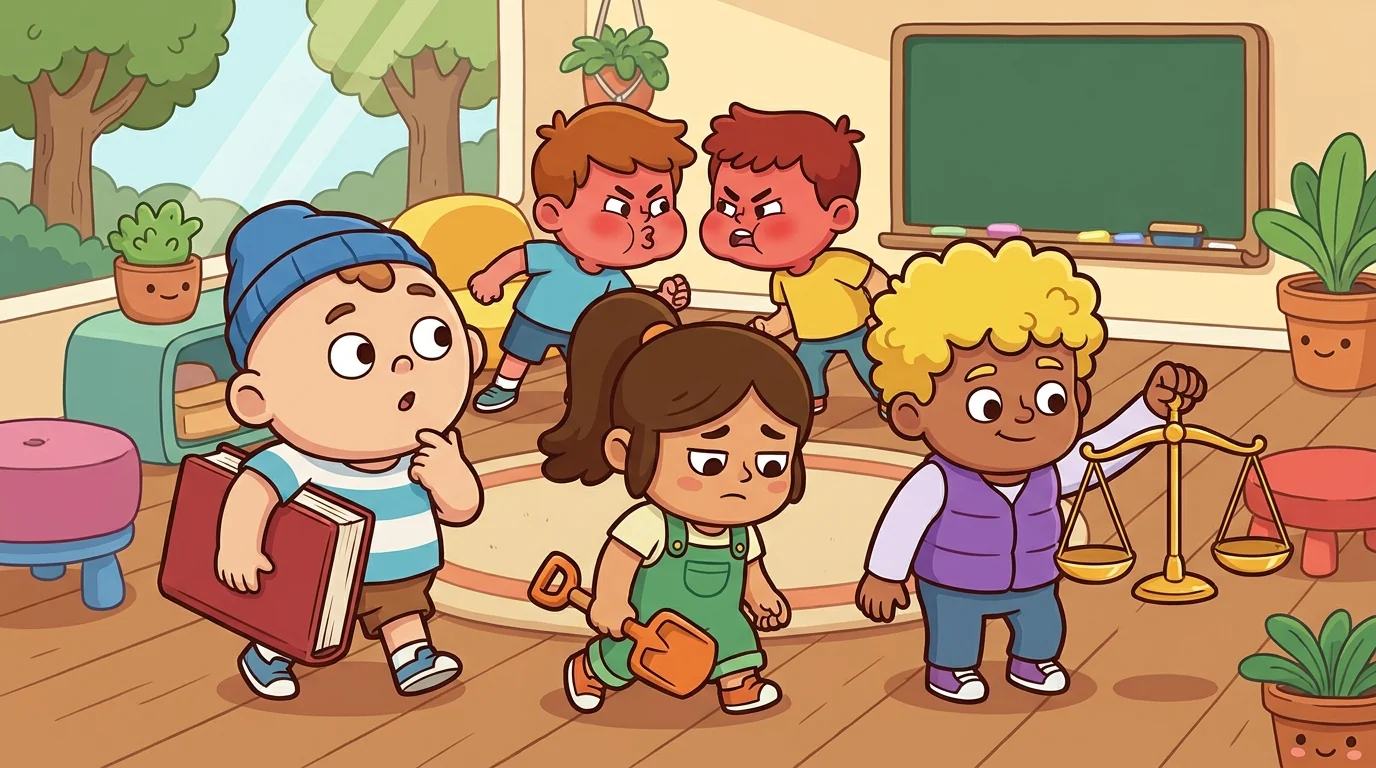
Two friends were three seconds from a real fight — not a playful one, a red-faced talking-over-each-other one — over a simple-sounding question: "Is it fair to give everyone in class the exact same thing?" One said obviously yes. One said obviously no. And they were about to have a shouting match that would settle nothing and cost them the afternoon.
Three helpers stepped in before the first shout — because a good argument, they knew, is mostly decided in how it's set up, long before anyone raises their voice.
Gloss carried a dictionary and a curious tilt of the head.
Footing carried a small shovel, for digging under things.
And Onus carried a set of balance-scales labeled who has to prove what.
"Wait — before you argue," said Gloss, "let's make sure you're even arguing about the same thing. You'd be astonished how often people aren't."
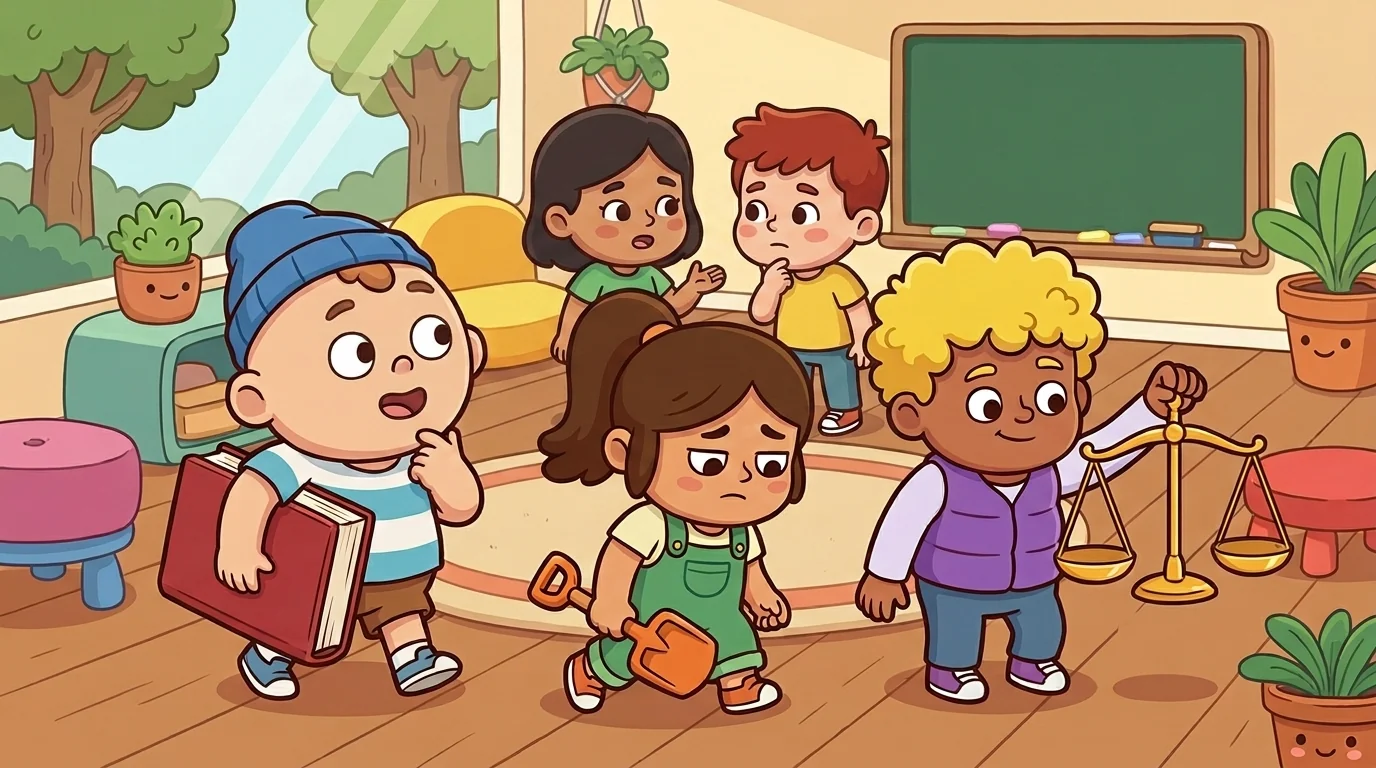
Gloss went first, opening the dictionary — because an enormous share of "arguments" are really two people using one word to mean two different things.
"You," said Gloss to the first friend, "when you say fair, what do you mean?" "The same for everyone!" she said. "And you?" Gloss asked the second. "Giving each person what they need, even when that's different!" he said. Gloss smiled. "There it is. Listen to yourselves. You both said fair — but she means equal treatment, and he means treatment according to need. You're not disagreeing about the answer. You're disagreeing about what the word means. Logicians call that a verbal dispute — a fight that lives in the language, not in the world. So here's the first move, before any real arguing: fix an operational definition — settle what the key words will mean and hold them still — because so many fights are secretly definition-fights wearing the costume of real ones. Pin the words down first, and half your 'arguments' quietly dissolve, revealing you were on the same side all along and never knew it."
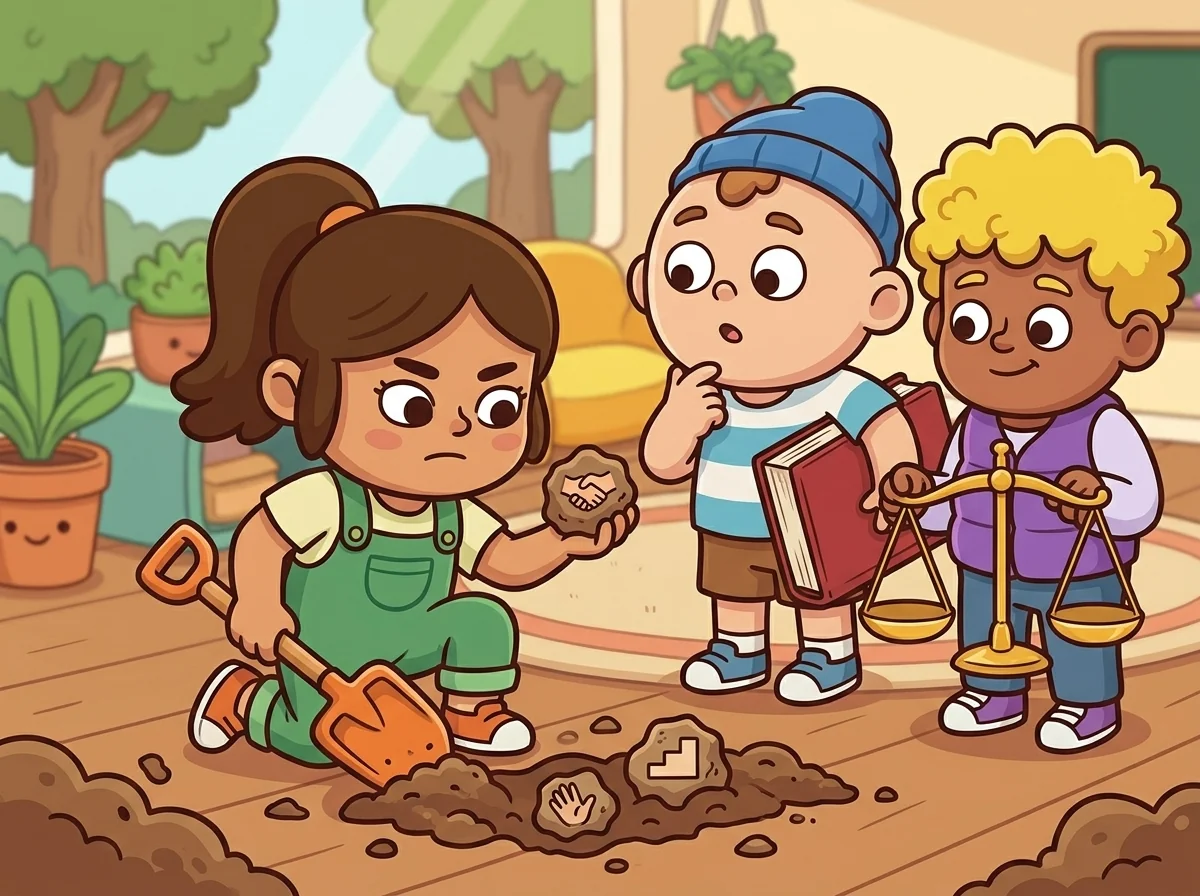
Then Footing dug the little shovel under the argument, because every claim stands on warrants — unstated 'givens' nobody's said out loud.
"Good — you now know you mean different things by fair," said Footing. "But let's dig under why each of you leans the way you do, down to the assumptions holding you up." Footing turned some earth. "She's standing on a warrant: treating people identically is what respect looks like. He's standing on a different one: people start from different places, so identical treatment lands unequally." Footing held up the unearthed warrants. "Neither of you said those aloud — you didn't even know you were standing on them. But an argument always rests on hidden footings like these, and an argument with its warrant left unspoken is an enthymeme: it looks complete while half of it stays buried. If you never surface the warrant, you'll argue forever about the surface while the real disagreement sits untouched underneath." Footing patted the exposed ground. "Now they're in daylight, where you can actually examine them and ask the useful question: which of these do we both accept? Which is the real crux? You can't test a foundation you can't see — so we dig it up first."
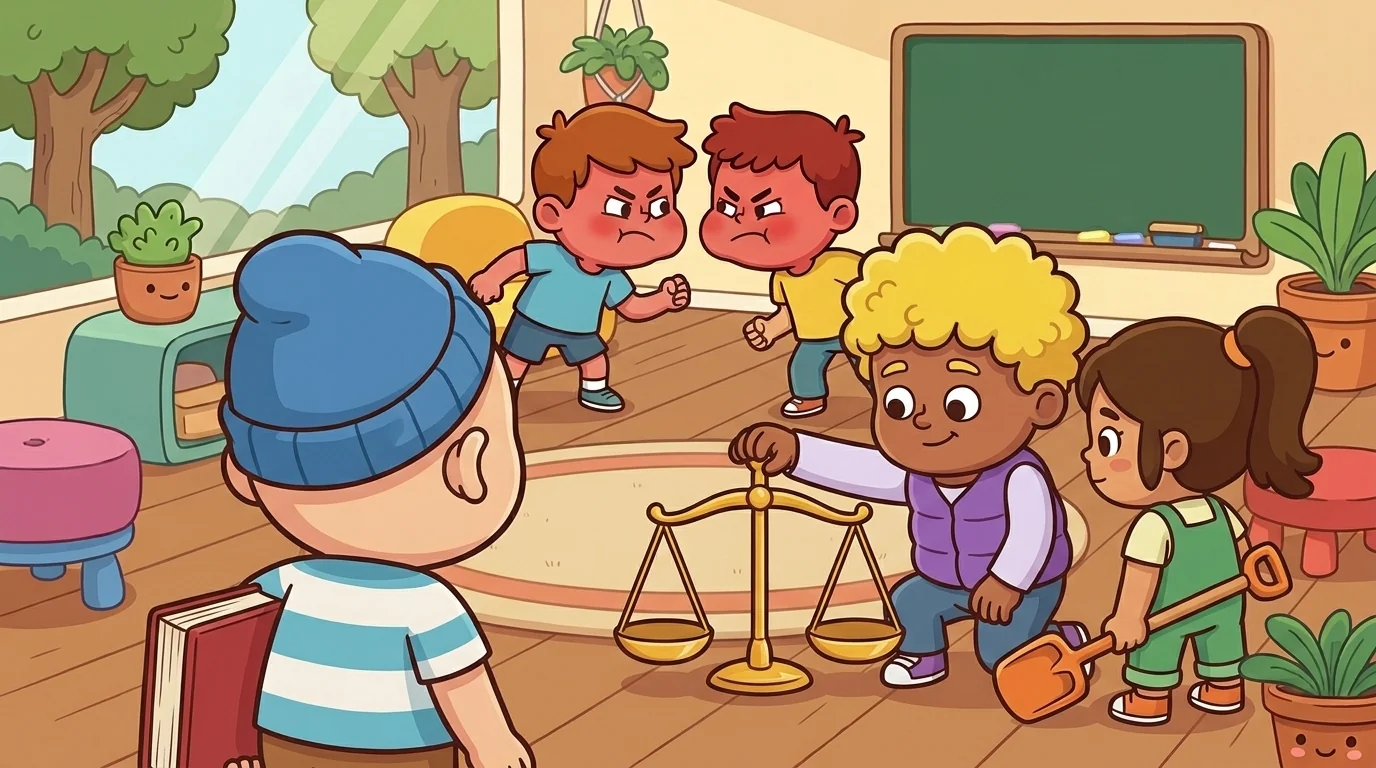
And then Onus set down the balance-scales, because a fair argument has to settle who carries the load of proving what.
"Last thing before you go," said Onus. "Whoever makes a claim carries the job of supporting it. That's the rule — onus probandi, the burden of proof — and it's what keeps an argument honest." Onus set the scales level. "If she claims 'same-for-everyone is always fairest,' the burden of showing why sits on her; she can't just assert it and demand he disprove it. If he claims 'need-based is always fairest,' the burden's on him. Because the sneakiest move in any argument is trying to flip the load — 'well, you can't prove I'm wrong!' That's the argument from ignorance: treating 'not yet disproven' as if it meant 'proven,' and it's backwards. The one who makes the claim owes the support, sized to the claim — a big surprising claim owes big evidence. Settle that before you start, and nobody gets to lob claims and dodge the work of backing them. Each side supports what each side asserts. That is a fair fight."
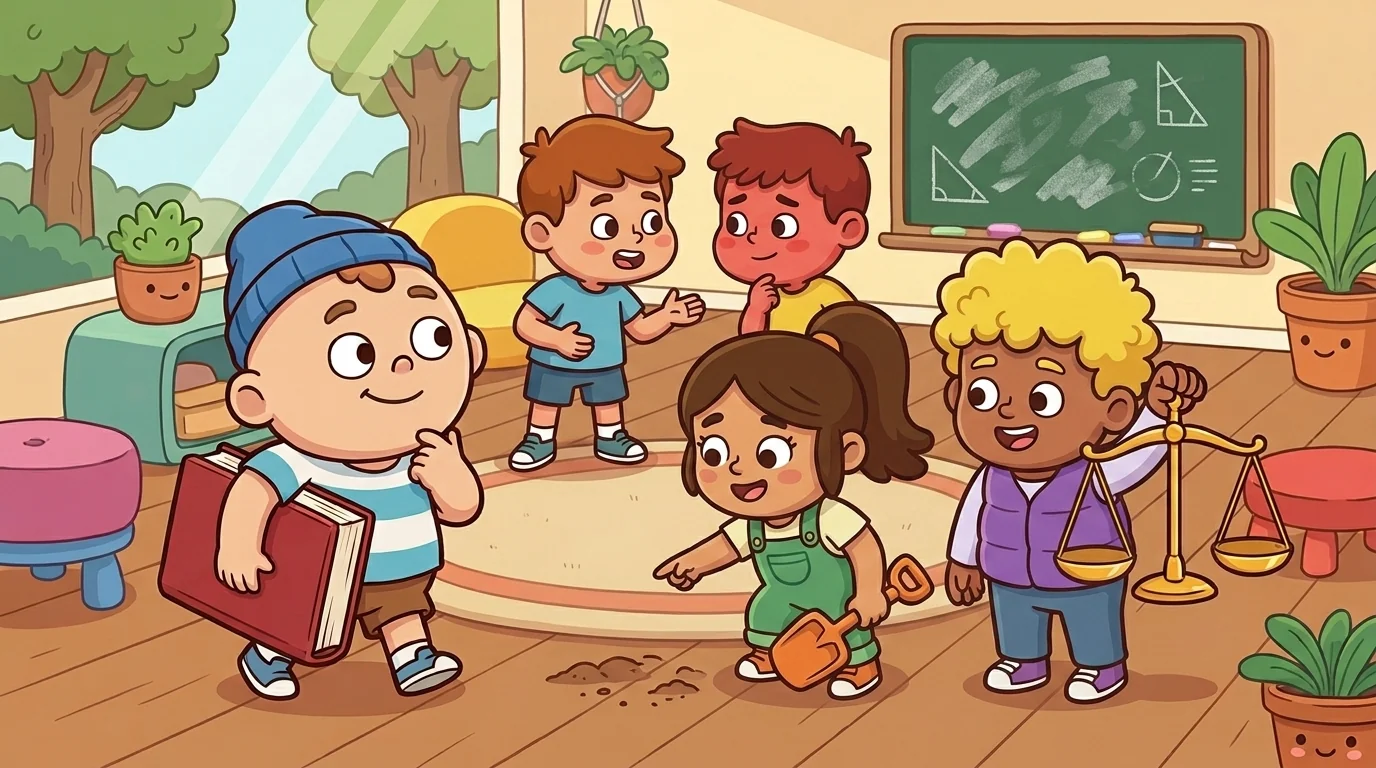
And so the two friends had their argument — but a wholly different kind than the shouting match they'd nearly had. They knew they meant different things by fair; they could see the warrants each was standing on; and each carried the burden for their own claims. It stayed warm. It went somewhere. By the end they understood each other clearly, even at the point where they still, honestly, disagreed.
"Good defining," said Footing.
"Good digging," said Onus.
"Good burden," said Gloss.
There is a genuine, almost physical pleasure in an argument done well — one set up so carefully that it becomes a real conversation instead of a heated mess. Most bad arguments aren't bad because the people are foolish or cruel. They're bad because nobody fixed what the words meant, nobody surfaced the hidden warrants, and everybody tried to shove the burden of proof onto the other side. Handle those three things first — define, dig, and settle who proves what — and even a hard disagreement turns into something close to enjoyable: two people genuinely thinking together, instead of just shouting near each other and calling it a debate.
The ClaimCraft ensemble
Gloss, Footing and Onus is part of ClaimCraft's distributed-narrative cast. Each character embodies a different curricular primitive; together they teach the full subject.
-

Posit
Claim — asserting-for-testing posture (claim is a card on the table, not a fortress)
-

Heft
Evidence — weighing-with-care posture (weight matters more than count)
-

Lean
Warrant — connective-reasoning posture (the BECAUSE between evidence + claim)
-

Counter
Counterargument — opponent-taking-seriously posture (best version of the other side strengthens yours)
-

Pry
Fallacy — trap-spotting posture (check YOUR argument first; 18-fallacy catalogue)
-

Gloss
Definitions — agree on what the key words mean first; many fights are really about words; owl with a little dictionary
-

Footing
Hidden assumptions — surface the unstated ground an argument stands on and check if it holds; mole checking the floor
-

Temper
Qualifiers / scope — match a claim's strength to its evidence; 'usually' survives what 'always' can't; badger with balance-scales
-

Onus
Burden of proof — whoever makes the claim supports it; bigger claims need bigger evidence; heron balancing the scales
-

Grant
Concession / common ground — grant the true points, find the shared ground, argue the real slice; deer in a shared clearing