Temper
TEMPER — match a claim's strength to your evidence; "usually" survives what "always" can't.
Loading audio…
Press play to listen along. The line being read lights up as you go.
Show full transcript
Loading transcript…
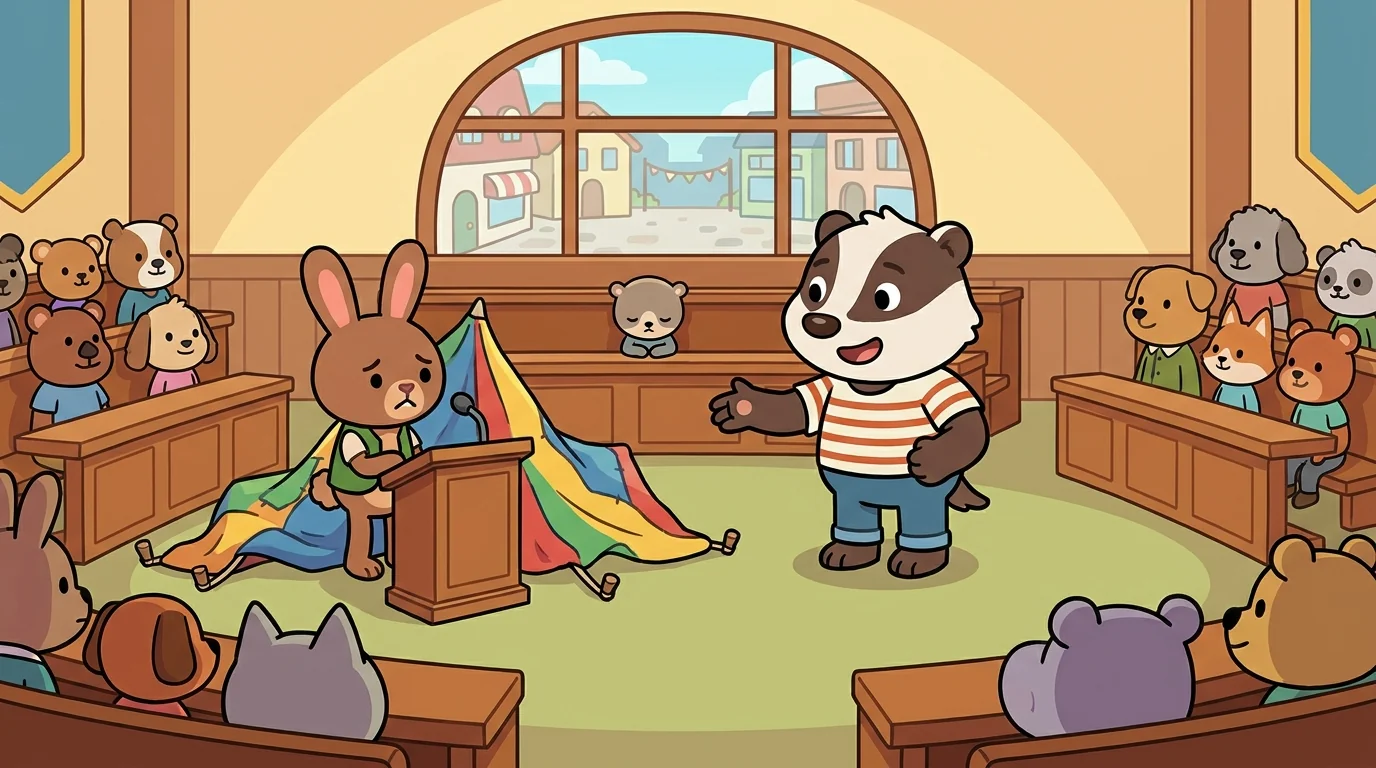
In the debate hall, a badger named Temper watched a confident rabbit make a bold declaration: "Dogs ALWAYS chase cats! Everyone knows it!"
Instantly, a quiet voice from the back: "My grandmother's old dog and her cat sleep in the same basket."
The rabbit's face fell. One example — one sleepy old dog — and the whole grand claim collapsed like a tent in the wind.
Temper stepped in, kind. "See what happened? The idea wasn't wrong — dogs chasing cats is a real, common thing. The word was wrong. You said always, and always means zero exceptions ever — so a single dozing dog knocks it flat. Try tempering it: dogs OFTEN chase cats. Now it's still true, it still makes your point — and that one sleepy dog can't topple it, because often already leaves room for exceptions. Match the size of your claim to the size of your evidence. An honest 'usually' stands where a proud 'always' falls."
The rabbit tried it. "Dogs... often chase cats." It held. Nobody could knock it over.

Have you ever said "always" or "never" about something and then someone found the one exception? How did that feel?
Temper had learned to right-size claims after being toppled by a single one.
As a young badger, Temper had once announced, grandly and to a whole crowd, that "the library is NEVER open on rest-days." Temper was so sure. And a small voice pointed out that the library had, in fact, been open last rest-day, for the seed-swap. One exception. And because Temper had said never — the biggest, most breakable word there is — the entire proud claim shattered, and worse, everything else Temper said that day got doubted too, because never had been so easily broken.
Standing there, cheeks hot, Temper felt the sting of it — not the sting of being wrong about libraries, but of having over-claimed, of having stretched a mostly-true thing into an all-the-way claim it couldn't support, and paying for the extra reach with the whole argument. The bigger the word, the easier it breaks, Temper realized. Always and never are made of glass. From then on, Temper learned to weigh a claim's size as carefully as its truth — to say exactly as much as the evidence held up, and not one word more.

Temper lumbered to the ClaimCraft academy, carrying a little set of balance-scales.
Logos, the mentor, met Temper and asked the question. "What is a qualifier?"
Temper set a claim on one scale and a pile of evidence on the other. "A qualifier is the word that sizes a claim to fit its evidence — always, usually, often, sometimes, rarely, never. Strong evidence earns a strong word. Thin evidence earns a careful one. Say always and you promise zero exceptions; say usually and you've already made peace with a few. It's not about sounding unsure. It's about being exactly as sure as you've earned the right to be — no bigger, no smaller."
Logos weighed the honesty of it and nodded. "You are appointed."
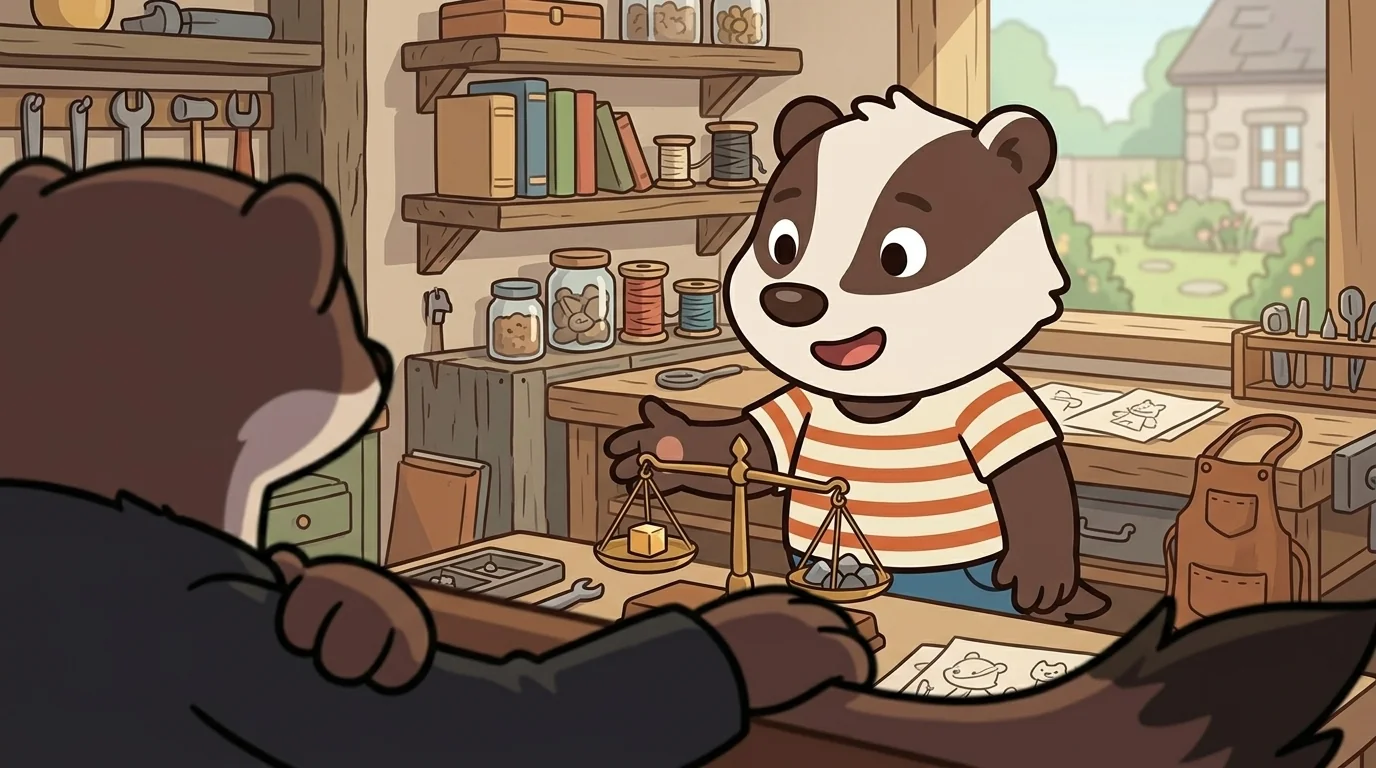
In Temper's workshop, a young stoat scoffed, arms folded.
"Temper, all these 'usually's and 'often's sound so weak and wishy-washy. When I argue, I want to sound strong and sure! Doesn't hedging just make me look like I don't believe my own point?"
Temper set the little scales between them.
"That's the great misunderstanding, so let me flip it for you. A tempered claim isn't the weak one — it's the unbreakable one. Always sounds strong right up until one exception smashes it in front of everyone. Usually keeps standing no matter how many odd cases people throw at it, because it never promised more than it can hold. Precision isn't weakness — it's armor. The person who says exactly as much as they can defend can never be toppled by a single counterexample, and everyone learns to trust their word, because their word always holds. Over-claiming feels strong and is fragile. Right-sizing feels modest and is mighty."
The stoat's arms slowly unfolded. "So 'usually' isn't me being unsure. It's me being un-knock-over-able."
"Un-knock-over-able," Temper agreed. "The strongest thing an arguer can be."
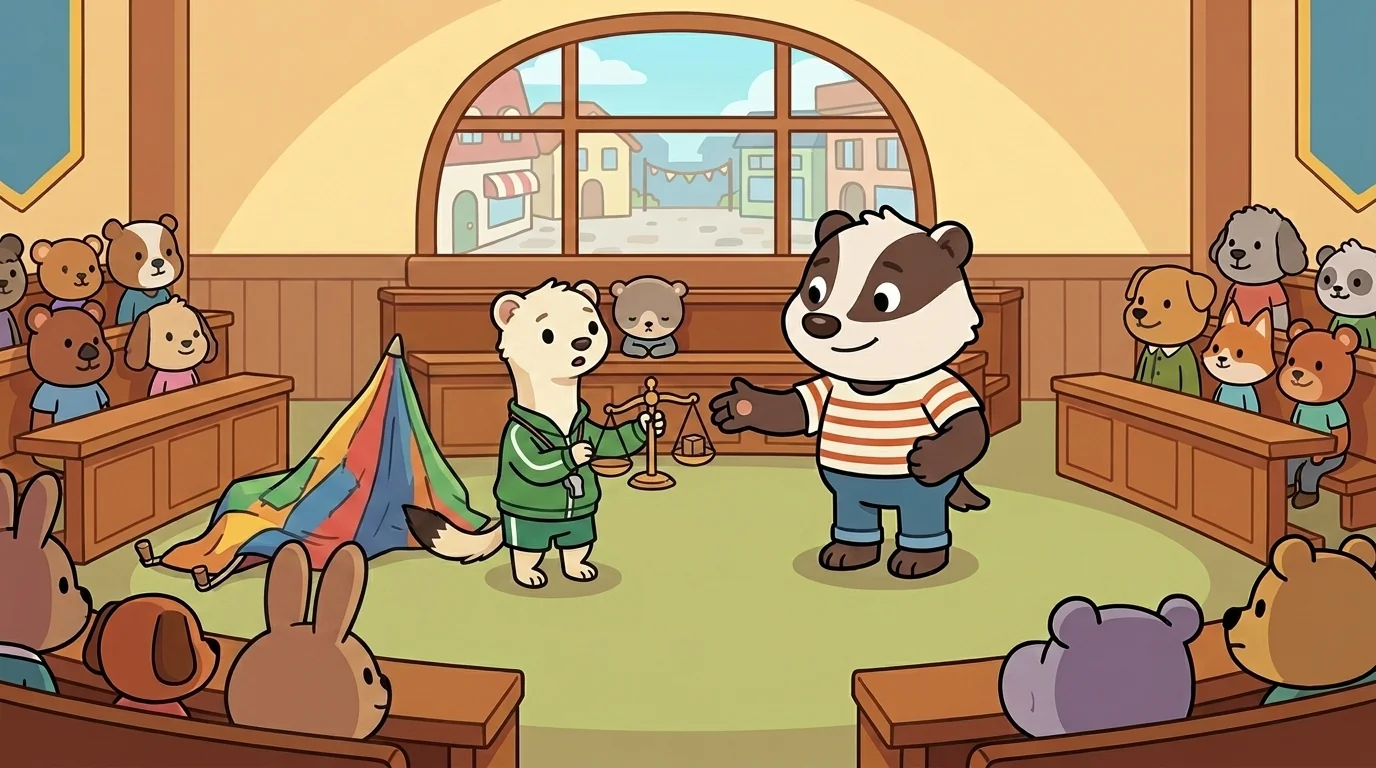
Think of a time you said exactly what you meant — no more, no less. What did that feel like compared to over-claiming?
The stoat thought about it, and the scoff softened.
"When I told my coach I 'sometimes' miss the early practice instead of pretending I 'never' do, they actually trusted me more," the stoat said, surprised. "And when I did show up, it counted. If I'd said 'never' they'd have caught me out and stopped believing anything I said."
"That's the quiet power of it," Temper said warmly. "There's a real, settled steadiness in saying exactly what's true — no bragging bigness, no false modesty, just the honest size of the thing. People feel it. They trust the person whose words fit their evidence, because that person's claims never crumble. And you feel it too — the calm of standing behind something you can actually defend, forever, against anyone." Temper handed the stoat the little balance-scales. "Go make a claim exactly the right size today. Feel how solid it stands."
The stoat took the scales, felt the unshakeable calm of a claim that fit, and went to say precisely as much as they could defend — and not a word more.
The ClaimCraft ensemble
Temper is part of ClaimCraft's distributed-narrative cast. Each character embodies a different curricular primitive; together they teach the full subject.
-

Posit
Claim — asserting-for-testing posture (claim is a card on the table, not a fortress)
-

Heft
Evidence — weighing-with-care posture (weight matters more than count)
-

Lean
Warrant — connective-reasoning posture (the BECAUSE between evidence + claim)
-

Counter
Counterargument — opponent-taking-seriously posture (best version of the other side strengthens yours)
-

Pry
Fallacy — trap-spotting posture (check YOUR argument first; 18-fallacy catalogue)
-
Gloss
Definitions — agree on what the key words mean first; many fights are really about words; owl with a little dictionary
-

Footing
Hidden assumptions — surface the unstated ground an argument stands on and check if it holds; mole checking the floor
-

Onus
Burden of proof — whoever makes the claim supports it; bigger claims need bigger evidence; heron balancing the scales
-

Grant
Concession / common ground — grant the true points, find the shared ground, argue the real slice; deer in a shared clearing