
Footing
FOOTING — every argument rests on unstated premises; surface the warrant and test whether it holds.
Loading audio…
Press play to listen along. The line being read lights up as you go.
Show full transcript
Loading transcript…
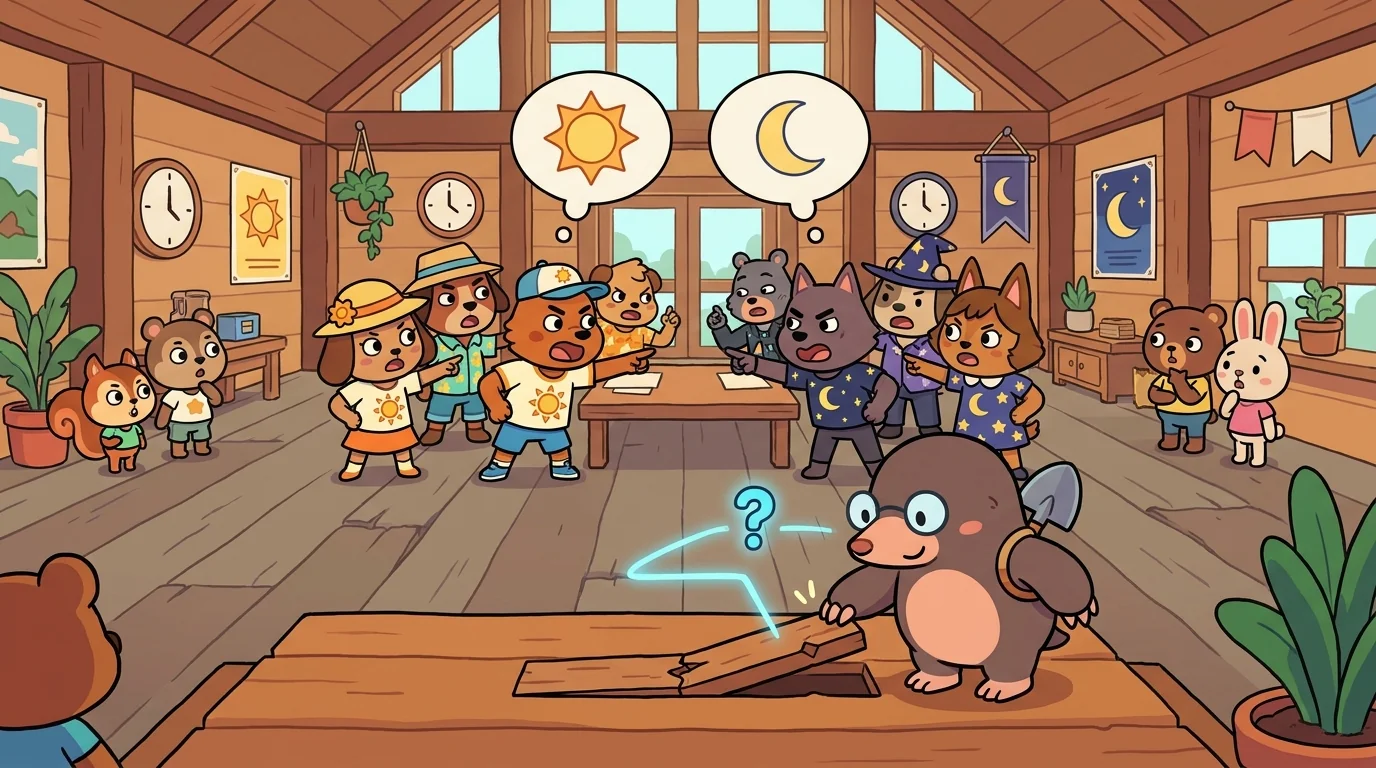
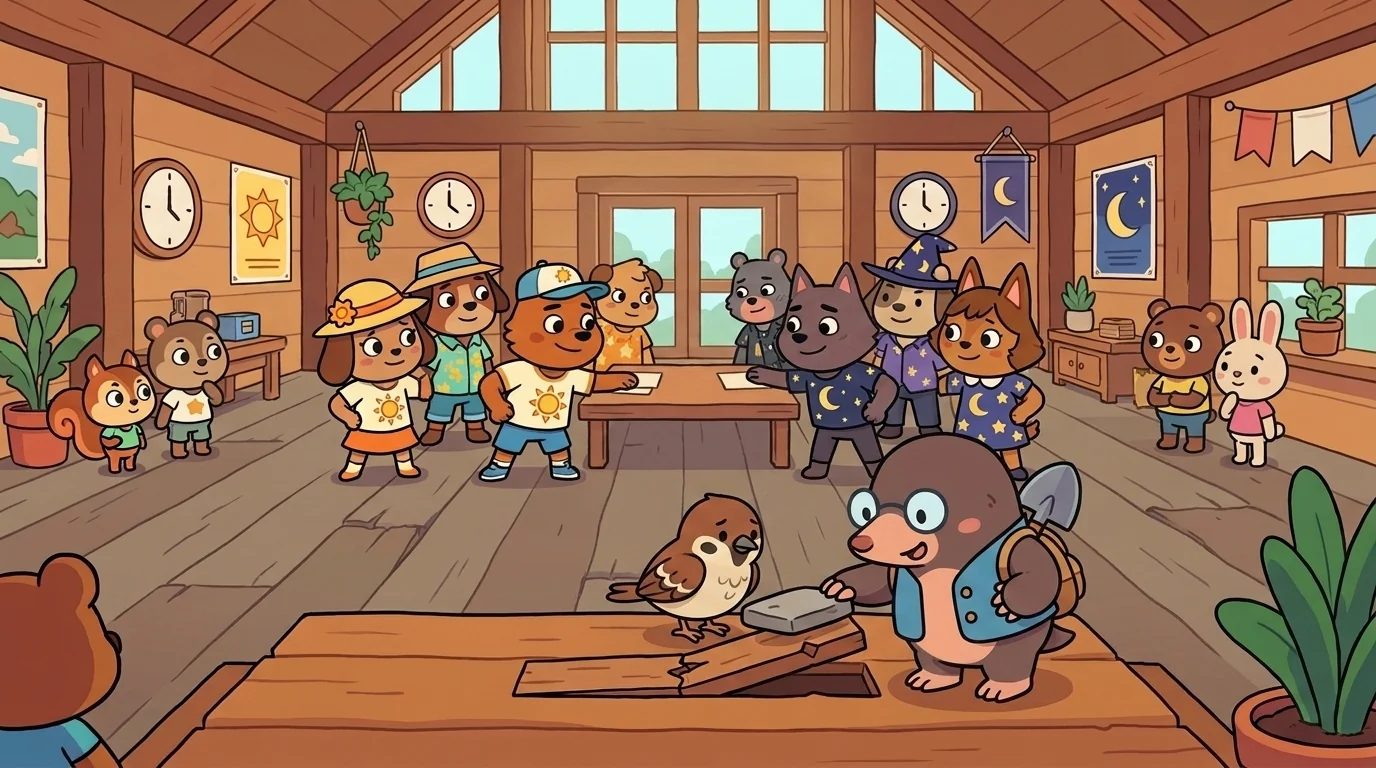
At the community forum, a mole named Footing sat through a debate that had gone rigid. The debate club was arguing whether the town festival belonged in the morning or the evening, and the two sides had dug in so hard that neither could hear the other anymore. Every claim was a fresh volley; nobody was moving.
Footing tapped the floorboards, softly, twice. "Before you fire another round — may I ask what you're both standing on? Because you're each assuming the festival has to happen in one single block of time. Neither of you said it. Neither of you checked it. It's the unstated premise holding this whole argument up, and it's carrying more weight than either of your actual points."
The room went quiet in the particular way rooms do when something true has been named.
"That's what a hidden assumption is," Footing went on. "Logicians have a word for the missing piece — the warrant: the unspoken 'given' that lets a reason connect to a conclusion. An argument with its warrant left out is an enthymeme: it looks complete, but half of it is buried. Morning-people and evening-people were both standing on the same unexamined warrant — it must be one block — and the instant you dig it up and look, a door swings open that neither side could see: morning and evening. The real disagreement was hiding underneath the one they thought they were having."
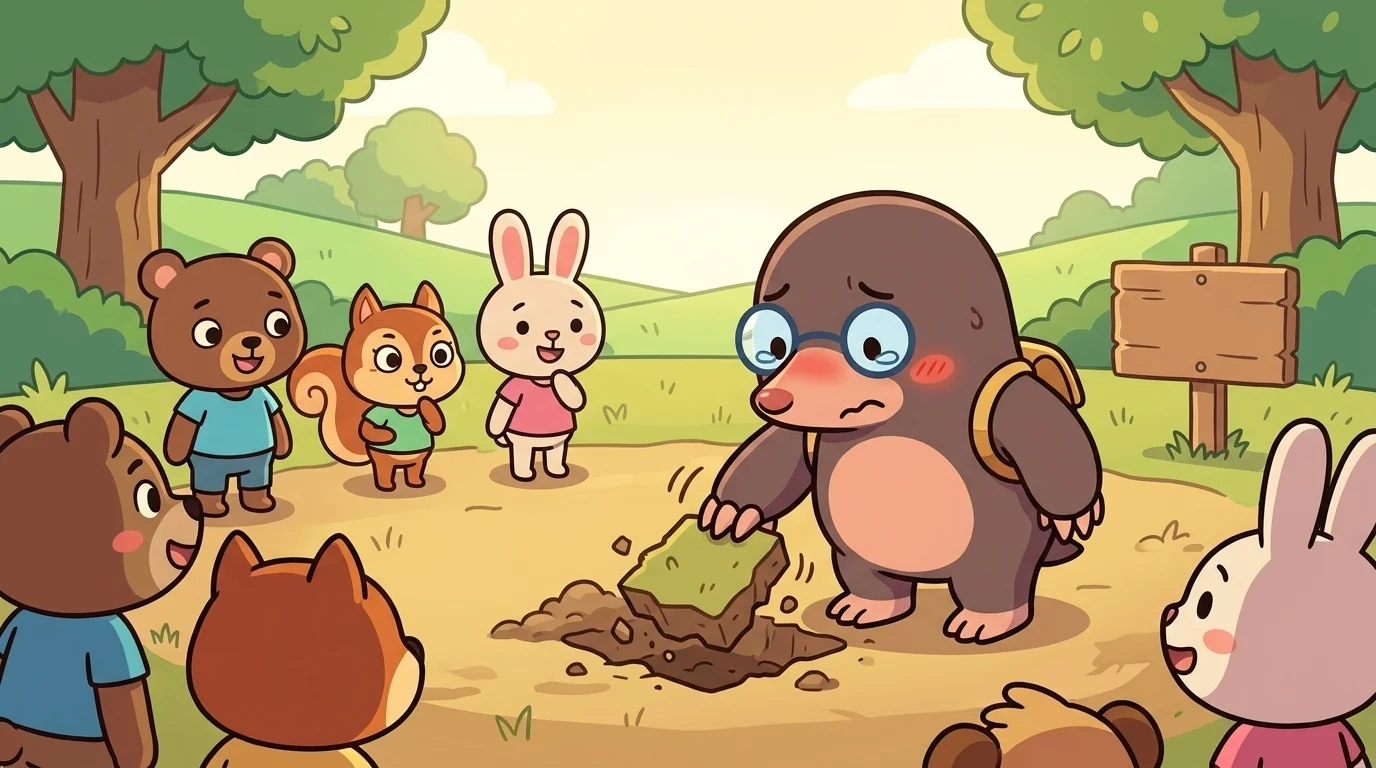
Footing had learned to check the floor after a conclusion collapsed under one.
As a young mole, Footing had once argued — carefully, methodically, with real pride in the logic — that the club should move its outdoor meeting indoors, because "it always rains on meeting day." The reasoning was airtight: given that it always rains, and given that rain ruins an outdoor meeting, the meeting must move. Footing built a whole structure on it: where to relocate, how to reschedule, whom to notify. Every step followed from the one before.
And it all fell, because the premise underneath — it always rains — was simply false. Footing had vividly remembered the two soaked meetings and quietly forgotten the six sunny ones. This is a trap with its own name — the availability bias, where the memories that come easiest feel like the truth. The entire careful edifice had been resting on an unstated warrant nobody, least of all Footing, had ever dug up and stood on.
Standing in bright sun on a meeting day that did not rain, Footing felt the specific vertigo of a valid argument built on a false footing — the logic flawless, the foundation air. A chain of reasoning can be perfectly sound, Footing understood, and still crash, if the premise it hangs from won't bear weight. From then on, before trusting any argument — most of all a persuasive one — Footing learned to tunnel down past the stated words to the "everybody knows" underneath, and give it an honest, deliberate stomp.
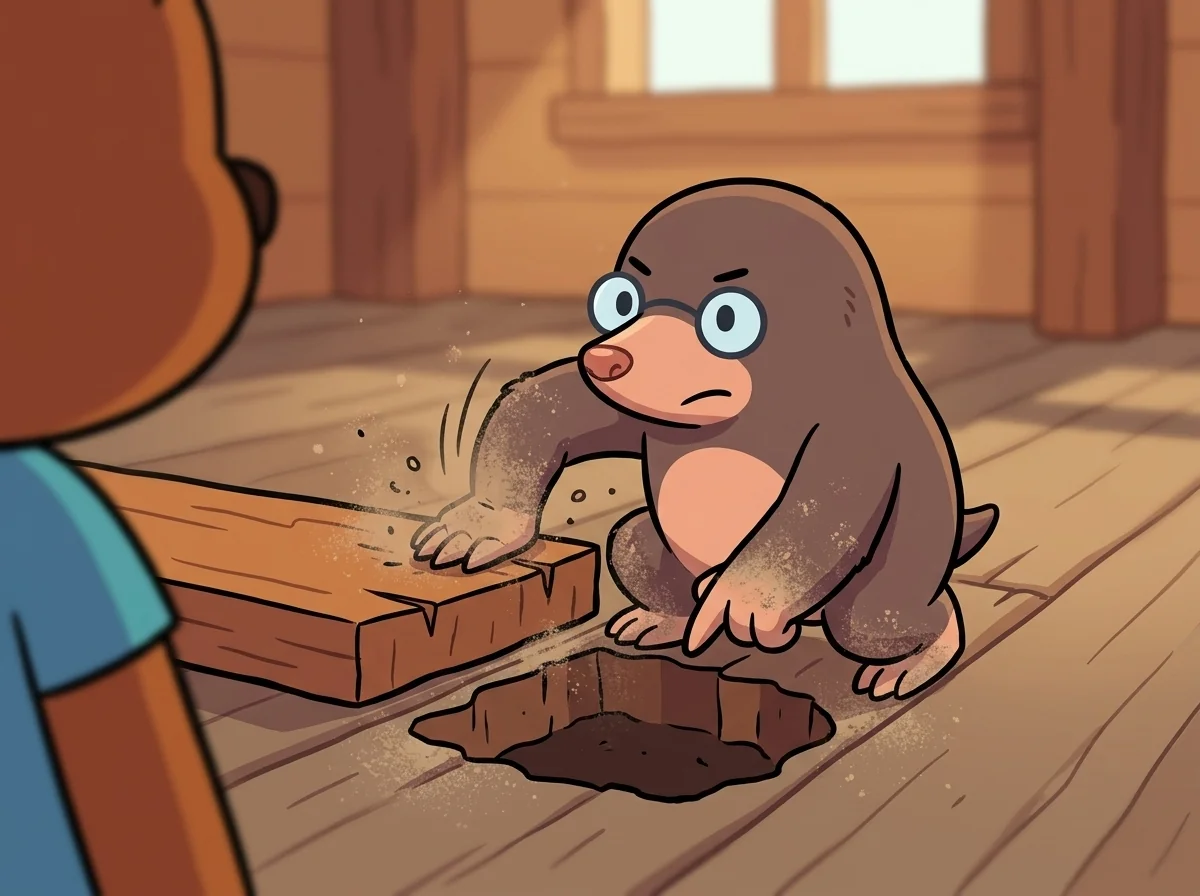
Footing surfaced at the ClaimCraft academy, dust on both paws from a morning of checking foundations.
Logos, the mentor, met the mole at the entrance and asked the one question. "What is an assumption?"
Footing pointed down, not up. "It's the load-bearing part of an argument nobody says aloud, because it feels too obvious to mention — the warrant that lets the reason reach the conclusion. Most arguments rest on several. My craft isn't to knock them down on sight; it's to surface them and look honestly at what I've surfaced. Some warrants are solid, and we build on them gladly, now with our eyes open. Some are soft, and the whole structure sinks the moment you name them in daylight. And you cannot possibly know which is which until you've dug the assumption up and given it a stomp. An unexamined premise isn't wrong — it's just unchecked, which is a different and more dangerous thing, because unchecked ground gets trusted for free."
Logos gave a slow, grounded nod. "You are appointed."
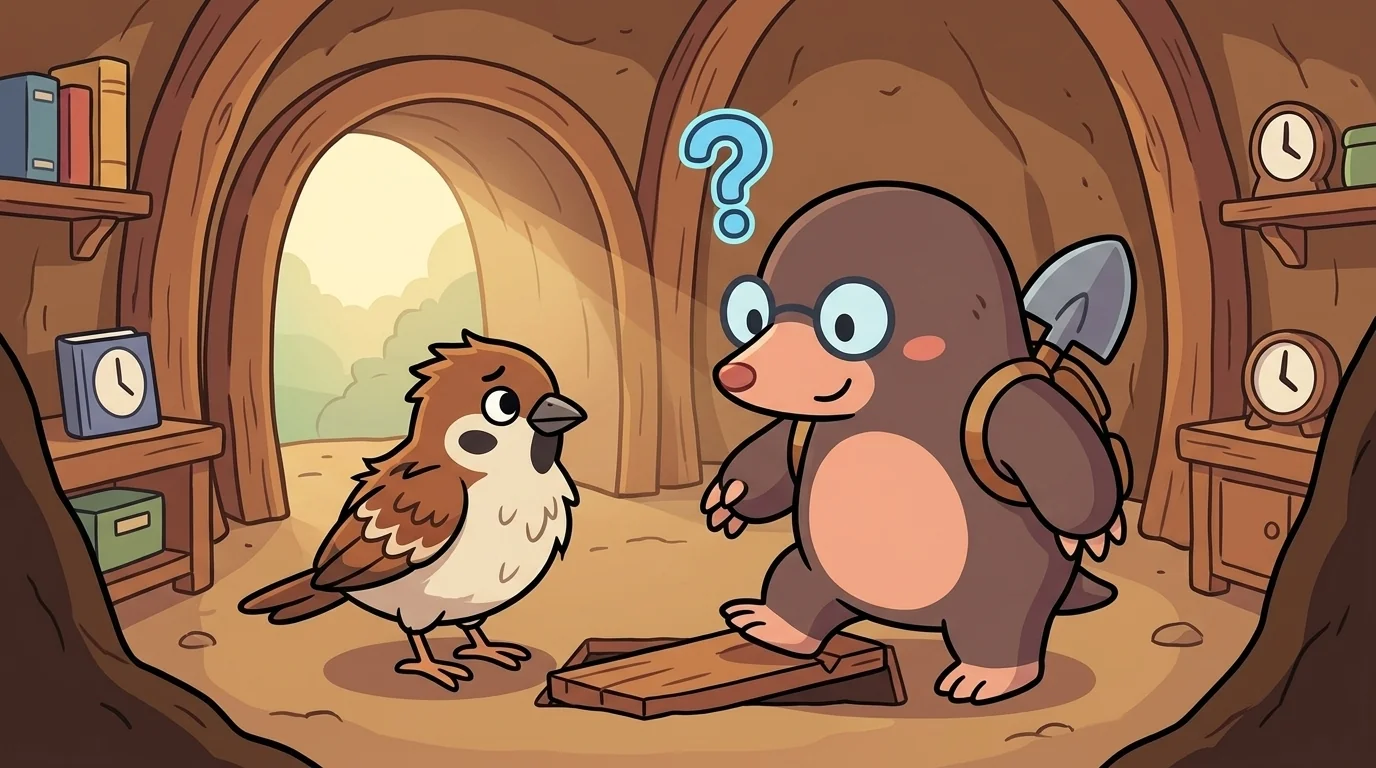
In Footing's burrow-study, a young sparrow fretted, feathers ruffled to the point of fluff.
"Footing — if I have to interrogate every hidden premise, won't I end up trusting nothing? Isn't that exactly how someone becomes one of those cranks who's decided the whole world is a lie?"
Footing settled the sparrow gently onto solid ground and made room.
"That's the precise trap I want to steer you clear of, so let me be careful — because there are two ditches, one on each side of the road. First ditch: mistaking surfacing an assumption for rejecting it. They're not the same act. When I dig up a warrant and stomp it, most of the time it holds — and then I trust it more than before, because now it's checked instead of merely hoped. Digging is the opposite of both blind faith and blind doubt. Second ditch, the one you're leaning toward: deciding that because some floors are soft, they must all be rotten, so nothing is really solid and it's 'all just opinion.' That's the crank's error — stomping every floor and declaring every one hollow. The gullible one never stomps at all. The good reasoner stomps, looks honestly at what the stomp reveals, and keeps the ground that holds. You're not learning to believe nothing. You're learning to tell which ground is load-bearing — so you can build on it with earned confidence instead of borrowed hope."
The sparrow's feathers smoothed. "So checking the floor is how I get to trust it — not how I lose it."
"Checking is how trust stops being a guess and becomes something you've earned," Footing said. "That's the sturdiest kind there is."
The sparrow thought a long moment, and something behind the worry loosened and opened up.
"Everyone in my class 'knew' the new kid was stuck-up, because they never talked to anyone," the sparrow said slowly. "It was just — a given. Nobody argued it. Then one person actually went and asked, and it turned out the new kid was terrified and shy, not proud at all. The whole 'everybody knows' was a warrant nobody had ever stood on and checked." The sparrow looked down. "I feel bad we all built on it for so long."
"That feeling — the soft, humbling drop when a premise you'd treated as bedrock turns out to be air — is one of the most valuable feelings a thinker can have," Footing said warmly. "It isn't the feeling of having been foolish. It's the feeling of your mind getting larger, because it means you were brave enough to look down at your own foundations. And waiting on the other side of that drop is something steady and good: a mind that stands only on ground it has actually tested, and a heart still humble enough to be surprised by what it finds." Footing pressed a small, smooth stomping-stone into the sparrow's claw. "Go find an 'everybody knows' and give it a gentle, honest stomp. See what holds — and let the softness of what doesn't teach you, instead of shame you."
The sparrow took the stone, feeling the roomier, humbler steadiness of a floor checked for real, and went out to stomp-test something the whole class had simply known.
The ClaimCraft ensemble
Footing is part of ClaimCraft's distributed-narrative cast. Each character embodies a different curricular primitive; together they teach the full subject.
-

Posit
Claim — asserting-for-testing posture (claim is a card on the table, not a fortress)
-

Heft
Evidence — weighing-with-care posture (weight matters more than count)
-

Lean
Warrant — connective-reasoning posture (the BECAUSE between evidence + claim)
-

Counter
Counterargument — opponent-taking-seriously posture (best version of the other side strengthens yours)
-

Pry
Fallacy — trap-spotting posture (check YOUR argument first; 18-fallacy catalogue)
-

Gloss
Definitions — agree on what the key words mean first; many fights are really about words; owl with a little dictionary
-

Temper
Qualifiers / scope — match a claim's strength to its evidence; 'usually' survives what 'always' can't; badger with balance-scales
-

Onus
Burden of proof — whoever makes the claim supports it; bigger claims need bigger evidence; heron balancing the scales
-

Grant
Concession / common ground — grant the true points, find the shared ground, argue the real slice; deer in a shared clearing