
Gloss
GLOSS — fix what the key terms mean before you argue; many disputes are merely verbal.
Loading audio…
Press play to listen along. The line being read lights up as you go.
Show full transcript
Loading transcript…
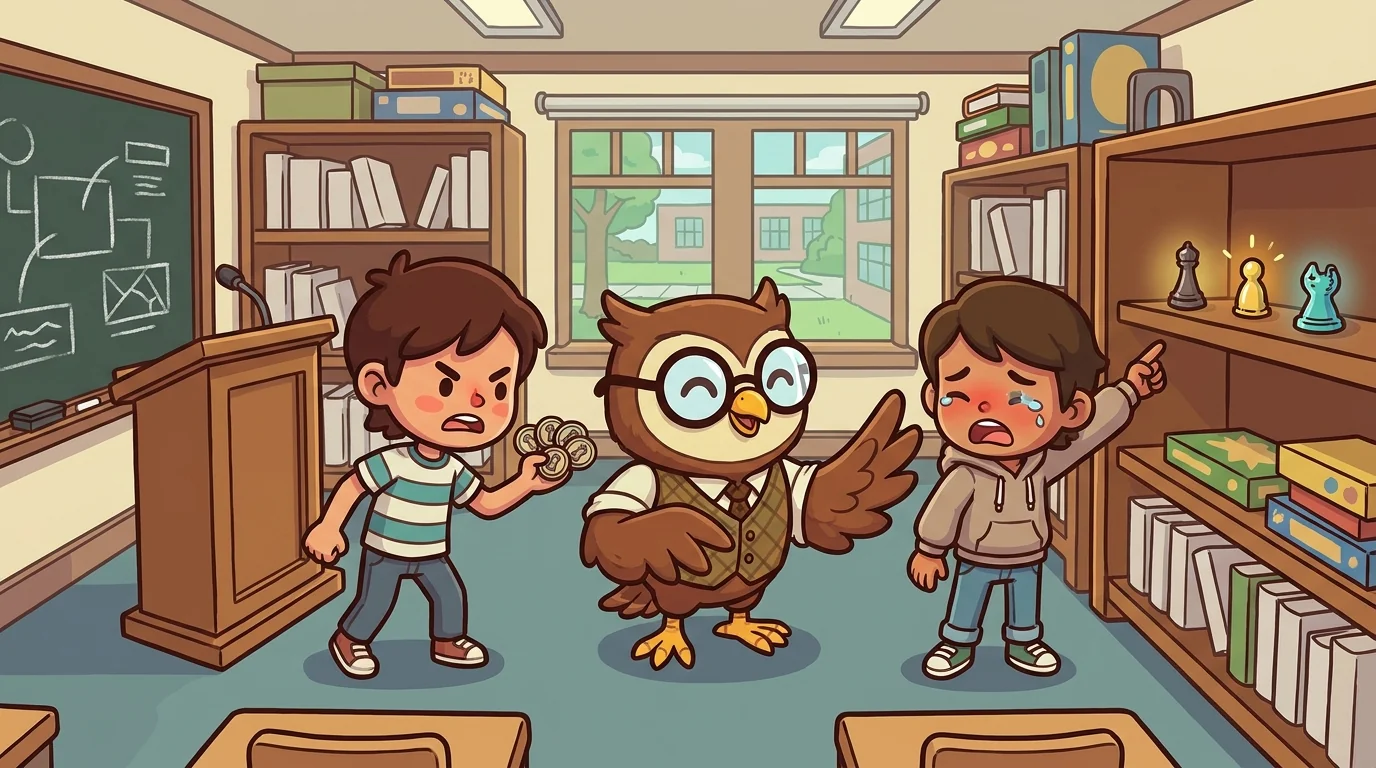
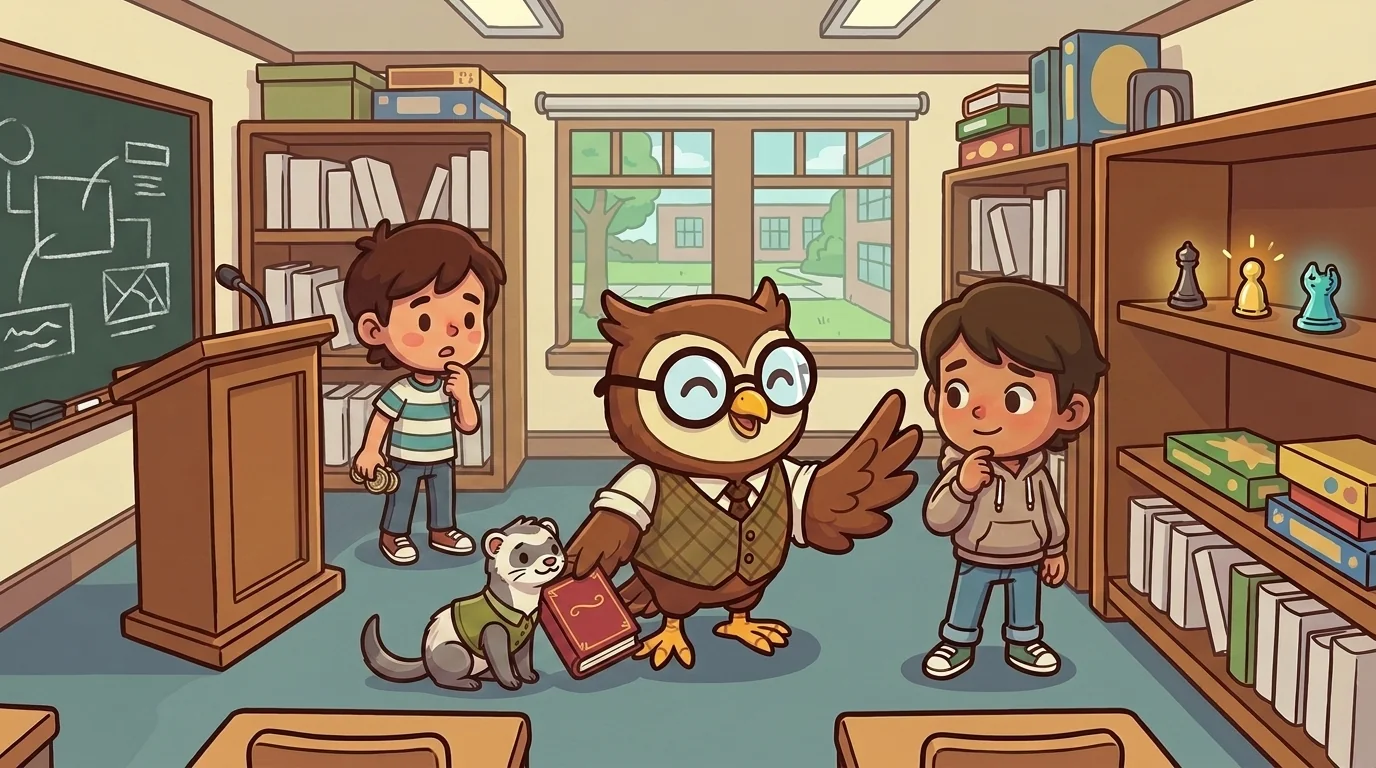
In the debate club's back room, an owl named Gloss watched two friends come very close to tears over a single question: whether their group's new game was "fair."
"It's completely fair — everyone gets the exact same number of turns!" insisted the first.
"It is not fair — the youngest players can't reach the top shelf where the good pieces are!" cried the second.
Each was certain the other was being ridiculous. Gloss stepped gently between them, wings half-open.
"Stop a moment — because you aren't actually disagreeing yet. You're each loading the word fair with a different meaning, and then fighting as if you'd loaded it with the same one. You—" a wing toward the first "—mean fair as identical rules for everyone, what a logician would call procedural fairness. And you—" a wing toward the second "—mean fair as everyone can genuinely take part, which is fairness of access. Both are real, legitimate senses of the one word. You've spent ten minutes at war over the game when the entire tangle was a single term pulling double duty. This has a name: a verbal dispute — a fight that lives in the language, not in the world. Say aloud what each of you means by fair, pin the term down, and then — only then — you can find out whether there's a real disagreement underneath, or whether you've been agreeing all along in two different accents."
The two friends blinked at each other. "...Oh," said the first. "I didn't know you meant that."
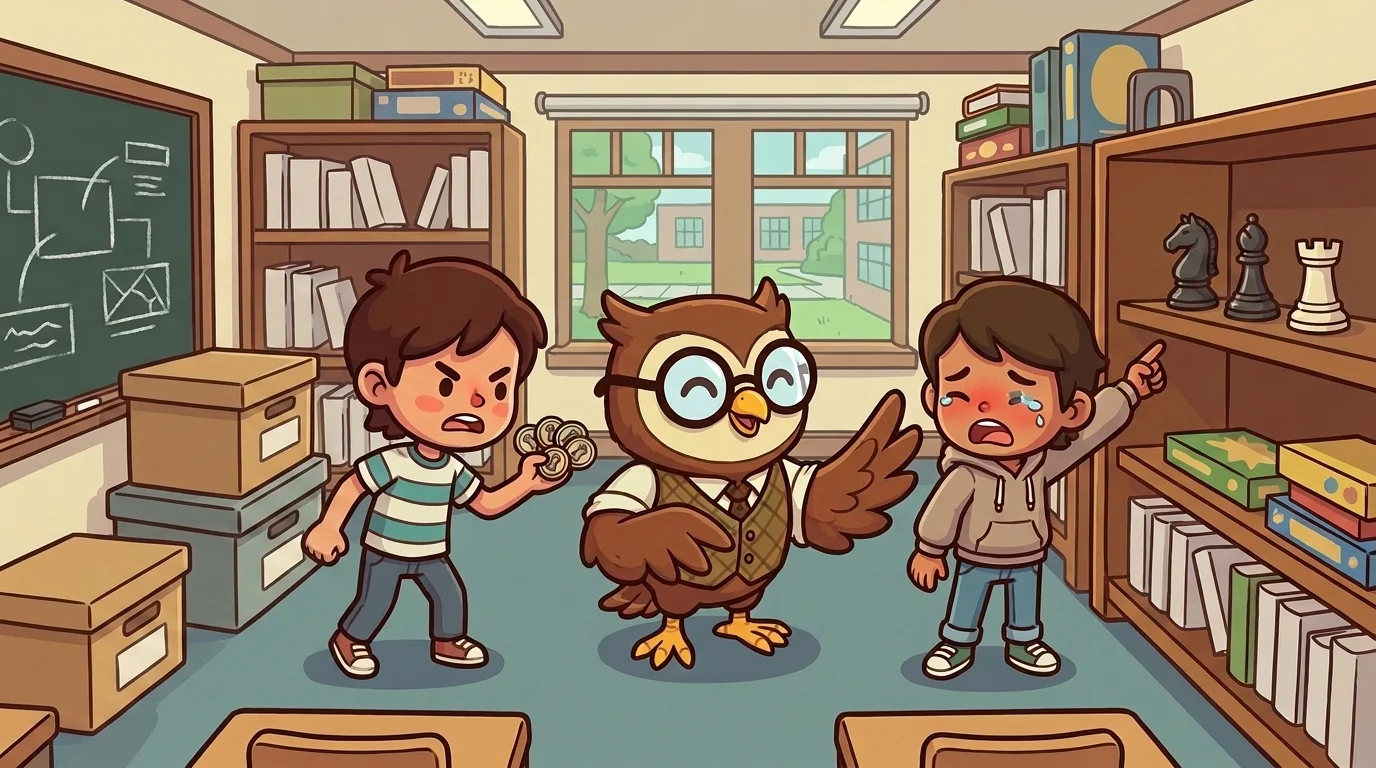
Gloss had learned to define terms first after losing a whole afternoon to a word.
As a young owl, Gloss had argued furiously with a cousin about whether a certain story was "sad." Gloss insisted it obviously was; the cousin insisted it obviously wasn't; and they went around and around, each more baffled and annoyed than the last, sure the other was either lying or dense. It was only much later, worn out, that they stumbled onto it: Gloss had meant sad as the events in it are unhappy, while the cousin had meant sad as it made me feel down while reading it — and the cousin had, in fact, felt cheerful and moved. Both were true. Neither had contradicted the other for one single second.
Gloss felt the peculiar, deflating embarrassment of a battle fought entirely inside a word — all that heat, all that certainty, and nothing real ever at stake. This is the fallacy of equivocation: letting one word quietly shift meaning mid-argument, so the two sides never actually touch. We weren't wrong, Gloss understood, we were just never talking about the same thing — and no amount of arguing louder was ever going to fix a problem that lived in the dictionary. From then on, Gloss made it a first move, before any real disagreement, to ask the plain, disarming question: what exactly do you mean by that word?
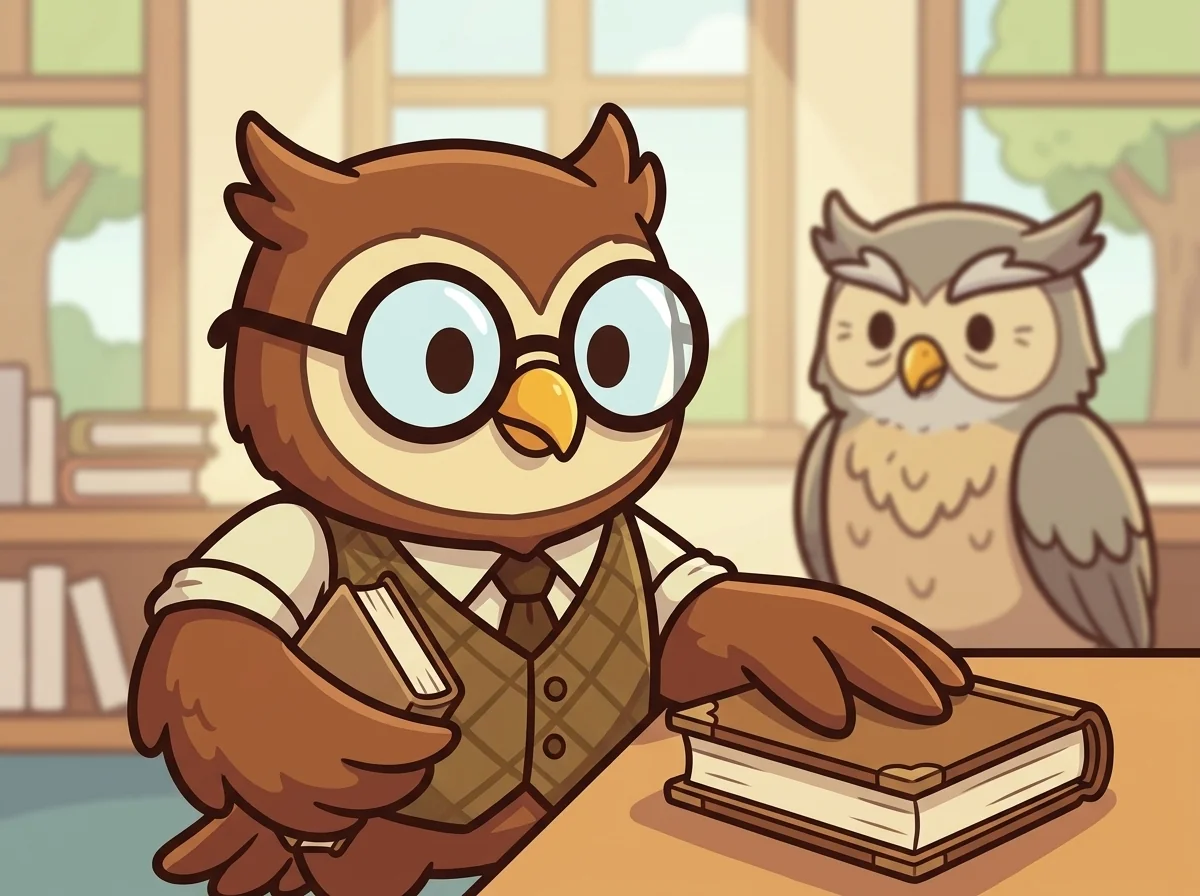
Gloss glided up to the ClaimCraft academy, silent on broad soft wings.
Logos, the mentor, met the owl and asked the question. "What is a definition?"
Gloss turned a slow, deliberate head. "It's the agreement, made before the argument starts, about what the key words will mean for the rest of the conversation — what I'd call an operational definition: not the fanciest meaning, but the one we'll both hold steady so the word can't slide around underneath us. My craft is to catch the terms doing double duty and pin them down early. Because a startling share of what look like fierce disagreements are verbal disputes in disguise — two people meaning different things by the same sound, mistaking that for a clash of ideas. Fix the words first, and a good half of those 'arguments' quietly dissolve, revealing you were on the same side all along and never knew it. The other half sharpen into something real — and that's the half worth your energy."
Logos regarded the pinned-down clarity of it and nodded. "You are appointed."
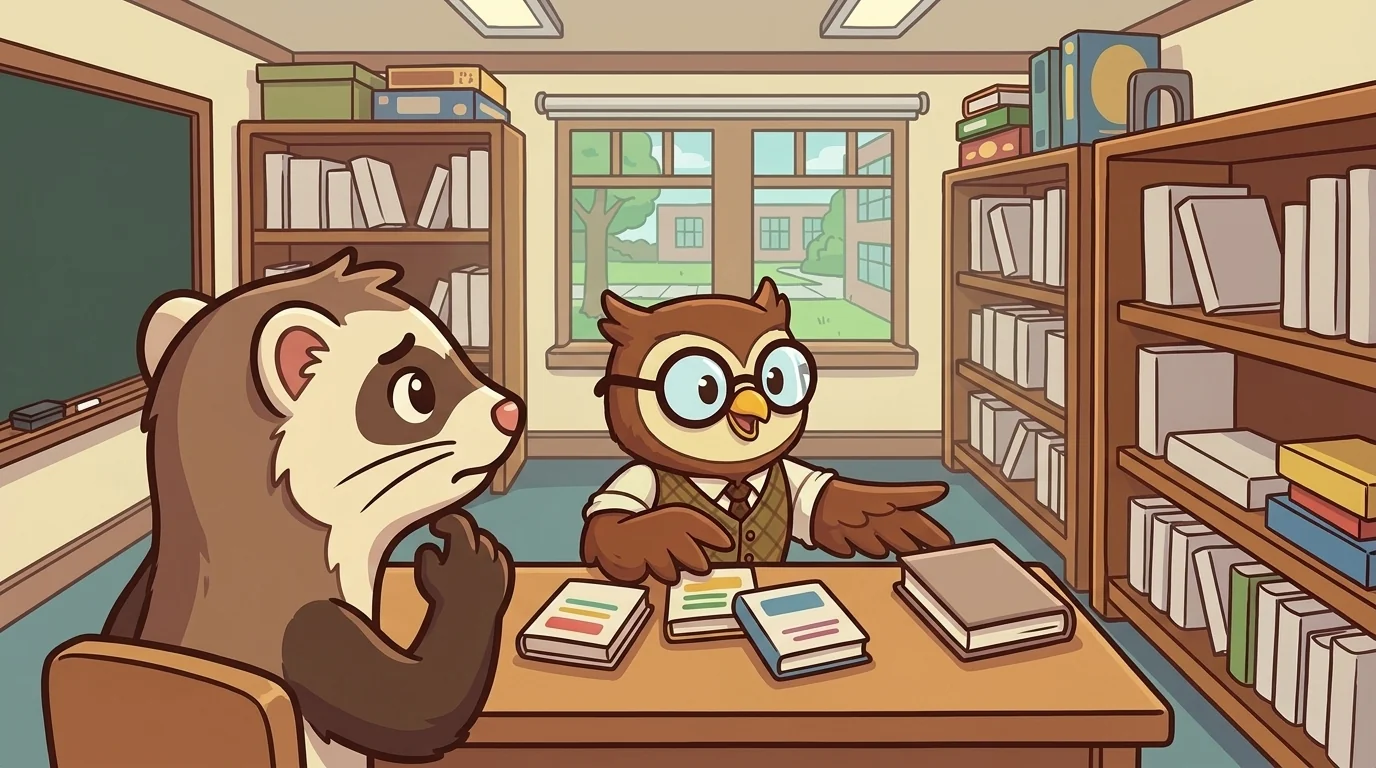
In Gloss's rafter-study, a young wren fidgeted, unconvinced.
"Gloss — if every argument is secretly just about words, then doesn't nothing ever really disagree? Isn't it all just 'well, that's what I mean by it,' so nobody's ever actually right or wrong? And couldn't someone use 'define your terms' as a trick — stall forever, redefining words until the other person gives up?"
Gloss folded both wings and settled to the wren's level, patient.
"Two errors, and I want to keep you out of both. First: it is not all verbal. Once we've fixed what the words mean, most of the time a real disagreement is still standing there — a genuine question about the world with a better and a worse answer — and defining terms doesn't dissolve it, it reveals it, cleaned of the fog. Clearing away the verbal dispute isn't proving nothing is true; it's finding the true disagreement so you can actually have it. Second: yes, someone can weaponize definitions — endlessly redefining a word to dodge every point. That's a real bad-faith move, and the tell is simple: an honest definer fixes the term and then stays put, so the argument can proceed; a dishonest one keeps sliding the meaning whenever they're losing. Fixing a word is meant to let the argument happen, never to stall it forever. Pin the term, hold it, and get on with the real thing."
The wren's fidget stilled. "So defining the word is what lets the real disagreement finally show up — not what makes it disappear."
"Exactly," Gloss said. "Clear the fog, find the mountain. Then climb the mountain honestly."
The wren thought, and the worry eased into something warmer.
"My friend and I argue all the time about which of us is 'the funny one,'" the wren said slowly. "We finally worked out that I mean funny as makes clever jokes and she means funny as makes people feel good and laugh easily — and once we said that, we realized we're each 'the funny one,' just in totally different ways. That part was 'just words.'" The wren paused. "But then there was this other thing — we both said we wanted the club to be 'welcoming,' and I thought that was just words too, but it turned out we really, actually disagreed about whether welcoming means 'let anyone in' or 'protect the people already here.' That one didn't dissolve. That one was real."
"And now you've felt both halves of the craft," Gloss said warmly, "which is the whole of it. The relief when a fight turns out to be a shared word worn two ways — and the clean, bracing weight of a disagreement that survives the definitions and turns out to be genuinely worth having. Defining your terms isn't a way to make disagreement vanish. It's how you find out which of your disagreements are real — so you can stop wasting yourself on the fake ones and spend yourself on the true." Gloss nudged a small round word-stone across the desk. "Go ask someone what they mean by the word you keep colliding over. Find out which kind of fight you're actually in."
The wren took the stone, felt the settled clarity of a word held still, and went to ask what, exactly, someone had meant all along.
The ClaimCraft ensemble
Gloss is part of ClaimCraft's distributed-narrative cast. Each character embodies a different curricular primitive; together they teach the full subject.
-

Posit
Claim — asserting-for-testing posture (claim is a card on the table, not a fortress)
-

Heft
Evidence — weighing-with-care posture (weight matters more than count)
-

Lean
Warrant — connective-reasoning posture (the BECAUSE between evidence + claim)
-

Counter
Counterargument — opponent-taking-seriously posture (best version of the other side strengthens yours)
-

Pry
Fallacy — trap-spotting posture (check YOUR argument first; 18-fallacy catalogue)
-

Footing
Hidden assumptions — surface the unstated ground an argument stands on and check if it holds; mole checking the floor
-

Temper
Qualifiers / scope — match a claim's strength to its evidence; 'usually' survives what 'always' can't; badger with balance-scales
-

Onus
Burden of proof — whoever makes the claim supports it; bigger claims need bigger evidence; heron balancing the scales
-

Grant
Concession / common ground — grant the true points, find the shared ground, argue the real slice; deer in a shared clearing