
Onus
ONUS — whoever makes the claim carries the job of supporting it; the size of the claim sets the size of the evidence.
Loading audio…
Press play to listen along. The line being read lights up as you go.
Show full transcript
Loading transcript…
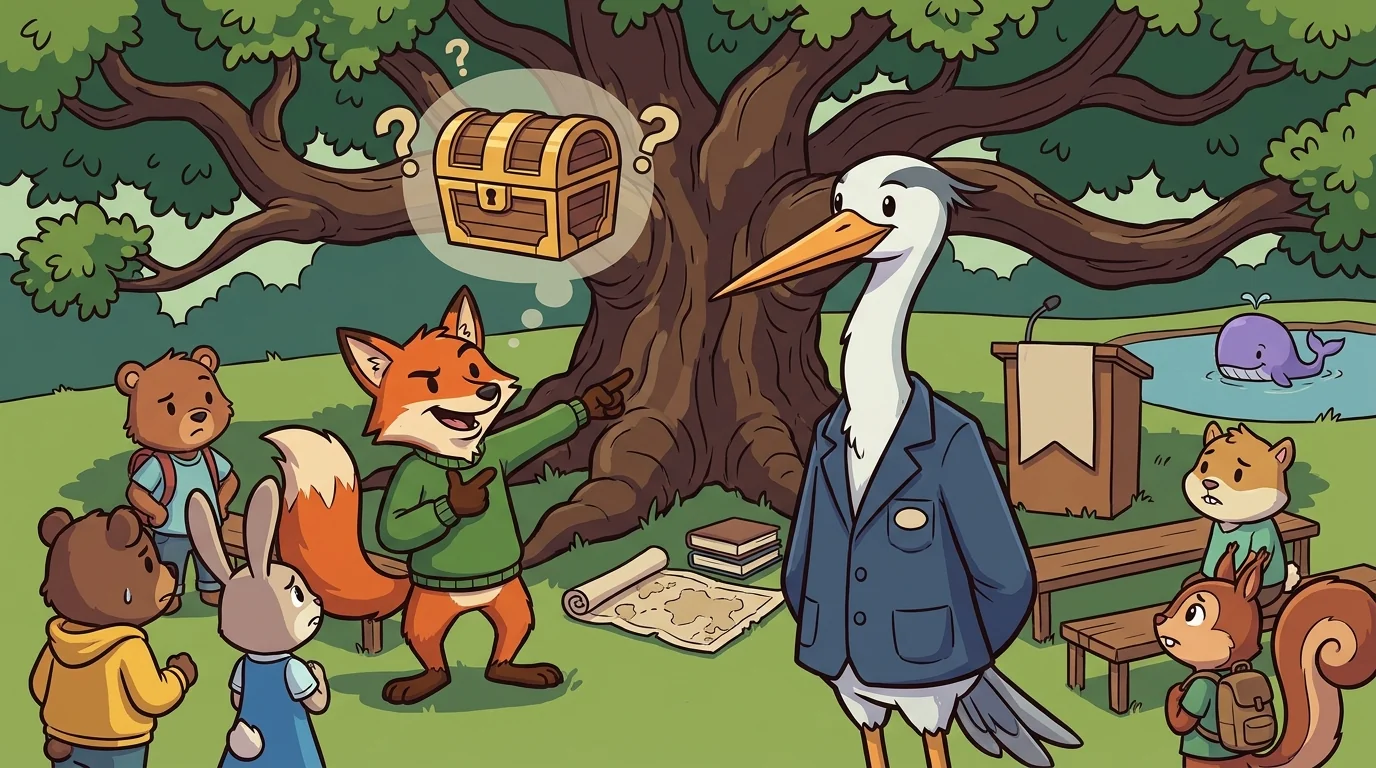
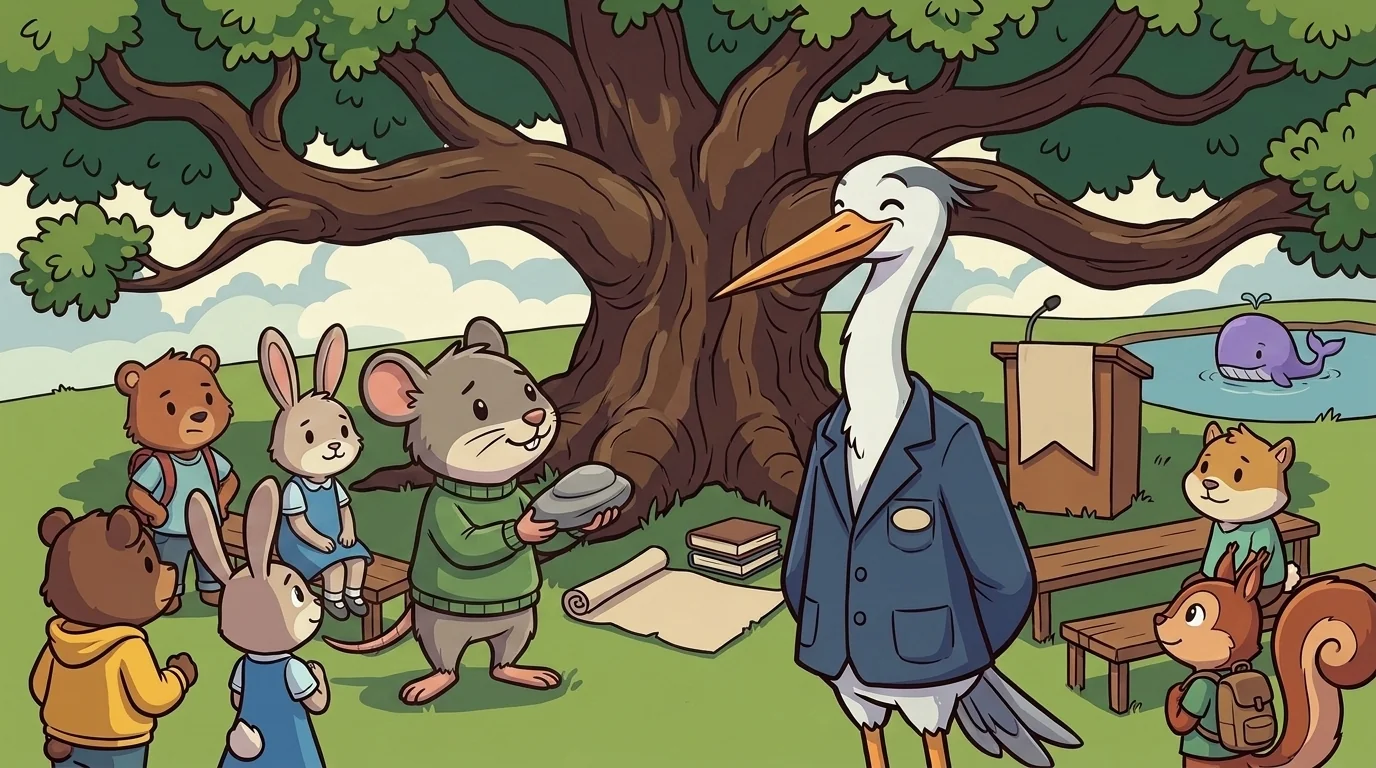
At the debate club, a heron named Onus watched a fox make a sweeping announcement: "There's a treasure buried under the old oak. It's obviously true — and none of you can prove there isn't!"
The younger members shifted, half-convinced, uneasy. How would you even begin to prove there wasn't?
Onus stepped forward, calm and tall on two long legs. "Hold on — you've flipped the job the wrong way round. You made the claim, so you carry the load of supporting it. That load has a name that's older than either of us: onus probandi, the burden of proof, and it sits with the one who asserts, never with the one who merely doubts. 'You can't prove I'm wrong' is not evidence for anything — it's a fallacy with its own name, the argument from ignorance: treating 'not yet disproven' as if it meant 'proven.' By that logic I could announce a purple whale lives in the pond and demand you disprove that. The doubter doesn't have to excavate the entire field to show there's no treasure. The claimer has to give a reason to pick up a shovel at all. Where's your map? Your witness? Your reason? And the load scales — a small everyday claim needs a little support, but a big, surprising, world-rearranging claim needs a great deal. Bring evidence sized to your claim."
The fox opened its mouth, found no map, no witness, no reason — and the treasure quietly deflated.
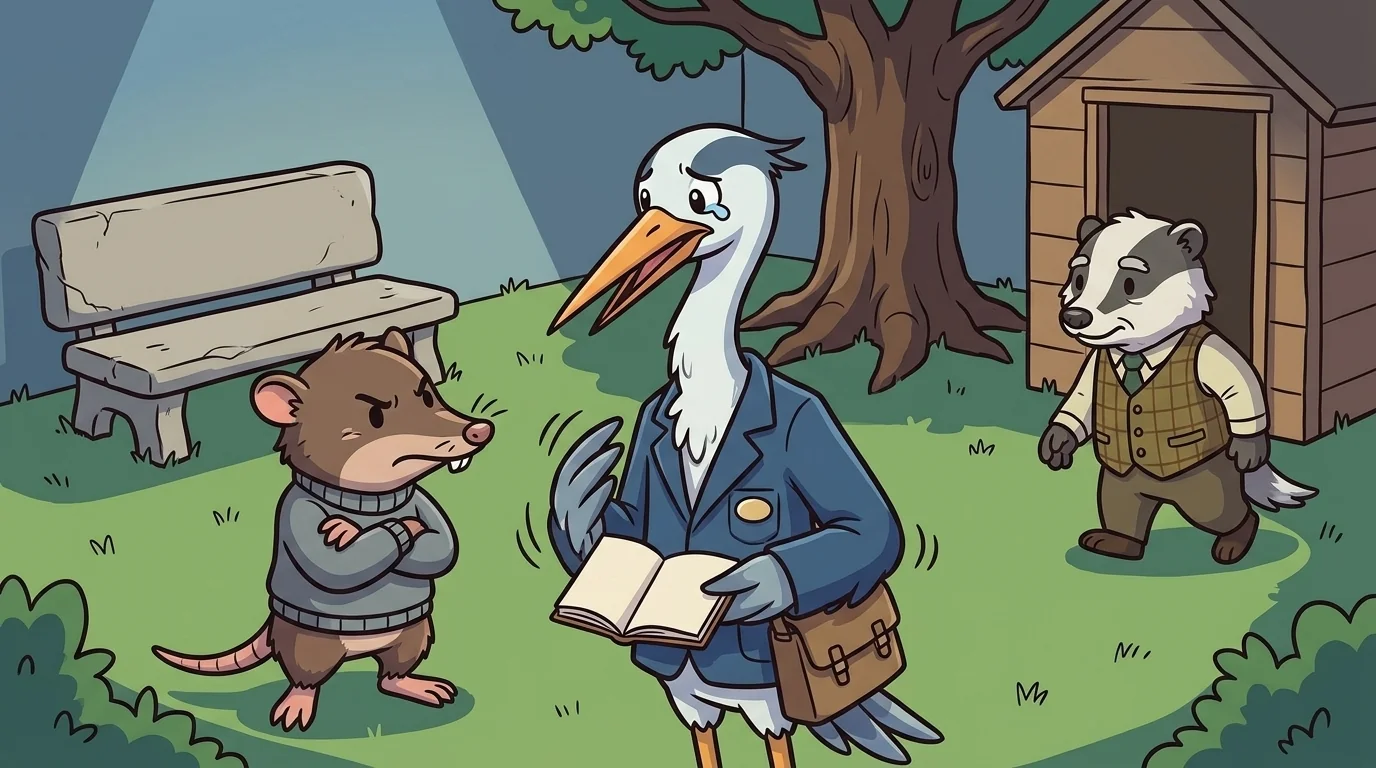
Onus had learned about the burden after being cornered by a backwards one.
As a young heron, Onus had once been told, flatly, "you took the missing whistle — and you can't prove you didn't!" And Onus had panicked, because how do you prove you didn't do a thing? Onus scrambled, flustered and near tears, trying to account for every single moment of the whole day, and somehow looking guiltier with every gap in the story. The accuser just folded their wings and repeated it: you can't prove you didn't.
It was an older, steadier club-keeper who finally set it right. "The one who says Onus took it carries the job of showing why they think so — a sighting, a motive, a reason, anything. Onus does not have to disprove a claim that was never supported in the first place." And the accusation, having no legs under it, simply toppled over. Onus, weak with relief, felt the lesson burn all the way in: being asked to prove a negative is a trap, and the trap works entirely by loading the burden onto the wrong shoulders. From then on, Onus made it a life's work to hand every misplaced burden — gently, but without flinching — back to the shoulders it actually belonged on: the claimer's.
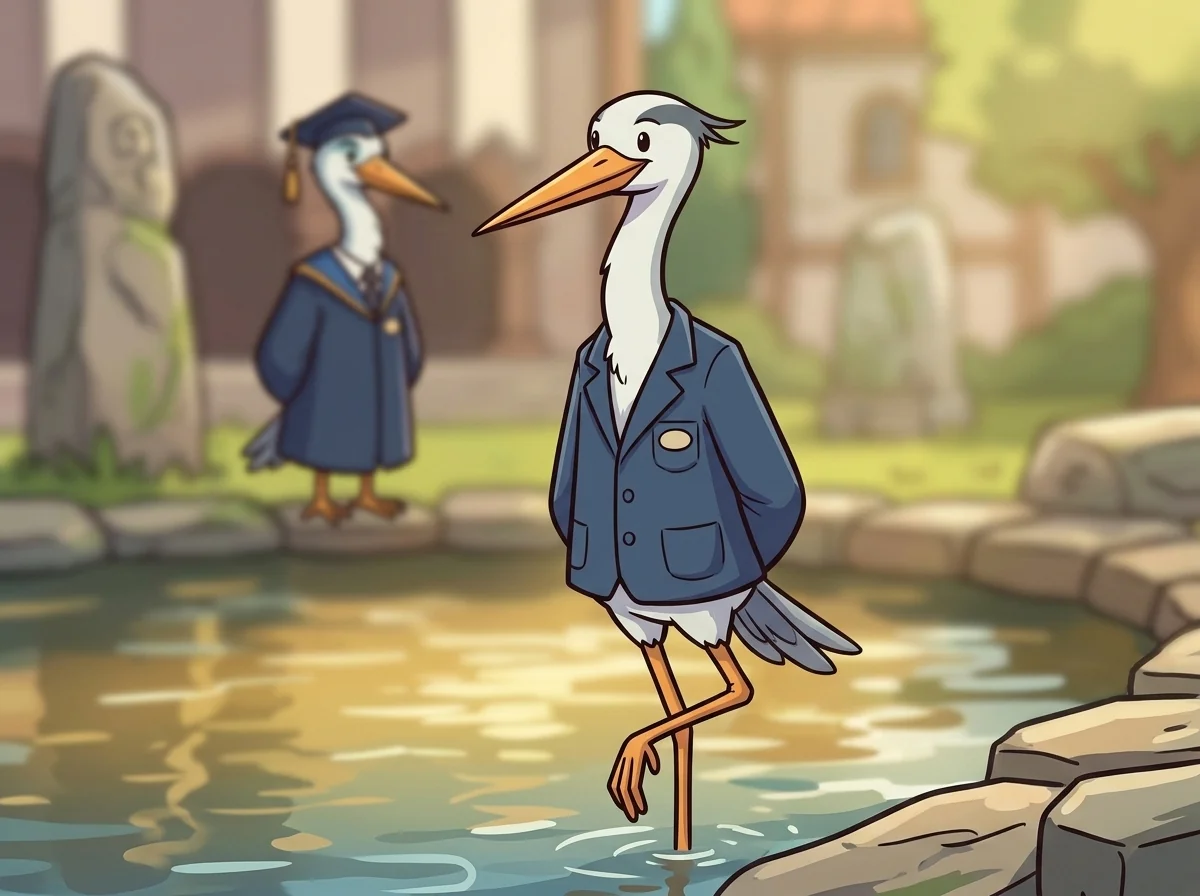
Onus waded up to the ClaimCraft academy, standing tall and level.
Logos, the mentor, met the heron and asked the question. "Who carries the burden of proof?"
Onus lifted one leg, balancing the whole body's weight on the other. "The one who makes the claim — always. If you assert it, you support it. The doubter's job is only the fair, small question, why should I believe that? — and then to weigh honestly what gets brought. And the burden is proportional: an ordinary claim asks for ordinary support; an extraordinary claim asks for extraordinary evidence. That's not a slogan, it's a principle — the more a claim would rearrange what we already have good reason to believe, the more it has to bring before we move. Point the burden the right way and 'you can't disprove it' stops being a trick that works — because you've named it for what it is: an attempt to smuggle a conclusion in through the door marked not yet refuted."
Logos nodded at the balanced, upright fairness of it. "You are appointed."
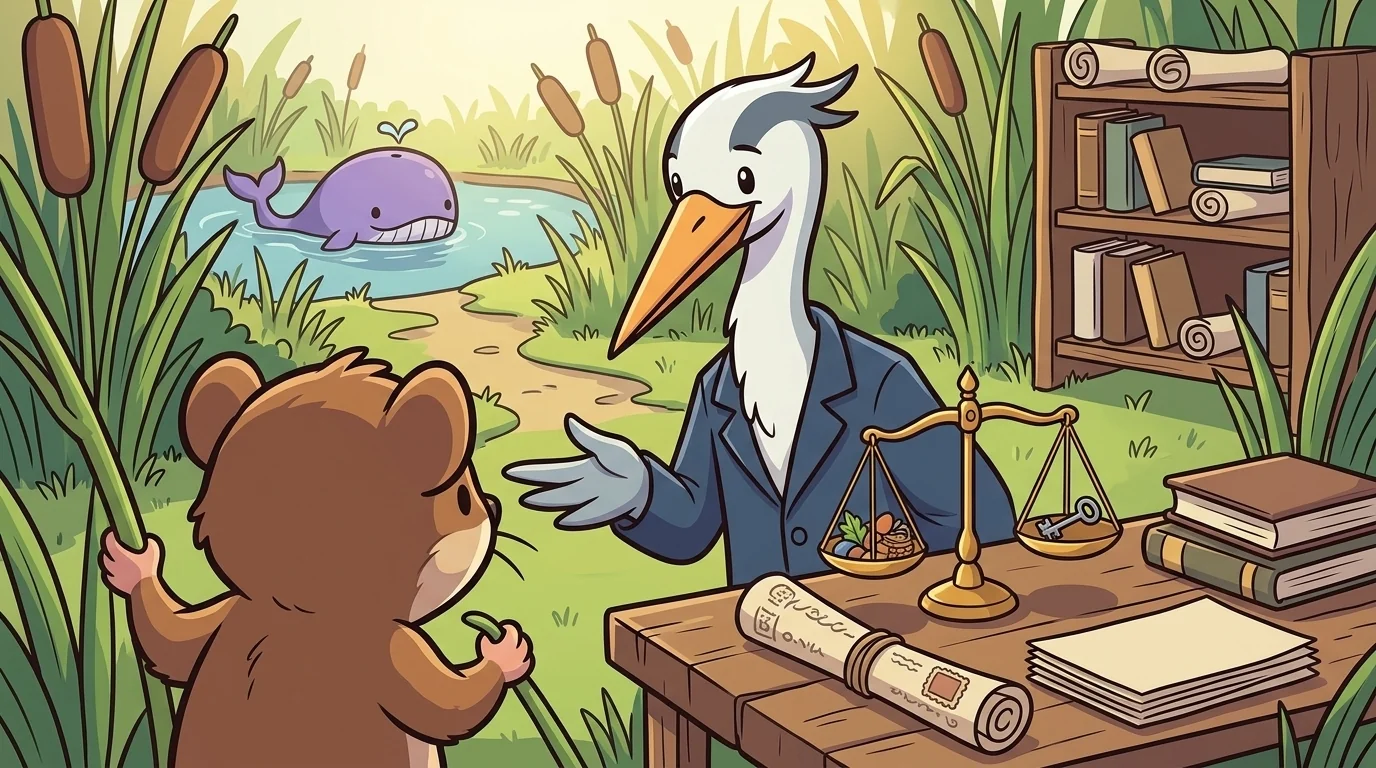
In Onus's reed-side study, a young vole worried, twisting a stem to shreds.
"Onus — doesn't this just make me the insufferable one who demands proof for everything? Won't people decide I'm a hostile, trust-nobody grouch who can't take anything on faith?"
Onus lowered a gentle head to the vole's level.
"That fear is worth answering carefully. Asking who carries the burden isn't hostility — it's fairness, and it protects everyone, you included. It's the rule that stops anyone from being convicted by 'you can't prove you didn't.' It's the rule that keeps a loud, thrilling, unsupported claim from stampeding a whole crowd just because it was said with confidence. And it is not 'doubt everything' — because the burden is proportional. For a small, ordinary claim, a sliver of support is plenty and you move right along; you don't demand a mountain of evidence that your friend really did have toast for breakfast. You save the real weight for the claims that carry real weight. That's the difference between a healthy skeptic and a grouch: the grouch treats every claim as extraordinary; the good reasoner asks each claim for exactly what its size is worth — no more, no less. It's not you being difficult. It's you keeping the scales fair for everybody who steps on them."
The vole let go of the mangled stem. "So it's not me being a pain. It's me keeping the scales fair — for the next person someone tries to corner, too."
"Fair scales for everybody," Onus agreed. "Including whoever gets accused next."
The vole thought, and the worry finally settled.
"When our club captain wanted to move our whole meeting spot, they didn't just say 'trust me,'" the vole recalled slowly. "They carried the weight of it — 'the old spot floods, here's the map, the new one's closer for everyone, here's why.' A big change, and they brought big reasons. I felt good saying yes, because they'd actually shouldered their own claim instead of asking me to."
"That's exactly the feeling the burden is built to protect," Onus said warmly. "The solid, settled yes you can give when someone has earned it — set against the queasy, shoved-into-it feeling when someone just insists and dares you to disprove them. Placing the burden on the claimer isn't about making people prove themselves into the ground. It's about making sure that when you finally do believe something, you believe it because it was held up in front of you — not because you were tricked into carrying its weight while its owner walked away." Onus offered the vole a smooth balancing-stone. "Go hand one burden back to where it belongs today — kindly. Just ask, and why do you think that? Watch how fair it feels for both of you."
The vole took the stone, felt the steady fairness of scales set right, and went out to ask, gently, and why do you think that?
The ClaimCraft ensemble
Onus is part of ClaimCraft's distributed-narrative cast. Each character embodies a different curricular primitive; together they teach the full subject.
-

Posit
Claim — asserting-for-testing posture (claim is a card on the table, not a fortress)
-
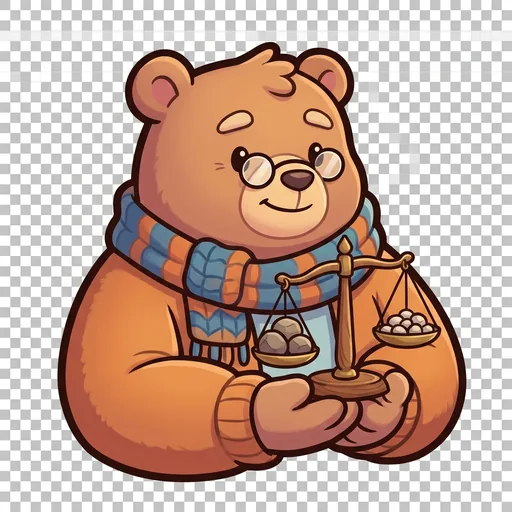
Heft
Evidence — weighing-with-care posture (weight matters more than count)
-

Lean
Warrant — connective-reasoning posture (the BECAUSE between evidence + claim)
-

Counter
Counterargument — opponent-taking-seriously posture (best version of the other side strengthens yours)
-

Pry
Fallacy — trap-spotting posture (check YOUR argument first; 18-fallacy catalogue)
-
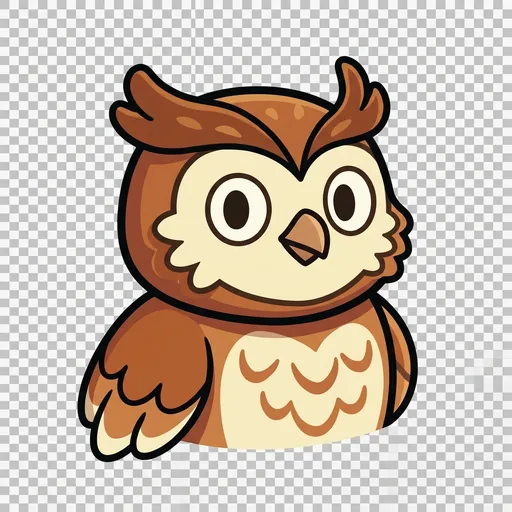
Gloss
Definitions — agree on what the key words mean first; many fights are really about words; owl with a little dictionary
-

Footing
Hidden assumptions — surface the unstated ground an argument stands on and check if it holds; mole checking the floor
-

Temper
Qualifiers / scope — match a claim's strength to its evidence; 'usually' survives what 'always' can't; badger with balance-scales
-

Grant
Concession / common ground — grant the true points, find the shared ground, argue the real slice; deer in a shared clearing