
Stash
VARIABLE / STORAGE — *the labeled box that holds a value until you call for it.*
Loading audio…
Press play to listen along. The line being read lights up as you go.
Show full transcript
Loading transcript…
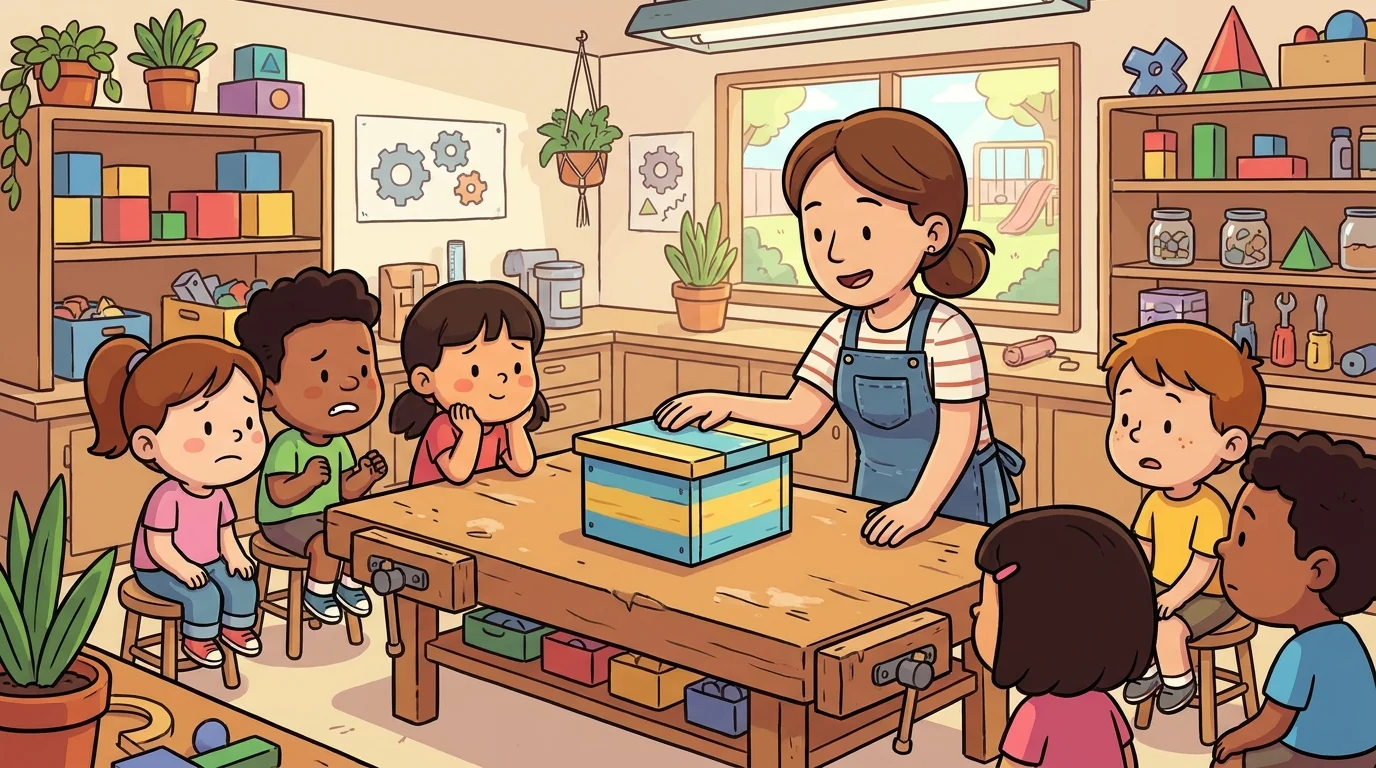
Stash wasn't a fuzzy animal or a talking robot. Stash was a box — a small painted wooden box that sat on the classroom workbench, with a label on its side and a little value visible inside. The label read NAME = X. You could open the box to put a value in, or open it to take a value out. That was the whole of Stash.
"This is Stash," Loop said, patting the box. She always spoke on Stash's behalf, because Stash never pretended to be a person. "Stash is a variable — a labeled box. And I want to be honest with you right away, the way Stash would if it could talk: I am not a mind. I do not think, I do not decide. I hold a value until you call for it. I am a box." A few kids who'd come in nervous — sure that "coding variables" would be something huge and mysterious — sat up a little.
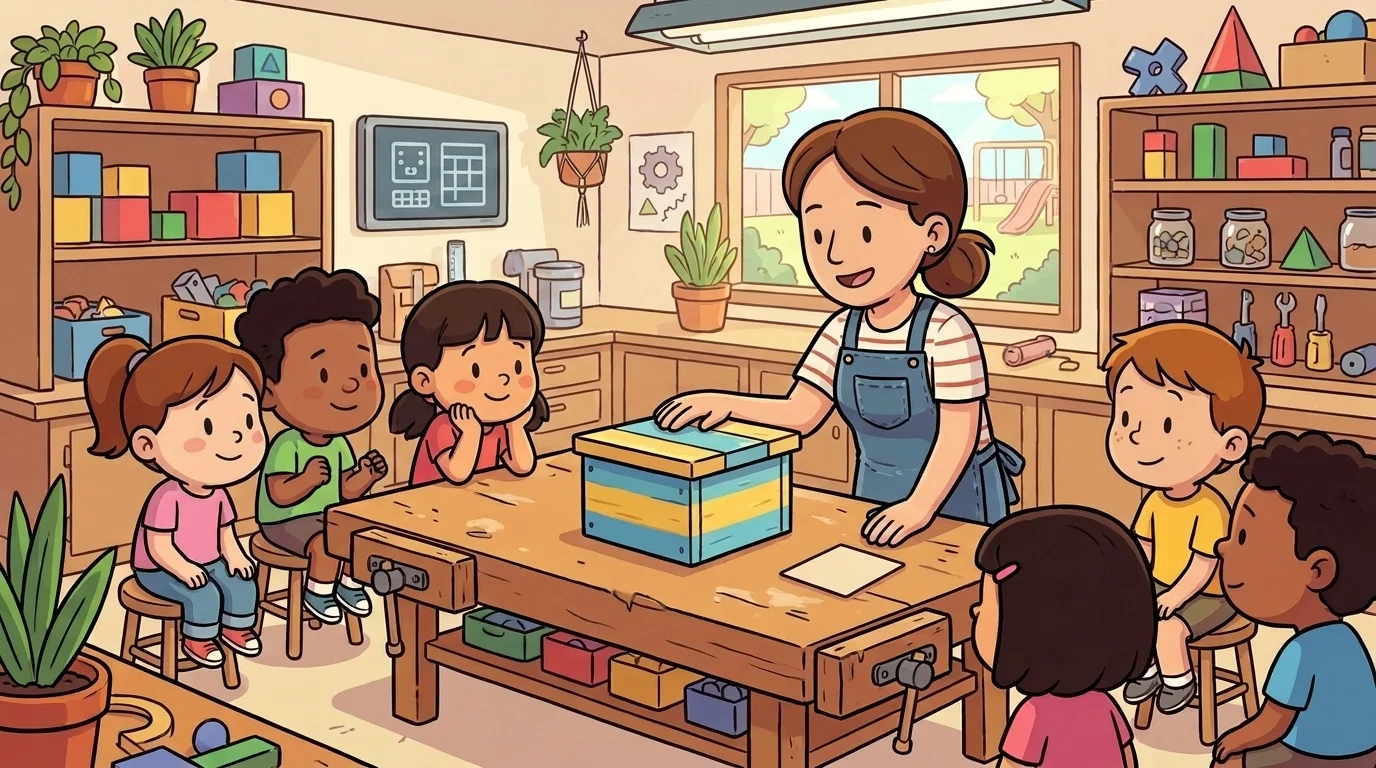
Loop lifted the lid. "Watch. I'll put a value in." She set a card marked 5 inside and closed it. On the little screen behind her, it showed: x = 5. "That's called assignment — putting the value 5 into a box labeled 'x.'" Then she opened the box and held up the 5 for everyone to see. "And this is reference — asking for whatever's in the box right now: print(x) — and out comes 5." She smiled. "A variable has two parts, and only two: a name (the label on the side) and a value (whatever's inside). That's it. Put in, take out."
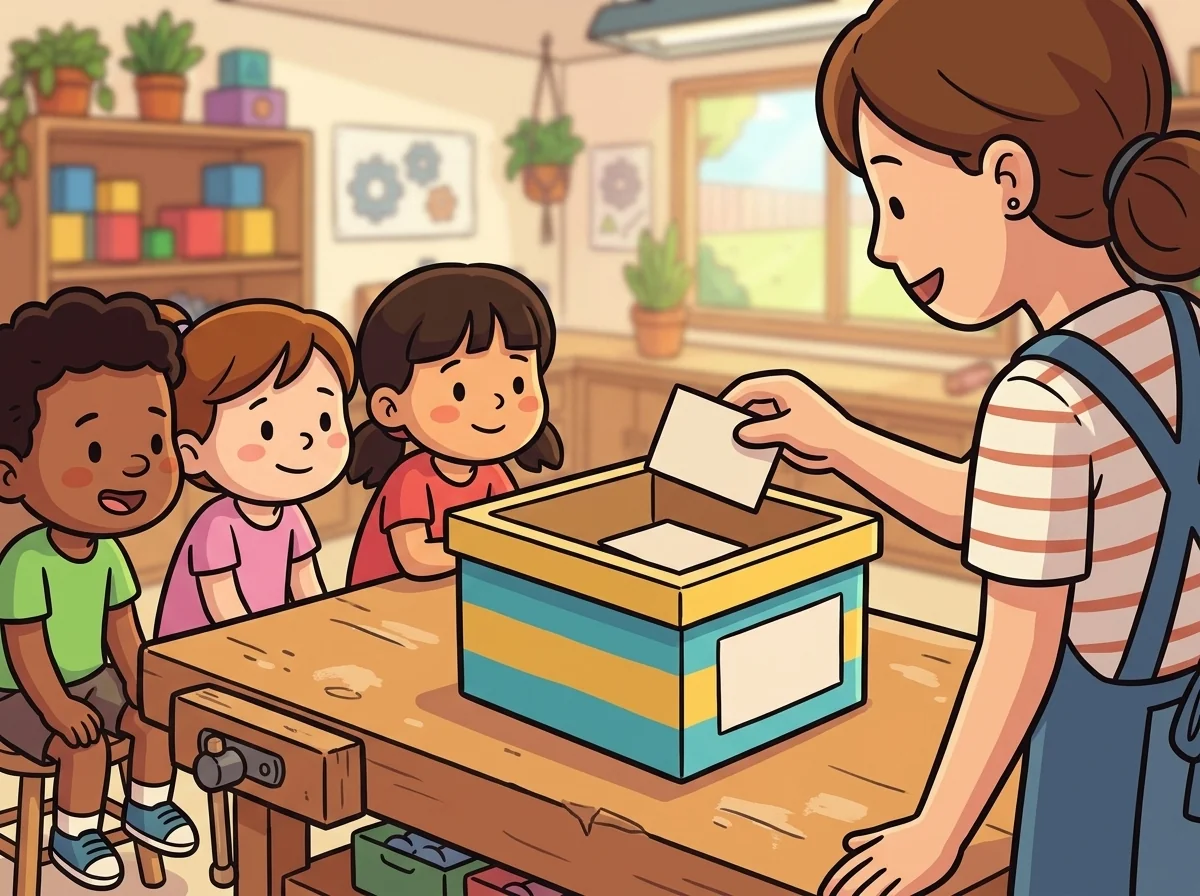
"Now the part that surprises people," Loop said. She opened the box, took out the 5, and dropped in a card marked 10. The screen updated: x = 10. "Same box. Same label — still 'x.' But brand-new contents. That's reassignment — you can empty the box and refill it whenever you like. The label stays put; the value can change as often as you want." She held up different cards. "And lots of kinds of things can go in the box, not just numbers — a bit of text like "hello", or a whole list of things — depending on the language's rules. The box doesn't care much what you keep in it. It just holds it, steady, until you come back for it."
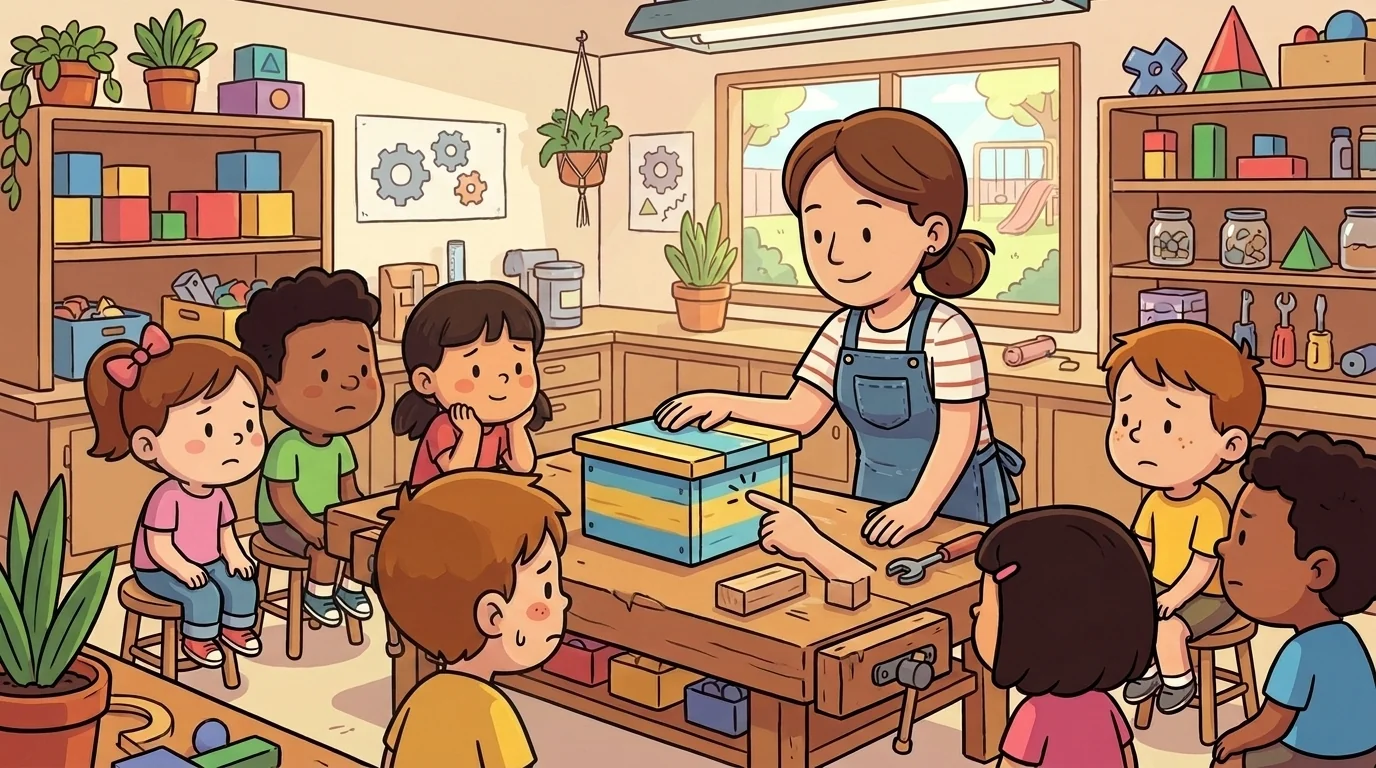
"Two more things, and they're about being kind to future-you," Loop said, tapping the label. "First — names matter. A good label tells you what's in the box: score, playerName, currentLevel. A lazy label like x or temp or data leaves you guessing later what you even stored." She pointed around the room to imaginary boxes. "Second — scope. Some boxes sit out where the whole program can reach them; others live only inside one little corner — one function's workbench — and vanish when that job is done. Knowing where a box can be reached keeps you from hunting for a value that isn't there." She closed Stash gently. "But under all of it — Stash is still just: box, label, value. Put in, take out, change the contents."

A student who'd been chewing her lip finally asked the thing she'd been dreading: "Is this the part that's really hard? Variables?"
Loop shook her head and opened Stash one more time, showing the plain card inside. "Not hard. Box. Label. Value. Put-in, take-out, change. That's all a variable is." And Stash sat there on the bench, quiet and steady, waiting for the next value — not magical, not a mind, just a reliable place to keep something safe until you called for it.
And the kids who'd come in nervous felt it then — the worry loosening into something calm, and even a little brave. The thing that had seemed mysterious and out of reach had turned out to be as friendly and solid as a box you could hold in your own two hands. That feeling — oh... I can hold onto this. I've got a steady place to keep what matters until I need it — is the warm, quiet thing Stash leaves behind. Chase that steady feeling. Everything else in CodeRealm is built on it.
The CodeRealm ensemble
Stash is part of CodeRealm's distributed-narrative cast. Each character embodies a different curricular primitive; together they teach the full subject.
-

Fork
Conditional / branching — chooses a path based on what's true right now
-

Trek
Loop / iteration — keeps going around until the work is done
-

Module
Function / encapsulation — does one job well and can be called anywhere
-

Glitch
Debugging / inspection — finds bugs gently, never shaming; 'there's always a reason'
-

Order
Sequence / syntax — reminds you that order matters in code
-
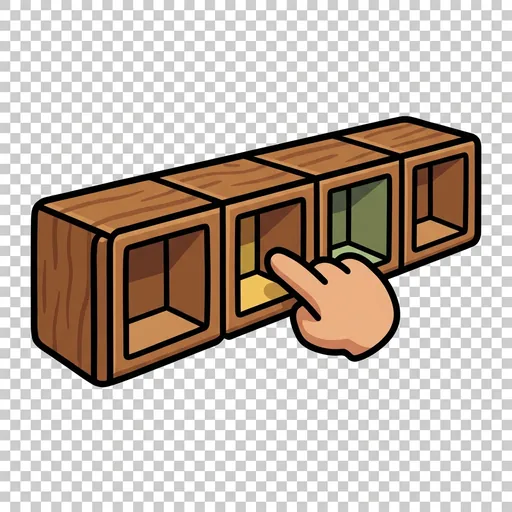
Row
A list: many values lined up in a numbered row, so you can grab item number three instantly or walk through them one by one.
-

Port
Input and output: the doorway that brings information in from the world (a key press, a sensor) and sends results back out.
-
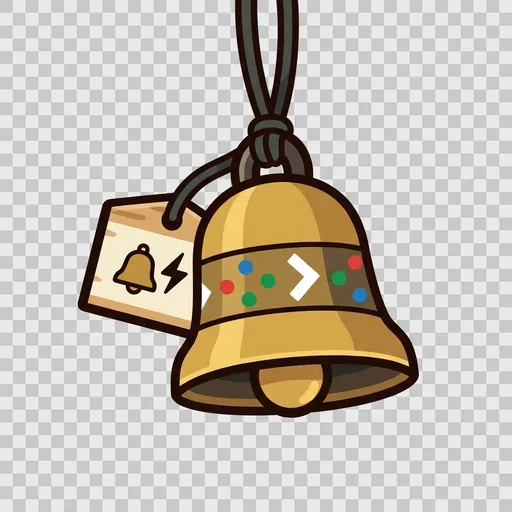
Ping
An event: a waiting bell that does nothing until its trigger happens, then runs its code the instant it is struck.
-

Shuffle
Randomness: a fresh unpredictable value each time — a dice roll, a shuffled deck — so a program can surprise, vary, and stay fair.