
Before you start
Think it through first
Most popular
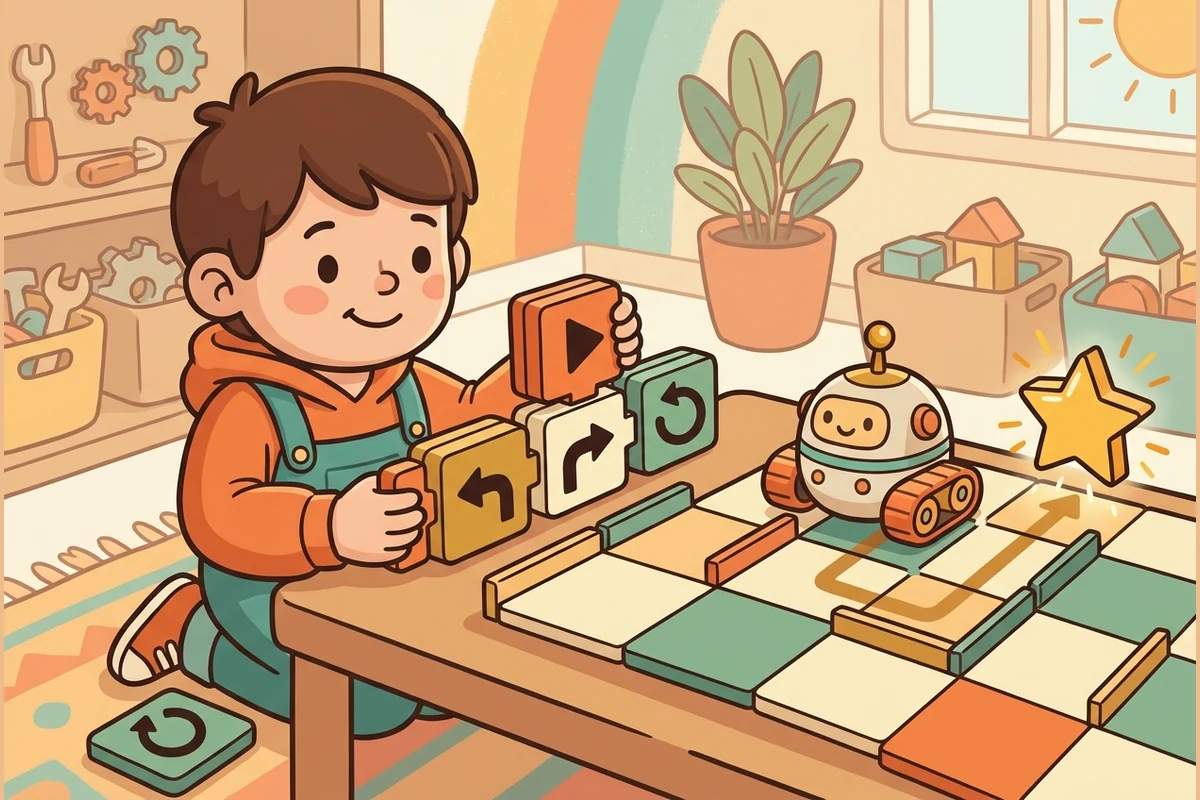 Block Builder Snap move / turn / repeat / if blocks together to drive Bit to the ★ — 24 puzzles.
 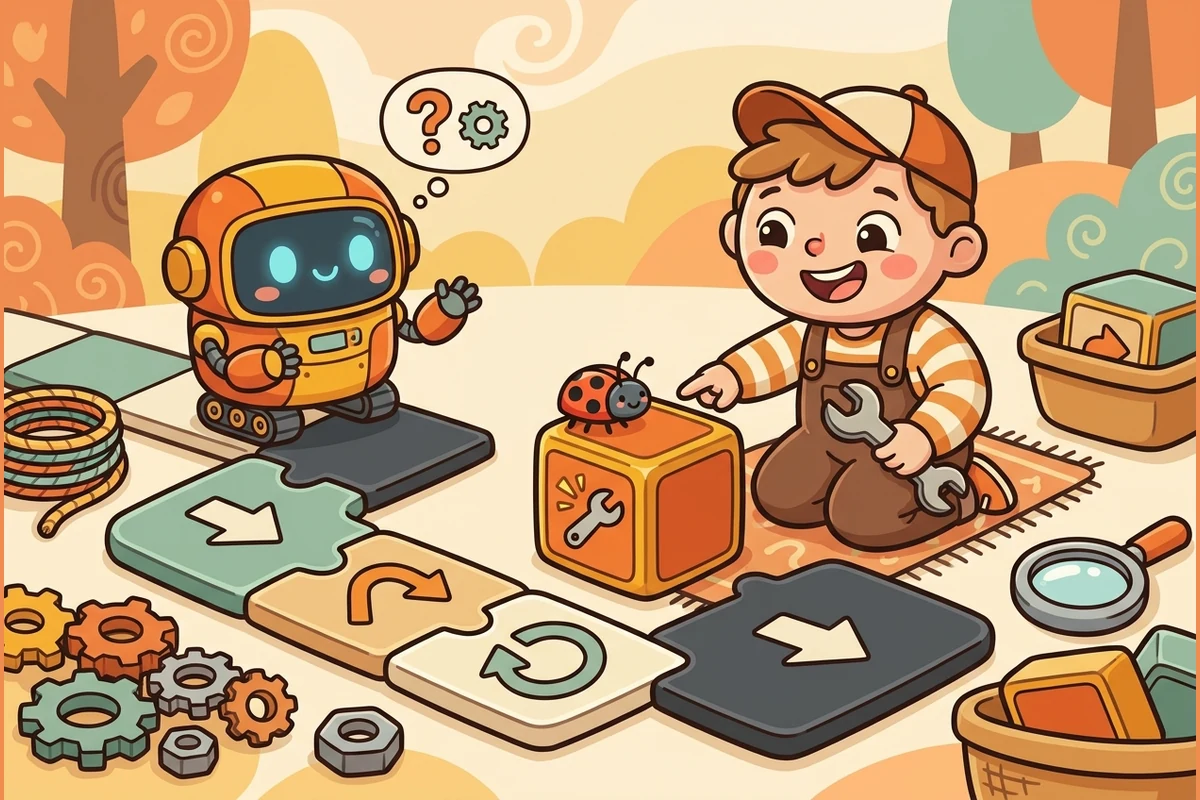 Debug It A program that almost works — run it, spot where Bit goes wrong, fix the one broken block — 3 puzzles.
  Variables Give Bit a memory — store a value in a box, change it, and use it to make the code smarter.
 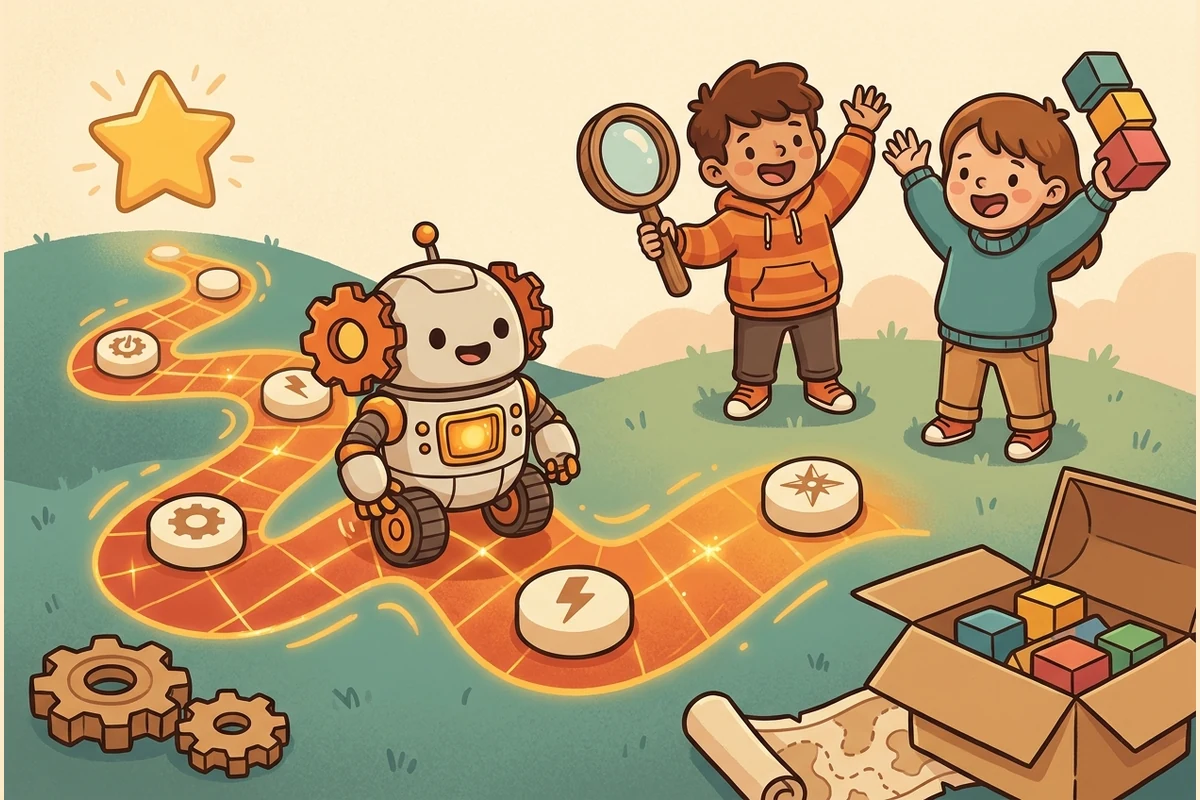 Adventure Map A progression trail through every kit — clear each stop of real coding, then move on.
 All activities
Write & run code
Block Builder Snap move / turn / repeat / if blocks together to drive Bit to the ★. Run, step, and reset — plus a "Show Swift" peek. Debug It A program that almost works — run it, spot where Bit goes wrong, and fix the one broken block. Variables Give Bit a memory — store a value in a box, change it, and use it to make the program smarter.
Learn & practice
Mixed Practice A short round across the kits you have played — brought back to make it stick. CodeRealm Sprint Race your OWN best on what you already know. Timer optional, no penalty for a miss. Trick Questions Brain-teasers with a twist — spot why the obvious answer is a trap. Teach the Cast Teach a coding idea to a cast member still learning it — teaching makes it stick.
Play together
Code Duel 2–4 players take turns on one device — same questions, highest first-try score wins. Adventure Map A progression trail through every kit — clear each stop of real coding, then move on. Progress Your levels, streak, and how each topic is coming along — saved on this device. Progress report For grown-ups — a private on-device snapshot mapped to the CS concepts. Export a CSV or print.
Concept Kits — 16 kits of CS concepts
Kit 1: Algorithms & Sequences Algorithms & Sequences · 4-5 · 25 questions Kit 2: Loops & Patterns Loops & Patterns · 4-5 · 25 questions Kit 3: Conditionals & Logic Conditionals & Logic · 5-6 · 25 questions Kit 4: Variables & Data Types Variables & Data Types · 5-6 · 25 questions Kit 5: Functions & Decomposition Functions & Decomposition · 5-6 · 25 questions Kit 6: Debugging & Testing Debugging & Testing · 6-7 · 25 questions Kit 7: Data Structures Data Structures · 6-7 · 25 questions Kit 8: Advanced Algorithms & Complexity Advanced Algorithms & Complexity · 7-8 · 25 questions Kit 9: Object-Oriented Concepts Computer Science · 6-7 · 25 questions Kit 10: Recursion & Recursive Thinking Computer Science · 6-7 · 25 questions Kit 11: Algorithms & Efficiency Computer Science · 7-8 · 25 questions Kit 12: Software Design & Collaboration Computer Science · 7-8 · 25 questions Kit 13: Cross-Topic Connections Functions & Decomposition · 5-6 · 25 questions Kit 14: Real-World Applications Functions & Decomposition · 6-7 · 25 questions Kit 15: Misconceptions & Reasoning Functions & Decomposition · 6-7 · 25 questions Kit 16: Advanced Synthesis Functions & Decomposition · 7-8 · 25 questions
More ways to play
😄 Brain break

Meet the cast — the characters who teach this
-
 Stash Variable / storage — the labeled box that holds a value until you call for it
 -
 Fork Conditional / branching — chooses a path based on what's true right now
 -
 Trek Loop / iteration — keeps going around until the work is done
 -
 Module Function / encapsulation — does one job well and can be called anywhere
 -
 Glitch Debugging / inspection — finds bugs gently, never shaming; 'there's always a reason'
 -
 Order Sequence / syntax — reminds you that order matters in code
 -
 Row A list: many values lined up in a numbered row, so you can grab item number three instantly or walk through them one by one.
 -
 Port Input and output: the doorway that brings information in from the world (a key press, a sensor) and sends results back out.
 -
 Ping An event: a waiting bell that does nothing until its trigger happens, then runs its code the instant it is struck.
 -
 Shuffle Randomness: a fresh unpredictable value each time — a dice roll, a shuffled deck — so a program can surprise, vary, and stay fair.
Ensemble stories — the cast together