Bristle
DRY-BRUSHING — take the paint AWAY, then the little that's left catches the raised edges.
Loading audio…
Press play to listen along. The line being read lights up as you go.
Show full transcript
Loading transcript…
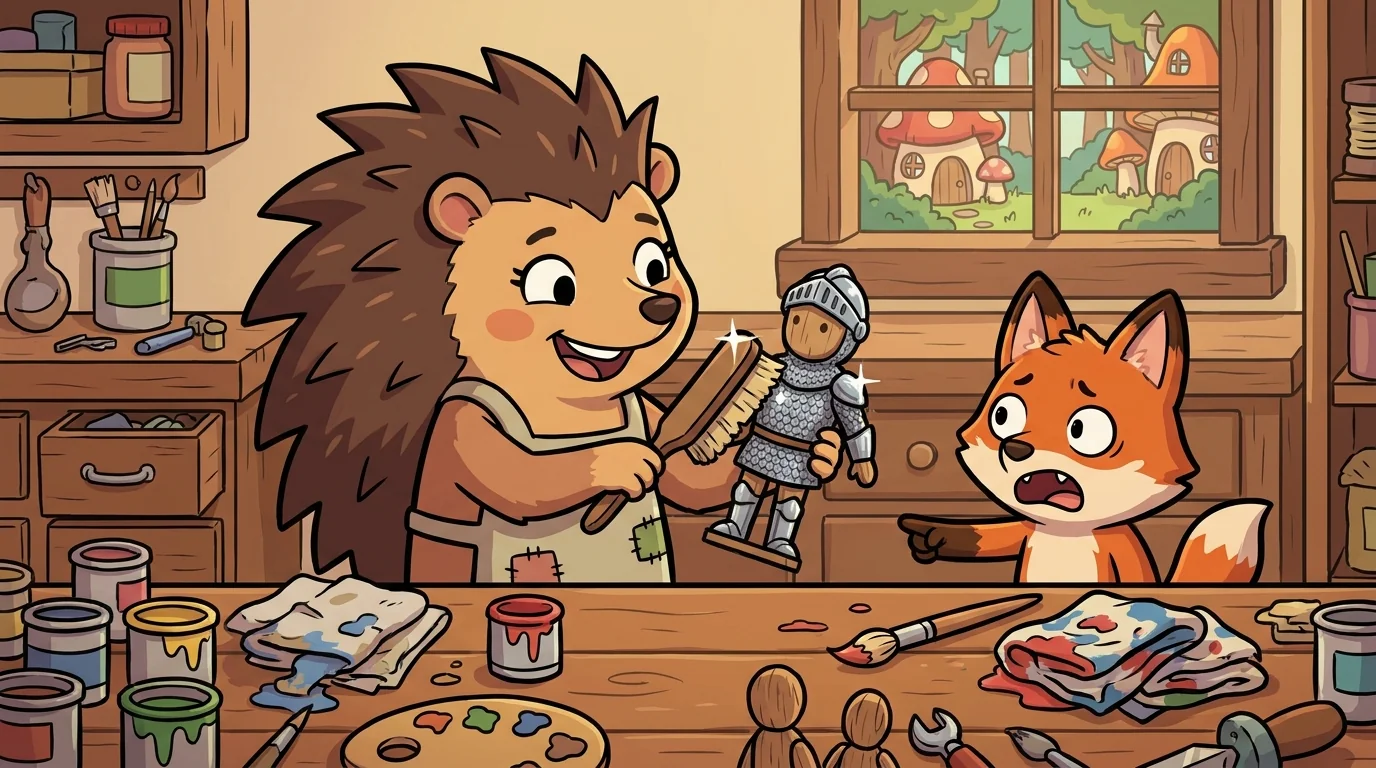
At a workbench cluttered with rags, a hedgehog-tween named Bristle dipped a stiff brush into silver paint — and then, to a fox-kit's horror, wiped almost all of it back off again, onto a scrap of cloth, until the brush looked bone dry.
"You just wasted it," the fox-kit said. "There's basically nothing left on there."
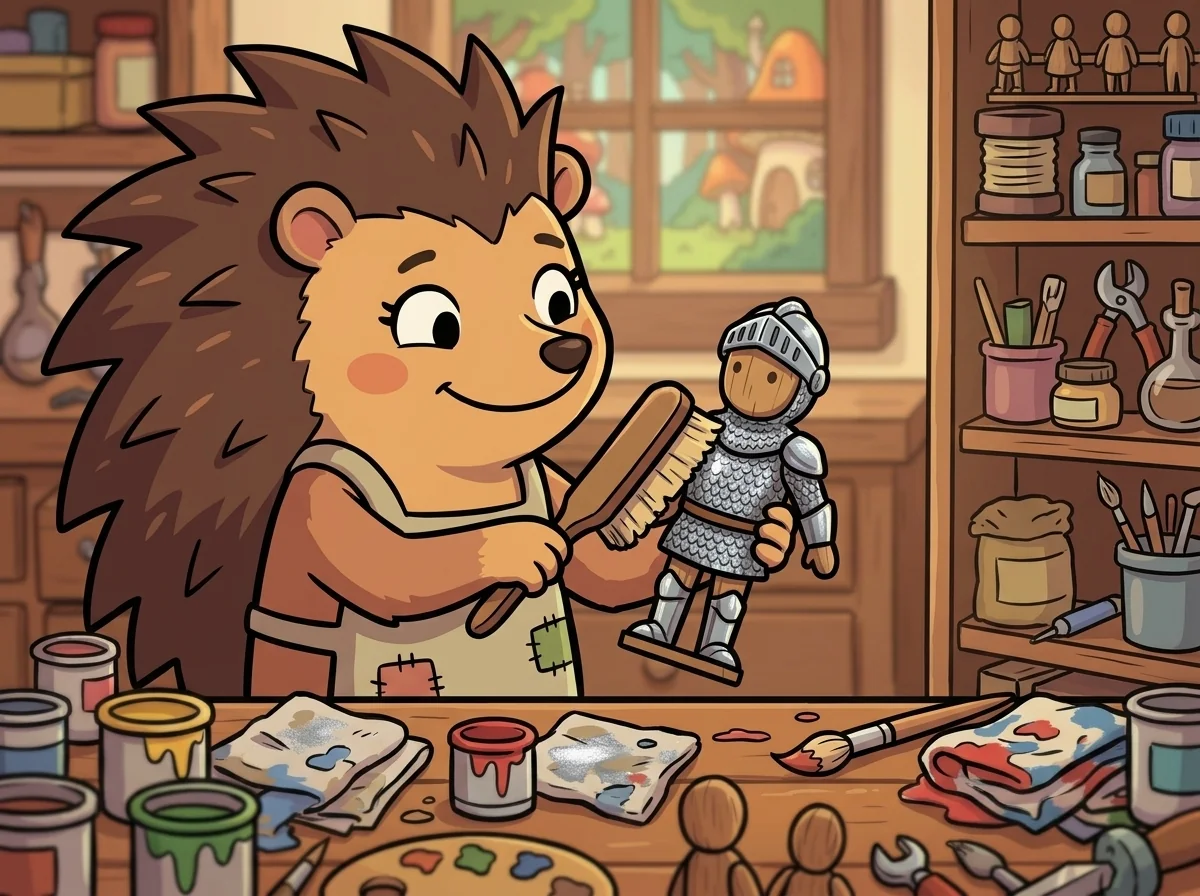
"Basically nothing is exactly right," said Bristle. She held a little wooden knight in chain-mail — every tiny ring carved but flat and grey — and dragged the near-dry brush across it, feather-light, quick, barely touching. She didn't press. She didn't fill anything in. She just skimmed.
And the chain-mail lit up. The faint silver caught only the very tops of every little ring — the raised edges — and skipped every dip and hollow between them. In three light drags, a flat grey lump of armor turned into a hundred glinting metal links, each one round and real.
"See?" said Bristle. "A wet brush would've flooded the whole thing and drowned the texture. But an almost-empty brush only touches what sticks up. I don't paint the edges. I let the edges grab what little paint is left." She grinned, spines bristling. "The trick isn't adding silver. It's taking almost all of it away first."
Bristle had learned that on the day she stopped being afraid of her own spines.
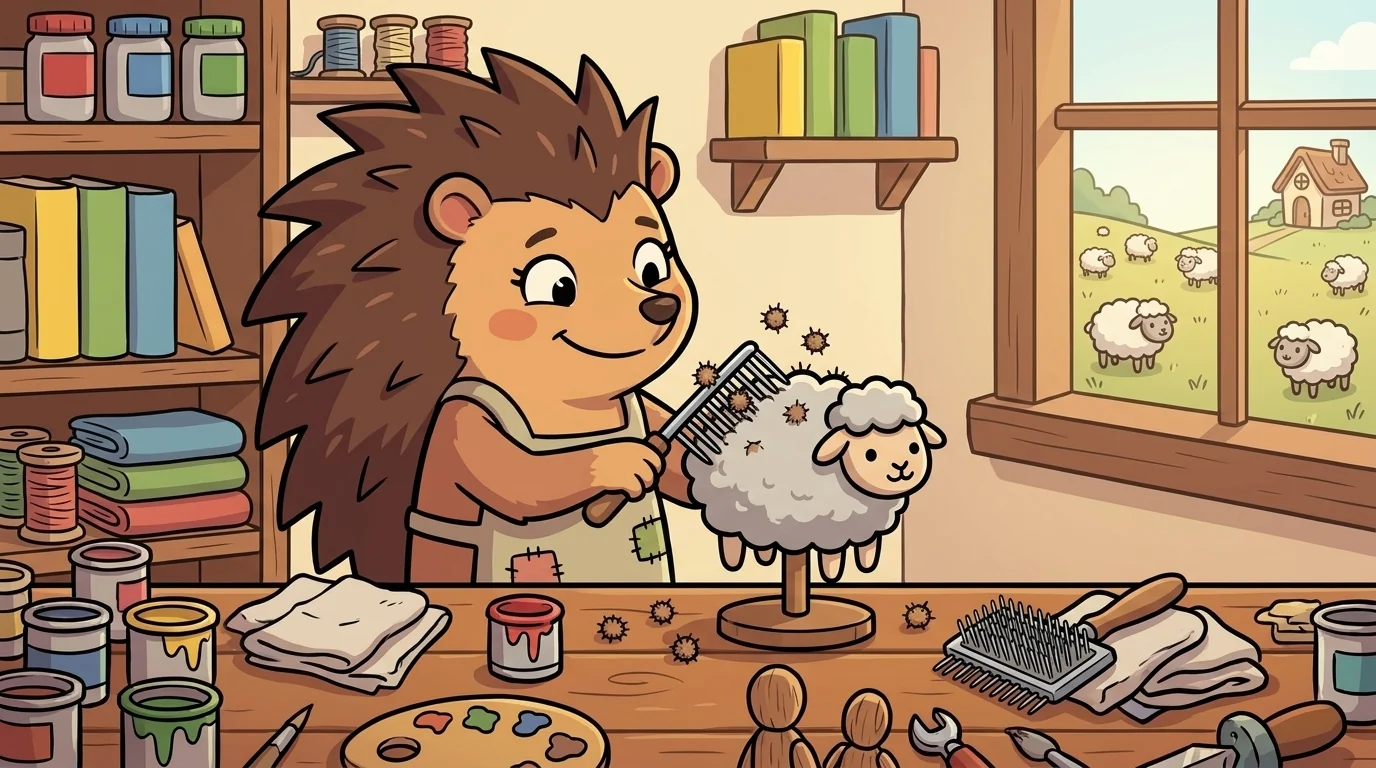
She'd grown up in a family of thistle-combers, who brushed the burrs and seeds out of sheep's wool with stiff wire combs. Small Bristle hated it — she pressed too hard, dug in, and left the wool torn and the sheep grumpy.
Her grandmother watched her fight the wool one afternoon and finally caught her paw. "You're pressing like you want to reach the skin," she said. "But the burrs aren't on the skin. They're on top." She loosened the comb in Bristle's grip until it was barely held. "Now go light. So light you almost miss. Just skim the surface — and let the comb catch only what's raised."
Bristle skimmed. The comb glided, snagged only the burrs, and left the wool whole. The sheep sighed and leaned into it. And Bristle felt something loosen in her chest: she'd been trying so hard, pressing so deep, when the whole job lived in the lightest possible touch on the very top.
"Less pressure, more truth," her grandmother said. "The raised things want to be found. You only have to brush by."
Bristle never forgot the feeling of that first weightless, perfect drag.
She came to CraftForge because a place full of tiny textures needed someone who wouldn't drown them.
Iris, the mentor, met her at the door and asked a single question. "What is dry-brushing?"
Bristle didn't answer in words. She took a plain grey mini of a stone wall — every carved brick flat and lifeless — loaded a brush, wiped it nearly clean, and skimmed pale paint across the wall in a few quick, glancing passes. The tops of every brick caught the light; the mortar lines between stayed dark. The flat wall leapt into rough, sunlit stone.
Iris tilted it toward the window. "You barely had any paint on the brush," she said.
"That's the whole secret," said Bristle. "A full brush fills everything and hides the texture. An almost-dry brush only kisses the high points — and suddenly you can see every edge the carver made. I take the paint away, then let what's left find the raised parts on its own." She nodded at the glinting wall. "Light hits the tops of real things. So that's the only place I paint."
Iris studied the little sunlit wall for a long moment. "You belong here," she said.
Bristle's corner filled up with kits who all made the same mistake: too much.
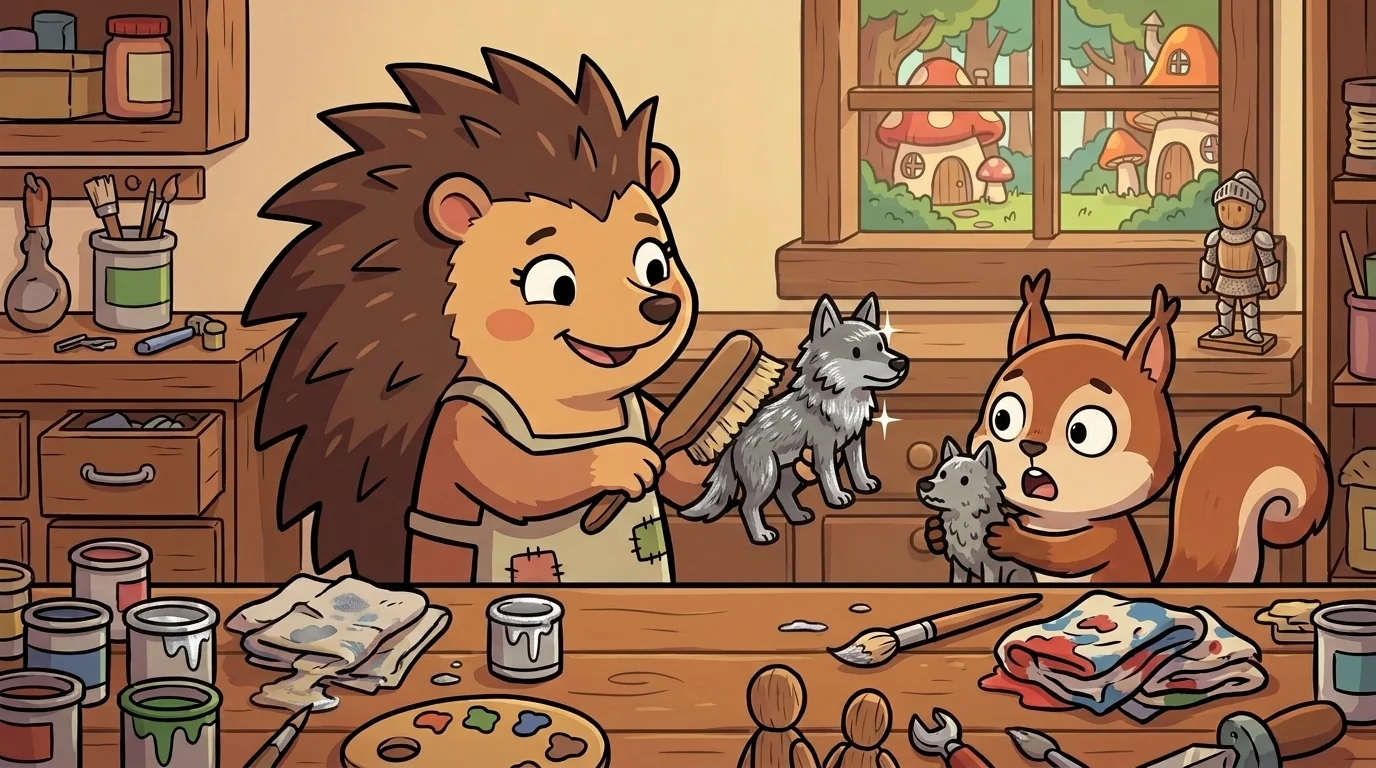
A squirrel-kit stomped in with a mini of a shaggy wolf, its carved fur completely lost under a thick, gloppy coat of paint. "I painted every single strand," he said, miserable. "And now it just looks like a grey potato with legs."
"Because you filled the valleys," Bristle said gently. "Fur is all tiny ridges. You drowned them." She handed him a lighter grey, then a rag. "Load your brush. Now wipe it — no, more — keep wiping — until you're sure there's nothing left. Trust me."
He wiped until the brush looked dry. "This can't do anything."
"Drag it across the fur. Light. Fast. Don't press."
He skimmed, wincing — and gasped. Wherever the carved fur stood up, the faint paint caught it, strand by strand by strand. The potato became a wolf with a rough, layered, windblown coat, each hair picked out in pale light.
"I did less and it did more," he said, stunned.
"There it is." Bristle's eyes shone. "You can't force texture in by pressing harder. You coax it out by touching lighter. The carver already put the fur there. My job — your job — is just to brush by with almost nothing, and let it catch." She tapped the wolf's glinting coat. "Empty brush, light hand, and the tops do the rest."
The squirrel-kit dragged it once more, even lighter, and laughed out loud.
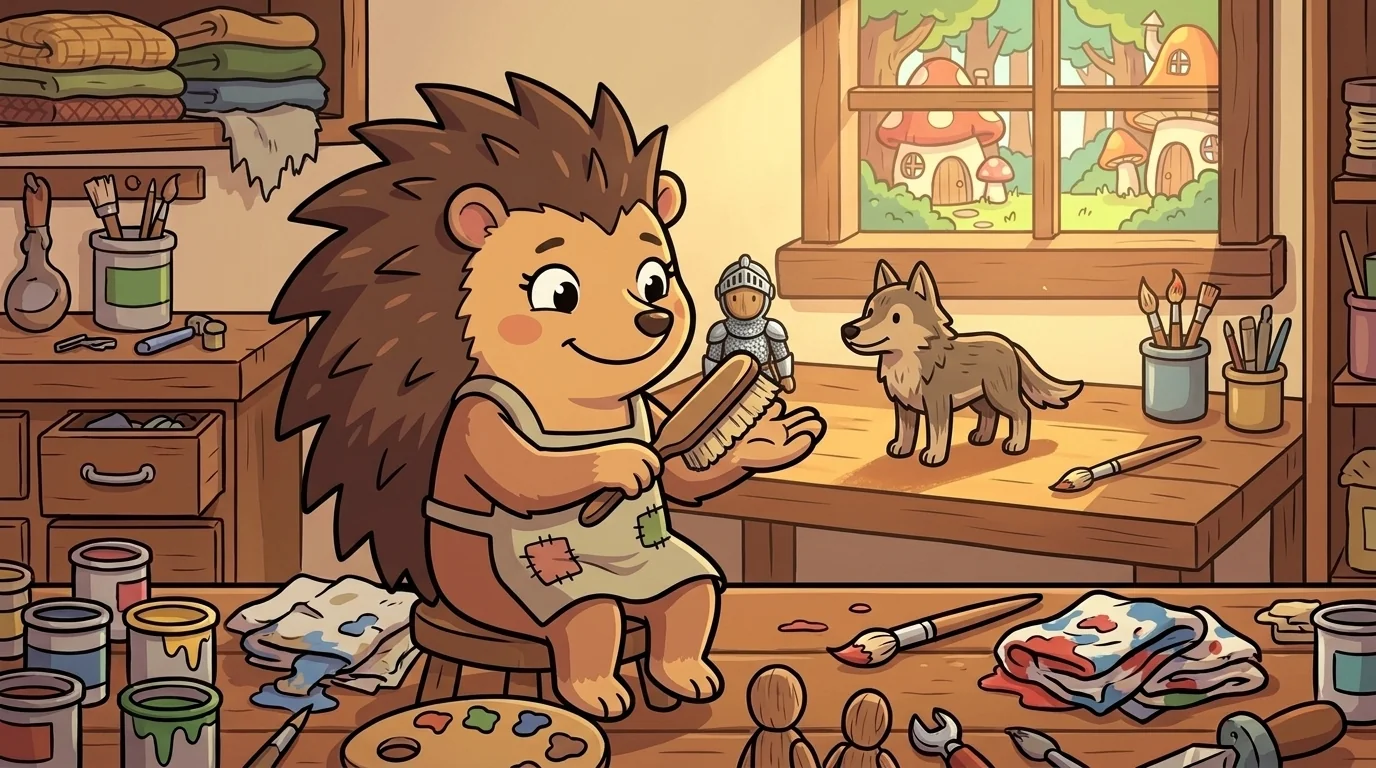
Later, when the corner had emptied, the squirrel-kit lingered at the door, the wolf cradled in his paws.
"It feels backward," he said. "The harder I try, the worse it gets. The less I do, the better. Doesn't that ever mess with your head?"
Bristle thought about the torn wool and the sighing sheep, and her grandmother loosening her grip.
"It used to," she admitted. "When you spend your whole life being told to try HARDER, an almost-empty brush feels like cheating." She dragged her dry brush across her own palm, so light it made no mark, and smiled. "But then it works, and this warm, unclenched calm just spreads right through my chest — the relief of finally putting down all that pressing and straining, and finding out the gentlest touch was enough the whole time." She set the wolf in the sun. "Not everything needs more of you. Some things only need the lightest, kindest brush-by — and the courage to trust that it's plenty."
The squirrel-kit's shoulders came down, and he brushed his wolf one last feather-light time, and looked, for a moment, completely at peace.
The CraftForge ensemble
Bristle is part of CraftForge's distributed-narrative cast. Each character embodies a different curricular primitive; together they teach the full subject.
-
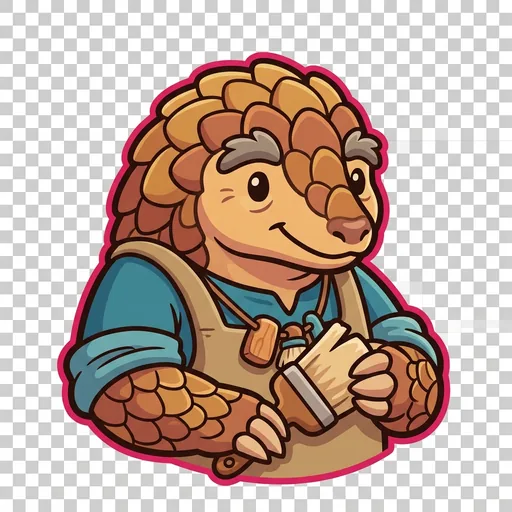
Sand
Surface preparation — the patient pangolin-elder who treats priming as the invisible foundation everything else stands on ('ready surface first; the paint listens to the surface')
-
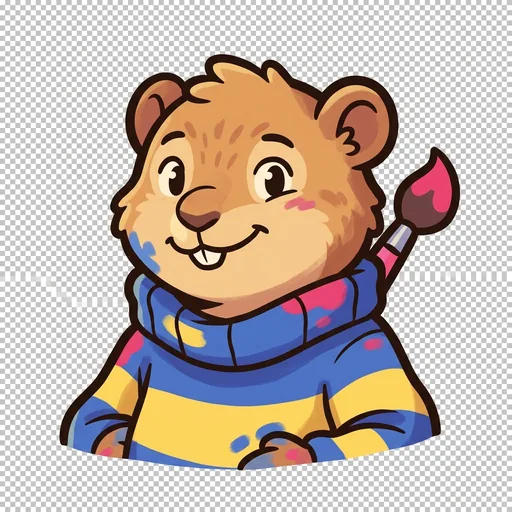
Dab
Basecoat + wash — the confident vole-tween of broad strokes who treats basecoats as the loud first hello and washes as the quiet shadow-finder ('big shapes first, shadows fall second')
-

Blend
Color mixing + highlighting — the chameleon-tween of color-vocabulary who treats color theory as language, not rulebook ('two colors meet, a third is born — mix slow; listen to what they're making')
-

Coat
Layered application + varnish — the steady badger-tween who treats every coat as deliberate next-stratum patience ('layer waits for layer; patience is the secret pigment')
-
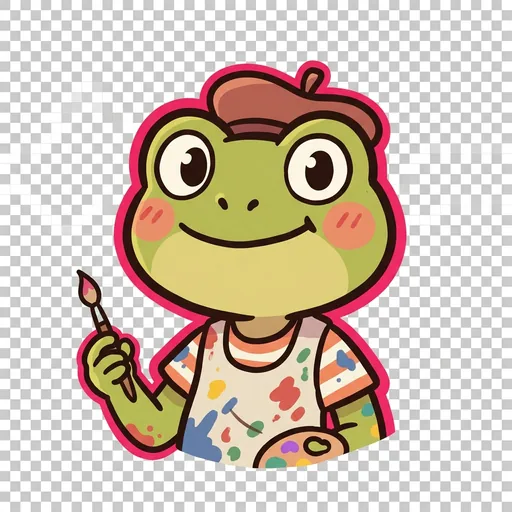
Tip
Fine detail + freehand — the relaxed treefrog-tween of fearless small-brush play who carries the cluster's perfectionism-gate anchor ('tiny brushes, loose wrist — wobbly is fine; the eye fixes it from arm's length')
-
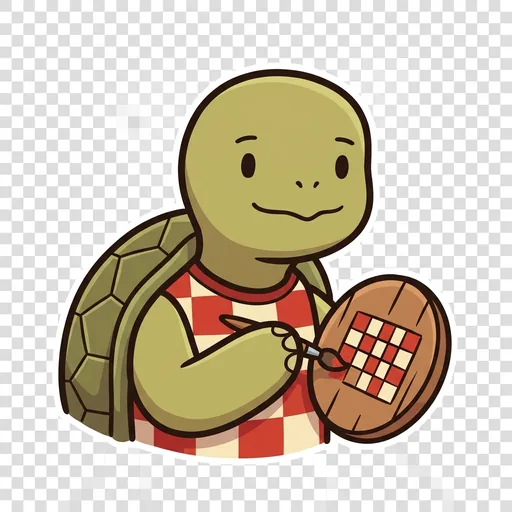
Chequer
Pattern work — find the one small unit, then repeat it faithfully; the pattern lives in the repeat, not the piece
-
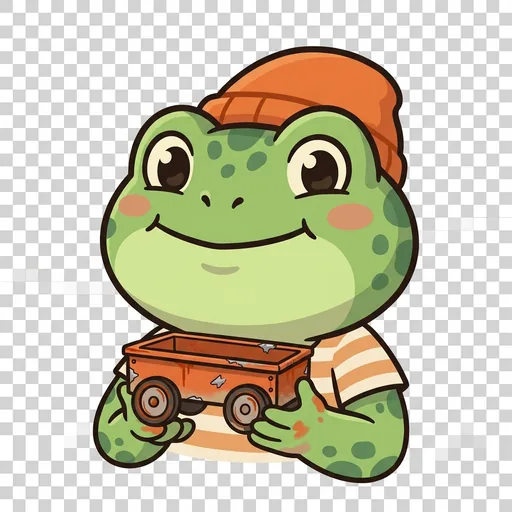
Patina
Weathering — a too-clean model looks fake; add the marks of use (rust, chips, dust, wear) and it earns a history
-
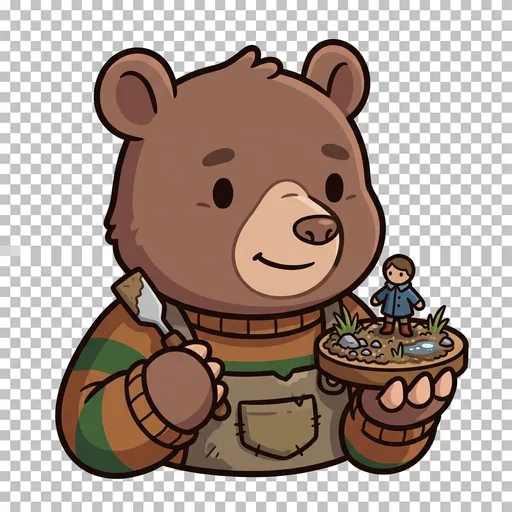
Plinth
Basing — a model needs a place to stand; build the little ground and the figure gains a world, a scale, and a story
-

Prism
Color harmony — colors don't work alone; put opposites side by side and both catch fire, keep the family warm or cool so it sings