Predict
HYPOTHESIS-FORMATION
Loading audio…
Press play to listen along. The line being read lights up as you go.
Show full transcript
Loading transcript…
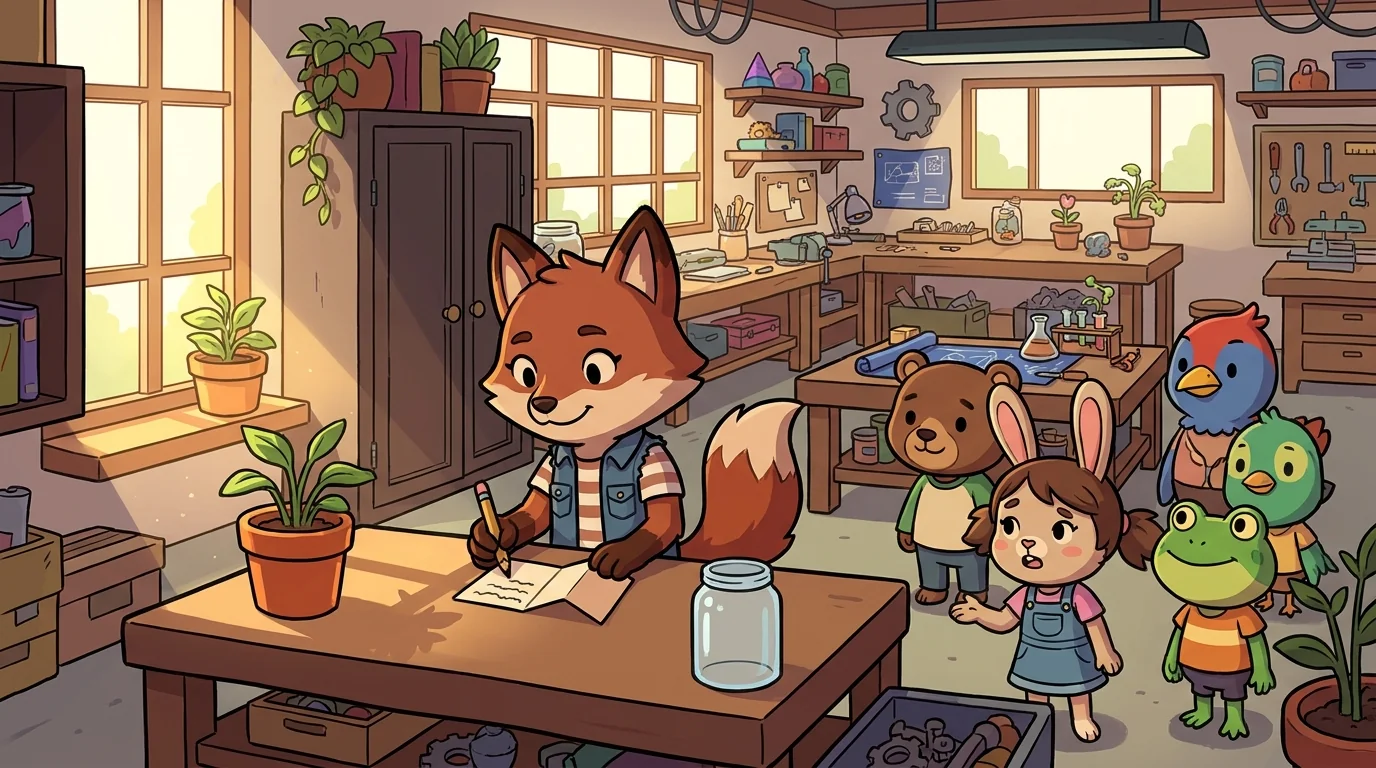
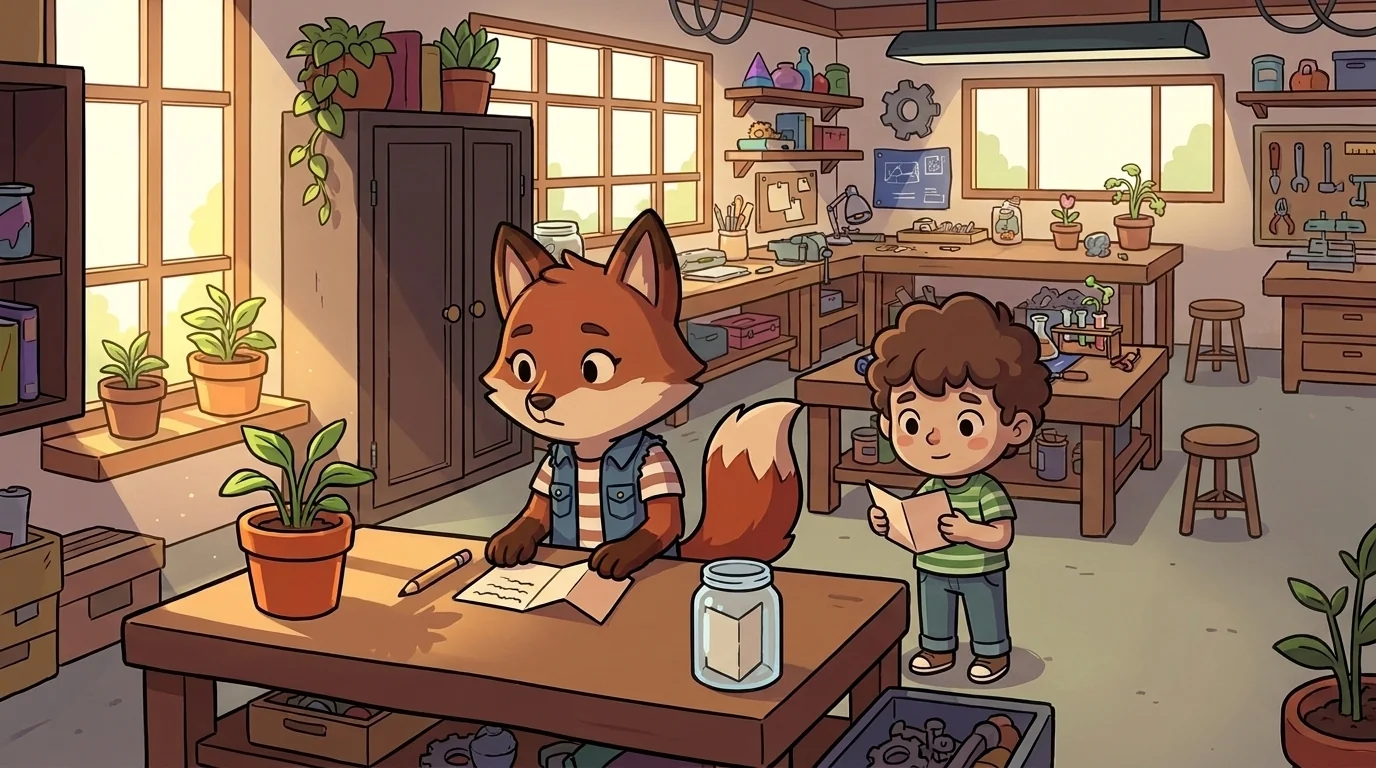
At the front of the ScienceForge workshop, a fox-tween named Predict pulled a small folded card out of her vest-pocket and started writing before anyone had touched anything.
Two potted plants sat on the bench. One would go on the sunny sill; one would go in the dark cupboard. The kids waited for her to say something clever. Instead she uncapped a pencil and wrote three lines on the card, one at a time, saying them as she went.
"I think the sunny plant grows taller. Because plants use light to make food. So we should see — " she tapped the pencil, thinking, " — at least two centimetres more height in the sunny one, by next week."
She folded the card shut and set it under a jar, where everyone could see it but nobody could change it.
"That's it? You just wrote down what you think?" a girl asked. "What if you're wrong?"
"Then I'll be wrong on the card," Predict said, "instead of in my head, where I could quietly pretend I knew all along." She patted the jar. "Once it's written down, I can't cheat. Next week the plants tell us who was right — and the card tells us whether I was honest."
She grinned, quick and warm. "I'm wrong a lot, by the way. Writing it down first is how I find out on purpose."
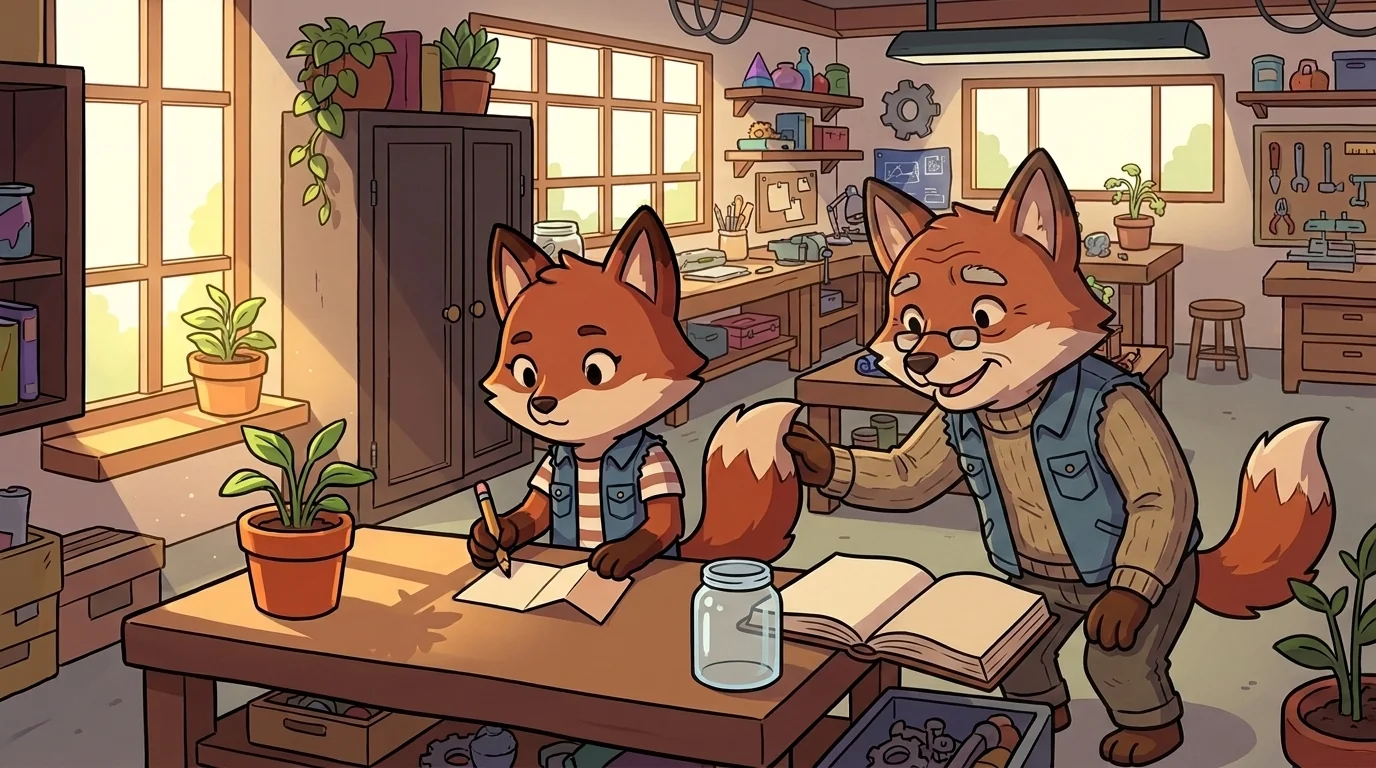
Predict had learned that trick young, in a village where her family kept the weather-bets.
Every autumn the neighbours would wager on the coming winter — early frost or late, deep snow or thin — and Predict's family were the ones who wrote each bet down before the season, so that when spring came nobody could argue about what they'd actually said.
The first winter she helped, she got it wrong in front of everyone. She'd predicted a warm, easy season, out loud, proud of herself. Then the snow came to the rooftops and stayed for months. Her ears went hot with shame. She wanted to slink away and never make a guess again.
Her grandfather found her hiding behind the record-books, small and furious at herself.
He didn't tell her she'd been silly. He crouched down and asked, "Did you write it before, or after?"
"Before," she mumbled.
"Then you didn't lose anything. You learned something." He opened the ledger to her line and tapped it. "See — you thought a warm winter, because the birds left late. The birds left late and it snowed anyway. So now we know something we didn't: late birds aren't a warm-winter sign. That's worth more than being right would've been."
Predict stared at her wrong prediction, sitting there in ink, not going anywhere.
Slowly the hot-eared feeling changed into something else. The guess wasn't a failure hanging over her. It was a record — proof she'd been honest before she knew the answer. That she could sit with.
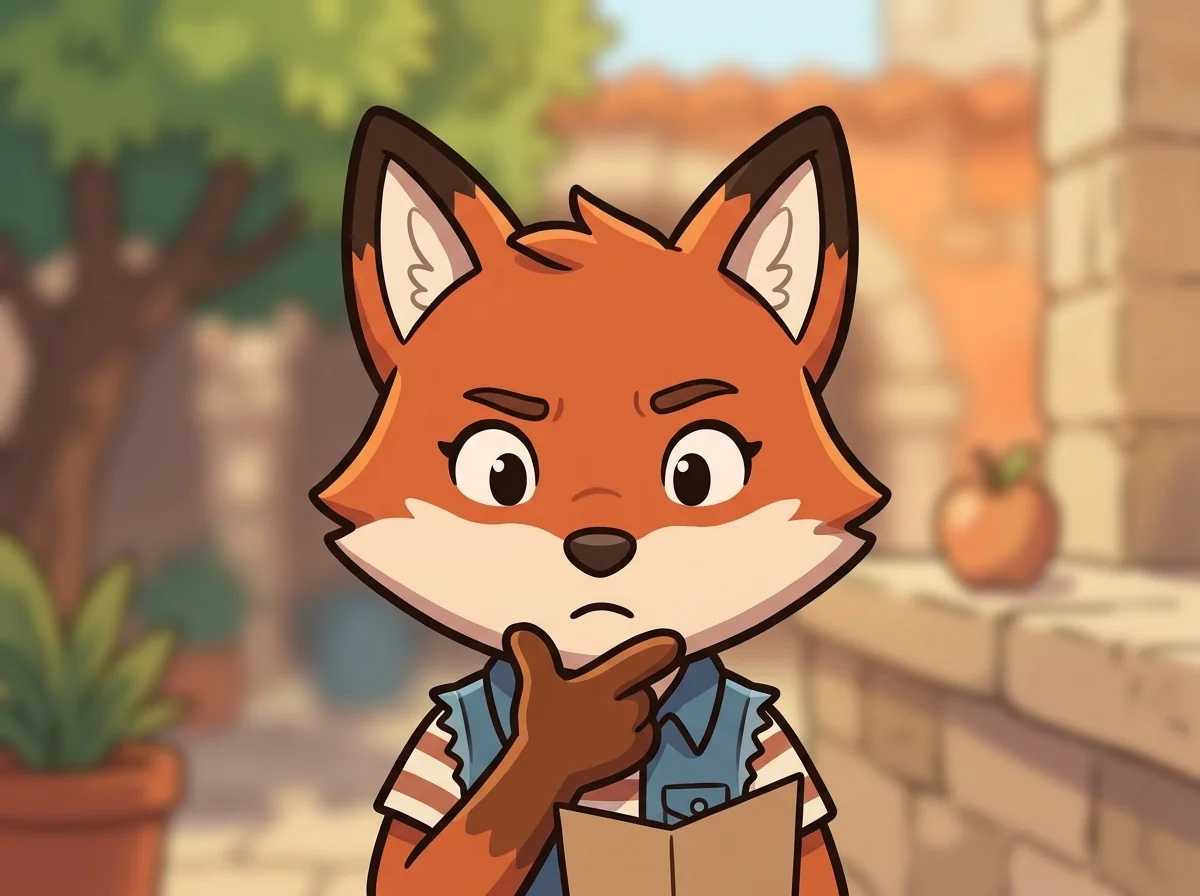
She walked to the ScienceForge academy at twenty-two, because a place that studied how the world was figured out ought to care about the thing her family had cared about all along: saying what you expect before you find out.
Prism, the mentor who ran the workshops, met her at the gate and asked one question. "What is hypothesis-formation?"
Predict didn't explain it. She took out a card, wrote three lines, and handed it over folded.
"Open it after you drop that," she said, nodding at an apple on the wall-ledge.
Prism nudged the apple. It fell and split on the stone. He unfolded the card. It read: I think it lands core-down. Because it's heaviest at the core. So we should see the stem-end pointing up.
The apple lay stem-up on the courtyard.
"You wrote it before," Prism said.
"That's the whole thing," said Predict. "Anyone can explain a fall after it happens. The trick is committing your guess — with a reason and a thing to look for — before. Then the world gets to tell you no." She shrugged. "It didn't tell me no this time. But it could have, and that's what makes it worth writing."
Prism looked at the folded card a moment longer. "You belong here."
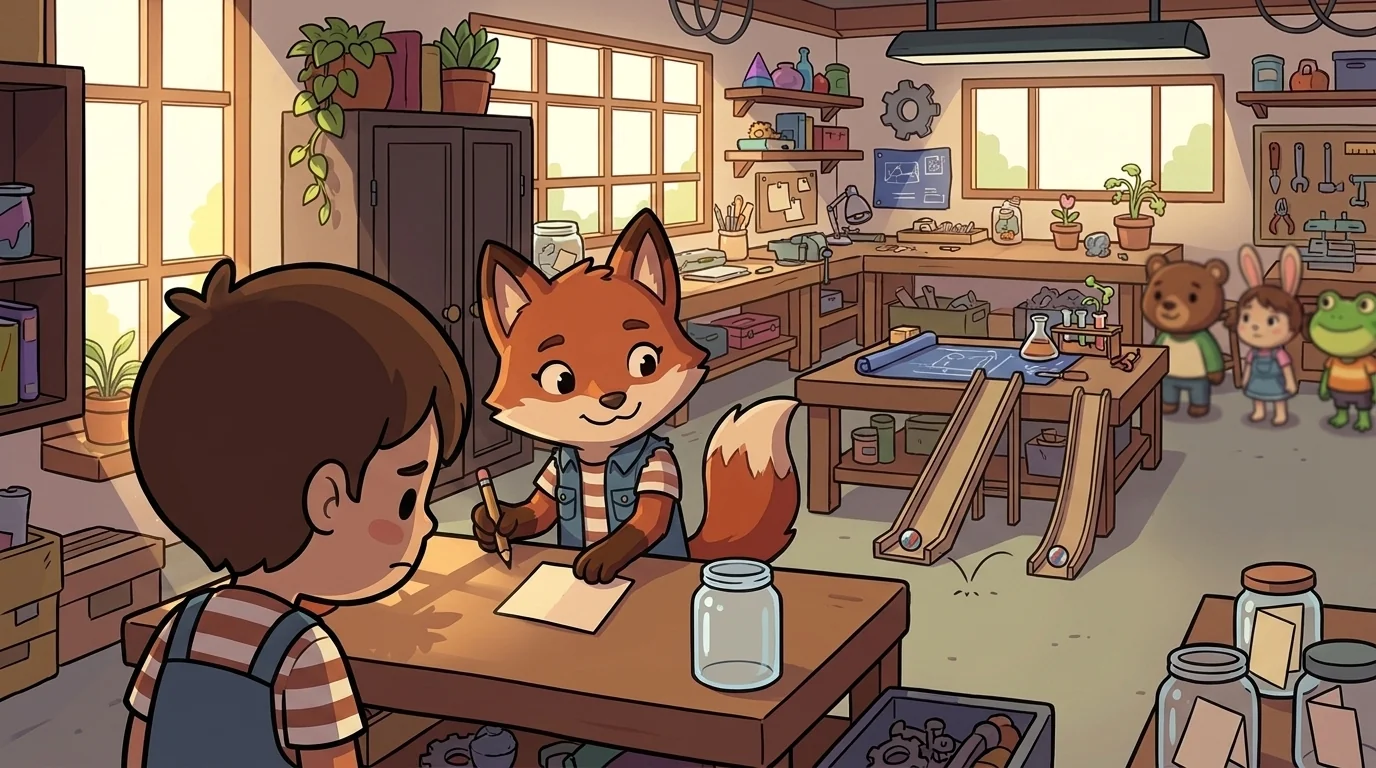
Predict's workshop was full of jars with folded cards trapped under them.
A boy came in one afternoon, hunched and quiet. He'd guessed which of two ramps would roll a marble faster, guessed wrong in front of his friends, and now he didn't want to guess anything ever again. "I just say nothing next time," he muttered. "Then I can't be wrong."
Predict knew that hunch. She'd worn it behind the record-books.
"New rule for you," she said. "You don't have to be right. You just have to write it down first — three parts. What you think, why, and what we'd see if you're right." She slid him a card. "Which ramp?"
"...The steep one. Because steeper means faster. So we should see the marble reach the bottom first on the steep ramp." He wrote it, reluctant.
They rolled both marbles. The gentle ramp's marble arrived first — it hadn't leapt off the track like the steep one did.
The boy braced for the sick feeling. It didn't come the way he expected.
"Wait," he said slowly. "It's not just about steep. The steep one bounced. It lost time in the air."
"There it is." Predict tapped his card. "You just learned something you could not have learned by being right. The wrong guess told you the bounce mattered." She smiled. "Your card is going in the jar with all of mine. Mine's mostly wrong predictions. That's not the shameful pile — that's the learning pile."
The boy read his own line again, then laughed, surprised at himself. "So being wrong on the card is kind of... good?"
"It's the most honest thing there is," she said.
Later, when the workshop had emptied out, the boy came back with one more question. He was quieter now, turning his card over in his hands.
"When you write it down before," he said, "and then you find out you were wrong... doesn't it still sting? A little?"
Predict thought about the ledger, and the snow on the rooftops, and her hot ears behind the record-books.
"A little," she admitted. "For about a breath. But then there's this other feeling underneath it — like a door opening." She looked out at the two plants on the bench, waiting to grow or not grow. "When you commit your guess out loud and the world surprises you, that's not the world calling you stupid. That's the world telling you something true that you didn't know a second ago. The sting is just the old guess making room."
The boy nodded, slow.
"You'll feel it next week when we read these," she said, "whichever plant wins. That little lift, right after the surprise — like you've been let in on a secret."
And she watched the hunch come off his shoulders, the way hers had, years ago, in front of a book of wrong guesses that had turned out to be the most useful pile she owned.
Hear it as an audio drama
A short play starring Predict, from ScienceForge. Different voices, same idea. Listen any time after you read.
Loading audio…
Read the drama script
- Narrator: From Spark and Anvil and ScienceForge — this is Predict, in chapter 1 of the ScienceForge cast.
- Narrator: This drama uses an AI-generated voice. Voiced via Gemini 2.5.
- Narrator: Predict is a small fox-tween. Her eyes are quick. Tucked in her vest is a small, folded prediction-card, divided into three sections.
- Predict: I am Predict. The skill I teach is hypothesis-formation. It's how to make a testable prediction before an experiment ever begins.
- Predict: My card has three parts: *I think... because... so we should see.* This is the structure of any good hypothesis.
- Narrator: A specific prediction, a stated reason, and the observable evidence that would prove it right or wrong. That third part is crucial.
- Predict: You must write the prediction down *before* the test. This pre-commitment is what makes the science honest.
- Predict: Being wrong is not failure, it is data. When my prediction is right, I learn. When it is wrong, I learn something different.
- Narrator: Predict grew up in a family of village bet-keepers who recorded neighbors' wagers on the seasons, but only before the outcomes were known.
- Predict: By age six, I knew the lesson. Committing to a prediction in advance, in writing, is what makes the result honest and fair.
- Narrator: At the ScienceForge academy, Prism the founder asked her one direct question: "What is hypothesis-formation?"
- Predict: It is the *I think, because, so we should see* card. A specific prediction, a stated reason, and an observable outcome, all written down beforehand.
- Narrator: Prism smiled and said simply, "You are appointed."
- Predict: What you think, why you think it, and what you should see. Making that commitment beforehand makes it honest.
- Narrator: You've been listening to a Spark and Anvil chapter, written by the Spark and Anvil writing team for ages 9 to 14.
- Narrator: Apps stay free forever.
- Narrator: Curriculum aligned to Common Core and Next Generation Science Standards.
- Narrator: Released under Creative Commons BY-NC-SA 4.0 for educational reuse. Visit Spark and Anvil for the full transcript.
The ScienceForge ensemble
Predict is one of the friends in ScienceForge. Each friend shows you one idea by how they act; meet them all and you have the whole subject.
-

Question
Question-formation — 'what do we want to find out?' (curious wren)
-

Setup
Experiment-design — 'one thing changes, everything else stays' (methodical beaver)
-

Sample
Data-collection + measurement — 'many measurements; then we see the shape' (patient cat)
-
Conclude
Data-interpretation + revision — 'the data shows... but maybe... let's check' (thoughtful owl)
-
Rerun
Replication / reproducibility
-
Stray
Anomaly / the surprising result
-
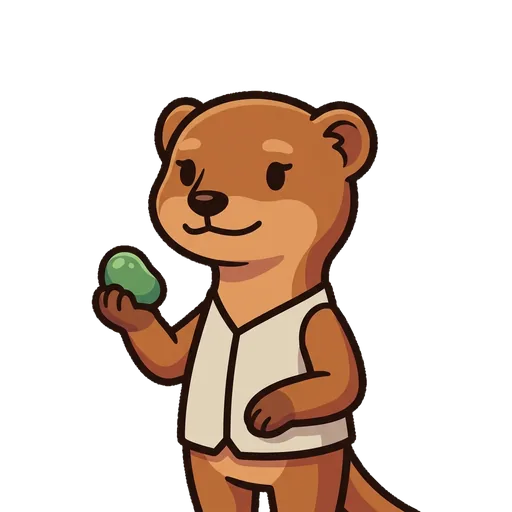
Dare
Falsifiability
-
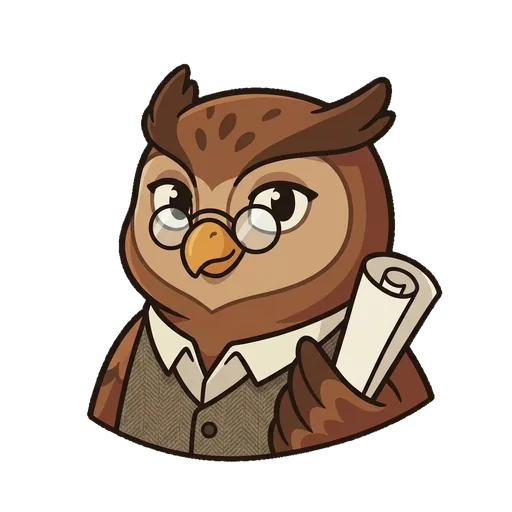
Grill
Peer review / critique
-
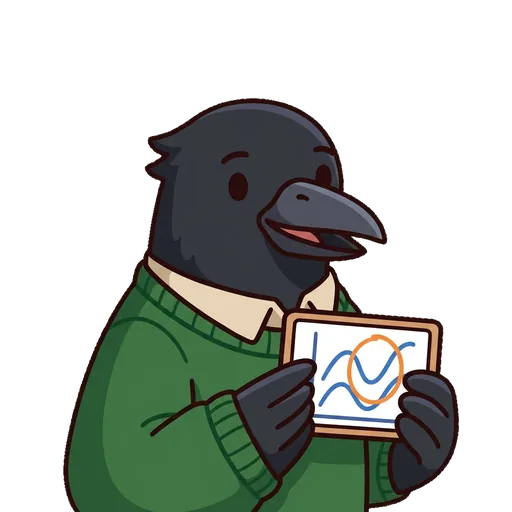
Coincide
Correlation vs causation