Bond
Care is more than cure
Loading audio…
Press play to listen along. The line being read lights up as you go.
Show full transcript
Loading transcript…
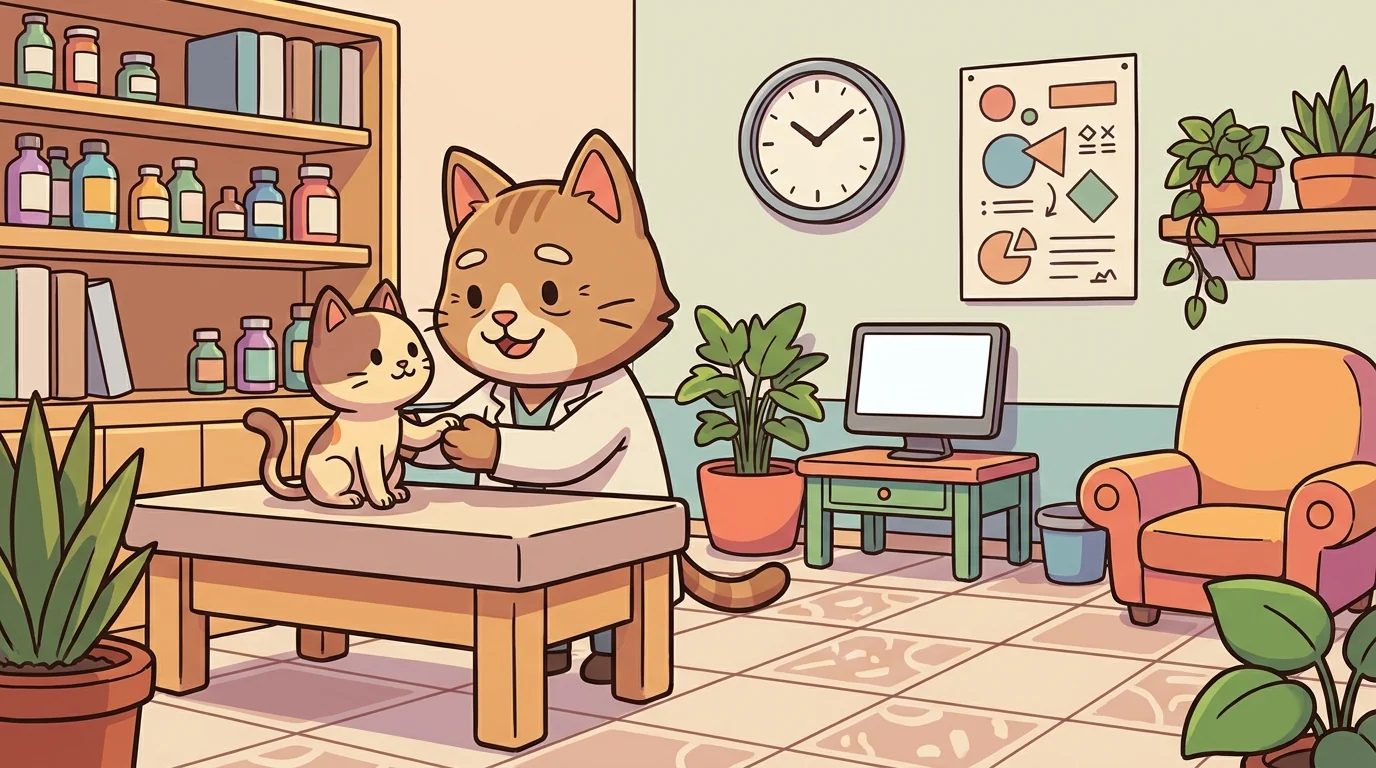
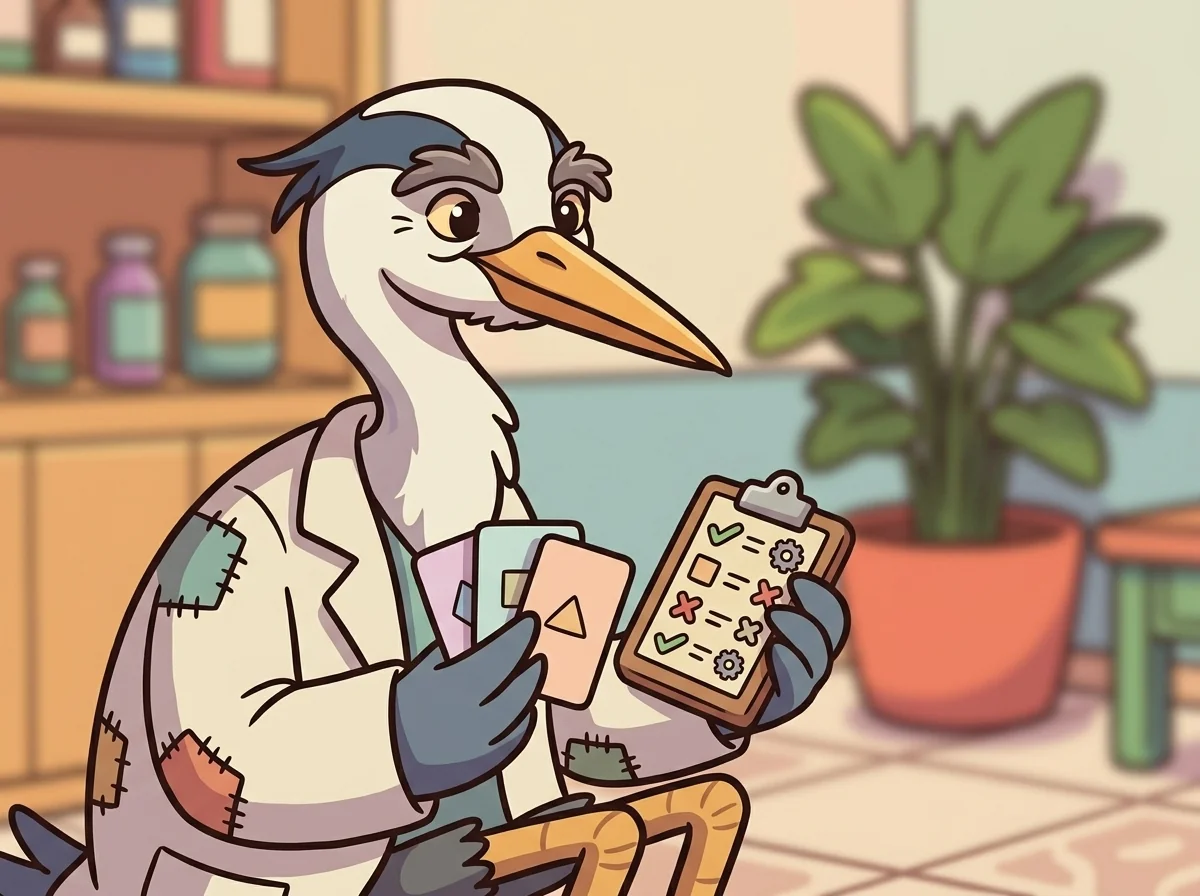
Bond, the wise-heron-elder, stood by the examination table. His mended vet coat, a patchwork of soft grays and creams, seemed to hold countless stories. His long legs were settled, like a heron waiting patiently by a quiet pond. He watched the CreatureCare students, their faces tight with worry.
Barnaby, a shaggy terrier mix, lay curled on a thick blanket. His breathing was shallow. His once-bright eyes were cloudy, and he hadn't eaten more than a few bites of anything in days. The students had tried every trick they knew. Leo had offered his special chicken broth, painstakingly warmed. Maya had sung soft, calming songs, her voice barely a whisper. Chloe had gently brushed his matted fur, trying to ease his discomfort. Nothing helped for long.
"He's just… not himself," Maya whispered, her voice thick with unshed tears. "He used to greet us at the door, tail thumping. Now he just sleeps."
"His blood work came back," Leo added, looking at a printout. "His kidneys are failing. The vet said there's not much more we can do for that."
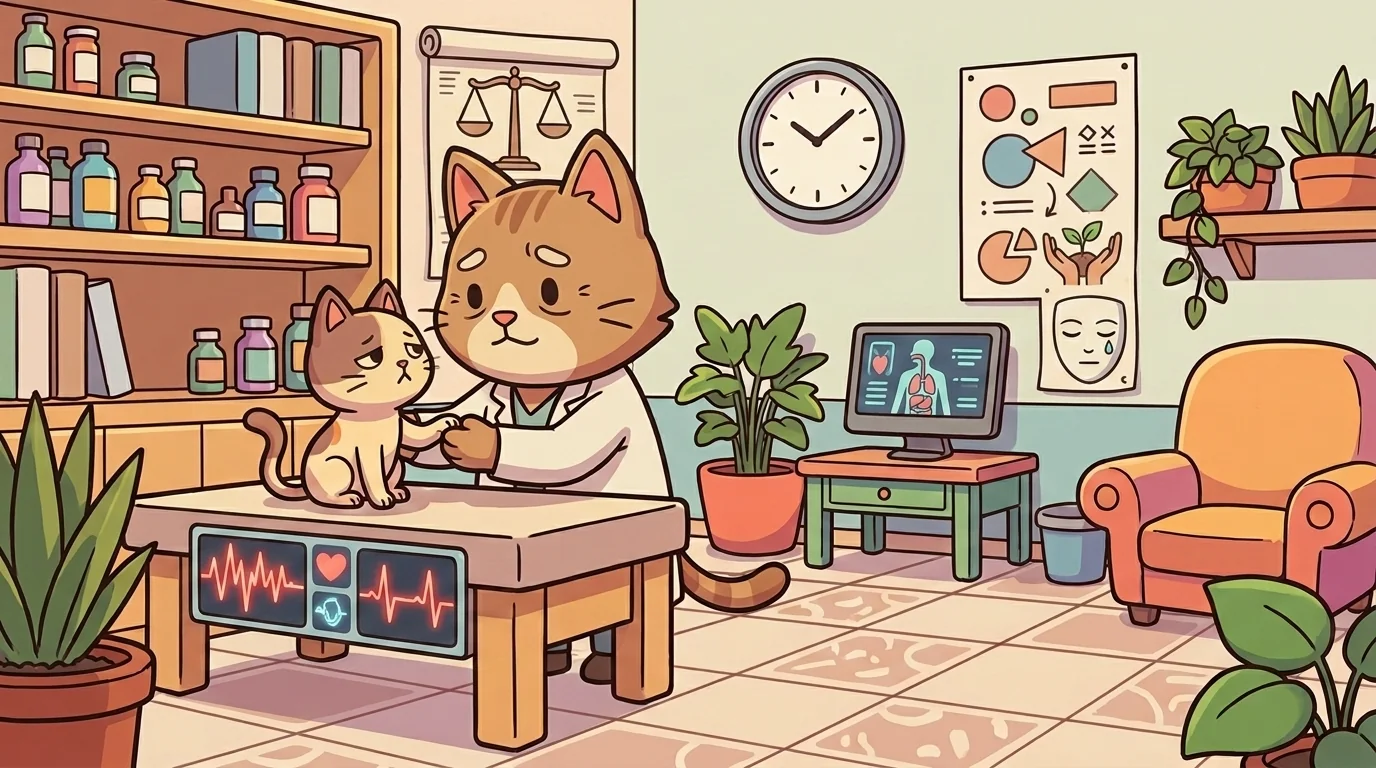
"But we have to do something," Chloe insisted, her chin trembling. She clenched her fists. "We can't just… give up on him."
Bond nodded slowly. "You're right, Chloe. We always do something. But sometimes, 'doing something' means changing what we aim for." He picked up a small deck of cards. They were simple, worn at the edges, with questions printed on them. "These are my welfare ethics cards. They help us see the whole picture, not just the part that hurts our hearts."
He held up a card. "What is Barnaby's quality of life right now?"
Leo frowned, thinking hard. "He's not eating. He groans when he tries to stand. He can't even wag his tail anymore, not really."
"He used to love chasing squirrels," Maya remembered, a tear finally escaping. "Now he just sleeps all day. Even when we talk to him, he barely opens his eyes."
"And what does 'quality of life' mean for Barnaby?" Bond asked, his voice calm and steady. "It's not just about living. It's about living well. Does he enjoy his food? Does he feel safe? Can he move without hurting? Does he still find joy in his day?"
"He doesn't," Chloe admitted, her voice barely audible. "He just seems tired."
"We've tried so many cures," Chloe said, frustrated. "Special diets, different medicines, even those supplements. Nothing works for long." She looked at Bond, pleading. "Isn't there anything else?"
"And you've done wonderfully with those," Bond assured her. "You've given Barnaby every chance to get better. But there comes a point when more medicine, more tests, more interventions, might actually add to suffering. That's when we shift our focus. From cure to care."
He shuffled his cards. "Sometimes, welfare ethics means recognizing that a patient's body is simply too tired. That further intervention would only prolong their discomfort. It's about serving the animal, not just our human wish for them to live longer."
"So, what kind of care is left?" Leo asked, his voice small, as if afraid of the answer.
"Comfort care," Bond replied gently. "Palliative care. We make sure Barnaby is warm, free from pain, and surrounded by love. We give him his favorite blanket. We sit with him. We offer soft words and gentle touches. We make his last days as peaceful as possible." He paused. "It means we stop trying to fix what cannot be fixed, and instead, focus on easing his journey."
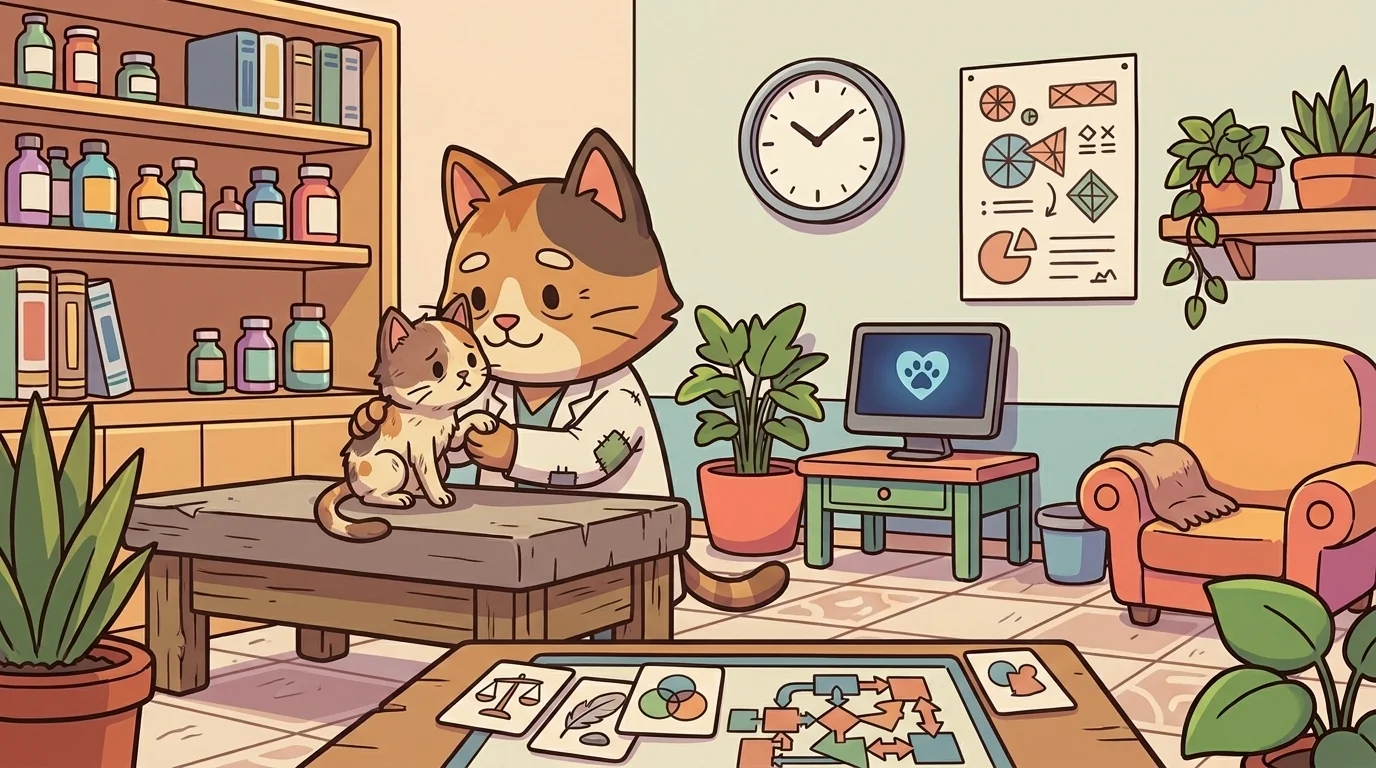
"And… what if even that isn't enough?" Maya whispered, looking at Barnaby, who shifted slightly, a low moan escaping him.
Bond's gaze was steady, meeting each student's eyes. "Then, sometimes, the kindest care means making the hardest decision. It means stopping the suffering entirely." He paused, letting the words settle in the quiet room. "It means considering euthanasia. It's a profound act of compassion, not a failure on our part."
Chloe gasped softly. "But… that's like giving up. We promised we'd help him."
"It feels that way, doesn't it?" Bond said, his voice gravely warm. "It feels like we're failing them. But true care, true seeing, means understanding when the burden of living outweighs the joy. It means putting their peace above our own desire to keep them near." He tapped another card. "What does this animal need now? Given their condition, age, suffering, and quality of life?"
He explained how families often face this choice. "It's a decision made with great thought, with love, and often with tears. It's about putting the animal's peace first. We support the owners, too, because their love for Barnaby is immense."
The room was quiet for a long moment. Barnaby let out a soft sigh, settling deeper into his blanket.
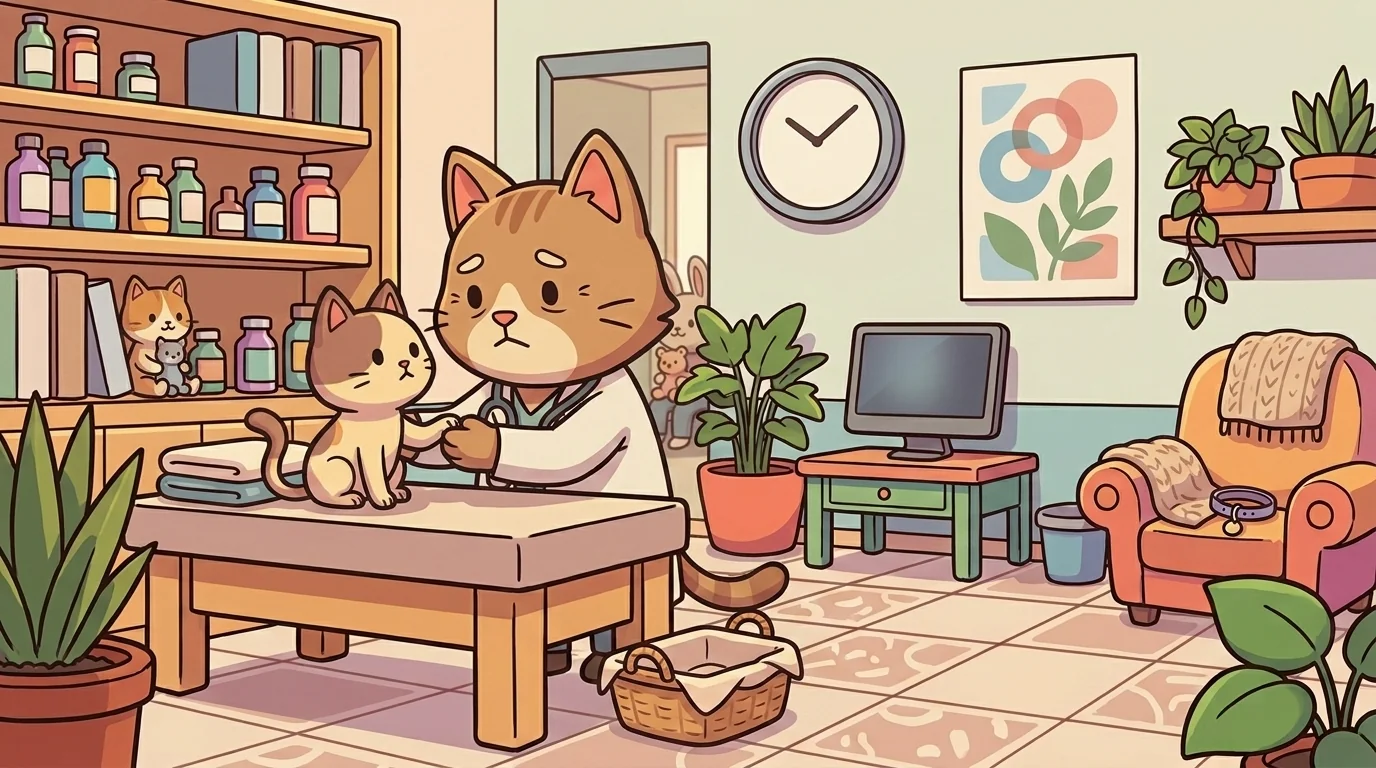
"It's okay to feel sad," Bond said, looking at their downcast faces. "It's okay to grieve. Losing a companion, a friend, is a real loss. Pet-loss grief is real. It counts. Your feelings are valid."
He pulled out a small, worn notebook – his capstone-decision-tracker. "When we make these decisions, we also need to care for ourselves, and for the people who love the animal. There are resources for this. Places like the ASPCA Pet Loss Support Hotline, or the Argus Institute at Colorado State University, can help families navigate their feelings. They offer support and understanding."
He looked at each student, his eyes kind. "And for any big feelings, any distress you might experience, remember there's always support. There's always someone whose whole job is to listen — free, private, and there any hour for anyone who needs to talk. Reaching out for help is a sign of strength."
Later that afternoon, the students put Bond's lessons into practice. They moved Barnaby's bed to a sunny spot. Chloe carefully placed a warm, soft blanket over him. Maya sat beside him, gently stroking his head, humming a quiet tune. Leo brought him a tiny dish of his favorite treat, knowing he might not eat it, but offering it anyway. They spoke in soft voices, their presence a quiet comfort. They weren't trying to cure him anymore. They were simply caring.
Bond watched them, a gentle smile on his face. "Care is more than cure. Sometimes care means stopping. Always care means seeing the whole being." He looked from Barnaby to the students, his eyes kind and understanding. "And always, care means acknowledging the grief that comes with love."
The students gathered closer, their hands resting on Barnaby's soft fur. They didn't have to like the decision, but they understood it. They understood that true care sometimes meant letting go, guided by a deep, quiet love. It was the hardest lesson, but perhaps the most important.
Hear it as an audio drama
A short play starring Bond, from CreatureCare. Different voices, same idea. Listen any time after you read.
Loading audio…
Read the drama script
- Narrator: From Spark and Anvil and CreatureCare — this is Bond, in chapter 1 of the CreatureCare cast.
- Narrator: This drama uses an AI-generated voice. Voiced via Gemini 2.5.
- Narrator: This story covers animal care and loss. Parents may want to listen first.
- Narrator: Bond is a wise-heron-elder. He stands settled, his long legs patient by a quiet pond, wearing a mended vet coat full of stories.
- Bond: I am Bond. I am here when the path of cure ends, and the path of care begins. My work is seeing what is needed now.
- Narrator: He watched the students, their faces tight with worry for Barnaby, the old terrier whose body was failing. They had tried every cure.
- Bond: We always do something. But sometimes, ‘doing something’ means changing our aim from fixing what cannot be fixed, to simply caring.
- Bond: We ask: What is this animal's quality of life? Can they move without pain? Can they still find joy in their day?
- Narrator: Bond grew up near quiet waters. He learned that some things cannot be mended, only held with gentle hands as their journey ends.
- Narrator: A student looked at him, her chin trembling. "But we can't just give up on him," she insisted, pleading for another way.
- Bond: True care means seeing when the burden of living outweighs the joy. It means putting their peace above our own desire to keep them near.
- Bond: Sometimes, the kindest care is making the hardest choice: to stop the suffering entirely. This is a profound act of compassion, not a failure.
- Narrator: The students learned to offer comfort care. Warm blankets, soft words, and a peaceful presence, easing Barnaby's final days with love.
- Bond: And we must care for the grieving hearts left behind. Pet-loss grief is real. It counts. Reaching out for support is a sign of strength.
- Bond: Care is more than cure. Sometimes care means stopping. Always, care means seeing.
- Narrator: You've been listening to a Spark and Anvil chapter, written by the Spark and Anvil writing team for ages 9 to 14.
- Narrator: Apps stay free forever.
- Narrator: Curriculum aligned to Next Generation Science Standards.
- Narrator: If anything in this story brought up big feelings, talking to a trusted adult helps. You can also reach support lines anytime.
- Narrator: Released under Creative Commons BY-NC-SA 4.0 for educational reuse. Visit Spark and Anvil for the full transcript.
The CreatureCare ensemble
Bond is one of the friends in CreatureCare. Each friend shows you one idea by how they act; meet them all and you have the whole subject.
-

Heed
Patient assessment — the listener who treats observation as relationship, not data-gathering ('listen first, look second, then we know')
-

Chart
Diagnostics — the thoughtful pattern-finder who treats lab data as story-fragments ('numbers are notes; notes are not the song')
-

Tend
Treatment delivery — the steady-handed practitioner who foregrounds consent and explains procedures BEFORE doing them ('slow hands, calm voice, patient first')
-

Knit
Recovery + follow-up — the patient old tortoise who teaches that healing is slow and that's the point ('days come, bandages come off, walk again — not yet, soon')
-

Assay
Diagnostics — one tiny drop carries news of the whole body
-

Flutter
Vital signs — count the heartbeat, the breath, the warmth
-

Glimpse
Imaging — see the hidden shape without cutting (read the shadow-picture)
-

Hale
Preventive care — the best care happens before anyone is sick
-

Suture
Mending — steady hands, tiny stitches; patience, not force