
Bastian
THE DOUBLE-CORNER FORTRESS (drawing defense) — being down material doesn't always mean losing. In the endgame, a defender can retreat into the *double corner* — a spot the attacker structurally cannot break — and hold a *draw* against a stronger force. Not every game is won or lost; some are *held.* Knowing when a position is a fortress is knowing when "behind" still equals "safe."
Loading audio…
Press play to listen along. The line being read lights up as you go.
Show full transcript
Loading transcript…
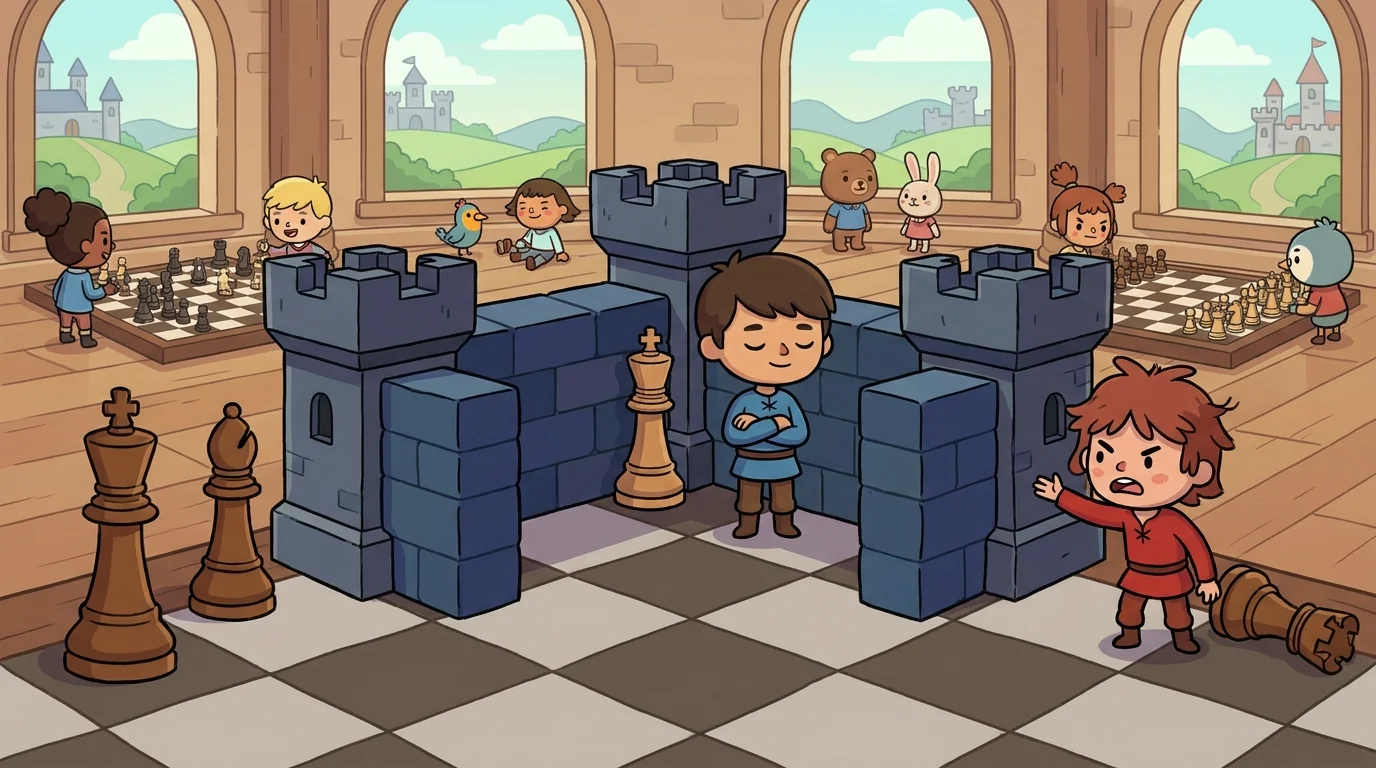
The mahogany board rattled as Maeve slid her black piece into a trap. Her face flared red, bright as a freshly painted crown. She reached out with both hands, ready to sweep all twelve dark checkers onto the floor.
Bastian stopped her board-tipping motion with two fingers against the rim.
"Wait," he said softly. "The board didn't hurt you."
"I'm down two kings!" Maeve snapped, her voice cracking across the quiet workshop. "The game is over!"
"Is it?" Bastian asked. He didn't look angry. He looked like a gardener inspecting a stubborn cabbage. "Show me where you're dead."
"Right there," she spat, pointing at her lone king trapped near the edge. "He's going to corner me in three moves."
"He might corner you," Bastian agreed. "But he can't kill you unless you let him. Walk him to the double corner."
Maeve glared at the wooden grid. "That's retreating."
"That's geometry," Bastian said.
In checkers, the double-corner fortress is where standard math breaks down. An attacker can bring three kings. They can line up like a solid wall. But because of how the squares connect at that specific edge, the attacker simply runs out of angles.
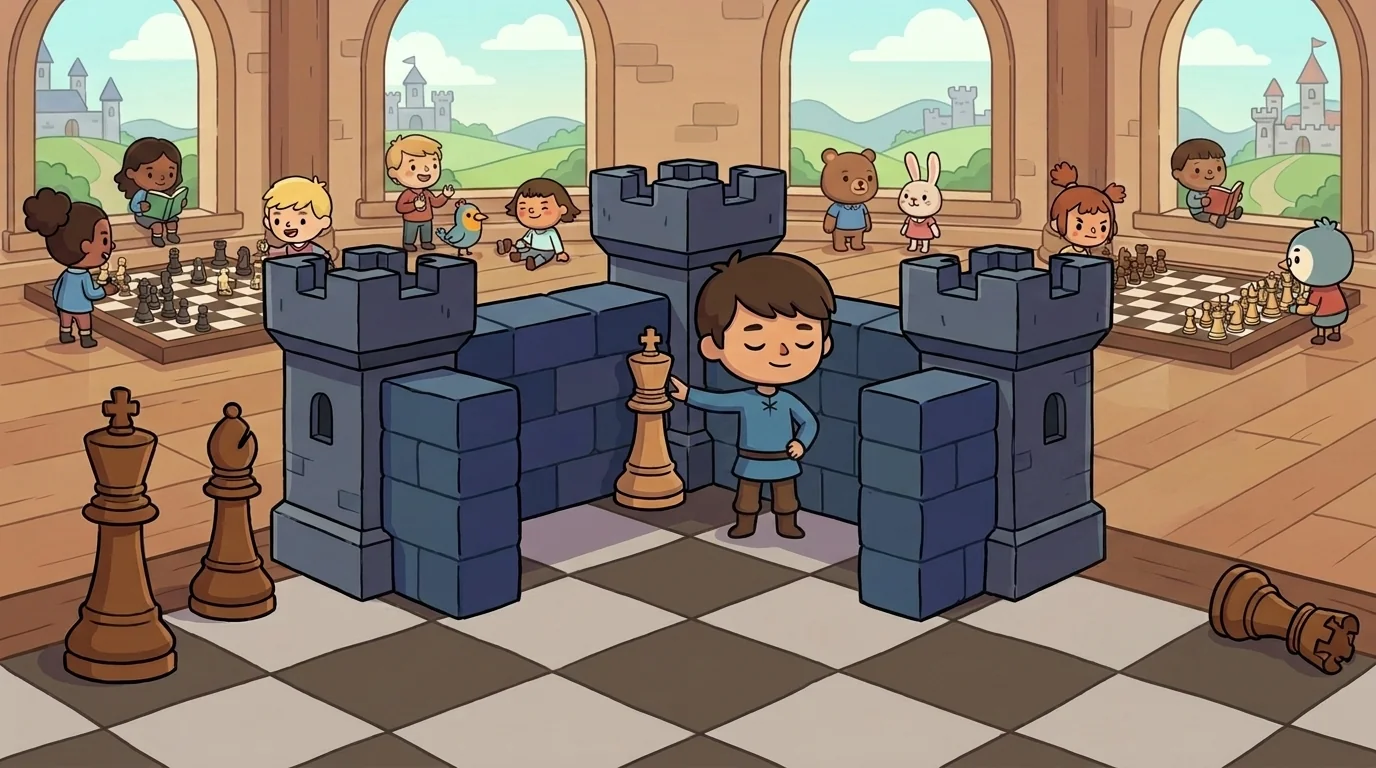
Bastian nudged her piece into the twin squares at the pocket.
"Two squares," he said. "Your king steps between them. Back and forth. Forever."
Maeve watched her opponent, a boy named Pip, try to force his way inside. Pip moved right. Maeve stepped left. Pip moved down. Maeve stepped right.
No matter what Pip tried, his pieces bounced off her tiny pocket like water against solid granite.
"He can't touch me," Maeve whispered. Her eyes widened.
"He can't touch you at all," Bastian said. "You aren't winning. But you're never going to lose."
Bastian understood Maeve's rage because he used to own it.
When he was ten, a single bad exchange made his stomach twist into tight knots. He used to surrender before his opponent even finished promoting pieces. A lost piece felt like a personal insult. He thought being behind meant he was weak.
Then an old teacher sat him down in a cold basement club room. The air smelled of old paper and citrus polish. The teacher placed one black king against three white ones on a scratched board.
"You think you're behind," the old man told him. "And you think behind means beaten. Those are two different sentences, Bastian."
The old teacher showed him how two small squares tucked at the board's edge could hold off an entire army.
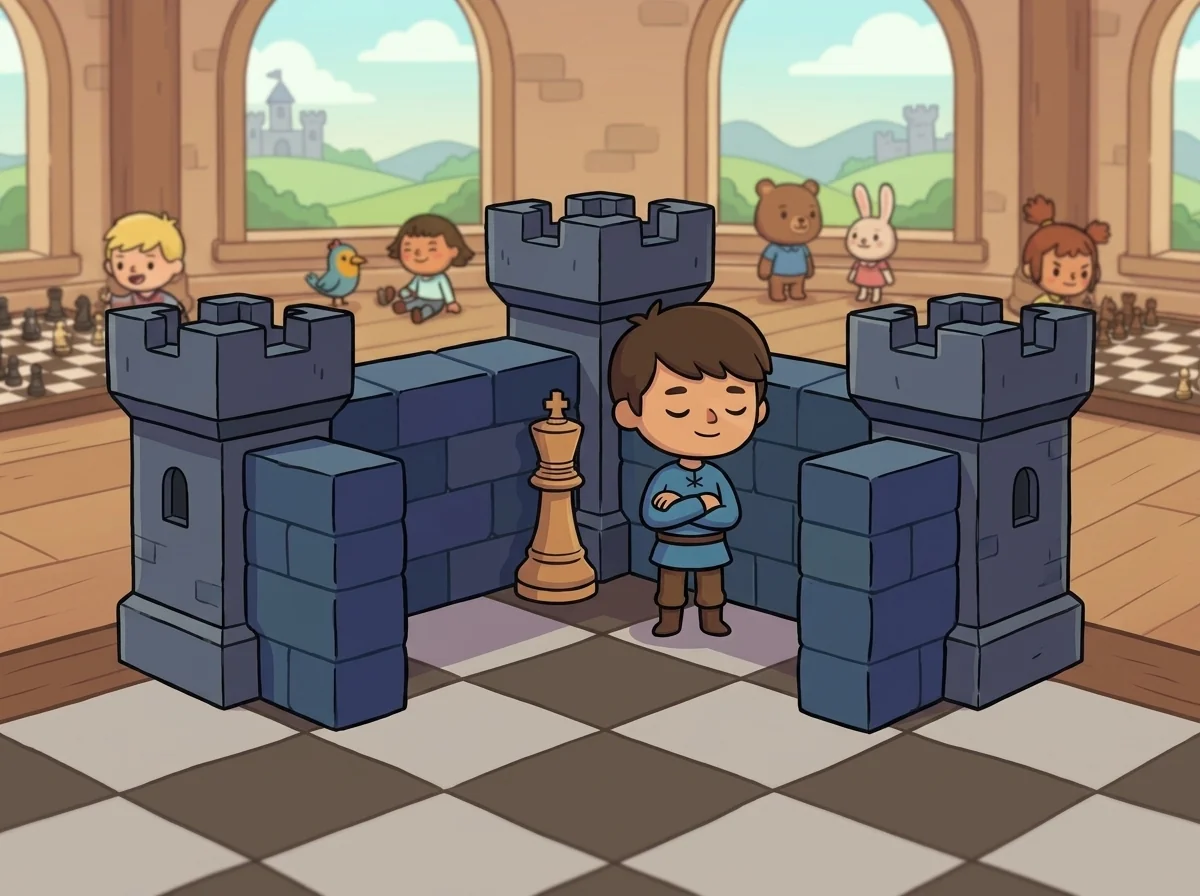
That single afternoon changed everything. Bastian realized he had thrown away dozens of games that were actually perfectly safe. He had surrendered to his own panic, not to his opponent's skill.
When Bastian first arrived at the CrownTales Academy, Master Draughtsmith tested him in front of the whole hall.
The master set up a broken endgame position. Bastian was down a piece and trapped in the middle of the board.
"Most players resign here," Draughtsmith said, his voice echoing off the stone walls. "They see the missing piece and lose their nerve. Show the academy why they shouldn't."
Prong, the red-haired tactic solver, leaned against a wooden pillar and smirked. "He's just going to run away," Prong whispered to Regina.
Bastian didn't care about the whispers. He picked up his king and began a deliberate, quiet march across the dark diagonals. He didn't look for counterattacks. He didn't try to pull off a desperate jump.
He marched straight into the double corner and closed the door behind him.
Draughtsmith threw every trick in his book at the corner pocket. He angled his kings. He offered sacrifices. He tried to block the escape route.
Bastian simply shuffled his piece back and forth. Two squares. One step, then another.
After twenty identical moves, Draughtsmith paused and set his pieces down.
"I can't break through," the master admitted.
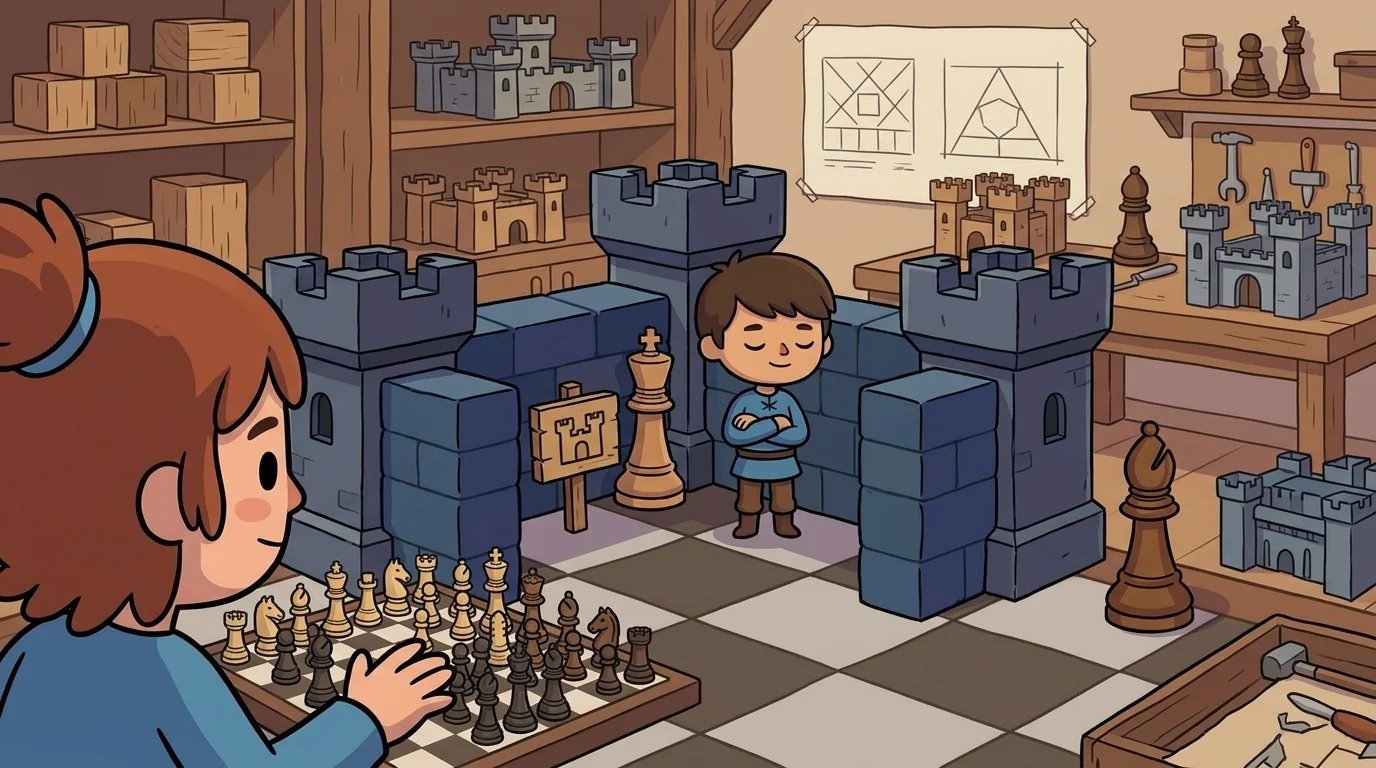
"I can't win this," Bastian said quietly. "I never could. But I don't have to win it. I have to not lose it. The double corner holds until the sun goes out."
Draughtsmith looked around the silent hall.
"You didn't find a way to win," the master announced to the watching students. "You found the place where you couldn't lose. When you are behind, that is the exact same thing."
Back in the present workshop, Maeve's game ended in an official draw. Pip threw his hands up in frustration and marched off to reset his board.
Maeve sat staring at the two corner squares. She didn't look happy yet, but the tension had left her shoulders.
"Is every corner a fortress?" she asked quietly. "What if I hide in a spot and think I'm safe, but they break in anyway?"
Bastian leaned over the dark wood. "That is where most players fail," he said. "They confuse hope with structure. A fortress isn't a place you wish will hold. It's a place you know holds."
He pointed to the single corner on the opposite side of the board.
"If you sit here," Bastian said, placing a piece in the single corner, "they can force you out and trap you against the wall."
"That isn't a fortress," he added. "That's just a corner where you wait to lose."
"So how do I know the difference?" Maeve asked.
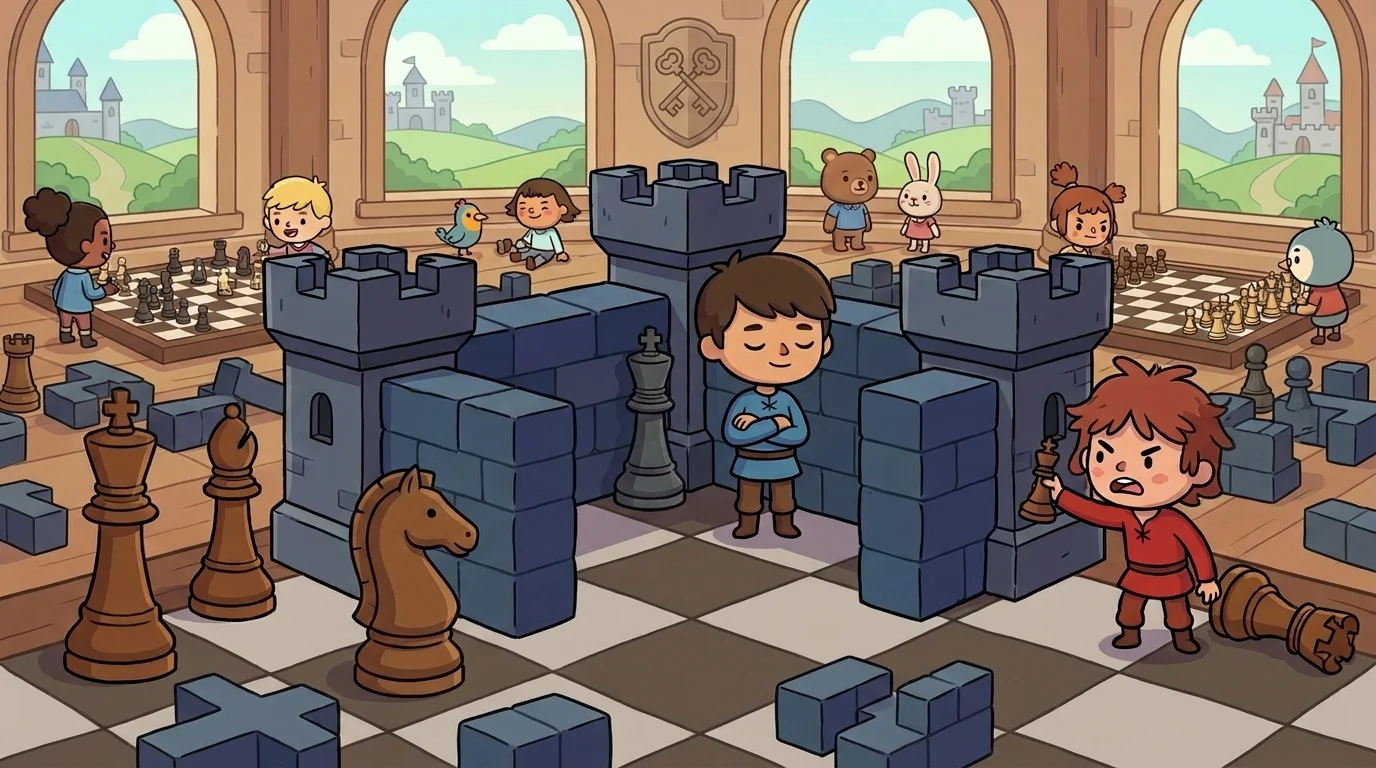
"You count the doors," Bastian told her. "Look at every square your enemy can enter from. Check every single angle of attack."
"If there is even one door left open, it's not a fortress yet," he said.
"Count the doors," Maeve repeated under her breath.
"Dig in on proof, not on hope," Bastian said. "Know the difference between a position that's hard to break and one that's impossible to break."
Regina walked past the table, her wooden record slate tucked under her arm.
"Learning to survive again, Bastian?" she asked with a dry smile. "One of these days you will have to teach them how to attack."
"Attack is easy when you're ahead, Regina," Bastian replied without looking up. "I teach them what to do when everything goes wrong."
Prong snorted from two tables over. "You play not to lose," Prong called out.
"Not losing is a skill you'll wish you had the day your attack fails," Bastian answered, completely unbothered.
Maeve gathered her dark checkers into a velvet pouch. She walked out into the courtyard, feeling a strange new quiet in her chest. Holding a draw when she was supposed to lose felt an awful lot like winning.
That night, when a heavy pile of academy homework felt like it was crashing down on her desk, Maeve remembered. She stopped herself from sweeping her papers onto the floor.
Behind and beaten were not the same sentence. She found her steadiest ground, counted her options, and held it.
The CrownTales ensemble
Bastian is part of CrownTales's distributed-narrative cast. Each character embodies a different curricular primitive; together they teach the full subject.
-

Kingsley
Crowning: a man that reaches the far row becomes a king that moves both ways
-

Leapford
The forced capture: a man captures by leaping over a neighbor
-

Ordell
Orthogonal movement: how Turkish-draughts pieces step straight, not diagonally
-

Prong
The fork: one move that threatens two pieces at once
-
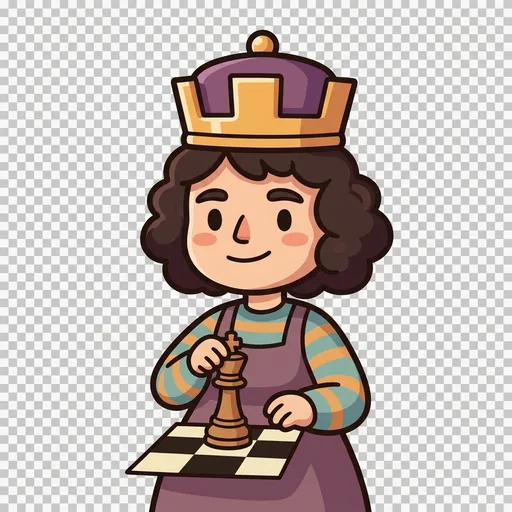
Regina
Opposition and tempo: winning the endgame by controlling who must move
-

Skipjack
The multi-jump chain: capturing several pieces in one turn
-

Slant
Diagonal movement: how an ordinary man steps one square diagonally
-

Volant
The flying king: the long-range king of International 10x10 draughts