Regina
OPPOSITION & TEMPO
Loading audio…
Press play to listen along. The line being read lights up as you go.
Show full transcript
Loading transcript…
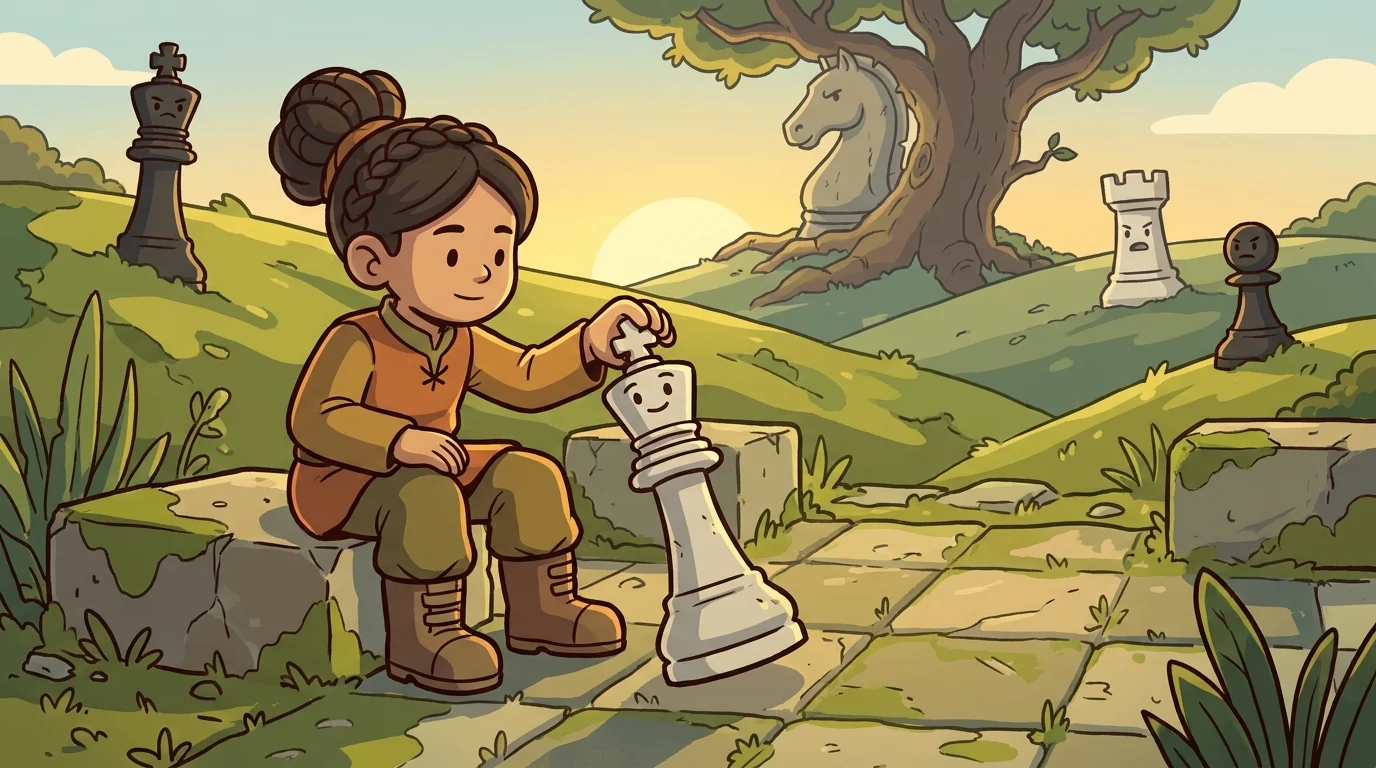
Regina almost never makes the loud move. She makes the quiet one — and wins.
In the endgame, when only a few kings remain, the other pieces want to charge, to attack, to do something. Regina waits. She makes a small, patient move that seems to do nothing — and it forces her opponent to be the one who has to move next, into a worse square. "In the endgame, the loser is usually whoever is forced to move into a bad spot," she says, sliding a king one quiet square. "So I don't force myself. I make the waiting move, and hand the burden of moving to you. That's the opposition. That's how you win by standing still."
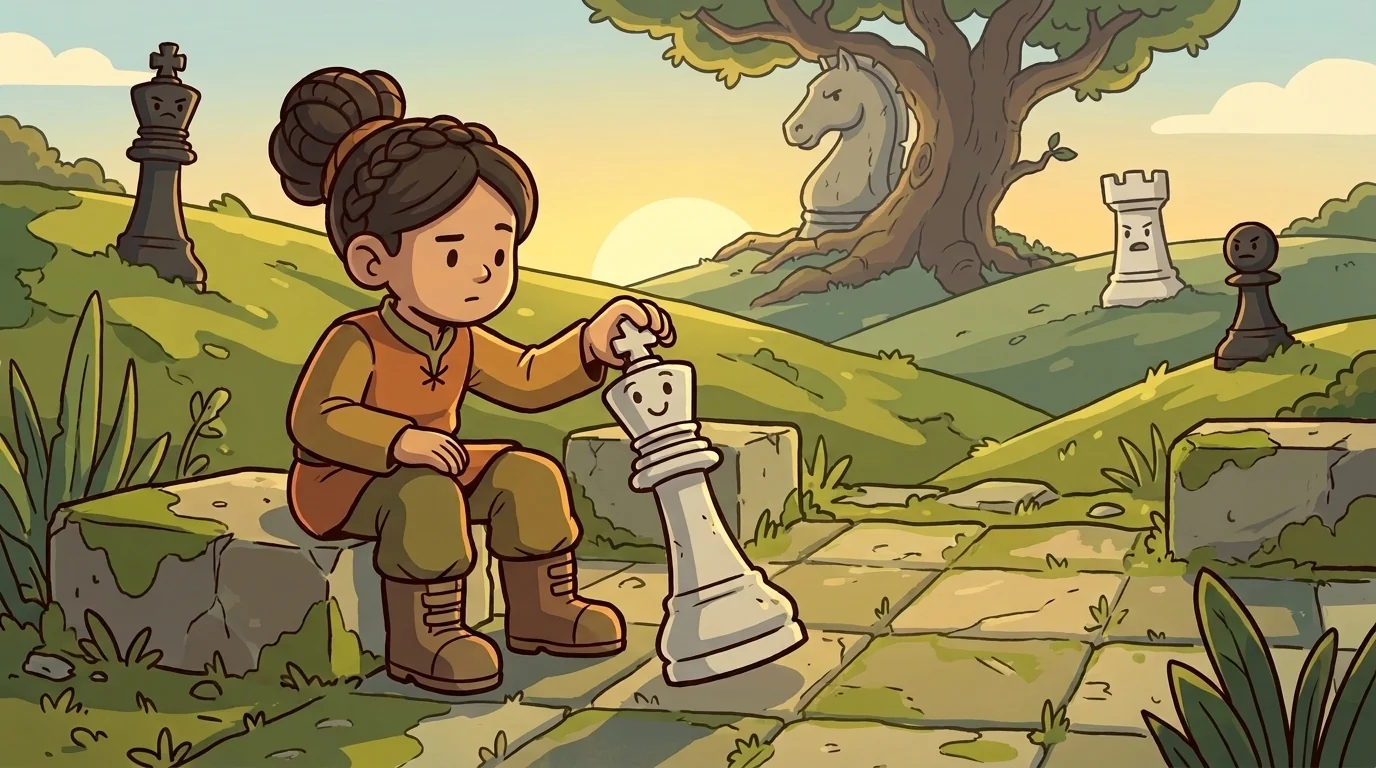
Regina spent her early days losing endgames by trying too hard.
She'd reach a close endgame and, unable to bear the tension, charge — attack, chase, make the biggest move she could — and again and again she'd overextend, expose herself, and lose a game that was hers to win. Doing something felt safer than doing nothing. Waiting felt like weakness. So she rushed, and she lost.
An old queen-piece, who had won more endgames than anyone, taught her the hardest lesson of the game. "You keep losing because you can't stand to wait," she said. "But in the endgame, waiting is the weapon. Count the moves. See who runs out of good ones first. If you can make a tiny move that changes nothing important — a waiting move — you can force your opponent to be the one who has to step into the bad square. The one who moves is often the one who loses. So learn to not move — cleverly." Regina practiced it, and the endgames she'd been throwing away started, quietly, to turn into wins.
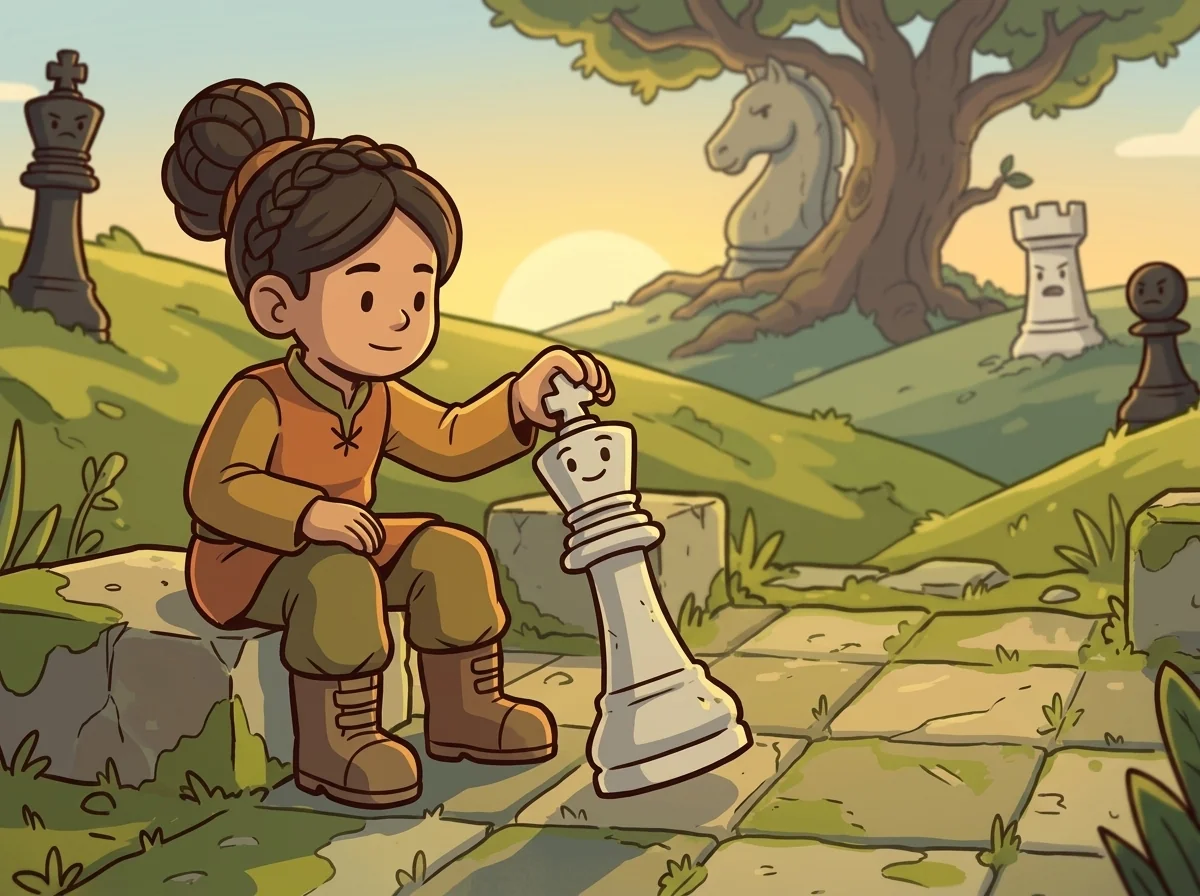
She came to the CrownTales academy as the piece who teaches the endgame. On her first day the head set up a delicate king ending and asked her to win it.
Regina didn't charge. She looked at the position for a long, still moment, counting. Then she made a move so small the other apprentices thought she'd wasted her turn — a king sliding one square sideways and back's worth of nothing. But it changed whose turn it would be at the critical moment. Her opponent, now forced to move, had no good square left, and stepped into the losing one. "I didn't beat the position," Regina said. "I made you beat it, by handing you the move when there was nothing good left to do with it. That's opposition. That's tempo."
"Every other apprentice attacked," the head said. "You waited, and won." And that has been her role ever since: teaching that in the endgame, patience is the sharpest blade.
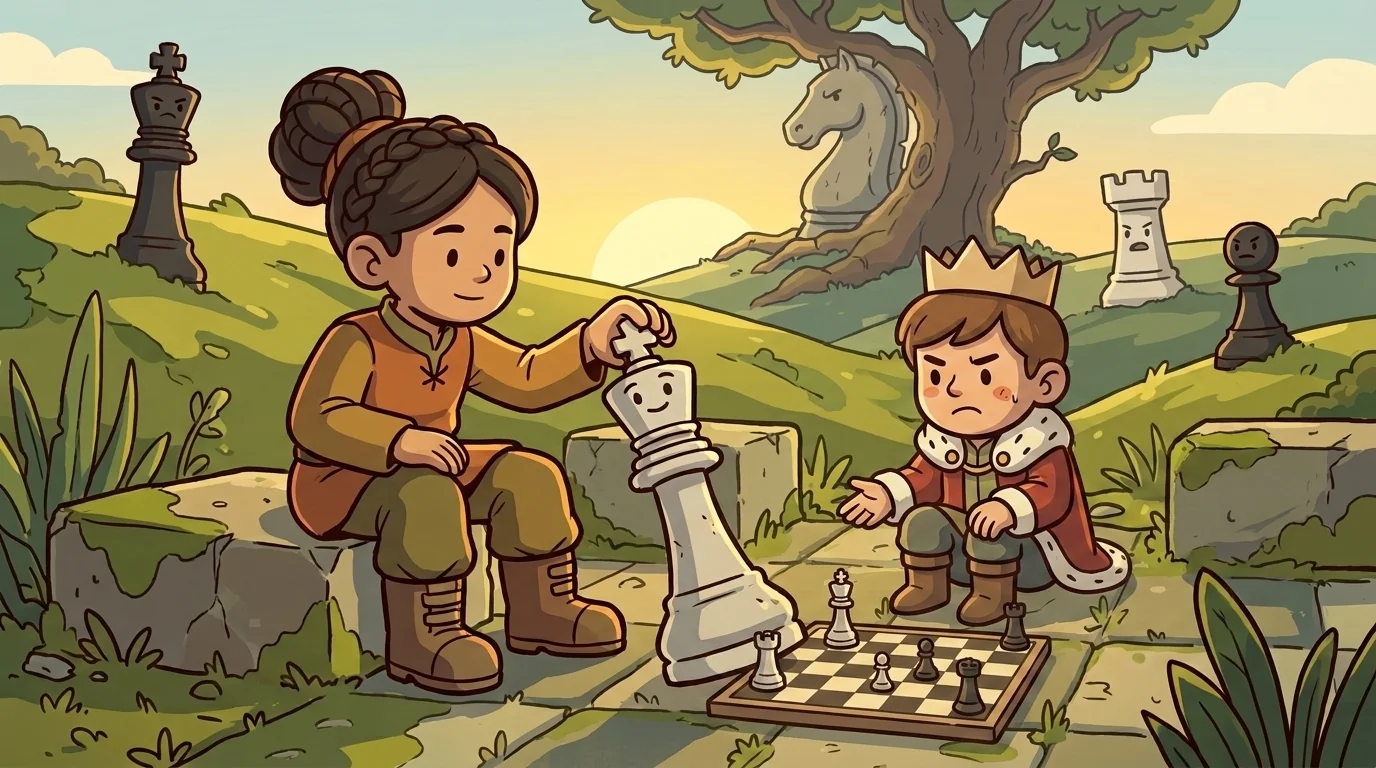
A restless young king came to her frustrated. "I keep losing endgames! I attack and attack and it falls apart." Regina nodded slowly; she had been that king. "You're losing because you can't stand to wait," she said gently. "In the endgame, the one who moves is often the one who gives ground. So stop trying to force it. Count the moves. Find the little waiting move that hands me the burden of moving." She showed the young king a position. "Don't charge. Sit. Make the quiet move. Let me run out of good squares first."
The young king tried it — made the small, patient move it had always been too anxious to make — and watched, amazed, as the opponent, forced to move, walked straight into a loss. It hadn't needed a bigger attack. It had needed the courage to wait.
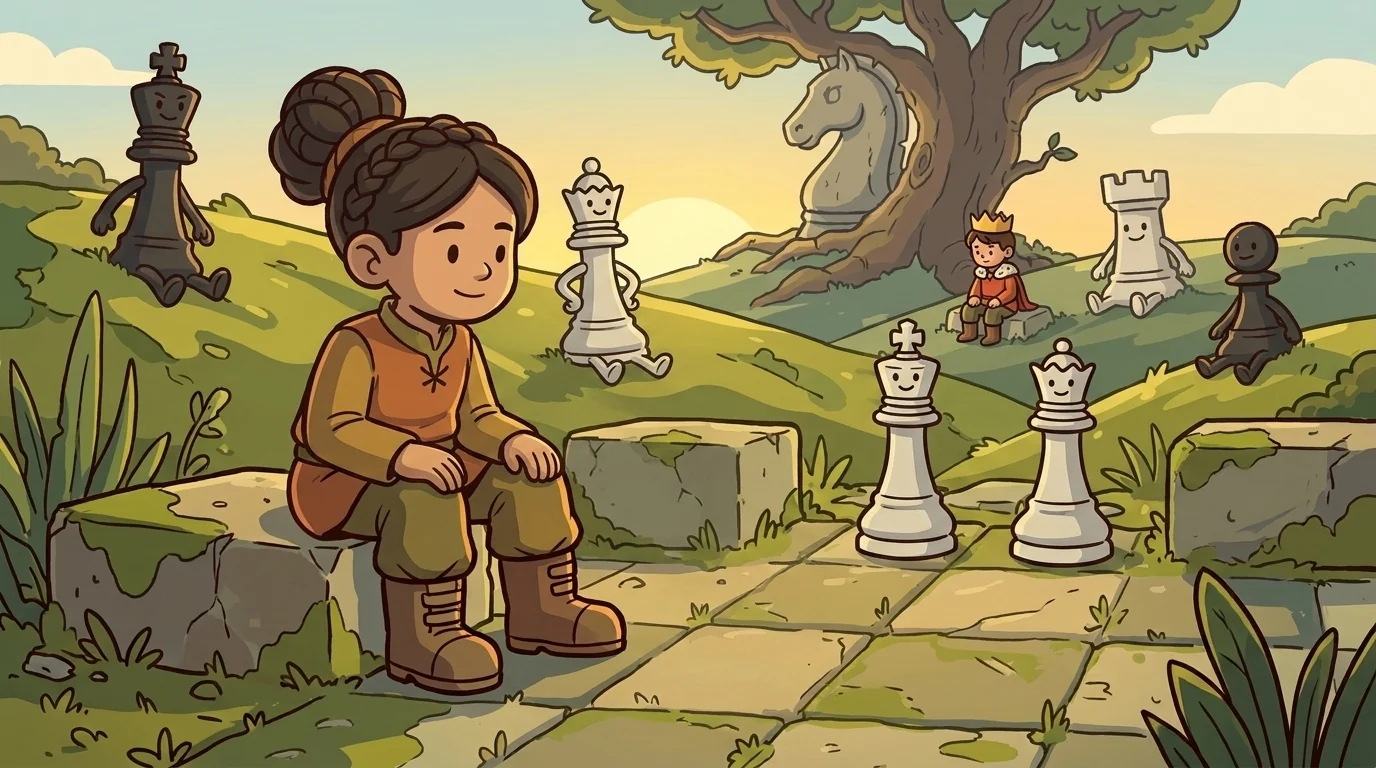
Later the young king said the real thing. "Waiting makes me so anxious. Doing nothing feels like I'm losing."
Regina settled onto her square, perfectly still. "I know that anxiety better than anyone — it cost me a hundred endgames," she said. "But here's what I learned: doing nothing, on purpose, at the right moment, is doing something very powerful. The waiting move isn't weakness. It's control. It's the calm to let the other side act first and reveal their weakness, instead of rushing to reveal your own." She slid one quiet square. "There's a real strength in stillness. Most people never learn it because they can't bear to wait. Learn it, and you'll win the games everyone else throws away in a hurry."
The young king practiced the waiting move — the hardest move in the game, the one that looks like nothing — and found, in the stillness, a patience that felt less like anxiety and more like power.
Hear it as an audio drama
A short play starring Regina, from CrownTales. Different voices, same idea. Listen any time after you read.
Loading audio…
Read the drama script
- Narrator: From Spark and Anvil and Crowntales — this is Regina, in chapter 1 of the Crowntales cast.
- Narrator: This drama uses an AI-generated voice. Voiced via Gemini 2.5.
- Narrator: Regina rules the endgame, where only a few pieces remain — and she wins not with force, but by deciding who is forced to move.
- Regina: When the board is nearly empty, the game isn't about capturing anymore. It's about obligation. Whoever is FORCED to move often has to give ground — step somewhere that lets the other side in. So I don't ask "how do I attack?" I ask "how do I make it THEIR turn in a bad spot?"
- Narrator: The idea is called opposition — and its engine is tempo, the count of moves.
- Regina: I stand my king right so that when my opponent must move, every square they can go to hurts them. That's seizing the opposition. Sometimes I even make a tiny WAITING move — accomplishing nothing but passing the obligation back to them. And now THEY must give ground.
- Narrator: Regina used to charge in the endgame, attacking hard and losing her advantage.
- Regina: With a winning position, I'd lunge forward — and lunge right into a draw, because I gave my opponent room. I didn't understand that in the endgame, MOVING can be a weakness. The player forced to move first is often the one who loses.
- Narrator: So Regina learned patience and the waiting move.
- Regina: I position, then I wait. I hand them the move like a hot potato. They step — and every step opens a door for me. Control who moves, and you control the endgame without ever throwing a punch.
- Narrator: A boy kept advancing his king in a winning endgame and slipping toward a draw.
- Regina: Stop advancing. Make a waiting move instead — shuffle here, do nothing. Now it's THEIR move, and look — every square they can reach lets you in. You didn't attack. You made them come to you.
- Narrator: The boy made a quiet waiting move, and his opponent was forced to step aside and let the king through.
- Regina: In the endgame, don't force the board — force the turn. Take the opposition, and make them move.
- Narrator: You've been listening to a Spark and Anvil chapter, written by the Spark and Anvil writing team for ages 9 to 14.
- Narrator: Apps stay free forever.
- Narrator: Curriculum aligned to Common Core and Next Generation Science Standards.
- Narrator: Released under Creative Commons BY-NC-SA 4.0 for educational reuse. Visit Spark and Anvil for the full transcript.
The CrownTales ensemble
Regina is one of the friends in CrownTales. Each friend shows you one idea by how they act; meet them all and you have the whole subject.
-
Bastian
The double-corner fortress: drawing a lost-looking game by holding the safe square
-

Kingsley
Crowning: a man that reaches the far row becomes a king that moves both ways
-

Leapford
The forced capture: a man captures by leaping over a neighbor
-

Ordell
Orthogonal movement: how Turkish-draughts pieces step straight, not diagonally
-

Prong
The fork: one move that threatens two pieces at once
-

Skipjack
The multi-jump chain: capturing several pieces in one turn
-

Slant
Diagonal movement: how an ordinary man steps one square diagonally
-

Volant
The flying king: the long-range king of International 10x10 draughts