Skipjack
THE MULTI-JUMP CHAIN
Loading audio…
Press play to listen along. The line being read lights up as you go.
Show full transcript
Loading transcript…
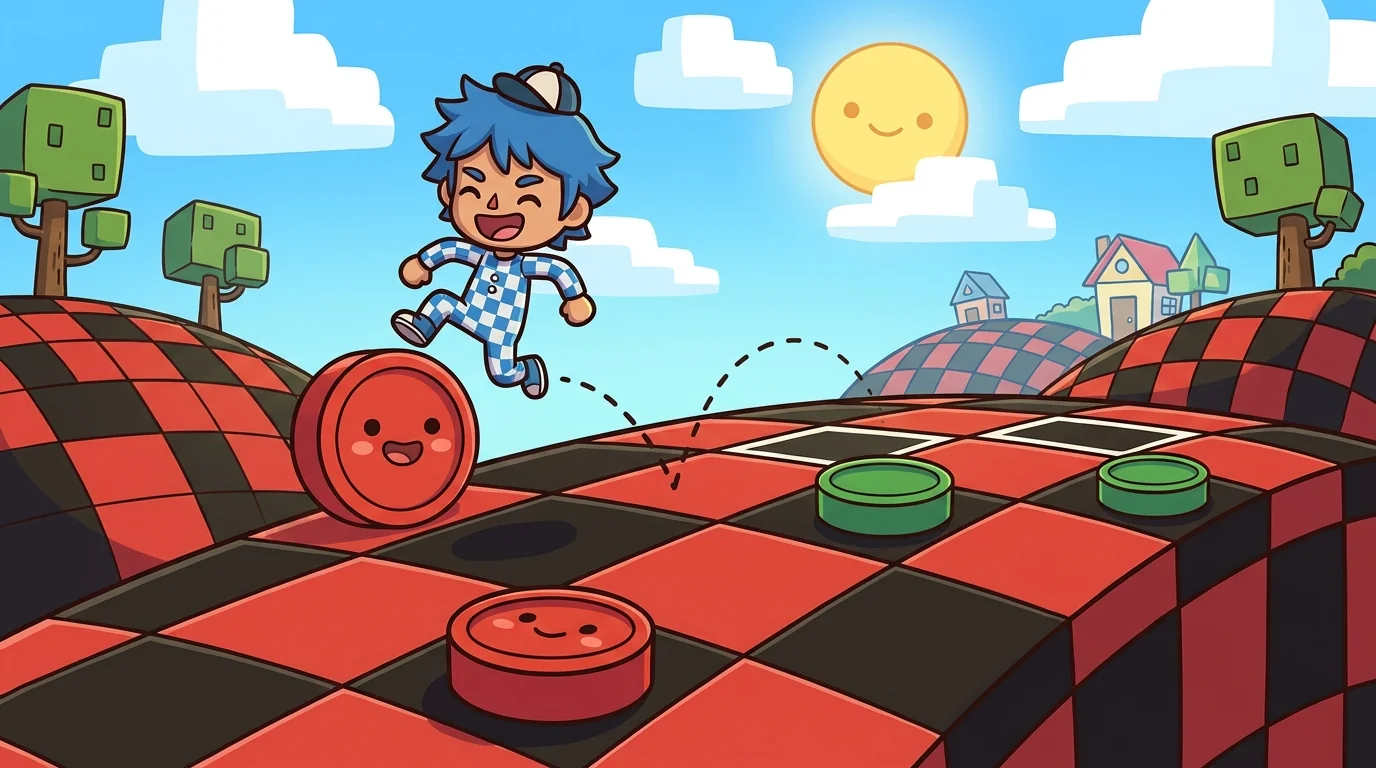
Skipjack never takes just one jump if he can help it.
Where another piece leaps a single enemy and stops, Skipjack lands, spots the next enemy already lined up with an empty square behind it, and leaps again — and again — clearing a whole diagonal of opponents in one continuous, zig-zagging turn. "One jump is fine," he says, mid-hop. "But why stop at one when the whole chain is right there? The trick isn't the leaping. Anybody can leap. The trick is seeing the whole chain before you start."
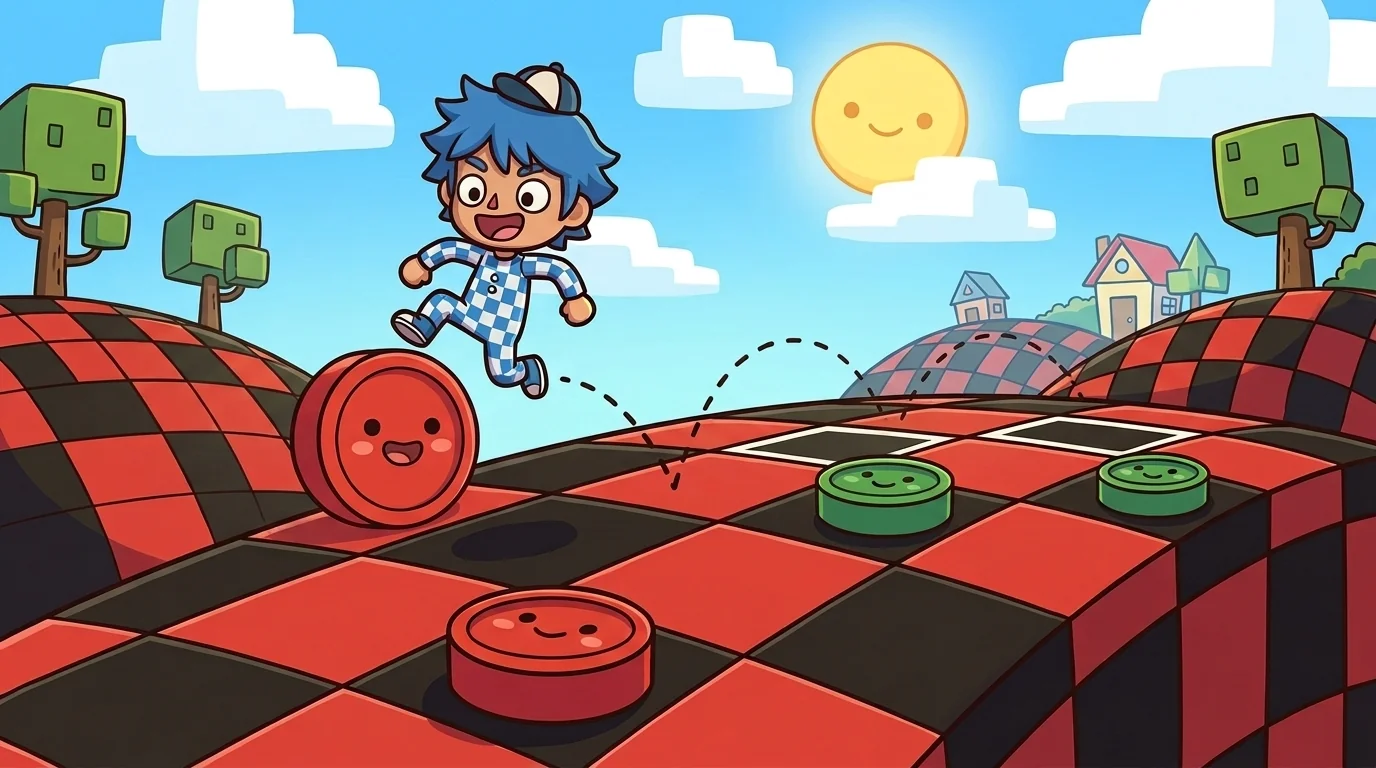
Skipjack learned to look ahead because he used to leap without looking, and it cost him.
As a young piece he was all energy and no plan. He'd see one jump, take it in a burst of excitement, and land somewhere terrible — out of position, exposed, having grabbed one piece while missing the three he could have taken if he'd only looked first. His enthusiasm kept getting him into trouble. He was fast, and he was thoughtless, and the two together made him easy to beat.
An old strategist stopped him mid-blunder. "You leap like your feet are on fire," she said. "Slow down. Before you take the first jump, trace the whole path with your eyes. Where do you land? Is there another jump there? And after that one?" Skipjack tried it — and discovered that a jump he'd have taken alone was actually the first link in a chain of three, if only he'd traced it first. His energy hadn't been the problem. The problem was leaping before he'd seen. Once he learned to see the whole chain first, his speed became a weapon instead of a liability.

He came to the CrownTales academy as the piece who teaches combinations. On his first day the head set up three enemies in a zig-zag, each with an empty landing beyond, and asked Skipjack to show what a man could do.
Skipjack didn't leap right away — and that restraint was the lesson. He traced the path first with a fingertip: over the first, land, over the second, land, over the third. Then he leapt, all three in one flowing turn. "See how I looked before I jumped?" he said. "If I'd taken the first leap on impulse, I might've landed facing the wrong way and missed the rest. You don't win by leaping fast. You win by leaping in the right order, and you only know the order if you trace the whole chain first."
"Most eager pieces leap and hope," the head said. "You look, then leap." And that has been his role ever since: teaching that the chain is seen before it is taken.
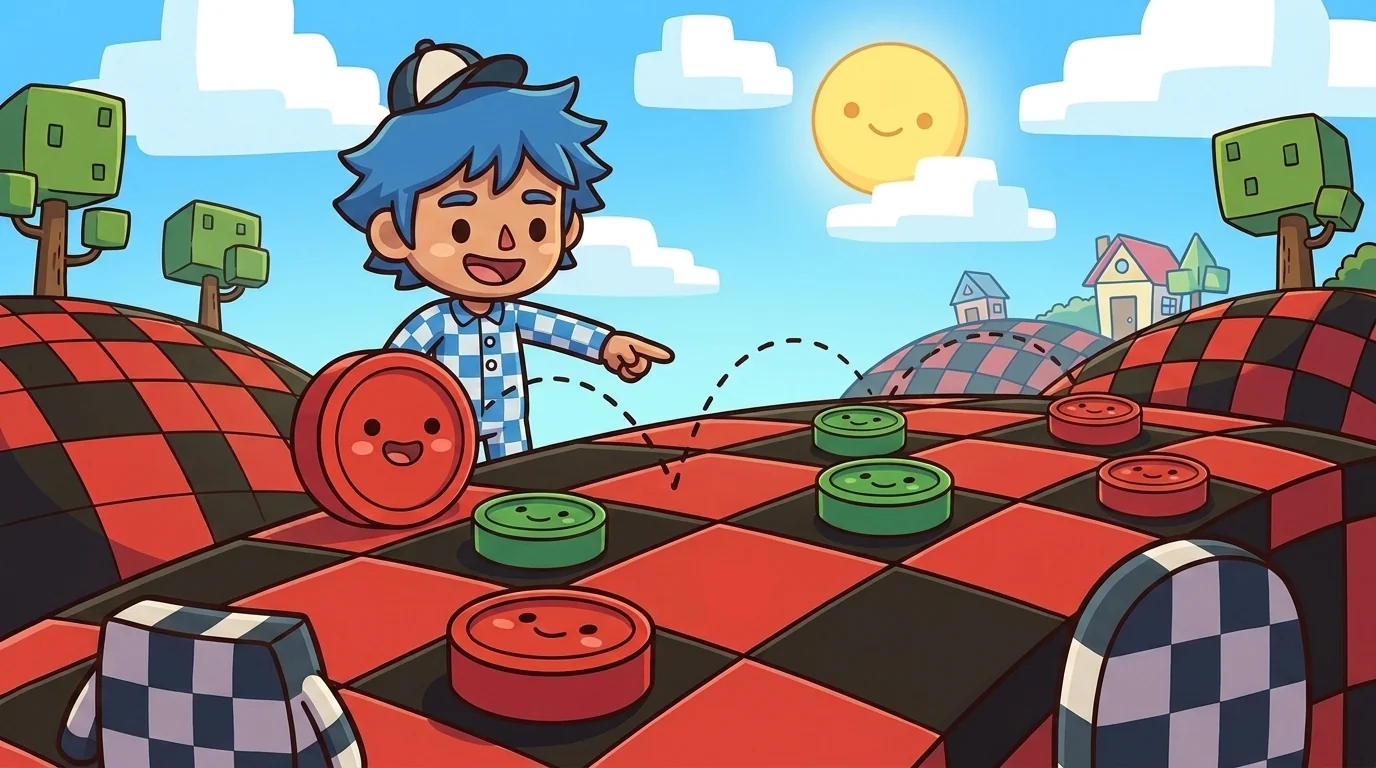
A young piece came to him buzzing with frustration. "I took a jump and it was a disaster — I landed in a terrible spot!" Skipjack laughed, kindly, because he knew that exact disaster. "You leapt before you looked," he said. "I did that for years. Here —" he set up a chain "— before you touch a single piece, trace where each jump lands you. A jump that grabs one enemy but strands you is worse than a chain that grabs three and leaves you strong. Slow down for one breath. See the whole thing. Then fly."
The young piece traced the chain first — the whole zig-zag — and then took it, and landed exactly where it meant to, three enemies richer, and grinned like it had just learned to fly on purpose instead of by accident.
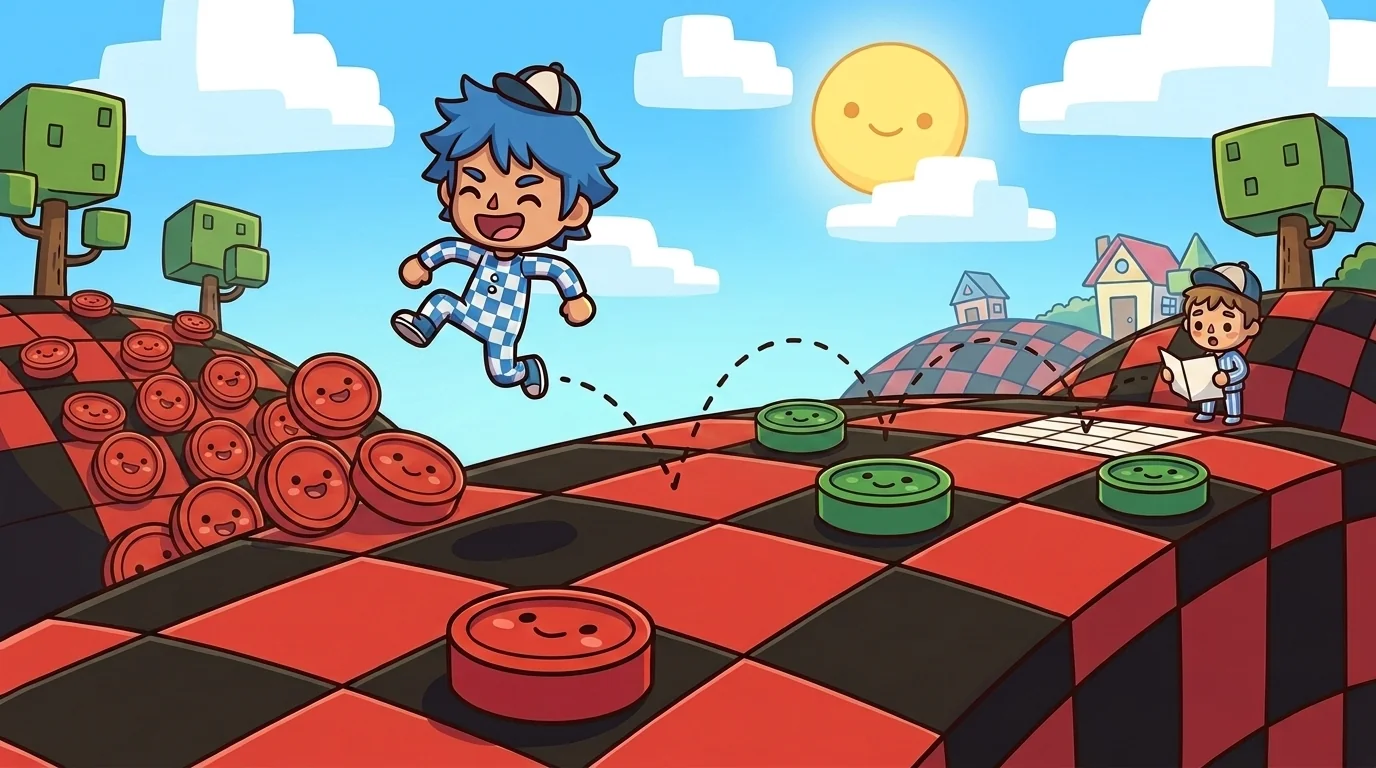
Later the young piece admitted it. "I get so excited I just go."
Skipjack nodded — he still felt that pull himself. "That excitement is a gift," he said. "Don't lose it. But pair it with one breath of looking first. The difference between a piece that blunders and a piece that wins isn't how much energy it has — it's whether it sees the chain before it leaps." He traced an imaginary path in the air. "One step can open a whole sequence you didn't know was there. But only if you look for it. Look first. Then let yourself go all the way."
The young piece practiced tracing chains before every jump, and found — to its delight — that looking first didn't slow it down at all. It just meant that when it finally leapt, it leapt all the way through.
Hear it as an audio drama
A short play starring Skipjack, from CrownTales. Different voices, same idea. Listen any time after you read.
Loading audio…
Read the drama script
- Narrator: From Spark and Anvil and Crowntales — this is Skipjack, in chapter 1 of the Crowntales cast.
- Narrator: This drama uses an AI-generated voice. Voiced via Gemini 2.5.
- Narrator: Skipjack is the crowd-pleaser of the checkers court — the one who captures four enemies in a single glorious turn.
- Skipjack: When you jump an enemy and LAND next to another one you could jump — you keep going! Same turn. Jump, land, jump again, land, jump again. A whole chain of captures in one move. It feels like flying.
- Narrator: A multi-jump. But Skipjack says the skill isn't the jumping.
- Skipjack: The skill is SEEING the whole chain before you start. Because once you begin a forced chain, you're committed to the path. If you leap in without looking ahead, you might land somewhere terrible on the last hop. You have to trace the entire zig-zag in your mind FIRST, then commit.
- Narrator: Skipjack once started a dazzling chain without checking the end.
- Skipjack: I jumped three pieces — so proud — and landed my checker right where the opponent could take it back plus two more. My four-capture turn LOST me the game. The chain was beautiful and I hadn't looked at where it ended.
- Narrator: So now Skipjack looks before leaping.
- Skipjack: I trace it: jump here, land there, jump there, land THERE — and is that last square safe? If yes, I fly. If the landing's a trap, I find a different chain, or don't jump at all. See the whole thing, then commit. The magic is in the seeing, not the jumping.
- Narrator: A girl was about to launch a chain with her eyes on the first jump only.
- Skipjack: Wait — where do you LAND after the third jump? ...Right next to their king. That's a trap. Look, if you start from this piece instead, the chain ends here — safe. Same number of captures, but you live to enjoy them.
- Narrator: The girl traced the whole chain first, then swept three pieces off the board and landed somewhere safe.
- Skipjack: One turn, many jumps — but only if you see the whole chain before your first leap.
- Narrator: You've been listening to a Spark and Anvil chapter, written by the Spark and Anvil writing team for ages 9 to 14.
- Narrator: Apps stay free forever.
- Narrator: Curriculum aligned to Common Core and Next Generation Science Standards.
- Narrator: Released under Creative Commons BY-NC-SA 4.0 for educational reuse. Visit Spark and Anvil for the full transcript.
The CrownTales ensemble
Skipjack is one of the friends in CrownTales. Each friend shows you one idea by how they act; meet them all and you have the whole subject.
-
Bastian
The double-corner fortress: drawing a lost-looking game by holding the safe square
-

Kingsley
Crowning: a man that reaches the far row becomes a king that moves both ways
-

Leapford
The forced capture: a man captures by leaping over a neighbor
-

Ordell
Orthogonal movement: how Turkish-draughts pieces step straight, not diagonally
-
Prong
The fork: one move that threatens two pieces at once
-
Regina
Opposition and tempo: winning the endgame by controlling who must move
-

Slant
Diagonal movement: how an ordinary man steps one square diagonally
-

Volant
The flying king: the long-range king of International 10x10 draughts