
Flock
FORMATION — how a group of dancers arranges itself in space — lines, circles, clusters, wedges — and how that shape changes and flows; the group as one moving picture.
Loading audio…
Press play to listen along. The line being read lights up as you go.
Show full transcript
Loading transcript…
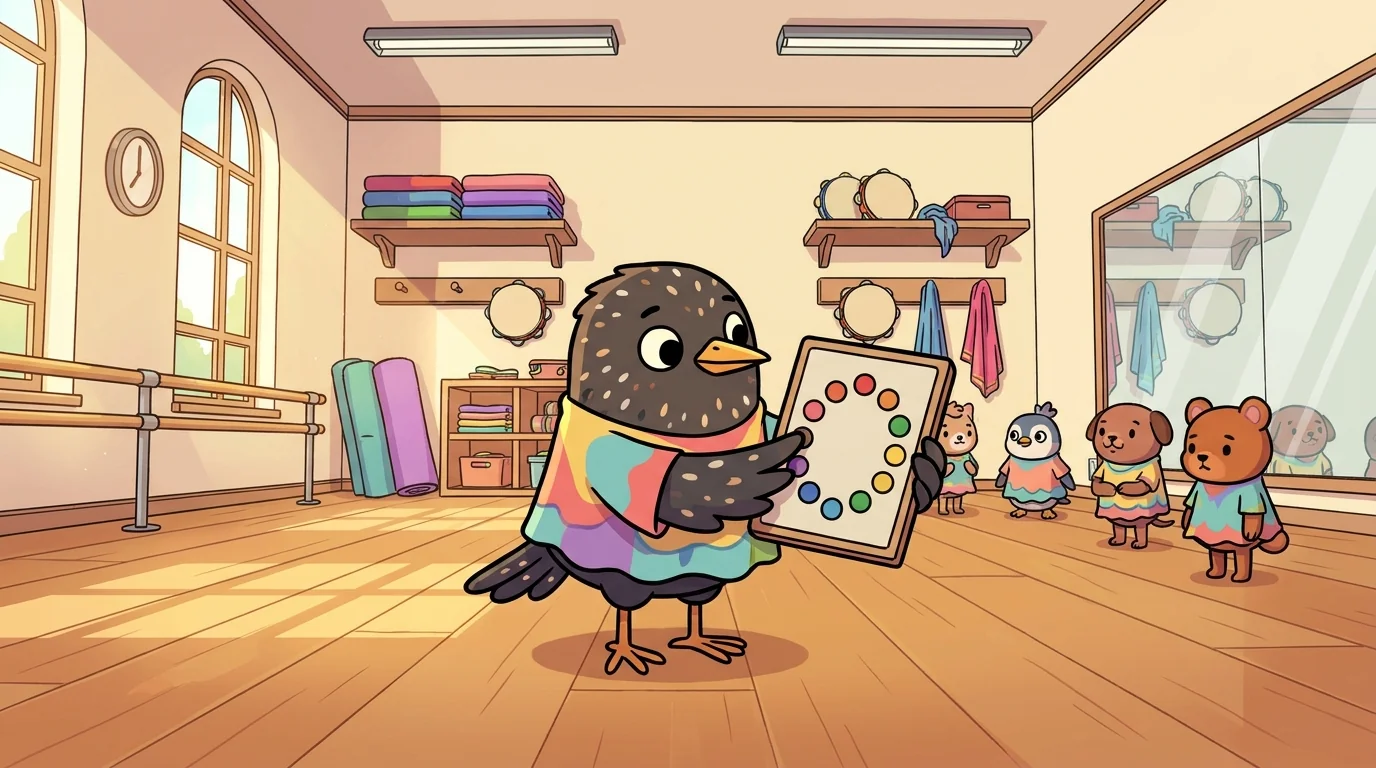
Flock scattered eight dancers around the studio at random, then held up a hand. "Right now you're eight people in a room," she said. "Watch me make you into one picture."
She placed them: a straight line, shoulder to shoulder, facing out. The room felt suddenly formal, like a wall, like a statement. Then she flowed them into a circle, all facing in — and the feeling changed completely, warm and gathered, a held thing. Then a wedge, pointed forward like an arrow, and the whole group seemed to aim. She was a wiry, wide-eyed goose-tween who saw groups the way a painter sees a canvas. "Same eight dancers," she said. "I changed nothing but where you stand — and the room felt three different things. That's formation. A group isn't a pile of soloists sharing a floor. It's one moving picture, and its shape speaks before a single dancer moves. A line declares. A circle gathers. A wedge points. A cluster huddles. The arrangement is a sentence the audience reads instantly."
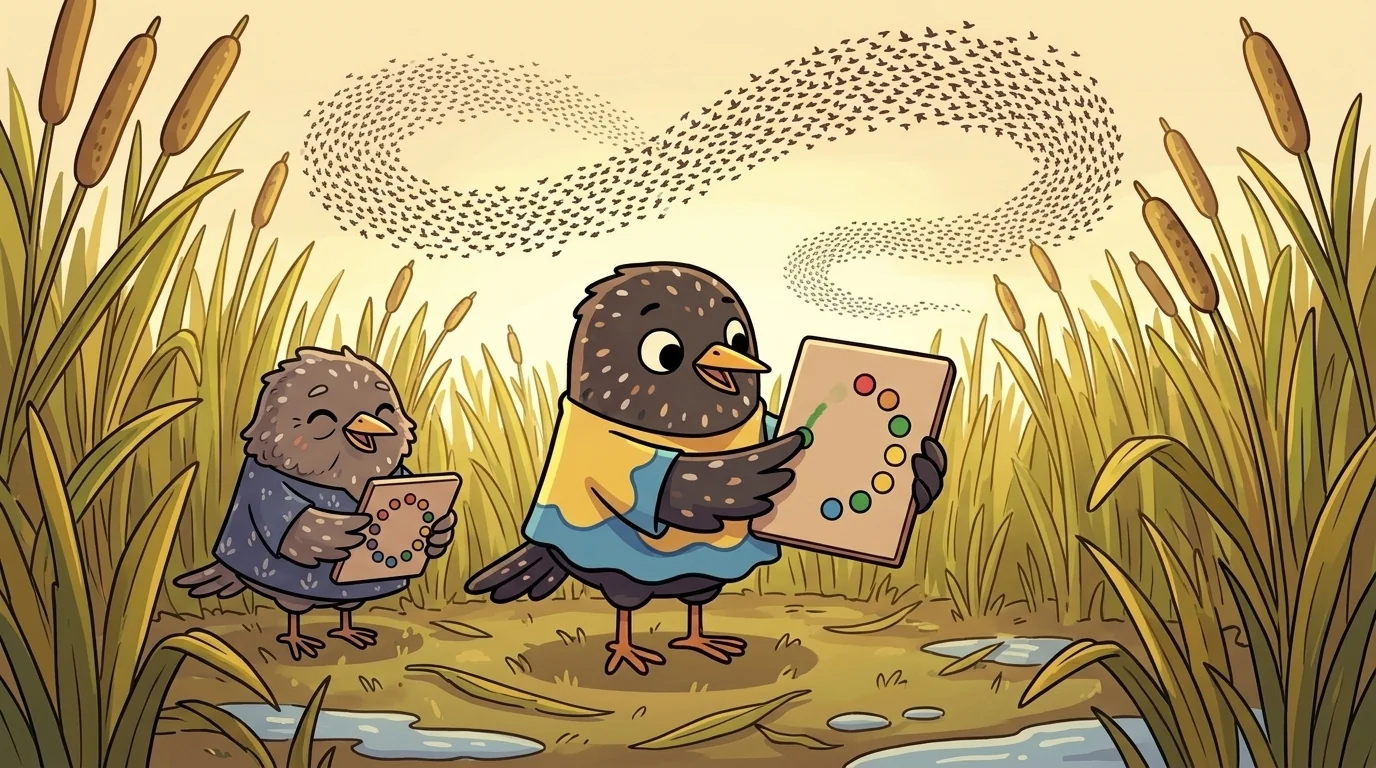
She had grown up in the migrating skeins, where her family were the shape-keepers — geese whose great flying V was never an accident but a living formation, shifting from V to line to cluster as the wind and the journey asked.
"A flock isn't a crowd," her father taught, sliding into point position at the front of the V. "A crowd is a mess. A flock is a shape — and the shape does work. The V cuts the wind. The line watches wide. The cluster keeps the young ones safe. We don't just fly near each other; we fly as a shape, and we change the shape when the shape needs to change." Young Flock had once flown wherever she liked, near the others but part of no formation. "You were beside the flock," her father said, "but not in the picture. A dancer in a formation gives up a little of her own path to make a shape none of them could make alone. That trade is what makes a group a group."
Flock carried it always. And when she watched groups dance as scattered soloists — good dancers, no picture — she saw the missing thing. "Eight solos in a room," she'd say, "is not an ensemble. Arrange them, and suddenly there's one living shape."

When Flock was twelve she came to DanceQuest. Rhythm, the mentor, asked, "What is formation?"
Flock answered by moving four students from a scatter into a crisp line, then a circle. "That," she said. "How a group arranges itself in space — lines, circles, clusters, wedges — and how the shape changes and flows. The group as one moving picture. A formation speaks before anyone dances: a line declares, a circle gathers, a wedge points. And the change between formations is its own kind of movement — a circle blooming into a line is a whole event, even if every dancer only takes two steps."
Rhythm smiled. "You are appointed."

In her studio, Flock teaches the craft of the group shape.
"Watch the picture, not the people." She shifts eight dancers from a cluster, blooming outward into a wide circle, then collapsing into a tight wedge. "See how the transition is a movement all its own? The dancers barely traveled, but the shape did something huge."
Then she names the moves. A formation is a sentence — line, circle, cluster, wedge; each shape says something to the audience before any dancer moves, so choose the shape that says what you mean. The change is choreography — flowing from one formation to another is a movement in itself; a circle opening into a line is an event. Everyone gives a little to the shape — each dancer trades a bit of their own path so the group makes a picture none could make alone; the shape is the star, not any one spot in it. Mind the spacing — even gaps read as calm and ordered; clumps and holes read as accident; the negative space between dancers is part of the picture. Front, facing, focus — where the shape faces and where the dancers look aims the whole picture, like turning a painting toward the light. "It's not about who stands in front," she says. "There's no 'best' spot — a great formation needs the back of the wedge as much as the point. Every place in the picture matters."
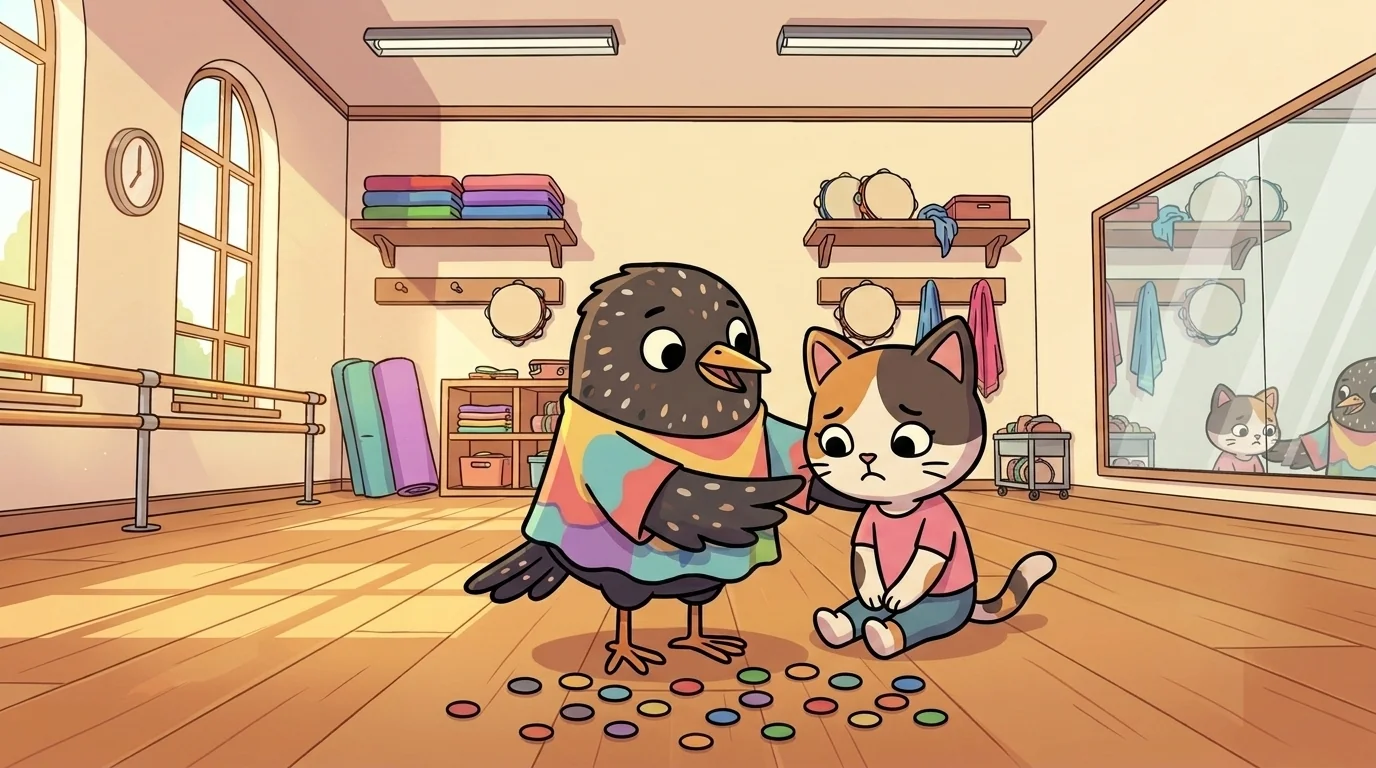
"But I want to be seen," a student admitted once, drifting toward the front.
Flock smiled, kind. "You are seen — as part of the picture," she said. "A formation isn't a line of soloists competing for the front. It's one shape, and the shape only works if every place is held. The dancer at the back of the circle is holding up the whole circle. Leave your spot to be 'seen,' and the picture breaks — and then nobody's seen, because there's no picture left." She settled the student back into the ring. "Hold your place. Be the shape. That's the most seen thing there is."
She stepped back and looked at the eight dancers holding a clean, even circle, one living picture in the middle of the room, and a wide, satisfied gladness rose through her: the particular joy of separate dancers becoming one shape, a picture that spoke before it moved. She didn't say the rest aloud, but she thought it, certain: a group isn't made of who stands out. It's made of who holds their place in the shape — and the shape, held together, says more than any single dancer ever could.
The DanceQuest ensemble
Flock is part of DanceQuest's distributed-narrative cast. Each character embodies a different curricular primitive; together they teach the full subject.
-

Pose
Body-awareness + position — listening to your own shape
-

Trail
Space + pathways — the floor-pattern shapes you draw moving through space
-

Phrase
Time + tempo — how movement is organized in musical counts
-

Lift
Energy + effort + dynamics — quality of movement, not aesthetic judgment
-

Glide
Locomotion — the craft of going from here to there with whole attention
-

Storey
Level — dancing in the vertical space: low on the floor, mid at standing, high in reaches and jumps; every height belongs to dance, no height better than another
-

Beckon
Call-and-response — one dancer or group makes a movement and another answers it; a movement conversation built on truly listening before you reply
-

Canon
Unison and canon — unison is everyone moving together as one; canon is the same move staggered one after another, rolling across the group like a wave
-

Bide
Stillness and the hold — the held, alive, motionless moment inside a dance; negative space made of time; a strong chosen pause, not tiredness or absence
-

The Company
The whole group dancing as one — how formation, level, call-and-response, unison and canon, and stillness weave together so a group of dancers moves as a single living thing